On this day in 1970, the man who unexpectedly filmed the assassination of JFK, Abraham Zapruder died of stomach cancer in Dallas at the age of 65. Born into a Russian-Jewish family in the city of Kovel in Ukraine on 15 May 1905. The Final Footprint – Zapruder is interred in Emanu-El Cemetery in Dallas. His wife was interred next to him after her death in 1993. Their graves are marked by a companion engraved flat granite marker.
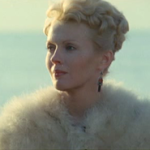 On this day in 1979, actress Jean Seberg died at the age of 40 from an apparent intentional overdose of barbiturates in the back seat of her Renault, which was parked close to her Paris apartment in the 16th arrondissement. Born Jean Dorothy Seberg on 13 November 1938 in Marshalltown, Iowa. She starred in 37 films in Hollywood and in Europe, including Bonjour Tristesse (1958), À bout de soufflé (Breathless) (1960), the musical Paint Your Wagon (1969), and the disaster film Airport (1970). Seberg is also one of the best-known targets of the FBI COINTELPRO project. Her victimization was rendered as a well-documented retaliation for her support of civil rights and activist groups in the 1960s. Seberg married François Moreuil (1958 – 1960 divorce), Romain Gary (1963 – 1970 divorce) and Dennis Berry (1972 – 1979 separated, her death).
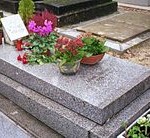 The Final Footprint – Seberg was interred in the Cimetière du Montparnasse, Paris. Montparnasse Cemetery is the eternal home of many of France’s intellectual and artistic elite as well as publishers and others who promoted the works of authors and artists. There are also monuments to police and firefighters killed in the line of duty in the city of Paris. There are also many graves of foreigners who have made France their home. The cemetery is divided by Rue Émile Richard. The small section is usually referred to as the small cemetery (petit cimetière) and the large section as the big cemetery (grand cimetière). Other notable Final Footprints at Montparnasse include; Charles Baudelaire, Simone de Beauvoir, Samuel Beckett, Emmanuel Chabrier, Alfred Dreyfus, Marguerite Duras, Henri Fantin-Latour, César Franck, André Lhote, Guy de Maupassant, Adah Isaacs Menken, Man Ray, Camille Saint-Saëns, Jean-Paul Sartre, and Susan Sontag.
#RIP #OTD in 1981 dancer, actress (On the Town, White Christmas) Vera-Ellen died at the Los Angeles County General Hospital of ovarian cancer aged 60. Glen Haven Memorial Park, Sylmar, California
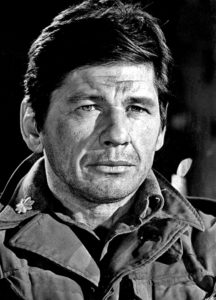 On this day in 2003 actor Charles Bronson died of pneumonia at Cedars-Sinai Medical Center in Los Angeles at the age of 81. Born Charles Dennis Buchinski 3 November 1921 in Ehrenfeld, Pennsylvania. My favorite Bronson movies inlcude: John Sturges’ The Magnificent Seven (1960) with Yul Brynner, Steve McQueen, James Coburn, Robert Vaughn and Eli Wallach and filmscore by Elmer Bernstein; The Dirty Dozen (1967) with Lee Marvin, Ernest Borgnine, Telly Savalas, and Jim Brown; Sergio Leone’s Once Upon a Time in the West (1968) with Claudia Cardinale, Henry Fonda and Jason Robards; as Wild Bill Hickok in The White Buffalo (1977) with Kim Novak, Jack Warden, Slim Pickens and Will Sampson; as Albert Johnson in Death Hunt (1981) with Lee Marvin, Angie Dickinson and Carl Weathers. Bronson was married three times; Harriet Tendler (1949-1967 divorce), actress Jill Ireland (1968-1990 her death) and Kim Weeks (1998-2003 his death).
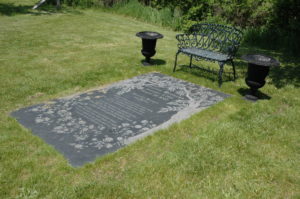 The Final Footprint – Bronson is buried in Brownsville Cemetery in West Windsor, Vermont. His grave is marked with a full ledger engraved granite marker. It is engraved with the term of endearment, Cherished Husband and Father and with the following popular bereavement poem by Mary Elizabeth Frye:
O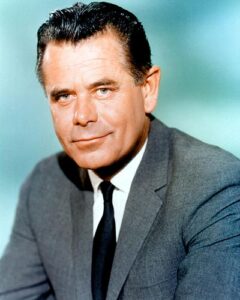 n this day in 2006 actor (Gilda, The Big Heat, Blackboard Jungle, 3:10 to Yuma, Superman) Glenn Ford died in his Beverly Hills home at the age of 90. He often portrayed ordinary men in unusual circumstances. Ford was most prominent during Hollywood’s Golden Age as one of the biggest box-office draws of the 1940s, 1950s, and 1960s, who had a career that lasted more than 50 years. Although he played in many genres of movies, some of his most significant roles were in the film noirs Gilda (1946) and The Big Heat (1953), and the high school angst film Blackboard Jungle (1955). However, it was for comedies or westerns which he received acting laurels, including three Golden Globe Nominations for Best Actor in a Comedy movie, winning for Pocketful of Miracles (1961). He also played a supporting role as Clark Kent’s adoptive father, Jonathan Kent, in Superman (1978). Five of his films have been selected for the National Film Registry by the Library of Congress as being “culturally, historically or aesthetically” significant: Gilda (1946), The Big Heat (1953), Blackboard Jungle (1955), 3:10 to Yuma (1957) and Superman (1978).
Ford did not remain on good terms with his ex-wives. He was a notorious womanizer who had affairs with many of his leading ladies, including Rita Hayworth, Maria Schell, Geraldine Brooks, Stella Stevens, Gloria Grahame, Gene Tierney, Eva Gabor, and Barbara Stanwyck. He had a one-night stand with Marilyn Monroe in 1962 and a fling with Joan Crawford in the early 1940s.
Ford dated Christiane Schmidtmer, Linda Christian and Vikki Dougan during the mid-1960s, and he also had relationships with Judy Garland, Connie Stevens, Suzanne Pleshette, Rhonda Fleming, Roberta Collins, Susie Lund, Terry Moore, Angie Dickinson, Debbie Reynolds, Jill St. John, Brigitte Bardot, and Loretta Young. He subsequently married actress Kathryn Hays (1966–1969); marriages to Cynthia Hayward (1977–1984), and Jeanne Baus (1993–1994) would later follow. All four marriages would end in divorce. He also had a long-term relationship with actress Hope Lange in the early 1960s. According to his son Peter Ford’s book Glenn Ford: A Life (2011), Ford had affairs with 146 actresses, all of which were documented in his personal diaries, including a 40-year, on-and off-again affair with Hayworth that began during the filming of Gilda in 1945. Their affair resumed during the making of their 1948 film The Loves of Carmen; Ford impregnated Hayworth, and she later traveled to France to get an abortion.
In 1960, Ford would move next door to Hayworth in Beverly Hills, and they continued their relationship for many years until the early 1980s.
Ford’s affair with stripper and cult actress Liz Renay was chronicled by her in the 1991 book My First 2,000 Men. She ranked Ford as one of her top five best lovers.
 The Final Footprint– Entombed in Woodlawn Memorial Cemetery, Santa Monica, California. Other notable Final Footprints at Woodlawn include; Barbara Billingsley, Harvey Korman, Doug McClure, Bess Myerson, Sally Ride, and Irene Ryan.
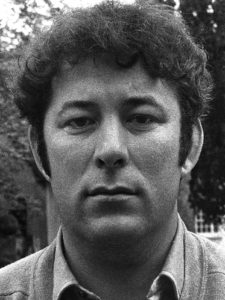 On this day in 2013, poet, playwright Seamus Heaney died in the Blackrock Clinic in Dublin, aged 74. Born Seamus Justin Heaney on 13 April 1939 in the townland of Tamniaran between Castledawson and Toomebridge, Northern Ireland. He received the 1995 Nobel Prize in Literature. Perhaps best known for his work Death of a Naturalist (1966), his first major published volume. Robert Lowell described him as “the most important Irish poet since Yeats”.
His family moved to Bellaghy when he was a boy. He became a lecturer at St. Joseph’s College in Belfast in the early 1960s, after attending Queen’s University and began to publish poetry. He lived in Sandymount, Dublin, from 1976 until his death. He lived part-time in the United States from 1981 to 2006.
Heaney was a professor at Harvard from 1981 to 1997, and its Poet in Residence from 1988 to 2006. From 1989 to 1994, he was also the Professor of Poetry at Oxford. In 1996, was made a Commandeur de l’Ordre des Arts et des Lettres and in 1998 was bestowed the title Saoi of the Aosdána. Other awards that he received include the Geoffrey Faber Memorial Prize (1968), the E. M. Forster Award (1975), the PEN Translation Prize (1985), the Golden Wreath of Poetry (2001), the T. S. Eliot Prize (2006) and two Whitbread Prizes (1996 and 1999). In 2011, he was awarded the Griffin Poetry Prize and in 2012, a Lifetime Recognition Award from the Griffin Trust. His literary papers are held by the National Library of Ireland.
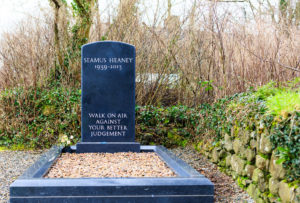 The Final Footprint
His son Michael revealed at the funeral mass that his father texted his final words, “Noli timere” (Latin: “Do not be afraid”), to his wife, Marie, minutes before he died.
His funeral was broadcast live the following day on RTÉ television and radio and was streamed internationally at RTÉ’s website. RTÉ Radio 1 Extra transmitted a continuous broadcast, from 8 a.m. to 9:15 p.m. on the day of the funeral, of his Collected Poems album, recorded by Heaney in 2009. His poetry collections sold out rapidly in Irish bookshops immediately following his death.
He is buried at the Cemetery of St Mary’s Church, Bellaghy, Northern Ireland, in the same graveyard as his parents, young brother, and other family members. The headstone bears the epitaph “Walk on air against your better judgement”, from one of his poems, “The Gravel Walks”.
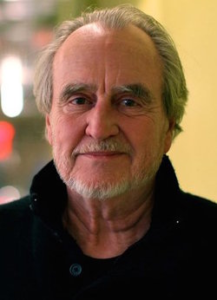 On this day in 2015 film director, writer, producer, actor, Master of Horror Wes Craven died of brain cancer at his Los Angeles home at the age of 76. Born Wesley Earl Craven on August 2, 1939 in Cleveland, Ohio. Perhaps best known for his pioneering work in the genre of horror films, particularly slasher films, where he mixed horror cliches with humor and satire. His impact on the genre was considered prolific and influential.
He is best known for creating A Nightmare on Elm Street (1984) and Scream (1996), featuring the characters of Freddy Krueger, Nancy Thompson, Ghostface, and Sidney Prescott. His other films include The Last House on the Left (1972), The Hills Have Eyes (1977), Swamp Thing (1982), The Serpent and the Rainbow (1988), The People Under the Stairs (1991), Vampire in Brooklyn (1995), Music of the Heart (1999), and Red Eye (2005).
Craven’s first marriage was to Bonnie Broecker. The marriage ended in 1970. In 1982, Craven married a woman who became known professionally as actress Mimi Craven. The two later divorced, with Wes Craven stating in interviews that the marriage dissolved after he discovered it “was no longer anything but a sham”. In 2004, Craven married Iya Labunka; she frequently worked as a producer on Craven’s films.
Craven was a birder; in 2010, he joined Audubon California’s Board of Directors. His favorite films included Night of the Living Dead (1968), The Virgin Spring (1960) and Red River (1948).
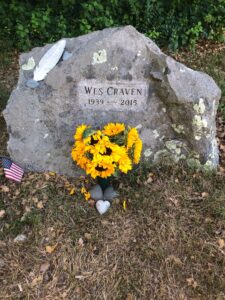 The Final Footprint
Lambert’s Cove Cemetery, West Tisbury, Dukes County, Massachusetts.
#RIP #OTD in 2019 actress (The Mary Tyler Moore Show, Rhoda, Freebie and the Bean, Chapter Two) Valerie Harper died from lung cancer in Los Angeles aged 80. Hollywood Forever Cemetery
Have you planned yours yet?
Follow us on twitter @RIPTFF
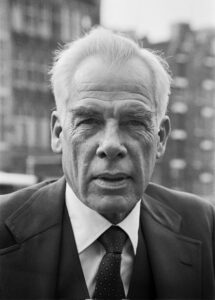
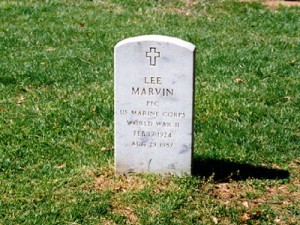 The Final Footprint – Marvin is interred in Arlington National Cemetery. His grave is marked by an upright VA marble marker. Other notable Final Footprints at Arlington include; the Space Shuttle Columbia, the Space Shuttle Challenger, Medgar Evers, JFK, Jacqueline Bouvier Kennedy Onassis, RFK, Edward Kennedy, Audie Murphy, and Malcolm Kilduff, Jr.
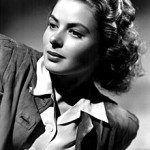 On this day in 1982, Academy, Emmy and Tony Award winning actress, Ingrid Bergman died on her 67th birthday in London, from breast cancer. Born on 29 August 1915 in Stockholm, Sweden. Bergman starred in a variety of European and American films. She won three Academy Awards, two Emmy Awards, and the Tony Award for Best Actress. Perhaps best remembered for her roles as Ilsa Lund in Casablanca (1942), a World War II drama co-starring Humphrey Bogart, and as Alicia Huberman in Notorious (1946), an Alfred Hitchcock thriller co-starring Cary Grant. Before becoming a star in American films, she had been a leading actress in Swedish films. A few of her other starring roles, included For Whom the Bell Tolls (1943), Gaslight (1944), The Bells of St. Mary’s (1945), Hitchcock’s Spellbound (1945), and Under Capricorn (1949), and the independent production, Joan of Arc (1948). In 1950, after a decade of stardom in American films, she starred in the Italian film Stromboli, which led to a love affair with director Roberto Rossellini while they were both already married. The affair and then marriage with Rossellini created a scandal that forced her to remain in Europe until 1956, when she made a successful Hollywood return in Anastasia, for which she won her second Academy Award. She and Rossellini are the parents of actress Isabella Rossellini. Bergman married three times; Petter Aron Lindström (1937 – 1950 divorce), Rossellini (1950 – 1957 divorce), and Lars Schmidt (1958 – 1975 divorce).
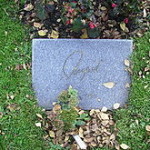 The Final Footprint – Her body was cremated at Kensal Green Cemetery, London and her ashes taken to Sweden. Most of them were scattered in the sea around the islet of Dannholmen off the fishing village of Fjällbacka in Bohuslän, on the west coast of Sweden, where she spent most summers from 1958 to her death in 1982. The rest were placed next to her parents’ ashes in Norra begravningsplatsen (Northern Cemetery), Stockholm, Sweden. Another notable cremation at Kensal Green was that of Freddie Mercury. Another notable final footprint at Norra begravninsplatsen is that of Alfred Nobel.
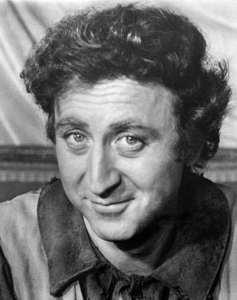 On this day in 2016 actor, screenwriter, director, producer, singer-songwriter, and author Gene Wilder died from Alzheimer’s complications in Stamford, Connecticut at the age of 83. Born Jerome Silberman on June 11, 1933 in Milwaukee, Wisconsin.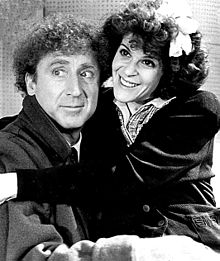
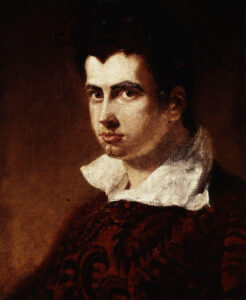 On this day in 1859 critic, essayist, friend of Keats and Shelley, poet (“Jenny kiss’d Me”, “Abou Ben Adhem”, “A Night-Rain in Summer”), Leigh Hunt died in Putney in London, aged 74. Born James Henry Leigh Hunt on 19 October 1784, in Southgate, London.
 The Final Footprint – Hunt was interred at Kensal Green Cemetery. In September 1966, Christ’s Hospital named one of its houses in the memory of Hunt. Today, a residential street in his birthplace of Southgate is named Leigh Hunt Drive in his honour. His epitaph:
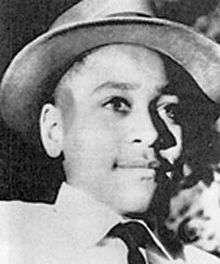 On this day in 1955 “Bobo”, Emmett Till was murdered near Money, Mississippi at the age of 14. Born Emmett Louis Till on 25 July 1941 in Chicago.
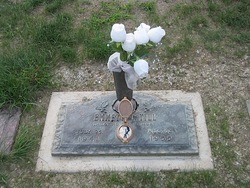 The Final Footprint – Till is interred in Burr Oak Cemetery in Alsip, Illinois. His grave is marked by an individual flat bronze on concrete marker with a cameo photo. His mother, Mamie Carthan, insisted on a public funeral service with an open casket to show the world the brutality of the killing.
 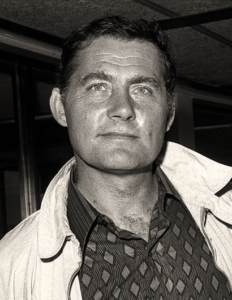 On this day in 1978 actor (A Man for All Seasons, The Sting, Quint in Jaws, From Russia with Love), novelist (The Sun Doctor), playwright and screenwriter Robert Shaw died from a heart attack on 28 August 1978, while driving from Castlebar, County Mayo, Ireland to his home in Tourmakeady, aged 51. Born Robert Archibald Shaw on 9 August 1927 at 51 King Street in Westhoughton, Lancashire, England.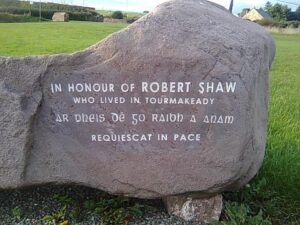
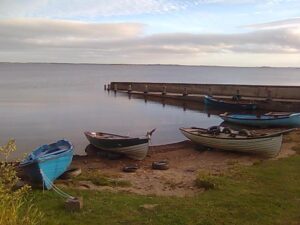
 home in Tourmakeady, Shaw suddenly became ill, stopped the car, stepped out, and then collapsed and died on the roadside. He was accompanied by his wife Virginia and his son Thomas at the time. He was rushed to Castlebar General Hospital, where he was pronounced dead. He had just completed acting in the film Avalanche Express. His body was cremated and his ashes scattered near his home in Tourmakeady. A stone memorial to him was unveiled there in his honour in August 2008.
 On this day in 1985 actress, (Rosemary’s Baby, What Ever Happened to Aunt Alice, Where’s Poppa?, Harold and Maude, Every Which Way but Loose), screenwriter and playwright Ruth Gordon died at her summer home in Edgartown, Massachusetts, following a stroke at age 88. Born Ruth Gordon Jones in Quincy, Massachusetts, at 41 Winthrop Avenue.
 On this day in 1987, film director, screenwriter and actor, John Huston, died in Middletown, Rhode Island from pneumonia as a complication of lung disease in his rented home at the age of 81. Born John Marcellus Huston on 5 August 1906, in Nevada, Missouri. He wrote the screenplays for most of the 37 feature films he directed, many of which are today considered classics: The Maltese Falcon (1941), The Treasure of the Sierra Madre (1948), Key Largo (1948), The Asphalt Jungle (1950), The African Queen (1951), Moulin Rouge (1952), The Misfits (1961), and The Man Who Would Be King (1975). During his 46-year career, Huston received 15 Oscar nominations, won twice, and directed both his father, Walter Huston, and daughter, Anjelica Huston, to Oscar wins in different films. Huston was known to direct with the vision of an artist, having studied and worked as a fine art painter in Paris in his early years. He continued to explore the visual aspects of his films throughout his career: sketching each scene on paper beforehand, then carefully framing his characters during the shooting. In addition, while most directors rely on post-production editing to shape their final work, Huston instead created his films while they were being shot, making his films both more economical and more cerebral, with little editing needed. Before becoming a Hollywood filmmaker, he had been an amateur boxer, reporter, short-story writer, portrait artist in Paris, a cavalry rider in Mexico, and a documentary filmmaker during World War II. Huston has been referred to as “a titan”, “a rebel” and a “renaissance man”, in the Hollywood film industry and one who was never afraid to tackle tough issues head on. Besides sports and adventure, Huston enjoyed hard liquor and relationships with women of all types — one of the reasons he was married five times; Dorothy Harvey (1925–1926; divorce), Lesley Black (1937–1945; divorce), actress Evelyn Keyes (Suellen O’Hara in Gone with the Wind) (1946–1950; divorce), Enrica Soma (mother of Anjelica) (1950–1969; her death), and Celeste Shane (1972–1977; divorce).
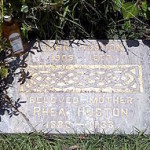 The Final Footprint – Huston is interred next to his mother in the Hollywood Forever Cemetery in Hollywood. Other notable Final Footprints at Hollywood Forever include; Mel Blanc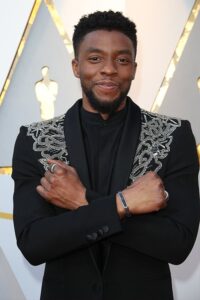
 The Final Footprint – A public memorial service was held on September 4, 2020, in Anderson, South Carolina, where the speakers included Boseman’s childhood pastor as well as Deanna Brown-Thomas, daughter of James Brown, whom Boseman portrayed in Get on Up. The city announced plans for the creation of a permanent art memorial at the service. Boseman’s final resting place is Forest Lawn Memorial Cemetery in Anderson.
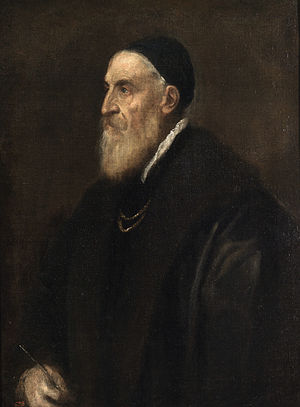 On this day in 1576, artist/painter Tiziano Vecelli or Tiziano Vecellio, da Cadore, Titian died from a fever in Venice, in his eighties or nineties. He was born in Pieve di Cadore, near Belluno (in Veneto, Republic of Venice) around 1490.
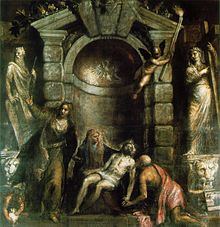
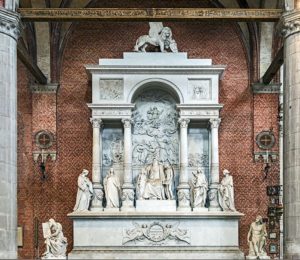 The Final Footprint – Titian was entombed in the Frari (Basilica di Santa Maria Gloriosa dei Frari). He lies near his own famous painting, the Madonna di Ca’ Pesaro. No memorial marked his grave, until much later the Austrian rulers of Venice commissioned Canova to provide a large monument.






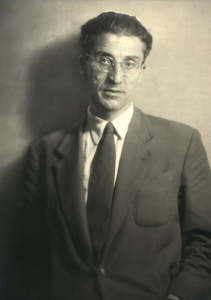 On this day in 1950, Italian poet, novelist, literary critic and translator Cesare Pavese, died from an overdose of barbiturates in Turin, Italy at the age of 41. Born 9 September 1908 in Santo Stefano Belbo, in the province of Cuneo.
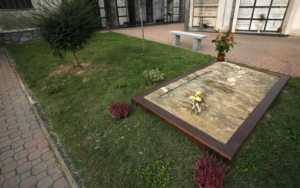 The Final Footprint – His final resting place is in the Cimitero di Santo Stefano Belbo, Piemonte, Italy.
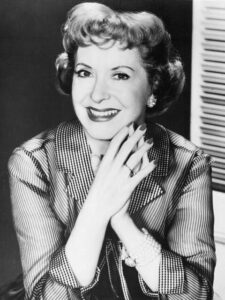 On this day in 1964, vaudevillian, singer, actress, and comedian who became internationally famous as the zany partner and comic foil of husband George Burns, her straight man, appearing with him on radio, television and film as the duo Burns and Allen, Gracie Allen died from a heart attack in Hollywood at age 69. Born Grace Ethel Cecile Rosalie Allen on 26 July 1895.
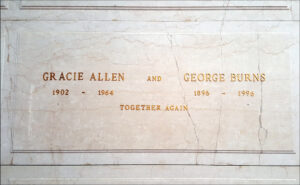 The Final Footprint – Her remains were entombed in a crypt at the Freedom Mausoleum in the Sanctuary of Heritage at Forest Lawn Memorial Park, Glendale, California.
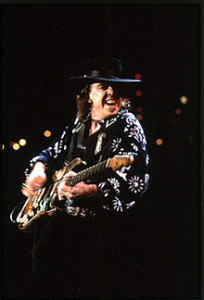 And on this day in 1990, legendary blues guitarist, Grammy award winner, SRV,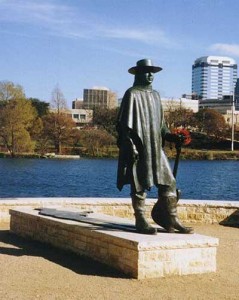
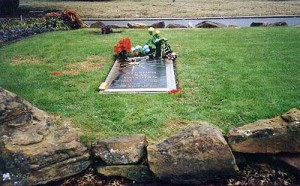 The Final Footprint
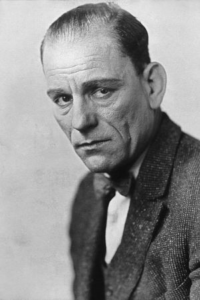 On this day in 1930, actor, father of actor Lon Chaney, Jr., The Man of a Thousand Faces, Lon Chaney died from a throat hemorrhage in Los Angeles at the age of 47. Born Leonidas Frank Chaney in Colorado Springs, Colorado on 1 April 1883. He is regarded as one of the most versatile and powerful actors of early cinema, renowned for his characterizations of tortured, often grotesque and afflicted characters, and his groundbreaking artistry with makeup. Chaney is known for his starring roles in such silent horror films as The Hunchback of Notre Dame and The Phantom of the Opera. His ability to transform himself using makeup techniques he developed earned him the nickname “The Man of a Thousand Faces.” Chaney married twice: Cleva Creighton (1906 – 1915 divorce) and Hazel Hastings (1915 – 1930 his death).
 The Final Footprint – The US Marine Corps provided a chaplain and Honor Guard for his funeral. Chaney is entombed in an unmarked crypt at Forest Lawn Memorial Park Cemetery, in Glendale, California, next to the crypt of his father. His wife Hazel was entombed there upon her death in 1933. For unknown reasons, Chaney’s crypt has remained unmarked. In 1978, Gene Simmons of the rock band KISS wrote a song about Chaney called “Man of 1,000 Faces” for his first solo album. Simmons may have been influenced by the old black and white classic horror movies growing up in New York City. From Warren Zevon’s song “Werewolves of London”; Well, I saw Lon Chaney walking with the Queen, / Doing the Werewolves of London / I saw Lon Chaney, Jr. walking with the Queen / Doing the Werewolves of London. Other notable Final Footprints at Forest Lawn Glendale include; L. Frank Baum, Humphrey Bogart, Nat King Cole, Sam Cooke, Dorothy Dandridge, Sammy Davis, Jr., Walt Disney, Errol Flynn, Clark Gable, Jean Harlow, Michael Jackson, Carole Lombard, Tom Mix, Casey Stengel, Jimmy Stewart, Elizabeth Taylor, and Spencer Tracy.
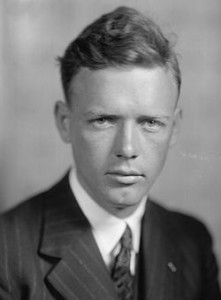 On this day in 1974, United States Army veteran, United States Air Force Reserve veteran, recipient of; the Medal of Honor, Pulitzer Prize, Legion of Honour (France), Air Force Cross (UK), Distinguished Fyling Cross (US), aviator, author, inventor, explorer, and social activist, “Slim,” “Lucky Lindy”, “The Lone Eagle”, Brigadier General Charles Lindbergh died in Kipahulu, Maui, Hawaii at the age of 72. Born Charles Augustus Lindbergh on 4 February 1902 in Detroit, Michigan, the only child of Swedish native Charles August Lindbergh (birth name Carl Månsson) (1859–1924), and Evangeline Lodge Land (1876–1954). Lindbergh spent most of his childhood in Little Falls, Minnesota, and Washington, D.C.. Perhaps best known for his solo non-stop flight on May 20–21, 1927, from Roosevelt Field located in Garden City on New York’s Long Island to Le Bourget Field in Paris, France, a distance of nearly 3,600 statute miles, in the single-seat, single-engine monoplane Spirit of St. Louis. In March 1932, his infant son, Charles, Jr., was kidnapped and murdered in what was soon dubbed the “Crime of the Century”. Lindbergh married Anne Spencer Morrow (1929-1974 his death) and fathered children with Brigitte Hesshaimer, Marietta Hesshaimer and Valeska.
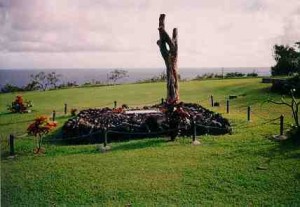 The Final Footprint – Lindbergh is interred on the grounds of the Palapala Ho’omau Church in Kipahulu, Maui. His grave is marked by a flat granite engraved marker with the inscription; “…If I take the wings of the morning, and dwell in the uttermost parts of the sea… C.A.L.
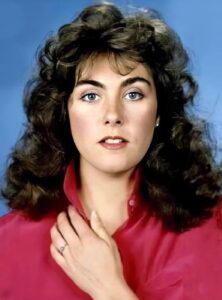 On this day in 2004 singer (“Gloria”, “Self Control”, “How Am I Supposed to Live Without You”), songwriter, actress Laura Branigan died in her sleep at her lodge in East Quogue, New York from a ventricular brain aneurysm, aged 52. Born
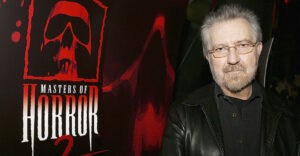 On this day in 2017 director (The Texas Chain Saw Massacre, Poltergeist) screenwriter, and producer Tobe Hooper died in Sherman Oaks, Los Angeles, at the age of 74. Born Willard Tobe Hooper on 25 January 1943 in Austin, Texas, Hooper’s feature film debut was the independent Eggshells (1969), which he co-wrote with Kim Henkel. The two reunited to co-write The Texas Chain Saw Massacre (1974), which Hooper also directed. The film went on to become a classic of the genre, and was described in 2010 by The Guardian as “one of the most influential films ever made.” Hooper subsequently directed the horror film Eaten Alive (1977), followed by the 1979 miniseries Salem’s Lot, an adaptation of the novel by Stephen King. Following this, Hooper signed on to direct The Funhouse (1981), a major studio slasher film distributed by Universal Pictures. The following year, he directed the supernatural thriller Poltergeist, written and produced by Steven Spielberg.
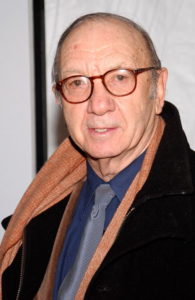 And on this day in 2018,
 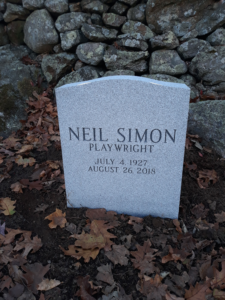 The Final Footprint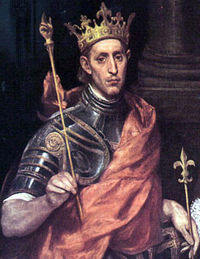
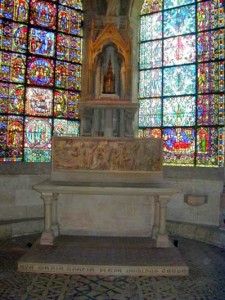 The Final Footprint – Christian tradition states that some of his entrails were buried directly on the spot in Tunisia, where a Tomb of Saint-Louis can still be visited today, whereas his heart and other parts of his entrails were sealed in an urn and placed in the Basilica of Monreale, Palermo, where they still remain. His body was entombed in Saint Denis Basilique in Saint-Denis, Ile-de-France Region, France. His tomb at Saint-Denis was a magnificent gilt brass monument designed in the late 14th century. It was melted down during the French Wars of Religion, at which time the body of the king disappeared. Only one finger was rescued and is kept at Saint-Denis. The city of St. Louis, Missouri was named after him. In early 1905 the Louisiana Purchase Exposition Company offered the city a bronze statue of the city’s patron saint. Called the Apothesis of St. Louis, the statue was made as a copy of the one designed by Charles Niehaus exhibited at the Louisiana Purchase Exposition (1904 World’s Fair). It was unveiled 4 October 1906. The inscription on the north base reads; “Presented to the City of St. Louis by the Louisiana Purchase Exposition in commemoration of the Universal Exposition of 1904 held on this site.” The monument became the symbol of the city. As final footprints go, very impressive. Which would you prefer; an extravagant final footprint or modest and subdued?
 On this day, 25 August, in 1330, Sir James
 of Douglas Scottish knight, friend and ablest warrior of Robert the Bruce, died fighting the Moors in Spain. Born c. 1286 in Douglas, Lanarkshire, Scotland. He was the eldest son of Sir William Douglas, known as “le Hardi” or “the bold”, who had been the first noble supporter of William Wallace. The Scots called him Good Sir James. The English called him Black Douglas. He commanded the left wing of Bruce’s army at Bannockburn. Before his death, Bruce asked Douglas to take his heart on a crusade to the Holy Land. Douglas set out bearing Bruce’s heart in a silver casket, but was killed before reaching the Holy Land.
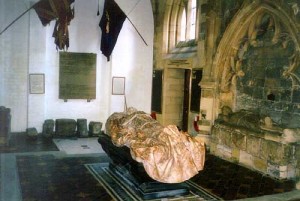 The Final Footprint – The Scottish knights who survived brought back Bruce’s heart, which was buried at Melrose Abbey, and Douglas’s body which was entombed in Saint Bride’s Cemetery in Douglas, Lanarkshire, Scotland. The plaque over his tomb reads; THE GOOD SIR JAMES OF DOUGLAS Killed in battle with the Moors in Spain while on his way to the Holy Land with the heart of King Robert the Bruce 25th August 1330.
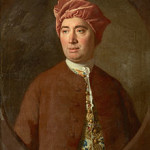 On this day in 1776, Scottish philosopher, historian, economist, and essayist, David Hume died at the south-west corner of St. Andrew’s Square in Edinburgh’s New Town, at what is now 21 Saint David Street, at the age of 65. Born David Home on 26 April 1711 (Old Style) in a tenement on the north side of the Lawnmarket in Edinburgh. Known especially for his philosophical empiricism and scepticism, he was, in my opinion, one of the most important figures in the history of Western philosophy and the Scottish Enlightenment. Hume is often grouped with John Locke, George Berkeley, and others as a British Empiricist. Beginning with his A Treatise of Human Nature (1739), Hume strove to create a total naturalistic “science of man” that examined the psychological basis of human nature. In stark opposition to the rationalists who preceded him, most notably Descartes, he concluded that desire rather than reason governed human behavior, saying: “Reason is, and ought only to be the slave of the passions“. A prominent figure in the sceptical philosophical tradition and a strong empiricist, he argued against the existence of innate ideas, concluding instead that humans have knowledge only of things they directly experience. Thus he divides perceptions between strong and lively “impressions” or direct sensations and fainter “ideas”, which are copied from impressions. He developed the position that mental behaviour is governed by “custom”, that is acquired ability; our use of induction, for example, is justified only by our idea of the “constant conjunction” of causes and effects. Without direct impressions of a metaphysical “self”, he concluded that humans have no actual conception of the self, only of a bundle of sensations associated with the self. Hume advocated a compatibilist theory of free will that proved extremely influential on subsequent moral philosophy. He was also a sentimentalist who held that ethics are based on feelings rather than abstract moral principles. Hume also examined the normative is–ought problem. He held notoriously ambiguous views of Christianity, but famously challenged the argument from design in his Dialogues Concerning Natural Religion (1777). Kant credited Hume with waking him up from his “dogmatic slumbers” and Hume has proved extremely influential on subsequent philosophy, especially on utilitarianism, logical positivism, philosophy of science, early analytic philosophy, cognitive philosophy, and other movements and thinkers. The philosopher Jerry Fodor proclaimed Hume’s Treatise “the founding document of cognitive science”. Also famous as a prose stylist, Hume pioneered the essay as a literary genre and engaged with contemporary intellectual luminaries such as Jean-Jacques Rousseau, Adam Smith (who acknowledged Hume’s influence on his economics and political philosophy), James Boswell, Joseph Butler, and Thomas Reid. Hume never married.
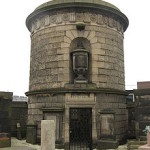 The Final Footprint – Hume asked that he be entombed in a “simple roman tomb.” In his will he requests that it be inscribed only with his name and the year of his birth and death, “leaving it to Posterity to add the Rest.” The Hume Family private mausoleum stands on the south-western slope of Calton Hill, in the Old Calton Cemetery in Edinburgh.
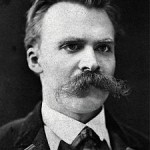 On this day in 1900, German philosopher, poet, composer and classical philologist, Friedrich Wilhelm Nietzsche died of a stroke in Weimar, Saxony, German Empire, at the age of 55. Born on 15 October 1844 in Röcken bei Lützen, Prussia. He wrote several critical texts on religion, morality, contemporary culture, philosophy and science, displaying a fondness for metaphor, irony and aphorism. Nietzsche’s key ideas include the Apollonian/Dionysian dichotomy, perspectivism, the Will to Power, the “death of God”, the Übermensch and eternal recurrence. Central to his philosophy is the idea of “life-affirmation”, which involves questioning of any doctrine that drains one’s expansive energies, however socially prevalent those ideas might be. His radical questioning of the value and objectivity of truth has been the focus of extensive commentary and his influence remains substantial, particularly in the continental philosophical tradition comprising existentialism, postmodernism, and post-structuralism. Nietzsche began his career as a classical philologist — a scholar of Greek and Roman textual criticism — before turning to philosophy. In 1869, at age twenty-four, he was appointed to the Chair of Classical Philology at the University of Basel, the youngest individual to have held this position. He resigned in the summer of 1879 due to health problems that plagued him most of his life. In 1889, at age forty-four, he suffered a collapse and a complete loss of his mental faculties. The breakdown was later ascribed to atypical general paresis due to tertiary syphilis, but this diagnosis has come into question. Nietzsche lived his remaining years in the care of his mother until her death in 1897, after which he fell under the care of his sister Elisabeth Förster-Nietzsche until his death in 1900. As his caretaker, his sister assumed the roles of curator and editor of Nietzsche’s manuscripts. Förster-Nietzsche was married to a prominent German nationalist and antisemite, Bernhard Förster, and reworked Nietzsche’s unpublished writings to fit her husband’s ideology, often in ways contrary to Nietzsche’s stated opinions, which were strongly and explicitly opposed to antisemitism and nationalism. Through Förster-Nietzsche’s editions, Nietzsche’s name became associated with German militarism and Nazism, although later twentieth-century scholars have attempted to counteract this misconception of his ideas. Nietzsche never married.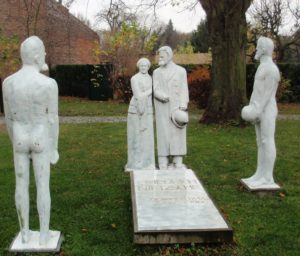
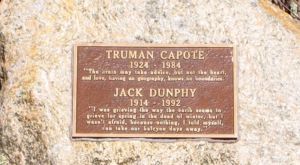
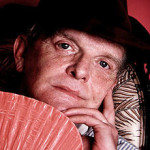 On this day in 1984, author Truman Capote died in the Los Angeles home of Joanne Carson, the former wife of Johnny Carson, from liver cancer at the age of 59. Born Truman Streckfus Persons on 30 September 1924 in New Orleans. Many of his short stories, novels, plays, and nonfiction are recognized literary classics, including the novella Breakfast at Tiffany’s (1958) and the true crime novel In Cold Blood (1966), which he labeled a “nonfiction novel.” At least 20 films and television dramas have been produced from Capote novels, stories and screenplays. Capote rose above a childhood troubled by divorce, a long absence from his mother, and multiple migrations. He had discovered his calling as a writer by the age of 11, and for the rest of his childhood he honed his writing ability. Capote began his professional career writing short stories. The critical success of one story, “Miriam” (1945), attracted the attention of Random House publisher Bennett Cerf, and resulted in a contract to write the novel Other Voices, Other Rooms (1948). Capote earned the most fame with In Cold Blood, a journalistic work about the murder of Herbert Clutter and his Kansas farm family in their home, a book Capote spent four years writing, with much help from his childhood friend, Harper Lee, who wrote To Kill a Mockingbird (1960) (The character Dill is apparently based on Capote). A milestone in popular culture, In Cold Blood was the peak of Capote’s literary career; it was to be his final fully published book. In the 1970s, he maintained his celebrity status by appearing on television talk shows.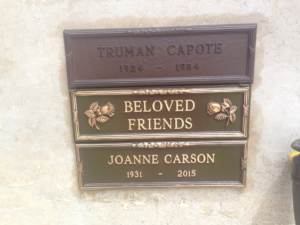
 On this day in 2001, American R&B recording artist, actress and model Aaliyah died when the plane she was a passenger on, crashed in Marsh Harbour, Abaco Island, The Bahamas. She was 22. Born Aaliyah Dana Haughton on 16 January 1979, in Brooklyn, New York. At age 12, Aaliyah signed with Jive Records and her uncle Barry Hankerson’s Blackground Records. Hankerson introduced her to R. Kelly, who became her mentor, as well as lead songwriter and producer of her debut album, Age Ain’t Nothing but a Number. Aaliyah worked with record producers Timbaland and Missy Elliott for her second album, One in a Million. In 2000, Aaliyah appeared in her first major film, Romeo Must Die. She contributed to the film’s soundtrack, which spawned the single “Try Again”. The song topped the Billboard Hot 100 solely on airplay, making Aaliyah the first artist in Billboard history to achieve this feat. “Try Again” earned Aaliyah a Grammy Award nomination for Best Female R&B Vocalist. After completing Romeo Must Die, Aaliyah filmed her part in Queen of the Damned, a loose adaptation of the third novel of Anne Rice’s The Vampire Chronicles. She released her third and final album, Aaliyah, in July 2001.
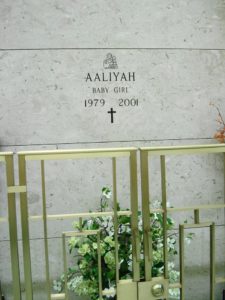 The Final Footprint – Aaliyah’s funeral was held on 31 August 2001, at the Saint Ignatius Loyola Church in New York. Her body was placed in a silver casket, which was carried in a glass hearse and was drawn by horse. Among those in attendance to the private ceremony were Missy Elliott, Timbaland, Gladys Knight, Lil’ Kim and Sean Combs. After the service, 22 white doves were released to symbolize each year of Aaliyah’s life. The service was conducted by Frank E. Campbell Funeral Home, a
 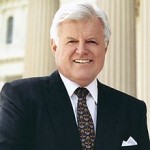 And on this day in 2009, younger brother of JFK and RFK, United States Senator from Massachusetts and a member of the Democratic Party, Edward Kennedy died of brain cancer at his home in Hyannis Port, Massachusetts at the age of 77, two weeks after the death of his sister, Eunice Kennedy Shriver. Born Edward Moore Kennedy on 22 February 1932 in Boston. He was the second most senior member of the Senate when he died and was the fourth-longest-serving senator in United States history, having served there for almost 47 years. As the most prominent living member of the Kennedy family for many years, he was also the last surviving son of Joseph P. Kennedy, Sr. and the father of Congressman Patrick J. Kennedy. Kennedy entered the Senate in a November 1962 special election to fill the seat once held by his brother John. He was elected to a full six-year term in 1964 and was reelected seven more times before his death. The Chappaquiddick incident on July 18, 1969, resulted in the death of his automobile passenger Mary Jo Kopechne. Kennedy pleaded guilty to a charge of leaving the scene of an accident and the incident significantly damaged his chances of ever becoming President of the United States. His one attempt, in the 1980 presidential election, resulted in a Democratic primary campaign loss to incumbent President Jimmy Carter. Kennedy was known for his charisma and oratorical skills. His 1968 eulogy for his brother Robert and his 1980 rallying cry for modern American liberalism were among his best-known speeches. He became recognized as “The Lion of the Senate” through his long tenure and influence. More than 300 bills that Kennedy and his staff authored were enacted into law. Unabashedly liberal, Kennedy championed an interventionist government emphasizing economic and social justice, but was also known for working with Republicans to find compromises between senators with disparate views. Kennedy played a major role in passing many laws, including laws addressing immigration, cancer research, health insurance, apartheid, disability discrimination, AIDS care, civil rights, mental health benefits, children’s health insurance, education and volunteering. During the 2000s, he led several unsuccessful immigration reform efforts. Over the course of his Senate career and continuing into the Obama administration, Kennedy continued his efforts to enact universal health care, which he called the “cause of my life.” Kennedy married twice: Virginia Joan Bennett (1958 – 1982 divorce) and Victoria Anne Reggie (1992 – 2009 his death).
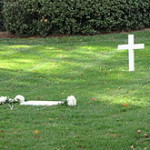 The Final Footprint – Kennedy’s body traveled from the Kennedy Compound in Hyannis Port to the John F. Kennedy Library in Boston where it lay in repose and where over 50,000 members of the public filed by to pay their respects. On Saturday, 29 August, a procession traveled from the library to the Our Lady of Perpetual Help Basilica in Boston, for a funeral Mass. Present at the funeral service were President Obama and former Presidents Jimmy Carter, Bill Clinton and George W. Bush, Tony Bennett, Placido Domingo, Jack Nicholson, Yo-Yo Ma, Lauren Bacall and Bill Russell. Kennedy’s body was returned to Washington, D.C. for burial at Arlington National Cemetery near the graves of his brothers. Kennedy’s grave marker is identical to his brother Robert’s: a white oak cross and a marble white foot marker bearing his full name, year of birth and death. Other notable Final Footprints at Arlington include; the Space Shuttle Columbia, the Space Shuttle Challenger, Medgar Evers, John F. Kennedy, Jacqueline Bouvier Kennedy Onassis, Robert F. Kennedy, Lee Marvin, Audie Murphy, and Malcolm Kilduff, Jr.
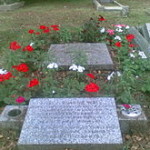 The Final Footprint – Weil is interred in the Catholic Section of the Bybrook Cemetery Ashford Kent, England Plot.
 On this day in 1978 Sicilian-American singer, actor, songwriter, and trumpeter, Grammy Award winner, “The King of the Swing” Louis Prima died from a cerebral hemorrhage in New Orleans at the age of 67. Born on 7 December 1910 in New Orleans. Known for his voice performance of the orangutan King Louie in the Walt Disney film, The Jungle Book (1967) and for singing the song “I Wanna be like You”. Also known for his arrangement and recording of the medley “Just a Gigolo”/”I Ain’t Got Nobody”, which was later covered by David Lee Roth. Prima wrote the swing standard “Jump Jive and Wail”.
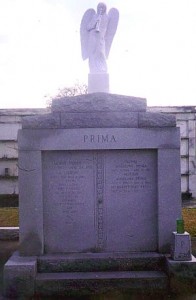 The Final Footprint – Prima is entombed in the Prima family private mausoleum in Metairie Cemetery in New Orleans. The gray marble crypt is topped by a figure of Gabriel, the trumpeter-angel, sculpted in 1997 by Russian-born sculptor Alexei Kazantsev. The inscription on the crypt’s door is: A LEGEND “WHEN THE END COMES, I KNOW, THEY’LL SAY, “JUST A GIGOLO” AS LIFE GOES ON WITHOUT ME, LOVINGLY, YOUR LITTLE FAMILY…” Other notable final footprints at Metairie include; Pete Fountain, Jim Garrison, Al Hirt, and Anne and Stan Rice.
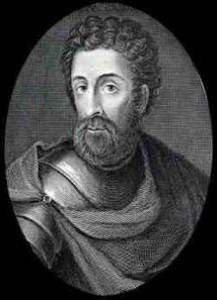 On this day in 1305 Scottish Knight, Guardian of Scotland, William Wallace was hung, drawn, and quartered emasculated, eviscerated and his bowels burned before him, beheaded, then cut into four parts for high treason and crimes against English civilians at the Elms, Smithfield, London, at the approximate age of 35. Born circa 1270 at Elderslie, Renfrewshire, Scotland. Little is known of the details of Wallace’s life. Most of what we know of him comes from the fifteenth-century ballad “The Wallace” by the anti-English bard Blind Harry. From the year 1296 Wallace fought valiantly for Scotland’s freedom. Along with Andrew Moray, Wallace defeated an English army at the Battle of Stirling Bridge in 1297. In July 1298, however, Wallace lost to Edward I’s, Longshanks, forces at Falkirk. In the years that followed, Wallace would try to rally support for the Scottish cause; but these efforts met with little success. He was captured in 1305 and executed in London in August of that year.
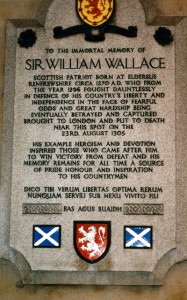 The Final Footprint – Wallace was beheaded and his body quartered and the parts were scattered across England and Scotland. The left upper quarter of his body is entombed in the wall of Saint Machars Cathedral in Aberdeen. In 1869 the Wallace Monument was erected, very close to the site of his victory at Stirling Bridge. In 1995, actor/director Mel Gibson made the Academy Award winning film Braveheart, which was inspired by Wallace’s story. Though some of the movie is fabrication, Braveheart renewed interest in Wallace and stimulated resurgent Scottish separatist sentiment. A placque was erected in a wall of St. Bartholomew’s Hospital near the site of his execution that reads: “To the immortal memory of Sir William Wallace, Scottish Patriot born at Elderslie. Renfrewshire circa 1270 A.D who from 1296 fought dauntlessly in defence of his country’s liberty and independence in the face of fearful odds and great hardship being eventually betrayed and captured brought to London and put to death near this spot on 23 August 1305. His example heroism and devotion inspired those who came after him to win victory from defeat and his memory remains for all time a source of pride honour and inspiration to his countrymen. Dico tibi verum libertas optima rerum nunquam servili sub nexu vivito fili. Bas agus Buaidh. (Death and Victory)”
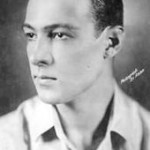 On this day in 1926, actor, “The Latin Lover”, Rudolph Valentino died in New York City from peritonitis and pleuresy at the age of 31. Born Rodolfo Alfonso Raffaello Pierre Filibert Guglielmi di Valentina D’Antonguolla on 6 May 1895 in Castellaneta, Puglia, Kingdom of Italy. He starred in several well known silent films including The Four Horsemen of the Apocalypse, The Sheik, Blood and Sand, The Eagle and Son of the Sheik. His sudden death at age 31 caused mass hysteria among his female fans, propelling him into icon status. Though his films are not as well known today, his name is still widely known. Valentino was married twice; Jean Acker (1919-1923 divorce) and Natacha Rambova (1923-1926 his death).
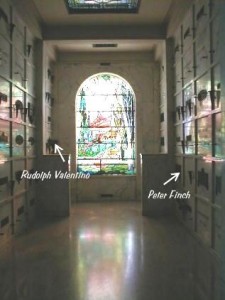 The Final Footprint – Valentino is entombed in the Cathedral Mausoleum at Hollywood Forever Cemetery in Hollywood. An estimated 100,000 people lined the streets of New York City to pay their respects at his funeral, handled by the Frank E. Campbell Funeral Home, a
 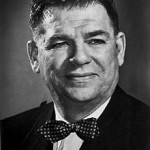 On this day in 1960 Tony and Academy Award-winning lyricist Oscar Hammerstein II died of stomach cancer at his home Highland Farm in Doylestown, Pennsylvania at the age of 65.
 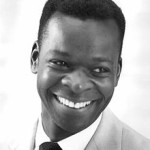 And on this day in 2005 actor Brock Peters died in Los Angeles from pancreatic cancer at the age of 78. Born George Fisher on 2 July 1927 in New York City. Perhaps best known for playing the role of Tom Robinson in the 1962 film To Kill a Mockingbird and for his role as the villainous “Crown” in the 1959 film version of Porgy and Bess. In later years, he gained recognition among Star Trek fans for his portrayals of Fleet Admiral Cartwright in two of the Star Trek feature films and Joseph Sisko, father of Benjamin Sisko, in Star Trek: Deep Space Nine. He was also notable for his role as Hatcher in Soylent Green. Peters was once romantically involved with actress Ja’net Dubois. Peters was married to Dolores ‘DiDi’ Daniels from 1961 until her death in 1989. Peters delivered the eulogy at Gregory Peck’s funeral in 2003.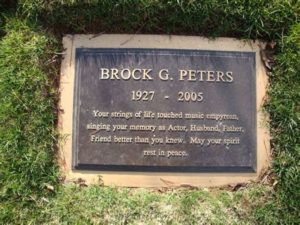
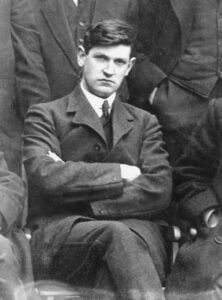 On this day in 1922, Irish revolutionary leader Michael Collins was shot and killed during the Irish Civil War in Béal na mBláth, County Cork, Ireland at the age of 31. Most Irish political parties recognise his contribution to the foundation of the modern Irish state. The supporters of Fine Gael hold his memory in particular esteem, regarding him as their movement’s founding father, through his link to their precursor Cumann na nGaedheal. Born on 16 October 1890 in Sam’s Cross, County Cork, Ireland. At the time of his death, he was engaged to Kitty Kiernan.
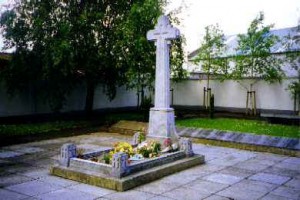 The Final Footprint– Collins is interred in Glasnevin Cemetery in Dublin. His grave is marked by a large upright stone cross. His body lay in state for three days in Dublin City Hall where tens of thousands of mourners filed past his coffin to pay their respects. His funeral mass took place at Dublin’s Pro Cathedral. An estimated 500,000 people attended his funeral, almost one fifth of the country’s population. An annual commemoration ceremony takes place each year in August at the ambush site at Béal na mBláth, Cork. There is also a remembrance ceremony in Glasnevin at Collins’ graveside. The Collins 22 Society established in 2002 is an international organisation dedicated to keeping the name and legacy of Collins in living memory. Collins was portrayed by Liam Neeson in the film Michael Collins (1996) featuring Aidan Quinn, Stephen Rea, Alan Rickman and Julia Roberts. Maude Gonne is also interred at Glasnevin.
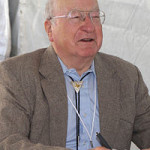 On this day in 2009, graduate of the University of Texas at Austin, journalist and writer, known particularly for his Western novels, Elmer Kelton died of natural causes in San Angelo, Texas at the age of 83. Born on 29 April 1926 at a place called Horse Camp on the Five Wells Ranch, owned by the Scharbauer Cattle Company, in Andrews County, Texas, just east of the city of Andrews.
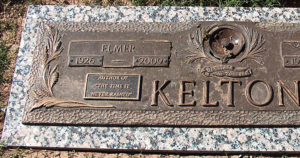 The Final Footprint – His funeral was held on 27 August 2009, at the First United Methodist Church in San Angelo. A life-size statue of Kelton by Raul Ruiz displayed at the Stevens Central Library in San Angelo. His final resting place is Lawnhaven Memorial Gardens, a
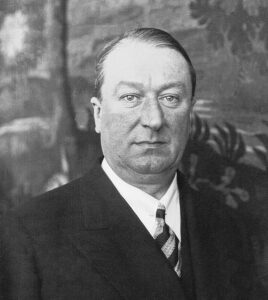 On this day in 1947, Italian-born and French naturalized citizen automobile designer and manufacturer, founder of the Bugatti automobile company, Ettore Bugatti died in Paris at the age of 65. Born Ettore Isidoro Arco Bugatti on 15 September 1881 in Milan, Italy. Bugatti cars are well-known for their high-performance and the beauty of their designs.
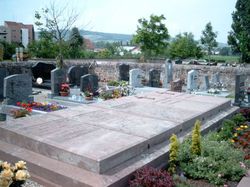 The Final Footprint – Bugatti is entombed with his wife in the family plot in Cimetière Dorlisheim near Molsheim in the Bas-Rhin département of the Alsace region of France.

