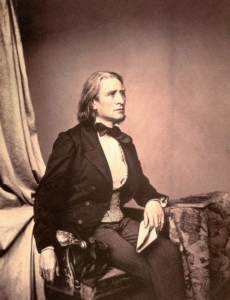
 On this day in 1886, composer, virtuoso pianist, conductor, music teacher, arranger, and organist of the Romantic era Franz Liszt died Bayreuth, Germany, on 31 July 1886, at the age of 74, officially as a result of pneumonia. Born on 22 October 1811 in . In my opinion, he is one of the greatest pianists of all time. He was also a writer, philanthropist, Hungarian nationalist, and Franciscan tertiary.
Liszt gained renown in Europe during the early nineteenth century for his skill as a pianist. He was a friend, musical promoter and benefactor to many composers of his time, including Frédéric Chopin, Charles-Valentin Alkan, Richard Wagner, Hector Berlioz, Robert Schumann, Camille Saint-Saëns, Edvard Grieg, Ole Bull, Joachim Raff, Mikhail Glinka, and Alexander Borodin.
A prolific composer, Liszt was one of the most prominent representatives of the New German School (German: Neudeutsche Schule). He left behind a body of work which influenced his forward-looking contemporaries and anticipated 20th-century ideas and trends. Among Liszt’s musical contributions were the symphonic poem, developing thematic transformation as part of his experiments in musical form, and radical innovations in harmony.
Liszt said; “I carry a deep sadness of the heart which must now and then break out in sound.”
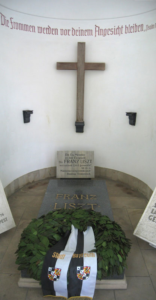
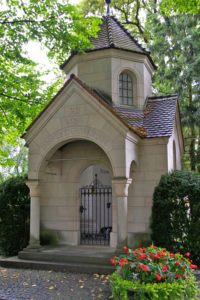 The Final footprint
He was buried on 3 August 1886, in Alter Friedhof, the municipal cemetery of Bayreuth evidently, against his wishes.
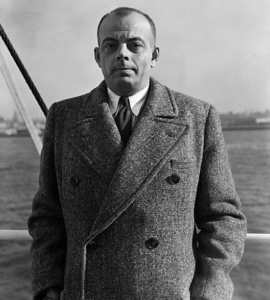 On this day in 1944 French writer and aviator Antoine de Saint-Exupéry disappeared on a reconnaissance flight over the Mediterranean off the coast of Marseille at the age of 44. Born Antoine Jean-Baptiste Marie Roger de Saint Exupéry on 29 June 1900 in Lyon, France. Perhaps best remembered for his novella The Little Prince (Le Petit Prince). He was a successful commercial pilot before World War II. He joined the Armée de l’Air (French Air Force) on the outbreak of war, flying reconnaissance missions until the armistice with Germany. Saint-Exupéry was married to Consuelo Suncín Sandoval Zeceña (1931-1944 his death).
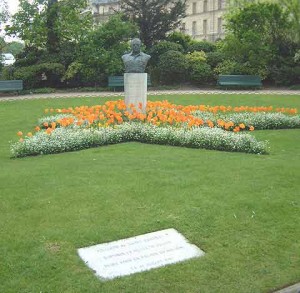 The Final Footprint – An unidentifiable body wearing French colors was found several days after his disappearance east of the Frioul archipelago south of Marseille and buried in Carqueiranne, France. His memorial was established at Les Invalides in Paris. Les Invalides, or L’Hôtel national des Invalides (The National Residence of the Invalids), is a complex of buildings in the 7th arrondissement of Paris containing museums and monuments, all relating to the military history of France, as well as a hospital and a retirement home for war veterans, the building’s original purpose. The buildings house the Musée de l’Armée, the military museum of the Army of France, the Musée des Plans-Reliefs, and the Musée d’Histoire Contemporaine, as well as the burial site for some of France’s war heroes, notably Napoleon. A quote from The Little Prince is inscribed on the sculpture erected to honour James Dean in Cholame, California —”What is essential is invisible to the eye.”
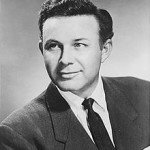 On this day in 1964, singer-songwriter, Gentleman Jim, Jim Reeves died at the age of 40 in the crash of a private plane northeast of Brentwood, Tennessee approximately at the junction of Baxter Lane and Franklin Pike Circle, just east of Interstate 65, and southwest of Nashville International Airport. Born James Travis Reeves on 20 August 1923 in Galloway, Texas. With records charting from the 1950’s to the 1980’s, Reeves became well known as a practitioner of the Nashville sound (a mixture of older country-style music with elements of popular music). He is a member of both the Country Music and Texas Country Music Halls of Fame.
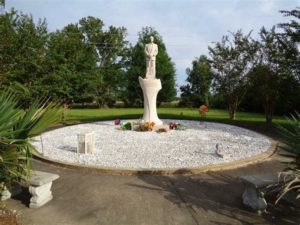 The Final Footprint – Thousands of people traveled to pay their last respects at his funeral two days later. The coffin, draped in flowers from fans, was driven through the streets of Nashville and then to Reeves’ final resting place near Carthage, Texas at what is now the Jim Reeves Memorial Park.
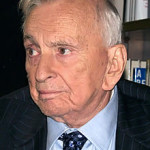 On this day in 2012, writer known for his essays, novels, screenplays, and Broadway plays, Gore Vidal died at his home in Hollywood Hills, California of complications from pneumonia at the age of 86. Born Eugene Louis Vidal in West Point, New York. As a well-known public intellectual, he was known for his patrician manner and witty aphorisms. Vidal was a lifelong Democrat; he ran for political office twice and was a longtime political commentator. As well known for his essays as his novels, Vidal wrote for The Nation, New Statesman, the New York Review of Books and Esquire. He was also known for his well-publicized spats with such figures as Norman Mailer, William F. Buckley, Jr., and Truman Capote. His most widely regarded social novel was Myra Breckinridge; his best known historical novels included Julian, Burr, and Lincoln. His third novel, The City and the Pillar (1948), outraged conservative critics as one of the first major American novels to feature unambiguous homosexuality. Vidal always rejected the terms of “homosexual” and “heterosexual” as inherently false, claiming that the vast majority of individuals had the potential to be pansexual. His screenwriting credits included the epic historical drama Ben-Hur (1959), which won the Academy Award for Best Picture. At the time of his death, he was the last of a generation of American writers who had served during World War II, including J. D. Salinger, Kurt Vonnegut, Mailer, and Joseph Heller. Perhaps best remembered for his caustic wit, he has been described as the 20th century’s answer to Oscar Wilde. Vidal had affairs with both men and women. The novelist Anaïs Nin claimed an involvement with Vidal in her memoir The Diary of Anaïs Nin but Vidal denied it in his memoir Palimpsest. Vidal also discussed having dalliances with people such as actress Diana Lynn, and alluded to the possibility that he may have a daughter. He was briefly engaged to Joanne Woodward, before she married Paul Newman; after eloping, the couple shared a house with Vidal in Los Angeles for a short time. In 1950, he met his long-term partner Howard Austen. Vidal once reported that the secret to his lengthy relationship with Austen was that they did not have sex with each other: “It’s easy to sustain a relationship when sex plays no part and impossible, I have observed, when it does.” He also said; “Love is not my bag. I was debagged at 25. So I turned to sex and art; perfectly acceptable substitutes.”
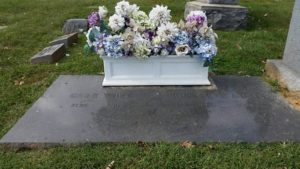 The Final Footprint – Vidal was interred next to Austen in Rock Creek Cemetery in Washington, D.C. Other notable final footprints at Rock Creek include; Tim Russert and Upton Sinclair.
#RIP #OTD in 2013 actor (Cochise in Broken Arrow series, Kane in Buck Rogers series, Commander Kang in Star Trek: The Original Series) Michael Ansara died from complications of Alzheimer’s disease at his home in Calabasas CA, aged 91. Forest Lawn Memorial Park Hollywood Hills
| Jeanne Moreau | |
|---|---|
 |
|
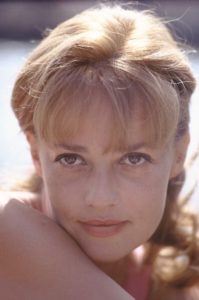
On this day in 2017, actrss, singer, screenwriter, and director Jeanne Moreau died in Paris at the age of 89. Born 23 January 1928 in Paris. She won the Cannes Film Festival Award for Best Actress for Seven Days… Seven Nights (1960), the BAFTA Award for Best Foreign Actress for Viva Maria! (1965), and the César Award for Best Actress for The Old Lady Who Walked in the Sea (1992). She was also the recipient of several lifetime awards, including a BAFTA Fellowship in 1996.
Moreau made her theatrical debut in 1947, and established herself as one of the leading actresses of the Comédie-Française. She began playing small roles in films in 1949, with impressive performances in the Fernandel vehicle Meurtres? (Three Sinners, 1950) and alongside Jean Gabin as a showgirl/gangster’s moll in the film Touchez pas au grisbi (1954). She achieved prominence as the star of Elevator to the Gallows (1958), directed by Louis Malle, and Jules et Jim (1962), directed by François Truffaut. Most prolific during the 1960s, Moreau continued to appear in films into her 80s.

Moreau in 1958
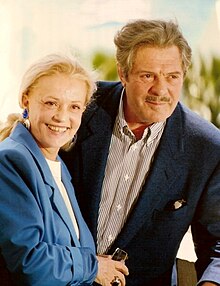
Moreau and Marcello Mastroianni in 1991
She formerly was married to Jean-Louis Richard (1949–1964) and then to American film director William Friedkin (1977–1979). Director Tony Richardson left his wife Vanessa Redgrave for her in 1967 but they never married. She also had affairs with directors Louis Malle and François Truffaut, fashion designer Pierre Cardin, jazz trumpeter Miles Davis and Theodoros Roubanis, the Greek actor/playboy.
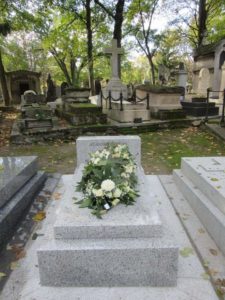 The Final Footprint
Cimetière de Montmartre in the 18th arrondissement of Paris. Officially known as the Cimitière du Nord, it is the third largest necropolis in Paris, after the Père Lachaise cemetery and the Montparnasse cemetery. Other notable final footprints at Montmartre include; Hector Berlioz, Dalida, Edgar Degas, Alexandre Dumas fils, Marie Duplessis, Théophile Gautier, Gustave Moreau, Henri Murger, Jacques Offenbach, François Truffaut, and Alfred de Vigny.
#RIP #OTD in 2022 professional basketball, center for the Boston Celtics, 11x NBA Champion Bill Russell died at his Mercer Island, Washington, home at the age of 88. Lake View Cemetery, Seattle, Washington
Have you planned yours yet?
Follow TFF on twitter @RIPTFF
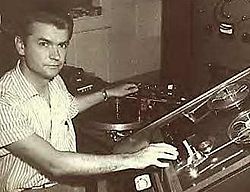
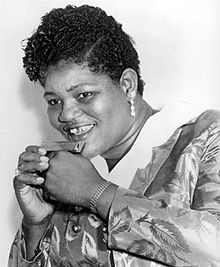
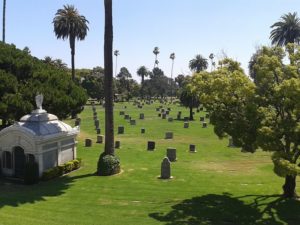
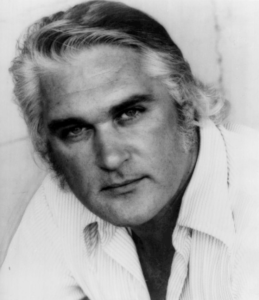
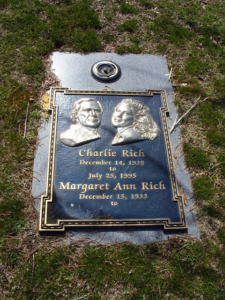
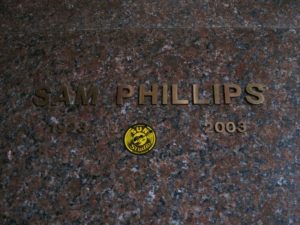 The Final Footprint – Phillips is entombed in the mausoleum Garden of Trees in Memorial Park Cemetery in Memphis. Another notable final footprints at Memorial Park include; Bobby Blue Bland, Isaac Hayes, Charlie Rich, and Bob Welch.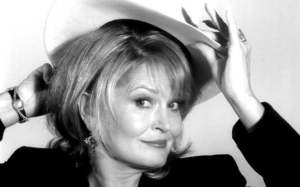














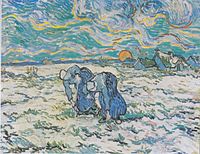


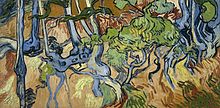

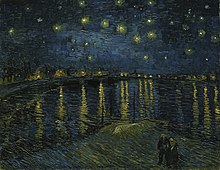
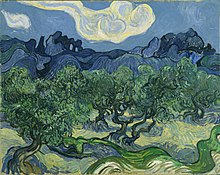


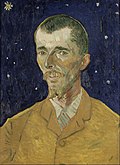

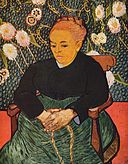





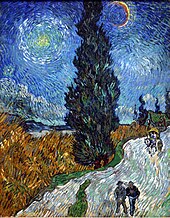



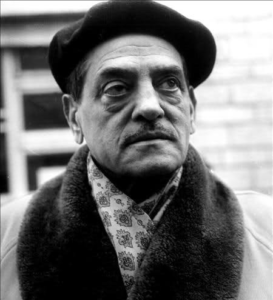 On this day in 1983, filmmaker Luis Buñuel died
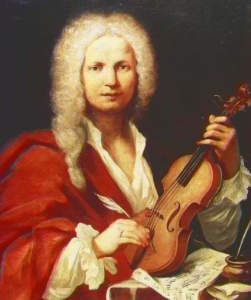
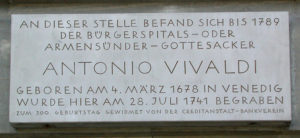 The Final Footprint – On 28 July Vivaldi was buried in a simple grave in a burial ground that was owned by the public hospital fund in Vienna. Vivaldi’s funeral took place at St. Stephen’s Cathedral.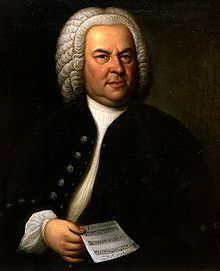
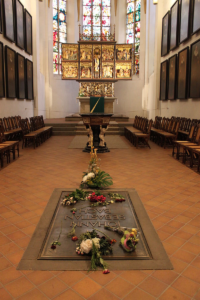 The Final Footprint – Bach was originally buried at Old St. John’s Cemetery in Leipzig. His grave went unmarked for nearly 150 years. In 1894 his coffin was finally discovered and reburied in a vault within St. John’s Church. This building was destroyed by Allied bombing during World War II, and in 1950 Bach’s remains were taken to their present resting place in Leipzig’s Church of St. Thomas.


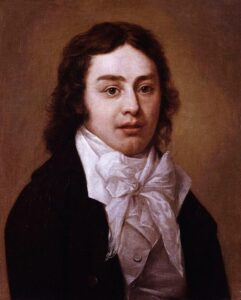 On this day in 1834, English poet, Romantic, literary critic and philosopher who, with his friend William Wordsworth, was a founder of the Romantic Movement in England and a member of the Lake Poets, Samuel Taylor Coleridge died at the home of the Gillman family, where he lived, in Highgate, London at the age of 61 as a result of heart failure compounded by an unknown lung disorder, possibly linked to his use of opium. Born 21 October 1772 in in the country town of Ottery St Mary, Devon, England. Perhaps best known for his poems The Rime of the Ancient Mariner and Kubla Khan, as well as his “Conversation poems”. His critical work, especially on Shakespeare, was highly influential, and he helped introduce German idealist philosophy to English-speaking culture. He coined many familiar words and phrases, including the celebrated “suspension of disbelief”. Throughout his adult life, Coleridge suffered from crippling bouts of anxiety and depression; it has been speculated by some that he suffered from bipolar disorder, a condition not identified during his lifetime. Coleridge suffered from poor health that may have stemmed from a bout of rheumatic fever and other childhood illnesses. He was treated for these concerns with laudanum, which fostered a lifelong opium addiction.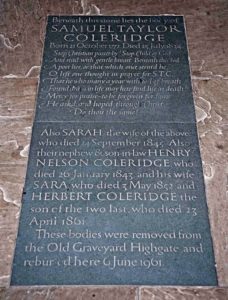
 The Final Footprint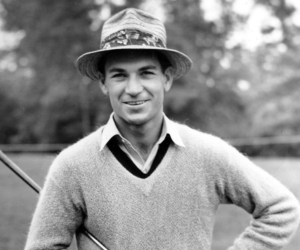
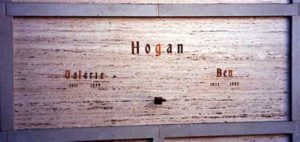 The Final Footprint – Hogan is entombed in the mausoleum at Greenwood Memorial Park in Fort Worth.
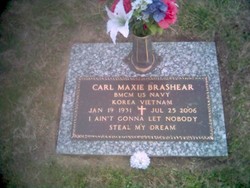 The Final Footprint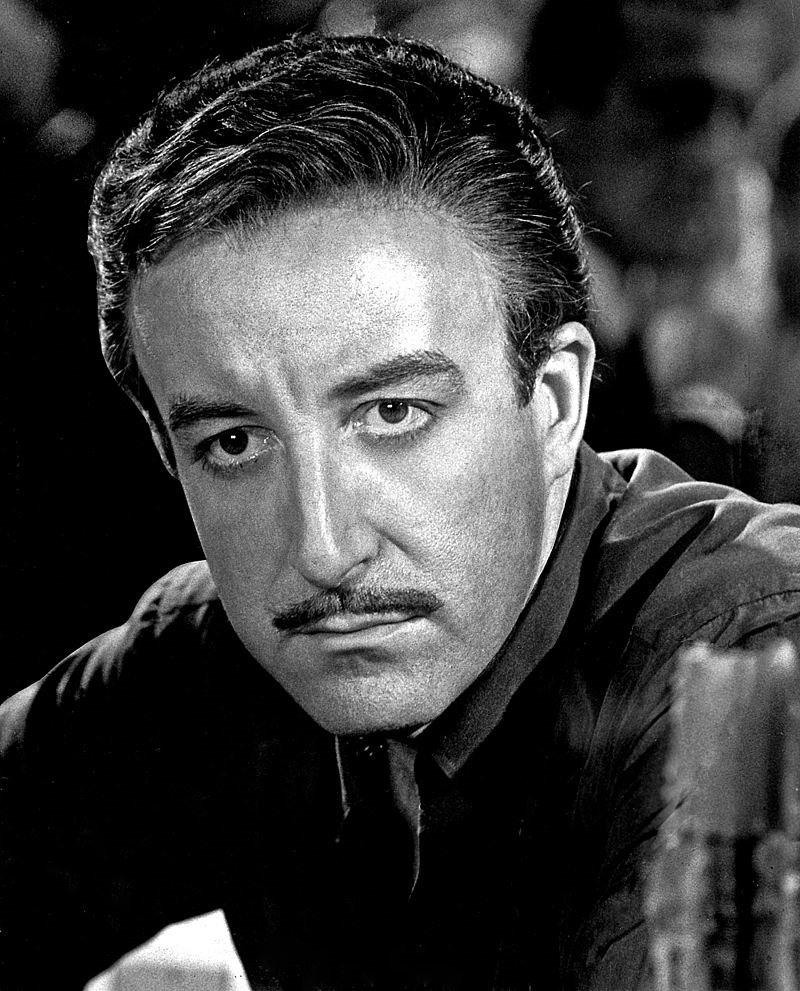
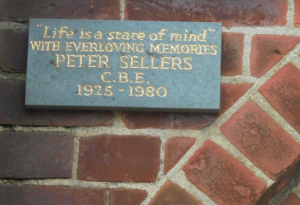
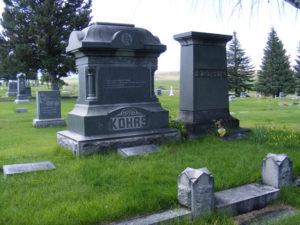 The Final Footprint – Hillcrest Cemetery, Deer Lodge, Montana.