#RIP #OTD in 1885 poet, strongly identified with her native Galicia and the celebration of the Galician language, Rosalía de Castro died from uterine cancer in Padrón, Spain, aged 48. Panteón de Galegos Ilustres, Convent of San Domingos de Bonaval in Santiago de Compostela, Spain
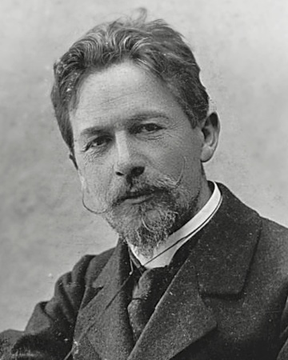 On this day in 1904, playwright and short story writer Anton Chekhov died from tuberculosis at the age of 44 in Badenweiler, German Empire. Born Anton Pavlovich Chekhov on 29 January 1860 in Taganrog, Ekaterinoslav Governorate, Russian Empire. In my opinion, he is among the greatest writers of short fiction in history. His career as a playwright produced four classics, and his best short stories are highly regarded. Along with Henrik Ibsen and August Strindberg, Chekhov is often referred to as one of the three seminal figures in the birth of early modernism in the theatre. Chekhov practiced as a medical doctor throughout most of his literary career: “Medicine is my lawful wife”, he once said, “and literature is my mistress.”
Chekhov renounced the theatre after the reception of The Seagull in 1896, but the play was revived to acclaim in 1898 by Konstantin Stanislavski’s Moscow Art Theatre, which subsequently also produced Chekhov’s Uncle Vanya and premiered his last two plays, Three Sisters and The Cherry Orchard.
Chekhov had at first written stories only for financial gain, but as his artistic ambition grew, he made formal innovations which have influenced the evolution of the modern short story. He made no apologies for the difficulties this posed to readers, insisting that the role of an artist was to ask questions, not to answer them.
in 1882

in country clothes

(left) with brother Nikolai in 1882

family and friends in 1890 (Top row, left to right) Ivan, Alexander, Father; (second row) unknown friend, Lika Mizinova, Masha, Mother, Seryozha Kiselev; (bottom row) Misha, Anton
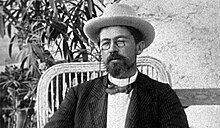
classic look: pince-nez, hat and bow-tie

in 1893
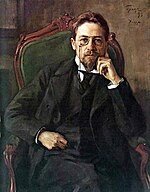
Osip Braz: Portrait of Anton Chekhov

with Leo Tolstoy at Yalta, 1900

with Olga, 1901, on their honeymoon

Anton Chekhov Monument in Alexandrovsk-Sakhalinsky, Russia
On 25 May 1901, Chekhov married Olga Knipper quietly, owing to his horror of weddings. She was a former protegée and sometime lover of Nemirovich-Danchenko whom he had first met at rehearsals for The Seagull. Up to that point, Chekhov, known as “Russia’s most elusive literary bachelor,” had preferred passing liaisons and visits to brothels over commitment. He had once written:
By all means I will be married if you wish it. But on these conditions: everything must be as it has been hitherto — that is, she must live in Moscow while I live in the country, and I will come and see her … I promise to be an excellent husband, but give me a wife who, like the moon, won’t appear in my sky every day.
The letter proved prophetic of Chekhov’s marital arrangements with Olga: he lived largely at Yalta, she in Moscow, pursuing her acting career.
By May 1904, Chekhov was terminally ill with tuberculosis. Mikhail Chekhov recalled that “everyone who saw him secretly thought the end was not far off, but the nearer [he] was to the end, the less he seemed to realise it.” On 3 June, he set off with Olga for the German spa town of Badenweiler in the Black Forest, from where he wrote outwardly jovial letters to his sister Masha, describing the food and surroundings, and assuring her and his mother that he was getting better. In his last letter, he complained about the way German women dressed.
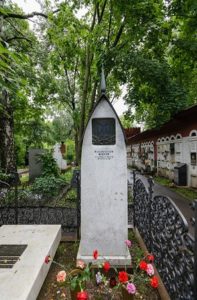 The Final Footprint
Chekhov’s death has become one of the great stories of literary history, retold, embroidered, and fictionalised many times since, notably in the short story “Errand” by Raymond Carver. In 1908, Olga wrote this account of her husband’s last moments:
Anton sat up unusually straight and said loudly and clearly (although he knew almost no German): Ich sterbe (“I’m dying”). The doctor calmed him, took a syringe, gave him an injection of camphor, and ordered champagne. Anton took a full glass, examined it, smiled at me and said: “It’s a long time since I drank champagne.” He drained it and lay quietly on his left side, and I just had time to run to him and lean across the bed and call to him, but he had stopped breathing and was sleeping peacefully as a child …
Chekhov’s body was transported to Moscow in a refrigerated railway car meant for oysters. Some of the thousands of mourners followed the funeral procession of a General Keller by mistake, to the accompaniment of a military band. Chekhov was buried next to his father at the Novodevichy Cemetery, Moscow.
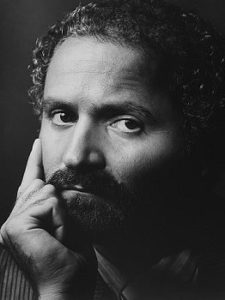 On this day in 1997, fashion designer and founder of Gianni Versace S.p.A., Gianni Versace died from a gunshot wound on the steps of his Miami Beach mansion, the former Casa Casuarina now known as “The Villa By Barton G.”, as he returned from a morning walk on Ocean Drive, at the age of 50. Versace was shot by Andrew Cunanan, who later shot himself, for unknow reasons. Born Gianni Marcus Versace on 2 December 1946, in Reggio Calabria, Italy, where he grew up with his elder brother Santo and younger sister Donatella, along with their father and dressmaker mother, Francesca.
Gianni Versace S.p.A., an international fashion house, produces accessories, fragrances, make-up and home furnishings as well as clothes. He also designed costumes for the theatre and films. Versace met his partner Antonio D’Amico, a model, in 1982. Their relationship lasted until Versace’s murder.
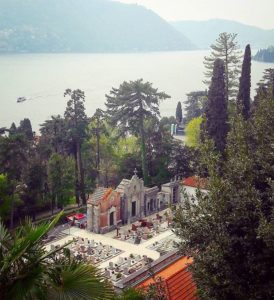 The Final Footprint – Versace’s body was cremated and his cremains were returned to the family’s estate near Cernobbio, Italy, and inurned in the family vault at Moltrasio cemetery near Lake Como. Versace’s brother, Santo, and Jorge Saud were named the new CEOs of Gianni Versace S.p.A. Versace’s sister, Donatella, became the new head of design. In his will, Versace left 50% of his fashion empire to his niece Allegra Versace. Her younger brother, Daniel, inherited Versace’s rare artwork collection. Versace was portrayed by Franco Nero in the 1998 film The Versace Murder, and by Enrico Colantoni in the 2013 Lifetime film House of Versace.
#RIP #OTD in 2012 actress (Gentleman’s Agreement, All About Eve, The Snake Pit, A Letter to Three Wives, High Society) Celeste Holm died at her Manhattan Central Park West apartment, aged 95. Cremation
#RIP #OTD in 2017 actor (North by Northwest; Mission: Impossible; Tucker; Crimes and Misdemeanors; Ed Wood; Rounders), Martin Landau died at UCLA Medical Center in Los Angeles from internal bleeding and heart disease aged 89. Beth David Cemetery in Elmont, New York
Have you planned yours yet?
Follow TFF on twitter @RIPTFF
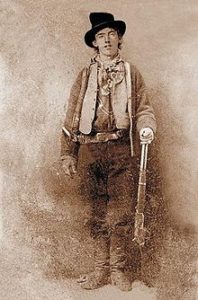
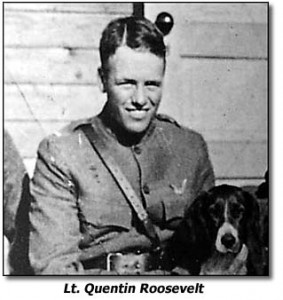
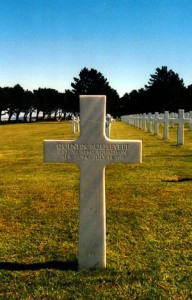 The Final Footprint – Lieutenant Roosevelt was interred by the Germans near Chamery, France where his plane crashed. After his grave came under Allied control, thousands of American soldiers visited it to pay their respects. Lieutenant Roosevelt’s resting place became a shrine and an inspiration to his comrades in arms. The French placed a headstone with the inscription: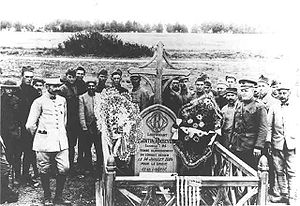
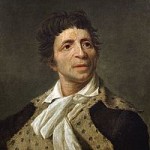 On this day in 1793, physician, political theorist, and scientist, Jean-Paul Marat was murdered in his bathtub in Paris by Charlotte Corday, a Girondist sympathizer. He was 50. His last words were to his wife Simonne, “Aidez-moi, ma chère amie!” (“Help me, my dear friend!”) Born on 24 May 1743 in Boudry, Principality of Neuenburg (Neuchâtel), Prussia (in present-day Canton of Neuchâtel, Switzerland). Perhaps best known for his career in France as a radical journalist and politician during the French Revolution. His journalism became renowned for its fierce tone, uncompromising stance toward the new leaders and institutions of the revolution, and advocacy of basic human rights for the poorest members of society. Marat was one of the most radical voices of the French Revolution. He became a vigorous defender of the sans-culottes, publishing his views in pamphlets, placards and newspapers, including the “L’ami du peuple”, which helped make him their unofficial link with the radical, republican Jacobin group that came to power after June 1793. In his death he became an icon to the Jacobins, a sort of revolutionary martyr, as portrayed in Jacque-Louis David’s famous painting of his death.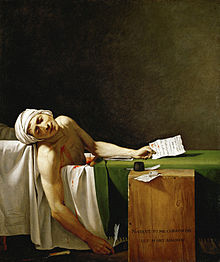
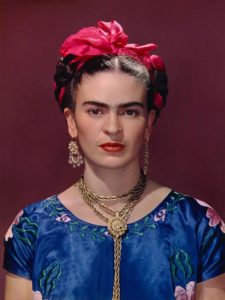 On this day in 1954, painter Frida Kahlo
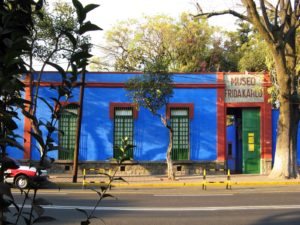 The Final Footprint –
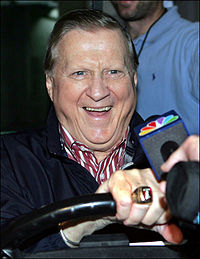 On this day in 2010, the morning of the 2010 Major
  League Baseball All-Star Game, United States Air Force veteran, shipping magnate, entrepreneur and owner of the New York Yankees, "The Boss", George Steinbrenner died of a heart attack at St. Joseph's Hospital in Tampa, Florida, at the age of 80. Born George Michael Steinbrenner III on 4 July 1930 in Rocky River, Ohio. During Steinbrenner's 37-year ownership, beginning in 1973, the longest in club history, the Yankees earned 7 World Series titles and 11 pennants. He received his B.A. from Williams College and his M.A. from Ohio State University. Steinbrenner was married once to Elizabeth Joan Zieg (1956-2010 his death).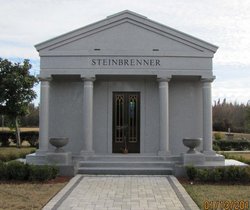

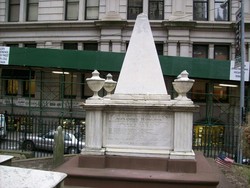 The Final Footprint – Hamilton is entombed in a marble tomb in the graveyard of Trinity Church at Wall Street and Broadway in Lower Manhattan. His epitaph reads; The PATRIOT of incorruptible INTEGRITY. The SOLDIER of approved VALOUR. The STATESMAN of consummate WISDOM; Whose TALENTS and VIRTUES will be admired Grateful Posterity. Long after this MARBLE shall have mouldered into DUST.
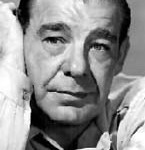 On this day in 1973, the son of famous silent film actor, Lon Chaney, actor Lon Chaney, Jr. died of heart failure at age 67 in San Clemente, California. Born Creighton Tull Chaney on 10 February 1906 in Oklahoma City. Perhaps best known for playing such characters as The Wolf Man, The Mummy, Frankenstein’s Monster and Count Alucard for Universal. He is also notable for portraying Lennie Small in Of Mice and Men. From Warren Zevon’s song “Werewolves of London”; Well, I saw Lon Chaney walking with the Queen, / Doing the Werewolves of London / I saw Lon Chaney, Jr. walking with the Queen / Doing the Werewolves of London.
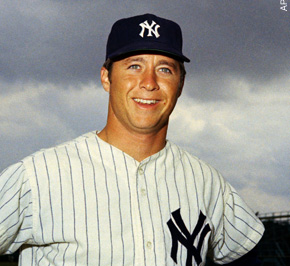 On this day in 2008, baseball player, 5x All-Star, New York Yankee, Bobby Murcer died from brain cancer, surrounded by his family at his home in Oklahoma City at the age of 62. Born Bobby Ray Murcer on 20 May 1946 in Oklahoma City.
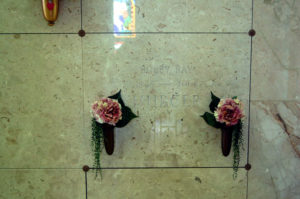 The Final Footprint – Yankees owner George Steinbrenner issued a statement following his death: “Bobby Murcer was a born Yankee, a great guy, very well-liked and a true friend of mine. I extend my deepest sympathies to his wife Kay, their children and grandchildren. I will really miss the guy.” Baseball commissioner Bud Selig eulogized, “All of Major League Baseball is saddened today by the passing of Bobby Murcer, particularly on the eve of this historic All-Star game at Yankee Stadium, a place he called home for so many years. Bobby was a gentleman, a great ambassador for baseball, and a true leader both on and off the field. He was a man of great heart and compassion.” The memorial service for Bobby was held in Edmond, OK on 6 August 2008, at the Memorial Road Church of Christ. Among the some 2,000 attending the memorial were Reggie Jackson, Derek Jeter, Andy Pettitte and Joe Girardi. Also in attendance Diana Munson, widow of Yankee captain Thurman Munson. The August 6 date was 29 years, to the day, since Murcer gave a eulogy at Munson’s funeral and is also the 25th anniversary of Bobby Murcer Day at Yankee Stadium. The uniform worn by Murcer at his final Yankee Stadium Old Timer’s Day appearance in 2007 was presented to his spouse Kay. Murcer is entombed in Rose Hill Mausoleum, in Oklahoma City, in the left side of the building.
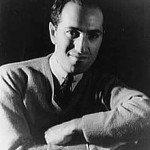 On this day in 1937, composer and pianist, George Gershwin died from a brain tumor at the age of 38 at Cedars Lebanon Hospital in Los Angeles. Born Jacob Gershowitz on 26 September 1898 in Brooklyn. Gershwin’s compositions spanned both popular and classical genres, and his most popular melodies are widely known. Among his best known works are the orchestral compositions Rhapsody in Blue (1924) and An American in Paris (1928), as well as the opera Porgy and Bess (1935). He composed Broadway theatre works with his brother Ira Gershwin and Buddy DeSylva. He moved to Paris to study with Nadia Boulanger, where he began to compose An American in Paris. After returning to New York City, he wrote Porgy and Bess with Ira and the author DuBose Heyward. Porgy and Bess is now considered one of the most important American operas of the twentieth century. Gershwin moved to Hollywood and composed numerous film scores. Gershwin’s compositions have been adapted for use in many films and for television, and several became jazz standards recorded in many variations. Countless celebrated singers and musicians have covered his songs.
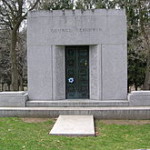 The Final Footprint – Gershwin is entombed in the George Gershwin Private Mausoleum at Westchester Hills Cemetery in Hastings-on-Hudson, New York. His brother Ira was entombed in the mausoleum upon his death, 17 August 1983.
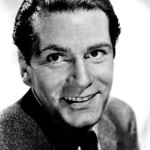 On this day in 1989, actor, director and producer, The Right Honourable, The Lord Olivier, Laurence Olivier died at his home in Steyning, West Sussex, England, from renal failure at the age of 82. Born Laurence Kerr Olivier on 22 May 1907 in Dorking, Surrey, United Kingdom. Olivier became determined early on to master Shakespeare, and eventually came to be regarded as one of the foremost Shakespeare interpreters of the 20th century. His three Shakespeare films as actor-director, Henry V (1944), Hamlet (1948), and Richard III (1955), are among the pinnacles of the Bard at the cinema. Olivier was the youngest actor to be knighted as a Knight Bachelor, in 1947, and the first to be elevated to the peerage two decades later. He married three times, to actresses Jill Esmond (1930 – 1940 divorce), Vivien Leigh (1940 – 1960 divorce) and Joan Plowright (1961 – 1989 his death).
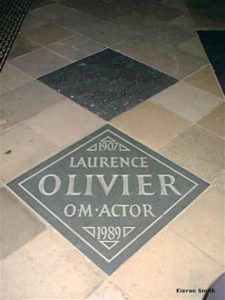 The Final Footprint – He was cremated and his ashes inurned in Poets’ Corner in Westminster Abbey, London. Other notable Final Footprints at Westminster include; Robert Browning, Lord Byron, Geoffrey Chaucer, Charles II, Oliver Cromwell, Charles Darwin, Charles Dickens, Edward III, Edward IV, Edward The Confessor, Elizabeth I, George II, George Friederic Handel, Henry III, Henry V, Henry VII, Stephen Hawking, James VI and I, Samuel Johnson, Ben Jonson, Rudyard Kipling, Henry Wadsworth Longfellow, Mary I, Mary II, Mary Queen of Scots, John Milton, Isaac Newton, Henry Purcell, Richard II, Thomas Shadwell, Edmund Spenser, Lord Alfred Tennyson, Dylan Thomas, and William III.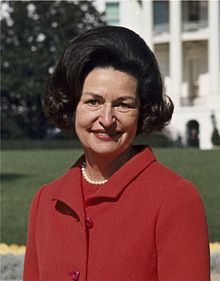
 the United States, entrepreneur, beloved daughter of Texas, Lady Bird Johnson died at her home in West Lake Hills, Texas at the age of 94. Born Claudia Alta Taylor on 22 December 1912 in Karnack, Texas. Throughout her life, she was an advocate for beautification of the nation’s cities and highways and conservation of natural resources and made that her major initiative as First Lady. After first attending the University of Alabama and St. Mary’s junior college in Dallas, she attended the University of Texas at Austin and earned two bachelor’s degrees; in history and journalism, both with honors. On 17 November 1934 she married Lyndon Baines Johnson at St.Mark’s Episcopal Church in San Antonio. They were married until his death in 1973. Lady Bird was instrumental in froming LBJ Holding Company which owned KTBC radio station, KTBC-TV/7, KLBJ-AM, KLBJ-FM and KGSR. Lady Bird was one of the speakers to address the graduates at UT’s Centennial graduation ceremony in May 1983. We wore burnt orange caps and gowns that night. The Goodyear blimp circled the outdoor ceremony. Some of my fondest childhood memories are playing at my cousins’s house in West Lake Hills where Lady Bird would one day own a home.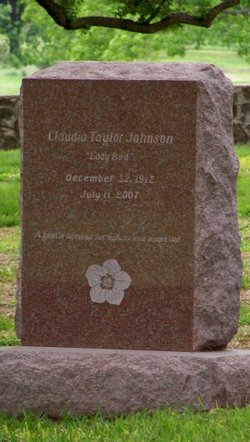
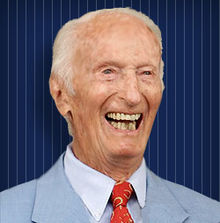 On this day in 2010, United States Navy veteran, public address announcer Bob Sheppard died at his home in Baldwin, New York on July 11, 2010, three months and nine days shy of his 100th birthday. Born Robert Leo Sheppard on 20 October 1910, in Richmond Hill, Queens, New York City. Sheppard was the long-time public address announcer for numerous New York area college and professional sports teams, in particular the MLB New York Yankees (1951–2007), and the NFL New York Giants (1956–2006). Sheppard announced more than 4,500 Yankees baseball games over a period of 56 years, including 22 pennant-winning seasons and 13 World Series championships; he called 121 consecutive postseason contests, 62 games in 22 World Series, and six no-hitters, including three perfect games. Sheppard was also the in-house voice for a half-century of Giants football games, encompassing nine conference championships, three NFL championships (1956, 1986, 1990), and the game often called “the greatest ever played”, the classic 1958 championship loss to Baltimore. His smooth, distinctive baritone and precise, consistent elocution became iconic aural symbols of both the old Yankee Stadium and Giants Stadium. Reggie Jackson famously nicknamed him “The Voice of God”, while Carl Yastrzemski once said, “You’re not in the big leagues until Bob Sheppard announces your name.”
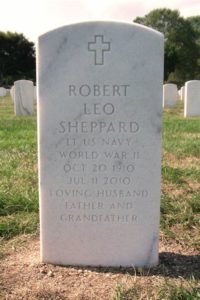 The Final Footprint – Sheppard was interred in Long Island National Cemetery, Farmingdale, New York. In announcing his father’s death, Sheppard’s son Paul said, “I know St. Peter will now recruit him. If you’re lucky enough to go to Heaven, you’ll be greeted by a voice saying, ‘Good afternoon, ladies and gentlemen. Welcome to Heaven!” In 2008, Derek Jeter asked Sheppard to record his at-bat introductions. The recordings have been used to introduce each of Jeter’s home at-bats since the beginning of the 2008 season, and will continue to do so for the rest of his Yankee career. Sheppard said: “It has been one of the greatest compliments I have received in my career of announcing. The fact that he wanted my voice every time he came to bat is a credit to his good judgment and my humility.” A recording of Sheppard was also used to introduce Jeter at the 2010 All-Star Game in Anaheim two days after Sheppard’s death. The Yankees wore a Bob Sheppard commemorative patch on the left sleeve of their home and road jerseys for the remainder of the 2010 season. The Yankees’ first home game after Sheppard’s death, a 5–4 victory over the Tampa Bay Rays on 16 July 2010, was played with an empty PA booth and no public address announcements. On 26 September 2013 a recording of Sheppard’s introduction, followed by Metallica’s “Enter Sandman”, was played as Mariano Rivera stepped to the mound at Yankee Stadium for the final time.
 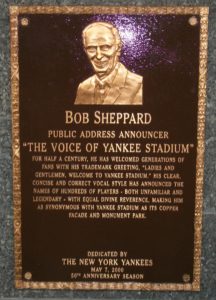 The Yankees dedicated a plaque in his memory for Monument Park at Yankee Stadium. Monument Park is an open-air museum containing a collection of monuments, plaques, and retired numbers honoring distinguished members of the Yankees. Other notable Yankees whose final footprints include memorialization in Monument Park; Mel Allen, Lou Gehrig, Joe DiMaggio, Babe Ruth, George Steinbrenner, Roger Maris, Thurman Munson, Mickey Mantle, Roger Maris, Phil Rizzuto, Billy Martin, and Casey Stengel.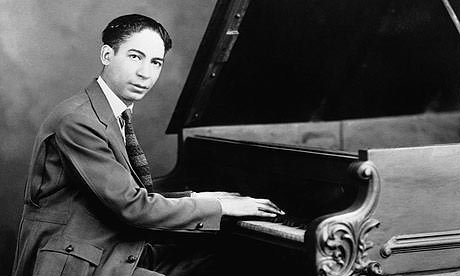
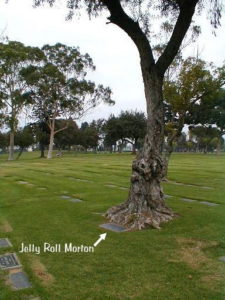
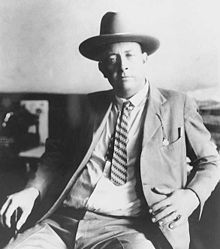

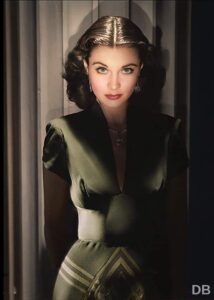
 The Final Footprint – Leigh was cremated at the Golders Green Crematorium in London and her cremains were scattered on the lake at her home, Tickerage Mill, near Blackboys, East Sussex, England. A memorial service was held at St Martin-in-the-Fields, with a final tribute read by actor John Gielgud. GGC was the first crematorium to be opened in London, and one of the oldest crematoria in Britain. The crematorium, the Philipson Family mausoleum, designed by Edwin Lutyens, the wall, along with memorials and gates, the Martin Smith Mausoleum, and Into The Silent Land statue are all Grade II listed buildings. The gardens are included in the National Register of Historic Parks and Gardens. GGC is in Hoop Lane, off Finchley Road, Golders Green, London NW11, ten minutes’ walk from Golders Green tube station. It is directly opposite the Golders Green Jewish Cemetery. The crematorium is secular, accepts all faiths and non-believers; clients may arrange their own type of service or remembrance event and choose whatever music they wish. Other notable cremations at GGC include; Kingsley Amis, Neville Chamberlain, T. S. Eliot, Sigmund Freud, Henry James, Rudyard Kipling, Keith Moon, Peter Sellers, Bram Stoker, H. G. Wells, and Amy Winehouse.