RIP #OTD in 1695 writer, philosopher, composer, Hieronymite nun, The Tenth Muse, The Mexican Phoenix, The Phoenix of America, Juana Inés de la Cruz died after ministering to other nuns stricken during a plague in Mexico City aged 43. Convento de San Jerónimo, Centro, Mexico City
| Ralph Waldo Emerson | |
|---|---|
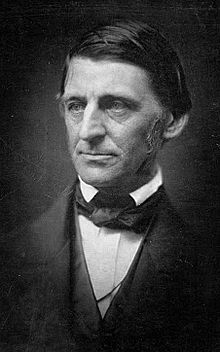 in 1857 |
|
On this day in 1882, essayist, lecturer, philosopher and poet Ralph Waldo Emerson died from pneumonia in Concord, Massachusetts at the age of 78. Born on May 25, 1803 Boston. He led the transcendentalist movement of the mid-19th century. He was seen as a champion of individualism and a prescient critic of the countervailing pressures of society. He disseminated his thoughts through dozens of published essays and more than 1,500 public lectures across the United States.
Emerson gradually moved away from the religious and social beliefs of his contemporaries, formulating and expressing the philosophy of transcendentalism in his 1836 essay “Nature”. Following this work, he gave a speech entitled “The American Scholar” in 1837, which Oliver Wendell Holmes Sr. considered to be America’s “intellectual Declaration of Independence”.
He is one of the key figures of the American romantic movement, and his work has greatly influenced the thinkers, writers and poets that followed him. When asked to sum up his work, he said his central doctrine was “the infinitude of the private man.” Emerson is also well known as a mentor and friend of Henry David Thoreau, a fellow transcendentalist.
Emerson met his first wife, Ellen Louisa Tucker, in Concord, New Hampshire, on Christmas Day, 1827, and married her when she was 18. The couple moved to Boston, with Emerson’s mother, Ruth, moving with them to help take care of Ellen, who was already ill with tuberculosis. Less than two years later, on February 8, 1831, Ellen died, at the age of 20, after uttering her last words: “I have not forgotten the peace and joy”. Emerson was heavily affected by her death and visited her grave in Roxbury daily. In a journal entry dated March 29, 1832, he wrote, “I visited Ellen’s tomb & opened the coffin”.
On January 24, 1835, Emerson wrote a letter to Lydia Jackson proposing marriage. Her acceptance reached him by mail on the 28th. In July 1835, he bought a house on the Cambridge and Concord Turnpike in Concord, Massachusetts, which he named Bush; it is now open to the public as the Ralph Waldo Emerson House.
Emerson changed his wife’s name to Lidian, and would call her Queenie, and sometimes Asia, and she called him Mr. Emerson.
The Final Footprint
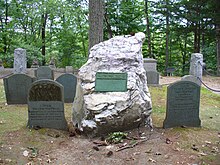
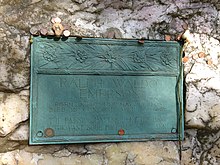
Emerson is buried in Sleepy Hollow Cemetery, Concord, Massachusetts. He was placed in his coffin wearing a white robe given by the American sculptor Daniel Chester French. Other notable final footprints at Sleepy Hollow include; Louisa May Alcott, William Ellery Channing, Nathaniel Hawthorne, and Henry David Thoreau.
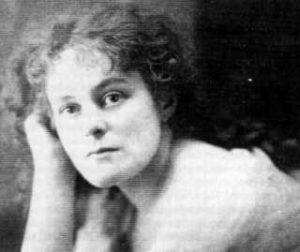 On this day in 1953, English-born Irish revolutionary, feminist, actress, and muse of William Butler Yeats, Maud Gonne died in Clonskeagh, Ireland at the age of 86. Born Edith Maud Gonne on 21 December 1866 in Tongham near Farnham, Surrey, England. She was won over to Irish nationalism by the plight of evicted people in the Land Wars. In 1889, she first met Yeats, who fell in love with her. Gonne in turn, was in love with Lucien Millevoye a French journalist and right-wing politician with whom she would have two children. Many of Yeats’s poems are inspired by her, or mention her. He wrote the plays The Countess Cathleen and Cathleen Ní Houlihan for her. His poem Aedh wishes for the Cloths of Heaven ends with a reference to her:
I have spread my dreams under your feet;
Tread softly because you tread on my dreams.
Few poets have celebrated a woman’s beauty to the extent Yeats did in his lyric verse about Gonne. From his second book to Last Poems, she became the Rose, Helen of Troy (in No second Troy), the Ledaean Body (Leda and the Swan and Among School Children), Cathleen Ní Houlihan, Pallas Athene and Deirdre. Gonne turned down several proposals from Yeats before marrying John MacBride with whom she would have a son, Seán MacBride. She and MacBride would separate in 1904. Gonne and Yeats reportedly finally consummated their relationship in Paris in 1908. Yeats’ long years of fidelity, so to speak, were rewarded at last, although Yeats would later remark that “the tragedy of sexual intercourse is the perpetual virginity of the soul.” The relationship did not develop into a new phase after their night together. Soon afterwards, Gonne wrote to the poet indicating that despite the physical consummation, they could not continue as they had been: “I have prayed so hard to have all earthly desire taken from my love for you and dearest, loving you as I do, I have prayed and I am praying still that the bodily desire for me may be taken from you too.” By January 1909, Gonne was sending Yeats letters praising the advantage given to artists who abstain from sex. Nearly twenty years later, Yeats recalled the night with Gonne in his poem “A Man Young and Old”:
My arms are like the twisted thorn
And yet there beauty lay;
The first of all the tribe lay there
And did such pleasure take;
She who had brought great Hector down
And put all Troy to wreck.
Gonne published her autobiography in 1938, titled A Servant of the Queen.
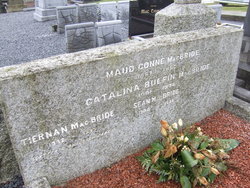 The Final Footprint – Gonne is interred in Glasnevin Cemetery in Dublin, the largest nondenominational cemetery in Ireland. Her grave is marked by a simple upright stone marker. Upon their deaths, her son, his wife and their son were interred next to her. Michael Collins is also interred at Glasnevin.
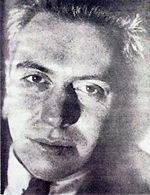 On this day in 1932, poet Hart Crane likely died by suicide by jumping overboard from the steamship Orizaba, in the Gulf of Mexico, at the age of 32. Born Harold Hart Crane on 21 July 1899 in Garrettsville, Ohio. Finding both inspiration and provocation in the poetry of T. S. Eliot, Crane wrote modernist poetry that was difficult, highly stylized, and ambitious in its scope. In perhaps his most ambitious work, The Bridge, Crane sought to write an epic poem, in the vein of The Waste Land, that expressed a more optimistic view of modern, urban culture than the one that he found in Eliot’s work. Crane never married.
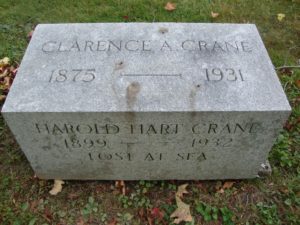 The Final Footprint – Although evidently, Crane had been drinking heavily and left no suicide note, witnesses believed his intentions to be suicidal, as several reported that he exclaimed “Goodbye, everybody!” before throwing himself overboard. His body was never recovered. A marker on his father’s tombstone in Park Cemetery, Garrettsville includes the inscription, “Harold Hart Crane 1899–1932 lost at sea”.
In the years following his death Crane has been hailed by playwrights, poets, and literary critics alike, as being one of the most influential poets of his generation. Crane is the subject of The Broken Tower, a 2011 American student film by the actor James Franco who wrote, directed, and starred in the film which was the Master thesis project for his MFA in filmmaking at New York University. He loosely based his script on Paul Mariani’s 1999 nonfiction book The Broken Tower: A Life of Hart Crane. Beyond poetry, Crane’s suicide inspired several works of art by noted artist Jasper Johns, including “Periscope,” “Land’s End,” and “Diver,” the “Symphony for Three Orchestras” by Elliott Carter (inspired by the “Bridge”) and the painting by Marsden Hartley “Eight Bells’ Folly, Memorial for Hart Crane.”
| Al Hirt | |
|---|---|
 in 1966 |
|
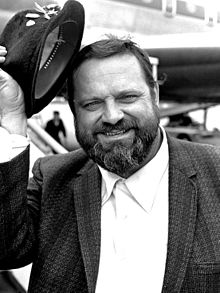
On this day in 1999, trumpeter and bandleader, Jumbo, The Round Mound of Sound, The King, Al Hirt died from liver failure in New Orleans at the age of 76. Born Alois Maxwell Hirt on November 7, 1922 in New Orleans. Perhaps best remembered for his million-selling recordings of “Java” and the accompanying album Honey in the Horn (1963), and for the theme song to The Green Hornet. Hirt was inducted into The Louisiana Music Hall of Fame in November 2009.
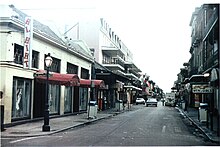
Al Hirt club on the corner of Bourbon Street and St Louis in the French Quarter, 1977
In 1962 Hirt opened his own club on Bourbon Street in the French Quarter, which he ran until 1983. He also became a minority owner in the NFL expansion New Orleans Saints in 1967.
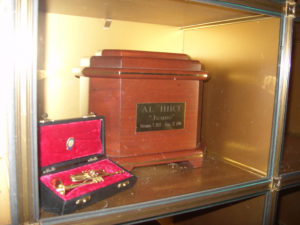
The Final Footprint
Hirt’s cremated remains are inurned at Metairie Cemetery in New Orleans. Other notable final footprints at Metairie include; Pete Fountain, Jim Garrison, Louis Prima, and Stan Rice.
#RIP #OTD in 2002 the inventor of the Barbie doll, co-founder of Mattel with husband Elliot, the company’s first president from 1945 to 1975, Ruth Handler died from complications during surgery for colon cancer in Century City, Los Angeles aged 85. Hillside Memorial Park, Culver City CA
Have you planned yours yet?
Follow TFF on Twitter @RIPTFF
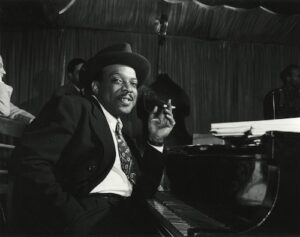 On this day in 1984, jazz pianist, bandleader, and composer Count Basie died of pancreatic cancer in Hollywood, Florida at the age of 79. Born William James Basie on August 21, 1904 in Red Bank, New Jersey. His mother taught him to play the piano and he started performing in his teens. Dropping out of school, he learned to operate lights for vaudeville and to improvise accompaniment for silent films at a local movie theater in his home town of Red Bank, New Jersey. By age 16, he increasingly played jazz piano at parties, resorts and other venues. In 1924, he went to Harlem, where his performing career expanded; he toured with groups to the major jazz cities of Chicago, St. Louis and Kansas City.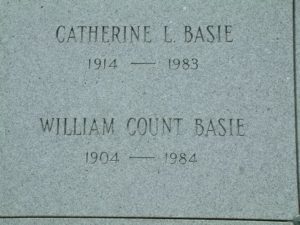
 On this day in 1989, legendary comedian, film, television, stage and radio actress, model, film and television executive, multiple Emmy winner, Lucille Ball died Cedars-Sinai Medical Center in Los Angeles from an aortic aneurysm at the age of 77. Born Lucille Désirée Ball on 6 August 1911 in Jamestown, New York. Perhaps best known as the star of the sitcom I Love Lucy, co-starring her then husband Desi Arnaz as Ricky Ricardo and Vivian Vance and William Frawley as Ethel and Fred Mertz, the Ricardo’s landlords and friends. Ball met and eloped with Cuban bandleader Arnaz in 1940. Ball and Arnaz founded Desilu Productions and Desilu Studios which was home to I Love Lucy and other hit television shows including; Star Trek, The Andy Griffith Show, Mission: Impossible, The Dick Van Dyke Show, The Lucy Show, My Three Sons, Family Affair, The Untouchables, I Spy, Mannix, Gomer Pyle, USMC, and That Girl. On 17 July 1951, almost 40 years old, Ball gave birth to their first child, Lucie Désirée Arnaz. A year and a half later, Ball gave birth to their second child, Desiderio Alberto Arnaz IV, known as Desi Arnaz, Jr. Ball and Arnaz divorced on 4 May 1960. Her second marriage was to Gary Morton (1961-1989 her death).
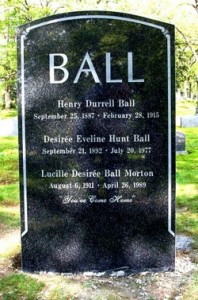 The Final Footprint – Ball was cremated and her cremated remains were initially interred in Forest Lawn Hollywood Hills Cemetery in Los Angeles. In 2002, her children had her cremated remains moved to the Ball family plot at Lake View Cemetery in Jamestown, New York where Ball’s mother, father, brother, and grandparents are buried. Her grave and her parent’s is marked by a large black granite upright marker with the inscription; “You’ve Come Home”.
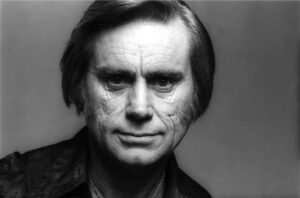 On this day in 2013, United States Marine Corp veteran, musician and singer, Thumper Jones, No Show Jones, The Possum, George Jones died, aged 81, from hypoxic respiratory failure in Nashville. Born George Glenn Jones on September 12, 1931 in Saratoga, Texas. He achieved fame for his long list of hit records, including perhaps his best known song “He Stopped Loving Her Today”, as well as his distinctive voice and phrasing. Waylon Jennings expressed his opinion on Jones in his song “It’s Alright”: “If we all could sound like we wanted to, we’d all sound like George Jones.” In 1959, Jones recorded “White Lightning,” written by J. P. Richardson, which launched his career as a singer. During his career, Jones had more than 150 hits, both as a solo artist and in duets with other artists.He married his first wife, Dorothy Bonvillion, in 1950, and was divorced in 1951. He married Shirley Ann Corley in 1954. His second marriage ended in divorce in 1968; he married fellow country music singer Tammy Wynette a year later. After his divorce from Wynette in 1975, Jones married his fourth wife, Nancy Sepulvado, in 1983 and became sober for good in 1999.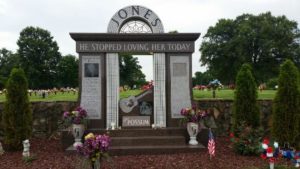
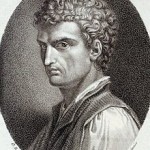 On this day in 1472, Italian author, artist, architect, poet, priest, linguist, philosopher, cryptographer, polymath, Renaissance man, Leon Battista Alberti died in Rome at the age of 68. Born in Genoa on 14 February 1404. Although he is often characterized as an “architect” exclusively, as art historian James Beck has observed, “to single out one of Leon Battista’s ‘fields’ over others as somehow functionally independent and self-sufficient is of no help at all to any effort to characterize Alberti’s extensive explorations in the fine arts.” Alberti’s life was described in Giorgio Vasari‘s Vite de’ più eccellenti pittori, scultori, e architettori or ‘Lives of the most excellent painters, sculptors and architects’.
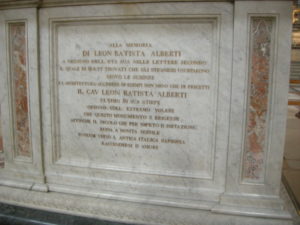 The Final Footprint – Entombment in Basilica di Santa Croce. Other notable final footprints at Santa Croce include; Ugo Foscolo, Galileo Galilei, Niccolò Machiavelli, Michelangelo, and Gioachino Rossini.
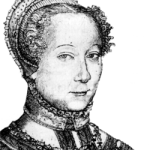 On this day in 1566, La Belle Cordière, (The Beautiful Ropemaker), French poet of the Renaissance, Louise Labé died in Parcieux-en-Dombes, France at the age of about 44. Born in 1520 or 1522 in Lyon. Her Œuvres include two prose works and poetry. Her poetry consists of three elegies in the style of the Heroides of Ovid, and twenty-four sonnets that draw on the traditions of Neoplatonism and Petrarchism. The Debat, the most popular of her works in the sixteenth century, inspired one of the fables of Jean de la Fontaine. The sonnets, remarkable for their frank eroticism, have been her most famous works following the early modern period.
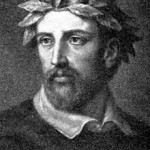 On this day in 1595, Italian poet Torquato Tasso died at the convent of Sant’Onofrio in Rome at the age of 51. Born in Sorrento, Kingdon of Naples on 11 March 1544. Perhaps best known for his poem La Gerusalemme liberata (Jerusalem Delivered, 1580), in which he depicts a highly imaginative version of the combats between Christians and Muslims at the end of the First Crusade, during the siege of Jerusalem. He suffered from mental illness and died a few days before he was due to be crowned as the king of poets by the Pope. Until the beginning of the 19th century, Tasso remained one of the most widely read poets in Europe.
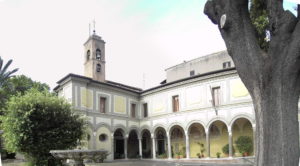 The Final Footprint – Tasso is entombed in Sant’Onofrio.
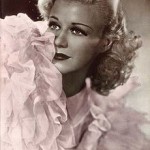 On this day in 1995, Academy Award-winning actress, singer and dancer, Ginger Rogers died in Rancho Mirage, California of congestive heart failure at the age of 83. Born Virginia Catherine McMath on 16 July 1911 in Independence, Missouri. This year, 2011, will mark the 100th anniversary of her birth. Best known for her role as Fred Astaire’s romantic interest and dancing partner in a series of ten Hollywood musical films that revolutionized the genre. She won the Academy Award for Best Actress for her performance in Kitty Foyle (1940). When Rogers was nine years old, her mother Lela married John Logan Rogers. They lived in Fort Worth, Texas. Rogers reportedly dated Howard Hughes and even turned down his proposal. Rogers was married five times; Jack Pepper (1929-1931 divorce), Lew Ayres (1934-1941 divorce), Jack Briggs (1943-1949 divorce), Jacques Bergerac (1953-1957 divorce), and William Marshall (1961-1969 divorce).
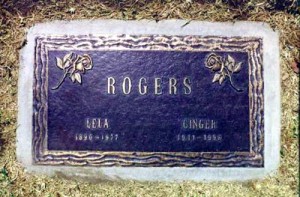 The Final Footprint – Rogers was cremated and her cremains were interred next to her mother’s, and just a short distance from Astaires’s grave, in Oakwood Memorial Park in Chatsworth, California. Another notable final footprint at Oakwood is that of Gloria Grahame .
 On this day in 1731,
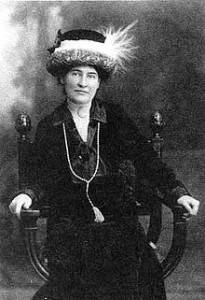 On this day in 1947, author Willa Cather died of a cerebral hemorrhage at the age of 73 in her home at 570 Park Avenue in Manhattan. Born Wilella Sibert Cather on 7 December 1873 on her maternal grandmother’s farm in the Back Creek Valley near Winchester, Virginia. Perhaps best known for her novels of frontier life on the Great Plains, in works such as O Pioneers!, My Ántonia, and The Song of the Lark. In 1923 she was awarded the Pulitzer Prize for One of Ours (1922), a novel set during World War I. Cather grew up in Nebraska and graduated from the University of Nebraska. She lived and worked in Pittsburgh for ten years. At the age of 33 she moved to New York, where she lived for the rest of her life. Cather never married.
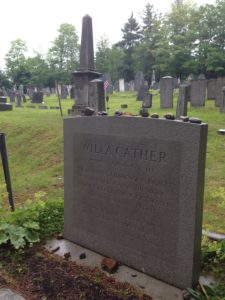 The Final Footprint – Cather was buried in the Old Burying Ground, behind the Jaffrey Center Meeting House in Jaffrey, New Hampshire. Her grave site, which she shares with her long-time friend Edith Wilson, is at the southwest corner of the graveyard. She had first visited Jaffrey in 1917 with Isabelle McClung, staying at the Shattuck Inn, where she came late in life for the seclusion necessary for her writing. The inscription on her tombstone reads:
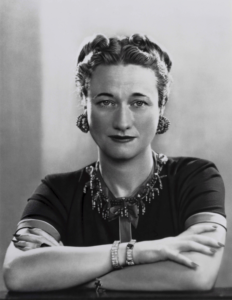 On this day in 1986, the woman who inspired a man to give up a kingdom, The Duchess of Windsor, Wallis Simpson died at her home in the Bois de Boulogne, Paris, age 89. Born Bessie Wallis Warfield on 19 June 1896 in Blue Ridge Summit, Pennsylvania. Wallis met Thelma, Lady Furness, the then-mistress of Edward, Prince of Wales, who would introduce her to the Prince on 10 January 1931. The Prince was the eldest son of King George V and Queen Mary, and heir apparent to the throne. Wallis allegedly became the Prince’s mistress in December 1933. By 1934, the Prince was clearly besotted with Wallis. There was just on small obstacle on their road to ever after; she was still married. To her second husband! Many people believed Wallis was politically, socially and morally unsuitable as a prospective consort and that she was a woman of limitless ambition who was pursuing Edward because of his wealth and position. On 20 January 1936, George V died and Edward ascended the throne as Edward VIII. The monarch of the United Kingdom is Supreme Governor of the Church of England. At the time of the proposed marriage, and until 2002, the Church of England did not permit the re-marriage of divorced people with living ex-spouses. Constitutionally, the King was required to be in communion with the Church of England. The King consulted with the Prime Minister, Stanley Baldwin, on a way to marry Wallis and keep the throne, but it became apparent that Baldwin and the Prime Ministers of Australia and South Africa would not approve the marriage. To avoid a constitutional crisis, the King signed the Instrument of Abdication on 10 December 1936, in the presence of his three surviving brothers, the Duke of York (who would ascend the throne the following day as George VI), the Duke of Gloucester and the Duke of Kent. The next day Edward made an address to the people saying; “I have found it impossible to carry the heavy burden of responsibility, and to discharge my duties as King as I would wish to do, without the help and support of the woman I love.” Wallis and Edward married one month later on 3 June 1937 at the Château de Candé, Monts, France. The date would have been King George V’s 72nd birthday. No member of the British Royal Family attended. The marriage produced no children. Her previous two husbands were, Earl Winfield Spencer, Jr. (1916-1927 divorce) and Ernest Aldrich Simpson (1928-1937 divorce). I am not sure if there is any evidence to prove whether Wallis really loved Edward or whether she was after the throne. So, I suppose ther are two ways to look at Wallis and Edward. The cynical view being; she was an ambitious woman who got what she deserved, her prince but not her king. The romantic view of course is that there is a happy ever after. Who needs a throne when one has love? Perhaps a clue can be found in what Wallis reportedly said: “You have no idea how hard it is to live out a great romance.” Is this a classic example of: Be careful what you wish for; you just might get it!
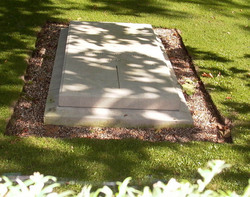 The Final Footprint – Wallis is interred next to Edward in the Royal Burial Grounds at Frogmore in Windsor, England. Her grave is marked by a full ledger marble marker.
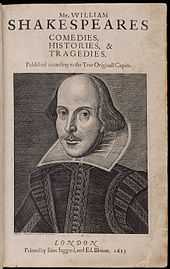 On this day in 1616, poet and playwright, William Shakespeare died in Stratford-upon-Avon, Warwickshire, England at the age of 52. Born in Stratford-upon-Avon and baptised there on 26 April 1564. His actual birthdate remains unknown, but is traditionally observed on 23 April, St George’s Day, which if right, would have him dying on the day he was born. In my opinion, Shakespeare is the greatest writer in the English language and the world’s pre-eminent dramatist. Few records of Shakespeare’s private life survive, which has fueled considerable speculation about his life including whether the works attributed to him were written by others. Shakespeare was respected in his own day, but his reputation did not rise to its present heights until the 19th century. The Romantics, in particular, acclaimed Shakespeare’s genius, and the Victorians worshipped Shakespeare with a reverence that George Bernard Shaw called “bardolatry.” Shakespeare was married to Anne Hathaway (1582-1616 his death). I am a big, literally and figuratively, fan of the man. His collected works would clearly make my list of a dozen favorite books. My favorite plays are his tragedies; Romeo and Juliet, Hamlet, King Lear, and Macbeth. I often quote him in my writing and speech. A few of the best;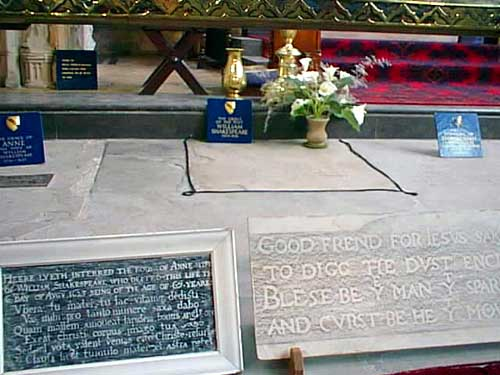
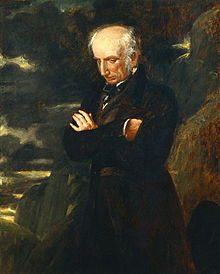 On this day in 1850, Romantic poet, William Wordsworth died by aggravating a case of pleurisy at the age of 80 in Cumberland. Born on 7 April 1770 in Wordsworth House in Cockermouth, Cumberland, part of the scenic region in northwest England, the Lake District. With his friend, Samuel Taylor Coleridge, Wordsworth helped to launch the Romantic Age in English literature with their 1798 joint publication Lyrical Ballads. Wordsworth’s magnum opus is generally considered to be The Prelude, a semiautobiographical poem of his early years which he revised and expanded a number of times. It was posthumously titled and published, prior to which it was generally known as “the poem to Coleridge”. Wordsworth was Britain’s Poet Laureate from 1843 until his death in 1850.
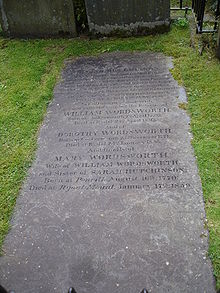 The Final Footprint – Wordsworth was buried at St. Oswald’s church in the village of Grasmere, in the Lake District, Cumbria, England. It is an active Anglican parish church in the deanery of Windermere, the archdeaconry of Westmorland and Furness, and the diocese of Carlisle. The church has been designated by English Heritage as a Grade I listed building. It is notable for its associations with Wordsworth and his family, and for its annual ceremony of rushbearing.
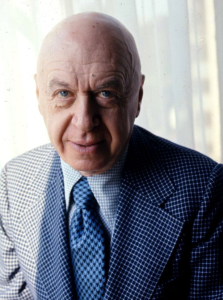 On this day in 1986, theatre and film director Otto Preminger died


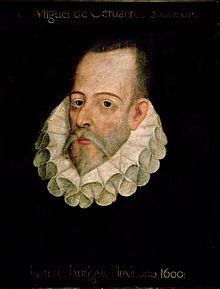 On this day in 1616, soldier, novelist, poet and playwright, El Príncipe de los Ingenios (“The Prince of Wits”), Miguel de Cervantes died in Madrid at the age of 68. Born Miguel de Cervantes Saavedra, presumably, in Alcalá de Henares, a Castilian city near Madrid, on 29 September (the feast day of Saint Michael the Archangel) 1547. His magnum opus, Don Quixote, in my opinion, the first modern European novel, is a classic of Western literature, and is amongst the best works of fiction ever written. His influence on the Spanish language has been so great that the language is often called la lengua de Cervantes (“the language of Cervantes”). In 1585, Cervantes published a pastoral novel named La Galatea. Because of financial problems, he worked as a purveyor for the Spanish Armada, and later as a tax collector. In 1597, discrepancies in his accounts of three years previous landed him in the Crown Jail of Seville. In 1605, he was in Valladolid when the immediate success of the first part of his Don Quixote, published in Madrid, signaled his return to the literary world. In 1607, he settled in Madrid, where he lived and worked until his death. During the last 9 years of his life, Cervantes solidified his reputation as a writer; he published the Novelas ejemplares (Exemplary Novels) in 1613, the Journey to Parnassus (Viaje al Parnaso) in 1614, and in 1615, the Ocho comedias y ocho entremeses and the 2nd part of Don Quixote.
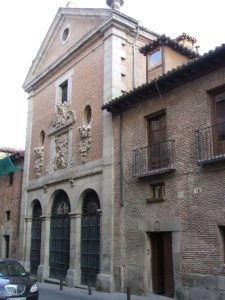 The Final Footprint – In accordance with Cervantes’ will, he was buried in the neighboring convent of Trinitarian nuns, in central Madrid. According to the English newspaper The Guardian, his “bones went missing in 1673 when building work was done at the convent. They are known to have been taken to a different convent and were returned later.” Don Quixote has been the subject of a variety of works in other fields of art, including operas by the Italian composer Giovanni Paisiello, the French Jules Massenet, and the Spanish Manuel de Falla, a Russian ballet by the Russian-German composer Ludwig Minkus, a tone poem by the German composer Richard Strauss, a German film (1933) directed by G. W. Pabst, a Soviet film (1957) directed by Grigori Kozintsev, a 1965 ballet (no relation to the one by Minkus) with choreography by George Balanchine, an American musical – Man of La Mancha (1965) – by Dale Wasserman, Mitch Leigh, and Joe Darion, which was made into a film in 1972, directed by Arthur Hiller, and a song by Brazilian tropicalia-pioneers Os Mutantes.
 The Final Footprint



 The Final Footprint
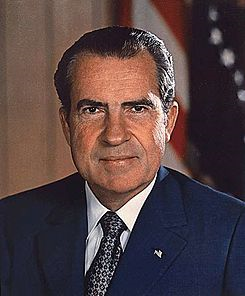 On this day in 1994, U. S. Navy veteran, U. S. Senator from California, 36th Vice President of the U. S., 37th President of the U. S., author Richard Milhous Nixon died from a stroke at New York Hospital-Cornell Medical Center in Manhattan at the age of 81. Born 9 January 1913 in Yorba Linda, California. He graduated from Whittier College in Whittier, California and received his law degree from Duke University. Nixon said “I always remember that whatever I have done in the past or may do in the future, Duke University is responsible in one way or another.” Nixon was married to Thelma Catherine “Pat” Ryan (1940-1993 her death). He served as Vice President during both of President Dwight D. Eisenhower’s terms in office. Nixon and his running mate, Henry Cabot Lodge, Jr. lost the 1960 presidential election to John F. Kennedy and his running mate Lyndon Baines Johnson. He lost the 1962 governor of California election to Pat Brown. Nixon again ran for president, with Spiro Agnew as his running mate, in 1968 this time defeating Vice President Hubert H. Humphrey. He and Agnew ran for reelection in 1972 winning in a landslide over George McGovern and Sargent Shriver (JFK‘s brother-in-law and father of Maria Owings Shriver Schwarzenegger). On 10 October 1973, Vice President Agnew resigned, amid charges of bribery, tax evasion and money laundering from his tenure as Maryland’s governor. Nixon chose Gerald Ford, Republican Minority Leader of the House of Representatives, to replace Agnew. Nixon resigned the office of the presidency on 9 August 1974 over the Nixon administration’s involvement and subsequent cover-up of the break-in to Democratic party headquarters at the Watergate Hotel in Washington, D.C. on 17 June 1972. During the subsequent investigation, Nixon said during a 17 November 1973 televised question and answer session with the press; “People have got to know whether or not their President is a crook. Well, I’m not a crook. I’ve earned everything I’ve got.” Ford took the oath of office the day Nixon resigned becoming the 38th POTUS. Ford selected Nelson Rockefeller to fill the vice presidency. On 8 September 1974, Ford granted Nixon a “full, free, and absolute pardon”. This ended any possibility of an indictment. Nixon then released a statement: “I was wrong in not acting more decisively and forthrightly in dealing with Watergate… No words can describe the depths of my regret and pain at the anguish of my mistakes over Watergate have caused the nation and presidency, a nation I so deeply love and an institution I so greatly respect.” Nixon would spend the remaining 20 years of his life rebuilding his reputation as a world statesman and adviser on foreign affairs to his presidential successors.
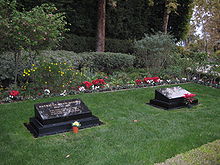 The Final Footprint – Nixon is interred next to his wife Pat at the Richard Nixon Library and Birthplace in Yorba Linda. His grave is marked by an upright slant granite marker and features the inscription; “THE GREATEST HONOR HISTORY CAN BESTOW IS THE TITLE OF PEACEMAKER.” At his funeral, eulogies were delivered by President Bill Clinton, former Secretary of State Henry Kissinger, Senate Minority Leader Bob Dole, California Governor Pete Wilson, and the Reverend Billy Graham. In attendance were former Presidents Ford, Jimmy Carter, Ronald Reagan, George H. W. Bush and their respective first ladies. In keeping with his wishes, his funeral was not a full state funeral. Nixon has been portrayed in multiple films and has been the subject of several books. The films include; Oliver Stone’s Nixon (1995) starring Anthony Hopkins and Ron Howard’s Frost/Nixon (2008) starring Frank Langella which received five Oscar nominations; Best Picture, Best Director and Best Actor.
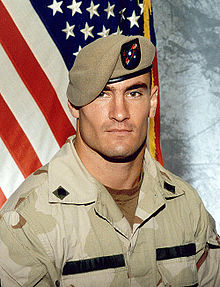 On this day in 2004, Arizona State Sun Devil, pro football player and United States Army Ranger, Pat Tillman died in the mountains of Afghanistan as a result of a friendly fire incident. Born Patrick Daniel Tillman on 6 November 1976, in Fremont, California. Tillman left his professional career and enlisted in the United States Army in June 2002 in the aftermath of the September 11 attacks. His service in Iraq and Afghanistan, and subsequent death, were the subject of much media attention. Tillman served several tours in combat before he died. At first, the Army reported that Tillman had been killed by enemy fire. Controversy ensued when the Pentagon notified the Tillman family that he had died as a result of a friendly fire incident. Tillman’s family and other critics allege that the Department of Defense delayed the disclosure for weeks after Tillman’s memorial service out of a desire to protect the image of the U.S. armed forces.
 On this day in 1142, medieval French scholastic philosopher, theologian and preeminent logician, composer Peter Abelard died in the priory of St. Marcel, near Chalon-sur-Saone at the age of 62 or 63. Born Pierre le Pallet, c1079 in Le Pallet, near Nantes, in Brittany. Perhaps best known for his legendary affair with and love for Héloïse d’Argenteuil. The Chambers Biographical Dictionary describes him as “the keenest thinker and boldest theologian of the 12th Century.” Heloise lived within the precincts of Notre-Dame, under the care of her uncle, the secular canon Fulbert. She was remarkable for her knowledge of classical letters, which extended beyond Latin to Greek and Hebrew. Abélard sought a place in Fulbert’s house, and then in 1115 or 1116 began an affair with Héloïse. The affair interfered with his career, and Abélard himself boasted of his conquest. Once Fulbert found out, he separated them, but they continued to meet in secret. Héloïse became pregnant and was sent by Abélard to be looked after by his family in Brittany, where she gave birth to a son whom she named Astrolabe after the scientific instrument. Abélard proposed a secret marriage so as not to mar his career prospects. Héloïse initially opposed it, but the couple were married. When Fulbert publicly disclosed the marriage, and Héloïse denied it, Abelard sent Héloïse to the convent at Argenteuil, where she had been brought up, in order to protect her from her uncle. Heloise dressed as a nun and shared the nun’s life, though she was not veiled. Héloïse sent letters to Abélard, questioning why she must submit to a religious life for which she had no calling. Fulbert, most probably believing that Abélard wanted to be rid of Héloïse by forcing her to become a nun, arranged for a band of men to break into Abelard’s room one night and castrate him, effectively ending his romantic career. In reaction, Abelard decided to become a monk at the monastery of St Denis, near Paris. As if the story could not get weirder…
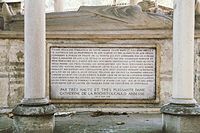 The Final Footprint – Abelard was first buried at St. Marcel, but his remains were soon carried off secretly to the Paraclete, and given over to the loving care of Héloïse, who in time came herself to rest beside him in 1163. The bones of the pair were moved more than once afterwards, but they were preserved even through the vicissitudes of the French Revolution, and now are presumed to lie in the well-known tomb in Père Lachaise Cemetery in eastern Paris. The transfer of their remains there in 1817 is considered to have considerably contributed to the popularity of that cemetery, at the time still far outside the built-up area of Paris. By tradition, lovers or lovelorn singles leave letters at the crypt, in tribute to the couple or in hope of finding true love. However, this chain of events is disputed. The Oratory of the Paraclete claims Abélard and Héloïse are buried there and that what exists in Père-Lachaise is merely a monument, or cenotaph. Others believe that while Abelard is buried in the tomb at Père-Lachaise, Heloïse’s remains are elsewhere. Other notable Final Footprints at Père Lachaise include; Guillaume Apollinaire, Honoré de Balzac, Jean-Dominique Bauby, Georges Bizet, Maria Callas, Chopin, Colette, Auguste Comte, Jean-Baptiste-Camille Corot, Max Ernst, Molière, Jim Morrison, Édith Piaf, Camille Pissarro, Marcel Proust, Sully Prudhomme, Gioachino Rossini, Georges-Pierre Seurat, Simone Signoret, Gertrude Stein, Dorothea Tanning, Alice B. Toklas, Oscar Wilde, and Richard Wright.
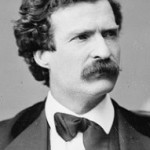 On this day in 1910, author and humorist, Mark Twain died of a heart attack in Redding, Connecticut at the age of 74. Born Samuel Langhorne Clemens on 30 November 1835 in Florida, Missouri. Perhaps most noted for his novels, The Adventures of Tom Sawyer (1876), and its sequel, Adventures of Huckleberry Finn (1885). Ernest Hemingway said “All modern American literature comes from” Huckleberry Finn. William Faulkner called Twain “the father of American literature.” Jimmy Buffett included Twain’s Following the Equator (1869) on his “baker’s dozen of books I would have to take to a desert island.” Twain was a steamboat pilot on the Mississippi and took his pen name from the riverboat measurement term “mark twain” or two fathoms (12 feet). Two fathoms, a depth indicating safe water for passage of boat, was measured on the sounding line. The term twain is an archaic term for “two.” The riverboatman’s cry was by the mark twain, meaning according to the mark on the line, the depth is two fathoms and it is safe to pass. Twain married Olivia Langdon (1870-1904 her death). In 1909, Twain was quoted as saying: “I came in with Halley’s Comet in 1835. It is coming again next year, and I expect to go out with it. It will be the greatest disappointment of my life if I don’t go out with Halley’s Comet. The Almighty has said, no doubt: ‘Now here are these two unaccountable freaks; they came in together, they must go out together.” His prediction was accurate and he got his wish passing away one day after the comet’s closest approach to earth. Both Tom Sawyer and Huck Finn were a part of my childhood.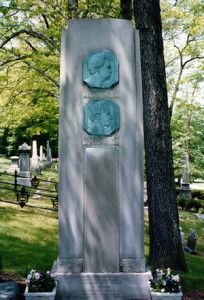
 On this day in 1978, singer-songwriter Sandy Denny died at Atkinson Morley Hospital, Wimbledon, England, from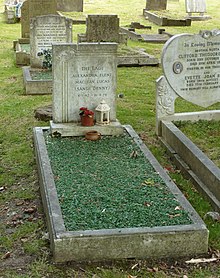
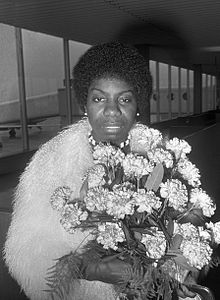 On this day in 2003, singer, songwriter, pianist, arranger, and civil rights activist, Nina Simone died in her sleep at her home in Carry-le-Rouet, Bouches-du-Rhône from breast cancer at the age of 70. Born Eunice Kathleen Waymon in Tryon, North Carolina on 21 February 1933. Simone worked in a broad range of musical styles including classical, jazz, blues, folk, R&B, gospel, and pop. Her recording Gershwin and Gershwin’s, “I Loves You, Porgy” was a hit in the United States in 1958. Over the length of her career Simone recorded more than 40 albums, mostly between 1958, when she made her debut with Little Girl Blue, and 1974. Her musical style arose from a fusion of gospel and pop songs with classical music, in particular with influences from her first inspiration, Johann Sebastian Bach, and accompanied with her expressive jazz-like singing in her characteristic contralto voice. She injected her classical background into her music as much as possible to give it more depth and quality, as she felt that pop music was inferior to classical. Her intuitive grasp on the audience–performer relationship was gained from a unique background of playing piano accompaniment for church revivals and sermons regularly from the early age of six years old.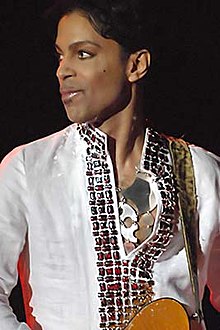
 (Love Symbol), The Artist Formerly Known as Prince (TAFKAP), The Artist, Prince died from an accidental fentanyl opioid overdose at his Paisley Park home in
  , an unpronounceable symbol also known as the “Love Symbol”, and began releasing new albums at a faster pace to remove himself from contractual obligations. He released five records between 1994 and 1996 before signing with Arista Records in 1998. In 2000, he began referring to himself as “Prince” again. He released 16 albums after that, including the platinum-selling Musicology (2004). His final album, Hit n Run Phase Two, was first released on the Tidal streaming service on December 12, 2015.
 The Final Footprint – Prince was cremated and his cremains were placed into a custom, 3D printed urn shaped like the Paisley Park estate. The urn is on display in the atrium of the Paisley Park complex.
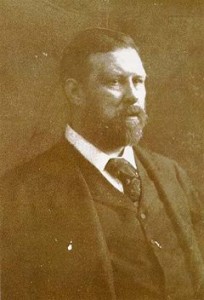 On this day in 1912, novelist and short story writer, Bram Stoker died at No. 26 St. George’s Square in Pimlico, London at the age of 64. Born Abraham Stoker on 8 November 1847 in Clontarf, Dublin, Ireland. Best known today for his novel Dracula (1897). Stoker spent several years researching European folklore and mythological stories of vampires. Dracula is an epistolary novel, written as a collection of fictional diary entries, telegrams, letters, ship’s logs, and newspaper clippings, which added a level of detailed realism to his story; a skill he developed as a newspaper writer. Stoker married Florence Balcombe (1878-1912 his death), a celebrated beauty whose former suitor was Oscar Wilde.
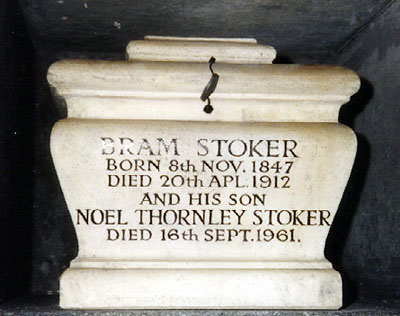 The Final Footprint – Stoker was cremated at Golders Green Crematorium and his cremated remains were placed in a urn at Golders Green. To pay respects to him, visitors must be escorted to the room where the urn is kept. The cremated remains of his son, Irving Noel Stoker, were placed in the same urn following his death in 1961.

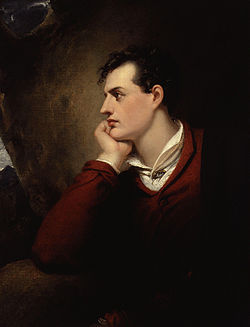
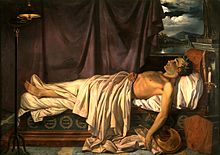
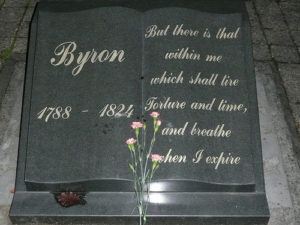 The Final Footprint –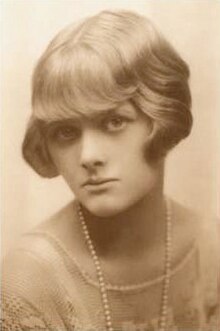
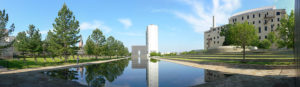 On this day in 1995, Timothy McVeigh parked a rental truck filled with explosives in front of the Alfred P. Murrah Federal Building in Oklahoma City. The resulting explosion killed 168 people and destroyed the entire north face of the building. The Oklahoma City National Memorial is a memorial that honors the victims, survivors, rescuers, and all who were changed by the Oklahoma City bombing. The memorial is located in downtown Oklahoma City on the former site of the Alfred P. Murrah Federal Building.
 Field of Empty Chairs: 168 empty chairs hand-crafted from glass, bronze, and stone represent those who lost their lives, with a name etched in the glass base of each. The chairs represent the empty chairs at the dinner tables of the victims’ families. Three unborn children died along with their mothers, and they are listed on their mothers’ chairs beneath their mothers’ names.
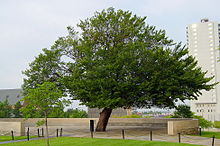 The Survivor Tree: An American elm on the north side of the Memorial, this was the only shade tree in the parking lot across the street from the Murrah Building. The force of the blast ripped most of the branches from the Survivor Tree. Glass and debris were embedded in its trunk and fire from the cars parked beneath it blackened what was left. Most thought the tree could not survive. Almost a year after the bombing, family members, survivors and rescue workers gathered for a memorial ceremony by the tree noticed it was beginning to bloom again. The inscription around the inside of the deck wall around the Survivor Tree reads: The spirit of this city and this nation will not be defeated; our deeply rooted faith sustains us. Hundreds of seeds from the Survivor Tree are planted annually and the resulting saplings are distributed each year on the anniversary of the bombing. Thousands of Survivor Trees are growing in public and private places all over the United States.
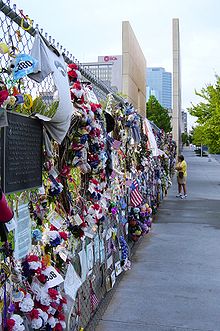 The Memorial Fence: A 10-foot-tall chain link fence was installed around the area that is now the Reflecting Pool and the Field of Empty Chairs to protect the site from damage and visitors from injury. The Fence stood for more than four years, becoming notable as the place where visitors left tributes. Visitors may still leave small items along and in the Fence; the mementos are periodically collected, cataloged, and stored.
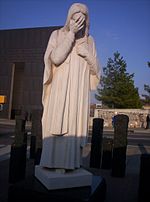 And Jesus Wept: On a corner adjacent to the memorial is a sculpture of Jesus weeping, erected by St. Joseph’s Catholic Church. St. Joseph’s, one of the first brick-and-mortar churches built in the city, was almost destroyed by the blast. Not officially part of the memorial, the statue is regularly visited.

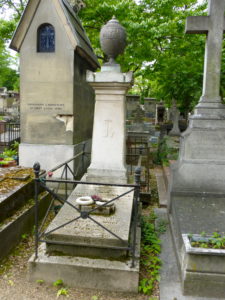 The Final Footprint








 On this day in 1936 violinist and composer Ottorino Respighi died of endocarditis at the age of 56. Born in an apartment inside Palazzo Fantuzzi on Via Guido Reni in Bologna, Italy, into a musical family 0n 9 July 1879. Perhaps best known for his three orchestral tone poems Fountains of Rome (1916), Pines of Rome (1924), and Roman Festivals (1928). His musicological interest in 16th-, 17th- and 18th-century music led him to compose pieces based on the music of these periods. He also wrote several operas, the most famous being La fiamma.
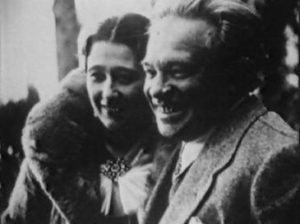 In 1919, he married the composer and singer Elsa Olivieri-Sangiacomo who, at fourteen years his junior, had been his composition pupil. In 1921, the couple relocated to a flat in Rome.

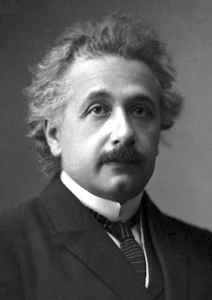 On this day in 1955, theoretical physicist, the father of modern physics, Albert Einstein died in Princeton Hospital in Princeton, New Jersey at the age of 76. Born on 14 March 1879 in Ulm, in the Kingdom of Württemberg in the German Empire. Einstein discovered the theory of general relativity, effecting a revolution in physics. He received the 1921 Nobel Prize in Physics “for his services to theoretical physics, and especially for his discovery of the law of the photoelectric effect”. Einstein was visiting the United States when Hitler came to power in 1933. He did not go back to Germany, becoming a U. S. citizen in 1940. In the summer of 1939, Einstein wrote a letter, with Leo Szilard, to President Franklin D. Roosevelt, alerting him of the possibility that Nazi Germany might be developing an atomic bomb. The letter recommended that the U.S. government should become directly involved with uranium research and chain reaction research. Einstein and Szilard, along with other refugees such as Edward Teller and Eugene Wigner, “regarded it as their responsibility to alert Americans to the possibility that German scientists might win the race to build an atomic bomb, and to warn that Hitler would be more than willing to resort to such a weapon.” Einstein married twice; Mileva Marić (1903-1919 divorce) and Elsa Löwenthal (1919-1936 her death). On his religious belief, Einstein said; “I believe in Spinoza’s God who reveals himself in the orderly harmony of what exists, not in a God who concerns himself with fates and actions of human beings.” The day before he died, Einstein experienced internal bleeding caused by the rupture of an abdominal aortic aneurysm. He refused surgery, saying: “I want to go when I want. It is tasteless to prolong life artificially. I have done my share, it is time to go. I will do it elegantly.” I have always thought physics was fascinating and had I been born a little smarter, actually a lot smarter, perhpaps I would have been a physicist. It is the study of the final frontier, or the next frontier.
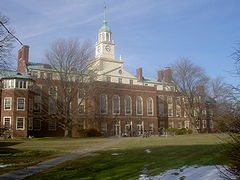 The Final Footprint – Einstein was cremated and his cremains were possibly scattered around the grounds of The Institute for Advanced Study in Princeton. Einstein has been the subject of, or inspiration for, many novels, films, plays, and works of music.