#RIP #OTD in 1867 Neoclassical painter Jean-Auguste-Dominique Ingres died of pneumonia in his apartment on the Quai Voltaire in Paris, aged 86. Père Lachaise Cemetery in Paris with a tomb sculpted by his student Jean-Marie Bonnassieux
#RIP #OTD in 1898 author (Alice’s Adventures in Wonderland, Through the Looking-Glass), poet (Jabberwocky, The Hunting of the Snark), mathematician, photographer, Lewis Carroll died of pneumonia following influenza at his sisters’ home, “The Chestnuts”, in Guildford, Surrey, England He was two weeks away from turning 66 years old. His funeral was held at the nearby St Mary’s Church. His body was interred at the Mount Cemetery in Guildford
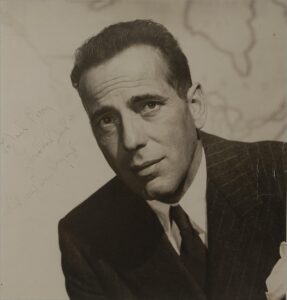 On this day in 1957, U.S. Navy veteran, Academy Award-winning actor and American icon, Bogie, Humphrey Bogart, died from cancer at his home in Holmby Hills, California at the age of 57. Born Humphrey DeForest Bogart on 25 December 1899 in New York City. Bogart is a Dutch name meaning orchard. His acting breakthrough came in 1941, with High Sierra and The Maltese Falcon. The next year, his performance in Casablanca raised him to the peak of his profession and cemented his trademark film persona; the hard-boiled cynic who ultimately shows his noble side. Bogart’s other notable movies included; To Have and Have Not (1944), The Big Sleep (1946), Dark Passage (1947), Key Largo (1948), with his wife Lauren Bacall; The Treasure of the Sierra Madre (1948); The African Queen (1951), for which he won his only Academy Award; Sabrina (1954) and The Caine Mutiny (1954). His last movie was The Harder They Fall (1956). During a film career of almost thirty years, he appeared in 75 feature films. Bogart was married four times; Helen Menken (1926 – 1927 divorce), Mary Phillips (1928 – 1937 divorce), Mayo Methot (1938 – 1945 divorce), Bacall (1945 – 1957 his death).
Bogart met Bacall while filming To Have and Have Not (1944), a loose adaptation of the Ernest Hemingway novel. When they met, Bacall was nineteen and Bogart was forty-five. He nicknamed her “Baby.” Bogart was drawn to Bacall’s high cheekbones, green eyes, tawny blond hair, and lean body, as well as her poise and earthy, outspoken honesty. Their physical and emotional rapport was very strong from the start and quite contrary to the Hollywood norm, it was his first affair with a leading lady. Bogart was still miserably married and his early meetings with Bacall were discreet and brief, their separations bridged by ardent love letters.
Bogart was a founding member of the Rat Pack. In the spring of 1955, after a long party in Las Vegas with Frank Sinatra, Judy Garland, her husband, Sid Luft, Mike Romanoff and wife Gloria, David Niven, Angie Dickinson and others, Bacall surveyed the wreckage of the party and declared, “You look like a goddamn rat pack.” Romanoff’s home in Beverly Hills was where the Rat Pack became official. Sinatra was named Pack Leader, Bacall was named Den Mother, Bogart was Director of Public Relations, and Luft was Acting Cage Manager. When asked by columnist Earl Wilson what the purpose of the group was, Bacall responded “to drink a lot of bourbon and stay up late.”
Bogart is credited with five of the most quotable quotes in American cinema: “Here’s looking at you, kid” – Casablanca, “The stuff that dreams are made of.” – The Maltese Falcon, “Louis, I think this is the beginning of a beautiful friendship.” – Casablanca, “We’ll always have Paris.” – Casablanca, “Of all the gin joints in all the towns in all the world, she walks into mine.” – Casablanca. Bogart is also credited with one of the top movie misquotations. In Casablanca, neither he, nor anyone else, ever said, “Play it again, Sam“. When Ilsa (Ingrid Bergman), his former love, first enters the Café Americain, she spots Sam, the piano player (Dooley Wilson) and asks him to “Play it once, Sam, for old times’ sake.” When he feigns ignorance, she responds, “Play it, Sam. Play “As Time Goes By.“” Later that night, alone with Sam, Rick says, “You played it for her and you can play it for me” and “If she can stand it, I can! Play it!” The slang term “bogarting” refers to taking an unfairly long time with a cigarette, drink, et cetera, that is supposed to be shared (e.g., “Don’t bogart the microphone!“). It derives from Bogart’s style of cigarette smoking, with which he left his cigarette dangling from his mouth rather than withdrawing it between puffs. No one was Bogart cool, before or since. Indeed, here is lookin’ at you. 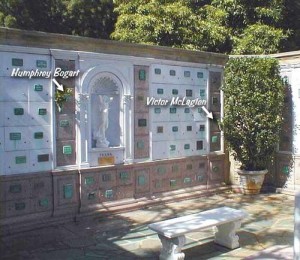
The Final Footprint – Bogart was cremated and his cremains are inurned in the Garden of Memory Columbarium of Eternal Light, Forest Lawn Memorial Park, Glendale, California. Inurned with his cremains is a small gold whistle, which he had given to Bacall, before they married, in reference to their first movie. His star on the Hollywood Walk of Fame is located at 6322 Hollywood Boulevard. The latest in a long line of Bogart biographies is Stefan Kanfer‘s “Tough Without a Gun: The Life and Extraordinary Afterlife of Humphrey Bogart.” Other notable Final Footprints at Forest Lawn Glendale include; L. Frank Baum, Lon Chaney, Dorothy Dandridge, Sammy Davis, Jr., Elizabeth Taylor, Jean Harlow, Nat King Cole, Sam Cooke, Walt Disney, Errol Flynn, Clark Gable, Michael Jackson, Carole Lombard, Tom Mix, Casey Stengel, Jimmy Stewart, and Spencer Tracy.
#RIP #OTD in 1965 soprano, sister of Blossom Rock (see below) actress (The Love Parade, Love Me Tonight, The Merry Widow, One Hour With You, Naughty Marietta, San Franciso) Jeanette MacDonald died; Houston Methodist Hospital, heart failure, aged 61. Forest Lawn Memorial Park, Glendale
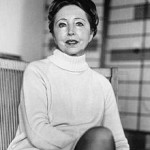 On this day in 1977, author Anaïs Nin died in Los Angeles, California after a three year battle with cancer, at the age of 73. Born Angela Anaïs Juana Antolina Rosa Edelmira Nin y Culmell on 21 February 1903 in Neuilly, France to a Cuban father and a French/Danish mother. Nin wrote journals (which span more than 60 years, beginning when she was 11 years old and ending shortly before her death), novels, critical studies, essays, short stories, and erotica; including Delta of Venus (1977), Little Birds (1979) and Henry and June (1986). On 3 March 1923, in Havana, Cuba, Nin married her first husband, Hugh Parker Guiler (1898–1985), a banker and artist, later known as “Ian Hugo” when he became a maker of experimental films in the late 1940s. According to her diaries, Vol.1, 1931–1934, Nin shared a bohemian lifestyle with writer Henry Miller during her time in Paris. The diaries tell that her union with Miller was very passionate and physical, and that she believed that it was a pregnancy by him that she aborted in 1934. In 1947, at the age of 44, she met former actor Rupert Pole in a Manhattan elevator on her way to a party. The two ended up dating and traveled to California together; Pole was sixteen years her junior. On 17 March 1955, she married him at Quartzsite, Arizona, returning with Pole to live in California. Guiler remained in New York City and was unaware of Nin’s second marriage until after her death in 1977, or chose not to know. Nin referred to her simultaneous marriages as her “bicoastal trapeze”. In 1966, Nin had her marriage with Pole annulled, due to the legal issues arising from both Guiler and Pole having to claim her as a dependent on their federal tax returns. Though the marriage was annulled, Nin and Pole continued to live together as if they were married, up until her death in 1977. Nin often cited authors Djuna Barnes and D. H. Lawrence as inspirations.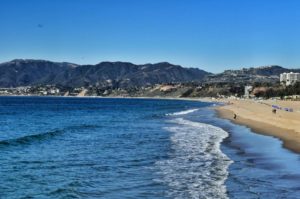
The Final Footrpint – Her body was cremated, and her cremated remains were scattered over Santa Monica Bay in Mermaid Cove. Philip Kaufman directed the 1990 film Henry & June based on Nin’s novel Henry and June: From the Unexpurgated Diary of Anaïs Nin. She was portrayed in the film by Maria de Medeiros.
#RIP #OTD in 1977, actor (Network; The Nun’s Story; Raid on Entebbe; Sunday Bloody Sunday), Peter Finch died from a heart attack in the lobby of the Beverly Hills Hotel aged 60. Hollywood Forever
#RIP #OTD in 1978 sister of Jeanette MacDonald (see above), actress (“Grandmama” on The Addams Family) Blossom Rock died in Los Angeles, California, aged 82. Forest Lawn Memorial Park in Glendale, California
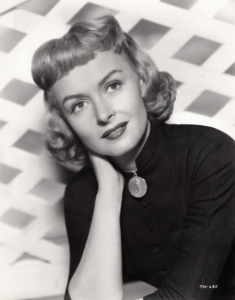 On this day in 1986, actress Donna Reed died of pancreatic cancer in Beverly Hills, at the age of 64. Born Donna Belle Mullenger on January 27, 1921 in Denison, Iowa. Her career spanned more than 40 years, with performances in more than 40 films. Perhaps best known for her role as Mary Hatch Bailey in Frank Capra’s 1946 film It’s a Wonderful Life. In 1953, she received the Academy Award for Best Supporting Actress for her performance as Lorene Burke in the war drama From Here to Eternity.
Reed is known for her work in television, notably as Donna Stone, a middle-class American mother and housewife in the sitcom The Donna Reed Show (1958–1966), in which her character was more assertive than most other television mothers of the era. She received numerous Emmy Award nominations for this role and the Golden Globe Award for Best TV Star in 1963. Later in her career, Reed replaced Barbara Bel Geddes as Miss Ellie Ewing Farlow in the 1984–1985 season of the television melodrama Dallas.
From 1943 to 1945, Reed was married to make-up artist William Tuttle. After they divorced, in 1945 she married producer Tony Owen. After 26 years of marriage, Reed and Owen divorced in 1971. Three years later, Reed married Grover W. Asmus (1926–2003), a retired United States Army colonel. They remained married until her death.
The Final Footprint

Her remains are interred in the Westwood Village Memorial Park Cemetery in Los Angeles. Other notable final footprints at Westwood include; Ray Bradbury, Sammy Cahn, Truman Capote, James Coburn, Rodney Dangerfield, Janet Leigh, Farrah Fawcett, Hugh Hefner, Brian Keith, Don Knotts, Burt Lancaster, Peter Lawford, Peggy Lee, Jack Lemmon, Karl Malden, Dean Martin, Walter Mathau, Marilyn Monroe, Carroll O’Connor, Roy Orbison, George C. Scott, Dorothy Stratten, Natalie Wood, and Frank Zappa.
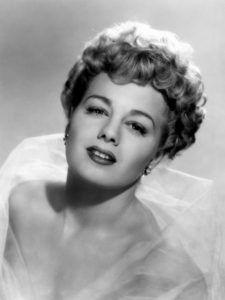 On this day in 2006, actress Shelley Winters died from heart failure at the Rehabilitation Center of Beverly Hills, at the age of 85. Born Shirley Schrift on August 18, 1920 in St. Louis, Missouri. Her career spanned almost six decades.
She appeared in numerous films, and won Academy Awards for The Diary of Anne Frank (1959) and A Patch of Blue (1965), and received nominations for A Place in the Sun (1951) and The Poseidon Adventure (1972). Other roles Winters appeared in include A Double Life (1947), The Night of the Hunter (1955), Lolita (1962), Alfie (1966), and Pete’s Dragon (1977).
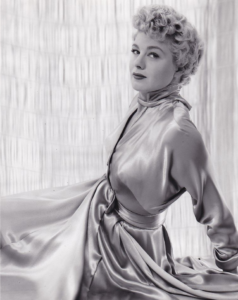 Winters was married four times. Her husbands were:
- Captain Mack Paul Mayer, whom she married on December 29, 1942 in Brooklyn;[11] they divorced in October 1948. Mayer was unable to deal with Shelley’s “Hollywood lifestyle” and wanted a “traditional homemaker” for a wife. Winters wore his wedding ring up until her death, and kept their relationship very private.
- Vittorio Gassman, whom she married on April 28, 1952 in Juarez, Mexico; they divorced on June 2, 1954.
- Anthony Franciosa, whom she married on May 4, 1957; they divorced on November 18, 1960.
- Gerry DeFord, whom she married on January 14, 2006.
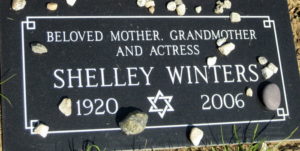 The Final Footprint
Her body was interred at Hillside Memorial Park Cemetery in Culver City. Her third former husband, Franciosa, had a stroke on the day she died and died five days later. Other notable Final Footprints at Hillside Memorial include; Jack Benny, Milton Berle, Cyd Charisse, Lorne Greene, Moe Howard, Al Jolson, Michael Landon, Jerry Leiber, Suzanne Pleshette, and Dinah Shore.
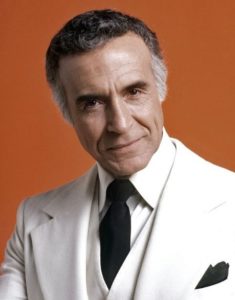 On this day in 2009, actor Ricardo Montalbán died from congestive heart failure at his home in Los Angeles at age 88. Born Ricardo Gonzalo Pedro Montalbán y Merino on November 25, 1920 in Mexico City. His career spanned seven decades, during which he became known for many different performances in a variety of genres, from crime and drama to musicals and comedy.
Among his notable roles was Armando in the Planet of the Apes film series from the early 1970s, where he starred in Escape from the Planet of the Apes (1971) and Conquest of the Planet of the Apes (1972).
Montalbán played Mr. Roarke on the television series Fantasy Island (1977–1984), and Khan Noonien Singh in both the original Star Trek series (1967) and the film Star Trek II: The Wrath of Khan (1982). He won an Emmy Award for his role in the miniseries How the West Was Won (1978), and a Lifetime Achievement Award from the Screen Actors Guild in 1993.
Montalbán was professionally active into his 80s, when he provided voices for animated films and commercials, and appeared as Grandfather Valentin in the Spy Kids franchise. During the 1970s and 80s he was a spokesman in automobile advertisements for Chrysler, including those in which he extolled the “rich Corinthian leather” used for the Cordoba’s interior.
Montalbán married actress and model Georgiana Young (born Georgiana Paula Belzer; September 30, 1923 – November 13, 2007) in 1944. Georgiana was the half-sister of actresses Sally Blane, Polly Ann Young and Loretta Young. They were married for 63 years. Her death preceded Montalbán’s by one year and two months.
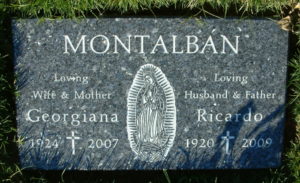 The Final Footprint
He is buried in Culver City, California at the Holy Cross Cemetery. Other notable final footprints at Holy Cross include; John Candy, Bing Crosby, Jimmy Durante, John Ford, Rita Hayworth, Chick Hearn, Conrad Hilton, Jr., Bela Lugosi, Al Martino, Audrey Meadows, Chris Penn, Jo Stafford, and Sharon Tate.
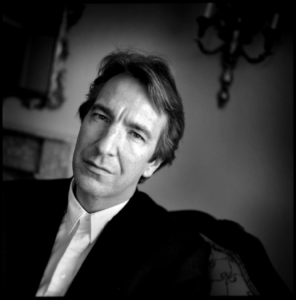 On this day in 2016, actor and director Alan Rickman died in London of pancreatic cancer, at the age of 69. Born Alan Sidney Patrick Rickman on 21 February 1946 in . He trained at the Royal Academy of Dramatic Art in London and became a member of the Royal Shakespeare Company (RSC), performing in modern and classical theatre productions. His first big television role came in 1982, he played the Vicomte de Valmont in the RSC stage production of Les Liaisons Dangereuses in 1985, and after the production transferred to Broadway in 1987 he was nominated for a Tony Award.
Rickman’s first cinematic role was as the German terrorist leader Hans Gruber in Die Hard (1988). He also appeared as the Sheriff of Nottingham in Robin Hood: Prince of Thieves (1991), for which he received the BAFTA Award for Best Actor in a Supporting Role; Elliott Marston in Quigley Down Under (1990); Jamie in Truly, Madly, Deeply (1990); P.L. O’Hara in An Awfully Big Adventure (1995); Colonel Brandon in Sense and Sensibility (1995); Alexander Dane in Galaxy Quest (1999); Harry in Love Actually (2003); Marvin the Paranoid Android in The Hitchhiker’s Guide to the Galaxy (2005); and Judge Turpin in the film adaptation of Stephen Sondheim’s musical of Sweeney Todd: The Demon Barber of Fleet Street (2007). Rickman gained further notice for his film performances as Severus Snape in the Harry Potter series.
Rickman made his television acting debut playing Tybalt in Romeo and Juliet (1978) as part of the BBC’s Shakespeare series. He later starred in television films, playing the title character in Rasputin: Dark Servant of Destiny (1996), which won him a Golden Globe Award, an Emmy Award and a Screen Actors Guild Award, and Dr. Alfred Blalock in the Emmy-winning Something the Lord Made (2004). His final film roles were as Lieutenant General Frank Benson in the thriller Eye in the Sky (2015), and the voice of Absolem, the caterpillar in Alice Through the Looking Glass.
In 1965, at age 19, Rickman met 18-year-old Rima Horton, who became his girlfriend and would later be a Labour Party councillor on the Kensington and Chelsea London Borough Council (1986–2006) and an economics lecturer at the nearby Kingston University. In 2015, Rickman confirmed that they had married in a private ceremony in New York City in 2012. They lived together from 1977 until Rickman’s death. The two had no children.
The Final Footprint
His remains were cremated on 3 February 2016 in the West London Crematorium in Kensal Green. His ashes were given to his wife. His final two films, Eye in the Sky and Alice Through the Looking Glass, were dedicated to his memory.
Have you planned yours yet?
Follow TFF on twitter @RIPTFF

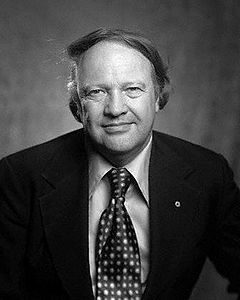 On this day in 1997, U.S. Army and U.S Air Force veteran, poet, novelist, eighteenth Poet Laureate Consultant in Poetry to the Library of Congress, James Dickey, died in Columbia, South Carolina at the age of 73. Born James Lafayette Dickey on 2 February 1923 in Atlanta, Georgia. He attended Clemson and later graduated from Vanderbilt. Dickey taught at Rice University and The University of South Carolina. Perhaps best known for his novel Deliverance (1970). The film version was released in 1972 starring Burt Reynolds, Jon Voight and Ned Beatty and was nominated for an Academy Award. Both the book and the movie are unforgettable. I highly recommend both.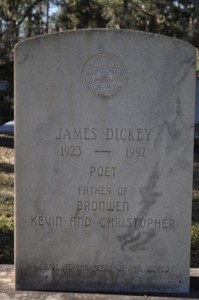
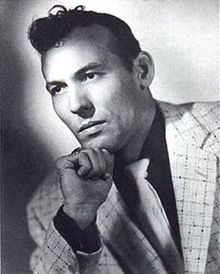 On this day in 1998, singer, songwriter, musician, the King of Rockabilly, Carl Perkins died at the age of 65 at Jackson-Madison County Hospital in Jackson, Tennessee from throat cancer after suffering several strokes. Born Carl Lee Perkins on 9 April 1932 in Tiptonville, Tennessee. Perkins, who recorded most notably at Sun Records Studio in Memphis, Tennessee, beginning in 1954, is perhaps best known for his song is “Blue Suede Shoes”. Charlie Daniels said, “Carl Perkins’ songs personified the rockabilly era, and Carl Perkins’ sound personifies the rockabilly sound more so than anybody involved in it, because he never changed.” Paul McCartney claimed that “if there were no Carl Perkins, there would be no Beatles.” Perkins was inducted into the Rock and Roll, the Rockabilly, and the Nashville Songwriters Halls of Fame; and was a Grammy Hall of Fame Award recipient.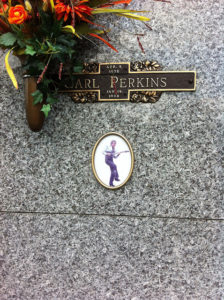
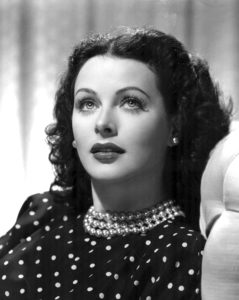
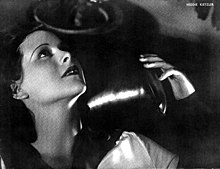



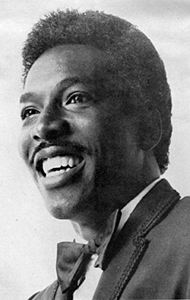 On this day in 2006, singer, songwriter, the Wicked Pickett, Wilson Pickett died from a heart attack in Reston, Virginia at the age of 64. Born on 18 March 1941 in Prattville, Alabama. A major figure in the development of American soul music, Pickett recorded over 50 songs which hit the US R&B charts, and frequently crossed over to the US Billboard Hot 100. Among his best known hits are “In the Midnight Hour” (which he co-wrote), “Land of 1,000 Dances”, “Mustang Sally”, and “Funky Broadway”. The impact of Pickett’s songwriting and recording led to his 1991 induction into the Rock and Roll Hall of Fame.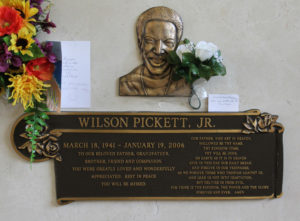
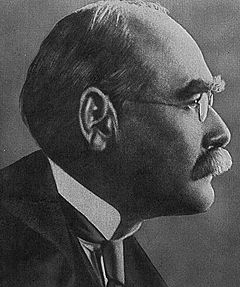 On this day in 1936, poet, writer, Nobel Prized recipient, Rudyard Kipling, died in Middlesex Hospital, London, England at the age of 70 of a perforated duodenal ulcer. Born Joseph Rudyard Kipling on 30 December 1865 in Bombay, British India. He was named after Rudyard Lake in Rudyard, Staffordshire, England where his parents met. Kipling is best known for his works of fiction, including The Jungle Book (1894), Kim (1901), many short stories including “The Man Who Would Be King” (1888); and his poems, including Mandalay (1890), Gunga Din (1890), and If— (1910). The Jungle Book is one of my favorite books from childhood. Memorizing If is a rite of passage for the children of one of my friends. Kipling was married to Carrie Balestier. On marriage, he wrote that marriage principally taught “the tougher virtues—such as humility, restraint, order, and forethought“. Partly in response to the tragic death of his only son, John in 1915 in the Battle of Loos, Kipling joined Sir Fabian Ware’s Imperial War Graves Commission (now the Commonwealth War Graves Commission), the group responsible for the garden-like British war graves that can be found to this day dotted along the former Western Front and all the other locations around the world where troops of the British Empire lie buried. His most significant contribution to the project was his selection of the biblical phrase “Their Name Liveth For Evermore” (Sirach 44.14, KJV) found on the Stones of Remembrance in larger war graves and his suggestion of the phrase “Known unto God” for the gravestones of unidentified servicemen. Kipling chose the inscription “The Glorious Dead” on the Cenotaph, Whitehall, London.

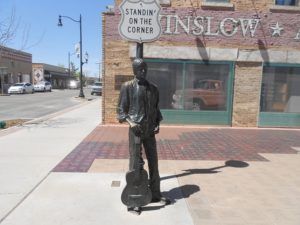 The Final Footprint

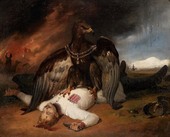
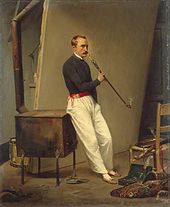
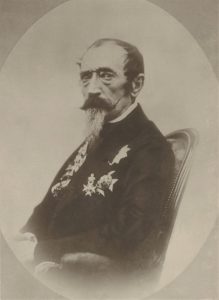 On this day in 1863 painter Horace Vernet died in Paris at the age of 73. Born Émile Jean-Horace Vernet on 30 June 1789 in the Louvre in Paris. Vernet’s father Carle Vernet and grandfather Claude Joseph Vernet were painters.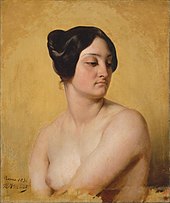


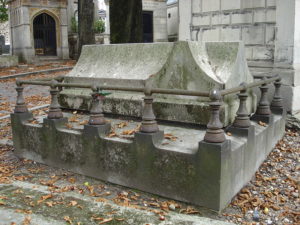 The Final Footprint
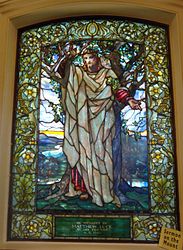
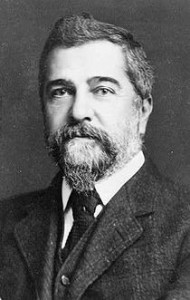 On this day in 1933, artist and designer Louis Comfort Tiffany died in New York City at the age of 84. Born on 18 February 1848 in New York City, the son of Charles Lewis Tiffany, founder of Tiffany and Company; and Harriet Olivia Avery Young. Tiffany worked in the decorative arts and is best known for his work in stained glass. He is the American artist most associated with the Art Nouveau and Aesthetic movements. Tiffany was affiliated with a prestigious collaborative of designers known as the Associated Artists. Tiffany designed stained glass windows and lamps, glass mosaics, blown glass, ceramics, jewelry, enamels and metalwork. Tiffany married twice: Mary Woodbridge Goddard (1872 – 1884 her death) and Louise Wakeman Knox (1886 – 1904 her death).
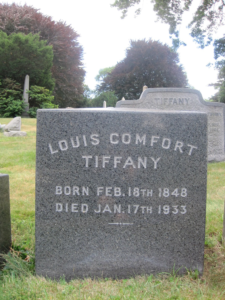 The Final Footprint – Tiffany is interred in Green-Wood Cemetery, Brooklyn. Other notable final footprints at Green-Wood include; Albert Anastasia, Jean-Michel Basquiat, Leonard Bernstein, Lorenzo da Ponte, and Charles Ebbes.







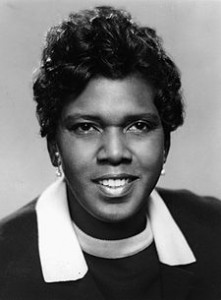 On this day in 1996, U.S. Congresswoman, Texas Senator, Presidential Medal of Freedom recipient, Barbara Jordan, died in Austin, Texas. Born Barbara Charline Jordan on 21 February 1936 in Houston, Texas. She was the first African-American elected to the Texas Senate after reconstruction and the first Southern black woman ever elected to the U.S. House of Representatives. Jordan was mentioned as a possible running mate to Jimmy Carter in 1976. That year, she became the first African-American woman to deliver the keynote address at the Democratic National Convention. Jordan retired from politics in 1979 and became an adjunct professor teaching ethics at the University of Texas at Austin Lyndon B. Johnson School of Public Affairs.
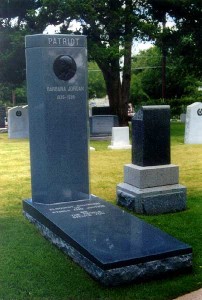 The Final Footprint – Jordan is interred in the Texas State Cemetery in Austin becoming the first African-American woman interred there. Her grave is marked by a large granite upright column monument and a full ledger granite marker. At the top of the column the word, PATRIOT, is engraved and the ledger is engraved in part; WE THE PEOPLE SALUTE YOU. Upon her death, Jordan lay in state at the LBJ Library on the campus of The University of Texas at Austin. The main terminal at Austin-Bergstrom International Airport is named after her. On April 24, 2009, a Barbara Jordan statue was unveiled at the University of Texas at Austin. Other notable final footprints at Texas State Cemetery include; Stephen F. Austin, John B. Connally, Nellie Connally, J. Frank Dobie, Tom Landry (cenotaph), James A. Michener (cenotaph), Ann Richards, Edwin “Bud” Shrake, Big Foot Wallace, and Walter Prescott Webb.
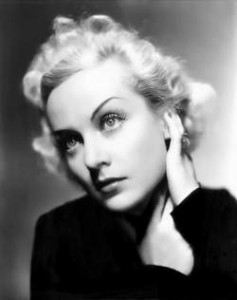 On this day in 1942, Academy Award nominated actress, Carole Lombard, died on Mount Potosi near Las Vegas, Nevada at the age of 33. Born Jane Alice Peters on 6 October 1908 in Fort Wayne, Indiana. She is particularly noted for her roles in the screwball comedies of the 1930s. Lombard is listed as one of the American Film Institute’s greatest stars of all time and was the highest-paid star in Hollywood in the late 1930s. Graham Greene praised the “heartbreaking and nostalgic melodies” of her faster-than-thought delivery: “Platinum blonde, with a heart-shaped face, delicate, impish features and a figure made to be swathed in silver lamé, Lombard wriggled expressively through such classics of hysteria as Twentieth Century and My Man Godfrey.” Lombard was married twice; William Powell (1931 – 1933 divorce) and Clark Gable (1939 – 1942 her death). Lombard and Gable eloped in Kingman, Arizona on the 29 March 1939. The couple, both lovers of the outdoors, bought a 20-acre ranch in Encino, California, where they kept barnyard animals and enjoyed hunting trips. Lombard and 21 others, including her mother, were killed when TWA Flight 3 crashed on returning to California from a war bond rally in Indiana.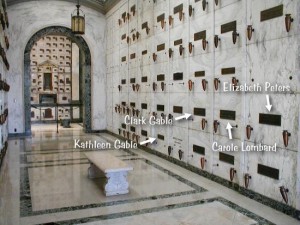
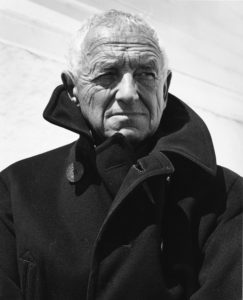 On this day in 2009, visual artist Andrew Wyeth died in his sleep in Chadds Ford, Pennsylvania, after a brief illness, at the age of 91. Born Andrew Newell Wyeth on July 12, 1917 in Chadds Ford.
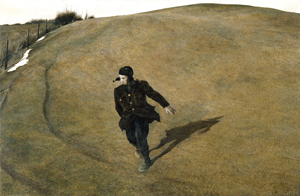
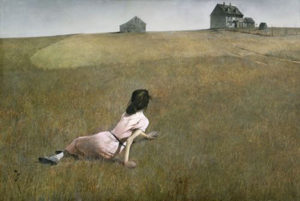

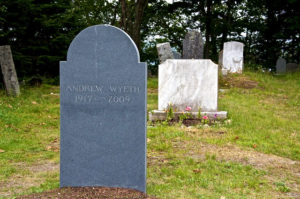 The Final Footprint
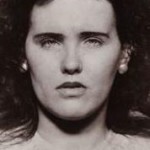 On this day in 1947, The Black Dahlia, Elizabeth Short‘s body was found in the Leimert Park district of Los Angeles, the victim of a gruesome and much-publicized murder, at the age of 22. Born Elizabeth Short on 29 July 1924 in Boston, Massachusetts. Short acquired the nickname posthumously by newspapers in the habit of nicknaming crimes they found particularly colorful. Short’s unsolved murder has been the source of widespread speculation, leading to many suspects, along with several books and film adaptations of the story.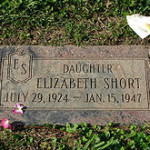
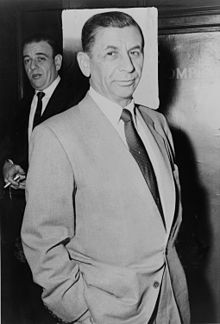 On this day in 1983, major organized crime figure, the “Mob’s Accountant”, Meyer Lansky died of lung cancer at the age of 80 in Miami Beach. Born Meyer Suchowlansky in Grodno (then in Russian Empire, now in Belarus) on 4 July 1902. Along with his associate Charles “Lucky” Luciano, Lansky was instrumental in the development of the “National Crime Syndicate” in the United States. For decades he was thought to be one of the most powerful individuals in the country. Lansky developed a gambling empire which stretched across the seas. He was said to own points in casinos in Las Vegas, Cuba, The Bahamas and London. Although a member of the Jewish Mob, Lansky undoubtedly had strong influence with the Italian Mafia and played a large role in the consolidation of the criminal underworld (although the full extent of this role has been the subject of some debate, as he himself denied many of the accusations against him). Despite all the reports, the U.S. Justice Department never found Lansky guilty of anything more serious than illegal gambling.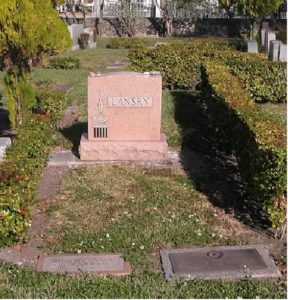
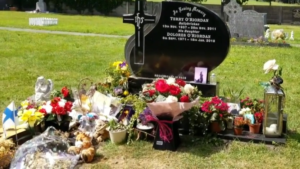
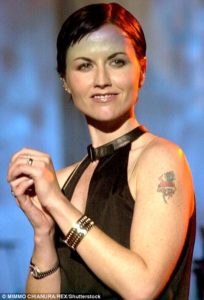 On this day in 2018, musician, singer and songwriter Dolores O’Riordan died as a result of accidental drowning in a bathtub due to sedation by alcohol intoxication at the London Hilton on Park Lane hotel in Mayfair, London, at the age of 46. Born Dolores Mary Eileen O’Riordan on 6 September 1971 in Ballybricken, County Limerick, Ireland. She was the vocalist for rock band The Cranberries from 1990 until their break-up in 2003, later reuniting with her band in 2009, which she led until her death in 2018.
 The Final Footprint
 On this day in 2019,

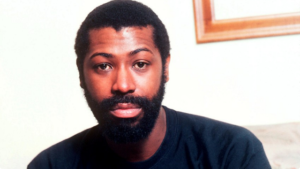 On this day in 2010, singer Teddy Pendergrass died from respiratory failure with his wife Joan by his side, at Bryn Mawr Hospital in Bryn Mawr, Pennsylvania at the age of 59. Born Theodore DeReese Pendergrass on March 26, 1950 in Philadelphia. He initially rose to musical fame as the lead singer of Harold Melvin & the Blue Notes. After leaving the group over monetary disputes in 1976, Pendergrass launched a successful solo career under the Philadelphia International label, releasing four consecutive platinum albums, then a record for an African-American R&B artist. Pendergrass’ career was suspended after a near-fatal car crash in March 1982 that left him paralyzed from the chest down. Pendergrass continued his successful solo career until announcing his retirement in 2007. Pendergrass died from respiratory failure in January 2010.
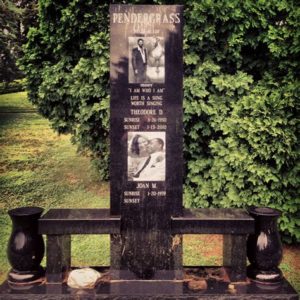 The Final Footprint
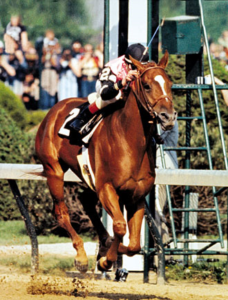 On this day in 2001, thoroughbred racehorse, Champion Two-Year-Old Colt (1977), Champion Three-Year-Old Male (1978), Two-X Horse of the Year (1978, 1979) and 11th Triple Crown Winner (1978), Affirmed, died at Jonabell Farm near Lexington, Kentucky, age 25. Affirmed was euthanized after falling seriously ill with laminitis, a circulatory hoof disease. The same disease led to the death of fellow Triple Crown winner Secretariat. Foaled on 21 February 1975 at Harbor View Farm near Fellowship, Florida. Affirmed was the great-great-grandson of Triple Crown winner War Admiral through damsire Crafty Admiral, and thereby the great-great-great grandson of Man o’ War who won two of the three Triple Crown races himself. Affirmed was also known for his famous rivalry with Alydar, whom he met ten times, including in all three Triple Crown races and where Alydar became the first racehorse to finish second in all three Triple Crown races. I remember watching all three of those races that year. I fell in love with both of these beautiful chestnut horses. Affirmed was trained by Hall of Fame trainer Laz Barrera. Barrera once said: “Affirmed is greater than Secretariat, or any Triple Crown winner, because only Affirmed had to face Alydar.” During the Triple Crown races, Affirmed was ridden by Hall of Fame jockey Steve Cauthen.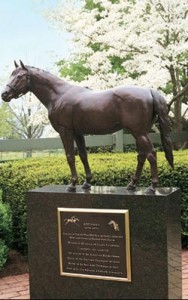
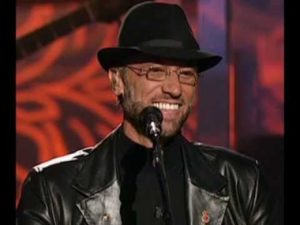 On this day in 2003, musician, singer, songwriter Maurice Gibb died unexpectedly due to complications of a twisted intestine, with his wife, children, and brothers at his side at Mount Sinai Medical Center in Miami Beach, Florida at the age of 53. Born Maurice Ernest Gibb on 22 December 1949 in Douglas, Isle of Man. He achieved fame as a member of the pop group Bee Gees. Although his brothers Barry and Robin Gibb were the group’s main lead singers, most of their albums included at least one or two compositions by Maurice, including “Lay It on Me”, “Country Woman”, and “On Time”. Gibb’s role in the group focused on melody and arrangements, providing backing vocal harmony and playing a variety of instruments.
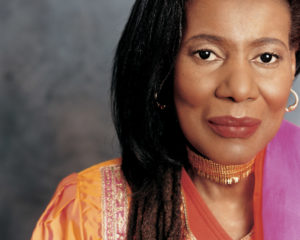 On this day in 2007, jazz musician and composer, and swamini, Alice Coltrane died of respiratory failure at West Hills Hospital and Medical Center in suburban Los Angeles, aged 69. Born Alice McLeod on August 27, 1937 in Detroit. Also known by her adopted Sanskrit name Turiyasangitananda or Turiya. One of the few harpists in the history of jazz, she recorded many albums as a bandleader, beginning in the late 1960s and early 1970s for Impulse! and other major record labels. She was the second wife and the widow of jazz saxophonist and composer John Coltrane.
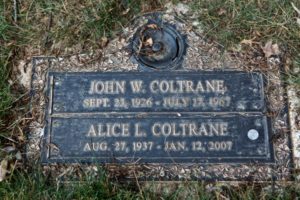 The Final Footprint
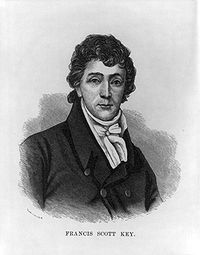 On this day in 1843, lawyer, author, and poet, Francis Scott Key, died at the home of his daughter Elizabeth Howard in Baltimore, Maryland at the age of 63. Born on 1 August 1779 in Carroll County Maryland. During the War of 1812, Key dined aboard the British ship HMS Tonnant, as a guest of the British. Key was there to negotiate the release of prisoners. Key was not allowed to return to his own sloop: he had become familiar with the strength and position of the British units and with the British intent to attack Baltimore. As a result, Key was unable to do anything but watch the bombarding of the American forces at Fort McHenry during the Battle of Baltimore on the night of 13 September – 14 September 1814. When the smoke cleared, Key was able to see an American flag still waving and reported this to the prisoners below deck. On the way back to Baltimore, he was inspired to write a poem describing his experience, “The Defence of Fort McHenry”, which he published in the Patriot on 20 September 1814. He intended to fit the words to the rhythms of composer John Stafford Smith‘s “To Anacreon in Heaven”. It became known as “The Star Spangled Banner”. Under this name, the song was adopted as the American national anthem, first by an Executive Order from President Woodrow Wilson in 1916 (which had little effect beyond requiring military bands to play it) and then by a Congressional resolution in 1931, signed by President Herbert Hoover. In 1832, Key served as the attorney for Sam Houston during his trial in the U.S. House of Representatives for assaulting another Congressman. Key was a distant cousin and the namesake of F. Scott Fitzgerald whose full name was Francis Scott Key Fitzgerald. Scott was married to Mary Tayloe “Polly” Lloyd (1784 – 1843 his death).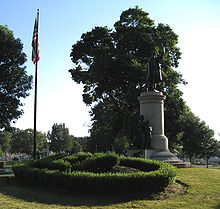
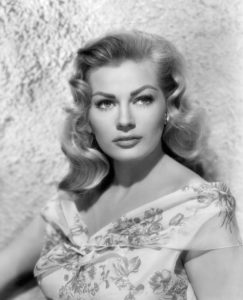 On this day in 2015, actress Anita Ekberg died at the clinic San Raffaele in Rocca di Papa in Castelli Romani, Italy, at the age of 83. Born Kerstin Anita Marianne Ekberg on 29 September 1931 in Malmö, Skåne, Sweden. She is best known for her role as Sylvia in the Federico Fellini film La Dolce Vita (1960). Ekberg worked primarily in Italy, where she became a permanent resident in 1964.
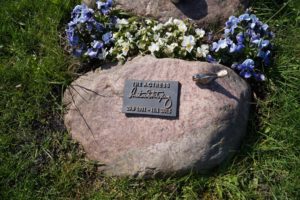 The Final Footprint
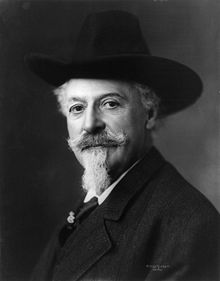 On this day in 1917, soldier, Medal of Honor recipient, bison hunter and showman, Buffalo Bill Cody, died surrounded by family and friends at his sister’s house in Denver, Colorado, at the age of 70. Born William Frederick Cody on 26 February 1846 near LeClaire, Iowa. One of the most colorful figures of the American Old West, mostly famous for the shows he organized with cowboy themes. At one time or another, the wild west shows Cody appeared in or founded featured, James Butler “Wild Bill” Hickok, Annie Oakley, Calamity Jane and the great Lakota Sioux holy man and war chief Sitting Bull. He was instrumental in founding the city of Cody, Wyoming. Cody established the TE Ranch located on the South Fork of the Shoshone River about thirty-five miles from Cody. The spread eventually included 8,000 acres for a grazing operation that ran about 1,000 head of cattle. Cody was married to Louisa Maud Frederici (1866 – 1917 his death). My heroes have always been Cowboys.
 The Final Footprint – Cody is interred in the Cody private estate on Lookout Mountain in Golden, Colorado. Louisa was interred next to him when she passed in1921. The estate is marked by a stone monument with a bronze plaque with their names and birth and death years. Underneath Louisa’s name is the inscription, AT REST HERE BY HIS REQUEST. Cody’s grave is marked by a bronze individual marker inscribed with his name and birth and death dates and the following; MEDAL OF HONOR INDIAN SCOUT 3 US CAV INDIAN WARS.
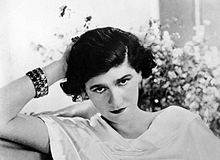 On this day in 1971, fashion designer and founder of the Chanel brand, Coco Chanel died at the Hotel Ritz in Paris, where she had resided for more than 30 years, at the age of 87. Born Gabrielle Bonheur Chanel on 19 August 1883 to an unmarried mother, Eugénie Jeanne Devolle – known as Jeanne – a laundrywoman, in the charity hospital run by the Sisters of Providence (a poorhouse) in Saumur, France. Her father, Albert Chanel was an itinerant street vendor who peddled work clothes and undergarments. Chanel is the only fashion designer listed on Time magazine’s list of the 100 most influential people of the 20th century. Along with Paul Poiret, Chanel was credited with liberating women from the constraints of the “corseted silhouette” and popularizing the acceptance of a sportive, casual chic as the feminine standard in the post-World War I era. A prolific fashion creator, Chanel’s influence extended beyond couture clothing. Her design aesthetic was realized in jewelry, handbags, and fragrance. Her signature scent, Chanel No. 5, has become an iconic product. Chanel was known for her lifelong determination, ambition, and energy which she applied to her professional and social life. She achieved both success as a businesswoman and social prominence thanks to the connections she made through her work. These included many artists and craftspeople to whom she became a patron. However, Chanel’s life choices generated controversy, particularly her behaviour during the German occupation of France in World War II. Chanel was the mistress of some of the most influential men of her time, but she never married. She had significant relationships with the poet Pierre Reverdy and the illustrator and designer Paul Iribe. During the German occupation of France, Chanel resided at the Hotel Ritz, which was also noteworthy for being the preferred place of residence for upper echelon German military staff. Her romantic liaison with Hans Gunther von Dincklage, a German officer who had been an operative in military intelligence since 1920, facilitated her arrangement to reside at the Ritz.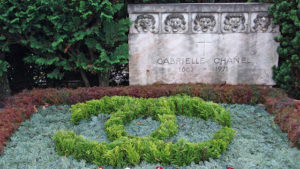
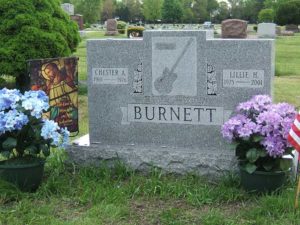
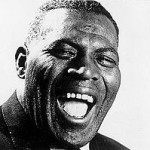 On this day in 1976, blues singer, songwriter, guitarist and harmonica player Howlin’ Wolf died from complications of kidney disease at the Hines VA Hospital in Hines, Illinois at the age of 65. In my opinion, one of the greatest blues artists of all-time. A number of songs written or popularized by Burnett, such as “Smokestack Lightnin'”, “Back Door Man”, “Killing Floor” and “Spoonful”, have become blues and blues rock standards. Born Chester Arthur Burnett on 10 June 1910 in West Point, Mississippi in an area now known as White Station.