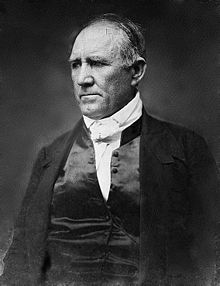
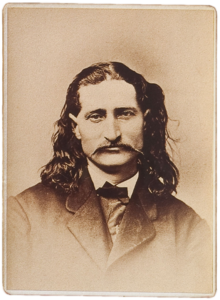
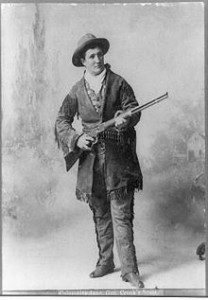
 On this day in 1876, gambler, gunfighter, scout and lawman Wild Bill Hickok died, after being shot in the head by John “Broken Nose Jack” McCall at Nuttal & Mann’s Saloon No. 10 in Deadwood, South Dakota, at the age of 39. Born James Butler Hickok on 27 May 1837 in Troy Grove, Illinois. It is difficult to separate the truth from the fiction about Hickok. His exploits, whether real or exaggerated or fabricated, were reported in popular dime novels of the era. He apparently met and associated with several famous or infamous characters including Buffalo Bill Cody, Lieutenant Colonel George Armstrong Custer, John Wesley Hardin and Calamity Jane. Hickok married Agnes Thatcher Lake (1876-1876 his death).
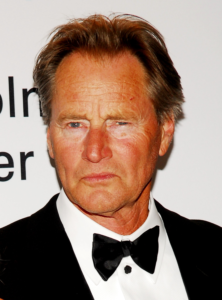
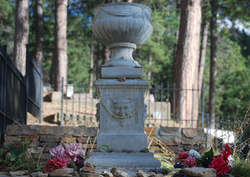
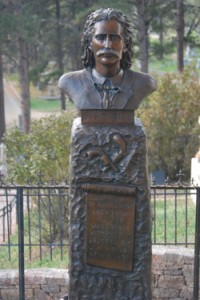 The Final Footprint – Hickok was initially interred in the Ingelside Cemetery, Deadwood’s original graveyard. On the third anniversary of his interment, Hickok’s friend Charlie “Colorado Charlie” Utter paid to move Hickok to the Mount Moriah Cemetery on Mount Moriah. His grave was initially marked by a wooden marker with the inscription; “Wild Bill, J. B. Hickock killed by the assassin Jack McCall in Deadwood, Black Hills, August 2d, 1876. Pard, we will meet again in the happy hunting ground to part no more. Good bye, Colorado Charlie, C. H. Utter.” His grave is now marked by a bronze upright monument with his bust on top. The inscription reads; DIED aug 2 1876 BY PISTOL SHOT AGED 39 years CUSTER WAS LONELY WITHOUT HIM. McCall was tried and aquitted and then tried and convicted for the murder and subsequently hung. Hickok was playing poker at the time of his death and the hand he was holding, a pair of aces and a pair of eights, all black, has become known as “the dead man’s hand”. Hickok has been portayed in numerous books and films. My favorite include; in Thomas Berger’s novels Little Big Man (1964) and The Return of Little Big Man (1999); as played by Gary Cooper in the film The Plainsman (1936) with Jean Arthur as Calamity Jane; as played by Howard Keel in the film Calamity Jane (1953) with Doris Day as Calamity Jane; as played by Charles Bronson in the film The White Buffalo (1977); as played by Sam Elliott in the telvision movie Buffalo Girls (1995) based on the Larry McMurtry novel of the same name with Anjelica Huston as Calamity Jane; as played by Jeff Bridges in the film Wild Bill (1995) with Ellen Barkin as Calamity Jane and John Hurt as Charley Prince, Diane Lane as Susannah Moore, Keith Carradine as Buffalo Bill Cody, David Arquette as Jack McCall, Christina Applegate as Lurline Newcomb, Bruce Dern as Will Plummer.
 On this day in 1890, French poet Louise-Victorine Ackermann died in Nice at the age of 76. Born Louise-Victorine Choquet on 30 November 1813 in Nice. The work on which Madame Ackermann’s real reputation rests is Poésies, premières poésies, poésies philosophiques (1874) a volume of sombre and powerful verse, expressing her revolt against human suffering.
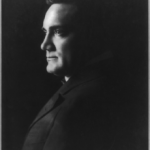 On this day in 1921, Italian tenor Enrico Caruso died at the Vesuvio Hotel in Naples a few minutes after 9:00 am at the age of 48. His death was attributed to peritonitis arising from a burst subrenal abscess. Born in Naples in the Via San Giovannello agli Ottocalli 7 on 25 February 1873. Caruso sang to great acclaim at the major opera houses of Europe and the Americas, appearing in a wide variety of roles from the Italian and French repertoires that ranged from the lyric to the dramatic. Caruso also made approximately 290 commercially released recordings from 1902 to 1920. All of these recordings, which span most of his stage career, are available today on CDs and as digital downloads. Caruso’s 1904 recording of “Vesti la giubba” from Leoncavallo’s opera Pagliacci was the first sound recording to sell a million copies. Prior to World War One, Caruso had been romantically tied to an Italian soprano, Ada Giachetti, who was a few years older than he was. Though already married, Giachetti bore Caruso four sons during their liaison, which lasted from 1897 to 1908. Ada had left her husband, manufacturer Gino Botti, and an existing son to live with Caruso. Towards the end of the war, Caruso met and wooed a 25-year-old socialite, Dorothy Park Benjamin. She was the daughter of a wealthy New York patent lawyer. In spite of the disapproval of Dorothy’s father, the couple wed on August 20, 1918. They had a daughter. Dorothy lived until 1955 and wrote two books about Caruso, whom she had called “Rico”. Published in 1928 and 1945, her books include many of Caruso’s letters to his “Doro”.
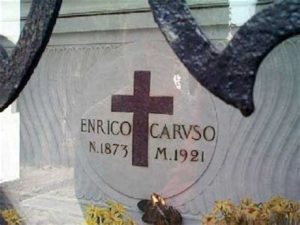 The Final Footprint – The King of Italy, Victor Emmanuel III, opened the Royal Basilica of the Church of San Francesco di Paola for Caruso’s funeral, which was attended by thousands of people. His embalmed body was preserved in a glass sarcophagus at Del Pianto Cemetery in Naples for mourners to view. His body was redressed each year with a new suit. In 1929, Dorothy Caruso had his remains sealed permanently in an ornate stone tomb. The famous Ajello Candle makers created a memorial candle for the opera singer towering over 18 feet tall and 8 feet in circumference and weighing one ton at the Church of Our Lady of Pompeii, made to last for 1800 years burning one day each year on the anniversary of Caruso’s birth.
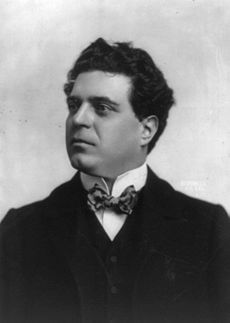
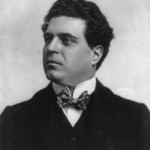 On this day in 1945, Italian composer most noted for his operas, Pietro Mascagni died in his apartment at the Hotel Plaza di Roma in Rome at the age of 82. His 1890 masterpiece Cavalleria rusticana caused one of the greatest sensations in opera history and single-handedly ushered in the Verismo movement in Italian dramatic music. His other operas L’amico Fritz and Iris have remained in the repertoire in Europe since their respective premieres. Mascagni reportedly said that at one point, Iris was performed in Italy more often than Cavalleria. Mascagni wrote fifteen operas, an operetta, several orchestral and vocal works, as well as songs and piano music. He enjoyed immense success during his lifetime, both as a composer and conductor of his own and other people’s music. He created a variety of styles in his operas: a Sicilian passion and warmth of Cavalleria, the exotic flavor of Iris, the idylls of L’amico Fritz and Lodoletta, the Gallic chiaroscuro of Isabeau, the steely, Veristic power of Il piccolo Marat, the over-ripe post-romanticism of the lush Parisina, which demonstrate a versatility.
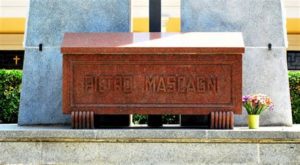 The Final Footprint – Mascagni’s final resting place is at Cimitero Della Misercordia in Livorno, Italy. The 1980 Martin Scorsese film Raging Bull prominently features the following music: the Intermezzo from Cavalleria rusticana, the Barcarolle from Silvano, and the Intermezzo from Guglielmo Ratcliff (known as Il sogno di Ratcliff). The 1990 Francis Ford Coppola film The Godfather Part III used a production of Cavalleria rusticana at the Teatro Massimo to set its climax, with Michael Corleone’s son Anthony as Turiddu. The movie ends with the Intermezzo playing.
#RIP #OTD in 1955 modernist poet (“The Auroras of Autumn”, “Anecdote of the Jar”, “Disillusionment of Ten O’Clock”, “The Emperor of Ice-Cream”, “The Idea of Order at Key West”, “Sunday Morning”, “The Snow Man”) Wallace Stevens died from stomach cancer in Hartford, Connecticut aged 75. Hartford’s Cedar Hill Cemetery
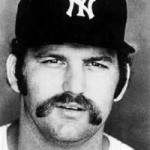 On this day in 1979, baseball player, catcher, New York
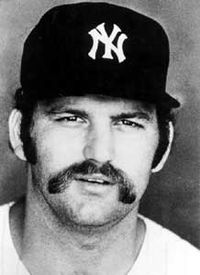
 Yankee, 2x World Series Champion, AL MVP, 7x All-Star, #15 retired, team captain, Thurman Munson died in a plane crash at the Akron-Canton Regional Airport in Ohio at the age of 32. Born Thurman Lee Munson on 7 June 1947 in Akron, Ohio. He played his entire 11-year career for the Yankees (1969–1979). Munson is the only Yankee ever to win both the Rookie of the Year and Most Valuable Player awards. Considered the “heart and soul” of the Yankees, Munson became the first team captain since Lou Gehrig. He led the Yankees to three consecutive World Series, winning two of them.
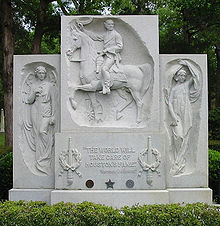
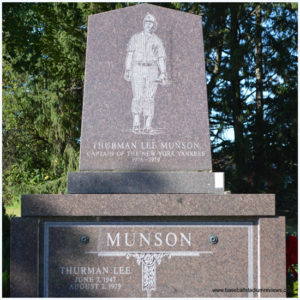 The Final Footprint – The day after his death, before the start of the Yankees’ four-game set with the Baltimore Orioles in the Bronx, the team paid tribute to their deceased captain in a pre-game ceremony in which the starters stood at their defensive positions, save for the catcher’s box, which remained empty. Following a prayer by Cardinal Terence Cooke, a moment of silence and “America The Beautiful” by Robert Merrill, the fans (announced attendance 51,151) burst into an eight minute standing ovation. Jerry Narron, the man who would replace Munson behind the plate that night, remained in the dugout and did not enter the field until stadium announcer Bob Sheppard said, “And now it is time to play ball. Thank you, ladies and gentlemen for your co-operation.” On August 6, the entire Yankee team attended Munson’s funeral in Canton, Ohio. Teammates Lou Piniella and Bobby Murcer, who were Munson’s best friends, gave eulogies. That night (before a national viewing audience on ABC’s Monday Night Baseball) the Yankees beat the Orioles 5–4 in New York, with Murcer driving in all five runs with a three-run home run in the seventh inning and a two-run single in the bottom of the ninth. Munson is interred in Sunset Hills Burial Park in Canton, Ohio. Yankee owner George Steinbrenner retired Munson’s number 15 immediately upon his catcher’s death. On 20 September 1980, a plaque dedicated to Munson’s memory was placed in Monument Park. The plaque bears excerpts from an inscription composed by Steinbrenner and flashed on the stadium scoreboard the day after his death:
Our captain and leader has not left us, today, tomorrow, this year, next … Our endeavors will reflect our love and admiration for him.
Other notable Yankees whose final footprints include memorialization in Monument Park; Mel Allen, Lou Gehrig, Joe DiMaggio, Billy Martin, Babe Ruth, Bob Sheppard, Mickey Mantle, Roger Maris, Phil Rizzuto, George Steinbrenner, and Casey Stengel.
#RIP #OTD in 1988 short story writer (What We Talk About When We Talk About Love), poet (Gravy), Raymond Carver died in Port Angeles, Washington, from lung cancer at the age of 50. Ocean View Cemetery, Port Angeles, Washington
#RIP #OTD in 1990 University of Chicago professor, writer (A River Runs Through It and Other Stories, Young Men and Fire), Norman Maclean died in Chicago, at the age of 87. cremated remains scattered over the mountains of Montana
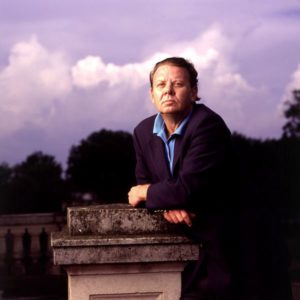 On this day in 1999 University of Texas in Austin graduate, writer and editor Willie Morris died from a heart attack in Jackson, Mississippi at the age of 64. Born William Weaks Morris on November 29, 1934 in Jackson, Mississippi. Perhaps best known for his lyrical prose style and reflections on the American South, particularly the Mississippi Delta and Yazoo City. In 1967 he became the youngest editor of Harper’s Magazine. He wrote several works of fiction and non-fiction, including his seminal book North Toward Home, as well as My Dog Skip.
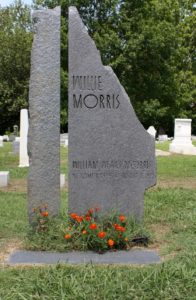
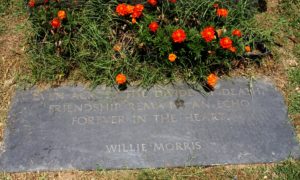
The Final Footprint
Willie Morris is buried in Glenwood Cemetery in Yazoo City, close to the “grave” of the fictitious Witch of Yazoo, a character from one of Morris’ books, Good Old Boy: A Delta Boyhood.
#RIP #OTD in 2022 sportscaster, play-by-play announcer for the Brooklyn / Los Angeles Dodgers Vin Scully died at his home in Hidden Hills, California, at the age of 94. Cremation
Have you planned yours yet?
Follow TFF on twitter @RIPTFF
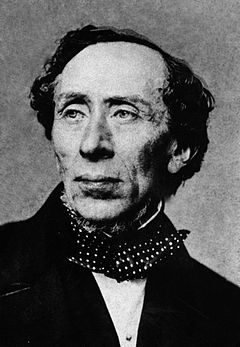 On this day in 1875, author and poet Hans Christian Andersen died in a house called Rolighed (calmness), near Copenhagen, the home of his close friend Moritz Melchior, at the age of 70. Born on 2 April 1805 in Odense, Denmark. Perhaps best known for his children’s stories including; “The Princess and the Pea” (1835), “Thumbelina” (1835), “The Little Mermaid” (1836), “The Emperor’s New Clothes” (1837), “The Steadfast Tin Soldier” (1838), “The Nightingale” (1844), “The Snow Queen” (1844), “The Ugly Duckling” (1844) and “The Little Match Girl” (1848). Andersen was apparently frustrated in love and may have channeled his romantic grief into his stories. At one point he wrote in his diary: “Almighty God, thee only have I; thou steerest my fate, I must give myself up to thee! Give me a livelihood! Give me a bride! My blood wants love, as my heart does!” His unrequited loves included a girl named Riborg Voigt from his youth, Sophie Ørsted, Louise Collin and the opera soprano Jenny Lind, the inspiration for his story “The Nightingale”. Andersen never married. I have read many of his stories to my children. Thank you HCA.
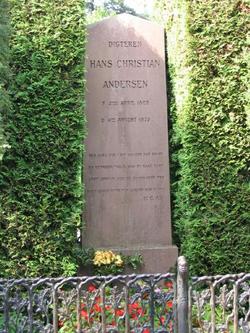 The Final Footprint – Andersen is interred in Assistens Cemetery in Copenhagen. His grave is marked by a large upright individual stone monument. Inscribed at the the top of the monument is the word DIGTEREN (poet). At the bottom is inscribed the last lines of Andersen’s poem “Oldingen” (The Old Man);
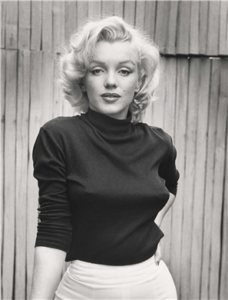 On this day in 1962, actress, singer and model, American Icon, Marilyn Monroe died at her Brentwood, Los Angeles home at the age of 36. She apparently died from acute barbiturate poisoning. Theories abound about how the drugs got in her system. Born Norma Jeane Mortenson on 1 June 1926 in Los Angeles. She was baptized and raised as Norma Jeane Baker. Remembered and loved for her ubeauty, charm and personality. My favorite Monore film roles include: as Lorelei Lee in Howard Hawks‘ Gentleman Prefer Blondes (1953) with Jane Russell and Charles Coburn; as Evelyn Keyes in Billy Wilder’s The Seven Year Itch (1955); as Sugar Kane in Wilder’s Some Like It Hot (1959) with Tony Curtis and Jack Lemmon; as Roslyn Tabor in John Huston’s The Misfits (1961) with Clark Gable, Montgomery Clift and Eli Wallach. The Misfits would prove to be the final film for both Monroe and Gable. Her picture appeared on the cover of the first issue of Playboy magazine in December 1953. Monroe married three times; James Dougherty (1942-1946 divorce), Joe DiMaggio (1954-1954 divorce) and Arthur Miller (1956-1961 divorce). She may have had affairs with Marlon Brando, Tony Curtis, JFK and RFK. More questions than answers surround Monroe. Was her death accidental, suicide or homicide? Was JFK the last person she talked to? Was she in love with him? Was RFK the last person she saw?
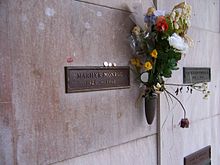 The Final Footprint – Monroe is entombed in Westwood Memorial Park (a Dignity Memorial property) in Los Angeles. Notice how her marble crypt front is discolored compared to the surrounding crypts. This is caused by the many people who visit her crypt and touch the marble. Also note the lipstick kisses. DiMaggio had a half-dozen red roses delivered three times a week to her crypt for 20 years. A memorial bench is located near her crypt dedicated to her In Loving Memory. Other notable final footprints at Westwood include; Ray Bradbury, Sammy Cahn, Truman Capote, James Coburn, Rodney Dangerfield, Janet Leigh, Farrah Fawcett, Hugh Hefner, Brian Keith, Don Knotts, Burt Lancaster, Peter Lawford, Peggy Lee, Jack Lemmon, Karl Malden, Dean Martin, Walter Mathau, Carroll O’Connor, Roy Orbison, George C. Scott, Dorothy Stratten, Natalie Wood, and Frank Zappa.
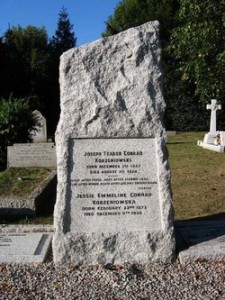
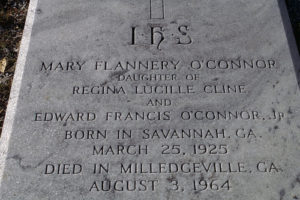 The Final Footprint – O’Connor was interred in Milledgeville, at Memory Hill Cemetery.


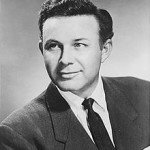
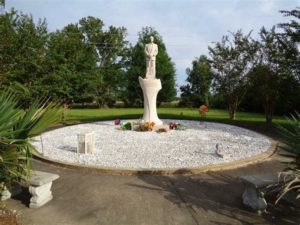 The Final Footprint – Thousands of people traveled to pay their last respects at his funeral two days later. The coffin, draped in flowers from fans, was driven through the streets of Nashville and then to Reeves’ final resting place near Carthage, Texas at what is now the Jim Reeves Memorial Park.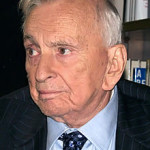
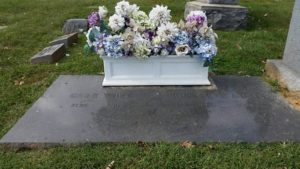 The Final Footprint – Vidal was interred next to Austen in Rock Creek Cemetery in Washington, D.C. Other notable final footprints at Rock Creek include; Tim Russert and Upton Sinclair.

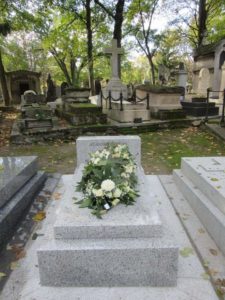
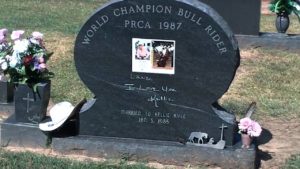
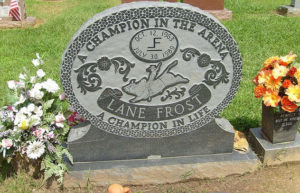
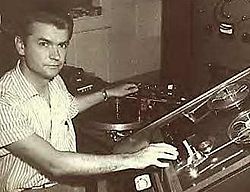
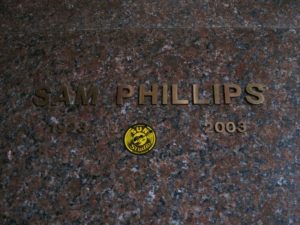 The Final Footprint – Phillips is entombed in the mausoleum Garden of Trees in Memorial Park Cemetery in Memphis. Another notable final footprints at Memorial Park include; Bobby Blue Bland, Isaac Hayes, Charlie Rich, and Bob Welch.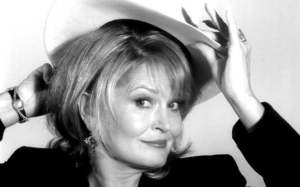



























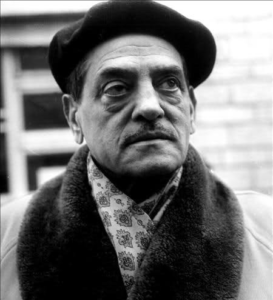 On this day in 1983, filmmaker Luis Buñuel died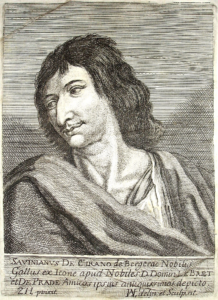
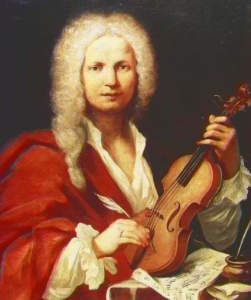
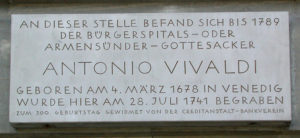 The Final Footprint – On 28 July Vivaldi was buried in a simple grave in a burial ground that was owned by the public hospital fund in Vienna. Vivaldi’s funeral took place at St. Stephen’s Cathedral.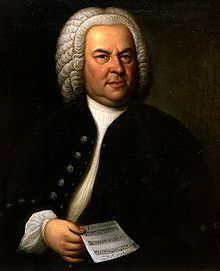
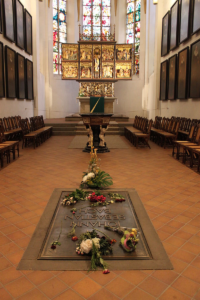 The Final Footprint – Bach was originally buried at Old St. John’s Cemetery in Leipzig. His grave went unmarked for nearly 150 years. In 1894 his coffin was finally discovered and reburied in a vault within St. John’s Church. This building was destroyed by Allied bombing during World War II, and in 1950 Bach’s remains were taken to their present resting place in Leipzig’s Church of St. Thomas.