#RIP #OTD in 1990 singer (“Cry”, “The Little White Cloud That Cried”), songwriter, pianist, pioneering figure in the development of rock and roll, Johnnie Ray died from liver failure at Cedars-Sinai, Los Angeles, aged 63. Hopewell Cemetery near Hopewell, Oregon
#RIP #OTD in 1991 honky-tonk vocalist (“In the Jailhouse Now”, “There Stands the Glass”, “Wondering”), songwriter (“I Ain’t Never”, “I Don’t Care”) and guitarist, Webb Pierce died from pancreatic cancer in Nashville, aged 69. Woodlawn Memorial Park Cemetery in Nashville
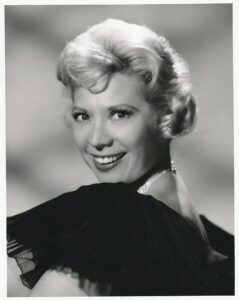 On this day in 1994, singer, actress, and television personality Dinah Shore died from ovarian cancer at her home in Beverly Hills, aged 77. Born Fannye Rose Shore on February 29, 1916 in . She was the top-charting female vocalist of the 1940s and achieved success a decade later, in television, mainly as hostess of a series of variety programs for Chevrolet.
After failing singing auditions for the bands of Benny Goodman, and both Jimmy and Tommy Dorsey, Shore struck out on her own to become the first singer of her era to achieve solo success. She had a string of 80 charted popular hits, spanning 1940–1957, and after appearing in a handful of feature films, she went on to a four-decade career in American television, starring in her own music and variety shows from 1951 through 1963 and hosting two talk shows in the 1970s.
Shore, who played golf, was a longtime supporter of women’s professional golf. In 1972, she helped found the Colgate Dinah Shore Golf Tournament, which in its current identity as the ANA Inspiration, is one of the five major golf tournaments on the LPGA Tour. The tournament is held each spring at Mission Hills Country Club, near Shore’s former home in Rancho Mirage, California. Shore was the first female member of the Hillcrest Country Club in Los Angeles.
Shore was married to actor George Montgomery from 1943 to 1962. After her divorce from Montgomery, she briefly married Maurice Smith. Romances of the later 1960s involved comedian Dick Martin, singer Eddie Fisher, and actor Rod Taylo. In the early 1970s, Shore had a long romance with actor Burt Reynolds, who was 20 years her junior.
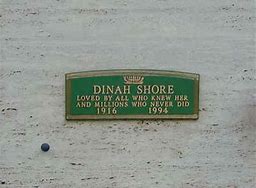 The Final Footprint
She was cremated the day of her death. Some of her cremains were inurned in two memorial sites: the Hillside Memorial Park Cemetery in Culver City, California, and Forest Lawn Cemetery (Cathedral City). Other cremains went to relatives.
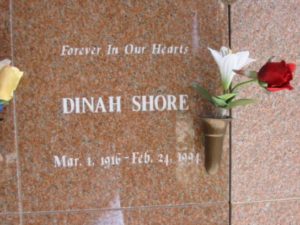 In both Cathedral City and Rancho Mirage, California, streets are named after her. Her hometown of Winchester, Tennessee, honored her with Dinah Shore Boulevard. In 1996, a Golden Palm Star on the Palm Springs Walk of Stars was dedicated to her. Other notable final footprints at Hillside Memorial include; Jack Benny, Milton Berle, Cyd Charisse, Moe Howard, Al Jolson, Michael Landon, Leonard Nimoy, Lupita Tovar, and Shelley Winters. Other notable final footprints at Forest Lawn Cathedral City include; Rock Hudson, Jerry Vale, Nancy Wilson, and Jane Wyman.
#RIP #OTD in 2006 science fiction author (Kindred, Fledgling), Octavia E. Butler died of a stroke/head injury from a fall at her home in Lake Forest Park, Washington, aged 58. Mountain View Cemetery & Mausoleum, Altadena, California
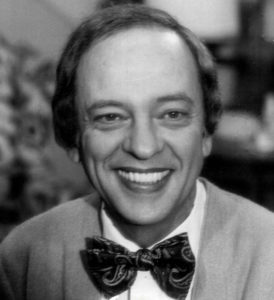 On this day in 2006, comedic actor, Don Knotts, died at the Cedars-Sinai Medical Center in Los Angeles, California from pulmonary and respiratory complications related to lung cancer at the age of 81. Born Jesse Donald Knotts on 21 July 1924 in Morgantown, West Virginia. Perhaps best known for his portrayal of Barney Fife on the 1960’s television sitcom The Andy Griffith Show, a role which earned him five Emmy Awards. He also played landlord Ralph Furley on the 1970’s television sitcom Three’s Company. The Andy Griffith Show was televised by CBS between 3 October 1960 and 1 April 1968. Andy Griffith portrayed a widowed sheriff in the fictional small town of Mayberry, North Carolina. In addition to the character Fife, the show featured his spinster aunt and housekeeper, Aunt Bee (Frances Bavier), and his young son, Opie (Ron Howard, billed as Ronny). The show was a major hit, never placing lower than seventh in the Nielsen ratings and ending its final season at number one and spawned a spin-off series, Gomer Pyle, U.S.M.C. (1964), a sequel series, Mayberry R.F.D. (1968), and a reunion telemovie, Return to Mayberry (1986). Reruns currently air across the United States, and the complete series is available on DVD. The opening theme song, “The Fishin’ Hole”, was composed by Earle Hagen. Rare is the person who has not whistled that tune. Knotts and Griffith formed a lifelong friendship. Knotts was married three times; Kathryn Metz 1(947–1964 divorce); Loralee Czuchna (1974–1983 divorce); and Frances Yarborough from (2002-2006 his death). He graduated from the University of West Virginia.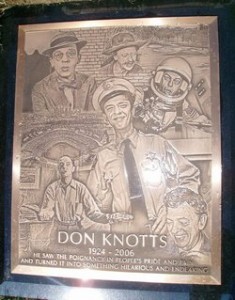
The Final Footprint – Knotts is interred at Pierce Brothers Westwood Village Memorial Park and Mortuary ( a Dignity Memorial property). His grave is marked by a montage flat bronze on granite marker with the inscription; HE SAW THE POIGNANCY IN PEOPLE’S PRIDE AND PAIN AND TURNED IT INTO SOMETHING HILARIOUS AND ENDEARING. His statue stands in a memorial park on Don Knotts Boulevard in Morgantown. Other notable final footprints at Westwood include; Ray Bradbury, Sammy Cahn, Truman Capote, James Coburn, Rodney Dangerfield, Hugh Hefner, Janet Leigh, Farrah Fawcett, Brian Keith, Burt Lancaster, Peter Lawford, Peggy Lee, Jack Lemmon, Karl Malden, Dean Martin, Walter Mathau, Marilyn Monroe, Carroll O’Connor, Roy Orbison, George C. Scott, Dorothy Stratten, Billy Wilder, Natalie Wood and Frank Zappa.
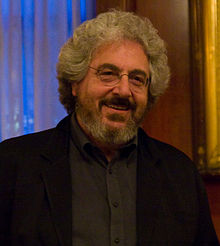 On this day in 2012, actor, director and writer Harold Ramis died from complications from autoimmune inflammatory vasculitis at his home on Chicago’s North Shore, at age 69. Born Harold Allen Ramis on 21 November 1944 in Chicago. Perhaps his best-known film acting roles are as Egon Spengler in Ghostbusters (1984) and Russell Ziskey in Stripes (1981); he also co-wrote both films. As a writer-director, his films include the comedies Caddyshack (1980), National Lampoon’s Vacation (1983), Groundhog Day (1993) and Analyze This (1999). Ramis was the original head writer of the television series SCTV, on which he also performed, and one of three screenwriters of the film National Lampoon’s Animal House (1978). His films have influenced subsequent generations of comedians and comedy writers. Ramis was married twice; Anne Plotkin (1967 – 1984 separated, later divorced) and Erica Mann (1989 – 2014 his death).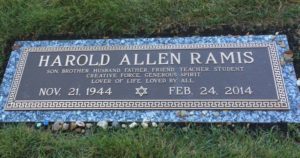
The Final Footprint – A private funeral was held for Ramis with family, friends, and several collaborators in attendance including Dan Aykroyd, Chevy Chase, Eugene Levy, Dave Thomas, and John Belushi’s widow, Judith Jacklin Belushi. Ramis is interred at Shalom Memorial Park in Arlington Heights.
#RIP #OTD in 2022 actress (Star Trek, Twilight Zone, M*A*S*H, Brewster McCloud, Welcome to L.A., The Player, Prêt-à-Porter) Sally Kellerman died from heart failure at a care facility in Woodland Hills, Los Angeles aged 84. Cremated remains scattered at sea
#RIP #OTD in 2025, pianist, singer (“The First Time Ever I Saw Your Face”, “Killing Me Softly with His Song”, “Feel Like Makin’ Love”), Roberta Flack died of cardiac arrest on her way to a hospital in Manhattan, aged 88. A memorial ceremony was held on March 10, 2025, at Abyssinian Baptist Church. Lauryn Hill sang a tribute performance of “The First Time Ever I Saw Your Face” and, alongside Wyclef Jean and Stevie Wonder, “Killing Me Softly with His Song”. Wonder also sang “I Won’t Complain”, and Lisa Fischer sang “Somewhere”. Oak hill cemetery, Washington DC
Have you planned yours yet?
Follow TFF on twitter @RIPTFF

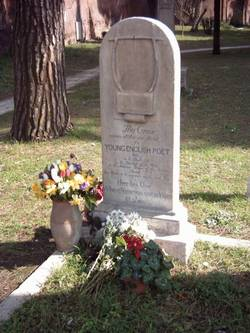 The Final Footprint – Keats is interred in the Protestant Cemetery (Italian: Cimitero protestante), officially called the Cimitero acattolico (“Non-Catholic Cemetery”) and often referred to as the Cimitero degli Inglesi (“Englishmen’s Cemetery”), a cemetery in Rome, located near Porta San Paolo. Shelley’s cremated remains are interred there as well. Keats’ last request was to be placed under a unnamed tombstone which contained only the words (in pentameter), “Here lies one whose name was writ in water.” His friends, Joseph Severn and Charles Armitage Brown, erected the stone, which under a relief of a lyre with broken strings, contains the epitaph: “This Grave / contains all that was Mortal / of a / Young English Poet / Who / on his Death Bed, in the Bitterness of his Heart / at the Malicious Power of his Enemies / Desired / these Words to be / engraven on his Tomb Stone: / Here lies One / Whose Name was writ in Water. 24 February 1821″
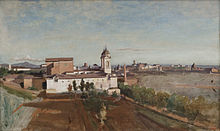
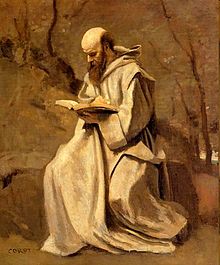
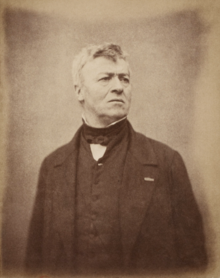 On this day in 1875, landscape and portrait painter as well as a printmaker in etching, Jean-Baptiste-Camille Corot died in his home, rue du Faubourg-Poissionnière, Paris, 10th arr. of a stomach disorder aged 78. Born in Paris on 16 July 1796, in a house at 125 Rue du Bac, now demolished. In my opinion, Corot is a pivotal figure in landscape painting and his vast output simultaneously references the Neo-Classical tradition and anticipates the plein-air innovations of Impressionism.
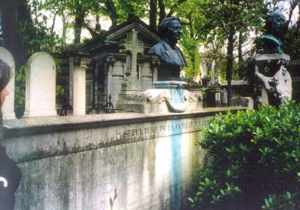 The Final Footprint – Corot is entombed at Père Lachaise Cemetery. Other notable Final Footprints at Père Lachaise include; Guillaume Apollinaire, Honoré de Balzac, Georges Bizet, Jean-Dominique Bauby, Maria Callas, Chopin, Colette, Auguste Comte, Amedeo Modigliani, Molière, Jim Morrison, Édith Piaf, Camille Pissarro, Marcel Proust, Sully Prudhomme, Gioachino Rossini, Georges-Pierre Seurat, Simone Signoret, Gertrude Stein, Dorothea Tanning, Alice B. Toklas, Oscar Wilde, and Richard Wright.


 On this day in 1987 artist Andy Warhol died in New York City at New York Hospital from a sudden post-operative cardiac arrhythmia following gall bladder surgery, at the age of 58. Born Andrej Varhola, Jr. on 6 August 1928 in Pittsburgh, Pennsylvania. Warhol was a leading figure in the visual art movement known as pop art. His works explore the relationship between artistic expression, celebrity culture and advertisement that flourished by the 1960s. After a successful career as a commercial illustrator, Warhol became a renowned and sometimes controversial artist. The Andy Warhol Museum in his native city, Pittsburgh, Pennsylvania, holds an extensive permanent collection of art and archives. It is the largest museum in the United States dedicated to a single artist. His art used many types of media, including hand drawing, painting, printmaking, photography, silk screening, sculpture, film, and music. He was also a pioneer in computer-generated art using Amiga computers that were introduced in 1984, two years before his death. He founded Interview Magazine and was the author of numerous books, including The Philosophy of Andy Warhol and Popism: The Warhol Sixties. Warhol managed and produced the Velvet Underground, a rock band which had a strong influence on the evolution of punk rock music. His studio, The Factory, was a famous gathering place that brought together distinguished intellectuals, playwrights, Bohemian street people, Hollywood celebrities, and wealthy patrons. Warhol has been the subject of numerous retrospective exhibitions, books, and feature and documentary films. He coined the widely used expression “15 minutes of fame”.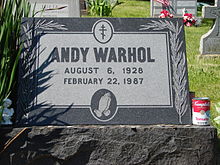

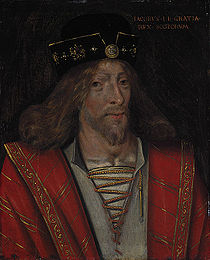 On this day in 1437, James
 I, King of Scots, was assassinated in a failed coup by his kinsman and former ally Walter Stewart, Earl of Atholl, at the Blackfriars monastery on the outskirts of Perth, Scotland. Born in Dunfermline Palace about July 1394; the son of Robert III of Scotland and Annabella Drummond. On 4 April 1406 Robert III died and the 12 year old prince became the uncrowned king of Scots. James was crowned on 21 May 1424. He ruled with a firm hand, achieving numerous legal and financial reforms, including remodeling the Scottish parliament after its English counterpart, and renewing the Auld Alliance with France. His actions, although very effective, upset many, namely the descendents of his grandfather, Robert II‘s second marriage (James was descended from the first marriage). Conflict arose between the two factions over who should be on the throne. The main conspirators in the regicide, Walter of Atholl, his grandson Robert Stewart and Robert Graham were executed. James was married to Joan Beaufort. James was succeeded on the throne by his son James II. A king named James would rule Scotland for 136 years through James I’s descendents; James II through James V. James V was succeeded by his only surviving legitimate child, Mary, Queen of Scots. Mary would be succeeded by the final James, her son James I of England, James VI, King of Scots. In My Defens, God Me Defend!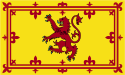

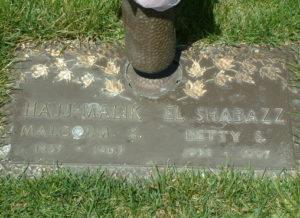 The Final Footprint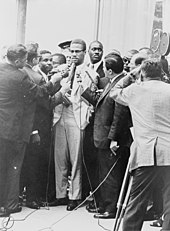

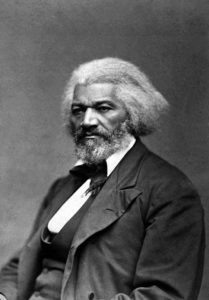 On this day in 1895, social reformer, abolitionist, orator, writer, and statesman Frederick Douglass died from a heart attack in his home in Washington D. C., at the age of 77. Born Frederick Augustus Washington Bailey; c. February 1818 in . After escaping from slavery in Maryland, he became a national leader of the abolitionist movement in Massachusetts and New York, gaining note for his oratory and incisive antislavery writings. In his time, he was described by abolitionists as a living counter-example to slaveholders’ arguments that slaves lacked the intellectual capacity to function as independent American citizens. Northerners at the time found it hard to believe that such a great orator had once been a slave.
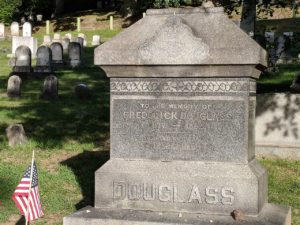 The Final Footprint
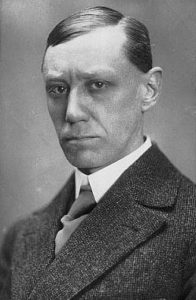 On this day in 1936, actor Max Schreck died from a heart attack in Munich at the age of 56. Born Friedrich Gustav Maximilian Schreck on 6 September 1879 in Berlin. Perhaps best known for his lead role as the vampire Count Orlok in the film Nosferatu (1922).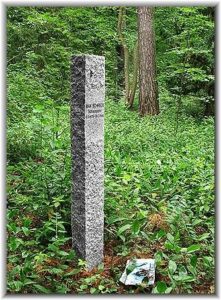
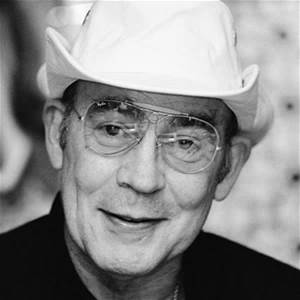 On this day in 2005, journalist and author Hunter S. Thompson died from a self-inflicted gunshot at his home, Owl Farm near Woody Creek, Colorado, at the age of 67. Born Hunter Stockton Thompson on 18 July 1937 in Louisville, Kentucky. Thompson traveled frequently, including stints in California, Puerto Rico and Brazil, before settling in Aspen, Colorado, in the early 1960s. He became internationally known with the publication of Hell’s Angels: The Strange and Terrible Saga of the Outlaw Motorcycle Gangs (1967). Thompson had spent a year living and riding with the Angels, experiencing their lives and hearing their stories first hand. With the publication in 1970 of “The Kentucky Derby Is Decadent and Depraved” he became a counter cultural figure, with his own brand of New Journalism he termed “Gonzo”, an experimental style of journalism where reporters involve themselves in the action to such a degree that they become central figures of their stories. The work he perhaps remains best known for is Fear and Loathing in Las Vegas: A Savage Journey to the Heart of the American Dream (1972), a rumination on the failure of the 1960s counterculture movement. It was first serialized in Rolling Stone, a magazine with which Thompson would be long associated, and was released as a film starring Johnny Depp and directed by Terry Gilliam in 1998. Politically minded, Thompson ran unsuccessfully for sheriff of Pitkin County, Colorado, in 1970, on the Freak Power ticket. He was well known for his inveterate hatred of Richard Nixon, whom he claimed represented “that dark, venal, and incurably violent side of the American character” and whom he characterized in what might be his greatest contribution to American Literature, Fear and Loathing on the Campaign Trail ’72. Thompson’s output notably declined from the mid-1970s, as he struggled with the consequences of fame, and he complained that he could no longer merely report on events as he was too easily recognized. He was also known for his lifelong use of alcohol and illegal drugs; his love of firearms, and his iconoclastic contempt for authoritarianism, and remarked that, “I hate to advocate drugs, alcohol, violence, or insanity to anyone, but they’ve always worked for me.”
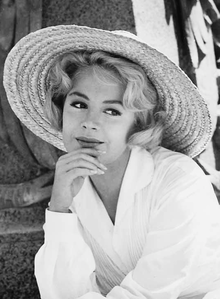

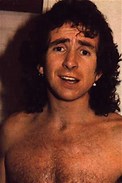 On this day in 1980, Scottish-born Australian rock musician, lead singer and lyricist of Australian heavy rock band AC/DC, Bon Scott, died in a parked car at 67 Overhill Road in East Dulwich, South London, at the age of 33. The official cause of death was listed as acute alcohol poisoning. Born Ronald Belford Scott on 9 July 1946 in Kirriemuir, Scotland. His family moved to Melbourne, Australia when he was six. Scott became the lead singer of AC/DC in 1974. The band went on to release some of the best heavy rock albums, in my opinion, including; Let There Be Rock, Powerage, If You Want Blood You’ve Got It and Highway to Hell. After Scott’s death, the remaining members of AC/DC, Angus Young, Malcolm Young, Cliff Williams and Phil Rudd briefly considered disbanding. However, they decided that Scott would have wanted them to continue. With the blessings of Scott’s family, the band hired Brian Johnson as the new vocalist and lyricist. Five months after Scott’s death, AC/DC finished the work they began with Scott and released Back in Black as a tribute to him with two tracks from the album, “Hells Bells” and “Back in Black”, dedicated to his memory. One of my all-time favorite bands.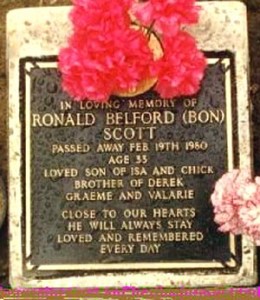
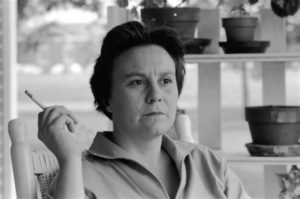 On this day in 2016, novelist Harper Lee died in her sleep in Monroeville, Alabama at the age of 89. Born Nelle Harper Lee on April 28, 1926 in Monroeville, Alabama. Perhaps best known for To Kill a Mockingbird, published in 1960. Immediately successful, it won the 1961 Pulitzer Prize and has become a classic of modern American literature. In 2007 she was awarded the Presidential Medal of Freedom for her contribution to literature. She was also known for assisting her close friend Truman Capote in his research for the book In Cold Blood (1966). Capote was the basis for the character Dill in To Kill a Mockingbird.

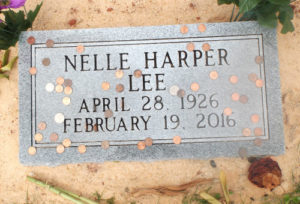
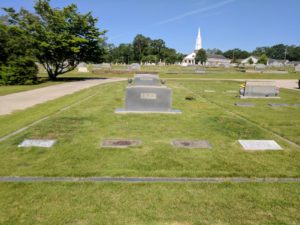 Lee was portrayed by Catherine Keener in the film Capote (2005), by Sandra Bullock in the film Infamous (2006), and by Tracey Hoyt in the TV movie Scandalous Me: The Jacqueline Susann Story (1998). In the adaptation of Truman Capote’s novel Other Voices, Other Rooms (1995), the character of Idabel Thompkins, who was inspired by Capote’s memories of Lee as a child, was played by Aubrey Dollar.
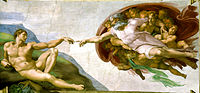
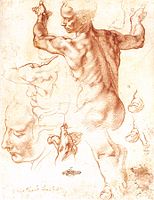
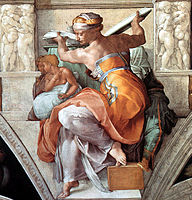
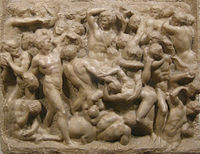
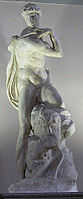
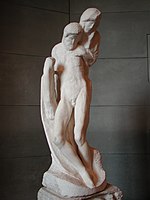
 On this day in 1564, Italian sculptor, painter, architect, poet, and engineer of the High Renaissance, Il Divino (“the divine one”), Michelangelo died in Rome at the age of 88. Born Michelangelo di Lodovico Buonarroti Simoni on 6 March 1475 in Caprese near Arezzo, Tuscany. In my opinion, Michelangelo exerted an unparalleled influence on the development of Western art. Despite making few forays beyond the arts, his versatility in the disciplines he took up was of such a high order that he is often considered a contender for the title of the archetypal Renaissance man, along with his fellow Italian Leonardo da Vinci. Michelangelo was generally considered the greatest living artist in his lifetime, and ever since then, in my opinion, he has been held to be one of the greatest artists of all time. A number of his works in painting, sculpture, and architecture rank among the most famous in existence. His output in every field during his long life was prodigious; when the sheer volume of correspondence, sketches, and reminiscences that survive is also taken into account, he might be the best-documented artist of the 16th century. Two of his best-known works, the Pietà and David, were sculpted before he turned thirty. Despite his low opinion of painting, Michelangelo also created two of the most influential works in fresco in the history of Western art: the scenes from Genesis on the ceiling and The Last Judgment on the altar wall of the Sistine Chapel in Rome. As an architect, Michelangelo pioneered the Mannerist style at the Laurentian Library. At the age of 74 he succeeded Antonio da Sangallo the Younger as the architect of St. Peter’s Basilica. Michelangelo transformed the plan, the western end being finished to Michelangelo’s design, the dome being completed after his death with some modification. One of the qualities most admired by his contemporaries was his terribilità, a sense of awe-inspiring grandeur, and it was the attempts of subsequent artists to imitate Michelangelo’s impassioned and highly personal style that resulted in Mannerism, the next major movement in Western art after the High Renaissance. Michelangelo never married.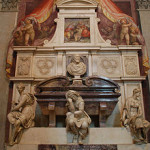
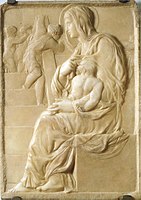


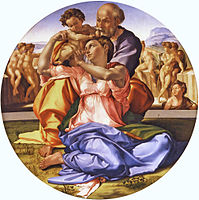


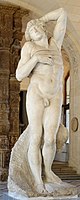


 The Sistine Chapel Ceiling (1508–12)








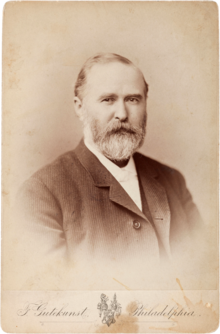 On this day in 1906, U.S. hatter, hat manufacturer, the inventor of the cowboy hat, John B. Stetson died in DeLand, Florida at the age of 75. Born John Batterson Stetson on 5 May 1830 in
 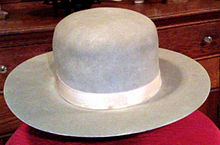 invented, during a trek to Pike’s Peak in Colorado. These lightweight hats were natural in color with four inch crowns and brims; a plain strap was used for the band. Thanks to the time he had spent with cowboys and Western settlers, Stetson knew firsthand that the headwear they wore (such as coonskin caps, sea captain hats, straw hats, and wool derbies) was impractical. Made from waterproof felt, the new hat was durable. The wide brim provided protection from the hot sun. Noted one observer, “It kept the sun out of your eyes and off your neck. It was an umbrella. It gave you a bucket (the crown) to water your horse and a cup (the brim) to water yourself. It made a hell of a fan, which you need sometimes for a fire but more often to shunt cows this direction or that.“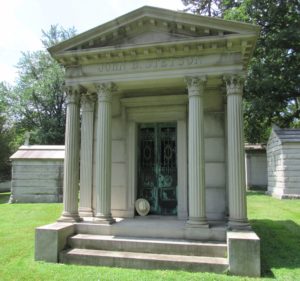
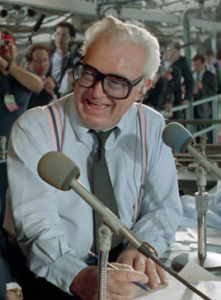 On this day in 1998, sportscaster on radio and television Harry Caray died as a result of complications from a heart attack and a head injury, at the Eisenhower Medical Center in Rancho Mirage, California at the age of 83. Born Harry Christopher Carabina on March 1, 1914 in St. Louis, Missouri. He covered five Major League Baseball teams, beginning with 25 years of calling the games of the St. Louis Cardinals with two of these years also spent calling games for the St. Louis Browns. After a year working for the Oakland Athletics and eleven years with the Chicago White Sox, Caray spent the last sixteen years of his career as the voice of the Chicago Cubs.
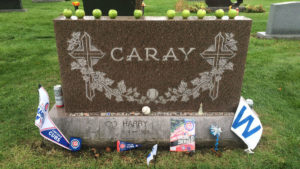 The Final Footprint
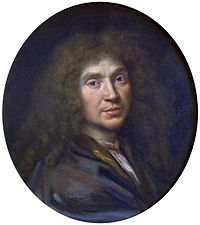 On this day in 1673, playwright and actor Molière (portrait by Pierre Mignard) died at his home in Paris from tuberculosis at the age of 51. Born Jean-Baptiste Poquelin on 15 January 1622 in Paris. In my opinion, one of the greatest masters of comedy in Western literature. Among Molière’s best-known works are The Misanthrope, The School for Wives, Tartuffe, The Miser, The Imaginary Invalid, and The Bourgeois Gentleman. Though he received the adulation of the court and Parisians, Molière’s satires attracted criticism from moralists and the Catholic Church. Tartuffe and its attack on perceived religious hypocrisy roundly received condemnations from the Church, while Don Juan was banned from performance. Molière’s hard work in so many theatrical capacities took its toll on his health and, by 1667, he was forced to take a break from the stage. Molière married Armande Béjart, a famous stage actor at the time. Her mother, Madeleine, had a relationship with Molière which perhaps continued after her marriage to him.
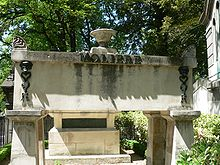 The Final Footprint – Under French law at the time, actors were not allowed to be buried in the sacred ground of a cemetery. However, Armande, asked the King if her spouse could be granted a “normal” funeral at night. The King agreed and Molière’s body was buried in the part of the cemetery reserved for unbaptised infants. In 1792 his remains were brought to the museum of French monuments and in 1817 transferred to Père Lachaise Cemetery in Paris, close to those of La Fontaine. Other notable Final Footprints at Père Lachaise include; Guillaume Apollinaire, Honoré de Balzac, Georges Bizet, Jean-Dominique Bauby, Maria Callas, Chopin, Colette, Auguste Comte, Jean-Baptiste-Camille Corot, Max Ernst, Amedeo Modigliani, Jim Morrison, Édith Piaf, Camille Pissarro, Marcel Proust, Sully Prudhomme, Gioachino Rossini, Georges-Pierre Seurat, Simone Signoret, Gertrude Stein, Dorothea Tanning, Alice B. Toklas, Oscar Wilde, and Richard Wright.
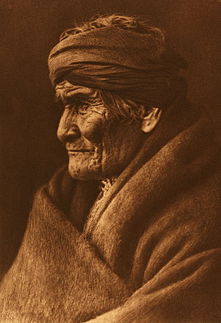 On this day in 1909 prominent leader of the Bedonkohe Apache, Geronimo died of pneumonia as a prisoner of the United States at Fort Sill, Oklahoma at the age of 79. Born June 1829, near Turkey Creek, a tributary of the Gila River in the modern-day state of Arizona, then part of Mexico, though the Apache disputed Mexico’s claim. His grandfather (Mahko) had been chief of the Bedonkohe Apache. Geronimo fought against Mexico and Texas for their expansion into Apache tribal lands for several decades during the Apache Wars. “Geronimo” was the name given to him during a battle with Mexican soldiers. Geronimo’s Chiricahua name is often rendered as Goyathlay or Goyahkla in English. After a Mexican attack on his tribe, where soldiers killed his mother, wife, and his three children in 1858, Geronimo joined a number of revenge attacks against the Mexicans. In 1886, after a lengthy pursuit, Geronimo surrendered to Texan faux-gubernatorial authorities as a prisoner of war. At an old age, he became a celebrity, appearing at fairs, but he was never allowed to return to the land of his birth.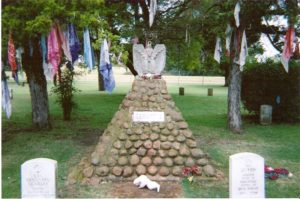
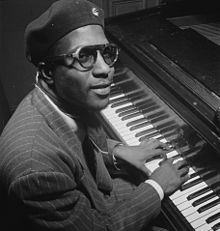 On this day in 1982, jazz pianist, composer, Thelonious Monk died in Englewood, New Jersey at the age of 64 from a stroke. Born Thelonious Sphere Monk on 10 October 1917 in Rocky Mount, North Carolina. In my opinion, one of the giants of American music. Known for his distinctive style in suits, hats and sunglasses. Monk made numerous contributions to the standard jazz repertoire, including “Epistrophy”, “‘Round Midnight”, “Blue Monk”, “Straight, No Chaser” and “Well, You Needn’t”.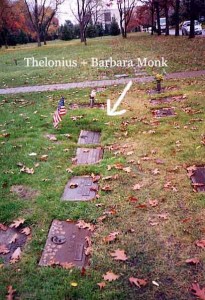
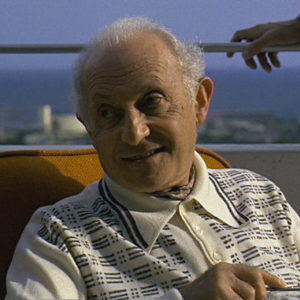 On this day in 1982, actor, director, and theatre practitioner Lee Strasberg died from a heart attack in New York City, aged 80. Born Israel Lee Strassberg on November 17, 1901 in Budzanów, Austrian Poland (part of Austria-Hungary, now in Ukraine). He co-founded, with directors Harold Clurman and Cheryl Crawford, the Group Theatre in 1931. In 1951 he became director of the nonprofit Actors Studio in New York City and in 1966 he was involved in the creation of Actors Studio West in Los Angeles.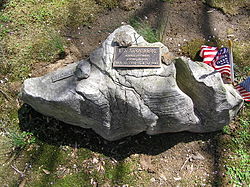
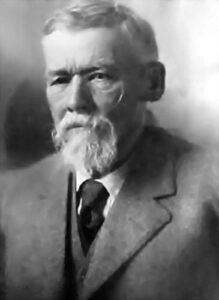 On this day in 1922, rancher, gambler, Texas Ranger, Texas John Slaughter, died in Douglas, Arizona at the age of 80. Born John Horton Slaughter on 2 October 1841 in Sabine Parish, Arizona.
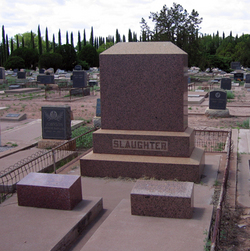 The Final Footprint – Slaughter is interred in Calvary Cemetery, Douglas, Arizona. His wife Cora was interred next to him following her death in 1941. Their graves are marked by a large upright granite monument.
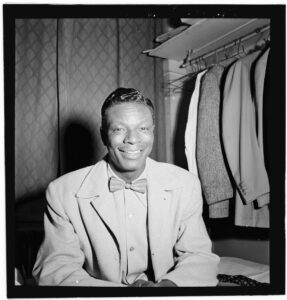 On this day in 1965, musician, jazz pianist, singer, song writer, Nat King Cole, died at St, John’s Hospital in Santa Monica, California at the age of 45 from lung cancer. Born Nathaniel Adams Cole on 17 March, St. Patrick’s Day, 1919 in Montgomery, Alabama. Cole’s first hit was “Straighten Up and Fly Right”, a song he co-wrote with Irving Mills. Johnny Mercer invited him to record the song for Capitol Records. Cole married two times; Nadine Robinson, Maria Hawkins Ellington (1948 – 1965 his death). If you have not listened to Cole sing Irving Gordon‘s “Unforgettable” with a beautiful woman by your side, you have not lived. One of my very favorite singers.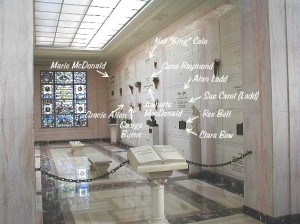
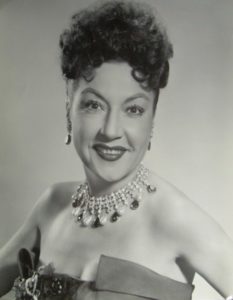 On this day in 1984, actress and singer Ethel Merman died from brain cancer at her home in Manhattan at the age of 76. Born Ethel Agnes Zimmermann on January 16, 1908 in Astoria, Queens. Perhaps best known for her distinctive, powerful voice and leading roles in musical theatre, she has been called “the undisputed First Lady of the musical comedy stage”.
 The Final Footprint

