#RIP #OTD in 1808 Lord Byron’s Landseer dog, Boatswain, died of rabies. Byron wrote “Epitaph to a Dog” and had it inscribed on Boatswain’s tomb, which is larger than Byron’s, at Newstead Abbey, Byron’s estate, in Nottinghamshire, England
On this day in 1909 poet (Cendres et Poussières, La Vénus des aveugles, A l’heure des mains jointes, Flambeaux éteints, Sillages, Poèmes en Prose, Dans un coin de violettes, Haillons), “Muse of the Violets”, who wrote in French, in the style of the Symbolistes and the Parnassiens, Renée Vivien died in Paris from pneumonia, aged 32. Born Pauline Mary Tarn in London on 11 June 1877.
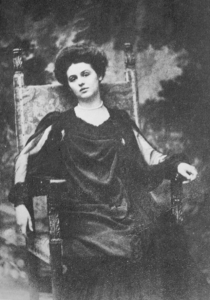
A high-profile lesbian in the Paris of the Belle Époque, she is notable for her work, which has received more attention following revival of interest in Sapphic verse. Many of her poems are autobiographical, pertaining mostly to Baudelarian themes of extreme romanticism and frequent despair. Apart from poetry, she wrote several works of prose, including L’Etre Double (inspired by Coleridge’s Christabel), and an unfinished biography of Anne Boleyn, which was published posthumously. She has been the object of multiple biographies, most notably by Jean-Paul Goujon, André Germain, and Yves-Gerard Le Dantec.
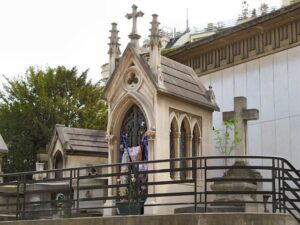 The Final Footprint
Above all, Vivien romanticized death. While visiting London in 1908, deeply despondent, she tried to kill herself by drinking an excess of laudanum. She stretched out on her divan with a bouquet of violets held over her heart. The suicide failed, but while in England, she contracted pleurisy; later, upon her return to Paris, she grew considerably weaker. According to biographer Jean-Paul Goujon, Vivien suffered from chronic gastritis, due to years of chloral hydrate and alcohol abuse. She had also started to refuse to eat. By the summer of 1909, she walked with a cane.
The cause of death was reported at the time as “lung congestion”, but likely resulted from pneumonia complicated by alcoholism, drug abuse, and anorexia nervosa. She was interred at Passy Cemetery in the same exclusive Parisian neighbourhood where she had lived.
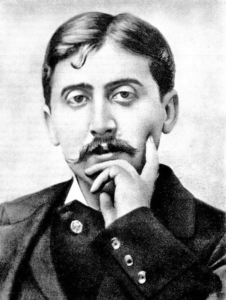 On this day in 1922, novelist Marcel Proust, died in Paris at the age of 51. Born Valentin Louis Georges Eugène Marcel Proust on 10 July 1871 in Auteuil, France. Author of the monumental À la recherche du temps perdu (In Search of Lost Time; earlier translated as Remembrance of Things Past). It was published in seven parts totaling about 3200 pages between 1913 and 1927. W. Somerset Maugham called the novel the “greatest fiction to date”. Graham Greene called Proust the “greatest novelist of the 20th century”.
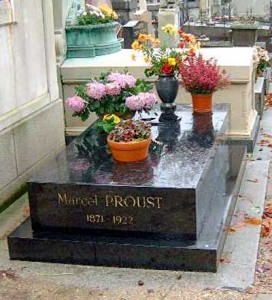 The Final Footprint – Proust is entombed in an individual above ground crypt in the Père Lachaise Cemetery in Paris. Père Lachaise is the largest cemetery in Paris and one of the most visited cemeteries in the world. Other notable Final Footprints at Père Lachaise include; Guillaume Apollinaire, Honoré de Balzac, Georges Bizet, Jean-Dominique Bauby, Maria Callas, Chopin, Colette, Auguste Comte, Jean-Baptiste-Camille Corot, Ma Ernst, Molière, Jim Morrison, Édith Piaf, Camille Pissarro, Sully Prudhomme, Gioachino Rossini, Georges-Pierre Seurat, Simone Signoret, Gertrude Stein, Dorothea Tanning, Alice B. Toklas, Oscar Wilde, and Richard Wright.
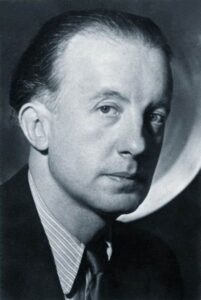 On this day in 1952 poet (Capitale de la douleur, L’Amour la Poésie, “Liberté”) a founder of the Surrealist movement Paul Éluard died from a heart attack at his home, in Charenton-le-Pont, Paris, aged 56. Born Eugène Émile Paul Grindel in Saint-Denis, Seine-Saint-Denis on 14 December 1895.
In 1916, he chose the name Paul Éluard, a matronymic borrowed from his maternal grandmother. He adhered to Dadaism and became one of the pillars of Surrealism by opening the way to artistic action politically committed to the Communist Party.
During World War II, he was the author of several poems against Nazism that circulated clandestinely. He became known worldwide as The Poet of Freedom and in my opinion, is the most gifted of French surrealist poets.
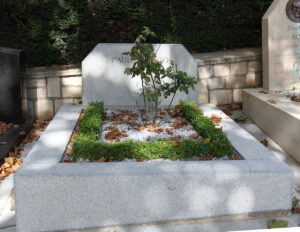 The Final Footprint
His funeral was held in the Père Lachaise Cemetery and organized by the French Communist Party. The French government refused to organise a national funeral for political reasons. A crowd of thousands spontaneously gathered in the streets of Paris to accompany Éluard’s casket to the cemetery. That day, Robert Sabatier wrote: “the whole world was mourning”.
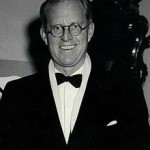 On this day in 1969, American businessman, investor, and government official, patriarch of the Kennedy Family, Joseph Kennedy died in Hyannis Port, Massachusetts at the age of 81. Born Joseph Patrick Kennedy on 6 September 1888 in Boston. He was the father of U.S. President John F. Kennedy, United States Attorney General and Senator Robert F. Kennedy, United States Senator Edward M. Kennedy, naval officer Joseph P. Kennedy, Jr., Special Olympics co-founder Eunice Kennedy Shriver, and former U.S. Ambassador to Ireland Jean Kennedy Smith. He was a leading member of the Democratic Party and of the Irish Catholic community. Kennedy was the inaugural Chairman of the U.S. Securities and Exchange Commission (SEC), appointed by President Franklin D. Roosevelt (FDR), and later directed the Maritime Commission. Kennedy served as the United States Ambassador to the United Kingdom from 1938 until late 1940, including the early part of World War II. Kennedy was educated at Harvard University, and embarked on a career in finance, making a large fortune as a stock market and commodity investor and by investing in real estate and a wide range of industries. During World War I, he was an assistant general manager of a Boston area Bethlehem Steel shipyard, through which he developed a friendship with FDR, then Assistant Secretary of the Navy. In the 1920s Kennedy made huge profits from reorganizing and refinancing several Hollywood studios, ultimately merging several acquisitions into Radio-Keith-Orpheum (RKO) studios. After Prohibition ended in 1933, Kennedy consolidated an even larger fortune when he traveled to Scotland with FDR’s son, James Roosevelt, to buy distribution rights for Scotch whisky. His company, Somerset Importers, became the exclusive American agent for Gordon’s Gin and Dewar’s Scotch. He owned the largest office building in the country at that time, Chicago’s Merchandise Mart, giving his family an important base in that city and an alliance with the Irish-American political leadership there. His term as ambassador and his political ambitions ended abruptly during the Battle of Britain in November 1940, with the publishing of his controversial remarks suggesting that “Democracy is finished in England. It may be here, [in the US].” Kennedy resigned under pressure shortly afterwards. In later years, Kennedy worked behind the scenes to continue building the financial and political fortunes of the Kennedy family. Kennedy married Rose Elizabeth Fitzgerald, the eldest daughter of Boston Mayor John Francis “Honey Fitz” Fitzgerald (political rival of his father P. J. Kennedy) and Mary Josephine “Josie” Hannon. The marriage joined two of the city’s most prominent Irish-American political families. The couple had nine children, four boys and five girls. Kennedy survived all but one of his sons and one of his daughters.
The Final Footprint – Kennedy is interred in the Kennedy private family estate in Holyhood Cemetery in Brookline, Massachusetts.
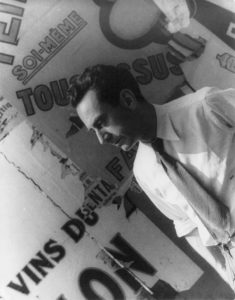 On this day in 1976, visual artist, Man Ray died in Paris from a lung infection at the age of 86. Born Emmanuel Radnitzky on August 27, 1890 in Philadelphia. He spent most of his career in Paris. He was a significant contributor to the Dada and Surrealist movements. He produced major works in a variety of media but considered himself a painter above all. Perhaps best known for his fashion and portrait photography. Man Ray is also noted for his work with photograms, which he called “rayographs” in reference to himself.
In 1913, Man Ray met his first wife, the Belgian poet Adon Lacroix (Donna Lecoeur) (1887–1975), in New York. They married in 1914, separated in 1919, and formally divorced in 1937.
In July 1921, Man Ray went to live and work in Paris, France. He soon settled in the Montparnasse quarter favored by many artists. Shortly after arriving in Paris, he met and fell in love with Kiki de Montparnasse (Alice Prin), an artists’ model and celebrated character in Paris bohemian circles. Kiki was Man Ray’s companion for most of the 1920s. She became the subject of some of his most famous photographic images and starred in his experimental films, Le Retour à la Raison and L’Étoile de mer. In 1929, he began a love affair with the Surrealist photographer Lee Miller. Miller left him in 1932.
Man Ray was in a relationship with the model Adrienne Fidelin during some time between 1936 and 1940, the two parting ways after Ray fled the Nazi occupation in France, while Adrienne chose to stay behind to care for her family.
Man Ray was forced to return from Paris to the United States due to the Second World War. He lived in Los Angeles from 1940 to 1951 where he focused his creative energy on painting. A few days after arriving in Los Angeles, Man Ray met Juliet Browner, a first-generation American of Romanian-Jewish lineage. She was a trained dancer, who studied dance with Martha Graham, and an experienced artists’ model. The two married in 1946 in a double wedding with their friends Max Ernst and Dorothea Tanning.
Man Ray returned to Paris in 1951, and settled with Juliet into a studio at 2 bis rue Ferou near the Luxembourg Gardens in St. Germain des Pres, where he continued his creative practice across mediums.
In 1963, he published his autobiography, Self-Portrait, which was republished in 1999.

1919, Seguidilla, airbrushed gouache, pen & ink, pencil, and colored pencil on paperboard, 55.8 × 70.6 cm, Hirshhorn Museum and Sculpture Garden, Smithsonian Institution, Washington, D.C.

1920, Three Heads (Joseph Stella and Marcel Duchamp, painting bust portrait of Man Ray above Duchamp), gelatin silver print, 20.7 x 15.7 cm, Museum of Modern Art, New York
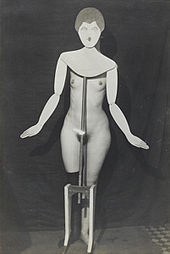
1920, The Coat-Stand (Porte manteau), reproduced in New York dada (magazine), Marcel Duchamp and Man Ray, April 1921

Lampshade, reproduced in 391, n. 13, July 1920

1922, Untitled Rayograph, gelatin silver photogram, 23.5 x 17.8 cm

with Salvador Dalí in Paris, on June 16, 1934 making “wild eyes” for photographer Carl Van Vechten
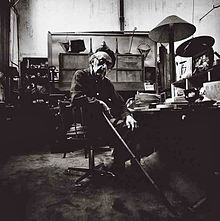
portrayed by Lothar Wolleh, Paris, 1975
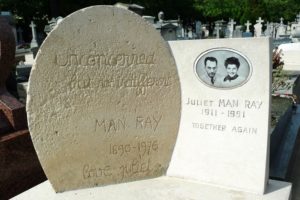
Paris 2011
The Final Footprint
He was interred in the Cimetière du Montparnasse in Paris. Ray’s epitaph reads “unconcerned, but not indifferent”. When Juliet Browner died in 1991, she was interred in the same tomb. Her epitaph reads “together again”. Juliet organized a trust for his work and donated much of his work to museums. Her plans to restore the studio as a public museum proved too expensive; such was the structure’s disrepair. Most of the contents were stored at the Pompidou Center. Other notable Final Footprints at Montparnasse include; Charles Baudelaire, Samuel Beckett, Simone de Beauvoir, Emmanuel Chabrier, César Franck, Guy de Maupassant, Adah Isaacs Menken, Man Ray, Camille Saint-Saëns, Jean-Paul Sartre, Jean Seberg, and Susan Sontag.
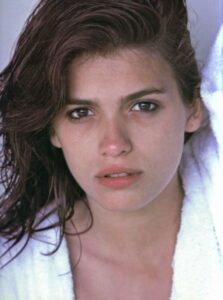 On this day in 1986 supermodel Gia Carangi died of AIDS-related complications at Hahnemann University Hospital, Philadelphia, aged 26. Born Gia Marie Carangi in January 29, 1960 in Philadelphia.
Considered by many to be the first supermodel. She was featured on the cover of many magazines, including multiple editions of Vogue and Cosmopolitan, and appeared in advertising campaigns for luxury fashion houses such as Armani, Dior, Versace and Yves Saint Laurent.
After Carangi became addicted to heroin, her career rapidly declined. As she had spent most of her modeling earnings on drugs, Carangi spent the final three years of her life with various lovers, friends, and family members in Philadelphia and Atlantic City. She was admitted to an intense drug treatment program at Eagleville Hospital in December 1984. After treatment, she got a job in a clothing store, which she eventually quit. She later found employment as a checkout clerk and then worked in the cafeteria of a nursing home. By late 1985, she had begun using drugs again and was engaging in sex work in Atlantic City. Her life was dramatized in the 1998 HBO television film, Gia directed by Michael Cristofer and starring Angelina Jolie as Carangi.
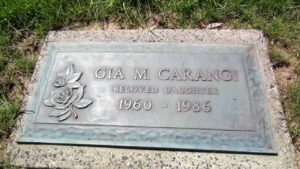 The Final Footprint
In December 1985, Carangi was admitted to Warminster General Hospital in Warminster, Pennsylvania, with bilateral pneumonia. A few days later, she was diagnosed with AIDS-related complex. In the fall of 1986, Carangi was hospitalized again after being found on the street badly beaten and raped. On October 18, she was admitted to Hahnemann University Hospital. Carangi died becoming one of the first famous women to die of the disease. Her funeral was held on November 23 at a small funeral home in Philadelphia. No one from the fashion world attended. However, weeks later, Francesco Scavullo, Carangi’s friend and confidant, sent a Mass card when he heard the news. Sunset Memorial Park, Feasterville, Pennsylvania.
Carangi is often considered to be the first supermodel, although that title has been applied to others, including Margaux Hemingway, Audrey Munson, Lisa Fonssagrives, Dorian Leigh, Twiggy, Jean Shrimpton, and Janice Dickinson. Model Cindy Crawford, who rose to prominence the year Carangi died, was referred to as “Baby Gia” because of her resemblance to Carangi. Crawford later recalled, “My agents took me to all the photographers who liked Gia: Albert Watson, Francesco Scavullo, Bill King. Everyone loved her look so much that they gladly saw me.” Additionally, Carangi, whose sexual orientation has been reported as either lesbian or bisexual, is considered a lesbian icon and is said to have “epitomized lesbian chic more than a decade before the term was coined.” Argentine model Mica Argañaraz has often been compared to Carangi, whom she considers a beauty icon.
Carangi’s life has been the subject of several works. A biography of Carangi by Stephen Fried titled Thing of Beauty—taken from the first line of John Keats’ famous poem Endymion—was published in 1993. Gia, a biographical television film starring Angelina Jolie, debuted on HBO in 1998. Jolie won a Golden Globe Award and a Screen Actors Guild Award for her performance, among other accolades. A documentary titled The Self-Destruction of Gia, released in 2003, showcased footage of Carangi, contemporary interviews with Carangi’s family and former colleagues, including Sandy Linter, and footage of actress-screenwriter Zoë Lund, herself a heroin addict, who had been commissioned to write a screenplay based upon Carangi’s life at the time of her own death of drug-related causes in 1999.
A biography of Carangi by Sacha Lanvin Baumann titled Born This Way: Friends, Colleagues, and Coworkers Recall Gia Carangi, the Supermodel Who Defined an Era, was published in 2015. Sondra Scerca, who brought Carangi to Wilhelmina, is currently writing a memoir titled GIA, WILLY and ME, which will be released in 2022. The AIDS Memorial Quilt contains one panel with Carangi’s full name on it that only commemorates her, one panel that refers to her as Gia that only commemorates her, and one panel that refers to her as Gia and commemorates other people as well as her.
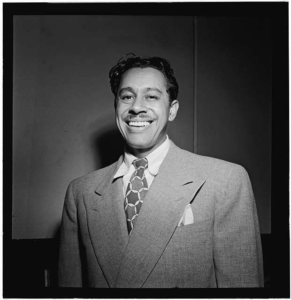 On this day in 1994, jazz singer, dancer, bandleader and actor Cab Calloway died from pneumonia in a nursing home in Hockessin, Delaware, at the age of 86. Born Cabell Calloway III on December 25, 1907 in Rochester, New York. He was associated with the Cotton Club in Harlem, New York City, where he was a regular performer and became a popular vocalist of the swing era. His niche of mixing jazz and vaudeville won him acclaim during a career that spanned over 65 years.
Calloway was a master of energetic scat singing and led one of the United States’ most popular big bands from the early 1930s to the late 1940s. His band included trumpeters Dizzy Gillespie, Jonah Jones, and Adolphus “Doc” Cheatham, saxophonists Ben Webster and Leon “Chu” Berry, guitarist Danny Barker, bassist Milt Hinton, and drummer Cozy Cole.
Calloway had several hit records in the 1930s and 1940s, becoming known as the “Hi-de-ho” man of jazz for his most recognized song, “Minnie the Moocher”, originally recorded in 1931. He reached the Billboard charts in five consecutive decades (1930s–1970s). Calloway also made several stage, film, and television appearances until his death in 1994 at the age of 86. He had roles in Stormy Weather (1943), Porgy and Bess (1953), The Cincinnati Kid (1965), and Hello Dolly! (1967). His career saw renewed interest in 1980 when he appeared in The Blues Brothers.
Calloway was the first African-American musician to sell a million records from a single song and to have a nationally syndicated radio show. In 1993, Calloway received the National Medal of Arts from the United States Congress.
Calloway married his first wife Wenonah “Betty” Conacher in July 1928. They divorced in 1949. Calloway married Zulme “Nuffie” MacNeal on October 7, 1949.
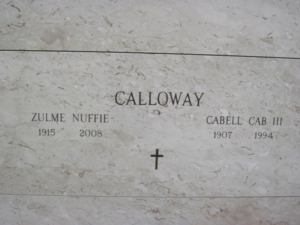 The Final Footprint
Calloway is entombed in Ferncliff Cemetery and Mausoleum in Hartsdale, New York. Other notable Final Footprints at Ferncliff include: Aaliyah, James Baldwin, Joan Crawford, Jerome Kern, Thelonious Monk, Oscar Hammerstein II, and Ed Sullivan.
He posthumously received the Grammy Lifetime Achievement Award in 2008. His song “Minnie the Moocher” was inducted into the Grammy Hall of Fame in 1999 and added to the Library of Congress’ National Recording Registry in 2019. He is also inducted into the Big Band and Jazz Hall of Fame and the International Jazz Hall of Fame.
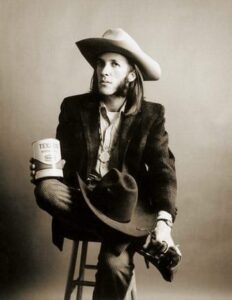 On this day in 1999, musician, singer-songwriter and multi-instrumentalist Doug Sahm died from a heart attack in Taos, New Mexico, aged 58. Born Douglas Wayne Sahm in San Antonio, Texas on 6 November 1949.
Sahm is regarded as one of the main figures of Tex-Mex music, and as an important performer of Texan Music. He gained fame along with his band, the Sir Douglas Quintet, with a top-twenty hit in the United States and the United Kingdom with “She’s About a Mover” (1965). Sahm was influenced by the San Antonio music scene that included conjunto and blues, and later by the hippie scene of San Francisco. With his blend of music, he found success performing in Austin, Texas, as the hippie counterculture soared in the 1970s.
Sahm began singing at age five and learned to play the steel guitar at age six. He was considered a child prodigy on the instrument. By the age of eight, he had appeared on the Louisiana Hayride. He made his recording debut as “Little Doug” in 1955, and was influenced by rock and roll during his teenage years. Sahm had local hit records, while he played clubs as a musician for other bands. In 1965, Huey P. Meaux produced Sahm and the Sir Douglas Quintet’s “She’s About a Mover”. The same year, Sahm moved to California. In 1971, he returned to San Antonio, and soon after he moved to Austin. Atlantic Records signed Sahm and released his debut solo album Doug Sahm and Band in 1973.
After a continuing decline in record sales, Sahm kept performing in clubs in Austin, and moved through different record labels. Meanwhile, he enjoyed success in Sweden and in Canada. In 1989, Sahm formed the supergroup the Texas Tornados with fellow Tex-Mex musicians Augie Meyers, Freddy Fender and Flaco Jiménez. The Texas Tornados toured successfully, and one of their releases earned a Grammy Award. In 1999, Sahm died during a vacation trip. A posthumous album, The Return of Wayne Douglas, was released in 2000. Sahm received multiple honors in the state of Texas, including hall of fame inductions and memorials in public places.
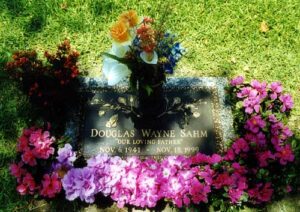 The Final Footprint
Sahm decided to take a vacation trip to New Mexico. He planned to visit a friend in Taos, then continue to a cabin in the Sangre de Cristo Range and finish the trip with a visit to Dan Healy in San Francisco. Sahm left for New Mexico after a brief visit with his son Shawn in Boerne, Texas. During the trip, Sahm called his son to inform him he had been feeling sick and that he often had to pull over to vomit. Sahm checked into the Kachina Lodge Hotel in Taos. His son continued calling him over the next few days. Sahm’s girlfriend, Debora Hanson, and Shawn offered to fly to New Mexico and drive him back to Texas. Sahm initially refused, but he agreed to drive himself to Albuquerque, New Mexico, to meet Hanson there for the drive back to Texas. As his condition worsened, he asked a clerk about local doctors. They advised him to visit the local emergency room, but he did not do so. Sahm was found dead in his hotel room. Local authorities determined it to be a death by natural causes, but an autopsy was ordered. The results of the autopsy determined that Sahm died of arteriosclerotic cardiovascular disease, described as a heart attack. The Austin Music Network aired a three-hour tribute to Sahm, while KUT dedicated an episode of one of its shows to his music. A memorial concert was announced to take place at Antone’s in December 1999.
On November 23, 1999, Sahm’s funeral took place at the Sunset Memorial Home in San Antonio. Loudspeakers were placed outside of the funeral home for the service to be heard by the estimated one thousand mourners in attendance. According to the Austin American Statesman, the crowd consisted of people “across all lines of age, race and social standing”. The viewing lasted an hour and a half, as the mourners passed Sahm’s casket and left keepsakes. Fender chose not to attend the funeral to avoid distracting the crowds with his presence. Sahm was buried in a private ceremony at Sunset Memorial Park in San Antonio, next to his mother and father.
In July 2000, the songs recorded at the Cherry Ridge Studios sessions the previous year were released on the posthumous album The Return of Wayne Douglas.
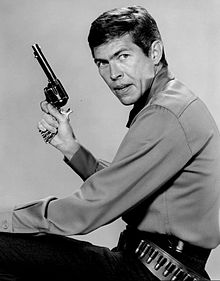 On this day in 2002, Academy Award winning actor James Coburn died of heart attack while listening to music in his Beverly Hills home at the age of 77. Born James Harrison Coburn III in Laurel, Nebraska on 31 August 1928. Coburn was featured in over 70 films and made 100 television appearances during his 45-year career, winning an Academy Award for his supporting role as Glen Whitehouse in Affliction. His rugged and “cool” persona made him a prpminent tough guy in numerous leading and supporting roles in westerns and action films, such as The Magnificent Seven (1960), The Great Escape (1963), Major Dundee (1965), Our Man Flint (1966), In Like Flint (1967), Duck, You Sucker! (1971), Pat Garrett and Billy the Kid (1973), Charade (1963) and Cross of Iron (1977). Coburn married twice; Beverly Kelly (1959 – 1979 divorce) and Paula Murad (1993 – 2002 his death).
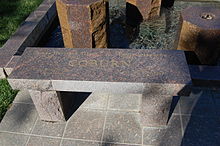 The Final Footprint – Coburn was cremated and his cremains were inurned in Westwood Village Memorial Park Cemetery (a Dignity Memorial® provider) in Los Angeles, California, and marked by a stone bench inscribed with his name. Other notable final footprints at Westwood include; Ray Bradbury, Sammy Cahn, Truman Capote, Rodney Dangerfield, Farrah Fawcett, Brian Keith, Don Knotts, Hugh Hefner, Burt Lancaster, Peter Lawford, Peggy Lee, Janet Leigh, Jack Lemmon, Karl Malden, Dean Martin, Walter Matthau, Marilyn Monroe, Carroll O’Connor, Roy Orbison, George C. Scott, Dorothy Stratten, Natalie Wood, and Frank Zappa.
Have your planned yours yet?
Follow TFF on twitter @RIPTFF

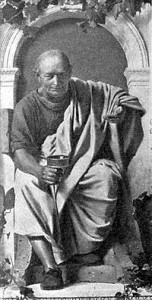 On this day in 8 BC, Roman lyric poet, Horace died in Rome at the age of 56. Born Quintus Horatius Flaccus on 8 December 65 BC in the Samnite south of Italy. The rhetorician Quintillian regarded his Odes as just about the only Latin lyrics worth reading: “He can be lofty sometimes, yet he is also full of charm and grace, versatile in his figures, and felicitously daring in his choice of words.” Horace also crafted hexameter verses (Sermones and Epistles) and iambic poetry (Epodes). The satirist Persius commented: “as his friend laughs, Horace slyly puts his finger on his every fault; once let in, he plays about the heartstrings”. His career coincided with Rome’s momentous change from Republic to Empire. An officer in the republican army defeated at the Battle of Philippi in 42 BC, he was befriended by Octavian’s right-hand man in civil affairs, Maecenas, and became a spokesman for the new regime. For some commentators, his association with the regime was a balance in which he maintained a strong measure of independence (he was “a master of the graceful sidestep”) but for others he was, in John Dryden‘s phrase, “a well-mannered court slave”. (Drawing of Horace, as imagined by Anton von Werner.)
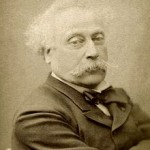 On this day in 1895, French author and dramatist, the son of Alexandre Dumas, père, Alexandre Dumas, fils died at Marly-le-Roi, Yvelines, at the age of 71. Born 27 July 1824 in Paris. When he was 20 years old, Dumas moved to Saint-Germain-en-Laye to live with his father. There, he met Marie Duplessis, a young courtesan who would be the inspiration for his romantic novel The Lady of the Camellias (La Dame aux camélias), wherein Duplessis was named Marguerite Gauthier. Adapted into a play, it was titled Camille in English and became the basis for Verdi’s 1853 opera, La Traviata, Duplessis undergoing yet another name change, this time to Violetta Valery. Dumas married Nadjeschda von Knorring (1867 – 1895 her death) and Henriette Régnier de La Brière (1895–1895 his death).
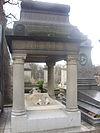 The Final Footprint – Dumas was interred in the Cimetière de Montmartre in Paris. His grave is only some 100 metres away from that of Duplessis. The film Pretty Woman (1990), starring Richard Gere as Edward Lewis and Julia Roberts as Vivian Ward, has a similar plot as La Traviata and Lewis takes Ward to see the opera, her first. Other notable final footprints at Montmartre include; Hector Berlioz, Dalida, Edgar Degas, Marie Duplessis, Théophile Gautier, Gustave Moreau, Henri Murger, Jacques Offenbach, Stendhal, François Truffaut, Horace Vernet, and Alfred de Vigny.
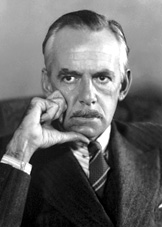 On this day in 1953, playwright and Nobel laureate in literature, Eugene O’Neill, died in room 401 of the Sheraton Hotel on Bay State Road in Boston, Massachusetts, at the age of 65. Born Eugene Gladstone O’Neill on 16 October 1888 in The Barrett Hotel in Times Square. Perhaps best known for his masterpiece Long Day’s Journey Into Night (1957), which waqs published posthumously and won the Pulizer Prize in 1957. In addition to that play I like Mourning Becomes Electra (1931) and The Iceman Cometh (1946). O’Neill married three times; Kathleen Jenkins (divorce), Agnes Boulton (divorce) and Carlotta Monterey (his death). His sons, Eugene Jr. and Shane, both died by suicide. His daughter Oona married actor, director, producer Charlie Chaplin.
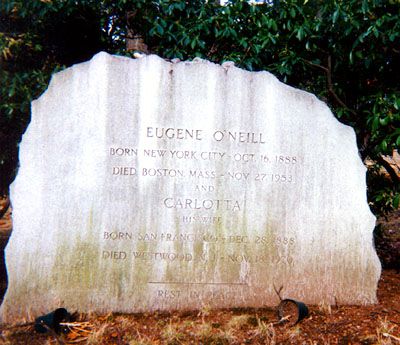 The Final Footprint – O’Neill’s reported last words were; “I knew it. I knew it. Born in a hotel room, and Goddamnit, died in a hotel room.” O’Neill is interred in the Forest Hills Cemetery in Boston’s Jamaica Plain neighborhood. The Barrett hotel where O’Neill was born is now a Starbucks, surprise, and there is a commemorarive birth plaque on the outside wall. A statue of the young O’Neill was installed on the waterfront in Boston.
 On this day in 1504, Isabella the Catholic, queen of Castile and León (Crown of Castile), Isabella I died in Medina del Campo at the age of 53. Born in Madrigal de las Altas Torres, Ávila, to John II of Castile and Isabella of Portugal on 22 April 1451. She and her husband, Ferdinand II of Aragon, brought stability to the kingdoms that became the basis for the political unification of Spain under their grandson, Holy Roman Emperor Charles V. After a struggle to claim her right to the throne, she reorganised the governmental system, brought the crime rate to the lowest it had been in years, and unburdened the kingdom of enormous debt. Isabella’s reforms and those she made with her husband had an influence that extended well beyond the borders of their united kingdoms. Isabella and Ferdinand are known for completing the Reconquista, ordering conversion or exile of their Muslim and Jewish subjects in the Spanish Inquisition, and for supporting and financing Christopher Columbus’s 1492 voyage that led to the opening of the New World. Isabella was granted the title Servant of God by the Catholic Church in 1974.
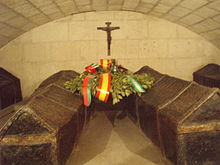 The Final Footprint – Isabella is entombed in Granada in the Capilla Real, which was built by her grandson, Charles V, Holy Roman Emperor (Carlos I of Spain), alongside her husband Ferdinand, her daughter Joanna and Joanna’s husband Philip; and Isabella’s 2-year-old grandson, Miguel (the son of Isabella’s daughter, also named Isabella, and King Manuel I of Portugal). The museum next to the Capilla Real holds her crown and scepter.
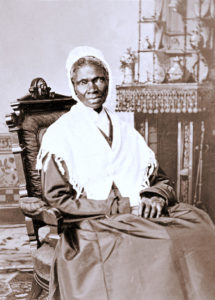 On this day in 1883, abolitionist and women’s rights activist Sojourner Truth died at her Battle Creek, Michigan home, at the approximate age of 86.
 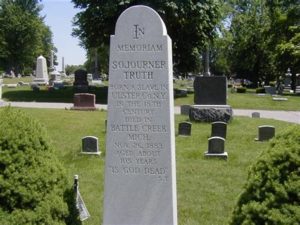 The Final Footprint
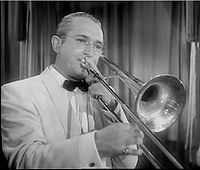 On this day in 1956, jazz trombonist, trumpeter, composer, bandleader of the Big Band era, younger brother of Jimmy, “The Sentimental Gentleman of Swing”, Tommy Dorsey, died at his Greenwich, Connecticut home at the age of 51. Born Thomas Francis Dorsey, Jr. on 19 November 1905 near Shenandoah, Pennsylvania. Dorsey married three times, Mildred Kraft (divorce), Pat Dane (divorce), Jane Carl New (his death).
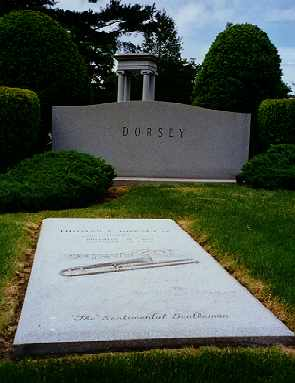 The Final Footprint – Dorsey is interred in the Dorsey Private Hedge Estate in Kensico Cemetery in Valhalla, New York. The estate is marked by a large upright granite marker. His grave is marked by a full ledger granite marker inscribed with a picture of sheet music and a trombone and his nickname, The Sentimental Gentleman.
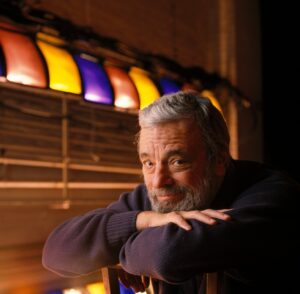 On this day in 2021 composer and lyricist Stephen Sondheim died of cardiovascular disease at his home in Roxbury, Connecticut, at the age of 91. Born Stephen Joshua Sondheim on March 22, 1930, in New York City
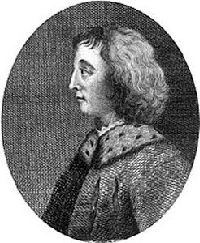
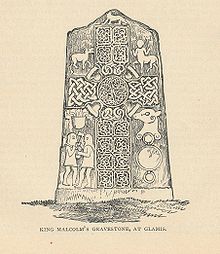
 On this day in 1763, author Abbé Prévost died at the age of 66 in Chantilly, France. Born Antoine François Prévost d’Exiles on 1 April 1697 at Hesdin, Artois. While living in the Hague, he engaged on a translation of De Thou’s Historia, and, relying on the popularity of his first book, published at Amsterdam a Suite in three volumes, forming volumes v, vi, and vii of the original Mémoires et aventures d’un homme de qualité. The seventh volume contained the famous Manon Lescaut, separately published in Paris in 1731 as Histoire du Chevalier des Grieux et de Manon Lescaut. The book was eagerly read, chiefly in pirated copies, being forbidden in France. Puccini‘s opera, Manon Lescaut is based on the novel.
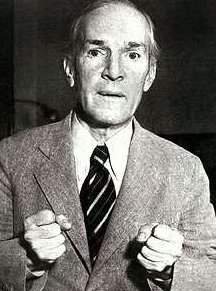 On this day in 1968, writer Upton Sinclair died in a nursing home in Bound Brook, New Jersey at the age of 90. Born Upton Beall Sinclair Jr. on September 20, 1878 in Baltimore, Maryland. Sinclair’s work was well known and popular in the first half of the 20th century, and he won the Pulitzer Prize for Fiction in 1943.
 The Final Footprint
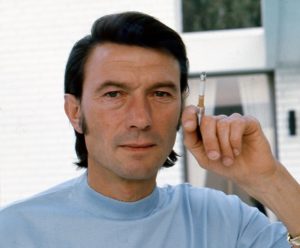 On this day in 1973, actor Laurence Harvey died from stomach cancer in Hampstead, London at the age of 45. Born Laruschka Mischa Skikne on 1 October 1928 in Joniškis, Lithuania. In a career that spanned a quarter of a century, Harvey appeared in stage, film and television productions primarily in the United Kingdom and the United States. His performance in Room at the Top (1959) resulted in an Academy Award nomination. That success was followed by the role of William Barret Travis in The Alamo (1960), and as the brainwashed Raymond Shaw in The Manchurian Candidate (1962).
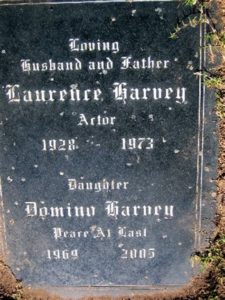 The Final Footprint
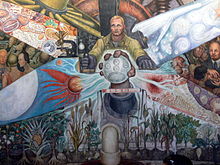
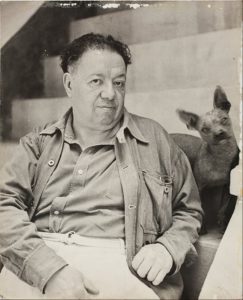 On this day in 1957, painter Diego Rivera died in Mexico City at the age of 70. Born Diego María de la Concepción Juan Nepomuceno Estanislao de la Rivera y Barrientos Acosta y Rodríguez on December 8, 1886 in Guanajuato, Mexico. His large frescoes helped establish the Mexican mural movement in Mexican art. Between 1922 and 1953, Rivera painted murals in, among other places, Mexico City, Chapingo, Cuernavaca, San Francisco, Detroit, and New York City. In 1931, a retrospective exhibition of his works was held at the Museum of Modern Art in New York. Rivera had a volatile marriage with fellow Mexican artist Frida Kahlo.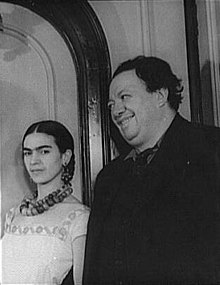




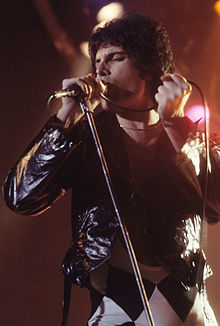 On this day in 1991, singer, songwriter, lyricist, lead singer of Queen, Freddie Mercury died at the age of 45 surrounded by friends at his home in Kensington, London, from bronchial pneumonia resulting from AIDS. Born Farrokh Bulsara in the British protectorate of Sultanate of Zanzibar, East Africa (now part of Tanzania) on 5 September 1946. As a performer, he was known for his flamboyant stage persona and powerful vocals over a four-octave range. As a songwriter, he composed many hits for Queen, including “Bohemian Rhapsody,” “Killer Queen,” “Somebody to Love,” “Don’t Stop Me Now,” “Crazy Little Thing Called Love,” and “We Are the Champions.” In addition to his work with Queen, he led a solo career, and also occasionally served as a producer and guest musician (piano or vocals) for other artists.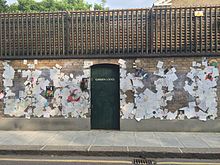
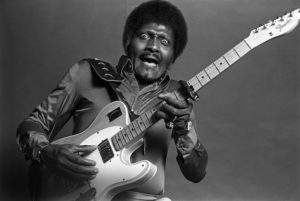 On this day in 1993, electric blues guitarist and singer, The Master of the Telecaster, The Ice Man, Albert Collins died from cancer at his home in Las Vegas at the age of 61. Born Albert Gene Drewery on October 1, 1932 in Leona, Texas. Known for his distinctive guitar style, using powerful playing and altered tunings and a capo.
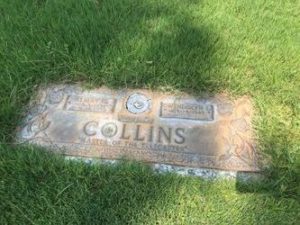 The Final Footprint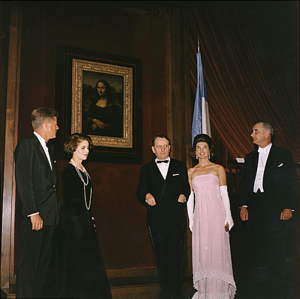
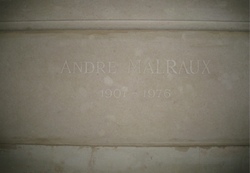 The Final Footprint – Malraux was cremated and his cremains were interred in the Verrières-le-Buisson (Essonne) cemetery. In 1996 on the twentieth anniversary of his passing, in honor of his contributions to French culture, his ashes were moved to the Panthéon in Paris. The Panthéon is a secular mausoleum containing the remains of distinguished French citizens. Other notable Final Footprints at the Panthéon include: Victor Hugo, Louis Braille, Pierre and Marie Curie, and Alexandre Dumas, père, Jean-Jacques Rousseau, Voltaire, and Émile Zola.
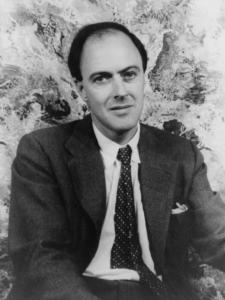 On this day in 1990, Royal Air Force veteran,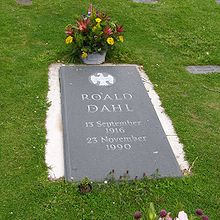
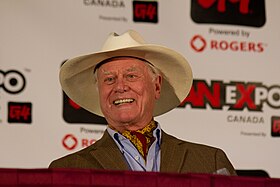
 On this day in 2012, United States Air Force veteran, actor, director, producer, Larry Hagman died at Medical City Dallas Hospital in Dallas, Texas at the age of 81 from complications of acute myeloid leukemia. Born Larry Martin Hagman on September 21, 1931 in Fort Worth, Texas. Perhaps best known for playing oil baron J.R. Ewing in the 1980s primetime television soap opera Dallas and astronaut Major Anthony “Tony” Nelson in the 1960s sitcom I Dream of Jeannie.


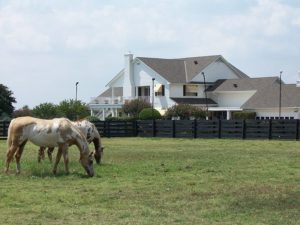 The Final Footprint
 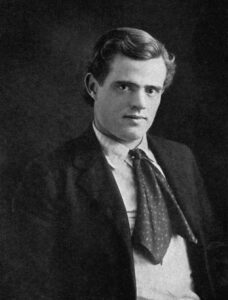 On this day in 1916 novelist, journalist and activist, Jack London died at his ranch in Glen Ellen, California, aged 40. A pioneer of commercial fiction and American magazines, he was one of the first American authors to become an international celebrity and earn a large fortune from writing. He was also an innovator in the genre that would later become known as science fiction.
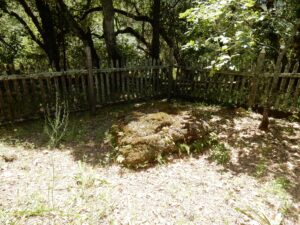 The Final Footprint
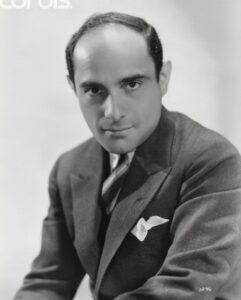 On this day in 1943 lyricist Lorenz Hart died in New York City of pneumonia from exposure, aged 48. Born Lorenz Milton Hart in Harlem on 2 May 1895. He was half of the Broadway songwriting team Rodgers and Hart. Some of his more famous lyrics include “Blue Moon”, “The Lady Is a Tramp”, “Manhattan”, “Bewitched, Bothered and Bewildered”, and “My Funny Valentine”.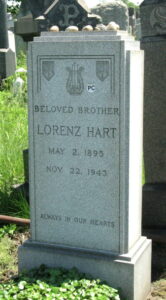
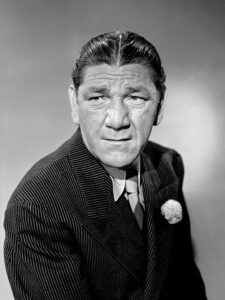 On this day in 1955 actor and comedian Shemp Howard died from a heart attack in Hollywood, at the age of 60. Born Samuel Horwitz in Bensonhurst in Brooklyn, on March 17, 1895.
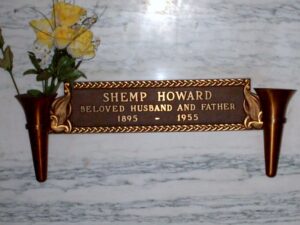 The Final Footprint
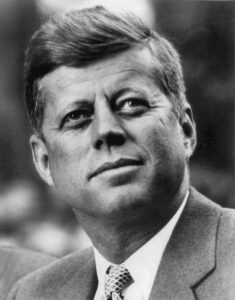 On this day in 1963, U.S. Navy veteran, U.S. Congressman, U.S. Senator, the 35th President of the U.S., author, American Icon, Jack, JFK, John F. Kennedy, died in Dallas, Texas at the age of 46. Born John Fitzgerald Kennedy on 29 May 1917 at 83 Beals Street in Brookline, Massachusetts. He graduated from Harvard in 1940 with a degree in international affairs. Kennedy met his future wife Jacqueline Lee “Jackie” Bouvier at a dinner party. They married 12 September 1953. They had four children; Arabella (23 August 1956 – 23 August 1956), Caroline Bouvier (27 November 1957 – ), John Fitzgerald Jr. (25 November 1960 – 16 July 1999), Patrick Bouvier (7 August 1963 – 9 August 1963). On Tuesday 8 November 1960, Kennedy won the presidential election over Republican Vice President Richard M. Nixon. The Kennedys were popular on a level more common with movie stars than politicians. This popularity and his charisma led to his administration being referred to as Camelot. The Kennedys travelled to Texas in an attempt to reconcile a widening rift in the Texas Democratic party between the conservative wing led by Governor John B. Connally and the liberal wing led by U.S. Senator Ralph Yarborough and Don Yarborough (no relation). Kennedy was fatally shot while riding in a Presidential motorcade with Jackie, Governor Connally and his wife Nellie Connally. He was succeeded as president by vice president Lyndon Baines Johnson. Conspiracy theories abound as to who was behind the assassination. The Warren Commission finding that Lee Harvey Oswald was the lone gunman has been debated and disputed since the findings were released. Groups behind supposed assassination plots include; the Mafia, the CIA, the Cubans, the Russians, the military industrial complex, or some combination of the above. Mrs. Connally, who as mentioned was riding in the car with JFK, believed to her grave that there was more than one shooter. November 22nd was a Friday that year. All three major networks suspended their regular schedules and switched to all news coverage through November 25th, 70 straight hours. I was three years old and Daddy and Uncle Ben told me later that I was upset because Saturday morning cartoons were not shown.
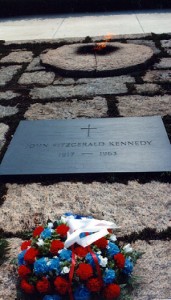 The Final Footprint – Kennedy was interred in a temporary plot at Arlington National Cemetery on 25 November 1960. On 14 March 1967, he was moved to his current plot at Arlington. His grave area is paved with irregular stones of Cape Cod granite, which were quarried around 1817 near the site of the president’s home and selected by members of his family. Clover, and later, sedum were planted in the crevices to give the appearance of stones lying naturally in a Massachusetts field. His grave is lit with an “Eternal Flame”. His brother Robert F. Kennedy was interred nearby following his assassination in 1968. Upon her death in 1994, Jackie was interred next to JFK. Upon his death in 2009, JFK’s brother Edward Kennedy was interred nearby. Other notable Final Footprints at Arlington include; the Space Shuttle Columbia, the Space Shuttle Challenger, Medgar Evers, Jacqueline Bouvier Kennedy Onassis, RFK, Edward Kennedy, Lee Marvin, Audie Murphy and Malcolm Kilduff, Jr.
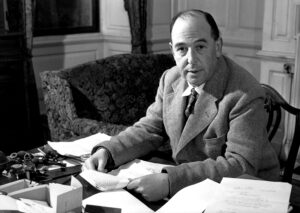 On this day in 1963 writer and lay theologian C. S. Lewis died at his home in Oxford from kidney failure, age 64. Born Clive Staples Lewis in Belfast in Ulster, Ireland (before partition), on 29 November 1898.
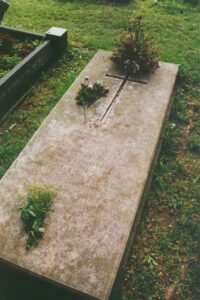 The Final Footprint
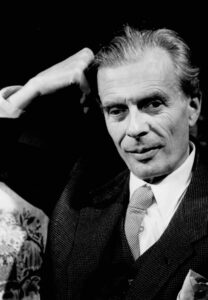 On this day in 1963 writer, philosopher Aldous Huxley died from an assisted intentional overdose of LSD, aged 69. Born Aldous Leonard Huxley in Godalming, Surrey, England, on 26 July 1894.
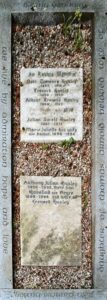 The Final Footprint
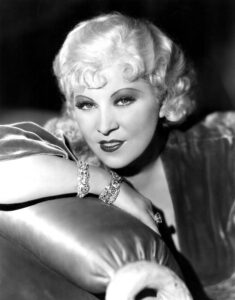 On this day in 1980 actress, playwright, screenwriter, singer, sex symbol Mae West died in Los Angeles, aged 87. Born Mary Jane West on August 17, 1893, in Brooklyn.
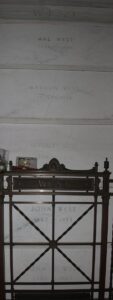 The Final Footprint
 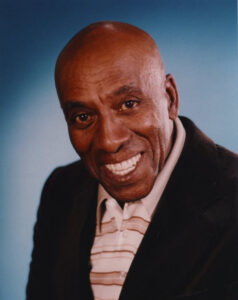 On this day in 1986 actor, singer and musician Scatman Crothers died from lung caner at his home in Van Nuys, California, age 76.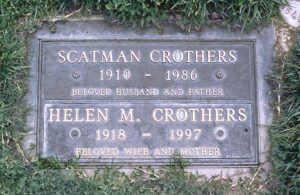
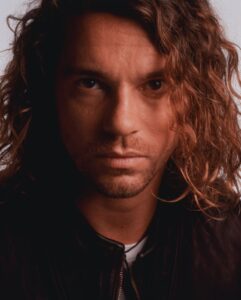 On this day in 1997 singer-songwriter, Michael Hutchence died at the Ritz-Carlton hotel, Double Bay, Sydney, aged 37. Born Michael Kelland John Hutchence on 22 January 1960 in Sydney.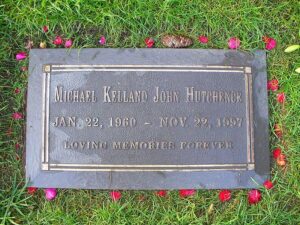
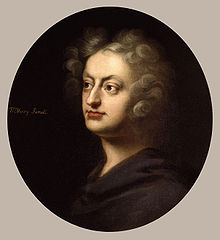 On this day in 1695, organist and Baroque composer, Henry Purcell, died at his home in Dean’s Yard, Westminster at the age of 35 or 36. Born on or about 10 September 1659 in St Ann’s Lane, Old Pye Street, Westminster. His legacy was a uniquely English form of Baroque music, a style of European classical music extending from about 1600 to 1750. This era begins after the Renaissance and was followed by the Classical era. The word “baroque” came from the Portuguese word barroco, meaning “misshapen pearl”. Baroque music forms a major portion of the classical music canon and is associated with composers such as Johann Sebastian Bach, George Frideric Handel, Alessandro Scarlatti, Antonio Vivaldi, Claudio Monteverdi and Purcell. Most importantly to me, it was during this period that opera became established as a musical genre. Purcell’s Dido and Aeneas (c. 1689) is, in my opinion, the first important English opera, and is still performed. Purcell had a direct influence on rock and roll. Apparently, both Pete Townshend of The Who and Queen, list Purcell’s music as an influence on their own.
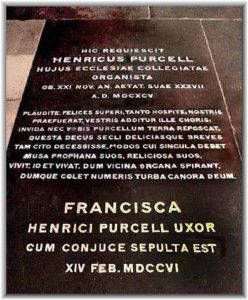 The Final Footprint – Purcell is entombed in Westminster Abbey near the organ in the North Choir Aisle. His epitaph reads: “Here lyes Henry Purcell Esq., who left this life and is gone to that blessed place where only his harmony can be exceeded.” A bronze memorial sculpture by Glynn Williams, The Flowering of the English Baroque, in tribute to Purcell was installed in a park on Victoria St,. Westminster. Other notable Final Footprints at Westminster include; Robert Browning, Lord Byron, Geoffrey Chaucer, Oliver Cromwell, Charles Darwin, Charles Dickens, Edward The Confessor, Elizabeth I, George II, George Friederic Handel, James I (James VI of Scotland), Samuel Johnson, Ben Jonson, Charles II, Edward III, Edward VI, Henry III, Henry V, Henry VII, Richard II, Rudyard Kipling, Henry Wadsworth Longfellow, John Milton, Sir Isaac Newton, Laurence Olivier, Mary I, Mary II, Mary Queen of Scots, Thomas Shadwell, Lord Alfred Tennyson, Dylan Thomas, and William III.
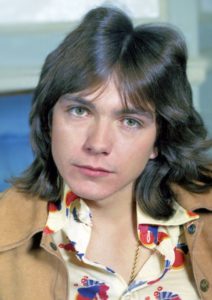 On this day in 2017, actor, singer, songwriter, and guitarist David Cassidy died of liver failure in Fort Lauderdale, Florida at the age of 67. Born David Bruce Cassidy on April 12, 1950 in Manhattan. Perhaps best known for his role as Keith Partridge, the son of Shirley Partridge (played by his stepmother Shirley Jones), in the 1970s musical-sitcom The Partridge Family, which led to his becoming one of popular culture’s teen idols and superstar pop singers of the 1970s. He later had a career in both acting and music.
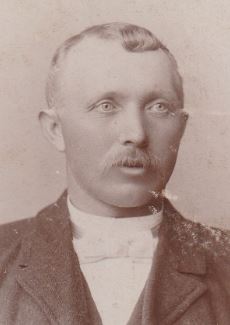 On this day in 1903, American Old West scout, hired gunman, Pinkerton, range detective, cowboy, and soldier Tom Horn executed by hanging in Cheyenne, Wyoming. Born Thomas Horn, Jr. on the Horn family farm in rural northeastern Scotland County, Missouri. Believed to have committed 17 murders as a hired gunman in the West, in 1902 Horn was convicted of the murder of 14-year-old Willie Nickell near Iron Mountain, Wyoming. The boy was the son of sheep rancher Kels Nickell, who had been involved in a range feud with neighbor and cattle rancher Jim Miller.
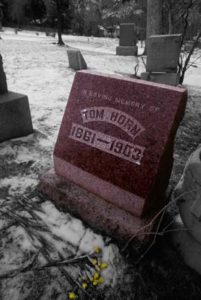 The Final Footprint – Horn was buried in the Columbia Cemetery in Boulder, Colorado on 3 December 1903. Rancher Jim Coble paid for his coffin and a stone to mark his grave. While in jail he wrote his autobiography, Life of Tom Horn: Government Scout and Interpreter (1904), which was published posthumously. Numerous editions have been published of this book since the late 20th century, and debate continues as to whether he was guilty of Nickell’s murder. Horn was portrayed by Steve McQueen in movie Tom Horn (1980). While the film took liberties with facts, McQueen’s performance was highly praised, and the film was well received.
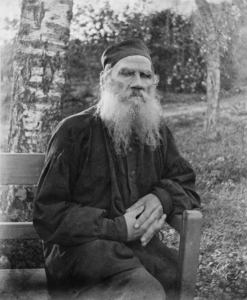 On this day in 1910, writer, Leo Tolstoy, died at the Astapovo railway station, Russia at the age of 82. Born Lyev Nikolayevich Tolstoy on 9 September 1828 in Yasnaya Polyana, the family estate in the Tula region of Russia. Perhaps best known for his masterpieces Anna Karenina (1877) and War and Peace (1869). Some condsider Tolstoy to be the worlds greatest novelist. Tolstoy is also known for his complicated and paradoxical persona and for his extreme moralistic and ascetic views, which he adopted after a moral crisis and spiritual awakening in the 1870s, after which he also became noted as a moral thinker and social reformer. His literal interpretation of the ethical teachings of Jesus, centering on the Sermon on the Mount, caused him in later life to become a fervent Christian anarchist and anarcho-pacifist. His ideas on nonviolent resistance, expressed in such works as The Kingdom of God Is Within You, were to have a profound impact on other thinkers and reformers. On 23 September 1862, Tolstoy married Sophia “Sonya” Andreevna Bers, who was 16 years his junior and the daughter of a court physician. Their relationship was apparently passionate and tumultuous and they had 13 children.
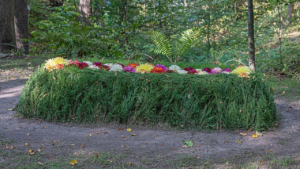 The Final Footprint
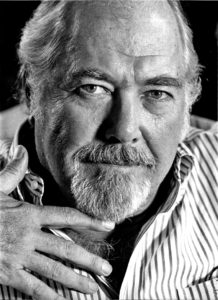 On this day in 2006, film director, screenwriter, and producer, five-time nominee of the Academy Award for Best Director, Robert Altman died from leukemia complications at Cedars-Sinai Medical Center in Los Angeles at the age of 81. Born Robert Bernard Altman on February 20, 1925 in Kansas City, Missouri. An enduring figure from the New Hollywood era, Altman was considered a “maverick” in making films with a highly naturalistic but stylized and satirical aesthetic. In my opinion, he is one of the most influential filmmakers in American cinema.
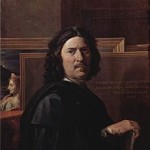 On this day in 1665, classical French painter, Nicolas Poussin, died in Rome at the age of 71. Perhaps the leading painter of the classical French Baroque style, although he spent most of his working life in Rome. He worked in Rome for a circle of leading collectors there and elsewhere, except for a short period when Cardinal Richelieu ordered him back to France to serve as First Painter to the King. Most of his works are history paintings of religious or mythological subjects that often have a large landscape element. He served as inspiration for classically-oriented artists, notably Paul Cézanne.
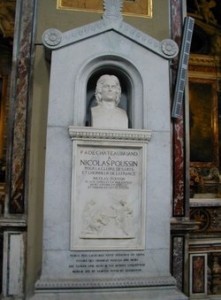 The Final Footprint – Poussin is interred at Basilica di San Lorenzo in Lucina in Rome. The French writer, politician, diplomat and founder of Romanticism in French literature, François-René, vicomte de Chateaubriand, donated the marble memorial in honour of Poussin in 1820. It reads; POUR LA GLORIE DES ARTS ET LHONNEUR DE LA FRANCE.


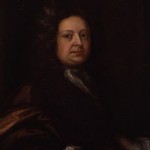 On this day in 1692, English poet and playwright who was appointed poet laureate in 1689, Thomas Shadwell died from an overdose of opium at Chelsea on 19 November 1692. Born ca. 1642 at Stanton Hall, Norfolk, England.
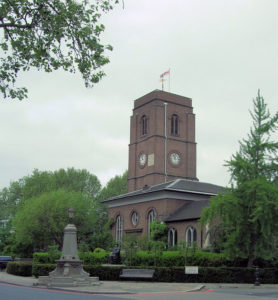 The Final Footprint – Shadwell was interred at Chelsea Old Church which was destroyed during World War II bombing. He has a memorial in Poets’ Corner of Westminster Abbey. Other notable Final Footprints at Westminster include; Robert Browning, Lord Byron, Geoffrey Chaucer, Oliver Cromwell, Charles Darwin, Charles Dickens, Edward The Confessor, Elizabeth I, George II, George Friederic Handel, James I (James VI of Scotland), Samuel Johnson, Ben Jonson, Charles II, Edward III, Edward VI, Stephen Hawking, Henry III, Henry V, Henry VII, Richard II, Rudyard Kipling, Henry Wadsworth Longfellow, John Milton, Sir Isaac Newton, Laurence Olivier, Henry Purcell, Mary I, Mary II, Mary Queen of Scots, Lord Alfred Tennyson, Dylan Thomas, and William III.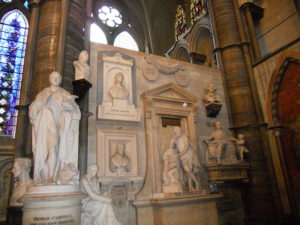
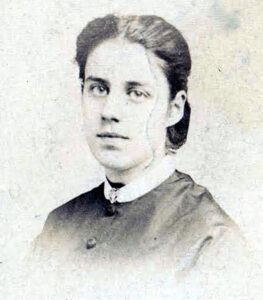 On this day in 1887 author of poetry, prose, and translations, activist Emma Lazarus died from Hodgkin’s lymphoma in New York City, age 38. Born in New York City on July 22, 1849.
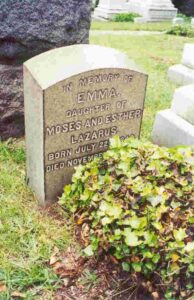 The Final Footprint
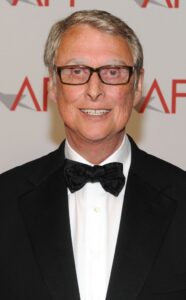 On this day in 2014 film and theater director, producer, actor, and comedian, Mike Nichols died of a heart attack at his apartment in Manhattan, thirteen days after his 83rd birthday. Born Michael Igor Peschkowsky on November 6, 1931 in Berlin.
 On this day in 2017 professional tennis player, Wimbledon Champion Jana Novotná died from cancer with her friends and family in the Czech Republic, age 49. Born on 2 October 1968 in Brno, in the South Moravian Region of the Czech Republic.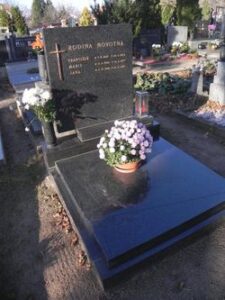
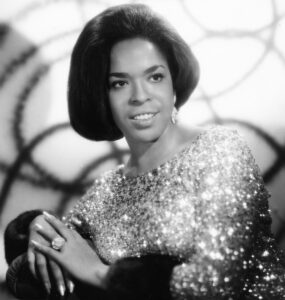 On this day in 2017, singer, actress, and ordained minister whose career spanned seven decades Della Reese died at her home in Encino, Los Angeles, age 86. Born Delloreese Patricia Early on July 6, 1931, in the historic Black Bottom neighborhood of Detroit, Michigan.
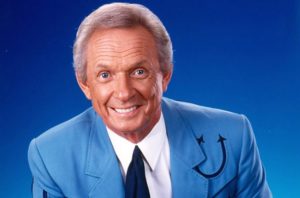 And on this day in 2017, singer and songwriter Mel Tillis died of respiratory failure in Ocala, Florida, at the age of 85. Born Lonnie Melvin Tillis on August 8, 1932 in Tampa, Florida. Although he recorded songs since the late 1950s, his biggest success occurred in the 1970s, with a long list of Top 10 songs.
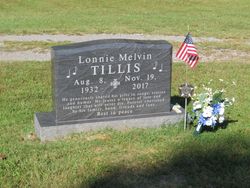 The Final Footprint


