On this day in 1938, novelist Thomas Wolfe died from miliary tuberculosis of the brain at Johns Hopkins Hospital in Baltimore at the age of 37. Born Thomas Clayton Wolfe on 3 October 1900 in Asheville, North Carolina. Haled as either a genius or merely a writer of bad prose. Wolfe wrote four lengthy novels (Look Homeward, Angel; Of Time and the River; You Can’t Go Home Again; The Web and the Rock), plus many short stories, dramatic works and novellas. He is known for mixing highly original, poetic, rhapsodic, and impressionistic prose with autobiographical writing. His books, written and published from the 1920s to the 1940s, vividly reflect on American culture and mores of the period, albeit filtered through Wolfe’s sensitive, sophisticated and hyper-analytical perspective. He became very famous during his own lifetime. After Wolfe’s death, his chief contemporary William Faulkner reportedly said that Wolfe may have had the best talent of their generation. He remains one of the most important writers in modern American literature, as he was one of the first masters of autobiographical fiction. In my opinion, he is North Carolina’s most famous writer.
The Final Footprint – Wolfe is buried in Riverside Cemetery in Asheville. His grave is marked by an upright slanted granite monument. In addition to the birth and death dates the monument is inscribed: TOM, SON OF W. O. AND JULIA E. WOLFE, A BELOVED AMERICAN AUTHOR, “THE LAST VOYAGE, THE LONGEST, THE BEST” LOOK HOMEWARD ANGEL, “DEATH BENT TO TOUCH HIS CHOSEN SON WITH MERCY, LOVE AND PITY AND PUT THE SEAL OF HONOR ON HIM WHEN HE DIED” THE WEB AND THE ROCK. The Thomas Wolfe Society was established in the late 1970s to promote appreciation and study of the works of this famous American author. The Society meets annually in May at locations in the U.S. or Europe visited by Wolfe. Recent conferences have been held in Greenville, South Carolina, Paris, France, and Saint Louis, Missouri. The Society issues an annual publication of Wolfe-related materials, as well as its signature journal, The Thomas Wolfe Review, featuring scholarly articles, belles lettres, and reviews. The Society also awards prizes for literary scholarship on Wolfe.
On this day in 1963, Addie Mae Collins (14), Cynthia Wesley (14), Carole Robertson (14), and Carol Denise McNair (11) were murdered when a bomb exploded under the steps of the 16th Street Baptist Church in Birmingham, Alabama. The white supremacist terrorist bombing was carried out by our members of a local Ku Klux Klan chapter.
Described by Martin Luther King Jr. as “one of the most vicious and tragic crimes ever perpetrated against humanity”, the explosion injured between 14 and 22 other people.
Although the FBI had concluded in 1965 that the 16th Street Baptist Church bombing had been committed by four known Klansmen and segregationists: Thomas Edwin Blanton Jr., Herman Frank Cash, Robert Edward Chambliss, and Bobby Frank Cherry, no prosecutions were conducted until 1977, when Robert Chambliss was tried and convicted of the first-degree murder of one of the victims, 11-year-old Carol Denise McNair.
In a revival of effort by states and the federal government to prosecute cold cases from the civil rights era, the state conducted trials in the early 21st century of Thomas Edwin Blanton Jr. and Bobby Cherry, who were each convicted of four counts of murder and sentenced to life imprisonment in 2001 and 2002, respectively. Future United States Senator Doug Jones successfully prosecuted Blanton and Cherry. Herman Cash had died in 1994, and was never charged with his alleged involvement in the bombing.
The 16th Street Baptist Church bombing marked a turning point in the United States during the civil rights movement and contributed to support for passage by Congress of the Civil Rights Act of 1964.
Carol McNair graveAddie Mae Collins graveCynthia WesleyCarole Robertson
The Final Footprint
Robertson was laid to rest in a private family funeral held on September 17, 1963. The service was held at St. John’s African Methodist Episcopal Church. In attendance were 1,600 people. At this service, the Reverend C. E. Thomas told the congregation: “The greatest tribute you can pay to Carole is to be calm, be lovely, be kind, be innocent.”
On September 18, the funeral of the three other girls was held at the Sixth Avenue Baptist Church. Although no city officials attended this service, an estimated 800 clergymen of all races were among the attendees. Also present was Martin Luther King Jr. In a speech conducted before the burials of the girls, King addressed an estimated 3,300 mourners with a speech saying:
This tragic day may cause the white side to come to terms with its conscience. In spite of the darkness of this hour, we must not become bitter … We must not lose faith in our white brothers. Life is hard. At times as hard as crucible steel, but, today, you do not walk alone.
As the girls’ coffins were taken to their graves, King directed that those present remain solemn and forbade any singing, shouting or demonstrations. These instructions were relayed to the crowd present by a single youth with a bullhorn.
Collins, Wesley and Robertson are interred at Greenwood Cemetery in Birmingham. McNair is interred in Elmwood Cemetery in Birmingham.
On this day in 1989, poet, novelist, and literary critic and was one of the founders of New Criticism, Robert Penn Warren died at the age of 84 in Stratton, Vermont of complications from bone cancer. Born on 24 April 1905 in Guthrie, Kentucky. Warren was a charter member of the Fellowship of Southern Writers. He founded the influential literary journal The Southern Review with Cleanth Brooks in 1935. He received the 1947 Pulitzer Prize for the Novel for his novel All the King’s Men (1946) and the Pulitzer Prize for Poetry in 1958 and 1979. He is the only person to have won Pulitzer Prizes for both fiction and poetry.
The Final Footprint – Warren is interred in Willis Cemetery in Stratton, Vermont, and, at his request, a memorial marker is situated in the Warren family gravesite in Guthrie, Kentucky. Warren is one of my favorite writers. Each year on his birthday I read some of his short stories and poems.
On this day in 2017, United States Navy veteran, actor, musician and singer Harry Dean Stanton died at the Cedars-Sinai Medical Center in Los Angeles, California, at the age of 91. Born July 14, 1926 in West Irvine, Kentucky.
In a career that spanned more than six decades, Stanton played supporting roles in the films Cool Hand Luke (1967), Kelly’s Heroes (1970), Dillinger (1973), The Godfather Part II (1974), Alien (1979), Escape from New York (1981), Christine (1983), Repo Man (1984), Pretty in Pink (1986), The Last Temptation of Christ (1988), Wild at Heart (1990), The Straight Story (1999), The Green Mile (1999), Alpha Dog (2006) and Inland Empire (2006). He was given rare lead roles in Wim Wenders’ classic Paris, Texas (1984) and Lucky (2017), his last film.
The Final Footprint
Stanton was cremated and his ashes were spread outside downtown Lexington, Kentucky and interred at Blue Grass Memorial Gardens and Mausoleum, Nicholasville, Kentucky
And on this day in 2019 singer, songwriter, musician and record producer, primary co-lead vocalist, rhythm guitarist, songwriter, and frontman for the rock band the Cars, Ric Ocasek died from natural causes at his New York City townhouse, aged 75. Born Richard Theodore Otcasek on March 23, 1944 in Baltimore. In addition to his work with the Cars, Ocasek recorded seven solo albums, and his song “Emotion in Motion” was a top 20 hit in the United States in 1986. In 2018, Ocasek was inducted into the Rock and Roll Hall of Fame as a member of the Cars.
Ocasek and Cars co-founder Benjamin Orr were close friends who became estranged when the band broke up. The two reconciled prior to Orr’s death in 2000. Their friendship was commemorated in the song “Silver”, which Ocasek wrote in memory of Orr.
Ocasek was married three times. His first wife Constance divorced him in Ohio in 1971. In the same year he married Suzanne Otcasek, who uses the original spelling of Ocasek’s name. They were married for 17 years. During filming of the music video for the Cars’ song “Drive” in 1984, Ocasek met 18-year-old Czech-born supermodel Paulina Porizkova, while he was still married to Suzanne. Ocasek and Suzanne divorced in 1988. He and Porizkova were married on August 23, 1989 on Saint-Barthélemy island. In May 2018, Porizkova announced she and Ocasek had separated a year earlier.
The Final Footprint – Ocasek was found dead Porizkova. He had been recovering from surgery. Nine Partners Cemetery, Millbrook, New York.
RIP #OTD in 2023, Colombian painter and sculptor, whose signature style became known as “Boterismo”, depicts people and figures in large, exaggerated shapes, Fernando Botero died from complications of pneumonia, at age 91, in Monaco. Cimitero di Pietrasanta, Provincia di Lucca, Toscana, Italy
On this day in 1321, poet Dante Alighieri died in Ravenna at the age of c. 56. Born Durante degli Alighieri c. 1265 in Florence, Italy. A major poet of the Late Middle Ages, his Divine Comedy, originally called Comedìa (modern Italian: Commedia) and later christened Divina by Giovanni Boccaccio, in my opinion, is the most important poem of the Middle Ages and the greatest literary work in the Italian language.
In the late Middle Ages, most poetry was written in Latin, accessible only to the most educated readers. In De vulgari eloquentia (On Eloquence in the Vernacular), however, Dante defended use of the vernacular in literature. He would even write in the Tuscan dialect for works such as The New Life (1295) and the Divine Comedy; this highly unorthodox choice set a precedent that important later Italian writers such as Petrarch and Boccaccio would follow.
Dante was instrumental in establishing the literature of Italy, and his depictions of Hell, Purgatory and Heaven provided inspiration for the larger body of Western art. In addition, the first use of the interlocking three-line rhyme scheme, or the terza rima, is attributed to him. In Italy, he is often referred to as il Sommo Poeta (“the Supreme Poet”) and il Poeta; he, Petrarch, and Boccaccio are also called “the three fountains” or “the three crowns”.
Portrait of Dante, from a fresco in the Palazzo dei Giudici, Florence
Dante in Verona, by Antonio Cotti
Statue of Dante at the Uffizi, Florence
Dante said he first met Beatrice Portinari, daughter of Folco Portinari, at age nine, and claimed to have fallen in love with her “at first sight”, apparently without even talking with her. He saw her frequently after age 18, often exchanging greetings in the street, but never knew her well. In effect, he set an example of so-called courtly love, a phenomenon developed in French and Provençal poetry of prior centuries. Dante’s experience of such love was typical, but his expression of it was unique. It was in the name of this love that Dante left his imprint on the dolce stil novo (sweet new style, a term which Dante himself coined), and he would join other contemporary poets and writers in exploring never-before-emphasized aspects of love (Amore). Love for Beatrice (as Petrarch would show for Laura somewhat differently) would be his reason for poetry and for living, together with political passions. In many of his poems, she is depicted as semi-divine, watching over him constantly and providing spiritual instruction, sometimes harshly.
Illustration for Purgatory(Purgatorio) by Paul Gustave Louis Christophe Doré
Illustration for Paradiso (of The Divine Comedy) by Paul Gustave Louis Christophe Doré
Illustration for Paradiso (of The Divine Comedy) by Paul Gustave Louis Christophe Doré
Dante Alighieri, detail from Luca Signorelli’s fresco, Chapel of San Brizio, Orvieto Cathedral
The Final Footprint
A recreated death mask of Dante in Palazzo Vecchio, Florence
Dante’s tomb exterior and interior in Ravenna, built in 1780
Statue of Dante in the Piazza Santa Croce in Florence, Enrico Pazzi, 1865
Mural of Dante in the Uffizi Gallery, by Andrea del Castagno, c. 1450
He was entombed in Ravenna at the Church of San Pier Maggiore (later called San Francesco). Bernardo Bembo, praetor of Venice, erected a tomb for him in 1483.
Cenotaph in Basilica of Santa Croce, Florence
On the grave, some verses of Bernardo Canaccio, a friend of Dante, dedicated to Florence:
parvi Florentia mater amoris
Florence, mother of little love
On this day in 1715, French Benedictine monk Dom Pérignon died at the abbey of Hautvillers near the town of Epernay at the approximate age of 77. Born Pierre Pérignon c. 1638 in the town of Saint-Menehould in the Champagne region of northern France. Dom Pierre made important contributions to the production and quality of Champagne wine in an era when the region’s wines were predominantly still and red. Popular myths frequently, but erroneously, credit him with the invention of sparkling Champagne, which didn’t become the dominant style of Champagne until the mid-19th century. The famous champagne Dom Pérignon, the prestige cuvée of Moët & Chandon, is named after him.
The Final Footprint – Dom Pierre was buried in a section of the abbey cemetery traditionally reserved only for abbots.
On this day in 1851, writer James Fenimore Cooper died the day before his 62nd birthday from dropsy in Cooperstown, New York. Born in Burlington, New Jersey on 15 September 1789. His historical romances of frontier and Indian life in the early American days created a unique form of American literature. He lived most of his life in Cooperstown, which was established by his father William. He attended Yale University for three years, where he was a member of the Linonian Society, but was expelled for misbehavior. Before embarking on his career as a writer he served in the U.S. Navy as a Midshipman which greatly influenced many of his novels and other writings. He is best remembered as a novelist who wrote numerous sea-stories and the historical novels known as the Leatherstocking Tales. Among his most famous works is the Romantic novel The Last of the Mohicans (1826), often regarded as his masterpiece.
The Final Footprint – Cooper’s interment was in Christ Episcopal Churchyard, where his father, was buried. Cooper’s wife Susan survived her husband only by a few months and was buried by his side at Cooperstown. Several well-known writers, politicians, and other public figures honored Cooper’s memory with a dinner in February 1852; Washington Irving served as a co-chairman for the event, along with William Cullen Bryant and Daniel Webster. The protagonist of Cooper’s Leatherstocking Tales, is Nathaniel “Natty” Bumppo, whose other nickname is Hawkeye. The character of Hawkeye Pierce from M*A*S*H takes his nickname from Bumppo. In both the original book and the TV series it is stated that The Last of the Mohicans is the only book Pierce’s father had ever read. Bumppo is portrayed in the 1992 film version of The Last of the Mohicans by Daniel Day-Lewis. The film also starred Madeleine Stowe and Wes Studi. The soundtrack for the film features music by Trevor Jones and Randy Edelman, and the song “I Will Find You” by Clannad. The main theme of the film is taken from the tune “The Gael” by Scottish singer-songwriter Dougie MacLean. Released on September 25, 1992, in the United States, The Last of the Mohicans was met with nearly-universal praise from critics as well as being commercially successful during its box-office run.
On this day in 1927 dancer Isadora Duncan died when her scarf became entangled in the wheel and axle of the car in which she was travelling in Nice, France, aged 50. Born Angela Isadora Duncan on May 26, 1877 or May 27, 1878, in San Francisco. She performed to great acclaim throughout Europe and the US. Duncan lived and danced in Western Europe, the US and the Soviet Union from the age of 22 until her death.
Duncan bore three children, all out of wedlock. The first two, Deirdre Beatrice (born September 24, 1906), whose father was theatre designer Gordon Craig; and the second, Patrick Augustus (born May 1, 1910), by Paris Singer, one of the many sons of sewing machine magnate Isaac Singer, drowned in the care of their nanny in 1913 when their car went into the River Seine. Following the accident, Duncan spent several months recuperating in Corfu with her brother and sister, then several weeks at the Viareggio seaside resort with the actress Eleonora Duse.
In her autobiography, Duncan relates that in her deep despair over the deaths of her children, she begged a young Italian stranger, the sculptor Romano Romanelli, to sleep with her because she was desperate for another child. She became pregnant and gave birth to a son on August 13, 1914, but he died shortly after birth.
When Duncan stayed at the Viareggio seaside resort with Duse, Duse had just left a relationship with the rebellious and epicene young feminist Lina Poletti. This fueled speculation as to the nature of Duncan and Duse’s relationship, but there has never been any indication that the two were involved romantically. In fact, Duncan was loving by nature and was close to her mother, siblings and all of her male and female friends. Later on, in 1921, after the end of the Russian Revolution, Duncan moved to Moscow where she met the poet Sergei Yesenin, who was eighteen years her junior. On May 2, 1922, they married, and Yesenin accompanied her on a tour of Europe and the United States. However, the marriage was brief as they grew apart while getting to know each other. In May 1923 Yesenin returned to Moscow. Two years later, on December 28, 1925, he was found dead in his room in the Hotel Angleterre in St Petersburg, in an apparent suicide.
Duncan also had a relationship with the poet and playwright Mercedes de Acosta, as documented in numerous revealing letters they wrote to each other. In one, Duncan wrote, “Mercedes, lead me with your little strong hands and I will follow you – to the top of a mountain. To the end of the world. Wherever you wish.”
The Final Footprint – Duncan was a passenger in an Amilcar CGSS automobile owned by Benoît Falchetto [fr], a French-Italian mechanic. She wore a long, flowing, hand-painted silk scarf, created by the Russian-born artist Roman Chatov, a gift from her friend Mary Desti. Desti, who saw Duncan off, had asked her to wear a cape in the open-air vehicle because of the cold weather, but she would agree to wear only the scarf. As they departed, she reportedly said to Desti and some companions, “Adieu, mes amis. Je vais à la gloire !” (“Farewell, my friends. I go to glory!”); but according to the American novelist Glenway Wescott, Desti later told him that Duncan’s actual parting words were, “Je vais à l’amour” (“I am off to love”). Desti considered this embarrassing, as it suggested that she and Falchetto were going to her hotel for a tryst.
Her silk scarf, draped around her neck, became entangled around the open-spoked wheels and rear axle, pulling her from the open car and breaking her neck. Desti said she called out to warn Duncan about the scarf almost immediately after the car left. Desti took Duncan to the hospital, where she was pronounced dead.
As The New York Times noted in its obituary, Duncan “met a tragic death at Nice on the Riviera”. “According to dispatches from Nice, Duncan was hurled in an extraordinary manner from an open automobile in which she was riding and instantly killed by the force of her fall to the stone pavement.” Other sources noted that she was almost decapitated by the sudden tightening of the scarf around her neck. The accident gave rise to Gertrude Stein’s mordant remark that “affectations can be dangerous”. At the time of her death, Duncan was a Soviet citizen. Her will was the first of a Soviet citizen to undergo probate in the U.S.
Duncan was cremated, and her cremated remains were placed next to those of her children in the columbarium at Père Lachaise Cemetery in Paris. On the headstone of her grave is inscribed École du Ballet de l’Opéra de Paris (“Ballet School of the Opera of Paris”).
On this day in 1982, Academy Award-winning actress and Princess of Monaco, Grace Kelly died from a cerebral hemorrage after a car wreck in France near Monaco at the age of 52. Born Grace Patricia Kelly on 12 November 1929 in Philadelphia, Pennsylvania.
After embarking on an acting career in 1950, when she was 20, Kelly appeared in New York City theatrical productions and more than 40 episodes of live drama productions broadcast during the early 1950s Golden Age of Television. From 1952 to 1956 she starred in several critically and commercial successful films, usually opposite male romantic leads 25 to 30 years older than her. In October 1953, she gained stardom from her performance in director John Ford’s film Mogambo starring Clark Gable and Ava Gardner, which won her a Golden Globe Award and an Academy Award nomination for Best Supporting Actress. In 1954 she won the Academy Award for Best Actress for her deglamorized performance in The Country Girl with Bing Crosby. Other noteworthy films she starred in include High Noon (1952), with Gary Cooper; High Society (1956), with Bing Crosby and Frank Sinatra; and three Alfred Hitchcock films in rapid succession: Dial M for Murder (1954), with Ray Milland; Rear Window (1954), with James Stewart; and, To Catch a Thief (1955), with Cary Grant.
Kelly retired from acting at the age of 26 to marry Prince Rainier III of Monaco, and began her duties as Princess of Monaco. It is well known that Hitchcock was hoping she would appear in more of his films which required a “icy blonde” lead actress, but he was unable to coax her out of retirement. Kelly and Rainier had three children: Princess Caroline, Prince Albert, and Princess Stéphanie. Kelly retained her link to America by her dual U.S. and Monégasque citizenship. My all-time favorite movie featuring Kelly is Alfred Hitchcock’s Rear Window.
The Final Footprint – Kelly was entombed in the Grimaldi family vault in the Cathedral of Saint Nicholas in Monte Carlo. Diana, Princess of Wales attended her funeral representing the British royal family. Prince Rainier, who did not remarry, was buried alongside her following his death in 2005.
#RIP #OTD in 1996 dancer, actress (Can-Can, G.I. Blues, The Fiercest Heart, Who Killed Teddy Bear?) Juliet Prowse died from pancreatic cancer in Los Angeles aged 59. Cremation
#RIP #OTD 2005 film director (West Side Story, The Sound of Music, The Haunting, The Andromeda Strain, The Hindenburg, Star Trek: The Motion Picture) Robert Wise died at UCLA Medical Center, Los Angeles from heart failure aged 91. Cremation
On this day in 2006, bodybuilder, actor, husband of Jayne Mansfield, father of Mariska Hargitay, 1955 Mr. Universe, Mickey Hargitay died in Los Angeles, aged 80, from multiple myeloma. Born Miklós Hargitay on 6 January 1926 in Budapest, Hungary. Hargitay moved to the United States in 1947, where he eventually became a citizen. He was married to actress Jayne Mansfield. During their marriage, Hargitay and Mansfield made four movies together: Will Success Spoil Rock Hunter? (1957), The Loves of Hercules (1960), Promises! Promises! (1963), and L’Amore Primitivo (1964).
Hargitay and Mansfield met in 1956, when he was performing in The Mae West Show at the Latin Quarter. The couple married on January 13, 1958. Hargitay remodeled much of his and Mansfield’s Beverly Hills mansion, known as “The Pink Palace”, building its famous heart-shaped swimming pool. In November 2002, the house was razed by developers who had purchased it from Engelbert Humperdinck.
In May 1963, Hargitay and Mansfield filed for divorce in Ciudad Juárez. The divorce was ruled invalid, and the two reconciled in October 1963. After Mariska’s birth, Mansfield sued for the Juárez divorce to be declared legal, and ultimately won. The divorce was recognized in the United States on August 26, 1964. Hargitay married again in September 1967 to Ellen Siano. Siano and Hargitay remained married for 39 years, until his death.
The Final Footprint – Hargitay was cremated. Arnold Schwarzenegger portrayed Hargitay in the 1980 made for television movie, The Jayne Mansfield Story, with Lonnie Anderson starring as Mansfield.
On this day in 2009, actor, dancer, singer and songwriter Patrick Swayze died from pancreatic cancer at the age of 57 with his family at his side in Los Angeles. Born Patrick Wayne Swayze on 18 August 1952 in Houston.
Perhaps best known for his tough-guy roles and as romantic leading men in the hit films Dirty Dancing and Ghost, and as Orry Main in the North and South television miniseries. He was named by People magazine as its “Sexiest Man Alive” in 1991. His film and TV career spanned 30 years.
The Final Footprint – Swayze was cremated and his cremains were scattered at his ranch in New Mexico.
And on this day in 2021, stand-up comedian, actor, writer Norm Macdonald died of leukemia at the City of Hope National Medical Center in Duarte, California, aged 61. Born Norman Gene Macdonald on October 17, 1959 in Quebec City, Canada. His stand-up style was characterized by a slow, almost stuttering deadpan delivery and the use of folksy, old-fashioned turns of phrase. He appeared in many films and was a regular guest on late-night talk shows, where he became best known for telling shaggy dog stories.
Early in his career, Macdonald’s first work on television included writing for such comedies as Roseanne and The Dennis Miller Show. In 1993, Macdonald was hired as a writer and cast member on Saturday Night Live (SNL), spending a total of five seasons on the series, which included anchoring the show’s Weekend Update segment for three and a half seasons. He was removed as host of SNL’s ‘Weekend Update‘ in 1998, allegedly for relentlessly mocking O.J. Simpson during his murder trial, offending producer Don Ohlmeyer, of whom Simpson was a close friend. After being fired from SNL, he wrote and starred in the 1998 film Dirty Work and headlined his own sitcom The Norm Show from 1999 to 2001. Macdonald was also a voice actor, and provided voice acting roles for Family Guy, Mike Tyson Mysteries, The Orville, and the Dr. Dolittle films.
Between 2013 and 2018, Macdonald hosted the talk shows Norm Macdonald Live (a video podcast) and Norm Macdonald Has a Show (a Netflix series), on which he interviewed comedians and other celebrities. In 2016, he authored Based on a True Story, a novel that presented a heavily fictionalized account of his life.
The Final Footprint – In 2013, Macdonald was diagnosed with multiple myeloma. He disclosed his diagnosis to only his family, agent, and producing partner, fearing that revealing his condition to the public would “affect the way he was perceived”, according to his brother Neil. The cancer went into remission not long after, but returned in early 2020, metastasizing into myelodysplastic syndrome, a cancer that often develops into acute leukemia. In July 2021, Macdonald entered the City of Hope National Medical Center in Duarte, California for a round of chemotherapy, where he developed an infection. He remained hospitalized at the City of Hope until his death.
Among those who expressed their sorrow over his death via social-media channels were comedians Jim Breuer, Conan O’Brien, Dave Chappelle, Adam Sandler, David Letterman, Jay Leno, David Spade, Sarah Silverman, Artie Lange, Seth Rogen, Bob Saget, Jim Carrey, Bill Burr, Gilbert Gottfried, David Cross and multiple other fellow comedians, as well as musician Frank Stallone (whom Macdonald used repeatedly as a non-sequitur during Weekend Update) and former US Senate Majority Leader Bob Dole (whom Macdonald played during his tenure at SNL). Letterman called him “[The best] in every important way, in the world of stand-up… an opinion shared by me and all peers.” According to O’Brien, “Norm had the most unique comedic voice I have ever encountered and he was so relentlessly and uncompromisingly funny. I will never laugh that hard again.” Both John Oliver and Lorne Michaels dedicated their victories at the 73rd Primetime Emmy Awards to Macdonald’s memory. Season 3 of The Orville opened with an onscreen dedication to Macdonald.
On July 12, 2022, Macdonald was posthumously nominated for three Primetime Emmys for his standup special Norm Macdonald: Nothing Special.
RIP #OTD in 2022, singer, actress (The Guns of Navarone, Zorba the Greek, Z, The Trojan Women, Iphigenia, Antigone, Electra), Irene Papas died at her niece’s house in Kifissia, Athens at the age of 93. Chiliomodi Cemetery, Corinthia, Greece
On this day in 1592, French essayist, one of the most influential writers of the French Renaissance, the father of Modern Skepticism, Michel de Montaigne died of quinsy at the age of 59, at his family estate Château de Montaigne. Remaining in possession of all his other faculties, he requested mass, and died during the celebration of that mass. Born Michel Eyquem de Montaigne on 28 February 1533 in the Aquitaine region of France, on the family estate Château de Montaigne, in a town now called Saint-Michel-de-Montaigne, not far from Bordeaux. In my opinion, one of the most influential writers of the French Renaissance, known for popularizing the essay as a literary genre, and commonly thought of as the father of modern skepticism. He became famous for his effortless ability to merge serious intellectual exercises with casual anecdotes and autobiography. His massive volume Essais (translated literally as “Attempts” or “Trials”) contains, to this day, some of the most widely influential essays ever written. In his own time, Montaigne was admired more as a statesman than as an author. The tendency in his essays to digress into anecdotes and personal ruminations was seen as detrimental to proper style rather than as an innovation, and his declaration that, ‘I am myself the matter of my book‘, was viewed by his contemporaries as self-indulgent. In time, however, Montaigne would be recognized as embodying, perhaps better than any other author of his time, the spirit of freely entertaining doubt which began to emerge at that time. Perhaps most famously known for his skeptical remark, ‘Que sçay-je?’ (‘What do I know?’ in Middle French; modern French Que sais-je?). Remarkably modern even to readers today, Montaigne’s attempt to examine the world through the lens of the only thing he can depend on implicitly, his own judgment, makes him more accessible to modern readers than any other author of the Renaissance. Much of modern literary non-fiction has found inspiration in Montaigne and writers of all kinds continue to read him for his masterful balance of intellectual knowledge and personal story-telling.
Cénotaphe de Michel de Montaigne par Prieur et Guillermain, vers 1593, calcaire, Collection Musée d’Aquitaine, Bordeaux. (c) DEC, photo B. Fontanel.
The Final Footprint – Montaigne was interred near Château de Montaigne. Later his remains were moved to the church of Saint Antoine at Bordeaux. The church no longer exists (it became the Convent des Feuillants, which has also disappeared). The Bordeaux Tourist Office says that Montaigne is buried at the Musée Aquitaine, Faculté des Lettres, Université Bordeaux 3 Michel de Montaigne, Pessac. His heart is preserved in the parish church of Saint-Michel-de-Montaigne. Selected Montaigne quotes:
Wherever your life ends, it is all there. The advantage of living is not measured by length, but by use; some men have lived long, and lived little; attend to it while you are in it. It lies in your will, not in the number of years, for you to have lived enough.
Obsession is the wellspring of genius and madness.
Everyone calls barbarity what he is not accustomed to.
If you belittle yourself, you are believed; if you praise yourself, you are disbelieved.
When I play with my cat, how do I know that she is not playing with me rather than I with her?
Life in itself is neither good nor evil, it is the place of good and evil, according to what you make it.
The continuous work of our life is to build death.
If you press me to say why I loved him, I can say no more than because it was he, because it was I.
Kings and philosophers defecate, and so do ladies.
I enter into discussion and argument with great freedom and ease, inasmuch as opinion finds me in a bad soil to penetrate and take deep root in. No propositions astonish me, no belief offends me, whatever contrast it offers to my own. There is no fancy so frivolous and so extravagant that it does not seem to me quite suitable to the production of the human mind.
Our religion is made to eradicate vices, instead it encourages them, covers them, and nurtures them.
Human understanding is marvellously enlightened by daily conversation with men, for we are, otherwise, compressed and heaped up in ourselves, and have our sight limited to the length of our own noses.
Not being able to govern events, I govern myself.
The clatter of arms drowns the voice of law.
No matter that we may mount on stilts, we still must walk on our own legs. And on the highest throne in the world, we still sit only on our own bottom.
Nothing is so firmly believed as that which least is known.
Man cannot make a worm, yet he will make gods by the dozen.
I have gathered a garland of other men’s flowers, and nothing is mine but the cord that binds them.
No man is a hero to his own valet.
The only thing certain is nothing is certain.
The greater part of the world’s troubles are due to questions of grammar.
Whether the events in our life are good or bad greatly depends on the way we perceive them.
I believe it to be true that dreams are the true interpreters of our inclinations; but there is art required to sort and understand them.
On this day in 1894, French Romantic composer and pianist Emmanuel Chabrier died in Paris at the age of 53. Born Alexis-Emmanuel Chabrier on 18 January 1841 in Ambert (Puy-de-Dôme), a town in the Auvergne region of central France. Although known primarily for two of his orchestral works, España and Joyeuse marche, he left an important corpus of operas (including the increasingly popular L’étoile), songs, and piano music as well.
The Final Footprint – Although he had asked to be entombed near the tomb of Eduard Manet in the Passy Cemetery, he was laid to rest in the Cimetière de Montparnasse in Paris. Other notable Final Footprints at Montparnasse include; Charles Baudelaire, Simone de Beauvoir, Samuel Beckett, Alfred Dreyfus, Marguerite Duras, Henri Fantin-Latour, César Franck, André Lhote, Guy de Maupassant, Adah Isaacs Menken, Man Ray, Camille Saint-Saëns, Jean-Paul Sartre, Jean Seberg, and Susan Sontag.
#RIP #OTD in 1928 businessman, novelist (La coscienza di Zeno), playwright, short story writer, Italo Svevo died from injuries sustained in a car crash in a hospital in Motta di Livenza, Italy aged 66. Cimitero Sant’Anna, Trieste, Italy
#RIP #OTD in 1931 painter (under the name Einar Wegener), transgender woman, one of the earliest recipients of gender-affirming surgery, portrayed by Eddie Redmayne in the film The Danish Girl, Lili Elbe died from post-surgery infection in Dresden, Germany aged 48. Trinity Cemetery in Dresden
#RIP #OTD 1996 highly influential rapper, songwriter, actor (Juice, Poetic Justice, Bullet) Tupac Shakur died at University Medical Center of Southern Nevada, Las Vegas from injuries sustained in a drive-by shooting aged 25. Cremated remains scattered in his mother’s garden in Stone Mountain, Georgia
#RIP #OTD in 2001 actress (Gentleman’s Agreement; Friendly Persuasion; Old Yeller; Swiss Family Robinson; Rich Man, Poor Man) Dorothy McGuire died of cardiac arrest in Santa Monica, California aged 85. Cremated remains scattered at sea
On this day in 2006, the 45th Governor of Texas, Ann Richards, died at the age of 73 from esophageal cancer at her home in Austin, surrounded by her family. Born Dorothy Ann Willis on 1 September 1933 in Lakeview, Texas. She was governor for one term from 1991 to 1995.
The Final Footprint – Richards is buried at Texas State Cemetery in Austin. Her grave is marked by an upright white marble monument. On the front it says: Ann Willis Richards Governor. On the back is an excerpt from her inaugural address delivered 15 January 1991: Today we have a vision of a Texas where opportunity knows no race, no gender, no color – a glimpse of what can happen in government if we simply open the doors and let the people in. Other notable final footprints at Texas State Cemetery include; Stephen F. Austin, John B. and Nellie Connally, J. Frank Dobie, Barbara Jordan, Tom Landry (cenotaph), James A. Michener (cenotaph), Edwin “Bud” Shrake, Big Foot Wallace, and Walter Prescott Webb.
On this day in 2019, singer and songwriter Eddie Money died from complications of esophageal cancer in Los Angeles at age 70. Born Edward Joseph Mahoney on March 21, 1949 in Brooklyn. Perhaps best known for the songs “Baby Hold On”, “Two Tickets to Paradise”, “Think I’m in Love”, “Shakin'”, “Take Me Home Tonight”, “I Wanna Go Back”, “Walk on Water”, and “The Love in Your Eyes”.
On Valentine’s Day 1984 in Moraga, California, Money married Margo Lee Walker, a 24-year-old student from Los Angeles. He and his bride tried to keep the wedding private, “but a crowd of screaming teenage fans showed up.”
Money married Laurie Harris in 1989. Together, they had five children. They were married for 30 years and had renewed their vows three months prior to his death.
The Final Footprint
Money was cremated.
#RIP #OTD in 2022 film director, screenwriter (Breathless, Vivre sa vie, Contempt, Band of Outsiders, Alphaville, Pierrot le Fou, Masculin Féminin, Weekend, Goodbye to Language) Jean-Luc Godard died at his home in Rolle, Switzerland aged 91. Cremation
On this day in 2003, legendary county music singer and songwriter, member of The Highwaymen, the Man in Black, Johnny Cash died at the age of 71 at Baptist Hospital in Nashville from complications from diabetes. Born J. R. Cash on 26 February 1932 in Kingsland, Arkansas. In my opinion, one of the most influential musicians of the 20th century. His songs and sound spanned genres from rock and roll and rockabilly to country, blues, folk, and gospel. This crossover appeal won Cash the rare honor of induction in the Country Music Hall of Fame, the Rock and Roll Hall of Fame, and the Gospel Music Hall of Fame. Cash was known for his deep, distinctive bass-baritone voice; a rebelliousness, coupled with an increasingly somber and humble demeanor; for providing free concerts inside prison walls; and for his dark performance clothing, which earned him the nickname “The Man in Black”. He traditionally began his concerts with the phrase “Hello, I’m Johnny Cash,” followed by his standard “Folsom Prison Blues”. Much of Cash’s music echoed themes of sorrow, moral tribulation and redemption, especially in the later stages of his career. His best-known songs included “I Walk the Line”, “Folsom Prison Blues”, “Ring of Fire”, “Get Rhythm”, “Man in Black”, “One Piece at a Time” and “A Boy Named Sue”; a duet with his future wife, June Carter, called “Jackson”; and railroad songs including “Hey, Porter” and “Rock Island Line”. The supergroup The Highwaymen included Cash, Willie Nelson, Waylon Jennings and Kris Kristofferson.
On July 18, 1951, while in Air Force training, Cash met 17-year-old Italian-American Vivian Liberto at a roller skating rink in her native San Antonio. They dated for three weeks until Cash was deployed to Germany for a three-year tour. During that time, the couple exchanged hundreds of pages of love letters. On August 7, 1954, one month after his discharge, they were married at St. Ann’s Roman Catholic Church in San Antonio. The ceremony was performed by her uncle, Vincent Liberto. They had four daughters: Rosanne, Kathy, Cindy, and Tara. In 1961, Johnny moved his family to a hilltop home overlooking Casitas Springs, California, a small town south of Ojai on Highway 33. He had previously moved his parents to the area to run a small trailer park called the Johnny Cash Trailer Park. Johnny’s drinking led to several run-ins with local law enforcement. Liberto later said that she had filed for divorce in 1966 because of Cash’s severe drug and alcohol abuse, as well as constant touring, affairs with other women, and his close relationship with June Carter. Their four daughters were then raised by their mother.
Johnny and June 1969
Cash met singer June Carter, of the famed Carter Family while on tour, and the two became infatuated with each other. In 1968, 13 years after they first met backstage at the Grand Ole Opry, Cash proposed to June, during a live performance in London, Ontario. The couple married on March 1, 1968, in Franklin, Kentucky. They had one child together, John Carter Cash, born March 3, 1970. He was the only son for both Johnny and June.
Cash and Carter continued to work, create music, and tour together for 35 years until June’s death in May 2003. Throughout their marriage, June attempted to keep Cash off of amphetamines, often taking his drugs and flushing them down the toilet. June remained with him even throughout his multiple admissions for rehabilitation treatment and years of drug abuse. After June’s death, Cash believed that his only reason for living was his music. He died four months after she did.
The Final Footprint – Cash is buried next to June in Hendersonville Memory Gardens in Hendersonville, Tennessee. Their graves are marked with twin full ledger bronze markers on a companion piece of granite. The name on his is John R. Cash and it includes the words to Psalm 19:14: Let the words of my mouth, and the meditation of my heart, be acceptable in thy sight, O Lord, my strength, and my redeemer. Also, his signature, Johnny Cash, is on the marker. A memorial bench is located at the head of the markers. In November 2005, Walk the Line, a biopic about Cash’s life, was released in the United States to considerable commercial success and critical acclaim. The film featured Joaquin Phoenix as cash (for which he was nominated for the Academy Award for Best Actor) and Reese Witherspoon as June (for which she won the Academy Award for Best Actress). Phoenix and Witherspoon also won the Golden Globe for Best Actor in a Musical or Comedy and Best Actress in a Musical or Comedy, respectively. They both performed their own vocals in the film, and Phoenix learned to play guitar for the role. Phoenix received a Grammy Award for his contributions to the soundtrack.
On this day in 1977, poet, 2x Pulitzer Prize recipient, Robert Lowell died having suffered a heart attack in a cab in New York City on his way to see his ex-wife, Elizabeth Hardwick, at the age of 60. Born Robert Traill Spence Lowell IV on 1 March 1917 into a Boston Brahmin family. Lowell stated, “The poets who most directly influenced me … were Allen Tate, Elizabeth Bishop, and William Carlos Williams. An unlikely combination!….. but you can see that Bishop is a sort of bridge between Tate’s formalism and Williams’s informal art.” After the publication of his 1959 book Life Studies, which won the 1960 National Book Award, which featured uninhibited discussions of personal, family, and psychological struggles, he was considered an important part of the confessional poetry movement. Lowell worked in a number of distinctive stylistic modes and forms over the course of his career. He was appointed the sixth Poet Laureate Consultant in Poetry to the Library of Congress, where he served from 1947 until 1948. In addition to winning the National Book Award, he won the Pulitzer Prize for Poetry in 1947 and 1974, the National Book Critics Circle Award in 1977, and a National Institute of Arts and Letters Award in 1947. In my opinion, he is one of the most important American poets of the postwar era. His biographer Paul Mariani called him “the poet-historian of our time” and “the last of [America’s] influential public poets.” Lowell married three times: Jean Stafford (1940 – 1948 divorce), Hardwick (1949 – 1972 divorce) and Caroline Blackwood (1972 – 1977 his death).
Final Footprint – Lowell is buried in Stark Cemetery, Dunbarton, New Hampshire.
On this day in 1992, actor and singer Anthony Perkins died from AIDS related pneumonia in his Los Angeles home at the age of 60. Born April 4, 1932 in New York City. He was nominated for the Academy Award for Best Supporting Actor for his second film, Friendly Persuasion, but is best known for playing Norman Bates in Alfred Hitchcock’s Psycho (1960) and its three sequels. His other films include Fear Strikes Out (1957), The Matchmaker (1958), On the Beach (1959), Tall Story (1960), The Trial (1962), Phaedra (1962), Five Miles to Midnight (1962), Pretty Poison (1968), Murder on the Orient Express (1974), Mahogany (1975), North Sea Hijack (1979), The Black Hole (1979), and Crimes of Passion (1984).
With Charmian Carr in Evening Primrose, 1966
in 1983
Perkins reportedly had relationships with Rock Hudson, Tab Hunter, Rudolf Nureyev, Stephen Sondheim, and Victoria Principal. He met photographer Berinthia “Berry” Berenson at a party in New York City in 1972. They married when he was aged 41 and she was 25, on August 9, 1973. Perkins and Berenson remained married until his death. Nine years later, she died at age 53 in the September 11 attacks aboard American Airlines Flight 11. She was returning to her California home following a holiday on Cape Cod.
The Final Footprint
Perkins was cremated. His urn, inscribed “Don’t Fence Me In,” is in an altar by a bench on the terrace of his former home in Hollywood Hills.
#RIP #OTD in 1993 actor (Godzilla, King of the Monsters!, Rear Window, Perry Mason, Ironside) Raymond Burr died at his Sonoma County ranch near Healdsburg, California aged 76. Fraser Cemetery, New Westminster, British Columbia
#RIP #OTD in 2008 novelist (Infinite Jest, The Pale King), short story writer, essayist, and university professor David Foster Wallace died by suicide at his home in Claremont, California aged 46. Cremation
#RIP #OTD in 1599 Roman noblewoman who helped murder her abusive father, Count Francesco Cenci, Béatrice Cenci was beheaded after a trial on the Ponte Sant’Angelo in Rome. Her death gave rise to an enduring legend and inspired numerous creatives. San Pietro in Montorio
On this day in 1994, stage and screen actress Jessica Tandy died at her home in Easton, Connecticut, at the age of 85. Born Jessie Alice Tandy on 7 June 1909 in Hackney, London. Tandy appeared in over 100 stage productions and had more than 60 roles in film and TV, receiving an Academy Award, four Tony Awards, a BAFTA, a Golden Globe Award, and a Primetime Emmy Award. She acted as Blanche DuBois in the original Broadway production of A Streetcar Named Desire in 1948. Her films included Alfred Hitchcock’s The Birds and The Gin Game. At 80, she became the oldest actress to receive the Academy Award for Best Actress for her role in Driving Miss Daisy.
In 1932 Tandy married English actor Jack Hawkins. After Tandy and Hawkins divorced in 1940, she married her second husband, Canadian actor Hume Cronyn, in 1942. Prior to moving to Connecticut, she and Cronyn lived for many years in nearby Pound Ridge, New York, and they remained together until her death in 1994.
The Final Footprint – Tandy was cremated.
Today is Patriot Day and National Day of Service and Remembrance, designated in memory of the 2,977 killed in the September 11, 2001 terrorist attacks. A total of 411 emergency workers died as they tried to rescue people and fight fires. The New York City Fire Department (FDNY) lost 340 firefighters, a chaplain and two paramedics. The New York City Police Department (NYPD) lost 23 officers. The Port Authority Police Department lost 37 officers. Eight emergency medical technicians (EMTs) and paramedics from private emergency medical services units were killed.
In honor of those who perished we feature The Final Footprints of some of the heroes of that day:
Todd M. Beamer – United Flight 93 Passenger. Born 24 November 1968 in Flushing, Michigan. Burial: Brainerd Cemetery in Cranbury, New Jersey. His grave is marked by an upright granite monument. After United Airlines Flight 93 was hijacked, Beamer and other passengers communicated with people on the ground via airphones and cell phones, and learned that the World Trade Center and the Pentagon had been attacked using hijacked airplanes. Beamer tried to place a credit card call through a phone located on the back of a plane seat but was routed to a customer-service representative instead, who passed him on to GTE supervisor Lisa Jefferson. Beamer reported that one passenger was killed and, later, that a flight attendant had told him the pilot and co-pilot had been forced from the cockpit and may have been wounded. According to accounts of cell phone conversations, Beamer, along with Mark Bingham, Tom Burnett and Jeremy Glick formed a plan to take the plane back from the hijackers, and led other passengers in this effort. Later, he told the operator that some of the plane’s passengers were planning to “jump on” the hijackers and fly the plane into the ground before the hijackers’ plan could be followed through. Beamer also recited 23rd Psalm with Jefferson. According to Jefferson, Beamer’s last audible words were “Are you guys ready? Okay, let’s roll.” At the National 9/11 Memorial, Beamer and other passengers from Flight 93 are memorialized at the South Pool, on Panel S-68.
Mark K. Bingham – United Flight 93 Passenger. Born 22 May 1970. Burial: Madronia Cemetery in Saratoga, California. His grave is marked with an engraved beveled granite marker featuring an American flag and the words, Forever in Our Hearts. Bingham’s name is located on Panel S-67 of the National September 11 Memorial’s South Pool, along with those of other passengers of Flight 93.
Thomas Edward Burnett, Jr. – United Flight 93 Passenger. Born 29 May 1963 in Minneapolis, Minnesota. Burial: Fort Snelling National Cemetery in Minneapolis, Minnesota. His grave is marked by an engraved upright granite VA monument featuring the words, Cadet US Air Force and Citizen Soldier. Burnett’s name is located on Panel S-68 of the National September 11 Memorial’s South Pool, along with those of other passengers of Flight 93.
Reverend Mychal Judge – NY fire department chaplain. Upon learning that the World Trade Center had been hit by the first of two jetliners, Judge rushed to the site. He was met by the Mayor of New York, Rudolph Giuliani, who asked him to pray for the city and its victims. Judge administered the Last Rites to some lying on the streets, then entered the lobby of the World Trade Center North Tower, where an emergency command post was organized. There he continued offering aid and prayers for the rescuers, the injured and dead. When the South Tower collapsed at 9:59 am, debris went flying through the North Tower lobby, killing many inside, including Judge. Born 11 May 1933. Burial: Holy Sepulchre Cemetery in Totowa, New Jersey. His grave is marked by an engraved flat granite marker. At the National 9/11 Memorial, Judge is memorialized at the South Pool, on Panel S-18, where other first responders are located.
These are but a few of the heroes from that day. If you know of a hero that you want included in our list please let us know.
Memorials
In the days immediately following the attacks, many memorials and vigils were held around the world.
One of the first memorials was the Tribute in Light, an installation of 88 searchlights at the footprints of the World Trade Center towers. In New York, the World Trade Center Site Memorial Competition was held to design an appropriate memorial on the site. The winning design, Reflecting Absence, was selected in August 2006, and consists of a pair of reflecting pools in the footprints of the towers, surrounded by a list of the victims’ names in an underground memorial space.
The Pentagon Memorial was completed and opened to the public on the seventh anniversary of the attacks in 2008. It consists of a landscaped park with 184 benches facing the Pentagon. When the Pentagon was repaired in 2001–2002, a private chapel and indoor memorial were included, located at the spot where Flight 77 crashed into the building.
The Flight 93 National Memorial is located at the site of the crash of United Airlines Flight 93, which was hijacked in the September 11 attacks, in Stonycreek Township, Pennsylvania, about 2 miles (3.2 km) north of Shanksville, and 60 miles (97 km) southeast of Pittsburgh. The memorial was made to honor the passengers and crew of Flight 93, who stopped the terrorists from reaching their target. A temporary memorial to the 40 victims was established soon after the crash, and the first phase of the permanent memorial was completed, opened, and dedicated on September 10, 2011. The current design for the memorial is a modified version of the entry Crescent of Embrace by Paul and Milena Murdoch. It was added to the National Register of Historic Places in 2012.
On every anniversary, in New York City, the names of the victims who died there are read out against a background of somber music.
on this day in 2002, stage and film actress Kim Hunter died in New York City of a heart attack at the age of 79. Born Janet Cole on November 12, 1922 in Detroit. She achieved prominence for portraying Stella Kowalski in the original production of Tennessee Williams’ A Streetcar Named Desire, which she reprised for the 1951 film adaptation, and won both an Academy Award and a Golden Globe Award for Best Supporting Actress. Decades later, she was nominated for a Daytime Emmy Award for her work on the soap opera The Edge of Night. She also portrayed the chimpanzee Zira in Planet of the Apes (1968), and its sequels Beneath the Planet of the Apes (1970) and Escape from the Planet of the Apes (1971).
Hunter was married twice, first to William Baldwin, a Marine Corps pilot, in 1944. The couple had a daughter, Kathryn Deirdre (b. 1944), before divorcing two years later. She wed Robert Emmett in 1951. They had a son, Sean Robert, in 1954. Hunter and Emmett would occasionally perform together in stage plays; he died in 2000. Hunter was a lifelong progressive Democrat.
#RIP #OTD in 2004 musical theatre lyricist who collaborated with composer John Kander (Cabaret, Chicago, ‘’New York, New York’’) Fred Ebb died from a heart attack at St. Luke’s-Roosevelt Hospital Center in Manhattan aged 76. Private mausoleum Sylvan Water at Green-Wood Cemetery, Brooklyn
The Final Footprint – Hunter was cremated.
RIP #OTD in 2004, lyricist and playwright who had many successful collaborations with composer John Kander (stage musicals Cabaret and Chicago, Martin Scorsese’s filmNew York, New York, “New York, New York”), Fred Ebb died from a heart attack at St. Luke’s-Roosevelt Hospital Center in Manhattan. He was 76. Ebb is entombed in a mausoleum with Edwin “Eddie” Aldridge (1929–1997) and Martin Cohen (1926–1995) on the banks of Sylvan Water at Green-Wood Cemetery, a National Historic Landmark in Brooklyn
#RIP #OTD in 1797 writer (A Vindication of the Rights of Woman), philosopher, advocate of women’s rights, mother of Mary Shelley, Mary Wollstonecraft died of septicaemia after giving birth to Mary aged 38. St Pancras Old Church, Somers Town, Central London
On this day in 1827, writer, revolutionary and poet Ugo Foscolo died at Turnham Green, England, at the age of 49. Born Niccolò Ugo Foscolo on the Ionian island of Zakynthos, Republic of Venice, on 6 February 1778. Perhaps best known for his 1807 long poem Dei Sepolcri, which may be described as an effort to seek refuge in the past from the misery of the present and the darkness of the future.
From Dei Sepolcri, 1807
All’ombra de’ cipressi e dentro l’urne
confortate di pianto è forse il sonno
della morte men duro? Ove piú il Sole
per me alla terra non-fecondi questa
bella d’erbe famiglia e d’animali,
e quando vaghe di lusinghe innanzi
a me non-danzeran l’ore future,
né da te, dolce amico, udrò piú il verso
e la mesta armonia che lo governa,
né piú nel cor mi parlerà lo spirto
delle vergini Muse e dell’amore,
unico spirto a mia vita raminga,
qual fia ristoro a’ dí perduti un sasso
che distingua le mie dalle infiniteossa che in terra e in mar semina morte?
Lines 1–15English translation by Foscolo:
Beneath the cypress shade, or sculptured urn
By fond tears watered, is the sleep of death
Less heavy? — When for me the sun no more
Shall shine on earth, to bless with genial beams
This beauteous race of beings animate —
When bright with flattering hues the coming hours
No longer dance before me — and I hear
No more, regarded friend, thy dulcet verse,
Nor the sad gentle harmony it breathes —
When mute within my breast the inspiring voice
Of youthful poesy, and love, sole light
To this my wandering life — what guerdon then
For vanished years will be the marble reared
To mark my dust amid the countless throng
Wherewith the Spoiler strews the land and sea?
The Final Footprint – Foscolo was entombed in Old Chiswick Cemetery, in Chiswick, England. Forty-four years after his death, on 7 June 1871, his remains were brought to Florence, and with all the pride, pomp and circumstance of a great national mourning, found their final resting-place beside the monuments of Machiavelli and Alfieri, of Michelangelo and Galileo, in the church of Santa Croce, the pantheon of Italian glory he had celebrated in Dei sepolcri. His tomb in the cemetery of St. Nicholas parish church, Chiswick, in West London has recently been restored, it refers to him as the “wearied citizen poet” and incorrectly states his age as 50.
On this day in 1931, Sicilian organized crime figure, early Cosa Nostra boss in the United States, capo di tutti capi, boss of bosses, Salvatore Maranzano died inside his office on the 9th floor of The Helmsley Building in Midtown Manhattan, from multiple gunshot and stab wounds, at the age of 45. Born on 31 July 1886 in Castellammare del Golfo, Sicily. He instigated the Castellammarese War to seize control of the American Mafia operations, and briefly became the Mafia’s “Boss of Bosses”. He was assassinated by a younger faction led by Lucky Luciano, who established a power-sharing arrangement rather than a “boss of bosses” to prevent future wars.
The Final Footprint – Maranzano and his wife Elisabetta (who died in 1964) are buried in Saint John’s Cemetery, Queens, located in New York City. Maranzano plays a small fictionalized role in Mario Puzo’s The Godfather. Maranzano refused Don Vito Corleone’s proposal to share his monopoly on gambling in New York City, in exchange for police and political contacts and expansion into Brooklyn and the Bronx. Maranzano arranged for two of Al Capone’s gunmen to come to New York and finish Corleone. Through his contacts in Chicago, Corleone found out, and sent Luca Brasi to murder the gunmen. With Capone out of the picture, the great mob war of 1933 had begun. Desperate for peace, Maranzano agreed to a sit down in a restaurant in Brooklyn, where he was killed by Salvatore Tessio and his men. Afterwards, Corleone called a meeting to reorganize the American Mafia, something that the real life Maranzano did. Other notable, and infamous, final footprints at Saint John’s include Joe Colombo, Carlo Gambino, John Gotti, Luciano, and Vito Genovese.
On this day in 1935, the 40th Governor of Louisiana, United States Senator, The Kingfish, Huey Long died from gunshot wounds he sustained at the Louisiana State Capitol building in Baton Rouge during a confrontation with Dr. Carl Weiss. Born Huey Pierce Long, Jr. 0n 30 August 1893 in Winnfield, Louisiana. A Democrat, he was an outspoken populist, partially inspired by sansepolcrista Italian fascism. During his tenure, he commanded large networks of supporters and was willing to take forceful action, influencing claims that he was a political boss. He established the political prominence of the Long political family. Long is best known for his Share Our Wealth program, created in 1934 under the motto “Every Man a King.” It proposed new wealth redistribution measures in the form of a net asset tax on corporations and individuals to curb the poverty and homelessness endemic nationwide during the Great Depression. To stimulate the economy, Long advocated federal spending on public works, schools and colleges, and old age pensions. He was an ardent critic of the policies of the Federal Reserve System. A supporter of Franklin D. Roosevelt in the 1932 presidential election, Long split with Roosevelt in June 1933 to plan his own presidential bid for 1936 in alliance with the influential Catholic priest and radio commentator Charles Coughlin. Under Long’s leadership, hospitals and educational institutions were expanded, a system of charity hospitals was set up that provided health care for the poor, massive highway construction and free bridges brought an end to rural isolationism, and free textbooks for schoolchildren were introduced to tackle illiteracy.
The Final Footprint – Long’s body was dressed in a tuxedo and his open double casket (made of bronze with a copper inner liner covered with a glass lid) was placed in the State Capitol rotunda. An estimated 200,000 people flooded Baton Rouge to witness the event. Tens of thousands of Louisianans crowded in front of the Capitol on September 12, 1935, for the 4 p.m. funeral handled by Merle Welsh of Rabenhorst Funeral Home. Welsh remembered that flowers came from all over the world and extended from the House of Representatives to the Senate chamber. Airline Highway between New Orleans and Baton Rouge was jammed bumper-to-bumper. Newsreel cameras clicked while airplanes circled overhead to record the service for posterity. Long was buried on the grounds of the State Capitol in Baton Rouge. A large bronze statue on top of a marble column marks the site of his grave. A plaque marks the site of the assassination inside the capitol. Also, a bronze statue of Long is located in Statuary Hall of the U. S. Capitol. Long’s assassination put an end to his national movement, but his legacy continued in Louisiana through his wife, Senator Rose McConnell Long, and his son, Senator Russell B. Long. The character Willie Stark from the novel All the King’s Men by Robert Penn Warren appears to be loosely based on Long. This is perhaps my all time favorite book. The book has inspired two movies; the Oscar-winning 1949 version and a 2006 version starring Sean Penn.
On this day in 1971, singer, model, actress Pier Angeli died of a barbiturate overdose at her home in Beverly Hills, aged 39. Born Anna Maria Pierangeli on 19 June 1932 in Cagliari, Sardinia, Italy. She starred in American, British and European films throughout her career. Her American motion picture debut was in the starring role of the film Teresa (1951), for which she won a Golden Globe Award for Young Star of the Year – Actress.
Angeli was fluent in Italian and English, and could speak and understand spoken French. She was good friends with Debbie Reynolds, Louis Jourdan, and Richard Attenborough.
According to Kirk Douglas’ autobiography The Ragman’s Son, he and Angeli were engaged in the 1950s after meeting on the set of the film The Story of Three Loves (1953). Angeli also had a passionate romantic relationship with James Dean. They met while she was shooting The Silver Chalice (1954) and he was shooting East of Eden (1955), on an adjoining Warner lot. Elia Kazan, the director of East of Eden (1955), remembered hearing Dean and Angeli loudly making love in Dean’s dressing room. Much against her will, she was forced to break it off mainly because her mother was not happy with their relationship as Dean was not Catholic. There were rumors that she and Dean secretly saw each other up until his death; Joe Hyams, in his 1992 biography of Dean, James Dean: Little Boy Lost, claims that he visited Dean just as Angeli, then married to Damone, was leaving his home. An Order for the Solemnization of Marriage pamphlet with the name “Pier” lightly penciled in every place the bride’s name is left blank was found amongst Dean’s personal effects after his death. She would later say that he was the love of her life: “He is the only man I ever loved deeply as a woman should love a man.” Friends of Angeli have said she never fully recovered from his death and that she had nightmares about him up until her own death.
Angeli was married to singer and actor Vic Damone from 1954 to 1958. Singer and actor Dean Martin performed at their wedding. It was reported by several people who attended the wedding that they saw James Dean, claiming Dean watched the wedding from across the road on his motorcycle, even gunning the engine during the ceremony, although Dean later denied doing anything so “dumb”. During their marriage, they appeared as guests on the June 17, 1956 episode of What’s My Line?. She had one son with Vic Damone; their divorce was followed by highly publicized court battles for the custody of their only child, son Perry (1955–2014).
Angeli next married Italian composer Armando Trovajoli in 1962 with whom she had another son, Howard, in 1963. She and Trovajoli separated in 1969.
In the early 1970s she returned to California, after having lived in Britain and Europe throughout the 1960s, and briefly lived with her close friend Debbie Reynolds until she found a little apartment in Beverly Hills.
The Final Footprint – On the day of her death, Angeli had been given an injection of Compazine by her doctor. Death due to anaphylaxis has been suggested; however, it is not supported by the findings of her autopsy. Her former lover Kirk Douglas and his wife Anne Buydens were among those who were invited to her funeral. She is interred in the Cimetière des Bulvis in Rueil-Malmaison, Hauts-de-Seine, France.
On this day in 1976, screenwriter Dalton Trumbo died in Los Angeles of a heart attack at the age of 70. Born James Dalton Trumbo on December 9, 1905 in Montrose, Colorado. He scripted many award-winning films, including Roman Holiday (1953), Exodus, Spartacus (both 1960), and Thirty Seconds Over Tokyo (1944). One of the Hollywood Ten, he refused to testify before the House Un-American Activities Committee (HUAC) in 1947 during the committee’s investigation of alleged Communist influences in the motion picture industry. Trumbo, the other members of the Hollywood Ten, and hundreds of other professionals in the industry were blacklisted by Hollywood. He was able to continue working clandestinely on major films, writing under pseudonyms or other authors’ names. His uncredited work won two Academy Awards for Best Story: for Roman Holiday (1953), which was presented to a front writer, and for The Brave One (1956), which was awarded to a pseudonym used by Trumbo. When he was given public screen credit for both Exodus and Spartacus in 1960, it marked the beginning of the end of the Hollywood Blacklist for Trumbo and other affected screenwriters. He finally was given full credit by the Writers’ Guild for Roman Holiday in 2011, nearly 60 years after the fact.
In 1938, Trumbo married Cleo Fincher, who was born in Fresno, California, on July 17, 1916, and had moved with her divorced mother and her brother and sister to Los Angeles. The Trumbos had three children: Nikola Trumbo (1939), who became a psychotherapist; Christopher Trumbo (1940), a filmmaker and screenwriter who became an expert on the Hollywood blacklist; and Melissa Trumbo (1945), known as Mitzi, a photographer.
Cleo died of natural causes at the age of 93 on October 9, 2009, at the home she shared with Mitzi in Los Altos, California.
The Final Footprint – He donated his body to scientific research.
On this day in 2005, musician, singer Clarence “Gatemouth” Brown died in Orange, Texas at the apartment of a grandniece, at the age of 81. Born on April 18, 1924 in Vinton, Louisiana. He won a Grammy Award for Best Traditional Blues Album in 1983 for his album, Alright Again!.
Brown was married and divorced three times.
In September 2004, Brown was diagnosed with lung cancer. He already had emphysema and heart disease, and he and his doctors decided to forego treatment for the cancer. This greatly affected his musical career. His home in Slidell, Louisiana, was destroyed by Hurricane Katrina in August 2005, although he had been evacuated to his childhood hometown of Orange, Texas, and lived with his brother before the storm hit.
The Final Footprint – Brown is buried in the Hollywood Cemetery in Orange. Flooding caused by Hurricane Ike in September 2008 damaged his grave. His grave has since been refurbished and through the estate funds, a headstone has been erected in his honor. A marker honoring Brown was placed by the Texas Historical Commission next to the flagpole at Hollywood Cemetery.
#RIP #OTD in 2007 actress (Stage Fright, So Big, Magnificent Obsession, All That Heaven Allows, Johnny Belinda, Falcon Crest) Jane Wyman died in her sleep at her home in Rancho Mirage, aged 90. Forest Lawn Memorial Park, Cathedral City, California
#RIP #OTD in 2011 actor (Charly, Twilight Zone, Three Days of the Condor, Spiderman) Cliff Robertson died in Stony Brook, New York, aged 88. Cremated remains Cedar Lawn Cemetery, East Hampton, New York
On this day in 2014, actor Richard Kiel died from a heart attack at St. Agnes Medical Center in Fresno, California, at the age of 74. Born Richard Dawson Kiel on September 13, 1939 in Detroit, Michigan. Standing 7 ft 2 in (218 cm) tall, he was perhaps best known for his role as Jaws in the James Bond franchise, portraying the character in The Spy Who Loved Me (1977) and Moonraker (1979). Kiel’s other notable roles include; Mr. Larson in Happy Gilmore (1996), The Longest Yard (1974), Silver Streak (1976), Force 10 from Navarone (1978), Cannonball Run II (1984), Pale Rider (1985) and Tangled (2010).
Kiel’s first marriage was to Faye Daniels in 1960. They divorced in the early 1970s. He later married Diane Rogers. They had four children and nine grandchildren.
The Final Footprint
Kiel is interred in Belmont Memorial Park in Fresno, California.
On this day in 2020 actress (The Avengers, On Her Majesty’s Secret Service, Game of Thrones) Diana Rigg died from lung cancer at her London home, aged 82. Her roles include Emma Peel in the TV series The Avengers (1965–1968); Countess Teresa di Vicenzo, wife of James Bond, in On Her Majesty’s Secret Service (1969); Olenna Tyrell in Game of Thrones (2013–2017); and the title role in Medea in the West End in 1993 followed by Broadway a year later.
Rigg made her professional stage debut in 1957 in The Caucasian Chalk Circle and joined the Royal Shakespeare Company in 1959. She made her Broadway debut in Abelard & Heloise in 1971. Her role as Emma Peel made her a sex symbol. For her role in Medea, both in London and New York, she won the 1994 Tony Award for Best Actress in a Play. She was made a CBE in 1988 and a Dame in 1994 for services to drama.
Rigg appeared in numerous TV series and films, playing Helena in A Midsummer Night’s Dream (1968); Lady Holiday in The Great Muppet Caper (1981); and Arlena Marshall in Evil Under the Sun (1982). She won the BAFTA TV Award for Best Actress for the BBC miniseries Mother Love (1989) and an Emmy Award for her role as Mrs. Danvers in an adaptation of Rebecca (1997). Her other television credits include You, Me and the Apocalypse (2015), Detectorists (2015), the Doctor Who episode “The Crimson Horror” (2013) with her daughter Rachael Stirling, and playing Mrs Pumphrey in All Creatures Great and Small (2020). Her final role was in Edgar Wright’s 2021 psychological horror film Last Night in Soho, completed just before her death.
As an Emmy and Tony Award winner, Rigg was an Academy Award away from achieving the Triple Crown of Acting status.
The Final Footprint – Rigg was cremated at Breakspear Crematorium Ruislip, London Borough of Hillingdon, Greater London, England.
#RIP #OTD in 2023 singer-songwriter (I Want You Bad, My Hometown, El Cerrito Place, Good Times) Charlie Robison died after suffering from cardiac arrest and other complications at a San Antonio, Texas, hospital aged 59. Bandera Cemetery, Bandera, Texas
On this day in 1087, the first Norman King of England, William the Conqueror, also known as William the Bastard, William I of England, William II of Normandy and Duke of Normandy, died at age 59 at the Convent of St. Gervais in Rouen, Normandy. Born in 1027 or 1028 in Chateau de Falaise in Falaise, Normandy, France, the only son of Robert I, Duke of Normandy. Crowned William I on Christmas Day 1066 in Westminster Abbey. The descendant of Viking raiders, he had been Duke of Normandy since 1035 under the style William II. After a long struggle to establish his hold on Normandy, he launched the Norman conquest of England in 1066. The rest of his life was marked by struggles to consolidate his hold over England and his continental lands and by difficulties with his eldest son. William and his wife Matilda of Flanders had at least nine children.
The Final Footprint – Disorder followed William’s death; everyone who had been at his deathbed left the body at Rouen and hurried off to attend to their own affairs. Eventually, the clergy of Rouen arranged to have the body sent to Caen, where William had desired to be entombed in the foundation of the Abbaye-aux-Hommes. William’s grave is currently marked by a marble slab with a Latin inscription dating from the early 19th century. The tomb has been disturbed several times since 1087. The first time in 1522 when the grave was opened on orders from the papacy. The intact body was restored to the tomb at that time, but in 1562, during the French Wars of Religion, the grave was reopened and the bones scattered and lost, with the exception of one thigh bone. This lone relic was reburied in 1642 with a new marker, which was replaced 100 years later with a more elaborate monument. This tomb was again destroyed during the French Revolution, but was eventually replaced with the current marker. The impact on England of William’s conquest was profound; changes in the Church, aristocracy, culture, and language of the country have persisted into modern times. William is seen by some historians either as one of the creators of England’s greatness or as inflicting one of the greatest defeats in English history. Others have viewed William as an enemy of the English constitution, or alternatively as its creator.
#RIP #OTD in 1898 major French symbolist poet, several revolutionary artistic schools of the early 20th century, such as Cubism, Futurism, Dadaism, and Surrealism, Stéphane Mallarmé died Vulaines-sur-Seine, France aged 56. Cimetière de Samoreau, Samoreau, Departement de Seine-et-Marne, Île-de-France,France
On this day in 1901, painter, printmaker, draughtsman and illustrator Henri de Toulouse-Lautrec died, most likely, from complications of alcoholism and syphilis at his family’s estate, Chateau Malromé, in Saint-André-du-Bois, Gironde, France, at the age of 36. Born Henri Marie Raymond de Toulouse-Lautrec-Monfa at the Hotel du Bosc in Albi, Tarn in the Midi-Pyrénées region of France, on 24 November 1864. His immersion in the colourful life of Paris in the late 1800s inspired a collection of exciting, elegant and provocative images of the modern and sometimes decadent life of those times. In my opinion, Toulouse-Lautrec is among the most well-known painters of the Post-Impressionist period. He never married.
The Final Footprint – Toulouse-Lautrec’s last words reportedly were: “Le vieux con!” (perhaps translated as “The old fool!”). Apparently, his goodbye to his father. Another version has him saying; “I knew, papa, that you wouldn’t miss the death.” (“Je savais, papa, que vous ne manqueriez pas l’hallali”). “Hallali” being a term used by huntsmen for the moment the hounds kill their prey. Toulouse-Lautrec is entombed in Verdelais, Gironde.
Paintings Gallery
Portrait of Vincent van Gogh (1887), Van Gogh Museum, Amsterdam
Equestrienne (At the Circus Fernando) (1888)
The Laundress (1889)
Ball at the Moulin de la Galette (1889)
Portrait of Gabrielle (1891)
La Goulue arriving at the Moulin Rouge (1892)
At the Moulin Rouge: Two Women Waltzing (1892)
Quadrille at the Moulin Rouge (1892)
Woman with a Black Feather Boa (c. 1892)
Jane Avril (1892)
Jane Avril Dancing (1892)
In Bed (1893)
The Medical Inspection at the Rue des Moulins Brothel (1894)
The clownesse Cha-U-Kao at the Moulin Rouge (1895)
Le Coucher (1899)
Posters
Moulin Rouge: La Goulue (1891)
Aristide Bruant in his cabaret (1892)
Ambassadeurs – Aristide Bruant (1892)
Reine de Joie (1892)
Divan Japonais (1892-1893)
Avril (Jane Avril) (1893)
The Photographer Sescau (1894)
The German Babylon (1894)
On this day in 1997, actor, director, producer, and writer, Burgess Meredith died from complications of Alzheimer’s disease and melanoma, aged 89, at his Malibu home. Born Oliver Burgess Meredith on November 16, 1907 in Cleveland, Ohio. Active for more than six decades, Meredith, in my opinion, was one of the most accomplished actors of his generation. A lifetime member of the Actors Studio by invitation, he won several Emmys, was the first male actor to win the Saturn Award for Best Supporting Actor twice, and was nominated for two Academy Awards. He established himself as a leading man in Hollywood with critically acclaimed performances as George Milton in Of Mice and Men (1939), Ernie Pyle in The Story of G.I. Joe (1945), and the narrator of A Walk in the Sun (1945). Meredith was known later in his career for his appearances on The Twilight Zone and for portraying arch-villain The Penguin on the 1960s TV series Batman and boxing trainer Mickey Goldmill in the Rocky film series. For his performances in The Day of the Locust (1975) and Rocky (1976), he received nominations for the Academy Award for Best Supporting Actor. He later starred in the comedy Foul Play (1978) and the fantasy film Clash of the Titans (1981). He narrated numerous films and documentaries during his long career, including Twilight Zone: The Movie (1983).
Meredith was married four times. His first wife, Helen Derby Merrien Burgess, was the daughter of Harry L. Derby, president of the American Cyanamid and Chemical Corporation; she took her life after their divorce. His next two wives were actresses, Margaret Perry and Paulette Goddard. Goddard had a miscarriage in 1944. His last marriage, to Kaja Sundsten, lasted 46 years.
The Final Footprint
Burgess was cremated.
#RIP #OTD in 2003 theoretical physicist, Manhattan Project member, known colloquially as “the father of the hydrogen bomb” and one of the creators of the Teller–Ulam design, Edward Teller died in Stanford, California aged 95. Cremated
#RIP #OTD in 2024 actor (The Great White Hope, Star Wars, The Man, Claudine, Conan the Barbarian, Matewan, Coming to America, Field of Dreams, The Hunt for Red October, Clear and Present Danger, Patriot Games, Sneakers, The Sandlot), James Earl Jones died at his home in Pawling, New York aged 93. Cremated
On this day in 1949, composer of the late Romantic and early Modern eras, Richard Strauss died at the age of 85 in Garmisch-Partenkirchen, Germany. Born Richard Georg Strauss on 11 June 1864 in Munich. He is known for his operas, which include Der Rosenkavalier and Salome; his lieder, especially his Four Last Songs; and his tone poems Death and Transfiguration, Till Eulenspiegel’s Merry Pranks, Also sprach Zarathustra, An Alpine Symphony; and other orchestral works, such as Metamorphosen. Strauss was also a prominent conductor throughout Germany and Austria. Strauss, along with Gustav Mahler, represents the late flowering of German Romanticism after Richard Wagner, in which pioneering subtleties of orchestration are combined with an advanced harmonic style.
The Final Footprint – Strauss was cremated and his cremated remains were interred in the garden of his villa in Garmisch, in the Bavarian Alps. Georg Solti, who had arranged Strauss’s 85th birthday celebration, also directed an orchestra during Strauss’s burial. The conductor later described how, during the singing of the famous trio from Rosenkavalier, “each singer broke down in tears and dropped out of the ensemble, but they recovered themselves and we all ended together.” Strauss’s wife, Pauline de Ahna, died eight months later, on 13 May 1950, at the age of 88.
On this day in 1965, actress and singer, Academy Award nominee, Dorothy Dandridge died at the age of 42 either from an accidental overdose of prescription medication or an embolism at her home in West Hollywood. Born Dorothy Jean Dandridge on 9 November 1922, in Cleveland, Ohio. She was the first African-American to be nominated for an Academy Award for Best Actress. She performed as a vocalist in venues such as the Cotton Club and the Apollo Theater. After many bit parts, and a few minor roles, Dandridge landed her first notable film role in Tarzan’s Peril (starring Lex Barker), in 1951. She won her first starring role in 1953, playing a teacher in a low-budget film with a nearly all-black cast, Bright Road, released by Metro-Goldwyn-Mayer. In 1954, she was nominated for an Academy Award for Best Actress and a BAFTA Award for Best Actress in a Leading Role for Carmen Jones. In 1959, she was nominated for a Golden Globe Award for Best Actress in a Motion Picture Musical or Comedy for her role as Bess in Otto Preminger’s film adaptation of the Gershwin/Heyward/Gershwin opera, Porgy and Bess. In 1999, she was the subject of the HBO biopic Introducing Dorothy Dandridge, starring Halle Berry as Dandridge. Dandridge was married and divorced twice: first, to dancer and entertainer Harold Nicholas (the father of her daughter, Harolyn Suzanne), and then to Jack Denison.
The Final Footprint – On 12 September 1965, a private funeral service was held for Dandridge at the Little Chapel of the Flowers; she was then cremated and her cremated remains inurned in the Freedom Mausoleum at Forest Lawn Memorial Park, Glendale. For her contributions to the motion picture industry, she was given a star on the Hollywood Walk of Fame, at 671 Hollywood Boulevard. Dandridge is a prominent figure in a huge mural of celebrities painted on an exterior wall of Hollywood High School. Dandridge has a statue at Hollywood-La Brea Boulevard in Los Angeles, designed by Catherine Hardwicke, built to honor multi-ethnic leading ladies of the cinema, including Mae West, Dolores del Rio and Anna May Wong. Other notable Final Footprints at Forest Lawn Glendale include; L. Frank Baum, Humphrey Bogart, Lon Chaney, Nat King Cole, Sam Cooke, Sammy Davis, Jr., Walt Disney, Errol Flynn, Clark Gable, Jean Harlow, Michael Jackson, Carole Lombard, Tom Mix, Casey Stengel, Jimmy Stewart, Elizabeth Taylor, and Spencer Tracy.
#RIP #OTD in 2016 The Grand Empress, The Doll, actress, author (Hiding My Candy), transgender club performer, The Lady Chablis died from Pneumocystis pneumonia at Candler Hospital in Savannah, Georgia aged 59
RIP #OTD in 2017, singer (“Good Ole Boys Like Me,” “Tulsa Time,” “It Must Be Love,” “She Never Knew Me,” “I Wouldn’t Want to Live if You Didn’t Love Me”), The Gentle Giant, Don Williams died in Mobile, Alabama, of emphysema aged 78. Cremated remains scattered in The Gulf of Mexico
On this day in 1892, influential Quaker poet, ardent advocate of the abolition of slavery in the United States, , John Greenleaf Whittier died at the age of 84 at a friend’s home in Hampton Falls, New Hampshire. Born near Haverhill, Massachusetts, on 17 December 1807. He is usually listed as one of the Fireside Poets along with Henry Wadsworth Longfellow, William Cullen Bryant, James Russell Lowell, and Oliver Wendell Holmes. Whittier appears to have been strongly influenced by the Scottish poet Robert Burns. Perhaps best remembered for his poem Snow-Bound, and the words of the hymn Dear Lord and Father of Mankind, from his poem “The Brewing of Soma”, sung to music by Hubert Parry.
The Final Footprint – Whittier is interred in Union Cemetery in Amesbury, Massachusetts. Whittier’s family farm, known as the John Greenleaf Whittier Homestead or simply “Whittier’s Birthplace”, is now a historic site open to the public. His later residence in Amesbury, where he lived for 56 years, is also open to the public, now known as the John Greenleaf Whittier Home. Whittier’s hometown of Haverhill has named many buildings and landmarks in his honor including J.G. Whittier Middle School, Greenleaf Elementary, and Whittier Regional Vocational Technical High School. Numerous other schools around the country also bear his name.
On this day in 1962, author Karen Blixen, Baroness Karen von Blixen-Finecke, died at Rungstedlund, her family’s estate in Denmark, at the age of 77. Born Karen Christenze Dinesen on 17 April 1885 in Rungsted, Denmark. Best known for her book Out of Africa, which was made into a movie starring Meryl Streep and Robert Redford as the English big game hunter Denys Finch Hatton. In 1913 Karen Dinesen became engaged to her second-cousin, the Swedish Baron Bror von Blixen-Finecke, after a failed love affair with his brother. The couple moved to Kenya, where in early 1914 they used family money to establish a coffee plantation, hiring African workers, predominantly the Kikuyu tribes people who lived on the farmlands at the time of their arrival. The Blixens separated in 1921, and were divorced in 1925. During her early years in Kenya, Blixen met Hatton and after her separation she and Hatton developed a close friendship which eventually became a long-term love affair.
The Final Footprint – Blixen was buried at Rungstedlund under a large beech tree. Her full ledger flat marker simply states her name – Karen Blixen. In addition, the family estate has been turned into a museum and is open to the public.
On this day in 1978, musician, drummer, member of The Who, Keith Moon died at the age of 32 from an overdose of prescription medication in Harry Nilsson’s flat, No.12 at 9 Curzon Place (now called Curzon Square), Shepherd Market, Mayfair. Perhaps the greatest drummer in the history of rock. The Who emerged in 1964 with singer Roger Daltrey, guitarist Pete Townshend, bassist John Entwistle, and Moon. They combined popular singles, such as “My Generation” (1965), “Substitute” (1966), “I Can See for Miles” (1967), “Pinball Wizard” (1969), and “Won’t Get Fooled Again” (1971), with critically acclaimed albums such as the rock operas Tommy (1969), and Quadrophenia (1973). They are known for energetic live performances which, since a performance at the Railway Hotel in Wealdstone in June 1964 when Townshend smashed his guitar in anger and frustration, often include smashing their instruments. For much of their career they have been regarded as the third most important British rock act after the Beatles and the Rolling Stones. Moon died shortly after the release of Who Are You. On the album cover, he is seated on a chair back-to-front. The words “NOT TO BE TAKEN AWAY” appear on the back of the chair. Born Keith John Moon on 23 August 1946 in Wembley, Middlesex, London.
The Final Footprint – Moon was cremated on 13 September 1978, at Golders Green Crematorium in London and his ashes scattered in its Gardens of Remembrance. GGC was the first crematorium to be opened in London, and one of the oldest crematoria in Britain. The crematorium, the Philipson Family mausoleum, designed by Edwin Lutyens, the wall, along with memorials and gates, the Martin Smith Mausoleum, and Into The Silent Land statue are all Grade II listed buildings. The gardens are included in the National Register of Historic Parks and Gardens. GGC is in Hoop Lane, off Finchley Road, Golders Green, London NW11, ten minutes’ walk from Golders Green tube station. It is directly opposite the Golders Green Jewish Cemetery. The crematorium is secular, accepts all faiths and non-believers; clients may arrange their own type of service or remembrance event and choose whatever music they wish. Other notable cremations at GGC include; Kingsley Amis, Marc Bolan, Neville Chamberlain, T. S. Eliot, Sigmund Freud, Henry James, Rudyard Kipling, Vivien Leigh, Peter Sellers, Bram Stoker, H. G. Wells, and Amy Winehouse.
#RIP #OTD in 1994 writer (King Rat, Shōgun), screenwriter (The Fly, The Great Escape), director (To Sir, with Love) James Clavell died in Switzerland from a stroke while suffering from cancer aged 72. Cremated
#RIP #OTD in 1994 (Dr. No, From Russia with Love, Thunderball, Wait Until Dark, Cold Sweat, Red Sun, The Valachi Papers) Terence Young died of a heart attack while working on a documentary at the age of 79 in Cannes
#RIP 1996 actress (Dr. Carol Marcus in Star Trek II: The Wrath of Khan, Who’s That Girl, Steel Magnolias, Tremors) Bibi Besch died of breast cancer at Daniel Freeman Hospital in Los Angeles aged 54. Cremation
On this day in 2003, singer, songwriter, musician Warren Zevon died, aged 56, at his home in Los Angeles, California from cancer. Born Warren William Zevon on 24 January 1947 in Chicago. Perhaps his best-known compositions include “Werewolves of London”, “Excitable Boy”, “Lawyers, Guns and Money”, “Roland the Headless Thompson Gunner” and “Johnny Strikes Up the Band”, all of which are featured on his third album, Excitable Boy (1978). Other well-known songs written by Zevon have been recorded by other artists, including “Poor Poor Pitiful Me” (a top 40 hit by Linda Ronstadt), “Accidentally Like a Martyr”, “Mohammed’s Radio”, “Carmelita”, and “Hasten Down the Wind”. Along with his own compositions, Zevon recorded or performed occasional covers, including Allen Toussaint’s A Certain Girl, Bob Dylan’s “Knockin’ on Heaven’s Door” and Leonard Cohen’s “First We Take Manhattan”. He was a frequent guest on Late Night with David Letterman and the Late Show with David Letterman. Letterman later performed guest vocals on “Hit Somebody! (The Hockey Song)” with Paul Shaffer and members of the CBS Orchestra on Zevon’s My Ride’s Here album.
The Final Footprint – Zevon was cremated and his cremains were scattered in the Pacific Ocean near Los Angeles. His album, The Wind was released 12 days before his death. The Wind was certified gold by the RIAA in December 2003 and Zevon received five posthumous Grammy nominations, including Song of the Year for the ballad “Keep Me In Your Heart”. The Wind won two Grammys, with the album itself receiving the award for Best Contemporary Folk Album, while “Disorder in the House”, Zevon’s duet with Bruce Springsteen, was awarded Best Rock Performance by a Duo or Group With Vocal. These posthumous awards were the first Grammys of Zevon’s thirty-plus year career.
#RIP #OTD in 2018 rapper, songwriter (“Good News”, “Blue World”) and record producer Mac Miller died from an accidental drug overdose of cocaine, fentanyl, and alcohol in his Studio City, Los Angeles home, aged 26. Homewood Cemetery, Pittsburgh, Pennsylvania
Miller began his career in Pittsburgh’s hip hop scene in 2007, at the age of fifteen. In 2010, he signed a record deal with independent label Rostrum Records and released his breakthrough mixtapes K.I.D.S. (2010) and Best Day Ever (2011). Miller’s debut studio album, Blue Slide Park (2011), became the first independently distributed debut album to top the US Billboard 200 since 1995.
On this day in 1907, French poet and essayist, recipient of the first Nobel Prize in Literature, Sully Prudhomme died at Châtenay-Malabry, at the age of 68. Born René François Armand Prudhomme on 16 March 1839 in Paris. The first ever winner of the Nobel Prize in Literature, in 1901. Prudhomme originally studied to be an engineer, but turned to philosophy and later to poetry; he declared it as his intent to create scientific poetry for modern times. In character sincere and melancholic, he was linked to the Parnassus school, although his work displays characteristics of its own.
The Final Footprint – Prudhomme is interred at Père-Lachaise Cemetery in Paris. Other notable Final Footprints at Père Lachaise include; Guillaume Apollinaire, Honoré de Balzac, Georges Bizet, Jean-Dominique Bauby, Maria Callas, Frédéric Chopin, Colette, Auguste Comte, Jean-Baptiste-Camille Corot, Max Ernst, Molière, Jim Morrison, Édith Piaf, Camille Pissarro, Marcel Proust, Gioachino Rossini, Georges-Pierre Seurat, Gertrude Stein, Dorothea Tanning, Alice B. Toklas, Oscar Wilde, and Richard Wright.
#RIP #OTD in 1966 birth control activist, sex educator, writer, and nurse, Margaret Sanger died of congestive heart failure in Tucson, Arizona, aged 86. Fishkill Rural Cemetery, Fishkill, New York
#RIP #OTD in 1981 painter, poet, writer (My Left Foot, Down All the Days) Christy Brown died at his home in Parbrook, Somerset, England, after choking while eating aged 49. Glasnevin Cemetery, Glasnevin, County Dublin, Ireland
On this day in 1984, singer songwriter, The Texas Troubadour, the original E.T., Ernest Tubb died from emphysema in Nashville at the age of 70. Born Ernest Dale Tubb on 9 February 1914 in Ellis County Texas. One of the pioneers of country music, his biggest career hit song, “Walking the Floor Over You” (1941), marked the rise of the honky tonk style of music. In 1948, he was the first singer to record a hit version of “Blue Christmas”. Another well-known Tubb hit was “Waltz Across Texas” (1965), which became one of his most requested songs and is often used in dance halls throughout Texas during waltz lessons. Tubb recorded duets with the then up-and-coming Loretta Lynn in the early 1960s, including their hit “Sweet Thang”. Tubb is a member of the Country Music Hall of Fame. My favorite E.T. song is Waltz across Texas.
The Final Footprint – Tubb was buried at Hermitage Memorial Gardens, a Dignity Memorial property, in Old Hickory, Tennessee. His grave is marked by a large custom flat bronze on granite memorial.
#RIP #OTD in 1998 filmmaker (Drunken Angel, Ikiru, Seven Samurai, Throne of Blood, Yojimbo, High and Low), painter Akira Kurosawa died of a stroke in Setagaya, Tokyo, at the age of 88. Anyo-In Temple Cemetery, Kamakura, Japan
On this day in 2007, one of the greatest opera tenors, The King of the High C’s, Luciano Pavarotti, died of kidney failure brought on by pancreatic cancer, at his home in Modena, Italy, at the age of 71. Born 12 October 1935 in Modena. One of the most commercially successful tenors of all time. He made numerous recordings of complete operas and individual arias, gaining worldwide fame for the brilliance and beauty of his tone, especially into the upper register, and eventually established himself as one of the finest tenors of the 20th century. As one of The Three Tenors, Pavarotti became well known for his televised concerts and media appearances. From the beginning of his professional career as a tenor in 1961 in Italy to his final performance of “Nessun dorma” at the 2006 Winter Olympics in Turin, Pavarotti was at his best in bel operas, pre-Aida Verdi roles and Puccini works such as La bohème, Tosca, and Madama Butterfly. Pavarotti was also noted for his charity work on behalf of refugees and the Red Cross, amongst others. He made his opera debut in April 1961, in the role of Rudolfo in the opera La bohème. In 1963, he made his international debut in the same role at London’s Royal Opera House. He became the first tenor in opera history to hit all nine high C notes in the aria Quel Destin in the opera The Daughter of the Regiment by Gaetano Donizetti.
Grave of Luciano Pavarotti and his family in Montale (near Modena)
The Final Footprint – Pavarotti’s funeral was held in Modena Cathedral. Romano Prodi and Kofi Annan attended. The Frecce Tricolori, the aerobatic demonstration team of the Italian Air Force, flew overhead, leaving green-white-red smoke trails. After a funeral procession through the centre of Modena, Pavarotti’s coffin was taken the final ten kilometres to Montale Rangone, a village part of Castelnuovo Rangone, and was entombed in the Pavarotti family crypt. The funeral, in its entirety, was also telecast live on CNN. The Vienna State Opera and the Salzburg Festival Hall flew black flags in mourning. Tributes were published by many opera houses, such as London’s Royal Opera House. The Italian football giant Juventus F.C., of which Pavarotti was a lifelong fan, was represented at the funeral and posted a farewell message on its website which said: “Ciao Luciano, black-and-white heart” referring to the team’s famous stripes when they play on their home ground. Luciano Pavarotti: Bravo!
On this day in 2018, actor, director, producer, sex symbol and icon of American popular culture, Burt Reynolds died of a heart attack at the Jupiter Medical Center in Jupiter, Florida at the age of 82.. Born Burton Leon Reynolds Jr. on February 11, 1936 in Lansing, Michigan.
Reynolds first rose to prominence starring in several different television series such as Gunsmoke (1962–1965), Hawk (1966), and Dan August (1970–1971). Reynolds had leading roles in such films as Navajo Joe (1966), but his breakthrough role was as Lewis Medlock in Deliverance (1972). Reynolds starred in a number of subsequent box office hits, such as The Longest Yard (1974), Smokey and the Bandit (1977), Semi-Tough (1977), The End (1978), Hooper (1978), Starting Over (1979), Smokey and the Bandit II (1980), The Cannonball Run (1981), Sharky’s Machine (1981), The Best Little Whorehouse in Texas (1982), and Cannonball Run II (1984). He was nominated twice for the Golden Globe Award for Best Actor – Motion Picture Musical or Comedy.
Reynolds was voted the world’s number one box office star for five consecutive years (from 1978 to 1982) in the annual Top Ten Money Making Stars Poll. His performance as high-minded pornographer Jack Horner in Paul Thomas Anderson’s Boogie Nights (1997) brought him renewed critical attention, earning him another Golden Globe (for Best Supporting Actor – Motion Picture), with nominations for an Academy Award for Best Supporting Actor and a BAFTA Award for Best Supporting Actor.
Reynolds was married to English actress Judy Carne from 1963 to 1965. He and American singer-actress Dinah Shore were in a relationship from early 1971 until 1976. In the mid-1970s, Reynolds briefly dated singer Tammy Wynette. He had a relationship from 1977 to 1980 (then off-and-on until 1982) with American actress Sally Field, during which time they appeared together in four films. In the later part of his life, he regarded Field as the love of his life. Reynolds was married to American actress Loni Anderson from 1988 to 1994.
The Final Footprint
On September 20, 2018, a private memorial service for Reynolds was held at a funeral home in North Palm Beach, Florida. Those in attendance included Sally Field, FSU coach Bobby Bowden, friend Lee Corso, and quarterback Doug Flutie. Reynolds’ body was cremated and his cremated remains were given to his family.
#RIP #OTD in 2021 actor (À bout de souffle, L’Homme de Rio, Pierrot le Fou, Borsalino, Le Professionnel) Jean-Paul Belmondo died at his home in Paris, aged 88. Cremated remains Cimetière du Montparnasse, Paris
On this day in 2021 actor (The Wire, Boardwalk Empire) Michael K. Williams died in his apartment in Williamsburg, Brooklyn from an overdose of heroin laced with fentanyl, aged 54. Born Michael Kenneth Williams on November 22, 1966 in Brooklyn. He rose to fame in 2002 through his critically acclaimed role as Omar Little on the HBO drama series The Wire. He has been described as a “singular presence, onscreen and off, who made every role his own.”
The Final Footprint
Williams was found dead by his nephew. On September 24, 2021, the NYC Office of Chief Medical Examiner confirmed that Williams died of a combination of fentanyl, p-fluorofentanyl, heroin, and cocaine, and ruled the death by overdose. His private funeral was held at St. Stephen’s Episcopal Cathedral in Harrisburg, Pennsylvania, where his mother lives. The Baltimore Ravens played a tribute to Williams by playing his character Omar Little’s whistle of the song “A Hunting We Will Go” as part of the team intro all throughout the M&T Bank Stadium. In February 2022, police arrested four men in connection with Williams’ death. His final resting place is in East Harrisburg Cemetery, Harrisburg, Pennsylvania.
#RIP #OTD in 2024 lyricist (Up Where We Belong, Higher Love, Back in the High Life Again, Looks Like We Made It, Tears in Heaven, My Heart Will Go On, I’ll Never Love this way Again) Will Jennings died at his home in Tyler, Texas aged 80.
RIP #OTD in 2025, musician, founder, vocalist, keyboardist of the rock band Supertramp, songwriter (wrote or co-wrote; “Bloody Well Right”, “Goodbye Stranger”, “My Kind of Lady”, “Cannonball”, “I’m Beggin’ You”), Rick Davies died from complications of multiple myeloma, at the age of 81, at his home in East Hampton, New York. his family and the band chose to keep the funeral arrangements and final resting details private
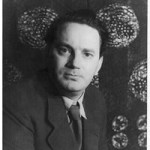
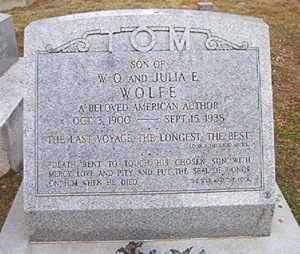
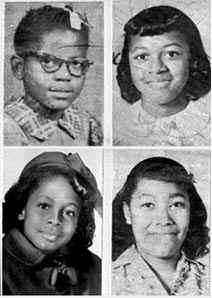
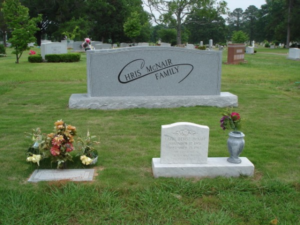
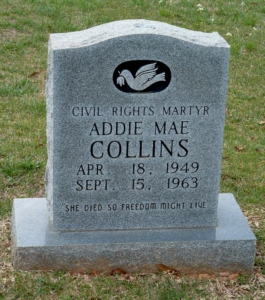
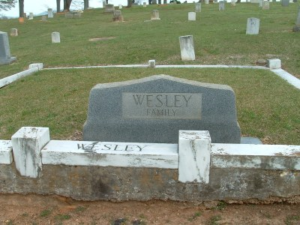
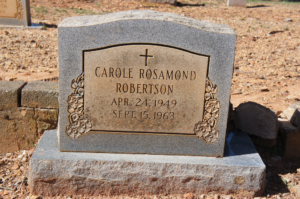
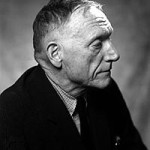
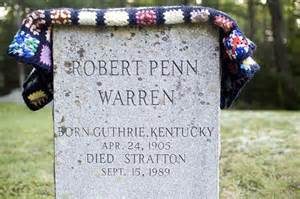 The Final Footprint – Warren is interred in Willis Cemetery in Stratton, Vermont, and, at his request, a memorial marker is situated in the Warren family gravesite in Guthrie, Kentucky. Warren is one of my favorite writers. Each year on his birthday I read some of his short stories and poems.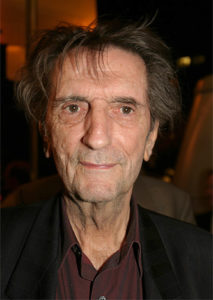
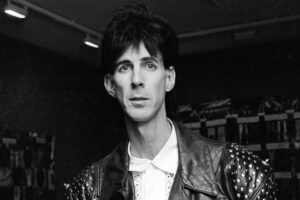
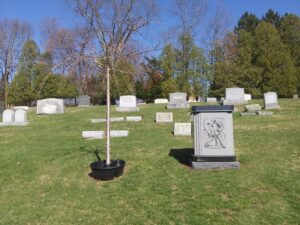
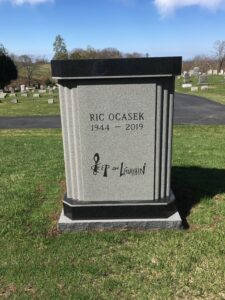
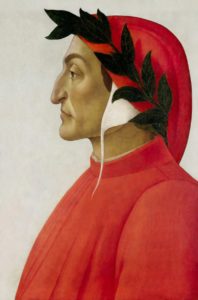


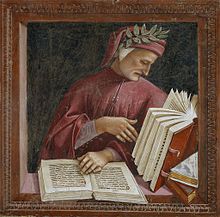
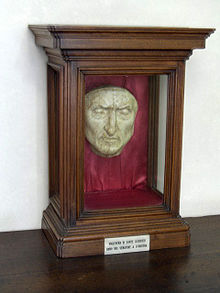

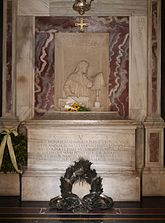


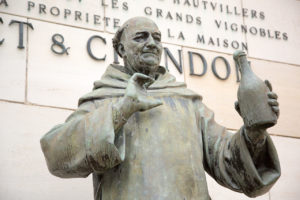
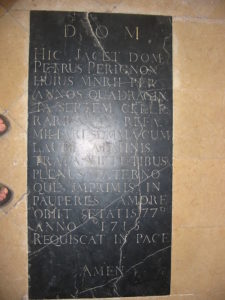 The Final Footprint – Dom Pierre was buried in a section of the abbey cemetery traditionally reserved only for abbots.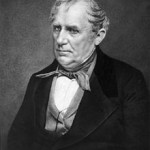
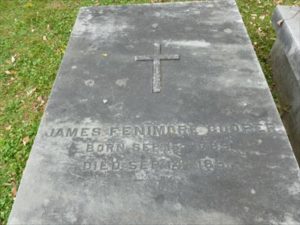
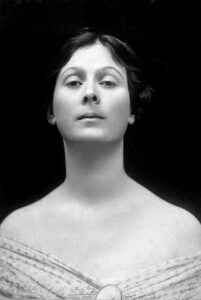
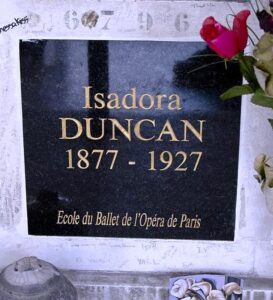
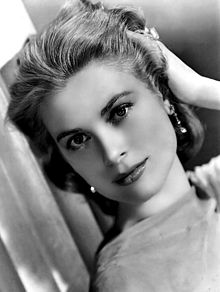
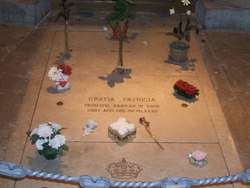 The Final Footprint – Kelly was entombed in the Grimaldi family vault in the Cathedral of Saint Nicholas in Monte Carlo. Diana, Princess of Wales attended her funeral representing the British royal family. Prince Rainier, who did not remarry, was buried alongside her following his death in 2005.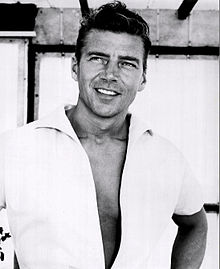
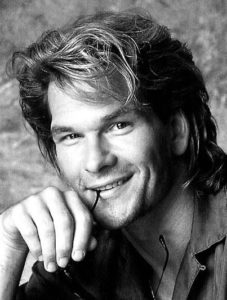
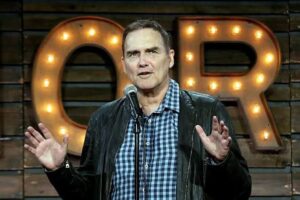
 On this day in 1592, French essayist, one of the most influential writers of the French Renaissance, the father of Modern Skepticism, Michel de Montaigne died of quinsy at the age of 59, at his family estate Château de Montaigne. Remaining in possession of all his other faculties, he requested mass, and died during the celebration of that mass. Born Michel Eyquem de Montaigne on 28 February 1533 in the Aquitaine region of France, on the family estate Château de Montaigne, in a town now called Saint-Michel-de-Montaigne, not far from Bordeaux. In my opinion, one of the most influential writers of the French Renaissance, known for popularizing the essay as a literary genre, and commonly thought of as the father of modern skepticism. He became famous for his effortless ability to merge serious intellectual exercises with casual anecdotes and autobiography. His massive volume Essais (translated literally as “Attempts” or “Trials”) contains, to this day, some of the most widely influential essays ever written. In his own time, Montaigne was admired more as a statesman than as an author. The tendency in his essays to digress into anecdotes and personal ruminations was seen as detrimental to proper style rather than as an innovation, and his declaration that, ‘I am myself the matter of my book‘, was viewed by his contemporaries as self-indulgent. In time, however, Montaigne would be recognized as embodying, perhaps better than any other author of his time, the spirit of freely entertaining doubt which began to emerge at that time. Perhaps most famously known for his skeptical remark, ‘Que sçay-je?’ (‘What do I know?’ in Middle French; modern French Que sais-je?). Remarkably modern even to readers today, Montaigne’s attempt to examine the world through the lens of the only thing he can depend on implicitly, his own judgment, makes him more accessible to modern readers than any other author of the Renaissance. Much of modern literary non-fiction has found inspiration in Montaigne and writers of all kinds continue to read him for his masterful balance of intellectual knowledge and personal story-telling.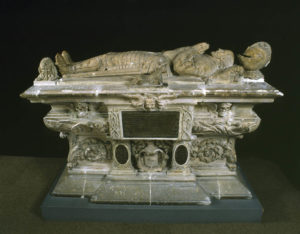
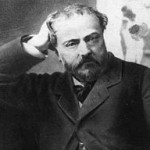 On this day in 1894, French Romantic composer and pianist Emmanuel Chabrier died in Paris at the age of 53. Born Alexis-Emmanuel Chabrier on 18 January 1841 in Ambert (Puy-de-Dôme), a town in the Auvergne region of central France. Although known primarily for two of his orchestral works, España and Joyeuse marche, he left an important corpus of operas (including the increasingly popular L’étoile), songs, and piano music as well.
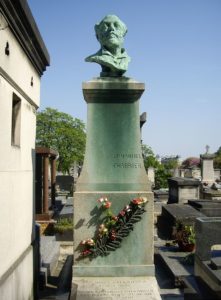 The Final Footprint – Although he had asked to be entombed near the tomb of Eduard Manet in the Passy Cemetery, he was laid to rest in the Cimetière de Montparnasse in Paris. Other notable Final Footprints at Montparnasse include; Charles Baudelaire, Simone de Beauvoir, Samuel Beckett, Alfred Dreyfus, Marguerite Duras, Henri Fantin-Latour, César Franck, André Lhote, Guy de Maupassant, Adah Isaacs Menken, Man Ray, Camille Saint-Saëns, Jean-Paul Sartre, Jean Seberg, and Susan Sontag.
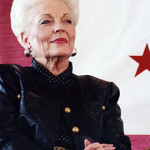 On this day in 2006, the 45th Governor of Texas, Ann Richards, died at the age of 73 from esophageal cancer at her home in Austin, surrounded by her family. Born Dorothy Ann Willis on 1 September 1933 in Lakeview, Texas. She was governor for one term from 1991 to 1995.
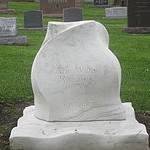 The Final Footprint – Richards is buried at Texas State Cemetery in Austin. Her grave is marked by an upright white marble monument. On the front it says: Ann Willis Richards Governor. On the back is an excerpt from her inaugural address delivered 15 January 1991: Today we have a vision of a Texas where opportunity knows no race, no gender, no color – a glimpse of what can happen in government if we simply open the doors and let the people in. Other notable final footprints at Texas State Cemetery include; Stephen F. Austin, John B. and Nellie Connally, J. Frank Dobie, Barbara Jordan, Tom Landry (cenotaph), James A. Michener (cenotaph), Edwin “Bud” Shrake, Big Foot Wallace, and Walter Prescott Webb.
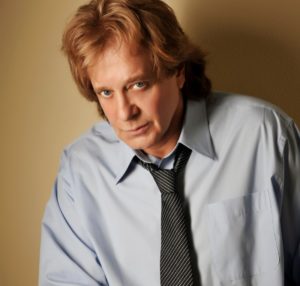 On this day in 2019, singer and songwriter Eddie Money died from complications of esophageal cancer in Los Angeles at age 70. Born Edward Joseph Mahoney on March 21, 1949 in Brooklyn. Perhaps best known for the songs “Baby Hold On”, “Two Tickets to Paradise”, “Think I’m in Love”, “Shakin'”, “Take Me Home Tonight”, “I Wanna Go Back”, “Walk on Water”, and “The Love in Your Eyes”.
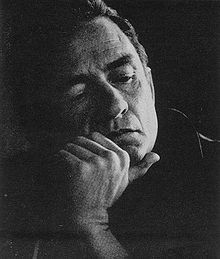 On this day in 2003, legendary county music singer and songwriter, member of The Highwaymen, the Man in Black, Johnny Cash died at the age of 71 at Baptist Hospital in Nashville from complications from diabetes. Born J. R. Cash on 26 February 1932 in Kingsland, Arkansas. In my opinion, one of the most influential musicians of the 20th century. His songs and sound spanned genres from rock and roll and rockabilly to country, blues, folk, and gospel. This crossover appeal won Cash the rare honor of induction in the Country Music Hall of Fame, the Rock and Roll Hall of Fame, and the Gospel Music Hall of Fame. Cash was known for his deep, distinctive bass-baritone voice; a rebelliousness, coupled with an increasingly somber and humble demeanor; for providing free concerts inside prison walls; and for his dark performance clothing, which earned him the nickname “The Man in Black”. He traditionally began his concerts with the phrase “Hello, I’m Johnny Cash,” followed by his standard “Folsom Prison Blues”. Much of Cash’s music echoed themes of sorrow, moral tribulation and redemption, especially in the later stages of his career. His best-known songs included “I Walk the Line”, “Folsom Prison Blues”, “Ring of Fire”, “Get Rhythm”, “Man in Black”, “One Piece at a Time” and “A Boy Named Sue”; a duet with his future wife, June Carter, called “Jackson”; and railroad songs including “Hey, Porter” and “Rock Island Line”. The supergroup The Highwaymen included Cash, Willie Nelson, Waylon Jennings and Kris Kristofferson.
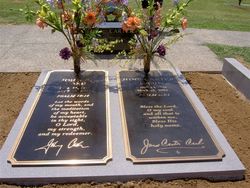
 On this day in 1977, poet, 2x Pulitzer Prize recipient, Robert Lowell died having suffered a heart attack in a cab in New York City on his way to see his ex-wife, Elizabeth Hardwick, at the age of 60. Born Robert Traill Spence Lowell IV on 1 March 1917 into a Boston Brahmin family. Lowell stated, “The poets who most directly influenced me … were Allen Tate, Elizabeth Bishop, and William Carlos Williams. An unlikely combination!….. but you can see that Bishop is a sort of bridge between Tate’s formalism and Williams’s informal art.” After the publication of his 1959 book Life Studies, which won the 1960 National Book Award, which featured uninhibited discussions of personal, family, and psychological struggles, he was considered an important part of the confessional poetry movement. Lowell worked in a number of distinctive stylistic modes and forms over the course of his career. He was appointed the sixth Poet Laureate Consultant in Poetry to the Library of Congress, where he served from 1947 until 1948. In addition to winning the National Book Award, he won the Pulitzer Prize for Poetry in 1947 and 1974, the National Book Critics Circle Award in 1977, and a National Institute of Arts and Letters Award in 1947. In my opinion, he is one of the most important American poets of the postwar era. His biographer Paul Mariani called him “the poet-historian of our time” and “the last of [America’s] influential public poets.” Lowell married three times: Jean Stafford (1940 – 1948 divorce), Hardwick (1949 – 1972 divorce) and Caroline Blackwood (1972 – 1977 his death).
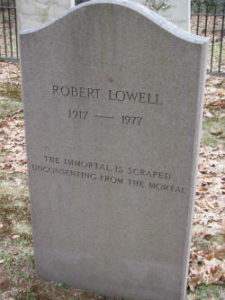 Final Footprint – Lowell is buried in Stark Cemetery, Dunbarton, New Hampshire.
 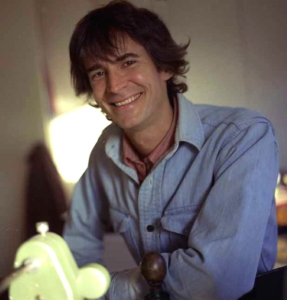 On this day in 1992, actor and singer Anthony Perkins died from AIDS related pneumonia in his Los Angeles home at the age of 60. Born April 4, 1932 in New York City. He was nominated for the Academy Award for Best Supporting Actor for his second film, Friendly Persuasion, but is best known for playing Norman Bates in Alfred Hitchcock’s Psycho (1960) and its three sequels. His other films include Fear Strikes Out (1957), The Matchmaker (1958), On the Beach (1959), Tall Story (1960), The Trial (1962), Phaedra (1962), Five Miles to Midnight (1962), Pretty Poison (1968), Murder on the Orient Express (1974), Mahogany (1975), North Sea Hijack (1979), The Black Hole (1979), and Crimes of Passion (1984).
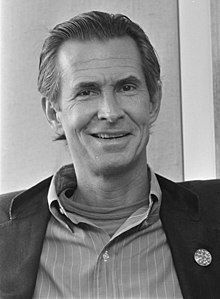

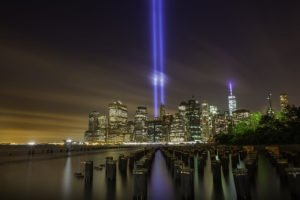
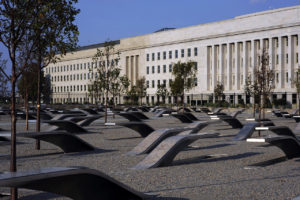

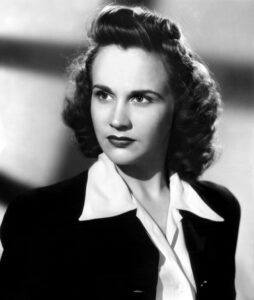
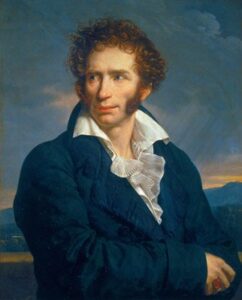 On this day in 1827, writer, revolutionary and poet Ugo Foscolo died at Turnham Green, England, at the age of 49. Born Niccolò Ugo Foscolo on the Ionian island of Zakynthos, Republic of Venice, on 6 February 1778. Perhaps best known for his 1807 long poem Dei Sepolcri, which may be described as an effort to seek refuge in the past from the misery of the present and the darkness of the future.
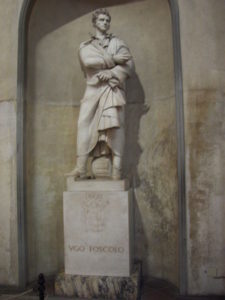 The Final Footprint – Foscolo was entombed in Old Chiswick Cemetery, in Chiswick, England. Forty-four years after his death, on 7 June 1871, his remains were brought to Florence, and with all the pride, pomp and circumstance of a great national mourning, found their final resting-place beside the monuments of Machiavelli and Alfieri, of Michelangelo and Galileo, in the church of Santa Croce, the pantheon of Italian glory he had celebrated in Dei sepolcri. His tomb in the cemetery of St. Nicholas parish church, Chiswick, in West London has recently been restored, it refers to him as the “wearied citizen poet” and incorrectly states his age as 50.
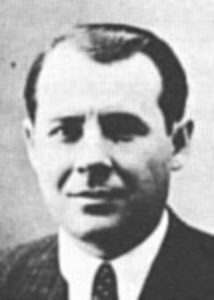 On this day in 1931, Sicilian organized crime figure, early Cosa Nostra boss in the United States, capo di tutti capi, boss of bosses, Salvatore Maranzano died inside his office on the 9th floor of The Helmsley Building in Midtown Manhattan, from multiple gunshot and stab wounds, at the age of 45. Born on 31 July 1886 in Castellammare del Golfo, Sicily. He instigated the Castellammarese War to seize control of the American Mafia operations, and briefly became the Mafia’s “Boss of Bosses”. He was assassinated by a younger faction led by Lucky Luciano, who established a power-sharing arrangement rather than a “boss of bosses” to prevent future wars.
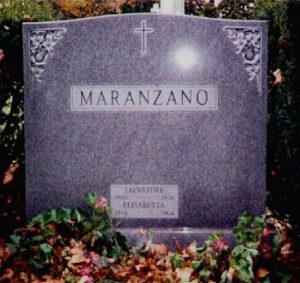 The Final Footprint – Maranzano and his wife Elisabetta (who died in 1964) are buried in Saint John’s Cemetery, Queens, located in New York City. Maranzano plays a small fictionalized role in Mario Puzo’s The Godfather. Maranzano refused Don Vito Corleone’s proposal to share his monopoly on gambling in New York City, in exchange for police and political contacts and expansion into Brooklyn and the Bronx. Maranzano arranged for two of Al Capone’s gunmen to come to New York and finish Corleone. Through his contacts in Chicago, Corleone found out, and sent Luca Brasi to murder the gunmen. With Capone out of the picture, the great mob war of 1933 had begun. Desperate for peace, Maranzano agreed to a sit down in a restaurant in Brooklyn, where he was killed by Salvatore Tessio and his men. Afterwards, Corleone called a meeting to reorganize the American Mafia, something that the real life Maranzano did. Other notable, and infamous, final footprints at Saint John’s include Joe Colombo, Carlo Gambino, John Gotti, Luciano, and Vito Genovese.
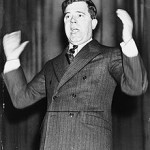 On this day in 1935, the 40th Governor of Louisiana, United States Senator, The Kingfish, Huey Long died from gunshot wounds he sustained at the Louisiana State Capitol building in Baton Rouge during a confrontation with Dr. Carl Weiss. Born Huey Pierce Long, Jr. 0n 30 August 1893 in Winnfield, Louisiana. A Democrat, he was an outspoken populist, partially inspired by sansepolcrista Italian fascism. During his tenure, he commanded large networks of supporters and was willing to take forceful action, influencing claims that he was a political boss. He established the political prominence of the Long political family. Long is best known for his Share Our Wealth program, created in 1934 under the motto “Every Man a King.” It proposed new wealth redistribution measures in the form of a net asset tax on corporations and individuals to curb the poverty and homelessness endemic nationwide during the Great Depression. To stimulate the economy, Long advocated federal spending on public works, schools and colleges, and old age pensions. He was an ardent critic of the policies of the Federal Reserve System. A supporter of Franklin D. Roosevelt in the 1932 presidential election, Long split with Roosevelt in June 1933 to plan his own presidential bid for 1936 in alliance with the influential Catholic priest and radio commentator Charles Coughlin. Under Long’s leadership, hospitals and educational institutions were expanded, a system of charity hospitals was set up that provided health care for the poor, massive highway construction and free bridges brought an end to rural isolationism, and free textbooks for schoolchildren were introduced to tackle illiteracy.
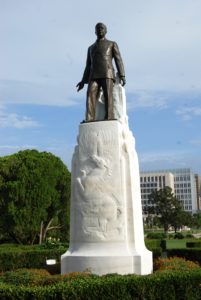 The Final Footprint – Long’s body was dressed in a tuxedo and his open double casket (made of bronze with a copper inner liner covered with a glass lid) was placed in the State Capitol rotunda. An estimated 200,000 people flooded Baton Rouge to witness the event. Tens of thousands of Louisianans crowded in front of the Capitol on September 12, 1935, for the 4 p.m. funeral handled by Merle Welsh of Rabenhorst Funeral Home. Welsh remembered that flowers came from all over the world and extended from the House of Representatives to the Senate chamber. Airline Highway between New Orleans and Baton Rouge was jammed bumper-to-bumper. Newsreel cameras clicked while airplanes circled overhead to record the service for posterity. Long was buried on the grounds of the State Capitol in Baton Rouge. A large bronze statue on top of a marble column marks the site of his grave. A plaque marks the site of the assassination inside the capitol. Also, a bronze statue of Long is located in Statuary Hall of the U. S. Capitol. Long’s assassination put an end to his national movement, but his legacy continued in Louisiana through his wife, Senator Rose McConnell Long, and his son, Senator Russell B. Long. The character Willie Stark from the novel All the King’s Men by Robert Penn Warren appears to be loosely based on Long. This is perhaps my all time favorite book. The book has inspired two movies; the Oscar-winning 1949 version and a 2006 version starring Sean Penn.
 On this day in 1971, singer, model, actress Pier Angeli died of a barbiturate overdose at her home in Beverly Hills, aged 39. Born Anna Maria Pierangeli on 19 June 1932 in Cagliari, Sardinia, Italy. She starred in American, British and European films throughout her career. Her American motion picture debut was in the starring role of the film Teresa (1951), for which she won a Golden Globe Award for Young Star of the Year – Actress.
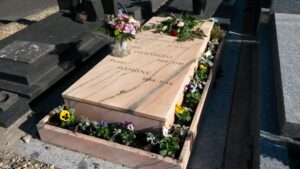 The Final Footprint – On the day of her death, Angeli had been given an injection of Compazine by her doctor. Death due to anaphylaxis has been suggested; however, it is not supported by the findings of her autopsy. Her former lover Kirk Douglas and his wife Anne Buydens were among those who were invited to her funeral. She is interred in the Cimetière des Bulvis in Rueil-Malmaison, Hauts-de-Seine, France.
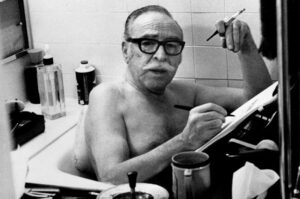 On this day in 1976, screenwriter Dalton Trumbo died in Los Angeles of a heart attack at the age of 70. Born James Dalton Trumbo on December 9, 1905 in Montrose, Colorado. He scripted many award-winning films, including Roman Holiday (1953), Exodus, Spartacus (both 1960), and Thirty Seconds Over Tokyo (1944). One of the Hollywood Ten, he refused to testify before the House Un-American Activities Committee (HUAC) in 1947 during the committee’s investigation of alleged Communist influences in the motion picture industry. Trumbo, the other members of the Hollywood Ten, and hundreds of other professionals in the industry were blacklisted by Hollywood. He was able to continue working clandestinely on major films, writing under pseudonyms or other authors’ names. His uncredited work won two Academy Awards for Best Story: for Roman Holiday (1953), which was presented to a front writer, and for The Brave One (1956), which was awarded to a pseudonym used by Trumbo. When he was given public screen credit for both Exodus and Spartacus in 1960, it marked the beginning of the end of the Hollywood Blacklist for Trumbo and other affected screenwriters. He finally was given full credit by the Writers’ Guild for Roman Holiday in 2011, nearly 60 years after the fact.
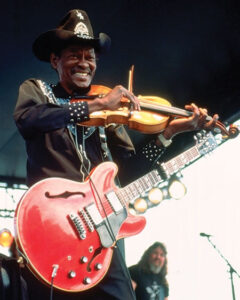 On this day in 2005, musician, singer Clarence “Gatemouth” Brown died in Orange, Texas at the apartment of a grandniece, at the age of 81. Born on April 18, 1924 in Vinton, Louisiana. He won a Grammy Award for Best Traditional Blues Album in 1983 for his album, Alright Again!.
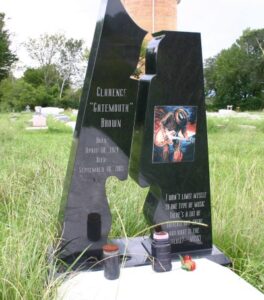 The Final Footprint – Brown is buried in the Hollywood Cemetery in Orange. Flooding caused by Hurricane Ike in September 2008 damaged his grave. His grave has since been refurbished and through the estate funds, a headstone has been erected in his honor. A marker honoring Brown was placed by the Texas Historical Commission next to the flagpole at Hollywood Cemetery.
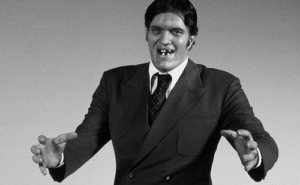 On this day in 2014, actor Richard Kiel died from a heart attack
 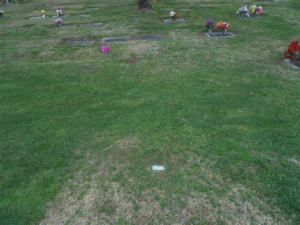 The Final Footprint
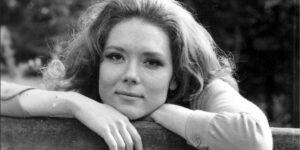 On this day in 2020 actress (The Avengers, On Her Majesty’s Secret Service, Game of Thrones) Diana Rigg died from lung cancer at her London home, aged 82. Her roles include Emma Peel in the TV series The Avengers (1965–1968); Countess Teresa di Vicenzo, wife of James Bond, in On Her Majesty’s Secret Service (1969); Olenna Tyrell in Game of Thrones (2013–2017); and the title role in Medea in the West End in 1993 followed by Broadway a year later.
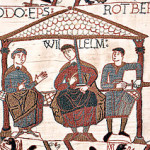 On this day in 1087, the first Norman King of England, William the Conqueror, also known as William the Bastard, William I of England, William II of Normandy and Duke of Normandy, died at age 59 at the Convent of St. Gervais in Rouen, Normandy. Born in 1027 or 1028 in Chateau de Falaise in Falaise, Normandy, France, the only son of Robert I, Duke of Normandy. Crowned William I on Christmas Day 1066 in Westminster Abbey. The descendant of Viking raiders, he had been Duke of Normandy since 1035 under the style William II. After a long struggle to establish his hold on Normandy, he launched the Norman conquest of England in 1066. The rest of his life was marked by struggles to consolidate his hold over England and his continental lands and by difficulties with his eldest son. William and his wife Matilda of Flanders had at least nine children.
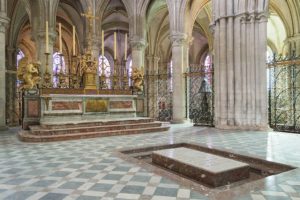 The Final Footprint – Disorder followed William’s death; everyone who had been at his deathbed left the body at Rouen and hurried off to attend to their own affairs. Eventually, the clergy of Rouen arranged to have the body sent to Caen, where William had desired to be entombed in the foundation of the Abbaye-aux-Hommes. William’s grave is currently marked by a marble slab with a Latin inscription dating from the early 19th century. The tomb has been disturbed several times since 1087. The first time in 1522 when the grave was opened on orders from the papacy. The intact body was restored to the tomb at that time, but in 1562, during the French Wars of Religion, the grave was reopened and the bones scattered and lost, with the exception of one thigh bone. This lone relic was reburied in 1642 with a new marker, which was replaced 100 years later with a more elaborate monument. This tomb was again destroyed during the French Revolution, but was eventually replaced with the current marker. The impact on England of William’s conquest was profound; changes in the Church, aristocracy, culture, and language of the country have persisted into modern times. William is seen by some historians either as one of the creators of England’s greatness or as inflicting one of the greatest defeats in English history. Others have viewed William as an enemy of the English constitution, or alternatively as its creator.
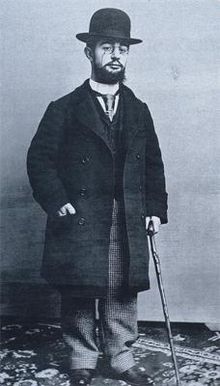 On this day in 1901, painter, printmaker, draughtsman and illustrator
 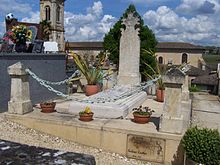 The Final Footprint – Toulouse-Lautrec’s last words reportedly were: “Le vieux con!” (perhaps translated as “The old fool!”). Apparently, his goodbye to his father. Another version has him saying; “I knew, papa, that you wouldn’t miss the death.” (“Je savais, papa, que vous ne manqueriez pas l’hallali”). “Hallali” being a term used by huntsmen for the moment the hounds kill their prey. Toulouse-Lautrec is entombed in Verdelais, Gironde.
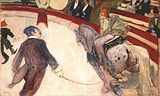


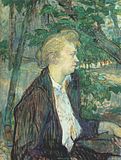

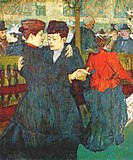


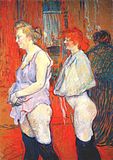

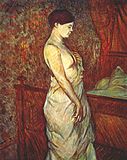
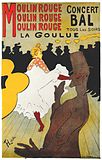


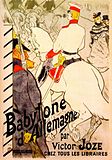
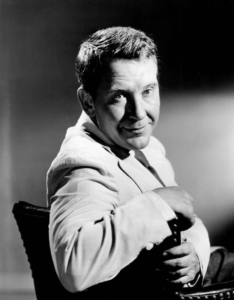 On this day in 1997,
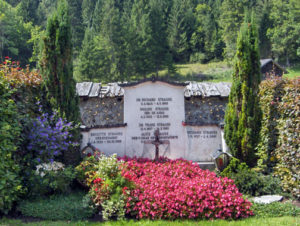
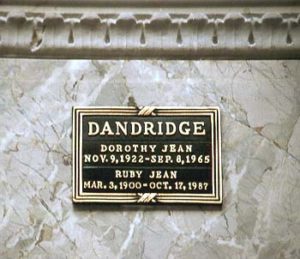
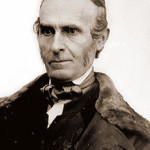 On this day in 1892, influential Quaker poet, ardent advocate of the abolition of slavery in the United States, , John Greenleaf Whittier died at the age of 84 at a friend’s home in Hampton Falls, New Hampshire. Born near Haverhill, Massachusetts, on 17 December 1807. He is usually listed as one of the Fireside Poets along with Henry Wadsworth Longfellow, William Cullen Bryant, James Russell Lowell, and Oliver Wendell Holmes. Whittier appears to have been strongly influenced by the Scottish poet Robert Burns. Perhaps best remembered for his poem Snow-Bound, and the words of the hymn Dear Lord and Father of Mankind, from his poem “The Brewing of Soma”, sung to music by Hubert Parry.
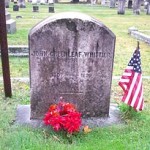 The Final Footprint – Whittier is interred in Union Cemetery in Amesbury, Massachusetts. Whittier’s family farm, known as the John Greenleaf Whittier Homestead or simply “Whittier’s Birthplace”, is now a historic site open to the public. His later residence in Amesbury, where he lived for 56 years, is also open to the public, now known as the John Greenleaf Whittier Home. Whittier’s hometown of Haverhill has named many buildings and landmarks in his honor including J.G. Whittier Middle School, Greenleaf Elementary, and Whittier Regional Vocational Technical High School. Numerous other schools around the country also bear his name.
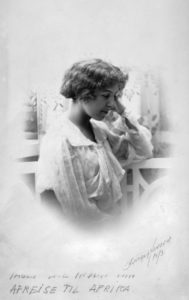 On this day in 1962, author Karen Blixen, Baroness Karen von Blixen-Finecke, died at Rungstedlund, her family’s estate in Denmark, at the age of 77. Born Karen Christenze Dinesen on 17 April 1885 in Rungsted, Denmark. Best known for her book Out of Africa, which was made into a movie starring Meryl Streep and Robert Redford as the English big game hunter Denys Finch Hatton. In 1913 Karen Dinesen became engaged to her second-cousin, the Swedish Baron Bror von Blixen-Finecke, after a failed love affair with his brother. The couple moved to Kenya, where in early 1914 they used family money to establish a coffee plantation, hiring African workers, predominantly the Kikuyu tribes people who lived on the farmlands at the time of their arrival. The Blixens separated in 1921, and were divorced in 1925. During her early years in Kenya, Blixen met Hatton and after her separation she and Hatton developed a close friendship which eventually became a long-term love affair.
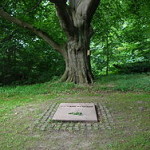 The Final Footprint – Blixen was buried at Rungstedlund under a large beech tree. Her full ledger flat marker simply states her name – Karen Blixen. In addition, the family estate has been turned into a museum and is open to the public.
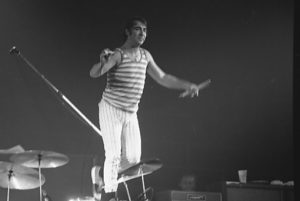 On this day in 1978, musician, drummer, member of The Who, Keith Moon died at the age of 32 from an overdose of prescription medication in Harry Nilsson’s flat, No.12 at 9 Curzon Place (now called Curzon Square), Shepherd Market, Mayfair. Perhaps the greatest drummer in the history of rock. The Who emerged in 1964 with singer Roger Daltrey, guitarist Pete Townshend, bassist John Entwistle, and Moon. They combined popular singles, such as “My Generation” (1965), “Substitute” (1966), “I Can See for Miles” (1967), “Pinball Wizard” (1969), and “Won’t Get Fooled Again” (1971), with critically acclaimed albums such as the rock operas Tommy (1969), and Quadrophenia (1973). They are known for energetic live performances which, since a performance at the Railway Hotel in Wealdstone in June 1964 when Townshend smashed his guitar in anger and frustration, often include smashing their instruments. For much of their career they have been regarded as the third most important British rock act after the Beatles and the Rolling Stones. Moon died shortly after the release of Who Are You. On the album cover, he is seated on a chair back-to-front. The words “NOT TO BE TAKEN AWAY” appear on the back of the chair. Born Keith John Moon on 23 August 1946 in Wembley, Middlesex, London.
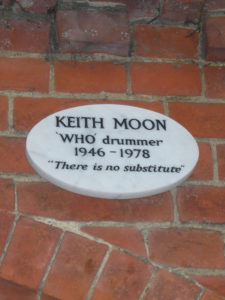 The Final Footprint – Moon was cremated on 13 September 1978, at Golders Green Crematorium in London and his ashes scattered in its Gardens of Remembrance. GGC was the first crematorium to be opened in London, and one of the oldest crematoria in Britain. The crematorium, the Philipson Family mausoleum, designed by Edwin Lutyens, the wall, along with memorials and gates, the Martin Smith Mausoleum, and Into The Silent Land statue are all Grade II listed buildings. The gardens are included in the National Register of Historic Parks and Gardens. GGC is in Hoop Lane, off Finchley Road, Golders Green, London NW11, ten minutes’ walk from Golders Green tube station. It is directly opposite the Golders Green Jewish Cemetery. The crematorium is secular, accepts all faiths and non-believers; clients may arrange their own type of service or remembrance event and choose whatever music they wish. Other notable cremations at GGC include; Kingsley Amis, Marc Bolan, Neville Chamberlain, T. S. Eliot, Sigmund Freud, Henry James, Rudyard Kipling, Vivien Leigh, Peter Sellers, Bram Stoker, H. G. Wells, and Amy Winehouse.
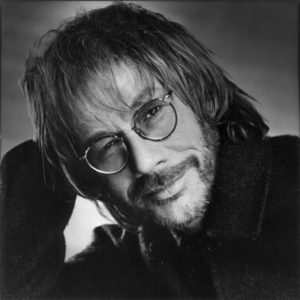 On this day in 2003, singer, songwriter, musician Warren Zevon died, aged 56, at his home in Los Angeles, California from cancer. Born Warren William Zevon on 24 January 1947 in Chicago. Perhaps his best-known compositions include “Werewolves of London”, “Excitable Boy”, “Lawyers, Guns and Money”, “Roland the Headless Thompson Gunner” and “Johnny Strikes Up the Band”, all of which are featured on his third album, Excitable Boy (1978). Other well-known songs written by Zevon have been recorded by other artists, including “Poor Poor Pitiful Me” (a top 40 hit by Linda Ronstadt), “Accidentally Like a Martyr”, “Mohammed’s Radio”, “Carmelita”, and “Hasten Down the Wind”. Along with his own compositions, Zevon recorded or performed occasional covers, including Allen Toussaint’s A Certain Girl, Bob Dylan’s “Knockin’ on Heaven’s Door” and Leonard Cohen’s “First We Take Manhattan”. He was a frequent guest on Late Night with David Letterman and the Late Show with David Letterman. Letterman later performed guest vocals on “Hit Somebody! (The Hockey Song)” with Paul Shaffer and members of the CBS Orchestra on Zevon’s My Ride’s Here album.
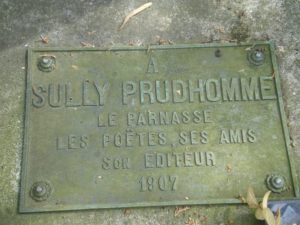
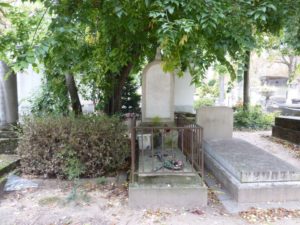
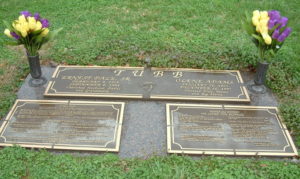 The Final Footprint – Tubb was buried at Hermitage Memorial Gardens, a