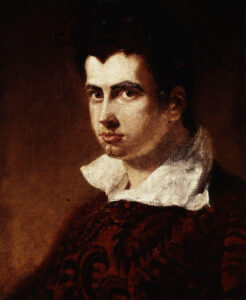
 On this day in 1859 critic, essayist, friend of Keats and Shelley, poet (“Jenny kiss’d Me”, “Abou Ben Adhem”, “A Night-Rain in Summer”), Leigh Hunt died in Putney in London, aged 74. Born James Henry Leigh Hunt on 19 October 1784, in Southgate, London.
Hunt co-founded The Examiner, a leading intellectual journal expounding radical principles. He was the centre of the Hampstead-based group that included William Hazlitt and Charles Lamb, known as the “Hunt circle”. Hunt also introduced John Keats, Percy Bysshe Shelley, Robert Browning and Alfred Tennyson to the public.
Hunt’s presence at Shelley’s funeral on the beach near Viareggio was immortalised in the painting by Louis Édouard Fournier, although in reality Hunt did not stand by the pyre, as portrayed. Hunt inspired aspects of the Harold Skimpole character in Charles Dickens’ novel Bleak House
Hunt maintained close friendships with both Keats and Shelley. Financial help from Shelley saved Hunt from ruin. In return, Hunt provided Shelley with support during his family problems and defended him in The Examiner. Hunt introduced Keats to Shelley and wrote a very generous appreciation of him in The Indicator. Keats seemingly, however, later felt that Hunt’s example as a poet had been in some respects detrimental to him.
After Shelley’s departure for Italy in 1818, Hunt experienced more financial difficulties. In addition, both his health and that of his wife Marianne failed. As a result, Hunt was forced to discontinue The Indicator (1819–1821) and stated that he had “almost died over the last numbers”.
In 1809, Leigh Hunt married Marianne Kent. Over the next 20 years, the couple had ten children. Marianne, in poor health for most of her life, died on 26 January 1857, at the age of 69.
 The Final Footprint – Hunt was interred at Kensal Green Cemetery. In September 1966, Christ’s Hospital named one of its houses in the memory of Hunt. Today, a residential street in his birthplace of Southgate is named Leigh Hunt Drive in his honour. His epitaph:
“WRITE ME AS ONE
THAT LOVES HIS FELLOW MEN.”
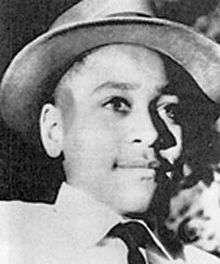 On this day in 1955 “Bobo”, Emmett Till was murdered near Money, Mississippi at the age of 14. Born Emmett Louis Till on 25 July 1941 in Chicago.
Till was lynched after being accused of offending a white woman in her family’s grocery store. The brutality of his murder and the fact that his killers were acquitted drew attention to the long history of violent persecution of African Americans in the United States. Till posthumously became an icon of the civil rights movement.
During summer vacation in August 1955, he was visiting relatives near Money, in the Mississippi Delta region. He spoke to 21-year-old Carolyn Bryant, the white married proprietor of a small grocery store there. Although what happened at the store is a matter of dispute, Till was accused of flirting with or whistling at Bryant. In 1955, Bryant had testified that Till made physical and verbal advances. The jury did not hear Bryant’s testimony, due to the judge ruling it inadmissible. Decades later, historian Timothy Tyson interviewed Bryant and wrote a book in which he claimed that she had disclosed that she had fabricated part of the testimony regarding her interaction with Till, specifically the portion where she accused Till of grabbing her waist and uttering obscenities; “That part’s not true,” Tyson claimed that Bryant stated in a 2008 interview with him. Till’s interaction with Bryant, perhaps unwittingly if at all, violated the strictures of conduct for an African-American male interacting with a white woman in the Jim Crow-era South. Several nights after the incident in the store, Bryant’s husband Roy and his half-brother J.W. Milam were armed when they went to Till’s great-uncle’s house and abducted the boy. They took him away and beat and mutilated him before shooting him in the head and sinking his body in the Tallahatchie River. Three days later, Till’s body was discovered and retrieved from the river.
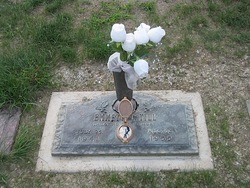 The Final Footprint – Till is interred in Burr Oak Cemetery in Alsip, Illinois. His grave is marked by an individual flat bronze on concrete marker with a cameo photo. His mother, Mamie Carthan, insisted on a public funeral service with an open casket to show the world the brutality of the killing. Tens of thousands attended his funeral or viewed his open casket. Images of his mutilated body were published in black magazines and newspapers, rallying popular black support and white sympathy across the U.S.
Although local newspapers and law enforcement officials initially decried the violence against Till and called for justice, they responded to national criticism by defending Mississippians, temporarily giving support to the killers. In September 1955, an all-white jury found Bryant and Milam not guilty of Till’s kidnapping and murder. Protected against double jeopardy, the two men publicly admitted in a 1956 interview with Look magazine that they had killed Till.
Till’s murder was seen as a catalyst for the next phase of the civil rights movement. In December 1955, the Montgomery bus boycott began in Alabama and lasted more than a year, resulting eventually in a U.S. Supreme Court ruling that segregated buses were unconstitutional. According to historians, events surrounding Till’s life and death continue to resonate. Some writers have suggested that almost every story about Mississippi returns to Till, or the Delta region in which he died.
An Emmett Till Memorial Commission was established in the early 21st century. The Sumner County Courthouse was restored and includes the Emmett Till Interpretive Center. Fifty-one sites in the Mississippi Delta are memorialized as associated with Till. A statue was unveiled in Denver in 1976 (since moved to Pueblo, Colorado) featuring Till with Martin Luther King, Jr. Till was included among the forty names of people who had died in the Civil Rights Movement (listed as martyrs) on the granite sculpture of the Civil Rights Memorial in Montgomery, Alabama, dedicated in 1989.
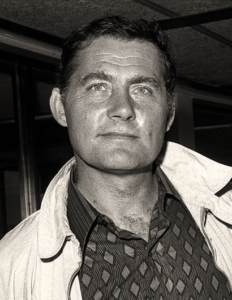 On this day in 1978 actor (A Man for All Seasons, The Sting, Quint in Jaws, From Russia with Love), novelist (The Sun Doctor), playwright and screenwriter Robert Shaw died from a heart attack on 28 August 1978, while driving from Castlebar, County Mayo, Ireland to his home in Tourmakeady, aged 51. Born Robert Archibald Shaw on 9 August 1927 at 51 King Street in Westhoughton, Lancashire, England.
Beginning his career in theatre, Shaw joined the Shakespeare Memorial Theatre after the Second World War and appeared in productions of Macbeth, Henry VIII, Cymbeline, and other Shakespeare plays. With the Old Vic company (1951–52), he continued primarily in Shakespearean roles. In 1959 he starred in a West End production of The Long and the Short and the Tall. Shaw was nominated for an Academy Award and a Golden Globe for his role as Henry VIII in A Man for All Seasons (1966).
Shaw was married three times and had 10 children, two of whom were adopted. His first wife was Jennifer Bourke from 1952 to 1963, with whom he had four daughters. His second wife was actress Mary Ure from 1963 to 1975, with whom he had four children. This marriage ended with Ure’s death from an overdose. His third and final wife was Virginia Jansen from 1976 until his death in 1978, with whom he had one son
For the last seven years of his life, Shaw lived at Drimbawn House in Tourmakeady, County Mayo, Ireland. Like his father, Shaw was an alcoholic for most of his life.
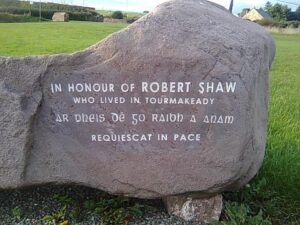
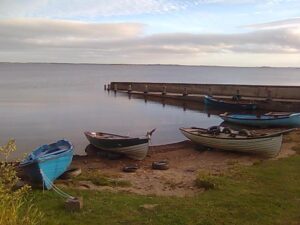
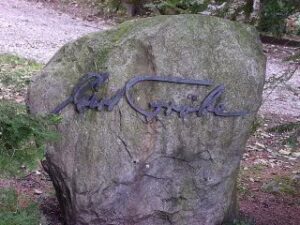
The Final Footprint – While driving from Castlebar, County Mayo, to his  home in Tourmakeady, Shaw suddenly became ill, stopped the car, stepped out, and then collapsed and died on the roadside. He was accompanied by his wife Virginia and his son Thomas at the time. He was rushed to Castlebar General Hospital, where he was pronounced dead. He had just completed acting in the film Avalanche Express. His body was cremated and his ashes scattered near his home in Tourmakeady. A stone memorial to him was unveiled there in his honour in August 2008.
 On this day in 1985 actress, (Rosemary’s Baby, What Ever Happened to Aunt Alice, Where’s Poppa?, Harold and Maude, Every Which Way but Loose), screenwriter and playwright Ruth Gordon died at her summer home in Edgartown, Massachusetts, following a stroke at age 88. Born Ruth Gordon Jones in Quincy, Massachusetts, at 41 Winthrop Avenue.
She began her career performing on Broadway at age 19. Known for her nasal voice and distinctive personality, Gordon gained international recognition and critical acclaim for film roles that continued into her 70s and 80s. In addition to her acting career, Gordon wrote numerous plays, film scripts, and books, most notably co-writing the screenplay for the 1949 film Adam’s Rib. Gordon won an Academy Award, a Primetime Emmy, and two Golden Globe Awards for her acting, as well as three Academy Award nominations for her writing.
The Final Footprint – Her husband for 43 years, Garson Kanin, was at her side and said that even her last day of life was typically full, with walks, talks, errands, and a morning of work on a new play. She had made her last public appearance two weeks before, at a benefit showing of the film Harold and Maude, and had recently finished acting in four films.
In August 1979, a small movie theater in Westboro, Massachusetts, was named the Ruth Gordon Flick. She attended the opening ceremony, standing on a bench in the lobby so she could be seen. The theater no longer exists. In November 1984, the outdoor amphitheater in Merrymount Park in Quincy, Massachusetts, was named Ruth Gordon Amphitheater in her honor. Gordon was cremated.
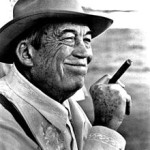 On this day in 1987, film director, screenwriter and actor, John Huston, died in Middletown, Rhode Island from pneumonia as a complication of lung disease in his rented home at the age of 81. Born John Marcellus Huston on 5 August 1906, in Nevada, Missouri. He wrote the screenplays for most of the 37 feature films he directed, many of which are today considered classics: The Maltese Falcon (1941), The Treasure of the Sierra Madre (1948), Key Largo (1948), The Asphalt Jungle (1950), The African Queen (1951), Moulin Rouge (1952), The Misfits (1961), and The Man Who Would Be King (1975). During his 46-year career, Huston received 15 Oscar nominations, won twice, and directed both his father, Walter Huston, and daughter, Anjelica Huston, to Oscar wins in different films. Huston was known to direct with the vision of an artist, having studied and worked as a fine art painter in Paris in his early years. He continued to explore the visual aspects of his films throughout his career: sketching each scene on paper beforehand, then carefully framing his characters during the shooting. In addition, while most directors rely on post-production editing to shape their final work, Huston instead created his films while they were being shot, making his films both more economical and more cerebral, with little editing needed. Before becoming a Hollywood filmmaker, he had been an amateur boxer, reporter, short-story writer, portrait artist in Paris, a cavalry rider in Mexico, and a documentary filmmaker during World War II. Huston has been referred to as “a titan”, “a rebel” and a “renaissance man”, in the Hollywood film industry and one who was never afraid to tackle tough issues head on. Besides sports and adventure, Huston enjoyed hard liquor and relationships with women of all types — one of the reasons he was married five times; Dorothy Harvey (1925–1926; divorce), Lesley Black (1937–1945; divorce), actress Evelyn Keyes (Suellen O’Hara in Gone with the Wind) (1946–1950; divorce), Enrica Soma (mother of Anjelica) (1950–1969; her death), and Celeste Shane (1972–1977; divorce).
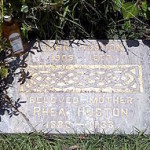 The Final Footprint – Huston is interred next to his mother in the Hollywood Forever Cemetery in Hollywood. Other notable Final Footprints at Hollywood Forever include; Mel Blanc (yes, his epitaph is “That’s All Folks!”), Lana Clarkson, Iron Eyes Cody, Chris Cornell, Dick Dale, Cecil B. DeMille, Victor Fleming, Judy Garland, Joan Hackett, Hattie McDaniel’s cenotaph, Jayne Mansfield’s cenotaph, Tyrone Power, Dee Dee Ramone, Johnny Ramone, Virginia Rappe, Nelson Riddle, Mickey Rooney, Ann Sheridan, Bugsy Siegel, Rudolph Valentino, Fay Wray, and Anton Yelchin.
#RIP #OTD in 1995 painter, printmaker, sculptor, cowboy, rodeo performer, inventor, actor, Earl W. Bascom died at his ranch in Victorville, California aged 89. Sunset Hills Memorial Park, Apple Valley, California
#RIP #OTD in 2017 model and actress (Week-end, Le Grand Blond avec une chaussure noire, Madly, Les seins de glace, L’Homme pressé) Mireille Darc died in Paris at the age of 79. Cimetière du Montparnasse, Paris
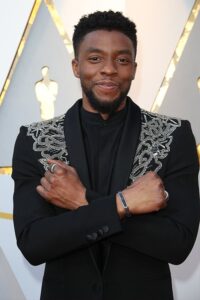 And on this day in 2020 actor (42, Get on Up, Black Panther, Ma Rainey’s Black Bottom) and playwright (Deep Azure) Chadwick Boseman died at his Los Angeles home as a result of complications related to colon cancer, age 43. Born Chadwick Aaron Boseman in Anderson, South Carolina on 29 November 1976. Boseman received two Screen Actors Guild Awards, a Golden Globe Award, and a Critics’ Choice Movie Award, among other accolades. He was also posthumously nominated for an Academy Award and a Primetime Emmy Award.
After studying directing at Howard University, Boseman began his career in theatre, winning a Drama League Directing Fellowship and an acting AUDELCO, along with receiving a Jeff Award nomination for his 2005 play Deep Azure. Transitioning to the screen, his first major role was as a series regular on the NBC drama Persons Unknown (2010) and he landed his breakthrough performance as baseball player Jackie Robinson in the 2013 biographical film 42. He continued to portray historical figures, starring as singer James Brown in Get on Up (2014) and as attorney Thurgood Marshall in Marshall (2017).
Boseman achieved international fame for playing the Marvel Comics superhero Black Panther in the Marvel Cinematic Universe (MCU) from 2016 to 2019. He appeared in four MCU films, including an eponymous 2018 film that earned him an NAACP Image Award for Outstanding Actor in a Motion Picture and a Screen Actors Guild Award for Outstanding Performance by a Cast in a Motion Picture. As the first black actor to headline an MCU film, he was also named in the 2018 Time 100. Boseman’s final performance as the character in the Disney + anthology series What If…? (2021) earned him a posthumous Primetime Emmy nomination for Outstanding Character Voice-Over Performance.
Boseman began dating singer Taylor Simone Ledward in 2015. The two reportedly got engaged by October 2019, and they later married in secret
 The Final Footprint – A public memorial service was held on September 4, 2020, in Anderson, South Carolina, where the speakers included Boseman’s childhood pastor as well as Deanna Brown-Thomas, daughter of James Brown, whom Boseman portrayed in Get on Up. The city announced plans for the creation of a permanent art memorial at the service. Boseman’s final resting place is Forest Lawn Memorial Cemetery in Anderson.
Have you planned yours yet?
Follow TFF on twitter @RIPTFF
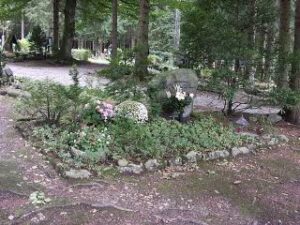
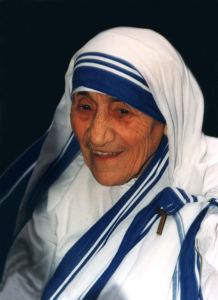
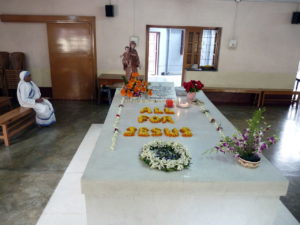
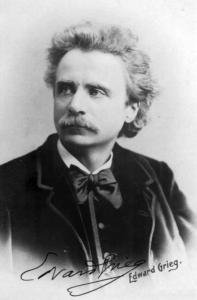

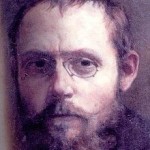
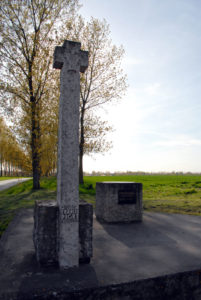 The Final Footprint – He is interred in a communal grave in the Grande Tombe de Villeroy, Seine-et-Marne, Ile-de-France, France. Péguy wrote: “There will be things that I do that no one will be left to understand.”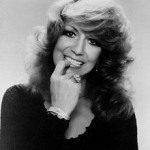
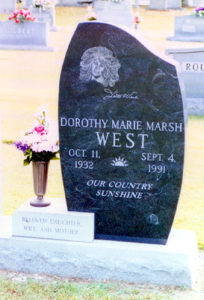
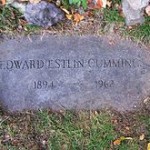
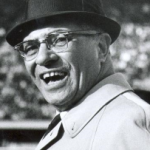
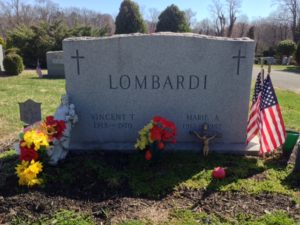
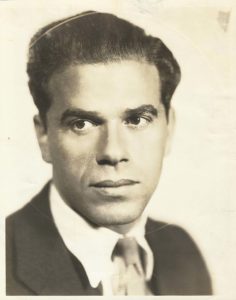
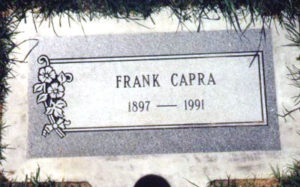 The Final Footprint – He is interred in the Coachella Valley Public Cemetery in Coachella, California. His grave is marked by a flat granite marker.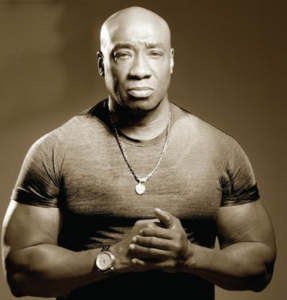

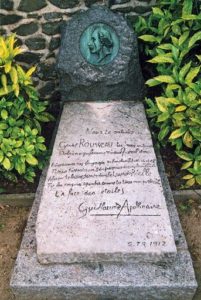
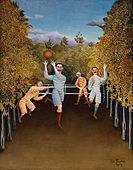
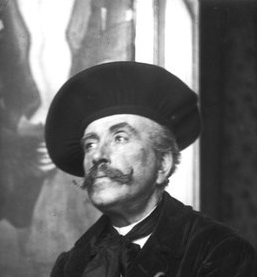 On this day in 1910, post-impressionist painter Henri Rousseau died in Paris at the age of 66. Born Henri Julien Félix Rousseau on May 21, 1844 in Laval, Mavenne. He was also known as Le Douanier (the customs officer), a humorous description of his occupation as a toll and tax collector. He started painting seriously in his early forties; by age 49, he retired from his job to work on his art full-time.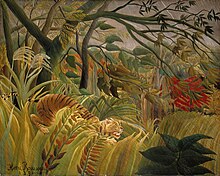









 On this day in 1973 writer, poet, philologist, and university professor, J.R.R. Tolkien died in Bournemouth, England at the age of 81. Born John Ronald Reuel Tolkien on 3 January 1892 in Bloemfontein in the Orange Free State (now Free State Province, part of South Africa). Best known as the author of the classic high fantasy works The Hobbit, The Lord of the Rings, and The Silmarillion. He was at one time a close friend of C. S. Lewis, both members of the informal literary discussion group known as the Inklings. Tolkien was appointed a Commander of the Order of the British Empire by Queen Elizabeth II on 28 March 1972. After his father’s death, Tolkien’s son Christopher published a series of works based on his father’s extensive notes and unpublished manuscripts, including The Silmarillion. These, together with The Hobbit and The Lord of the Rings form a connected body of tales, poems, fictional histories, invented languages, and literary essays about a fantasy world called Arda, and Middle-earth within it. Between 1951 and 1955, Tolkien applied the term legendarium to the larger part of these writings. While many other authors had published works of fantasy before Tolkien, the great success of The Hobbit and The Lord of the Rings led directly to a popular resurgence of the genre. This has caused Tolkien to be popularly identified as the “father” of modern fantasy literature or, more precisely, of high fantasy. Tolkien was married to Edith Mary Bratt (1916 – 1971 her death).
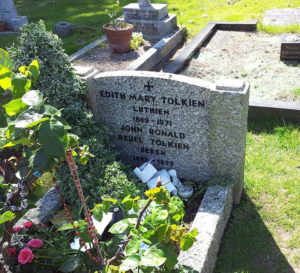 The Final Footprint – Tolkien is interred with his wife Edith in Wolvercote Cemetery, Oxford, England. Their graves are marked by an upright companion granite marker.
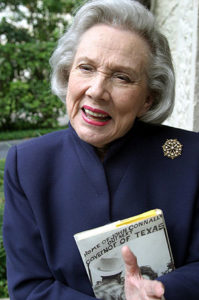

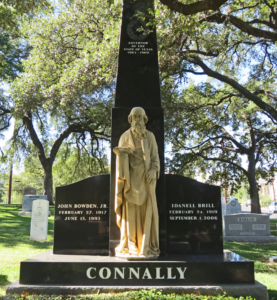 The Final Footprint – The Connally’s are buried together at the Texas State Cemetery in Austin. Texans widely regard her as a beloved daughter of the great state of Texas. Other notable final footprints at Texas State Cemetery include; Stephen F. Austin, J. Frank Dobie, Barbara Jordan, Tom Landry (cenotaph), James A. Michener (cenotaph), Ann Richards, Edwin “Bud” Shrake, Big Foot Wallace, and Walter Prescott Webb. What are your thoughts on the conspiracy theories surrounding JFK’s assassination?
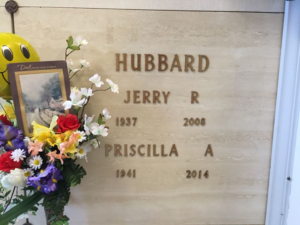
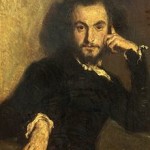 On this day in 1867, French poet, essayist, art critic, translator, Charles Baudelaire died in Paris at the age of 46. Born Charles Pierre Baudelaire on 9 April 1821 in Paris. Produced notable work as an essayist, art critic, and pioneering translator of Edgar Allan Poe. His most famous work, Les Fleurs du mal (The Flowers of Evil), expresses the changing nature of beauty in modern, industrializing Paris during the 19th century. Baudelaire’s highly original style of prose-poetry influenced a whole generation of poets. He is credited with coining the term “modernity” (modernité) to designate the fleeting, ephemeral experience of life in an urban metropolis, and the responsibility art has to capture that experience. In my opinion, he is one of the major innovators of French literature. For 20 years, Jeanne Duval was the muse of Baudelaire. They met in 1842, when Duval left Haiti for France, and the two remained together, albeit stormily, for the next two decades. Duval is said to have been the woman whom Baudelaire loved most, in his life, after his mother. She was born in Haiti on an unknown date, sometime around 1820. Poems of Baudelaire’s which are dedicated to Duval or pay her homage are: Le balcon, Parfum exotique, La chevelure, Sed non satiata, Le serpent qui danse, and Une charogne. Baudelaire called her “mistress of mistresses” and his “Vénus Noire” (“Black Venus”), and it is believed that, to him, Duval symbolized the dangerous beauty, sexuality, and mystery of a Creole woman in mid-nineteenth century France. He is perhaps my favorite poet.
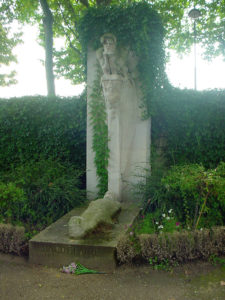 The Final Footprint – Baudelaire is buried in the Cimetière du Montparnasse, Paris. Other notable Final Footprints at Montparnasse include; Samuel Beckett, Simone de Beauvoir, Emmanuel Chabrier, Guy de Maupassant, Adah Isaacs Menken, Camille Saint-Saëns, Jean-Paul Sartre,
 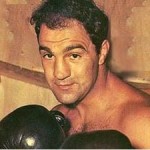 On this day in 1969 Italian-American boxing heavyweight champion of the world, The Brockton Blockbuster, The Rock of Brockton, Rocky Marciano died when the small private plane he was a passenger on crashed near Newton, Iowa, the day before his 46th birthday. Born Rocco Francis Marchegiano on 1 September 1923 in Brockton, Massachusetts. Marciano is the only person to hold the heavyweight title and go untied and undefeated throughout his career. Marciano defended his title six times, against Jersey Joe Walcott, Roland LaStarza, Ezzard Charles (2x), Don Cockell and Archie Moore.
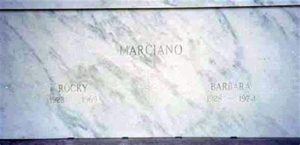 The Final Footprint – Marciano is entombed in the mausoleum at Forest Lawn Memorial Gardens Central in Fort Lauderdale, Florida.
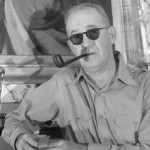 On this day in 1973, United States Navy veteran, film director, 4x Academy Award winner for Best Director (which is a record), John Ford died in Palm Desert, California at the age of 79. Born John Martin Feeney on 1 February 1894 in Cape Elizabeth, Maine. Ford was famous for his Westerns such as Stagecoach (1939), The Searchers (1956), and The Man Who Shot Liberty Valance (1962). In a career that spanned more than 50 years, Ford directed more than 140 films and he is widely regarded as one of the most important and influential filmmakers of his generation. Ford’s films and personality were held in high regard by his colleagues. In particular, Ford was a pioneer of location shooting and the long shot which frames his characters against a vast, harsh and rugged natural terrain. Ford was instrumental in launching the career of his friend, John Wayne.
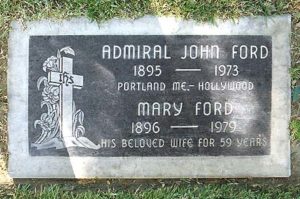 The Final Footprint – Ford’s funeral was held on 5 September at Hollywood’s Church of the Blessed Sacrament. He was interred in Holy Cross Cemetery in Culver City, California. Other notable final footprints at Holy Cross include; John Candy, Bing Crosby, Jimmy Durante, Chick Hearn, Rita Hayworth, Bela Lugosi, Al Martino, Audrey Meadows, Ricardo Montalbán, Chris Penn, Jo Stafford, and Sharon Tate.
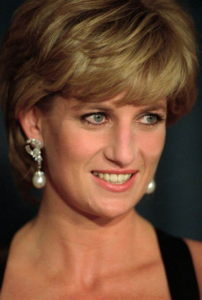 On this day in 1997, the first wife of Charles, Prince of Wales, the eldest child and heir apparent of Queen Elizabeth II, the Princess of Wales, Diana died in a car crash in the Pont de l’Alma road tunnel in Paris along with her then boyfriend, Dodi Al-Fayed and their chauffeur Henri Paul, at the age of 36. Born Diana Frances Spencer on 1 July 1961 in Park House, Sandringham, Norfolk, England into the Spencer family, a British noble family descended in the male line from Henry Spencer (died c. 1478), male-line ancestor of the Earls of Sunderland, the later Dukes of Marlborough, and the Earls Spencer. Sir Winston Churchill was a grandson of the 7th Duke of Marlborough. Diana became Lady Diana Spencer when her father inherited the title of Earl Spencer in 1975. She became a public figure with the announcement of her engagement. Her wedding to Charles on 29 July 1981 was held at St Paul’s Cathedral and seen by a global television audience of over 750 million. While married she bore the titles Princess of Wales, Duchess of Cornwall, Duchess of Rothesay, Countess of Chester and Baroness of Renfrew. The marriage produced two sons, the princes William and Harry, who were respectively second and third in the line of succession to the British throne throughout her lifetime. After her marriage, she undertook a variety of public engagements. She was well known for her fund-raising work for international charities and as an eminent celebrity of the late 20th century. She also received recognition for her charity work and for her support of the International Campaign to Ban Landmines. From 1989, she was the president of Great Ormond Street Hospital for children, in addition to dozens of other charities. Diana remained the object of worldwide media scrutiny during and after her marriage, which ended in divorce on 28 August 1996.
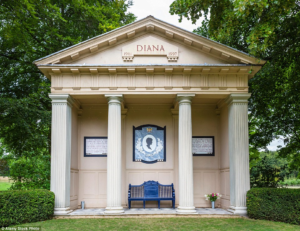 The Final Footprint – The sudden and unexpected death of an extraordinarily popular royal figure brought statements from senior figures worldwide and many tributes by members of the public. People left public offerings of flowers, candles, cards and personal messages outside Kensington Palace for many months. Her coffin, draped with royal flag, was brought to London from Paris by Prince Charles and her two sisters on 31 August 1997. After being taken to a private mortuary it was put at the Chapel Royal, St. James’s Palace. Diana’s funeral took place in Westminster Abbey on 6 September. The previous day Queen Elizabeth II had paid tribute to her in a live television broadcast. Her sons walked in the funeral procession behind her coffin, along with the Prince of Wales and the Duke of Edinburgh, and with Diana’s brother, Charles Spencer, 9th Earl Spencer. Lord Spencer said of his sister, “She proved in the last year that she needed no royal title to continue to generate her particular brand of magic.” Princess Diana is entombed in a private mausoleum on the Island on the lake Oval on the grounds of the Spencer Estate in Althorp. Permanent memorials include:
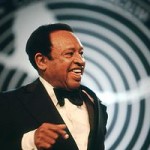 On this day in 2002 jazz vibraphonist, pianist, percussionist, bandleader and actor, Gates, Hamp, Mad Lionel, Lionel Hampton died from congestive heart failure at Mount Sinai Hospital in New York City, at the age of 94. Born Lionel Leo Hampton on 20 April 1908 in Louisville, Kentucky. Hampton was one of the first jazz vibraphone players and ranks among the great names in jazz history. Hampton married Gladys Riddle (1936-1971 her death).
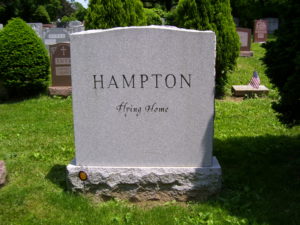 The Final Footprint – His funeral was held on 7 September 2002 and featured a performance by Wynton Marsalis and David Ostwald’s Gully Low Jazz Band at Riverside Church in Manhattan; the procession began at The Cotton Club in Harlem. Hampton is interred in Woodlawn Cemetery in the Bronx. His grave is marked by a large upright companion granite marker and a granite foot marker. His epitaph is, “Flying Home.” Other notable Final Footprints at Woodlawn include; Irving Berlin, Miles Davis, Duke Ellington, Fiorello La Guardia, Rowland Macy, Bat Masterson, Herman Melville, J. C. Penney, and Joseph Pulitzer.
 On this day in 1979, actress Jean Seberg died at the age of 40 from an apparent intentional overdose of barbiturates in the back seat of her Renault, which was parked close to her Paris apartment in the 16th arrondissement. Born Jean Dorothy Seberg on 13 November 1938 in Marshalltown, Iowa. She starred in 37 films in Hollywood and in Europe, including Bonjour Tristesse (1958), À bout de soufflé (Breathless) (1960), the musical Paint Your Wagon (1969), and the disaster film Airport (1970). Seberg is also one of the best-known targets of the FBI COINTELPRO project. Her victimization was rendered as a well-documented retaliation for her support of civil rights and activist groups in the 1960s. Seberg married François Moreuil (1958 – 1960 divorce), Romain Gary (1963 – 1970 divorce) and Dennis Berry (1972 – 1979 separated, her death).
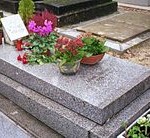 The Final Footprint – Seberg was interred in the Cimetière du Montparnasse, Paris. Montparnasse Cemetery is the eternal home of many of France’s intellectual and artistic elite as well as publishers and others who promoted the works of authors and artists. There are also monuments to police and firefighters killed in the line of duty in the city of Paris. There are also many graves of foreigners who have made France their home. The cemetery is divided by Rue Émile Richard. The small section is usually referred to as the small cemetery (petit cimetière) and the large section as the big cemetery (grand cimetière). Other notable Final Footprints at Montparnasse include; Charles Baudelaire, Simone de Beauvoir, Samuel Beckett, Emmanuel Chabrier, Alfred Dreyfus, Marguerite Duras, Henri Fantin-Latour, César Franck, André Lhote, Guy de Maupassant, Adah Isaacs Menken, Man Ray, Camille Saint-Saëns, Jean-Paul Sartre, and Susan Sontag.
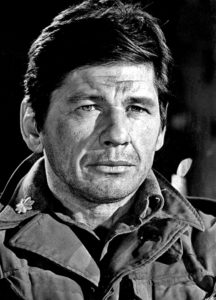 On this day in 2003 actor Charles Bronson died of pneumonia at Cedars-Sinai Medical Center in Los Angeles at the age of 81. Born Charles Dennis Buchinski 3 November 1921 in Ehrenfeld, Pennsylvania. My favorite Bronson movies inlcude: John Sturges’ The Magnificent Seven (1960) with Yul Brynner, Steve McQueen, James Coburn, Robert Vaughn and Eli Wallach and filmscore by Elmer Bernstein; The Dirty Dozen (1967) with Lee Marvin, Ernest Borgnine, Telly Savalas, and Jim Brown; Sergio Leone’s Once Upon a Time in the West (1968) with Claudia Cardinale, Henry Fonda and Jason Robards; as Wild Bill Hickok in The White Buffalo (1977) with Kim Novak, Jack Warden, Slim Pickens and Will Sampson; as Albert Johnson in Death Hunt (1981) with Lee Marvin, Angie Dickinson and Carl Weathers. Bronson was married three times; Harriet Tendler (1949-1967 divorce), actress Jill Ireland (1968-1990 her death) and Kim Weeks (1998-2003 his death).
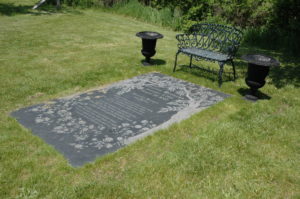 The Final Footprint – Bronson is buried in Brownsville Cemetery in West Windsor, Vermont. His grave is marked with a full ledger engraved granite marker. It is engraved with the term of endearment, Cherished Husband and Father and with the following popular bereavement poem by Mary Elizabeth Frye:
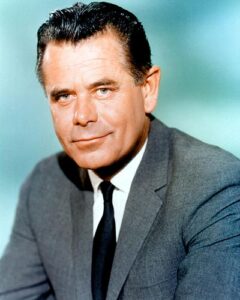 n this day in 2006 actor (Gilda, The Big Heat, Blackboard Jungle, 3:10 to Yuma, Superman) Glenn Ford died in his Beverly Hills home at the age of 90. He often portrayed ordinary men in unusual circumstances. Ford was most prominent during Hollywood’s Golden Age as one of the biggest box-office draws of the 1940s, 1950s, and 1960s, who had a career that lasted more than 50 years. Although he played in many genres of movies, some of his most significant roles were in the film noirs Gilda (1946) and The Big Heat (1953), and the high school angst film Blackboard Jungle (1955). However, it was for comedies or westerns which he received acting laurels, including three Golden Globe Nominations for Best Actor in a Comedy movie, winning for Pocketful of Miracles (1961). He also played a supporting role as Clark Kent’s adoptive father, Jonathan Kent, in Superman (1978). Five of his films have been selected for the National Film Registry by the Library of Congress as being “culturally, historically or aesthetically” significant: Gilda (1946), The Big Heat (1953), Blackboard Jungle (1955), 3:10 to Yuma (1957) and Superman (1978).
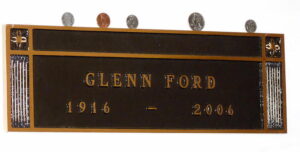 The Final Footprint– Entombed in Woodlawn Memorial Cemetery, Santa Monica, California. Other notable Final Footprints at Woodlawn include; Barbara Billingsley, Harvey Korman, Doug McClure, Bess Myerson, Sally Ride, and Irene Ryan.
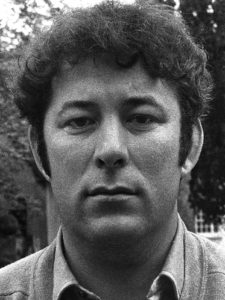 On this day in 2013, poet, playwright Seamus Heaney died in the Blackrock Clinic in Dublin, aged 74. Born Seamus Justin Heaney on 13 April 1939 in the townland of Tamniaran between Castledawson and Toomebridge, Northern Ireland. He received the 1995 Nobel Prize in Literature. Perhaps best known for his work Death of a Naturalist (1966), his first major published volume. Robert Lowell described him as “the most important Irish poet since Yeats”.
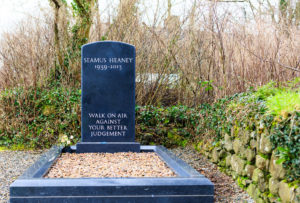 The Final Footprint
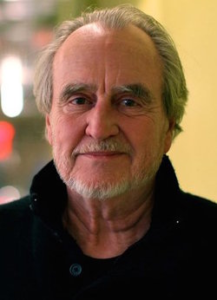 On this day in 2015
 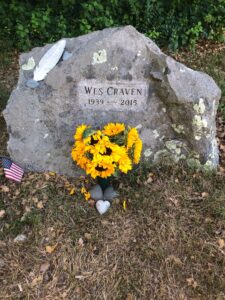 The Final Footprint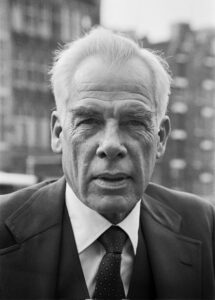
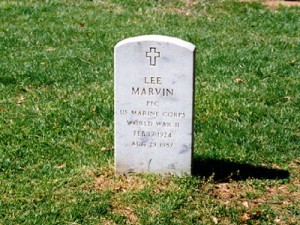 The Final Footprint – Marvin is interred in Arlington National Cemetery. His grave is marked by an upright VA marble marker. Other notable Final Footprints at Arlington include; the Space Shuttle Columbia, the Space Shuttle Challenger, Medgar Evers, JFK, Jacqueline Bouvier Kennedy Onassis, RFK, Edward Kennedy, Audie Murphy, and Malcolm Kilduff, Jr.
 On this day in 1982, Academy, Emmy and Tony Award winning actress, Ingrid Bergman died on her 67th birthday in London, from breast cancer. Born on 29 August 1915 in Stockholm, Sweden. Bergman starred in a variety of European and American films. She won three Academy Awards, two Emmy Awards, and the Tony Award for Best Actress. Perhaps best remembered for her roles as Ilsa Lund in Casablanca (1942), a World War II drama co-starring Humphrey Bogart, and as Alicia Huberman in Notorious (1946), an Alfred Hitchcock thriller co-starring Cary Grant. Before becoming a star in American films, she had been a leading actress in Swedish films. A few of her other starring roles, included For Whom the Bell Tolls (1943), Gaslight (1944), The Bells of St. Mary’s (1945), Hitchcock’s Spellbound (1945), and Under Capricorn (1949), and the independent production, Joan of Arc (1948). In 1950, after a decade of stardom in American films, she starred in the Italian film Stromboli, which led to a love affair with director Roberto Rossellini while they were both already married. The affair and then marriage with Rossellini created a scandal that forced her to remain in Europe until 1956, when she made a successful Hollywood return in Anastasia, for which she won her second Academy Award. She and Rossellini are the parents of actress Isabella Rossellini. Bergman married three times; Petter Aron Lindström (1937 – 1950 divorce), Rossellini (1950 – 1957 divorce), and Lars Schmidt (1958 – 1975 divorce).
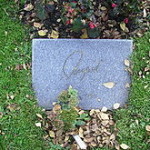 The Final Footprint – Her body was cremated at Kensal Green Cemetery, London and her ashes taken to Sweden. Most of them were scattered in the sea around the islet of Dannholmen off the fishing village of Fjällbacka in Bohuslän, on the west coast of Sweden, where she spent most summers from 1958 to her death in 1982. The rest were placed next to her parents’ ashes in Norra begravningsplatsen (Northern Cemetery), Stockholm, Sweden. Another notable cremation at Kensal Green was that of Freddie Mercury. Another notable final footprint at Norra begravninsplatsen is that of Alfred Nobel.
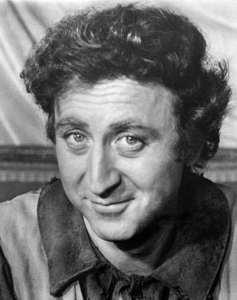 On this day in 2016 actor, screenwriter, director, producer, singer-songwriter, and author Gene Wilder died from Alzheimer’s complications in Stamford, Connecticut at the age of 83. Born Jerome Silberman on June 11, 1933 in Milwaukee, Wisconsin.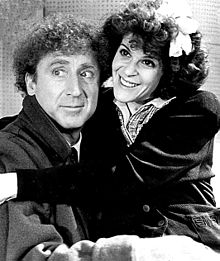
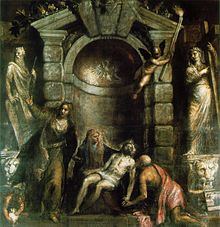
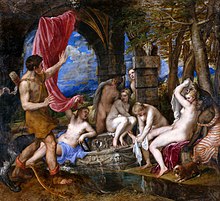
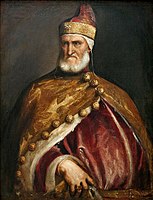
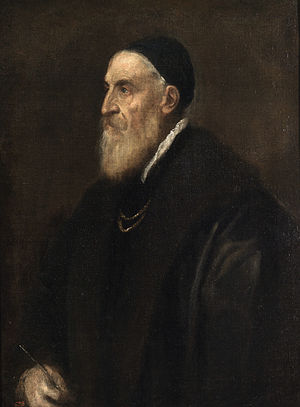 On this day in 1576, artist/painter Tiziano Vecelli or Tiziano Vecellio, da Cadore, Titian died from a fever in Venice, in his eighties or nineties. He was born in Pieve di Cadore, near Belluno (in Veneto, Republic of Venice) around 1490.
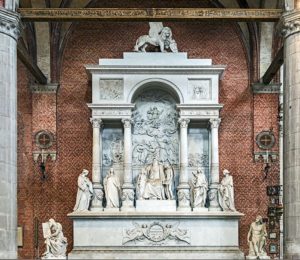 The Final Footprint – Titian was entombed in the Frari (Basilica di Santa Maria Gloriosa dei Frari). He lies near his own famous painting, the Madonna di Ca’ Pesaro. No memorial marked his grave, until much later the Austrian rulers of Venice commissioned Canova to provide a large monument.






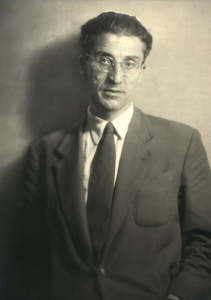 On this day in 1950, Italian poet, novelist, literary critic and translator Cesare Pavese, died from an overdose of barbiturates in Turin, Italy at the age of 41. Born 9 September 1908 in Santo Stefano Belbo, in the province of Cuneo.
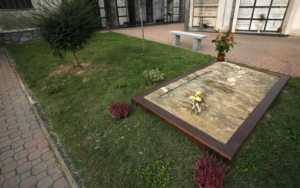 The Final Footprint – His final resting place is in the Cimitero di Santo Stefano Belbo, Piemonte, Italy.
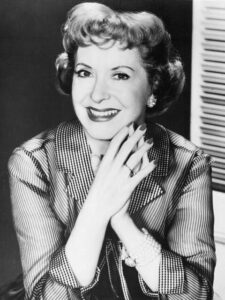 On this day in 1964, vaudevillian, singer, actress, and comedian who became internationally famous as the zany partner and comic foil of husband George Burns, her straight man, appearing with him on radio, television and film as the duo Burns and Allen, Gracie Allen died from a heart attack in Hollywood at age 69. Born Grace Ethel Cecile Rosalie Allen on 26 July 1895.
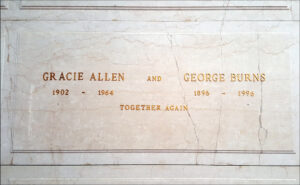 The Final Footprint – Her remains were entombed in a crypt at the Freedom Mausoleum in the Sanctuary of Heritage at Forest Lawn Memorial Park, Glendale, California.
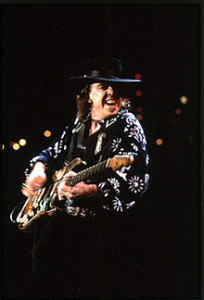 And on this day in 1990, legendary blues guitarist, Grammy award winner, SRV,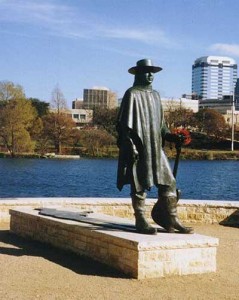
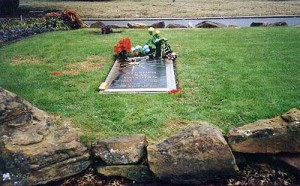 The Final Footprint

