 On this day in 1865, 16th President of the United States, Abraham Lincoln, died from a gunshot wound to the head, in the Petersen House which was across the street from Ford’s Theater where he had been shot by John Wilkes Booth. Lincoln died six days after General Robert E. Lee‘s surrender at Appomatox Courthouse. Born on 12 February 1809 in a one-room log cabin on the Sinking Spring Farm in southeast Hardin County, Kentucky (now LaRue County). He successfully led the country through its greatest constitutional, military and moral crisis, the American Civil War, by preserving the Union with force while ending slavery. Lincoln was the first Republican president, winning the 6 November 1860 election over Democrat Stephen Douglas and two other candidates. He won reelection in 1864 in the Union states in a landslide. Lincoln married Mary Todd (1842-1865 his death). One of the great orators in American history, his Gettysburg Address is oft quoted. Lincoln delivered the speech at the dedication of the Soldiers’ National Cemetery in Gettysburg, Pennsylvania, on the afternoon of Thursday 19 November 1863. In 272 words, and three minutes Lincoln summarized and defined the war:
“Four score and seven years ago our fathers brought forth on this continent a new nation, conceived in liberty, and dedicated to the proposition that all men are created equal.
Now we are engaged in a great civil war, testing whether that nation, or any nation, so conceived and so dedicated, can long endure. We are met on a great battle-field of that war. We have come to dedicate a portion of that field, as a final resting place for those who here gave their lives that that nation might live. It is altogether fitting and proper that we should do this.
But, in a larger sense, we can not dedicate, we can not consecrate, we can not hallow this ground. The brave men, living and dead, who struggled here, have consecrated it, far above our poor power to add or detract. The world will little note, nor long remember what we say here, but it can never forget what they did here. It is for us the living, rather, to be dedicated here to the unfinished work which they who fought here have thus far so nobly advanced. It is rather for us to be here dedicated to the great task remaining before us—that from these honored dead we take increased devotion to that cause for which they gave the last full measure of devotion—that we here highly resolve that these dead shall not have died in vain—that this nation, under God, shall have a new birth of freedom—and that government of the people, by the people, for the people, shall not perish from the earth.”
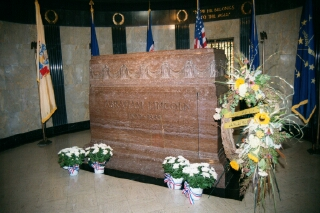 The Final Footprint – Lincoln is entombed in Lincoln’s Tomb in Oak Ridge Cemetery in Springfield, Illinois. His wife Mary and three of their four sons are entombed in the walls opposite his tomb. Lincoln’s name and image appear in numerous places, including the Lincoln Memorial in Washington, D.C., the U.S. Lincoln $5 bill and the Lincoln cent, and Lincoln’s sculpture on Mount Rushmore. Secretary of War Edwin M. Stanton, who was present when Lincoln died said, “Now he belongs to the ages.” Indeed he does.
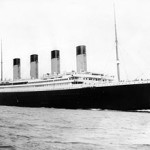 On this day in 1912, RMS Titanic sank in the north Atlantic Ocean, four days into her maiden voyage from Southampton to New York City. The largest passenger liner in service at the time, Titanic had an estimated 2,224 people on board when she struck an iceberg at 23:40 (ship’s time) on Sunday, 14 April 1912. Her sinking two hours and forty minutes later at 02:20 (05:18 GMT) on Monday, 15 April resulted in the deaths of more than 1,500 people, which made it one of the deadliest peacetime maritime disasters in history. Titanic received six warnings of sea ice on 14 April but was travelling near her maximum speed when her crew sighted the iceberg. Unable to turn quickly enough, the ship suffered a glancing blow that buckled her starboard (right) side and opened five of her sixteen compartments to the sea. Titanic had been designed to stay afloat with four of her forward compartments flooded but not more, and the crew soon realised that the ship would sink. They used rocket flares and radio (wireless) messages to attract help as the passengers were put into lifeboats. However, in accordance with existing maritime practice, the ship was carrying far too few lifeboats for everyone (though slightly more than the law required), and many boats were not filled to their capacity due to a poorly managed evacuation. The ship sank with over a thousand passengers and crew members still on board. Almost all those who jumped or fell into the water died from hypothermia within minutes. RMS Carpathia arrived on the scene about an hour and a half after the sinking and had rescued the last of the survivors in the lifeboats by 09:15 on 15 April, little more than 24 hours after Titanic‘s crew had received their first warnings of drifting ice.
The Final Footprint – The disaster caused widespread public outrage over the lack of lifeboats, lax shipping regulations, and the unequal treatment of the different passenger classes aboard the ship. Inquiries set up in the wake of the disaster recommended sweeping changes to maritime regulations. This led to the establishment in 1914 of the International Convention for the Safety of Life at Sea (SOLAS). Titanic’s sinking became a cultural phenomenon, commemorated by numerous artists, film-makers, writers, composers, musicians and dancers from the time immediately after the sinking to the present day. On 1 September 1985 a joint US-French expedition led by Robert Ballard found the wreck of Titanic, and the ship’s rediscovery led to increased interest in Titanic‘s story. In 1997, James Cameron‘s eponymous film became the first movie ever to earn $1 billion at the box office, and the film’s soundtrack became the best selling soundtrack recording of all time. Numerous expeditions have been launched to film the wreck and to salvage objects from the debris field. Many artifacts have been recovered and conserved, but the wreck itself is steadily decaying. In time, Titanic‘s structure will collapse into a pile of iron and steel fragments. Eventually she will be reduced to a spot of rust on the seabed, with the remaining scraps of the ship’s hull mingled with her more durable fittings, like her propellers, the bronze capstans and the telemotor. The following memorials have been erected in memory of those who lost their lives:
Titanic Memorial, Belfast

The Titanic Memorial in Belfast was erected to commemorate the lives lost. It was funded by contributions from the public, shipyard workers and victims’ families, and was dedicated in June 1920. It is located on Donegall Square in central Belfast in the grounds of Belfast City Hall. The memorial presents an allegorical representation of the disaster in the form of a female personification of Death or Fate holding a laurel wreath over the head of a drowned sailor raised above the waves by a pair of mermaids. It has been used as the site of annual commemorations of the Titanic disaster. For a while it was obscured by the Belfast Wheel that was removed in April 2010. It is now the centrepiece of a small Titanic memorial garden that was opened on 15 April 2012, the centenary of the disaster. Together with the garden, it is the only memorial in the world to commemorate all of the victims of the Titanic, passengers and crew alike.
Memorial to the Engine Room Heroes of the Titanic
The Memorial to the Engine Room Heroes of the Titanic is a granite monument located in St. Nicholas Place, Pier Head, Liverpool, England. The city of Liverpool is strongly associated with the ill-fated liner. The RMS Titanic was owned by White Star Line which was founded in Liverpool in 1840. Liverpool was also the port of registry of the liner with the words ‘Titanic, Liverpool’ visible on the stern of the ship. The memorial on Liverpool’s waterfront is dedicated to the 244 engineers that lost their lives in the disaster as they remained in the ship supplying the stricken liner with electricity and other amenities for as long as possible. The monument is notable as the first monument in the United Kingdom to depict The Working Man. The monument dedicated to the hundreds of men who died during the sinking was designed by Sir William Goscombe John and constructed circa 1916. It stands 14.6 m tall and although it is most strongly associated with the RMS Titanic, its dedication was broadened to include all maritime engine room fatalities incurred during the performance of duty in World War I. The monument is Grade II* listed. Shrapnel damage from bombs that fell during the Second World War can be clearly seen on the monument.
Titanic Memorial (New York City)


Titanic Memorial Lighthouse
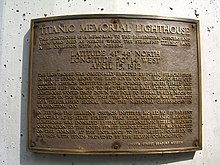
Dedication plaque on the Lighthouse
The Titanic Memorial is a 60-foot-tall (18 m) lighthouse built, due in part to the instigation of Margaret Brown, to remember the people who died on the RMS Titanic on April 15, 1912. Its design incorporates the use of a time ball.
Titanic Engineers’ Memorial, Southampton
 The Titanic Engineers’ Memorial is a memorial in East (Andrews) Park, Southampton, United Kingdom, to the engineers who died in the RMS Titanic disaster on 15 April 1912. The bronze and granite memorial was originally unveiled by Sir Archibald Denny, president of the Institute of Marine Engineers on 22 April 1914. The event was attended by an estimated 100,000 Southampton residents.
Titanic Memorial (Washington, D.C.)
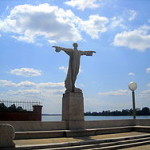 The Titanic Memorial is a granite statue in southwest Washington, D.C., that honors the men who gave their lives so that women and children might be saved during the RMS Titanic disaster. The thirteen-foot-tall figure is of a partly clad male figure with arms outstretched. The statue was erected by the Women’s Titanic Memorial Association. The memorial is located on P Street SW next to the Washington Channel near Fort Lesley J. McNair. It was designed by Gertrude Vanderbilt Whitney, who won the commission in open competition, and sculpted by John Horrigan from a single piece of red granite furnished from Westerly, RI, by the Henry C. Smalley Granite Co. It was unveiled on May 26, 1931, by Helen Herron Taft, the widow of President Taft. Originally located at the foot of New Hampshire Avenue, NW in Rock Creek Park along the Potomac River, the monument was removed in 1966 to accommodate the Kennedy Center. The memorial was re-erected without ceremony in 1968 on the south Washington waterfront outside Fort McNair in Washington Channel Park at Fourth and P Streets, SW. A replica of the head of the memorial, carved in marble and exhibited in Paris in 1921, was purchased by the French Government for the Musée du Luxembourg.
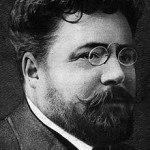 On this day in 1927, journalist and author Gaston Leroux died in Nice, France at the age of 58. In the English-speaking world, he is perhaps best known for writing the novel The Phantom of the Opera (Le Fantôme de l’Opéra, 1911). Born Gaston Louis Alfred Leroux in Paris on 6 May 1868. His novel The Mystery of the Yellow Room is also one of the most famous locked room mysteries ever written.
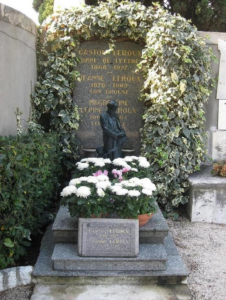
The Final Footprint – Leroux is interred in Cimetiére du Château in Nice. La Belle Otero is interred there as well. The Phantom of the Opera has been made into several film and stage productions of the same name, notably the 1925 film starring Lon Chaney, and Andrew Lloyd Webber‘s 1986 musical.
#RIP #OTD in 1975 actor (Call Northside 777, Cry of the City, House of Strangers, Whirlpool, The Blue Gardenia, The Big Combo, Ocean’s 11, Tony Rome, Lady in Cement, The Godfather), Richard Conte died from a heart attack at UCLA Medical Center aged 65. Westwood Memorial Park in Los Angeles
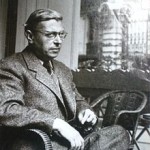 On this day in 1980, philosopher, playwright, novelist, screenwriter, political activist, biographer, and literary critic, Jean-Paul Sartre died from pulmonary edema in Paris at the age of 74. Born Jean-Paul Charles Aymard Sartre on 21 June 1905 in Paris. In my opinion, Sartre was one of the key figures in the philosophy of existentialism and phenomenology, and one of the leading figures in 20th-century French philosophy and Marxism. His work has also influenced sociology, critical theory, post-colonial theory, and literary studies, and continues to influence these disciplines. Sartre has also been noted for his open relationship with the prominent feminist theorist Simone de Beauvoir. He was awarded the 1964 Nobel Prize in Literature but refused it, saying that he always declined official honors and that “a writer should not allow himself to be turned into an institution”. In 1929 at the École Normale, he met de Beauvoir, who studied at the Sorbonne. The two became inseparable and lifelong companions, initiating a romantic relationship, though apparently, they were not monogamous. Together, Sartre and de Beauvoir challenged the cultural and social assumptions and expectations of their upbringings, which they considered bourgeois, in both lifestyle and thought. The conflict between oppressive, spiritually destructive conformity (mauvaise foi, literally, “bad faith”) and an “authentic” way of “being” became the dominant theme of Sartre’s early work, a theme embodied in his principal philosophical work L’Être et le Néant (Being and Nothingness) (1943). Sartre’s introduction to his philosophy is his work Existentialism and Humanism (1946), originally presented as a lecture.
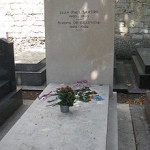 The Final Footprint – Sartre is entombed in Cimetière de Montparnasse in Paris. Evidently, his funeral was well attended, with estimates of the number of mourners along the two hour march ranging from 15,000 to over 50,000.
In 1975, when asked how he would like to be remembered, Sartre replied:
“I would like [people] to remember [my novel] Nausea, [my plays] No Exit and The Devil and the Good Lord, and then my two philosophical works, more particularly the second one, Critique of Dialectical Reason. Then my essay on Genet, Saint Genet…. If these are remembered, that would be quite an achievement, and I don’t ask for more. As a man, if a certain Jean-Paul Sartre is remembered, I would like people to remember the milieu or historical situation in which I lived,… how I lived in it, in terms of all the aspirations which I tried to gather up within myself.”
De Beauvoir was entombed next to him upon her death in 1986. Other notable Final Footprints at Montparnasse include; Charles Baudelaire, Samuel Beckett, Emmanuel Chabrier, Guy de Maupassant, Adah Isaac Menken, Camille Saint-Saëns, Jean Seberg, and Susan Sontag.
#RIP #OTD in 1986 novelist (Journal du voleur, Notre-Dame-des-Fleurs), playwright (Le Balcon, Les Bonnes, Les Paravents), poet, essayist, political activist, Jean Genet died at Jack’s Hotel in Paris aged 75. Larache Christian Cemetery in Larache, Morocco
| Greta Garbo | |
|---|---|
 in Anna Karenina (1935) |
|
On this day in 1990, film actress Greta Garbo died in New York City at the age of 84 from pneumonia and renal failure. Born Greta Lovisa Gustafsson on 18 September 1905 in Stockholm. Garbo was nominated three times for the Academy Award for Best Actress and received an Academy Honorary Award in 1954 for her “luminous and unforgettable screen performances.”
Garbo launched her career with a secondary role in the 1924 Swedish film The Saga of Gosta Berling. Her performance caught the attention of Louis B. Mayer, chief executive of Metro-Goldwyn-Mayer (MGM), who brought her to Hollywood in 1925. She immediately stirred interest with her first silent film, Torrent, released in 1926; a year later, her performance in Flesh and the Devil, her third movie, made her an international star.
Garbo’s first talking film was Anna Christie (1930). MGM marketers enticed the public with the catch-phrase “Garbo talks!” That same year she starred in Romance. For her performances in these films she received the first of three Academy Award nominations for Best Actress. (Academy rules at the time allowed for a performer to receive a single nomination for their work in more than one film). In 1932, her popularity allowed her to dictate the terms of her contract and she became increasingly selective about her roles. Her success continued in films such as Mata Hari (1931) and Grand Hotel (1932). Many critics and film historians consider her performance as the doomed courtesan Marguerite Gautier in Camille (1936) to be her finest. It is certainly my personal favorite. The role gained her a second Academy Award nomination. For her role in Ninotchka (1939), she earned her third Academy Award nomination. She retired from the screen, at the age of 35, after acting in twenty-eight films.
From then on, Garbo declined all opportunities to return to the screen. Shunning publicity, she began a private life. Garbo also became an art collector in her later life; her collection, included works from painters such as Pierre-Auguste Renoir, Pierre Bonnard, and Kees van Dongen.

Monument on the building which now stands where Greta Garbo was born on Södermalm.

in her first leading role in the Swedish film The Saga of Gösta Berling (1924) with Lars Hanson

Portrait photograph, 1925

in Flesh and the Devil (1926) with John Gilbert
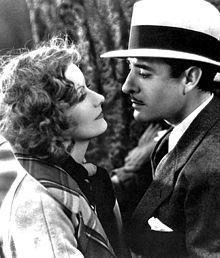
with John Gilbert in A Woman of Affairs (1928).

“Garbo talks!” in Anna Christie (1930).

with Fredric March in Anna Karenina (1935).

with Robert Taylor in Camille (1936).

with Charles Boyer in Conquest (1937)

with Melvyn Douglas in a scene from Ninotchka (1939).
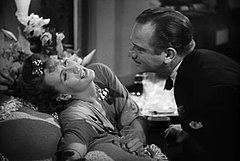
with Melvyn Douglas in “Two-Faced Woman” (1941)
From the early days of her career, Garbo avoided industry social functions, preferring to spend her time alone or with friends. She never signed autographs or answered fan mail, and rarely gave interviews. Nor did she ever appear at Oscar ceremonies, even when she was nominated. Her aversion to publicity and the press was genuine, and exasperating to the studio at first. In an interview in 1928, she explained that her desire for privacy began when she was a child, stating “as early as I can remember, I have wanted to be alone. I detest crowds, don’t like many people.”
She is closely associated with a line from Grand Hotel, “I want to be alone; I just want to be alone.”

signing her US citizenship papers in 1950
On 9 February 1951, she became a naturalized citizen of the United States and, in 1953, bought a seven-room apartment at 450 East 52nd Street in Manhattan, New York City, where she lived for the rest of her life.
Garbo never married, had no children. Her most famous romance was with her frequent co-star, John Gilbert, with whom she lived intermittently in 1926 and 1927. Gilbert allegedly proposed to her numerous times, with Garbo agreeing but backing out at the last minute. “I was in love with him,” she said. “But I froze. I was afraid he would tell me what to do and boss me. I always wanted to be the boss.”
In 1937, she met conductor Leopold Stokowski, with whom she had a highly publicized friendship or romance while traveling throughout Europe the following year. In his diary, Erich Maria Remarque discusses a liaison with Garbo in 1941. In his memoir, Cecil Beaton described an affair with her in 1947 and 1948. In 1941 she met the Russian-born millionaire, George Schlee, who was introduced to her by his wife, fashion designer Valentina. Nicholas Turner, Garbo’s close friend for 33 years, said that, after she bought an apartment in the same building, “Garbo moved in and took Schlee right away from Valentina.” Schlee would split his time between the two, becoming Garbo’s close companion and advisor until his death in 1964.
In 1927, Garbo was introduced to stage and screen actress Lilyan Tashman and they may have had an affair. Silent film star Louise Brooks stated that she and Garbo had a brief liaison.
In 1931, Garbo befriended the writer Mercedes de Acosta, introduced to her by her close friend, Salka Viertel, and, according to Garbo’s and de Acosta’s biographers, began a sporadic and volatile romance. The two remained friends for almost 30 years, during which time Garbo wrote de Acosta 181 letters, cards, and telegrams, now at the Rosenbach Museum & Library in Philadelphia.
Of Mimi Pollak, Garbo wrote “We cannot help our nature, as God has created it. But I have always thought you and I belonged together”. In 1975, she wrote a poem about not being able to touch the hand of her friend with whom she might have been walking through life.
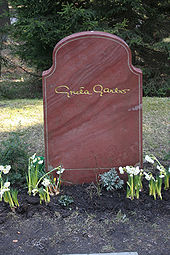
The Final Footprint
Garbo was cremated in Manhattan, and her ashes were interred in 1999 at Skogskyrkogården Cemetery just south of her native Stockholm.
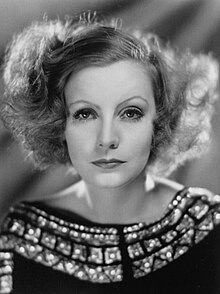
in Inspiration (1931) publicity still

In Camille (1936)
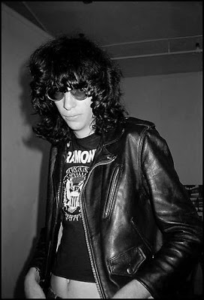 On this day in 2001, musician, singer-songwriter, and lead vocalist of the punk rock band the Ramones, Joey Ramone died at the age of 49 following a seven-year battle with lymphoma at New York-Presbyterian Hospital in manhattan. Born Jeffrey Ross Hyman on May 19, 1951 in Queens. His image, voice, and tenure as frontman of the Ramones made him a countercultural icon.
In 1974, Hyman co-founded the punk rock band the Ramones with friends John Cummings and Douglas Colvin. Colvin was already using the pseudonym “Dee Dee Ramone” and the others also adopted stage names using “Ramone” as their surname: Cummings became Johnny Ramone and Hyman became Joey Ramone. Joey initially served as the group’s drummer while Dee Dee was the original vocalist. However, when Dee Dee’s vocal cords proved unable to sustain the demands of consistent live performances, Ramones manager Thomas Erdelyi suggested Joey switch to vocals. After a series of unsuccessful auditions in search of a new drummer, Erdelyi took over on drums, assuming the name Tommy Ramone.
The Ramones were a major influence on the punk rock movement in the United States. Recognition of the band’s importance built over the years, and they are now regularly represented in many assessments of all-time great rock music–. In 1996, after a tour with the Lollapalooza music festival, the band played their final show and then disbanded.
The Final Footprint

Joey is interred at New Mount Zion Cemetery in Lyndhurst, New Jersey.
He was reportedly listening to the song “In a Little While” by U2 when he died. His solo album Don’t Worry About Me was released posthumously in 2002, and features the single “What a Wonderful World”, a cover of the Louis Armstrong standard. MTV News claimed: “With his trademark rose-colored shades, black leather jacket, shoulder-length hair, ripped jeans and alternately snarling and crooning vocals, Joey was the iconic godfather of punk.”
On November 30, 2003, a block of East 2nd Street in New York City was officially renamed Joey Ramone Place. It is the block where Hyman once lived with bandmate Dee Dee and is near the former site of the music club CBGB, where the Ramones began their career. Hyman’s birthday is celebrated annually by rock ‘n’ roll nightclubs, hosted in New York City by his brother and, until 2007, his mother, Charlotte. He is interred at Hillside Cemetery in Lyndhurst, New Jersey.
The Ramones were named as inductees to the Rock and Roll Hall of Fame as part of the class of 2002.
Several songs have been written in tribute to Joey Ramone. Tommy, CJ and Marky Ramone and Daniel Rey came together in 2002 to record Jed Davis’ Joey Ramone tribute album, The Bowery Electric. Other tributes include “Hello Joe” by Blondie from the album The Curse of Blondie, “Don’t Take Me For Granted” by Social Distortion, “You Can’t Kill Joey Ramone” by Sloppy Seconds, Joey by Raimundos, “I Wanna Be Your Joey Ramone” by Sleater-Kinney, “Red and White Stripes” by Moler and “Joey” by the Corin Tucker Band, “I Heard Ramona Sing” by Frank Black, and Amy Rigby’s “Dancin’ With Joey Ramone”. Rammstein ended several shows of their Mutter tour in 2001 with a cover of “Pet Sematary” in honor of the passing of Joey Ramone. “The Miracle (of Joey Ramone)” by U2.
In September 2010, the Associated Press reported that “Joey Ramone Place,” a sign at the corner of Bowery and East Second Street, was New York City’s most stolen sign. Later, the sign was moved to 20 ft (6.1 m) above ground level. Drummer Marky Ramone thought Joey would appreciate that his sign would be the most stolen, adding “Now you have to be an NBA player to see it.”
After several years in development, Ramone’s second posthumous album was released on May 22, 2012. Titled …Ya Know?, it was preceded on Record Store Day by a 7″ single re-release of “Blitzkrieg Bop”/”Havana Affair”.
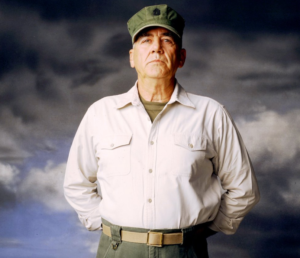 And on this day in 2018, actor, drill instructor, staff sergeant, honorary gunnery sergeant, Marine R. Lee Ermey died in Santa Monica, California, from complications related to pneumonia, at the age of 73. Born Ronald Lee Ermey on March 24, 1944 in Emporia, Kansas. Perhaps best known for his role as Gunnery Sergeant Hartman in the 1987 film Full Metal Jacket, which earned him a Golden Globe Award nomination for Best Supporting Actor.
Ermey was often typecast in authority figure roles, such as Mayor Tilman in the film Mississippi Burning, Bill Bowerman in Prefontaine, Sheriff Hoyt in The Texas Chainsaw Massacre remake, Jimmy Lee Farnsworth in Fletch Lives, a police captain in Se7en, plastic army men leader Sarge in the Toy Story films, Lt. “Tice” Ryan in Rocket Power, a prison warden in an episode of SpongeBob SquarePants, and John House in House.
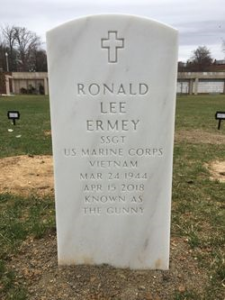 The Final Footprint
His funeral was held in Arlington National Cemetery on Friday, January 18, 2019, where his cremated remains are interred. Other notable Final Footprints at Arlington include; Space Shuttle Challenger, Space Shuttle Columbia, Medgar Evers, JFK, Jacqueline Bouvier Kennedy Onassis, RFK, Edward Kennedy, Malcolm Kilduff, Jr., Lee Marvin, and Audie Murphy.
#RIP #OTD in 2020 actor (First Blood, Gorky Park, Silverado, Cocoon, F/X, Presumed Innocent, Tommy Boy, Romeo + Juliet, Knight of Cups), Brian Dennehy died of cardiac arrest due to sepsis in New Haven, Connecticut aged 81. Cremation
Have you planned yours yet?
Follow TFF on twitter @RIPTFF
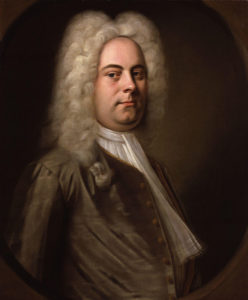 On this day in 1759, Baroque composer George Frideric (or Frederick) Handel died at his home in Brook Street, London, at age 74. Born on 5 March in Halle-upon-Saale, Duchy of Magdeburg (then part of Brandenburg-Prussia). He spent the bulk of his career in London, becoming well-known for his operas, oratorios, anthems, and organ concertos. Handel received important training in Halle-upon-Saale and worked as a composer in Hamburg and Italy before settling in London in 1712. He became a naturalised British subject in 1727. He was strongly influenced both by the great composers of the Italian Baroque and by the middle-German polyphonic choral tradition.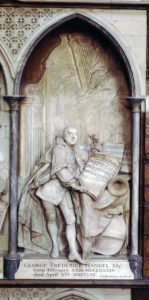
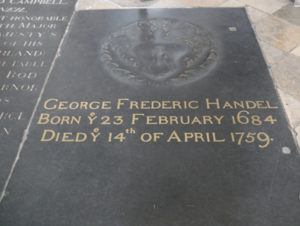 The Final Footprint
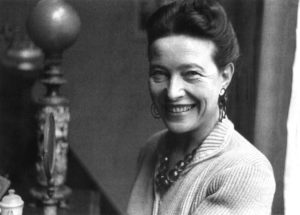 On this day in 1986, existentialist philosopher, public intellectual, social theorist and author, Simone de Beauvoir died of pneumonia in Paris at the age of 78. Born Simone-Ernestine-Lucie-Marie Bertrand de Beauvoir on 9 January 1908 in Paris. Perhaps best known for her metaphysical novels, including She Came to Stay (1943) and The Mandarins (1954), and for her treatise The Second Sex (1949). Also noted for her lifelong polyamorous relationship with Jean-Paul Sartre. Scholarly discussions have analyzed the influences of Beauvoir and Sartre on one another. She is seen as having influenced Sartre’s masterpiece, Being and Nothingness. Yet she wrote much on philosophy that is independent of Sartrean existentialism.
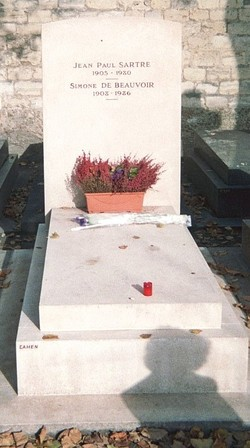 The Final Footprint – Beauvoir is interred with Sartre in the Cimetière du Montparnasse in Paris. In 2006, the city of Paris commissioned architect Dietmar Feichtinger to design a footbridge solely for pedestrians and cyclists across the Seine River. The bridge was named the Passerelle Simone-de-Beauvoir in her honor. It leads to the new Bibliothèque nationale de France. Other notable Final Footprints at Montparnasse include; Charles Baudelaire, Samuel Beckett, Emmanuel Chabrier, Henri Fantin-Latour, César Franck, Guy de Maupassant, Adah Isaac Menken, Man Ray, Camille Saint-Saëns, Jean-Paul Sartre, Jean Seberg, and Susan Sontag.
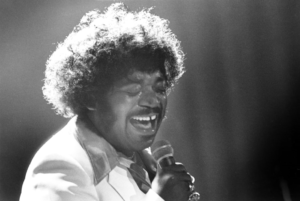 On this day in 2015,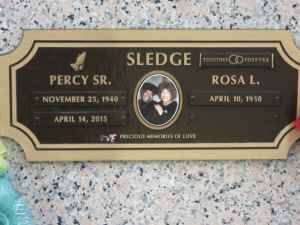
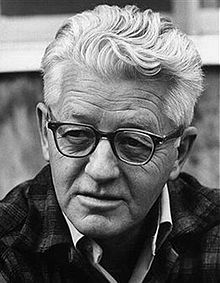 On this day in 1993, novelist, short story writer, environmentalist, and historian, “The Dean of Western Writers”, Wallace Stegner died in Santa Fe, New Mexico as the result of a car accident at the age of 84. Born Wallace Earle Stegner on 18 February 1909 in Lake Mills, Iowa. He and grew up in Great Falls, Montana; Salt Lake City, Utah; and the village of Eastend, Saskatchewan. Stegner won the Pulitzer Prize in 1972 for Angle of Repose, and the U.S. National Book Award in 1977 for The Spectator Bird. He taught at the University of Wisconsin and Harvard University. Eventually he settled at Stanford University, where he founded the creative writing program. His students included Wendell Berry, Sandra Day O’Connor, Thomas McGuane, Ken Kesey, and Larry McMurtry. Stegner married once; Mary Stuart Page (1934 – 1993 his death).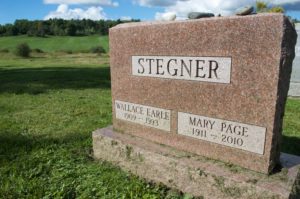
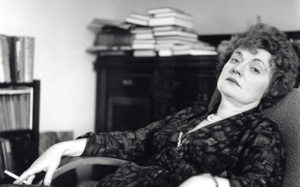 On this day in 2006 novelist, short story writer, poet and essayist Muriel Spark died in Florence, Tuscany, Italy at the age of 88. Born Muriel Sarah Spark on 1 February 1918 in Edinburgh. In 2008, The Times named Spark as No. 8 in its list of “the 50 greatest British writers since 1945”. Perhaps best know for her novel, The Prime of Miss Jean Brodie (1961).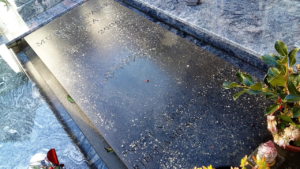
 On this day in 2009, sportscaster, Ford C. Frick Award-winning lead play-by-play announcer for Major League Baseball’s Philadelphia Phillies, Harry Kalas, died from a heart attack in the press box at Nationals Park, several hours before the Washington Nationals’ home opener against the Phillies. Born Harry Norbert Kalas on 26 March 1936 in Naperville, Illinois. He graduated for the University of Iowa and served two years in the U. S. Army. Kalas made his major league debut with the Houston Astros in 1965 and was hired by the Phillies in 1971. He called the first game at The Astrodome, six no-hit games, six National League Championship Series, three World Series (1983, 1993, and 2008), the first game at Veterans Stadium (10 April 1971), the last game at Veterans Stadium (28 September 2003), and the first game at Citizens Bank Park (12 April 2004). Kalas worked in the booth alongside Richie Ashburn for 27 seasons. The two became best friends and beloved figures in Philadelphia. Kalas’ signature home run call was “Swing … and a long drive, this ball is … outta here!” He was known for his love of Frank Sinatra’s version of the song, “High Hopes” (written by Jimmy Van Heusen and Sammy Cahn), a song he sang at numerous events, including the Phillies’ championship celebrations in his later years. On 29 October 2008, Kalas was finally able to call a Phillies’ championship-winning moment in the World Series when Brad Lidge struck out Eric Hinske to win the 104th Fall Classic: “One strike away; nothing-and-two, the count to Hinske. Fans on their feet; rally towels are being waved. Brad Lidge stretches. The 0-2 pitch — swing and a miss, struck him out! The Philadelphia Phillies are 2008 World Champions of baseball! Brad Lidge does it again, and stays perfect for the 2008 season! 48-for-48 in save opportunities, and let the city celebrate! Don’t let the 48-hour wait diminish the euphoria of this moment, and the celebration. And it has been 28 years since the Phillies have enjoyed a World Championship; 25 years in this city that a team that has enjoyed a World Championship, and the fans are ready to celebrate. What a night!”
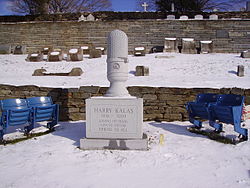 The Final Footprint – Kalas is interred in Laurel Hill Cemetery in Philadelphia. His grave is marked by an individual upright granite marker with a replica of a microphone on top. The terms of endearment; LOVING HUSBAND LOVING FATHER FRIEND TO ALL, are engraved on the monument. On either side of the monument are four seats from Veteran’s Stadium. Kalas became the fourth person to be given the honor of having their body lie in repose inside a major-league baseball stadium, after Babe Ruth, Jack Buck, and Miller Huggins, when his casket was displayed behind home plate and fans were encouraged to pay their respects at Citizens Bank Park. Friends, broadcast partners, and every player on the Phillies team roster, passed by his casket to pay respects before it was placed in a hearse which carried him out of Citizens Bank Park one final time. His grave was resurfaced with sod that originally came from Citizens Bank Park. On 17 April 2009, at the first home game after Kalas’ death, fans sang along with a video of Harry singing “High Hopes” during the seventh-inning stretch, instead of the traditional “Take Me Out to the Ball Game”.
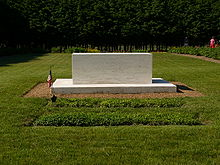 The Final Footprint – Roosevelt is interred in the Rose Garden at his home in Hyde Park which is now a National Historic Site and home to his Presidential Library. Eleanor was interred next to him upon her death in 1962. Their graves are marked by a large white marble monument engraved with their names and birth and death years.
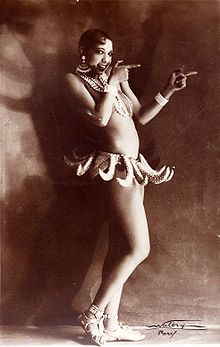 On this day in 1975, dancer, singer, actress, Civil Rights activist, spy, “Black Pearl,” “Bronze Venus”, “The Creole Goddess”, Josephine Baker died from a cerebral hemorrhage at Pitié-Salpêtrière Hospital in Paris at the age of 68. Born Freda Josephine McDonald in St. Louis, Missouri on 3 June 1906. Baker was the first black woman to star in a major motion picture, Zouzou (1934) or to become a world-famous entertainer. Baker, who refused to perform for segregated audiences in America, is also noted for her contributions to the Civil Rights Movement. She was offered unofficial leadership in the movement in the United States by Coretta Scott King in 1968, following Martin Luther King, Jr.’s assassination. Baker, however, turned down the offer. She was also known for assisting the French Resistance during World War II, and received the French military honor, the Croix de guerre and was made a Chevalier of the Légion d’honneur by General Charles de Gaulle. Baker became a citizen of France in 1937. She first traveled to Paris for a new venture, and opened in “La Revue Nègre” on 2 October 1925, at the Théâtre des Champs-Élysées. Baker became an instant success for her erotic dancing and for appearing practically nude on stage. After a successful tour of Europe, she returned to France to star at the Folies Bergère, setting the standard for her future acts. Baker was married four times; Willie Wells, Willie Baker, Jean Lion, and composer Jo Bouillon.
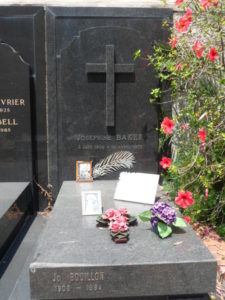 The Final Footprint – Baker received a full Roman Catholic funeral which was held at L’Église de la Madeleine. The only American-born woman to receive full French military honors at her funeral, Baker locked up the streets of Paris one last time. After a family service at Saint-Charles Church in Monte Carlo, she was interred at Monaco’s Cimetière de Monaco. In 1991, The Josephine Baker Story, was broadcast on HBO. Lynn Whitfield portrayed Baker, and won an Emmy Award for Outstanding Lead Actress in a Miniseries or a Special—becoming the first Black actress to win the award in this category.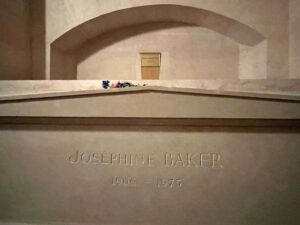
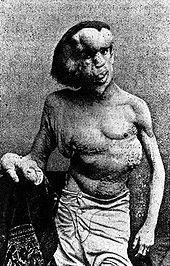 On this day in 1890, the man with severe deformities who was exhibited as a human curiosity and known as The Elephant Man, Joseph Carey Merrick died in The London Hospital (now known as the Royal London Hospital) at the age of 27. The exact cause of Merrick’s deformities is unclear. It is thought that Merrick suffered from either neurofibromatosis type I or Proteus syndrome or perhaps both. He was befriended by Dr. Frederick Treves who tried to diagnose and treat Merrick’s condition and saw to it that Merrick could stay at The London Hospital.
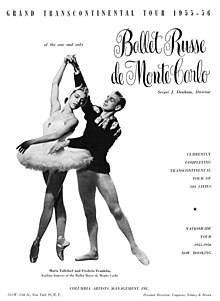
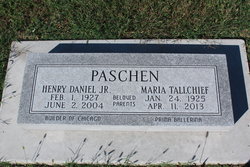
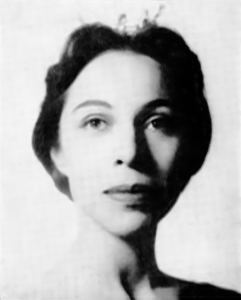 On this day in 2013, Native American and America’s first major prima ballerina Maria Tallchief died in Chicago at the age of 88. Born Elizabeth Marie “Betty” Tall Chief (Osage family name: Ki He Kah Stah Tsa) on January 24, 1925 in Fairfax, Oklahoma.


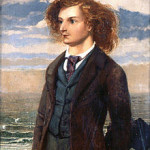 On this day in 1909, English poet, playwright, novelist, and critic Algernon Charles Swinburne died at The Pines, 11 Putney Hill, Putney, London at the age of 72. Born at 7 Chester Street, Grosvenor Place, London, on 5 April 1837. He devised the poetic form called the roundel, a variation of the French Rondeau form. In addition, he wrote several novels, and contributed to the famous Eleventh Edition of the Encyclopædia Britannica. He was nominated for the Nobel Prize in Literature in every year from 1903 to 1907 and again in 1909. Author H. P. Lovecraft considered that Swinburne was “the only real poet in either England or America after the death of Mr. Edgar Allan Poe.”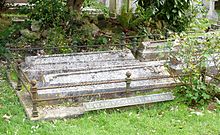
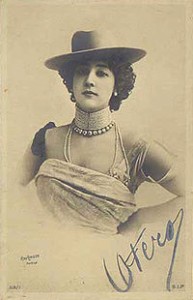 On this day in 1965, dancer, actress and courtesan Carolina “La Belle” Otero died in her apartment at the Hotel Novelty in Nice, France. Born Agustina Otero Iglesias on 4 November 1868 in Valga, Pontevedra, Galicia (Spain). She reportedly married an Italian nobleman, Count Guglielmo 1882, but found a sponsor in 1888 who moved with her to Marseille in order to promote her dancing career in France. She soon left him and created the character of La Belle Otero and became the star of Les Folies Bèrgere productions in Paris. Soon she was one of the most sought after women in Europe, serving as a courtesan to wealthy and powerful men. Apparently her lovers included; Prince Albert I of Monaco, King Edward VII of the United Kingdom, Kings of Serbia, and Kings of Spain as well as Russian Grand Dukes Peter and Nicholas, the Duke of Westminster and writer Gabriele D’Annunzio. Allegedly, duels were fought over her and some of her lovers committed suicide after the affairs ended. It was once said that her extraordinarily dark black eyes were so captivating that they were “of such intensity that it was impossible not to be detained before them.” Otero said, “Women have one mission in life: to be beautiful. When one gets old, one must learn how to break mirrors.”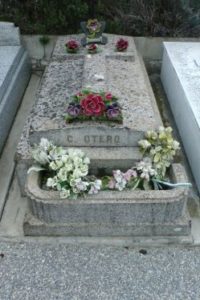
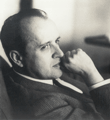 On this day in 1979, Italian composer, pianist, conductor and academic Nino Rota died from a coronary thrombosis at the age of 67 in Rome. Born Giovanni Rota Rinaldi on 3 December 1911 in Milan, Italy. Perhaps best known for his film scores, notably for the films of Federico Fellini, Luchino Visconti and Franco Zeffirelli. He will forever be remembered for his film scores for the first two films of Francis Ford Coppola‘s Godfather trilogy, receiving the Academy Award for Best Original Score for The Godfather Part II (1974).
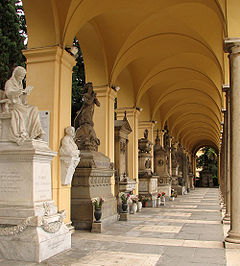 The Final Footprint – Rota shares a simple gravesite with his mother Ernesta, his brother Luigi, and his cousins Maria and Titina. The gravesite is at
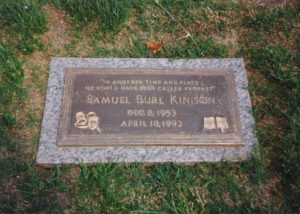
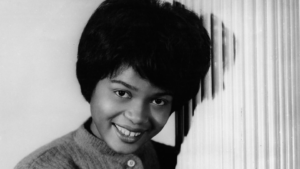 On this day in 2003, singer (“The Loco-Motion”) Little Eva died from
 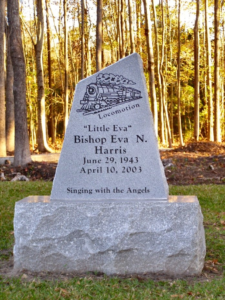 The Final Footprint
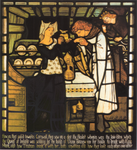
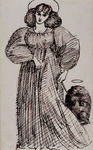
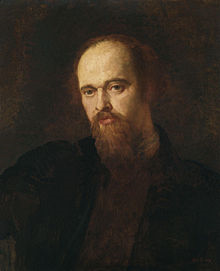 On this day in 1882, English poet, illustrator, painter and translator Dante Gabriel Rossetti died on Easter Sunday at the country house of a friend in Birchington-on-Sea, England, of Brights Disease at the age of 53. Born Gabriel Charles Dante Rossetti on 12 May 1828 in London. He founded the Pre-Raphaelite Brotherhood in 1848 with William Holman Hunt and John Everett Millais, and was later to be the main inspiration for a second generation of artists and writers influenced by the movement, most notably William Morris and Edward Burne-Jones. His work also influenced the European Symbolists and was a major precursor of the Aesthetic movement.
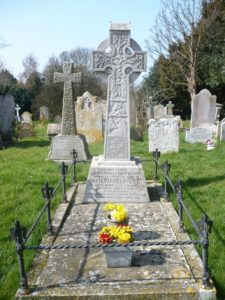 The Final Footprint – Rossetti is interred in the churchyard of All Saints in Birchington-on-Sea, under a tombstone designed by fellow artist, Ford Madox Brown.





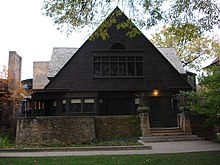
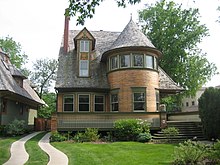


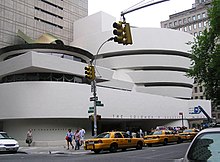
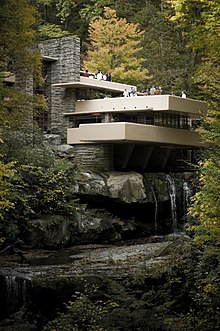


 The Final Footprint


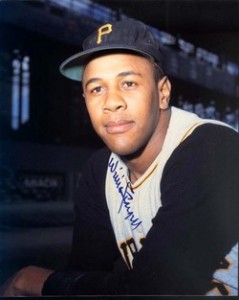
 Pirate, 7-time all-star, 2-time World Series Champion, baseball Hall of Famer, Pops, Willie Stargell died of complications related to a stroke in Wilmington, North Carolina at the age of 61. Born Wilver Dornel Stargell on 6 March 1940 in Earlsboro, Oklahoma. Known for his towering home runs. Only four home runs have ever been hit out of Dodger Stadium; two were by Stargell. Dodger starting pitcher Don Sutton said of Stargell, “I never saw anything like it. He doesn’t just hit pitchers, he takes away their dignity.” The Pirates won the World Series with Stargell in 1971 and 1979, both times defeating the Baltimore Orioles. The Pirates ’79 team adopted the Sister Sledge hit song “We Are Family” as the team anthem. Stargell earned the NLCS and World Series MVP awards and was named the co-MVP of the 1979 season (along with St. Louis’ Keith Hernandez). Stargell is the only player to have won all three trophies in a single year. I remember the ’79 World Series well. That Pirates team is one of my favorite teams and Stargell is one of my favorite players. The Pirates retired his number 8 in 1982.
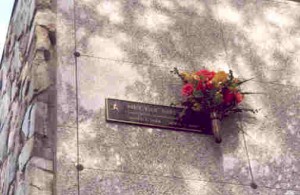 The Final Footprint – Stargell is entombed in a garden mausoleum in Oleander Memorial Gardens in Wilmington. The Willie Stargell statue, a 12-foot bronze statue, at PNC Park in Pittsburgh was unveiled in April 2001.
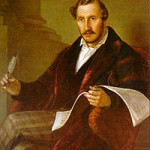 On this day in 1848, composer Gaetano Donizetti died in the house of a noble family, the Scotti, in Bergamo, Lombardy, Italy at the age of 49. Born Domenico Gaetano Maria Donizetti in Bergamo’s Borgo Canale quarter located just outside the city walls on 29 November 1797. Altogether Donizetti wrote about 70 operas. An offer in 1822 from Domenico Barbaja, the impresario of the Teatro San Carlo in Naples, which followed the composer’s ninth opera, led to his move to that city and the composition of 28 operas which were given their premieres at that house or in one of the city’s smaller houses including the Teatro Nuovo or the Teatro del Fondo. This continued until the production of Caterina Cornaro in January 1844. In all, Naples presented 51 of Donizetti’s operas. During this period, success came primarily with the comic operas, the serious ones failing to attract significant audiences. However, the situation changed with the appearance in 1830 of the serious opera, Anna Bolena which was the first to make a major impact on the Italian and international opera scene. After 1830, his best-known works included comedies such as L’elisir d’amore (1832) and Don Pasquale (1843) and historical dramas such as Lucia di Lammermoor (the first to be written by librettist Salvadore Cammarano) in 1835, as well as Roberto Devereux in 1837. Up to that point, all of his operas had been written to Italian librettos. After moving to Paris in 1838, Donizetti set his operas to French texts; these include La favorite and La fille du régiment and were first performed in that city from 1840 onward. It appears that much of the attraction of moving to Paris was not just for larger fees and prestige, but his chafing against the censorial limitations which existed in Italy, thus giving him a much greater freedom to choose subject matter. Along with Gioachino Rossini and Vincenzo Bellini, he was a leading composer of bel canto opera during the first fifty years of the Nineteenth Century. Donizetti married Virginia Vasselli.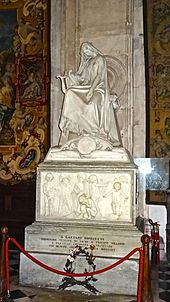
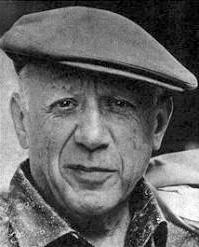 On this day in 1973, painter, draughtsman, and sculptor, Pablo Picasso died at his home in Mougins, France at the age of 91. Born on 25 October 1881 in the city of Málaga in the Andalusian region of Spain and baptized Pablo Diego José Francisco de Paula Juan Nepomuceno María de los Remedios Cipriano de la Santísima Trinidad Ruiz y Picasso. A prolific artist, he is perhaps best known as a pioneer, along with Georges Braque, of the avant-garde art movement Cubism which revolutionized European painting and sculpture. Among his most famous works are the proto-Cubist Les Demoiselles d’Avignon (1907)
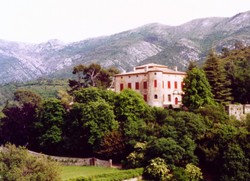 The Final Footprint – Picasso is interred at the Chateau of Vauvenargues near Aix-en-Provence, a property he had acquired in 1958 and occupied with Jacqueline. His grave is decorated with his own sculpture “Woman with the Vase” (1933), which was shown during the World exhibition of 1937 in Paris.
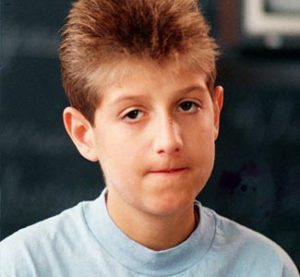 On this day in 1990, national poster child for HIV/AIDS Ryan White died at Riley Hospital for Children in Indianapolis, at the age of 18. Born Ryan Wayne White on December 6, 1971 in Kokomo, Indiana. As a hemophiliac, he became infected with HIV from a contaminated factor VIII blood treatment and, when diagnosed in December 1984, was given six months to live. Doctors said he posed no risk to other students, as AIDS is not an airborne disease and spreads solely through body fluids, but AIDS was poorly understood by the general public at the time. When White tried to return to school, many parents and teachers in Howard County rallied against his attendance due to concerns of the disease spreading through bodily fluid transfer. A lengthy administrative appeal process ensued, and news of the conflict turned Ryan into a popular celebrity and advocate for AIDS research and public education. Surprising his doctors, Ryan White lived five years longer than predicted. He died one month before his high school graduation.
 The Final Footprint
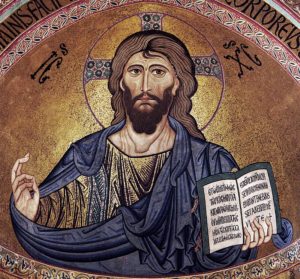 On this day, possibly, in AD 30/33, Jewish leader and religious leader, Jesus Christ, Jesus of Nazareth, Jesus was crucified in Calvary at the age of 33/36. Born c. 4 BC in Judea, Roman Empire. He is the central figure of Christianity, and in my opinion is one of the most influential people in history. Most Christians believe he is the incarnation of God the Son and the awaited Messiah (Christ) prophesied in the Old Testament.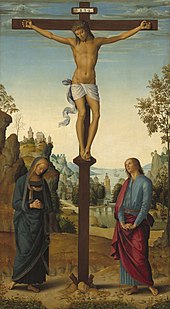

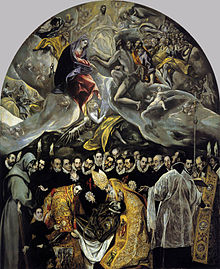
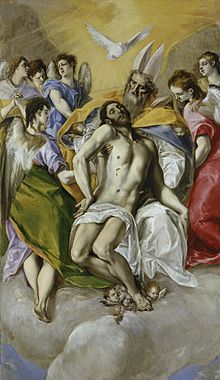
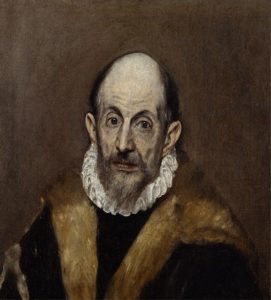 On this day in 1614, painter, sculptor and architect of the Spanish Renaissance El Greco died in Toledo, Spain at the age of 72. Born Doménikos Theotokópoulos in October 1541 in either the village of Fodele or Candia (the Venetian name of Chandax, present day Heraklion) on Crete. El Greco was a nickname, a reference to his Greek origin, and the artist normally signed his paintings with his full birth name in Greek letters, Δομήνικος Θεοτοκόπουλος, Doménikos Theotokópoulos, often adding the word Κρής Krēs, Cretan.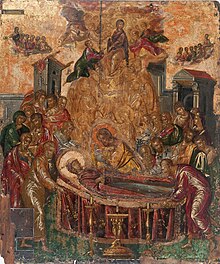



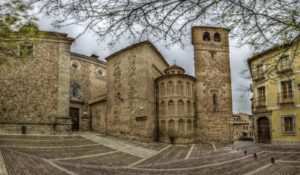 The Final Footprint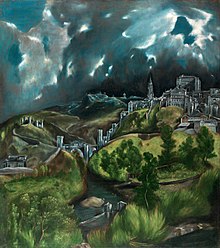


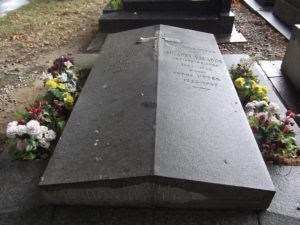
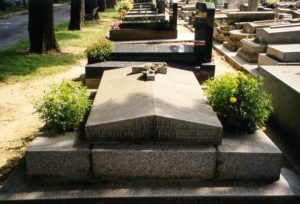
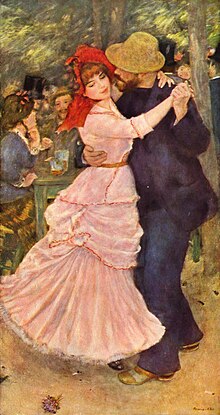
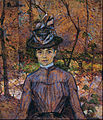
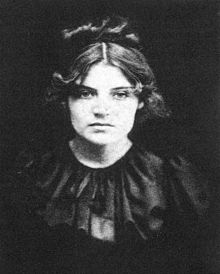 On this day in 1938, French painter and artists’ model, Suzanne Valadon died of a stroke at age 72 in Paris. Born Marie-Clémentine Valadon on 23 September 1865 at Bessines-sur-Gartempe, Haute-Vienne, France. In 1894, Valadon became the first woman painter admitted to the Société Nationale des Beaux-Arts. She was also the mother of painter Maurice Utrillo. The subjects of her drawings and paintings included mostly female nudes, female portraits, still lifes, and landscapes. She never attended the academy and was never confined within a tradition. Valadon debuted as a model in 1880 in Montmartre at age 15. She modeled for over 10 years for many different artists including the following: Pierre-Cécile Puvis de Chavannes, Théophile Steinlen, Pierre-Auguste Renoir, and Henri de Toulouse-Lautrec.





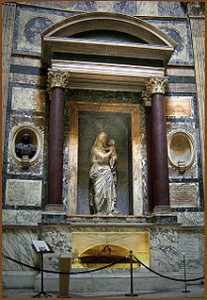 The Final Footprint – Raphael is entombed in a marble sarcophagus in the Pantheon in Rome. The inscription is an elegiac distich written by Pietro Bembo,: “Ille hic est Raffael, timuit quo sospite vinci, rerum magna parens et moriente mori.” Meaning: “Here lies Raphael, by whom the mother of all things (Nature) feared to be overcome while he was living, and while he was dying, herself to die.” The Pantheon was commissioned by Marcus Agrippa as a temple to all the gods of Ancient Rome, and was rebuilt by Emperor Hadrian in about 126 AD. It has been in continuous use throughout its history, and since the 7th century, the Pantheon has been used as a Roman Catholic church dedicated to “St. Mary and the Martyrs” but informally known as “Santa Maria Rotonda.”


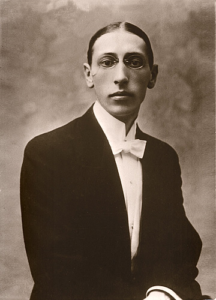 On this day in 1971, composer, pianist and conductor Igor Stravinsky died in his 5th Avenue apartment in Manhattan from heart failure at the age of 88. Born Igor Fyodorovich Stravinsky on 17 June [O.S. 5 June] 1882 in Oranienbaum, Russia. In my opinion, one of the most important and influential composers of the 20th century.
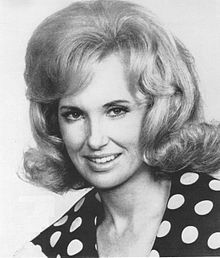 On this day in 1998, singer and songwriter, Country music icon, Tammy Wynette died from a heart attack at her home in Nashville at the age of 55. Born Virginia Wynette Pugh near Iuka, Mississippi on 5 May 1942. One of country music’s best-known artists, Wynette was called the “First Lady of Country Music”. Her best-known song was, “Stand by Your Man”. Many of her hits dealt with classic themes of loneliness, divorce, and the difficulties of man-woman relationships. During the late 1960s and early 1970s, Wynette charted 23 No. 1 songs. Wynette married five times; Euple Byrd (married April 1960– divorced 1966); Don Chapel, born Lloyd Franklin Amburgey (m. 1967 – annulled 1968); George Jones (m. February 16, 1969 – d. March 21, 1975); Michael Tomlin (m. July 18, 1976 – a. September 1976) 44 days; and singer/songwriter George Richey (m. July 6, 1978 – her death April 6, 1998), Wynette’s marriage to country music singer George Jones resulted in a sequence of albums and singles that hit the charts throughout the 1970s and early eighties.
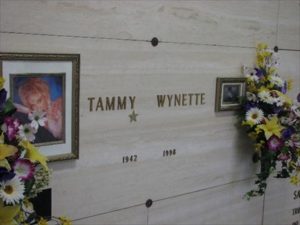 The Final Footprint – A public memorial service was held at Nashville’s historic Ryman Auditorium on 9 April 1998. A private grave-side service had been held earlier with a crypt entombment at Nashville’s Woodlawn Memorial Park Cemetery. Other notable final footprints at Woodlawn include; Eddy Arnold, Little Jimmy Dickens, George Jones, Johnny Paycheck, Webb Pierce, Jerry Reed, Marty Robbins, Dan Seals, Red Sovine, and Porter Wagoner.
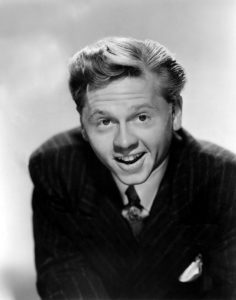 On this day in 2014, United States Army veteran, actor, vaudevillian, comedian, producer and radio personality Mickey Rooney died in Los Angeles at the age of 93. Born Joseph Yule Jr. on September 23, 1920 in Brooklyn. In a career spanning nine decades and continuing until shortly before his death, he appeared in more than 300 films and was one of the last surviving stars of the silent film era.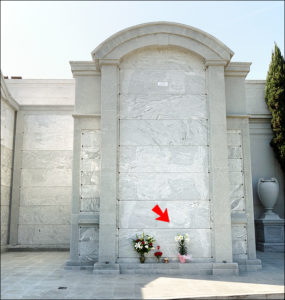
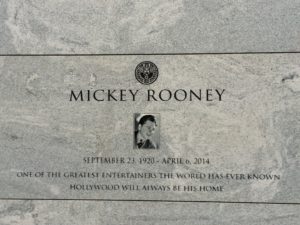



 The Final Footprint

