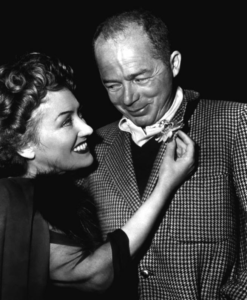
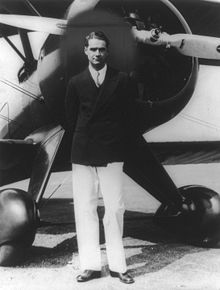
 On this day in 1976, aviator, engineer, industrialist, film producer, director, philanthropist, and once one of the wealthiest people in the world, Howard Hughes died from kidney failure aboard an airplane bound for Houston, at the age of 70. Born Howard Robard Hughes, Jr. probably on 24 September 1905 in Humble, Texas. His father patented the two-cone roller bit, which allowed rotary drilling for petroleum in previously inaccessible places and founded the Hughes Tool Company. Hughes took full control of the business when he was 19 following his father’s death. His most notable films inlcude the flying film Hell’s Angels (1930), Scarface (1932), and The Outlaw (1943), which featured Jane Russell. Hughes dated many famous women, including Bette Davis, Ava Gardner, Olivia de Havilland, Katharine Hepburn, Ginger Rogers, Jean Peters, Terry Moore and Gene Tierney. He reportedly proposed to Joan Fontaine several times. In 1932 Hughes founded Hughes Aircraft Company, which became a major American aerospace and defense contractor, as a division of Hughes Tool Company. Hughes was one of the most influential aviators in history; he set multiple world air-speed records, built the Hughes H-1 Racer and H-4 “Hercules” (better known to history as the “Spruce Goose”) aircraft, and acquired and expanded Trans World Airlines which would later on merge with American Airlines. In 1953, Hughes founded the Howard Hughes Medical Institute (HHMI) in Chevy Chase, Maryland, formed with the express goal of basic biomedical research, including trying to understand, in Hughes’ words, the “genesis of life itself.” Hughes gave all his stock in the Hughes Aircraft Company to the institute, which would sell the company to General Motors in 1985 for $5 billion. HHMI is one of the wealthiest medical research foundations in the world. In 1966, Hughes moved into the Desert Inn in Las Vegas. He wound up purchasing other hotels/casinos such as the Castaways, New Frontier, The Landmark Hotel and Casino, the Sands and the Silver Slipper. Hughes was married two or three times; Ella Rice (1925-1929 divorce), Terry Moore (1949-1976 his death) (alleged), and Jean Peters (1957-1971 divorce).
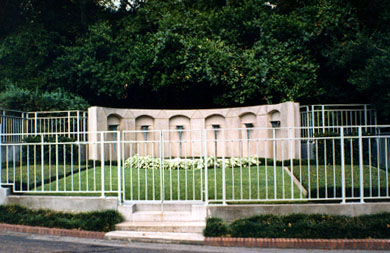 The Final Footprint – Hughes is interred in the Hughes private estate with his parents in Glenwood Cemetery in Houston. One of my offices in Houston overlooked Glenwood. Hughes has been portayed in film by Tommy Lee Jones in The Amazing Howard Hughes (1977) and by Leonardo DiCaprio in The Aviator (2004). The latter was nominated for 11 Academy Awards, winning five. Other notable Final Footprints at Glenwood include; Maria Franklin Prentiss Langham Gable, Oveta Culp Hobby, William P. Hobby, Glenn McCarthy, and Gene Tierney.
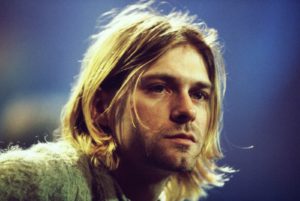 On this day in 1994, musician, singer, and songwriter Kurt Cobain died from a self inflicted gunshot wound at his home in Seattle at the age of 27. Born Kurt Donald Cobain on 20 February 1967, at Grays Harbor Hospital in Aberdeen, Washington. Cobain was the lead singer, guitarist, and primary songwriter of the grunge band Nirvana. Cobain formed Nirvana with Krist Novoselic in Aberdeen, Washington, in 1985 and established it as part of the Seattle music scene, having its debut album Bleach released on the independent record label Sub Pop in 1989. After signing with major label DGC Records, the band found breakthrough success with “Smells Like Teen Spirit” from its second album Nevermind (1991). Following the success of Nevermind, Nirvana was labeled “the flagship band” of Generation X, and Cobain hailed as “the spokesman of a generation”. Cobain, however, was often uncomfortable and frustrated, believing his message and artistic vision to have been misinterpreted by the public, with his personal issues often subject to media attention. During the last years of his life, Cobain struggled with heroin addiction, illness and depression. Cobain married fellow musician Courtney Love. With Cobain’s death at 27 he became a member of the 27 Club; a group of famous musicians who died when they were 27 years old. The group includes; bluesman Robert Johnson, Rolling Stone Brian Jones, Jimi Hendrix, Janis Joplin, Jim Morrison and Amy Winehouse.
 The Final Footprint – A public vigil was held for Cobain on 10 April 1994, at a park at Seattle Center. A prerecorded message by Love was played at the memorial. Love read portions of Cobain’s suicide note to the crowd, crying and chastising Cobain. Near the end of the vigil, Love arrived at the park and distributed some of Cobain’s clothing to those who still remained. A final ceremony was arranged for Cobain, by his mother, on 31 May 1999. As a Buddhist monk chanted, daughter Frances Bean scattered Cobain’s ashes into McLane Creek in Olympia, the city where he “had found his true artistic muse.” Together with Nirvana band mates Krist Novoselic and Dave Grohl, Cobain was posthumously inducted into the Rock and Roll Hall of Fame in 2014, which was the first year in which the band was eligible.
| Allen Ginsberg | |
|---|---|
 in 1979 |
|
On this day in 1997 poet, philosopher and writer Allen Ginsberg died from liver cancer via complications of hepatitis in East Village, New York City at the age of 70. Born Irwin Allen Ginsberg on June 3, 1926 in Newark, New Jersey. He was one of the leading figures of both the Beat Generation during the 1950s and the counterculture that soon followed. He opposed militarism, economic materialism and sexual repression and was known as embodying various aspects of this counterculture, such as his views on drugs, hostility to bureaucracy and openness to Eastern religions.
Perhaps best known for his poem “Howl”, in which he denounced what he saw as the destructive forces of capitalism and conformity in the United States. In 1956, “Howl” was seized by San Francisco police and US Customs. In 1957, it attracted widespread publicity when it became the subject of an obscenity trial, as it described heterosexual and homosexual sex at a time when sodomy laws made homosexual acts a crime in every U.S. state. Judge Clayton W. Horn ruled that “Howl” was not obscene, adding, “Would there be any freedom of press or speech if one must reduce his vocabulary to vapid innocuous euphemisms?”
Ginsberg was a practicing Buddhist. He lived modestly, buying his clothing in second-hand stores and residing in downscale apartments in New York’s East Village. Ginsberg took part in decades of non-violent political protest against everything from the Vietnam War to the War on Drugs.
His collection The Fall of America shared the annual U.S. National Book Award for Poetry in 1974. Ginsberg was a Pulitzer Prize finalist in 1995 for his book Cosmopolitan Greetings: Poems 1986–1992.
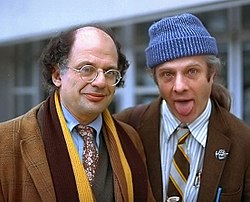
Ginsberg with his partner, poet Peter Orlovsky. Photo taken in 1978

Portrait with Bob Dylan, taken in 1975

Allen Ginsberg’s greeting A. C. Bhaktivedanta Swami Prabhupada at San Francisco International Airport. January 17, 1967
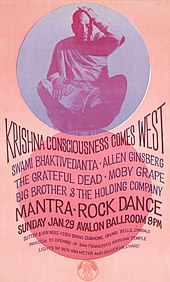
The Mantra-Rock Dance promotional poster featuring Allen Ginsberg along with leading rock bands.
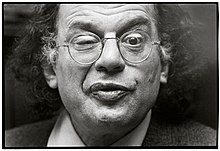
In 1979
Ginsberg continued to write through his final illness, with his last poem, “Things I’ll Not Do (Nostalgias)”, written on March 30.
The Final Footprint
He died with family and friends in his East Village loft in New York City, succumbing to liver cancer via complications of hepatitis. He was 70 years old.
One third of Ginsberg’s ashes were buried in his family plot in Gomel Chesed Cemetery in Newark, NJ. He was survived by Orlovsky.
When Orlovsky died, as per Ginsberg’s wishes, another third of his ashes were buried alongside Orlovsky at Shambhala Mountain Center in Colorado. The remaining third of the ashes are buried at Jewel Heart, Gelek Rimpoche’s sangha, in India.
 On this day in 2002, lead singer and co-songwriter of the rock band Alice in Chains, Layne Staley died from an accidental overdose of a speedball in his home in Seattle, at the age of 34. Born Layne Rutherford Staley on August 22, 1967 in Kirkland, Washington. Alice in Chains rose to international fame in the early 1990s during Seattle’s grunge movement, and became known for Staley’s distinct vocal style, as well as the harmonized vocals between him and guitarist/vocalist Jerry Cantrell. Staley was also a member of the supergroups Mad Season and Class of ’99.
The Final Footprint
An informal memorial was held for Staley on the night of April 20, 2002 at the Seattle Center, which was attended by at least 100 fans and friends, including Alice in Chains bandmates Cantrell, Starr, Inez, Kinney and Soundgarden frontman Chris Cornell. Staley’s body was cremated and a private memorial service was held for him on April 28, 2002 on Bainbridge Island in Washington’s Puget Sound. It was attended by Staley’s family and friends, along with his Alice in Chains bandmates, Cornell, as well as other music personalities. Cornell, joined by Heart’s Ann and Nancy Wilson, sang a rendition of The Rolling Stones’ “Wild Horses” at the funeral. They also performed The Lovemongers’ song “Sand”.
#RIP #OTD in 2006 singer (“Town Without Pity”, “(The Man Who Shot) Liberty Valance”, “Twenty Four Hours from Tulsa”, “I’m Gonna Be Strong”, “It Hurts to Be in Love”, “Something’s Gotten Hold of My Heart”), songwriter (“Hello Mary Lou”), musician Gene Pitney died in his hotel room following a concert in Cardiff, Wales, aged 66. Center Cemetery, Somers, Connecticut
| Charlton Heston | |
|---|---|
 1981 |
|
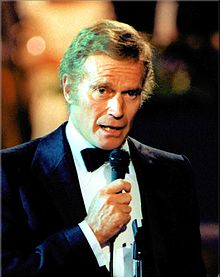
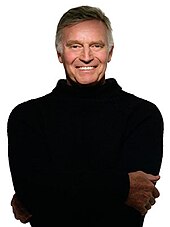
On this day in 2008, U.S. Army Air Forces veteran, actor and activist Charlton Heston died from Alzheimer’s complications at his home in Beverly Hills at the age of 84. Born John Charles Carter or Charlton John Carter on October 4, 1923 in Wilmette, Illinois.
As a Hollywood star, he appeared in 100 films over the course of 60 years. He played Moses in the epic film, The Ten Commandments (1956), for which he received his first nomination for the Golden Globe Award for Best Actor – Motion Picture Drama. He also starred in Touch of Evil (1958) with Orson Welles, Ben-Hur (1959), for which he won the Academy Award for Best Actor, El Cid (1961), and Planet of the Apes (1968). He also starred in the films The Greatest Show on Earth (1952), Secret of the Incas (1954), The Big Country (1958) and The Greatest Story Ever Told (1965).
A supporter of Democratic politicians and civil rights in the 1960s, Heston later became a Republican, founding a conservative political action committee and supporting Ronald Reagan. Heston’s most famous role in politics came as the five-term president of the National Rifle Association, from 1998 to 2003.

Heston as Antony in Julius Caesar (1950)

Heston in Cecil B. DeMille’s The Greatest Show on Earth (1952)

as Moses in Cecil B. DeMille’s The Ten Commandments (1956)

In Touch of Evil (1958)

In Ben-Hur (1959)

Drawing of Heston after he won an Oscar for Ben-Hur in 1959. Artist: Nicholas Volpe.

at a congressional hearing in 1961

with James Baldwin, Marlon Brando, and Harry Belafonte at the Civil Rights March on Washington for Jobs and Freedom 1963: Sidney Poitier is in the background.

at the 1963 Civil Rights March on Washington, DC with Sidney Poitier (left) and Harry Belafonte

at the March on Washington in 1963
by Jerry Avenaim in 2001
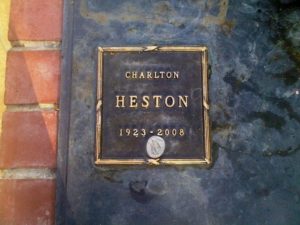 The Final Footprint
Heston died with Lydia, his wife of 64 years, by his side. Early tributes came in from leading figures; President George W. Bush called Heston “a man of character and integrity, with a big heart … He served his country during World War II, marched in the civil rights movement, led a labor union and vigorously defended Americans’ Second Amendment rights.” Former First Lady Nancy Reagan said that she was “heartbroken” over Heston’s death and released a statement, reading, “I will never forget Chuck as a hero on the big screen in the roles he played, but more importantly I considered him a hero in life for the many times that he stepped up to support Ronnie in whatever he was doing.”
Heston’s funeral was held a week later on April 12, 2008, in a ceremony which was attended by Nancy Reagan and Hollywood stars such as California Governor Arnold Schwarzenegger, Olivia de Havilland, Keith Carradine, Pat Boone, Tom Selleck, Oliver Stone (who had cast Heston in his 1999 movie Any Given Sunday), Rob Reiner, and Christian Bale.
The funeral was held at Episcopal Parish of St. Matthew’s Church in Pacific Palisades, the church where Heston had regularly worshipped and attended Sunday services since the early 1980s. He was cremated and his cremains are inured in Saint Matthew’s Episcopal Church Columbarium, Pacific Palisades, California, U.S.
#RIP #OTD in 2014 author (The Snow Leopard, Shadow Country, In the Spirit of Crazy Horse) naturalist, zen teacher, CIA agent, co-founder of The Paris Review, Peter Matthiessen died from leukemia at his home in Sagaponack, New York, aged 86
#RIP #OTD in 2020 actress (Cathy Gale in The Avengers, Bond girl Pussy Galorein Goldfinger, Shalako, Jason and the Argonauts), Honor Blackman died at her home in Lewes, East Sussex, England aged 94. Hoop Lane Jewish Cemetery, Golders Green, London
Have you planned yours yet?
Follow TFF on twitter @RIPTPFF
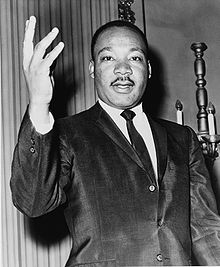 On this day in 1968, clergyman, activist, prominent leader and iconic figure in the African American civil rights movement, Nobel Peace Prize recipient, Dr. Martin Luther King, Jr. was assassinated on the balcony of room 306 at the Lorraine Motel in Memphis, Tennessee at the age of 39. Born on 15 January 1929 in Atlanta, Georgia. His father’s name was Michael King, but he changed his name to Martin Luther King after Martin Luther (10 November 1483 – 18 February 1546), the admired German priest and professor of theology who initiated the Protestant Reformation. King believed in and urged the use of nonviolent methods in the advancement of civil rights. One of the greatest orators in American history. His “I Have a Dream” speech concludes with; “Let freedom ring. And when this happens, and when we allow freedom ring—when we let it ring from every village and every hamlet, from every state and every city, we will be able to speed up that day when all of God’s children—black men and white men, Jews and Gentiles, Protestants and Catholics—will be able to join hands and sing in the words of the old Negro spiritual: ‘Free at last! Free at last! Thank God Almighty, we are free at last!” In 1948, he graduated from Morehouse with a Bachelor of Arts degree in sociology, and enrolled in Crozer Theological Seminary in Chester, Pennsylvania, from which he graduated with a Bachelor of Divinity degree in 1951. King married Coretta Scott, on 18 June 1953, on the lawn of her parents’ house in her hometown of Heiberger, Alabama. In the close of his last speech given in Memphis before the assassiantion, King said; “And then I got to Memphis. And some began to say the threats, or talk about the threats that were out. What would happen to me from some of our sick white brothers? Well, I don’t know what will happen now. We’ve got some difficult days ahead. But it doesn’t matter with me now. Because I’ve been to the mountaintop. And I don’t mind. Like anybody, I would like to live a long life. Longevity has its place. But I’m not concerned about that now. I just want to do God’s will. And He’s allowed me to go up to the mountain. And I’ve looked over. And I’ve seen the promised land. I may not get there with you. But I want you to know tonight, that we, as a people, will get to the promised land. And I’m happy, tonight. I’m not worried about anything. I’m not fearing any man. Mine eyes have seen the glory of the coming of the Lord.”
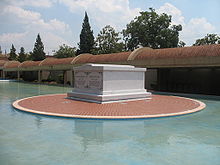 The Final Footprint – King is entombed at the Martin Luther King, Jr. National Historic Site in Atlanta. His crypt has the inscription; “Free at last, Free at last, Thank God Almighty I’m Free at last.” Coretta was entombed next to him upon her death in 2006. Her crypt has the inscription; “And now abide Faith, Hope, Love, These Three; but the greatest of these is Love.” 1 Cor. 13:13. Martin Luther King, Jr. Day was established as a U.S. federal holiday in 1
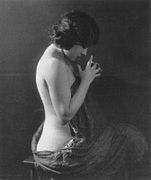
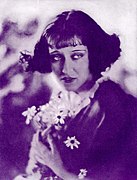
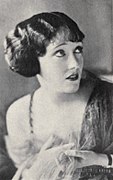
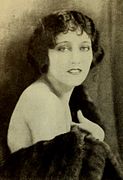
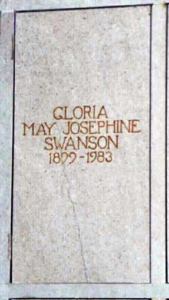
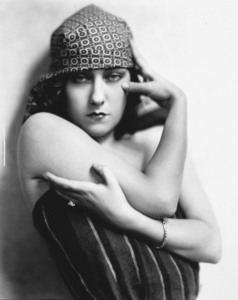 On this day in 1983, actress and producer Gloria Swanson died


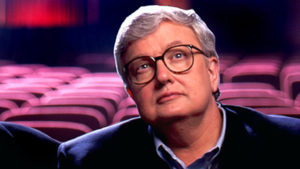 And on this day in 2013, film critic, historian, journalist, screenwriter, and author Roger Ebert died from cancer in Chicago at the age of 70. Born Roger Joseph Ebert on June 18, 1942 in Urbana, Illinois. He was a film critic for the Chicago Sun-Times from 1967 until his death in 2013. In 1975, Ebert became the first film critic to win the Pulitzer Prize for Criticism.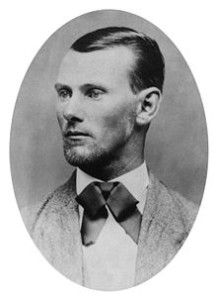
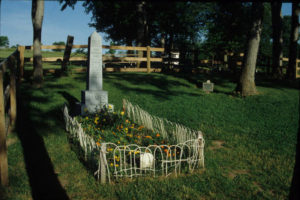 The Final Footprint – The death of Jesse became a national sensation. The Fords made no attempt to hide their role. Robert Ford wired the governor to claim a reward. Crowds pressed into the little house in St. Joseph to see the dead outlaw. The Ford brothers surrendered to the authorities but were evidently dismayed to find that they were charged with first degree murder. In the course of a single day, the Ford brothers were indicted, pleaded guilty, were sentenced to death by hanging and two hours later were granted a full pardon by Governor Thomas T. Crittenden. The governor’s quick pardon suggested he knew the brothers intended to kill James. The implication that the governor conspired to kill a private citizen startled the public and added to James’ notoriety. After receiving a small portion of the reward, the Fords fled Missouri. Later the Ford brothers starred in a touring stage show in which they reenacted the shooting. Suffering from tuberculosis (then incurable) and a morphine addiction, Charley Ford committed suicide on 6 May 1884, in Richmond, Missouri. Bob Ford operated a tent saloon in Creede, Colorado. On 8 June 1892, a man named Edward O’Kelley went to Creede, loaded a double barrel shotgun, entered Ford’s saloon and said “Hello, Bob” before shooting Ford in the throat, killing him instantly. O’Kelley was sentenced to life in prison. O’Kelley’s sentence was subsequently commuted because of a 7,000 signature petition in favor of his release. He was pardoned on 3 October 1902. Jesse was initially interred at the James Family Farm just outside Kearney. James’ mother Zerelda Samuel wrote the following epitaph for him: In Loving Memory of my Beloved Son, Murdered by a Traitor and Coward Whose Name is not Worthy to Appear Here. Eighteen months after Jesse’s wife’s death in November 1900, Jesse’s body was moved from the James Family Farm to rest next to hers at Mount Olivet Cemetery in Kearney. Debate continues over whether to place Jesse in the context of regional insurgencies of ex-Confederates following the American Civil War or as a manifestation of frontier lawlessness or alleged economic justice. Cultural depictions of Frank and Jesse and the Youngers proliferate in literature, movies and music. In Willa Cather‘s My Antonia, the narrator reads a book entitled ‘Life of Jesse James’ – probably a dime novel. In Charles Portis‘s 1968 novel, True Grit, the U.S. Marshal Rooster Cogburn describes fighting with Cole Younger and Frank James for the Confederacy during the Civil War. Long after his adventure with Mattie Ross, Cogburn ends his days in a traveling road show with the aged Cole Younger and Frank James. During his travel to the “Wilde West,” Oscar Wilde visited Kearney. Learning that Jesse had been assassinated by his own gang member, “…an event that sent the town into mourning and scrambling to buy Jesse’s artifacts,” “romantic appeal of the social outcast” in his mind, Wilde wrote in one of his letters to home that: “Americans are certainly great hero-worshippers, and always take [their] heroes from the criminal classes.” Frank and Jesse make an appearance in Wildwood Boys (2000) by James Carlos Blake.
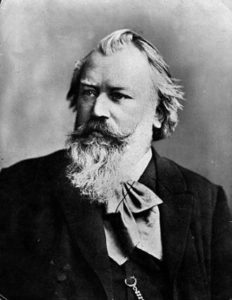 On this day in 1897, composer, pianist, and conductor of the Romantic period, Johannes Brahms died from liver cancer in Vienna, aged 63. Born on 7 May 1833 in Hamburg. Brahms spent much of his professional life in Vienna, Austria. His reputation and status as a composer are such that he is sometimes grouped with Johann Sebastian Bach and Ludwig van Beethoven as one of the “Three Bs” of classical music.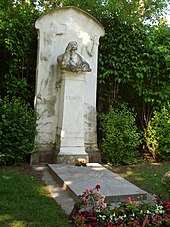
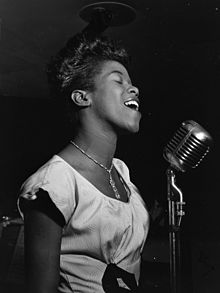 On this day in 1990, jazz singer, Grammy winner, Sailor, Sassy, The Divine One, Sarah Vaughan died at her home in California at the age of 66 from lung cancer. Born Sarah Lois Vaughan on 27 March 1924 in Newark, New Jersey. She had a contralto vocal range and her voice is one my favorites in music. Her singing ability was envied by many including Frank Sinatra who reportedly said that “Sassy is so good now that when I listen to her I want to cut my wrists with a dull razor.” Vaughan was married three times: George Treadwell (1946–1958 divorce), Clyde Atkins (1958–1961 divorce) and Waymon Reed (1978–1981 divorce).
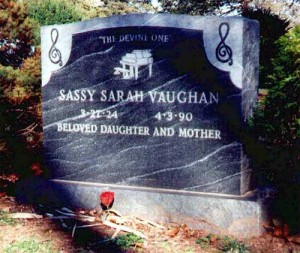 The Final Footprint – Vaughan’s funeral was held at the new location of Mount Zion Baptist Church, 208 Broadway in Newark, New Jersey, with the same congregation she grew up in. Following the ceremony, a horse-drawn carriage transported her body to its final resting place in Glendale Cemetery, Bloomfield in New Jersey. Her grave is marked by an individual upright marker with the inscription “THE DIVINE ONE” and the term of endearment “BELOVED DAUGHTER AND MOTHER.”
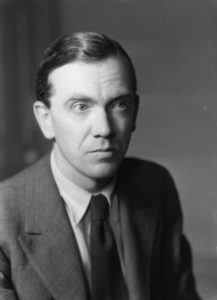 On this day in 1991, novelist Graham Greene died of leukemia, at the age of 86. Born Henry Graham Greene on 2 October 1904 in Berkhamsted in Hertfordshire, England. In my opinion, one of the leading English novelists of the 20th century. Combining literary acclaim with widespread popularity, Greene acquired a reputation early on as a major writer, both of serious Catholic novels, and of thrillers (or “entertainments” as he termed them). He was shortlisted, in 1966 and 1967, for the Nobel Prize for Literature. Through 67 years of writings, which included over 25 novels, he explored the ambivalent moral and political issues of the modern world, often through a Catholic perspective.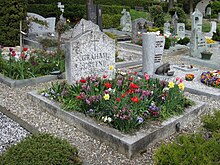
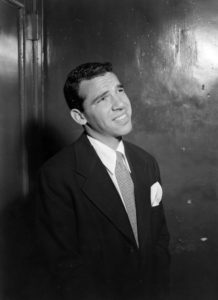 On this day in 1987, United States Marine Corp veteran, jazz drummer and bandleader Buddy Rich died of complications from a brain tumor in Los Angeles at the age of 69. Born Bernard Rich on September 30, 1917 in Brooklyn. In my opinion, he is one of the most influential drummers of all time and was known for his virtuoso technique, power, and speed. Among others he performed with Louie Armstrong, Count Basie, Tommy Dorsey, Ella Fitzgerald, Charlie Parker, Frank Sinatra and led a big band.
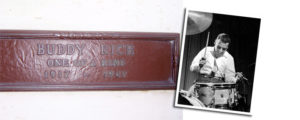 The Final Footprint
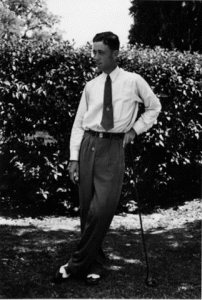 On this day in 1995, golf professional,
 coach, writer, Harvey Penick died in Austin, Texas at the age of 90. Born on 23 October 1904 in Austin. Penick was the golf coach at the University of Texas from 1931 to 1963, coaching the Longhorns to 21 Southwest Conference championships in 33 years, including 20 out of 23 seasons from 1932 to 1954 (1932–38; 1940–47; 1949–52; 1954). He coached the following members of the World Golf Hall of Fame: Tom Kite, Ben Crenshaw, Mickey Wright, Betsy Rawls, and Kathy Whitworth. In 1992, he co-authored (with Bud Shrake) Harvey Penick’s Little Red Book. The book became the highest selling golf book ever published. In my opinion, Penick was perhaps the most gifted instructor of the mental game who ever lived. He said; “once you address the ball, hitting it to the desired target must be the only thing in your life. Allow no negative thoughts, and focus on your goal.“ Penick and Shrake collaborated on four more golf books, the final three published after Penick’s 1995 death. During his final illness, he gave lessons from his deathbed to Crenshaw. Penick was married to Helen Holmes (1928-1995 his death).
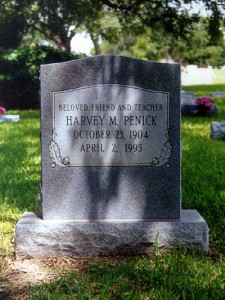 The Final Footprint – Penick is interred in Austin Memorial Park Cemetery in Austin. His grave is marked by a individual upright granite marker with the term of endearment; BELOVED FRIEND AND TEACHER. Helen was interred next to him upon her passing in 2006 at the age of 101. The day after serving as a pallbearer at Penick’s funeral, Crenshaw began play in the 1995 Masters Tournament. With the memory and spirit of his longtime friend and mentor to guide him, he became the second oldest Masters champion, winning his second Masters at the age of 43. Upon sinking his final putt on the 18th green, Crenshaw doubled over with his elbows on his knees and his face in his hands, crying. One of my all-time favorite sporting moments. I watch the Masters on television every year and I was riveted to every moment of that tournament in 1995. In the post-tournament interview, Crenshaw said: “I had a 15th club in my bag.” Other notable final footprints at Austin Memorial Park include; James Michener, Frank Hamer, Bibb Falk, and Noble Doss.
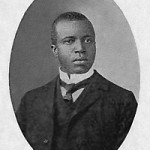 On this day in 1917, composer and pianist, The King of Ragtime, Scott Joplin died from tertiary syphilis and a resulting descent into insanity, in Manhattan State Hospital, a mental institution at the age of 49. During his brief career, he wrote 44 original ragtime pieces, one ragtime ballet, and two operas. One of his first pieces, the Maple Leaf Rag, became ragtime’s first and most influential hit, and has been recognized as the archetypal rag. Joplin was born into a musical family of laborers in Northeast Texas. He grew up in Texarkana, where he formed a vocal quartet, and taught mandolin and guitar. Joplin began publishing music in 1895, and publication of his Maple Leaf Rag in 1899 brought him fame. The score to his first opera, A Guest of Honor, was confiscated in 1903 with his belongings, owing to his non-payment of bills, and is considered lost. He continued to compose and publish music, and in 1907 moved to New York City, seeking to find a producer for a new opera. Joplin never married.
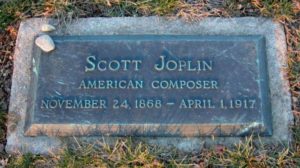 The Final Footprint – Joplin was buried in a pauper’s grave that remained unmarked for 57 years. His grave at Saint Michaels Cemetery in East Elmhurst, New York, was finally given a marker in 1974. Joplin’s death is widely considered to mark the end of ragtime as a mainstream music format, and in the next several years it evolved with other styles into jazz, and eventually big band swing. His music was rediscovered and returned to popularity in the early 1970s with the release of a million-selling album of Joplin’s rags recorded by Joshua Rifkin, followed by the Academy Award–winning movie The Sting, which featured several of his compositions, such as The Entertainer. The opera Treemonisha was finally produced in full to wide acclaim in 1972. In 1976, Joplin was posthumously awarded a Pulitzer Prize.

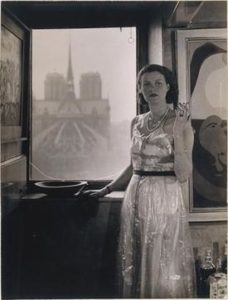
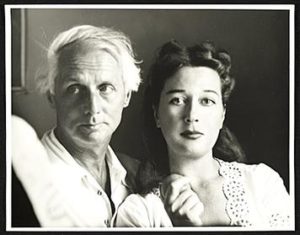
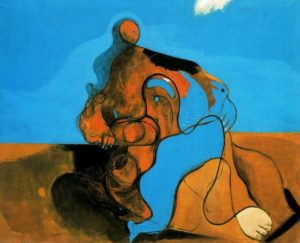 In 1927 Ernst married Marie-Berthe Aurenche, and it is thought his relationship with her may have inspired the erotic subject matter of The Kiss and other works of that year. Ernst appeared in the 1930 film L’Âge d’Or, directed by self-identifying Surrealist Luis Buñuel. In 1938, the American heiress and artistic patron Peggy Guggenheim acquired a number of Ernst’s works, which she displayed in her new gallery in London. Ernst and Guggenheim later were married (1942–1946).
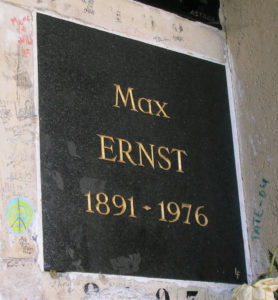 The Final Footprint
 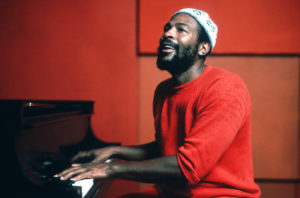 On this day in 1984, singer-songwriter and musician, The Prince of Motown, The Prince of Soul, Grammy winner, Marvin Gaye was shot and killed by his father during an argument at his parent’s home in Los Angeles the day before his 45th birthday. Born Marvin Pentz Gaye, Jr. on 2 April 1939 at Freedman’s Hospital in Washington, D.C. One of the giants of music. Where does one start a list of favorite Gaye songs; “Can I get a Witness”, “What’s Going On”, “Let’s Get it On”, “Sexual Healing”, to name just a few. Gaye was married twice; Anna Gordy, Berry Gordy’s sister (1964-1977) and Janis Hunter (1977-1981 divorce).
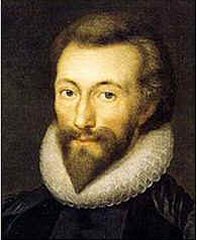 On this day in 1631, English cleric and poet, John Donne died at the age of 59 in London. Born 22 January 1572 in London. Donne is considered the pre-eminent representative of the metaphysical poets. His works are noted for their strong, sensual style and include sonnets, love poems, religious poems, Latin translations, epigrams, elegies, songs, satires and sermons. His poetry is noted for its vibrancy of language and inventiveness of metaphor, especially compared to that of his contemporaries. Donne’s style is characterised by abrupt openings and various paradoxes, ironies and dislocations. These features, along with his frequent dramatic or everyday speech rhythms, his tense syntax and his tough eloquence, were both a reaction against the smoothness of conventional Elizabethan poetry and an adaptation into English of European baroque and mannerist techniques. His early career was marked by poetry that bore knowledge of English society and he met that knowledge with sharp criticism. Another important theme in Donne’s poetry is the idea of true religion, something that he spent much time considering and about which he often theorized. He wrote secular poems as well as erotic and love poems. He spent much of the money he inherited during and after his education on womanising, literature, and travel. In 1601, Donne secretly married Anne More, with whom he had twelve children. In 1615, he became an Anglican priest.
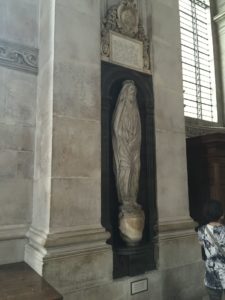 The Final Footprint – Donne was entombed in old St Paul’s Cathedral, where a memorial statue of him was erected (carved from a drawing of him in his shroud), with a Latin epigraph probably composed by himself. Donne’s monument survived the 1666 fire, and is on display in the present building. An excerpt from “Meditation 17 Devotions Upon Emergent Occasions” serves as the opening for Ernest Hemingway’s For Whom The Bell Tolls, and also produces the book’s title:
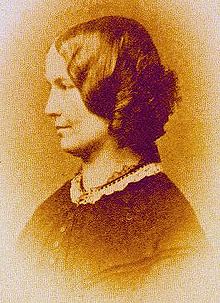 On this day in 1855, sister of Emily and Anne, novelist and poet, Charlotte Bronte died with her unborn child, aged 38 in Haworth, West Riding of Yorkshire, England. Born in Thornton, west of Bradford in the West Riding of Yorkshire, on 21 April 1816. The eldest of the three Brontë sisters who survived into adulthood and whose novels have become classics of English literature. She first published her works (including her best known novel, Jane Eyre) under the pen name Currer Bell. Charlotte received a proposal of marriage from Arthur Bell Nicholls, her father’s curate, who had long been in love with her. She initially turned down his proposal and her father objected to the union at least partly because of Nicholls’s poor financial status. Charlotte became increasingly attracted to Nicholls and by January 1854 she had accepted his proposal. They gained the approval of her father by April and married in June. They took their honeymoon in Banagher, Co. Offaly, Ireland.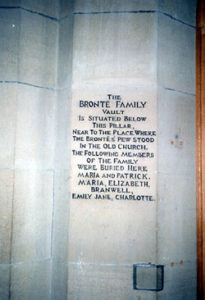
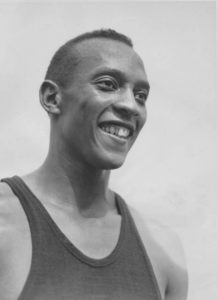 On this day in 1980, track and field athlete, four-time gold medalist in the 1936 Olympic Games, Jesse Owens died from lung cancer at age 66 in Tucson, Arizona. Born James Cleveland Owens on September 12, 1913 in Oakville, Alabama.
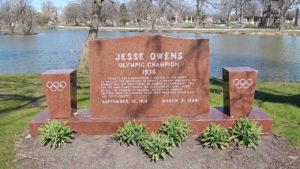 The Final Footprint
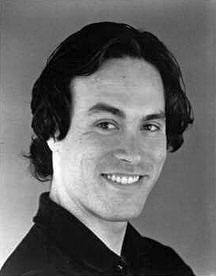 On this day in 1993, actor and martial artist Brandon Lee died in Wilmington, North Carolina during surgery after being injured on the set of The Crow after being shot by a faulty prop gun that fired the tip of a dummy round that was accidentally lodged in the chamber. He was 28. Born Brandon Bruce Lee on February 1, 1965 in Oakland, California. He was the first child of martial artist and actor Bruce Lee and teacher Linda Lee Cadwell (née Emery), the grandson of Cantonese opera singer Lee Hoi-chuen, and brother of Shannon Lee.
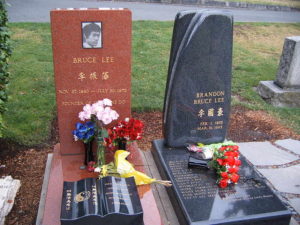 The Final Footprint
 On this day in 1995, singer-songwriter, Grammy winner, The Queen of Tejano, Selena was murdered in Corpus Christi, Texas at the age of 23. Born Selena Quintanilla on 16 April 1971 in Freeport Community Hospital in Lake Jackson, Texas. The most successful and popular star in the history of Tejano music. Her world-wide appeal extended far beyond Tejano. Selena was killed by Yolanda Saldivar, the president of her fan club and manager of the singer’s chain of beauty salons and boutiques. Selena believed that Saldivar had stolen over $30,000 from her businesses. Selena was married to Chris Pérez.
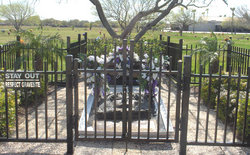 The Final Footprint – Selena is interred in Seaside Memorial Park in Corpus Christi in a private estate. Pavers lead up to the estate. Her grave is enclosed in a gated fence. The grave itself is marked by a full ledger bronze marker featuring a relief of her face and the inscription; “HE WILL ACTUALLY SWALLOW UP DEATH FOREVER, AND THE SOVEREIGN LORD JEHOVAH WILL CERTAINLY WIPE THE TEARS FROM ALL FACES”. ISIAH 25:8 On 12 April 1995, two weeks after her death, George W. Bush, governor of Texas at the time, declared her birthday “Selena Day” in Texas. Warner Bros. produced Selena (1997), a film based on her life starring Jennifer Lopez. Selena’s life was also the basis of the musical Selena Forever starring Veronica Vazquez. In June 2006, Selena was commemorated with a museum and a bronze life-sized statue, Mirador de la Flor, in Corpus Christi. Selena ¡VIVE!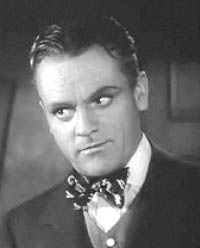
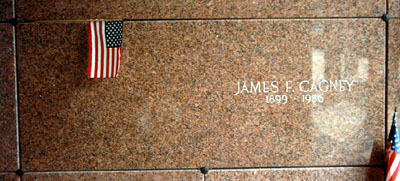 The Final Footprint – Cagney is entombed in the mausoleum at the Gate of Heaven Cemetery in Hawthorne, New York. President Ronald Reagan gave the eulogy. Other notable Final Footprints at Gate of Heaven include; Billy Martin, Sal Mineo, Babe Ruth, and
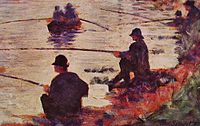
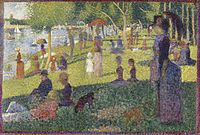
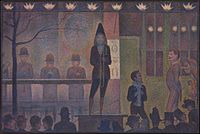
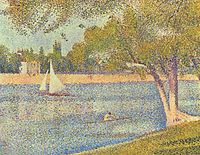
 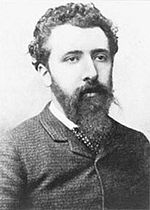 On this day in 1891, Post-Impressionist painter, Georges-Pierre Seurat died in Paris at the age of 31. Born on 2 December 1859 in Paris. In my opinion, his most famous work is, A Sunday Afternoon on the Island of La Grande Jatte (1884–1886), which altered the direction of modern art by initiating Neo-impressionism, and is one of the icons of 19th century painting. Apparently, he lived secretly with his young model, Madeleine Knobloch, whom he portrayed in his painting “Jeune femme se poudrant”. Seurat said; “Art is Harmony. Harmony is the analogy of the contrary and of similar elements of tone, of color and of line, considered according to their dominance and under the influence of light, in gay, calm or sad combinations”.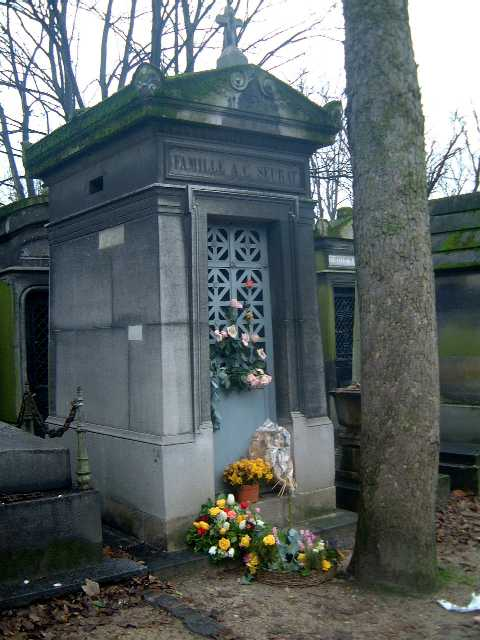






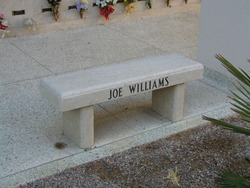
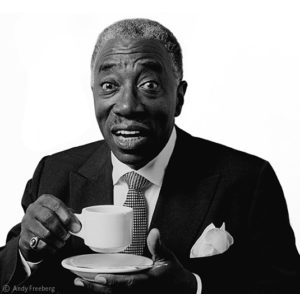 On this day in 1999, singer Joe Williams died in Las Vegas at the age of 80. Born Joseph Goreed on December 12, 1918 in Cordele, Georgia. He sang with big bands such as the Count Basie Orchestra and the Lionel Hampton Orchestra and with his combos. He sang in two films with the Basie orchestra and sometimes worked as an actor. Williams won the Best Jazz Vocal Performance Grammy Award for his LP Nothin’ but the Blues in 1984. It was also the winning Traditional Blues Album in the Blues Music Awards of the Blues Foundation in the following year. Williams was nominated for seven other Grammy awards: for Prez & Joe (1979); “8 to 5 I Lose” (1982); I Just Want To Sing (1986); Every Night: Live At Vine St. (1987); “I Won’t Leave You Again” (with Lena Horne, 1988); “Is You Is or Is You Ain’t My Baby” (with Marlena Shaw, 1989); and In Good Company (1989). In 1992, his 1955 recording of “Every Day I Have the Blues” with Basie was added to the Grammy Hall of Fame for recordings of particular historical or qualitative importance. Williams was added to the Jazz Wall of Fame of the American Society of Composers, Authors and Publishers in 2001. In 1988, with his wife Jillean and friends, Williams set up the not-for-profit Joe Williams Every Day Foundation to offer scholarships to talented young musicians.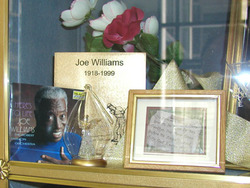
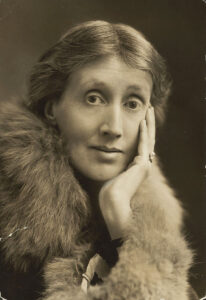 On this day in 1941, writer Virginia Woolf put on her overcoat, filled its pockets with stones, walked into the River Ouse near her home in Lewes, East Sussex, England, and drowned herself, at the age of 59. Born Adeline Virginia Stephen at 22 Hyde Park Gate in London on 25 January 1882. In my opinion, one of the foremost modernists of the twentieth century. During the interwar period, Woolf was a significant figure in London literary society and a central figure in the influential Bloomsbury Group, an influential group of associated English writers, intellectuals, philosophers and artists. Her most famous works include the novels Mrs Dalloway (1925), To the Lighthouse (1927) and Orlando (1928), and the book-length essay A Room of One’s Own (1929), with its famous dictum, “A woman must have money and a room of her own if she is to write fiction.” Woolf suffered from severe bouts of mental illness throughout her life, thought to have been the result of what is now termed bipolar disorder. Virginia Stephen married writer Leonard Woolf on 10 August 1912. Despite his low material status (Woolf referring to Leonard during their engagement as a “penniless Jew”) the couple evidently shared a close bond. The ethos of the Bloomsbury group encouraged a liberal approach to sexuality, and in 1922 she met the writer and gardener Vita Sackville-West, wife of Harold Nicolson. After a tentative start, they began a sexual relationship. In 1928, Woolf presented Sackville-West with Orlando, a fantastical biography in which the eponymous hero’s life spans three centuries and both sexes. Nigel Nicolson, Sackville-West’s son, wrote “The effect of Vita on Virginia is all contained in Orlando, the longest and most charming love letter in literature, in which she explores Vita, weaves her in and out of the centuries, tosses her from one sex to the other, plays with her, dresses her in furs, lace and emeralds, teases her, flirts with her, drops a veil of mist around her”. After their affair ended, the two women remained friends until Woolf’s death.
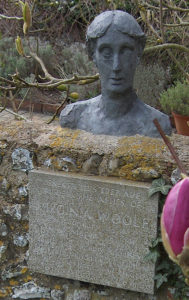 The Final Footprint – Woolf’s body was not found until 18 April 1941. Woolf was cremated and her husband buried her cremated remains under an elm in the garden of Monk’s House, their home in Rodmell, Sussex. Who’s Afraid of Virginia Woolf? is a Tony Award-winning 1962 play by Edward Albee. It examines the breakdown of the marriage of a middle-aged couple, Martha and George. The title is a pun on the song “Who’s Afraid of the Big Bad Wolf?” from Walt Disney’s The Three Little Pigs (1933), substituting Woolf’s name. Martha and George repeatedly sing this version of the song throughout the play. The film adaptation was released in 1966, written by Ernest Lehman, directed by Mike Nichols, and starring Richard Burton, Elizabeth Taylor, George Segal and Sandy Dennis. Michael Cunningham’s 1998 Pulitzer Prize–winning novel The Hours focused on three generations of women affected by Woolf’s novel Mrs Dalloway. In 2002, a film version of the novel was released starring Nicole Kidman as Woolf, a role for which she won the 2002 Academy Award for Best Actress. The film also starred Julianne Moore and Meryl Streep and featured an award-winning score by American composer Philip Glass.
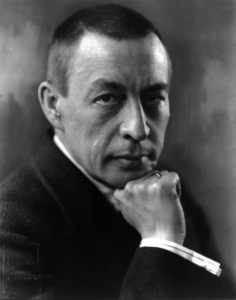 On this day in 1943,
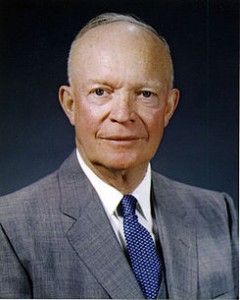 On this day in 1969, five-star general and the 34th President of the United States, Ike, Dwight David Eisenhower died of congestive heart failure at Walter Reed Army Hospital in Washington D.C. at the age of 78. Born 14 October 1890 in Denison, Texas. During World War II, he served as Supreme Commander of the Allied forces in Europe, with responsibility for planning and supervising the successful invasion of France and Germany in 1944–45. In 1951, he became the first supreme commander of NATO. A Republican, Eisenhower entered the 1952 presidential race and won by a landslide, defeating Democrat Adlai Stevenson and ending two decades of the New Deal Coalition holding the White House. In the 1956 election, he would again face Stevenson, easily winning re-election. Richard M. Nixon would serve as his vice president for both of his terms in office. Eisenhower graduated from the U. S. Military Academy in West Point. He married Mary Geneva “Mamie”Doud (1916-1969 his death). Eisenhower retired to the place where he and Mamie had spent much of their post-war time, a working farm adjacent to the battlefield at Gettysburg, Pennsylvania.
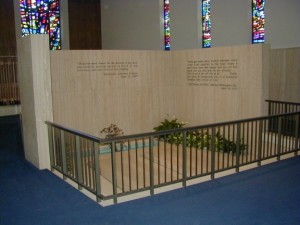 The Final Footprint – Eisenhower is entombed in a small chapel, the Place of Meditation, on the grounds of the Eisenhower Presidential Library in Abilene, Kansas. The day following his death, his body was moved to the Washington National Cathedral’s Bethlehem Chapel where he lay in repose for twenty-eight hours. On March 30, his body was brought by caisson to the United States Capitol where he lay in state in the Capitol Rotunda. On March 31, Eisenhower’s body was returned to the National Cathedral where he was given an Episcopal Church funeral service. That evening, Eisenhower’s body was placed onto a train en route to Abilene. Nixon, by this time president himself, said of Eisenhower’s death; “Some men are considered great because they lead great armies or they lead powerful nations. For eight years now, Dwight Eisenhower has neither commanded an army nor led a nation; and yet he remained through his final days the world’s most admired and respected man, truly the first citizen of the world.” There are many tributes and memorials to Eisenhower. My personal favorite being the Eisenhower tree which overhangs the 17th fairway at Augusta National Golf Club, where he was a member. Evidently the tree proved to be quite an obstacle for him when he played.






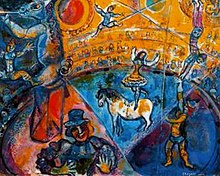
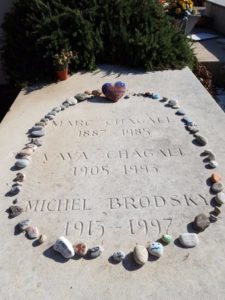 The Final Footprint



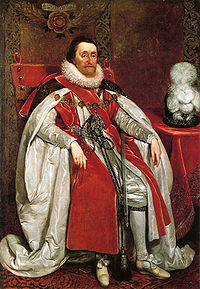 On this day in 1625, King of Scots James VI and King of England as James I, died at Theobalds House, England at the age of 58. Born on 19 June 1566 at Edinburgh Castle. As the eldest son and heir apparent of the monarchy he automatically became Duke of Rothesay and Prince and Great Steward of Scotland. James was baptised “Charles James” on 17 December 1566 in a Catholic ceremony held at Stirling Castle. He became King of Scotland when he was just thirteen months old on 24 July 1567, succeeding his mother Mary, Queen of Scots, who had been compelled to abdicate in his favour. In 1603, he succeeded the last Tudor monarch of England and Ireland, Elizabeth I, who died without issue. He then ruled England, Scotland, and Ireland for 22 years, often using the title King of Great Britain. Under James, the “Golden Age” of Elizabethan literature and drama continued, with writers such as William Shakespeare, John Donne, Ben Jonson, and Sir Francis Bacon contributing to a flourishing literary culture. Sir Anthony Weldon claimed that James had been termed “the wisest fool in Christendom”, an epithet associated with his character ever since. James was the only son of Mary, Queen of Scots, and her second husband, Henry Stuart, Lord Darnley. Both Mary and Darnley were great-grandchildren of Henry VII of England through Margaret Tudor, the older sister of Henry VIII. James was the first cousin twice removed Elizabeth I. Mary’s rule over Scotland was insecure, for both she and her husband, being Roman Catholics, faced a rebellion by Protestant noblemen. James married the fourteen-year-old Anne of Denmark, younger daughter of the Protestant King of Denmark Frederick II. The couple were married formally at the Bishop’s Palace in Oslo on 23 November 1589 and, after stays at Elsinore and Copenhagen, returned to Scotland in May 1590. The stability of James’s government in Scotland and in the early part of his English reign, as well as his relatively enlightened views on religion and war, have earned him a positive evaluation from many recent historians.
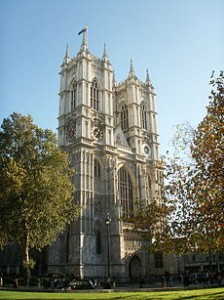 The Final Footprint – James was entombed in Westminster Abbey. Bishop John Williams of Lincoln preached the sermon, observing, “King Solomon died in Peace, when he had lived about sixty years … and so you know did King James”. “As he lived in peace,” remarked the Earl of Kellie, “so did he die in peace, and I pray God our king [Charles I] may follow him”. Other notable Final Footprints at Westminster include; Robert Browning, Lord Byron, Geoffrey Chaucer, Oliver Cromwell, Charles Darwin, Charles Dickens, John Dryden, Edward The Confessor, Elizabeth I, George II, George Friederic Handel, Stephen Hawking, Samuel Johnson, Ben Jonson, Charles II, Edward III, Edward VI, Henry III, Henry V, Henry VII, Richard II, Rudyard Kipling, Henry Wadsworth Longfellow, John Milton, Isaac Newton, Laurence Olivier, Henry Purcell, Mary I, Mary II, Mary Queen of Scots, Thomas Shadwell, Edmund Spenser, Lord Alfred Tennyson, Dylan Thomas, and William III.
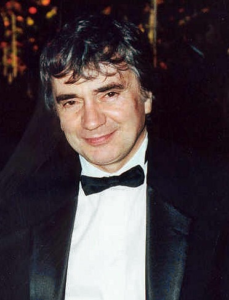 On this day in 2002, actor, comedian, musician and composer Dudley Moore died from pneumonia caused by progressive supranuclear palsy in Plainfield, New Jersey at the age of 66. Born Dudley Stuart John Moore on 19 April 1935 in Charing Cross, London.
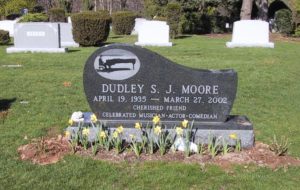 The Final Footprint
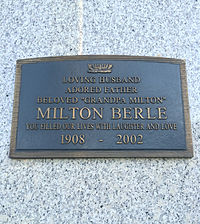
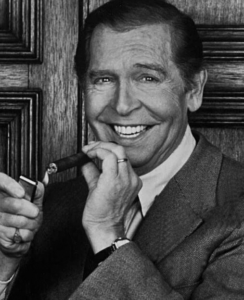 Also on this day in 2002, comedian and actor Milton Berle died from colon cancer in Los Angeles at the age of 93. Born Mendel Berlinger on July 12, 1908 in New York City. Berle’s career as an entertainer spanned over 80 years, first in silent films and on stage as a child actor, then in radio, movies and television. As the host of NBC’s Texaco Star Theater (1948–55), he was the first major American television star and was known to millions of viewers as “Uncle Miltie” and “Mr. Television” during TV’s golden age.