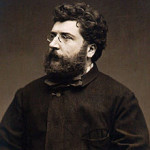
 On this day in 1875, composer and pianist of the Romantic era, Georges Bizet died on his sixth wedding anniversary, from heart failure at the age of 36 in Bougival (Yvelines), about 10 miles west of Paris. Born Georges Alexandre César Léopold Bizet on 25 October 1838 at 26 rue de la Tour d’Auvergne in the 9th arrondissement of Paris. Perhaps best know for his opera Carmen. Carmen, which is based on a novella of the same title written in 1846 by the French writer Prosper Mérimée, premiered on 3 March 1875, at the Opéra-Comique in Paris, but received an initial lukewarm reception. Bizet was reportedly bitterly disappointed. Of course, Carmen has since become one of the most popular works in the entire operatic repertoire. In June 1862 the Bizet family’s maid, Marie Reiter, gave birth to a son, Jean Bizet. Bizet married Geneviève Halévy (1869–1875 his death). Bravo Bizet! Dear reader, I strongly suggest you purchase/download Carmen and see it live when you can.
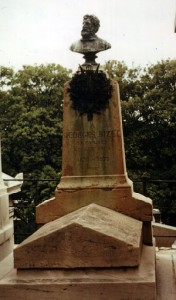 The Final Footprint – Bizet is entombed in Père Lachaise Cemetery in Paris. His tomb is marked by an upright marble or stone monument with his bronze bust on top. The names of his operas are engraved on the side of the monument. The following is engraved on the front; SA FAMILLE ET SES AMIS (His family and friends). Other notable Final Footprints at Père Lachaise include; Guillaume Apollinaire, Honoré de Balzac, Jean-Dominique Bauby, Maria Callas, Chopin, Colette, Auguste Comte, Jean-Baptiste-Camille Corot, Molière, Jim Morrison, Édith Piaf, Camille Pissarro, Marcel Proust, Sully Prudhomme, Gioachino Rossini, Georges-Pierre Seurat, Simone Signoret, Gertrude Stein, Dorothea Tanning, Alice B. Toklas, Oscar Wilde, and Richard Wright.
#RIP #OTD in 1899 composer (“The Blue Danube”, “Kaiser-Walzer”, “Tales from the Vienna Woods”, operetta Die Fledermaus), “The Waltz King”, Johann Strauss II died from pleuropneumonia in Vienna, aged 73. Zentralfriedhof, Vienna
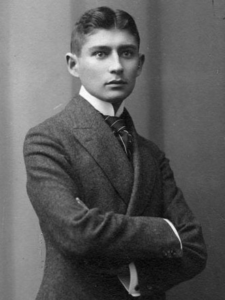 On this day in 1924, German-language writer of novels and short stories, one of the most influential authors of the 20th century, Franz Kafka died from complications of laryngeal tuberculosis at a sanatorium in Kierling near Vienna, at the age of 40. Born near the Old Town Square in Prague on 3 July 1883. Kafka strongly influenced genres such as existentialism. His works, “Die Verwandlung” (“The Metamorphosis”), Der Process (The Trial), and Das Schloss (The Castle), are filled with the themes and archetypes of alienation, physical and psychological brutality, parent/child conflict, characters on a terrifying quest, and mystical transformations. The term Kafkaesque has entered the English language to describe surreal situations.
He trained as a lawyer and after completing his legal education was employed full-time by an insurance company, forcing him to relegate writing to his spare time. Over the course of his life, Kafka wrote hundreds of letters to family and close friends, including his father, with whom he had a strained and formal relationship. He became engaged to several women but never married.
Few of Kafka’s works were published during his lifetime: the story collections Betrachtung (Contemplation) and Ein Landarzt (A Country Doctor), and individual stories (such as “Die Verwandlung“) were published in literary magazines but received little public attention. His work has influenced writers, critics, artists, and philosophers during the 20th and 21st centuries.
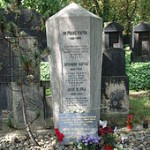 The Final Footprint – Kafka’s body was brought back to Prague where he was buried on 11 June 1924, in the New Jewish Cemetery in Prague-Žižkov. In his will, Kafka instructed his executor and friend Max Brod to destroy his unfinished works, including his novels Der Prozess, Das Schloss and Der Verschollene (translated as both Amerika and The Man Who Disappeared), but Brod ignored these instructions.
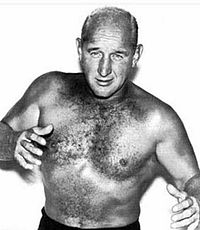 On this day in 1973, United States Navy veteran, professional wrestler, humanitarian, Dory Funk died at St. Anthony’s Hospital in Amarillo, Texas from a heart attack at the age of 54. Born Dorrance Wilhelm Funk on 4 May 1919 in Hammond, Indiana. Funk is the father of wrestlers Dory Funk, Jr. and Terry Funk. He founded The Double Cross Ranch near Amarillo. He was a long time supporter of the Cal Farley Boys Ranch. As a boy growing up in the Texas Panhandle, I watched the Funks wrestle on television. We called it “big time wrastlin'”.
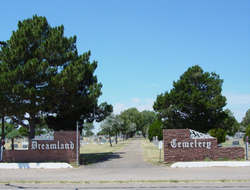
The Final Footprint – Funk is interred in Dreamland Cemetery in Canyon, Texas.
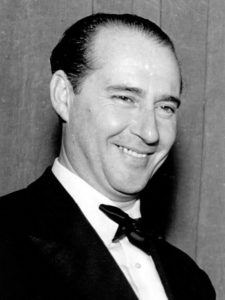 On this day in 1977, film director, screenwriter, and producer Roberto Rossellini died of a heart attack in Rome at the age of 71. Born Roberto Gastone Zeffiro Rossellini on 8 May 1906 in . Rossellini was one of the directors of the Italian neorealist cinema, contributing to the movement with films such as Rome, Open City (1945), Paisan (1946), Germany, Year Zero (1948), and General Della Rovere (1959).
On 26 September 1936, he married Marcella De Marchis (17 January 1916, Rome – 25 February 2009, Sarteano), a costume designer with whom he collaborated even after their marriage was over. This was after a quick annulment from Assia Noris, a Russian actress who worked in Italian films. Rossellini and De Marchis separated in 1950 (and eventually divorced). Rossellini produced two films now classified as the ‘Transitional films’: L’Amore (1948) (with Anna Magnani) and La macchina ammazzacattivi (1952), on the capability of cinema to portray reality and truth (with recalls of commedia dell’arte). In 1948, Rossellini received a letter from a famous foreign actress proposing a collaboration:
-
- Dear Mr. Rossellini,
- I saw your films Open City and Paisan, and enjoyed them very much. If you need a Swedish actress who speaks English very well, who has not forgotten her German, who is not very understandable in French, and who in Italian knows only “ti amo,” I am ready to come and make a film with you.
- Ingrid Bergman
With this letter began one of the best known love stories in film history, with Bergman and Rossellini both at the peak of their careers. Their first collaboration was Stromboli terra di Dio (1950) (in the island of Stromboli, whose volcano quite conveniently erupted during filming). This affair caused a great scandal in some countries with Bergman and Rossellini both being married to other people. Rossellini and Bergman married in 1950.
In 1957, Jawaharlal Nehru, the Indian Prime Minister at the time, invited him to India to make the documentary India and put some life into the floundering Indian Films Division. Though married to Bergman, he had an affair with Sonali Das Gupta, a screenwriter, herself married to local filmmaker Hari Sadhan Das Gupta, who was helping develop vignettes for the film. Given the climate of the 1950s, this led to a scandal in India as well as in Hollywood. Nehru had to ask Rossellini to leave. Soon after, Bergman and Rossellini separated.
Rossellini eloped with Sonali Das Gupta, when she was only 27 years old and later married her in 1957. In 1973 Rossellini left Sonali for a young woman, Silvia D’Amico.
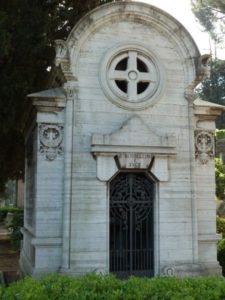
The Final Footprint
Rossellini is entombed in the Rossellini family mausoleum in Cimitero Comunale Monumentale Campo Verano. Another notable final footprints at Camp Verano include; Grazia Deledda and Marcelo Mastroianni.
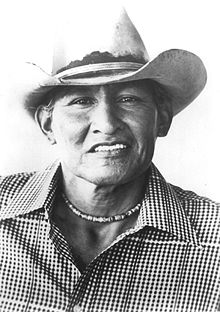
On this day in 1987, actor and artist, Native American Muscogee (Creek), Will Sampson died in Houston after undergoing a heart and lung transplant of post-operative kidney failure and pre-operative malnutrition problems, at the age of 53. Born in Okmulgee, Oklahoma on 27 September 1933. Perhaps his most notable roles were as “Chief Bromden” in the Miloš Forman film One Flew Over the Cuckoo’s Nest (1975)based on the 1962 novel of the same name by Ken Kesey; as “Ten Bears” in the Clint Eastwood film The Outlaw Josey Wales (1976) based on the novel Gone to Texas by Forrest Carter; and as Crazy Horse in The White Buffalo (1977). Sampson was also an artist. His large painting depicting the Ribbon Dance of his Muscogee people is in the collection of the Creek Council House Museum in Okmulgee, Oklahoma.
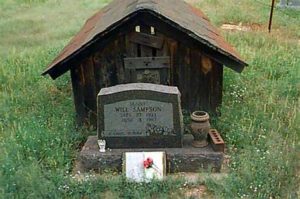
The Final Footprint – Sampson was interred at Graves Creek Cemetery in Hitchita, Oklahoma.
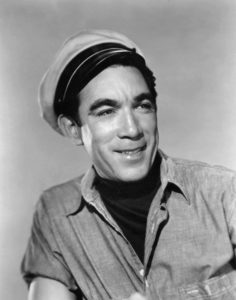
On this day in 2001, actor, painter, writer and film director Anthony Quinn died of respiratory failure, pneumonia and throat cancer in Boston, Massachusetts at the age of 86. Born Antonio Rodolfo Quinn Oaxaca on April 21, 1915 in Chihauhau, Mexico. He starred in numerous critically acclaimed and commercially successful films, including La Strada, The Guns of Navarone, Zorba the Greek, Guns for San Sebastian, Lawrence of Arabia, The Shoes of the Fisherman, The Message, Lion of the Desert, Last Action Hero and A Walk in the Clouds. He won the Academy Award for Best Supporting Actor twice: for Viva Zapata! in 1952 and Lust for Life in 1956. In addition, he received two Academy Award nominations in the Best Leading Actor category, along with five Golden Globe nominations. In 1987, he was presented with the Golden Globe Cecil B. DeMille Lifetime Achievement Award.
Quinn’s first wife was the adopted daughter of Cecil B. DeMille, the actress Katherine DeMille. They wed in 1937. The couple had five children.

Quinn with Jolanda Addolori
In 1965, Quinn and DeMille were divorced, because of his affair with Italian costume designer Jolanda Addolori, whom he married in 1966. They had three children including the actor Francesco Quinn (March 22, 1963 – August 5, 2011). His marriage with Addolori finally ended in divorce in August 1997. He then married Katherine Benvin in December 1997. Quinn and Benvin remained married until his death, in June 2001.
The Final Footprint
His funeral was held in the First Baptist Church in America in College Hill, Providence, Rhode Island. Late in life, he had rejoined the Foursquare evangelical Christian community. He is buried in a family plot in Bristol, Rhode Island.
| David Carradine |
 Carradine in April 2008 |
|
On this day in 2009 United States Army veteran, actor and martial artist David Carradine was found dead in a closet in his hotel room in Bangkok, Thailand due to a fatal autoerotic asphyxiation accident. Born John Arthur Carradine on December 8, 1936 in Hollywood. He is noted for his leading role as peace-loving Shaolin monk, Kwai Chang Caine, in the television series Kung Fu (1972–1975). He was also known for playing Frankenstein in Death Race 2000 (1975) and Bill in both Kill Bill films (2003–2004).
He was a member of the Carradine family of actors that began with his father, John Carradine. His father’s acting career, which included major and minor roles on stage and television, and in cinema, spanned over four decades. A prolific “B” movie actor, David Carradine appeared in more than 100 feature films in a career spanning over sixty years. He received nominations for a Golden Globe Award and an Emmy Award for his work on Kung Fu, and received three further Golden Globe nominations for his performances in Woody Guthrie biopic Bound for Glory (1976), the miniseries North and South (1985), and Quentin Tarantino’s Kill Bill: Volume 2, for which he won the Saturn Award for Best Supporting Actor.
Films that featured Carradine continued to be released after his death. These posthumous credits were from a variety of genres including action, documentaries, drama, horror, martial arts, science fiction, and westerns. In addition to his acting career, Carradine was a director and musician. Moreover, influenced by his Kung Fu role, he studied martial arts. On April 1, 1997, Carradine received a star on the Hollywood Walk of Fame.

Carradine as Caine.

Carradine in April 2005
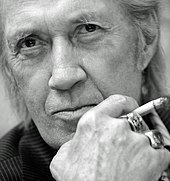
Carradine in 2006
Shortly after being drafted into the Army in 1960, Carradine proposed marriage to Donna Lee Becht (born September 26, 1937), whom he had met while they were students at Oakland High School. They were married on Christmas Day that year. The marriage dissolved in 1968, whereupon Carradine left New York and headed back to California to continue his television and film careers.
In 1969, Carradine met actress Barbara Hershey while the two of them were working on Heaven with a Gun. The pair lived together until 1975. They appeared in other films together, including Martin Scorsese’s Boxcar Bertha. In 1972, they appeared together in a nude Playboy spread, recreating some sex scenes from Boxcar Bertha. The couple’s relationship fell apart around the time of Carradine’s 1974 burglary arrest, when Carradine began an affair with Season Hubley, who had guest-starred on Kung Fu. Carradine was engaged to Hubley for a time, but they never married.
In February 1977, Carradine married, in a civil ceremony in Munich, Germany, his second wife, Linda (née Linda Anne Gilbert), immediately following the filming of The Serpent’s Egg.
Carradine’s second marriage ended in divorce, as did the two that followed. He was married to Gail Jensen from 1986 to 1997. She died in April 2010, at the age of 60, of an alcohol-related illness. He was married to Marina Anderson from 1998 to 2001. By this time, Carradine had proclaimed himself to be a “serial monogamist.”
On December 26, 2004, Carradine married the widowed Annie Bierman (née Anne Kirstie Fraser, born December 21, 1960) at the seaside Malibu home of his friend Michael Madsen. Vicki Roberts, his attorney and a longtime friend of his wife’s, performed the ceremony.
The Final Footprint

Carradine was in Bangkok to shoot his latest film, titled Stretch. A police official said that he was found naked, hanging by a rope in the room’s closet.
Carradine’s funeral was held on June 13, 2009, in Los Angeles. His bamboo casket was buried at Forest Lawn Memorial Park, Hollywood Hills. Among the many stars and family members who attended his private memorial were Tom Selleck, Lucy Liu, Frances Fisher, and James Cromwell. His grave was marked on December 3, 2009. The monument proclaimed him to be “The Barefoot Legend” and included a quote from “Paint”, a song he wrote and performed as the theme to Sonny Boy, as an epitaph. Other notable final footprints at Hollywood Hills include; Gene Autry, Scatman Crothers, Bette Davis, Sandra Dee, Ronnie James Dio, Michael Clarke Duncan, Carrie Fisher, Bobby Fuller, Andy Gibb, Michael Hutchence, Jill Ireland, Al Jarreau, Lemmy Kilmister, Jack LaLanne, Nicolette Larsen, Liberace, Strother Martin, Ricky Nelson, Bill Paxton, Brock Peters, Freddie Prinze, Lou Rawls, John Ritter, Debbie Reynolds, Telly Savalas, Lee Van Cleef, Paul Walker, and Jack Webb.
#RIP #OTD in 2009 blues singer (“Wang Dang Doodle”), “The Queen of the Blues”, Koko Taylor died from complications following surgery for gastrointestinal bleeding in Chicago, aged 80. Washington Memory Gardens, Homewood, Illinois
| Muhammad Ali |
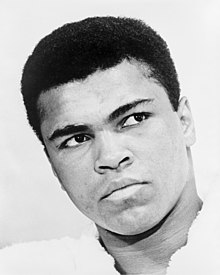 Ali in 1967 |
|
On this day in 2016, 3x World Heavyweight Boxing Champion, activist, and philanthropist, The Greatest, Muhammad Ali died in Scottsdale, Arizona at the age of 74 from septic shock. Born Cassius Marcellus Clay Jr. on January 17, 1942 in Louisville, Kentucky. He is widely regarded as one of the most significant and celebrated sports figures of the 20th century. From early in his career, Ali was known as an inspiring, controversial, and polarizing figure both inside and outside the ring.
He began training as an amateur boxer when he was 12 years old. At age 18, he won a gold medal in the light heavyweight division at the 1960 Summer Olympics in Rome and turned professional later that year. At age 22 in 1964, he won the WBA, WBC, and lineal heavyweight titles from Sonny Liston in a major upset. He then announced his conversion to Islam and changed his name from Cassius Clay, which he called his “slave name”, to Muhammad Ali. He set an example of racial pride for African Americans and resistance to white domination during the Civil Rights Movement.
In 1966, two years after winning the heavyweight title, Ali further antagonized the white establishment by refusing to be drafted into the U.S. military, citing his religious beliefs and opposition to American involvement in the Vietnam War. He was eventually arrested, found guilty of draft evasion charges, and stripped of his boxing titles. He successfully appealed the decision to the U.S. Supreme Court, which overturned his conviction in 1971, by which time he had not fought for nearly four years and thereby lost a period of peak performance as an athlete. Ali’s actions as a conscientious objector to the war made him an icon for the larger counterculture generation.
Ali remains the only three-time lineal heavyweight champion. He was ranked the greatest heavyweight boxer of all time by Ring Magazine and The Associated Press. He was also ranked as the greatest athlete of the 20th century by Sports Illustrated, and the Sports Personality of the Century by the BBC. Nicknamed “the Greatest”, he was involved in several historic boxing matches. Notable among these were the Liston fights; the “Fight of the Century”, “Super Fight II” and the “Thrilla in Manila” against his rival Joe Frazier; and “The Rumble in the Jungle” against George Foreman.
At a time when most fighters let their managers do the talking, Ali thrived in and indeed craved the spotlight, where he was often provocative and outlandish. He was known for trash talking, and often freestyled with rhyme schemes and spoken word poetry, anticipating elements of rap and hip hop music. As a musician, Ali recorded two spoken word albums and a rhythm and blues song, and received two Grammy Award nominations. As an actor, he performed in several films and a Broadway musical. Additionally, Ali wrote two autobiographies, one during and one after his boxing career.
As a Muslim, Ali was initially affiliated with Elijah Muhammad’s Nation of Islam (NOI) and advocated their black separatist ideology. He later disavowed the NOI, adhering to Sunni Islam, practicing Sufism, and supporting racial integration, like his former mentor Malcolm X.
After retiring from boxing at age 39 in 1981, Ali focused on religion and charity. His efforts in philanthropy and humanitarianism include campaigning for various causes, donating millions to charity organizations and disadvantaged people, and helping to feed more than 22 million people afflicted by hunger. In 1984 Ali was diagnosed with Parkinson’s syndrome, which his doctors attributed to boxing-related brain injuries.

President Jimmy Carter greets Ali at a White House dinner, 1977
Ali was married four times and had seven daughters and two sons. Ali was introduced to cocktail waitress Sonji Roi by Herbert Muhammad and asked her to marry him after their first date. They were wed approximately one month later on August 14, 1964. They quarrelled over Sonji’s refusal to adhere to strict Islamic dress and behavior codes, and her questioning of Elijah Muhammad’s teachings. According to Ali, “She wouldn’t do what she was supposed to do. She wore lipstick; she went into bars; she dressed in clothes that were revealing and didn’t look right.” The marriage was childless and they divorced on January 10, 1966. Just before the divorce was finalized, Ali sent Sonji a note: “You traded heaven for hell, baby.”
On August 17, 1967, Ali married Belinda Boyd. After the wedding, she, like Ali, converted to Islam. She changed her name to Khalilah Ali, though she was still called Belinda by old friends and family.
Ali was a resident of Cherry Hill, New Jersey, in the early 1970s. At age 32 in 1974, Ali began an illicit extramarital relationship with 16-year-old Wanda Bolton (who subsequently changed her name to Aaisha Ali). While still married to Belinda, Ali married Aaisha in an Islamic ceremony that was not legally recognized.
In 1975, Ali began an affair with Veronica Porché, an actress and model. While Ali was in the Philippines for the “Thrilla in Manila” bout vs. Joe Frazier, Belinda was enraged when she saw Ali on television introducing Veronica to Ferdinand Marcos. She flew out to Manila to confront Ali and scratched his face when they argued. Belinda later said that her marriage to Ali was a “rollercoaster ride—it had its ups and its downs but it was fun”.
By the summer of 1977, his second marriage was over and he had married Porché. By 1986, Ali and Porché were divorced.
On November 19, 1986, Ali married Yolanda (“Lonnie”) Williams. They had been friends since 1964 in Louisville.
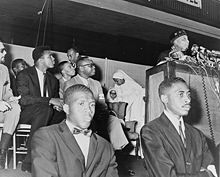
Ali (seen in background) at an address by Elijah Muhammad in 1964

Ali and Michael J. Fox testify before a Senate committee on providing government funding to combat Parkinson’s
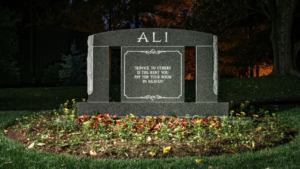 The Final Footprint
Ali was hospitalized in Scottsdale on June 2, 2016, with a respiratory illness. Though his condition was initially described as “fair”, it worsened, and he died the following day at age 74 from septic shock. BET played their documentary Muhammad Ali: Made In Miami. ESPN played four hours of non-stop commercial-free coverage of Ali. News networks, such as ABC News, BBC, CNN, and Fox News, also covered him extensively.
Ali was mourned globally, and a family spokesman said the family “certainly believes that Muhammad was a citizen of the world … and they know that the world grieves with him.” Politicians such as Barack Obama, Hillary Clinton, Bill Clinton, Donald Trump, David Cameron and more paid tribute to Ali. Ali also received numerous tributes from the world of sports including Michael Jordan, Tiger Woods, Floyd Mayweather, Mike Tyson, the Miami Marlins, LeBron James, Steph Curry and more. Louisville Mayor Greg Fischer stated, “Muhammad Ali belongs to the world. But he only has one hometown.”
Ali’s funeral had been preplanned by himself and others for several years prior to his actual death. The services began in Louisville on June 9, 2016, with an Islamic Janazah prayer service at Freedom Hall on the grounds of the Kentucky Exposition Center. On June 10, 2016, the funeral procession went through the streets of Louisville and ended at Cave Hill Cemetery, where Ali was interred during a private ceremony. His grave is marked with a simple granite marker that bears only his name. A public memorial service for Ali in downtown Louisville was held in the afternoon of June 10. The pallbearers included Will Smith, Lennox Lewis and Mike Tyson, with honorary pallbearers including George Chuvalo, Larry Holmes and George Foreman.
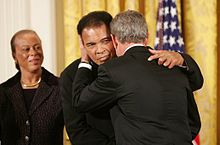
As Mrs. Lonnie Ali looks on, President George W. Bush embraces Muhammad Ali after presenting him with the Presidential Medal of Freedomon November 9, 2005, during ceremonies at the White House.
Have you planned yours yet?
Follow TFF on twitter @RIPTFF
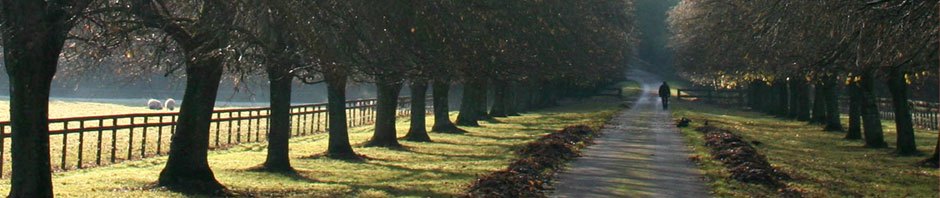
 On this day in 1870, novelist Charles Dickens died at his country home, Gads Hill Place, in Higham, Kent, England after a stroke at the age of 58. Born Charles John Huffman Dickens on 7 February 1812 in Landport, Portsmouth, England. Probably the most popular novelist of the Victorian era. Dickens remains popular. Some of the characters he created are among the most iconic characters in English literature. In 1830, Dickens met his first love, Maria Beadnell, but her parents evidently disapproved of the relationship and sent her to school in Paris. Dickens married Catherine Thomson Hogarth (1836-1870 his death) although they separated in 1858. He possibly had a long affair with Ellen Ternan. The iconic characters he created include; Ebenezer Scrooge, Tiny Tim, Jacob Marley, Bob Cratchit, Oliver Twist, The Artful Dodger, Fagin, Bill Sikes, Pip, Miss Havisham, Charles Darnay, David Copperfield, Mr. Micawber, Abel Magwitch, Daniel Quilp, Samuel Pickwick, Wackford Squeers, Uriah Heep. My favorite Dickens’s novels are;
 The Final Footprint – Dickens is interred in a vault in Poet’s Corner in Westminster Abbey, despite the fact that his wish was to be buried at Rochester Cathedral in Rochester, Kent, “in an inexpensive, unostentatious, and strictly private manner”. His last words, as reported in his obituary in The Times were alleged to have been: “Be natural my children. For the writer that is natural has fullfilled all the rules of art”. His will stipulated that no memorial be erected to honour him. The only life-size bronze statue of Dickens, cast in 1891 by Francis Edwin Elwell, is located in Clark Park in the Spruce Hill neighbourhood of Philadelphia, Pennsylvania in the United States. Other notable Final Footprints at Westminster include; Robert Browning, Lord Byron, Geoffrey Chaucer, Charles II, Oliver Cromwell, Charles Darwin, Edward III, Edward IV, Edward The Confessor, Elizabeth I, George II, George Friederic Handel, Stephen Hawking, Henry III, Henry V, Henry VII, James VI and I, Samuel Johnson, Ben Jonson, Rudyard Kipling, Henry Wadsworth Longfellow, Mary I, Mary II, Mary Queen of Scots, John Milton, Isaac Newton, Laurence Olivier, Henry Purcell, Richard II, Thomas Shadwell, Edmund Spenser, Lord Alfred Tennyson, Dylan Thomas, and William III.
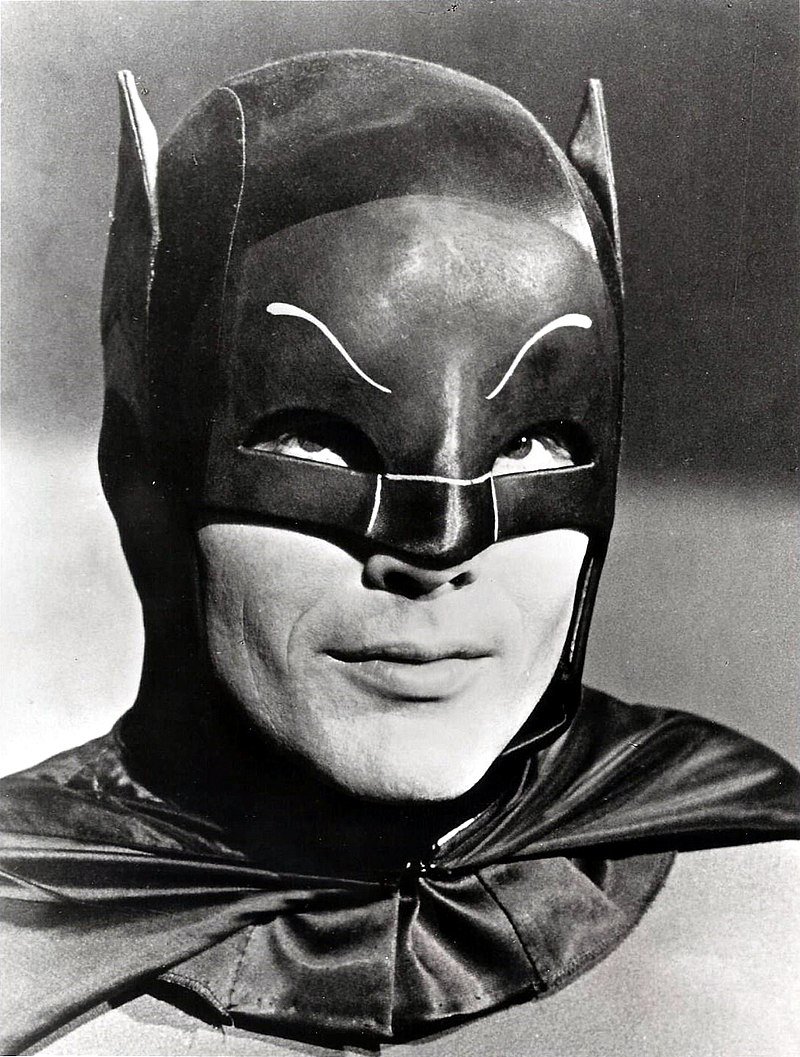


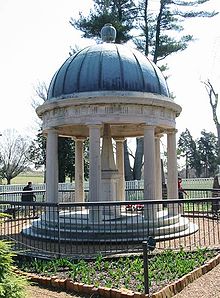



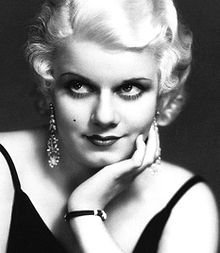 On this day in 1937, actress, Baby, the Blonde Bombshell, the Platinum Blonde, Jean Harlow died of renal failure in Good Samaritan Hospital in Los Angeles at the age of 26. Born Harlean Harlow Carpenter on 3 March 1911 in Kansas City, Missouri. Howard Hughes signed Harlow to a contract and she appeared in his film Hell’s Angels (1930). She was one of the biggest stars in Hollywood in the 1930’s and appeared in five films with Clark Gable. Harlow married three times: Charles McGrew (1927-1929 divorce), Paul Bern (1932-1932 his death), Harold Rosson (1933-1934 divorce). After her third marriage ended in 1934, Harlow met William Powell, another MGM star, and quickly fell in love. Reportedly the couple were engaged for two years, but differences kept them from formalizing their relationship (she wanted children; he did not). Harlow also said that Louis B. Mayer would never allow them to marry.
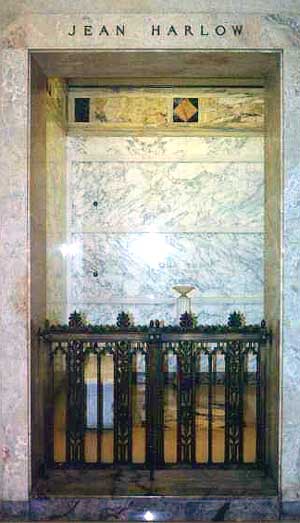 The Final Footprint – Harlow is entombed in a private family room in the Great Mausoleum at Forest Lawn Memorial Park, Glendale, California. Her crypt is lettered; OUR BABY. She was buried in the gown she wore in Libeled Lady and in her hands she held a white gardenia and a note which Powell had written: “Goodnight, my dearest darling.” Spaces in the same room were reserved for Harlow’s mother and Powell. Harlow’s mother was entombed there in 1958, but Powell remarried in 1940 and after his death in 1984 was cremated: his ashes were scattered over the Palm Springs Desert area. Gable was a pallbearer. Other notable Final Footprints at Forest Lawn Glendale include; L. Frank Baum, Humphrey Bogart, Lon Chaney, Nat King Cole, Dorothy Dandridge, Sammy Davis, Jr., Sam Cooke, Walt Disney, Errol Flynn, Clark Gable, Michael Jackson, Carole Lombard, Tom Mix, Casey Stengel, Jimmy Stewart, Elizabeth Taylor, and Spencer Tracy.
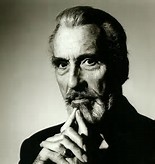 On this day in 2015, actor, singer, and author Christopher Lee died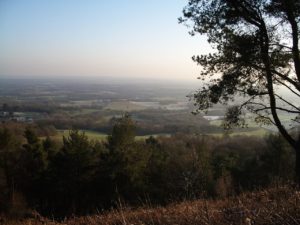
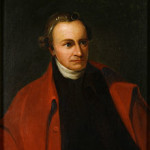 On this day in 1799, attorney, planter, politician, orator, and Founding Father, Patrick Henry died of stomach cancer at Red Hill, his plantation near Brookneal, Virginia at the age of 63. Born 29 May 1736 in Hanover County, Virginia. Remembered for his “Give me Liberty, or give me Death!” speech.
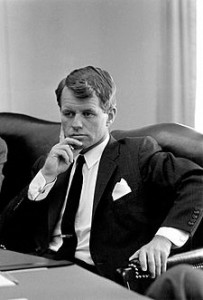 On this day in 1968, politician, civil rights activist, RFK, Robert F. Kennedy died at Good Samaritan Hospital in Los Angeles from gunshot wounds sustained at The Ambassador Hotel in Los Angeles at the age of 42. Born Robert Francis Kennedy on 20 November 1925 in Brookline, Massachusetts. He was the younger brother of John F. Kennedy and the older brother of Edward M. Kennedy. RFK was a graduate of Harvard and obtained his law degree from the University of Virginia. He served as Attorney General of the United States (1961-1964) first under his brother, JFK, then briefly under LBJ. Following JFK’s assassination, at the 1964 Democratic National Convention in Atlantic City, New Jersey, RFK quoted Shakespeare (from Romeo and Juliet) in speaking of his brother;
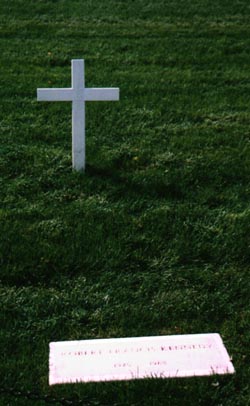 The Final Footprint – His body was returned to New York City, where it lay in repose at Saint Patrick’s Cathedral for several days before the Requiem Mass held there on June 8. His brother, Ted, eulogized him with the words:
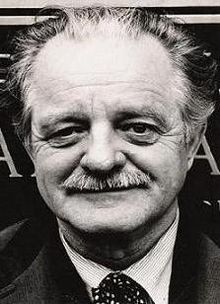 On this day in 1982, poet, translator, essayist, “The Father of the Beats”, Kenneth Rexroth died in Santa Barbara, California at the age of 76. Born Kenneth Charles Marion Rexroth in South Bend, Indiana on 22 December 1905. In my opinion, one of the central figures in the San Francisco Renaissance. Although he apparently did not consider himself to be a Beat poet, and disliked the association, he was dubbed the “Father of the Beats” by Time. He was among the first poets in the United States to explore traditional Japanese poetic forms such as haiku. Much of Rexroth’s work can be classified as “erotic” or “love poetry,” given his deep fascination with transcendent love. Rexroth married four times; Andrée Dutcher (1927-1940), Marie Kass (1941-1955), Marthe Larsen (1949- ), Carol Tinker ( – 1982 his death).
 The Final Footprint – Rexroth is interred on the grounds of the Santa Barbara Cemetery Association overlooking the sea. While all the other graves face inland, his alone faces the Pacific. His epitaph reads, “As the full moon rises / The swan sings in sleep / On the lake of the mind.” According to association records, he is interred near the corner of Island and Bluff boulevards, in Block C of the Sunset section, Plot 18. Other notable Final Footprints at Santa Barbara include actor Laurence Harvey, Fess Parker, and Suzy Parker (no relation to Fess).
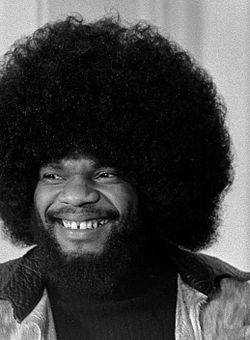
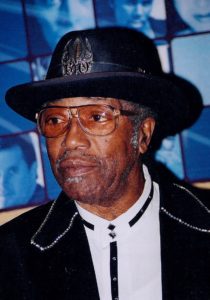
 On this day in 2006, musician and songwriter, the Fifth Beatle, Billy Preston died in Scottsdale, Arizona, of complications of malignant hypertension that resulted in kidney failure and other complications at the age of 59. Born William Everett Preston on 2 September 1946 in Houston. Preston became famous first as a session musician with artists such as Little Richard, Sam Cooke, Ray Charles and the Beatles, and was later successful as a solo artist with hit pop singles including “Outa-Space”, its sequel, “Space Race”, “Will It Go Round in Circles” and “Nothing from Nothing”, and a string of albums and guest appearances with Eric Clapton, the Red Hot Chili Peppers and others. In addition, Preston was co-author, with The Beach Boys’ Dennis Wilson, of “You Are So Beautiful,” recorded by Preston and later a #5 hit for Joe Cocker.
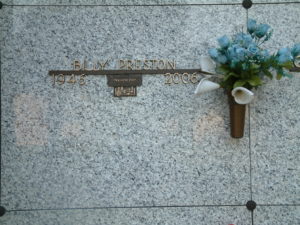 The Final Footprint – His funeral was held on June 20 at the Faithful Central Bible Church in Inglewood, California, where his remains were entombed at Inglewood Park Cemetery. Other notable Final Footprints at Inglewood Park include; Ray Charles, Ella Fitzgerald, Betty Grable, Etta James, Robert Kardashian, Gypsy Rose Lee, Cesar Romero, Big Mama Thornton, T-Bone Walker, and Syreeta Wright.




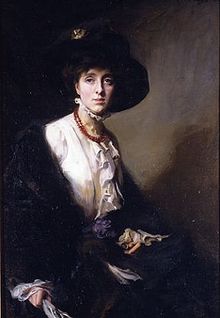 On this day in 1962, author, poet and one-time lover of Virginia Woolf, The Hon Victoria Mary Sackville-West, Lady Nicolson, died at the age of 70 in Sissinghurst Castle, Kent, England. Born Victoria Mary Sackville-West at Knole House near Sevenoaks, Kent on 9 March 1892. She won the Hawthornden Prize in 1927 and 1933. She was known for her exuberant aristocratic life, her passionate affair with the novelist Woolf, and Sissinghurst Castle Garden, which she and her husband, Sir Harold Nicolson, created at their estate. Woolf wrote one of her most famous novels, Orlando, described by Sackville-West’s son Nigel Nicolson as “the longest and most charming love-letter in literature”, as a result of her affair with Sackville-West. The moment of the conception of Orlando was documented from Woolf’s diary on 5 October 1927: “And instantly the usual exciting devices enter my mind: a biography beginning in the year 1500 and continuing to the present day, called Orlando: Vita; only with a change about from one sex to the other”.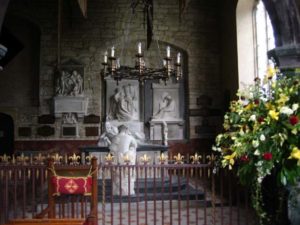
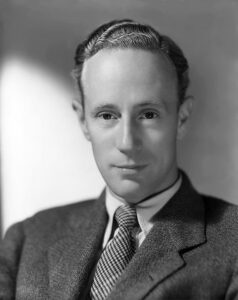
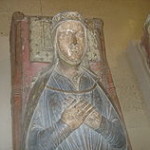 On this day in 1246, queen consort of England as the second wife of King John, from 1200 until John’s death in 1216, renowned beauty, the “Helen” of the Middle Ages, and mother of the future King Henry III, Isabella of Angoulême died at Fontevraud Abbey in France at the approximate age of 57.
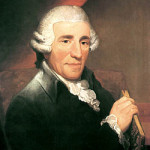 On this day in 1809, composer, “Father of the Symphony” and “Father of the String Quartet”, Joseph Haydn died at his home in the Vienna suburb of Gumpendorf, at the age of 77. Born Franz Joseph Haydn on 31 March 1732 in Rohrau, Austria.
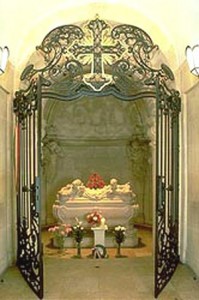 The Final Footprint – Some of his last words reportedly were attempts to calm and reassure his servants as the French army under Napoleon launched an attack on Vienna: “My children, have no fear, for where Haydn is, no harm can fall.” On 15 June 1809, a memorial service was held in the Schottenkirche at which Mozart’s Requiem was performed. Haydn’s remains were interred in the local Hundsturm cemetery until 1820, when they were moved to the Bergkirche in Eisenstadt, Austria by Prince Nikolaus. His head took a different journey; it was stolen by phrenologists shortly after burial, and the skull was reunited with the other remains only in 1954.