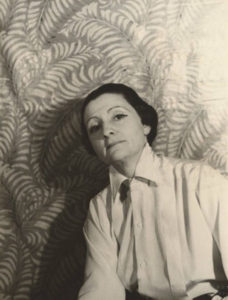
 On this day in 1968, poet, playwright, and novelist, MdA, Mercedes de Acosta died in New York City, at the age of 75. Born March 1, 1892 in New York City. De Acosta wrote almost a dozen plays, only four of which were produced, and she published a novel and three volumes of poetry; Moods (prose poems) (1919), Archways of Life (1921) and Streets and Shadows (1922). Her memoir, Here Lies the Heart (1960), is now recognized as an important contribution to gay and lesbian history.
De Acosta was involved in numerous lesbian relationships with Broadway’s and Hollywood’s elite and she did not attempt to hide her sexuality. Her uncloseted existence was very rare and daring in her generation. In 1916 she began an affair with actress Alla Nazimova and later with dancer Isadora Duncan. Shortly after marrying Abram Poole in 1920, de Acosta became involved in a five-year relationship with actress Eva Le Gallienne. De Acosta wrote two plays for Le Gallienne, Sandro Botticelli and Jehanne de Arc. After the financial failures of both plays they ended their relationship.
Over the next decade she was involved with several famous actresses and dancers including Greta Garbo, Marlene Dietrich, Ona Munson, and Russian ballerina Tamara Platonovna Karsavina. Additional unsubstantiated rumors include affairs with Tallulah Bankhead, Pola Negri, Eleonora Duse, Katherine Cornell, and Alice B. Toklas. Bankhead may have referred to de Acosta as “Countess Dracula” following their alleged affair.
Toklas, lover of Gertrude Stein and de Acosta’s long-term friend, wrote to a disapproving critic, “Say what you will about Mercedes, she’s had the most important women of the twentieth century”.
It has often been said that she once stated, “I can get any woman away from any man” but there is no evidence to substantiate this claim.
A tireless advocate for women’s rights, she wrote in her memoir, “I believed…in every form of independence for women and I was…an enrolled worker for women’s suffrage.”
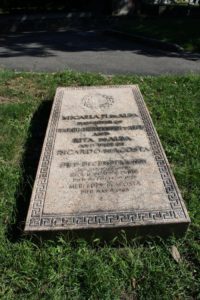
The Final Footprint
Trinity Cemetery in Washington Heights, Manhattan. Other notable final footprints at Trinity include; Ralph Ellison.
#RIP #OTD in 1981 writer (The Man with the Golden Arm, The Neon Wilderness, A Walk on the Wild Side), lover of writer Simone de Beauvoir, Nelson Algren died of a heart attack at his home in Long Island, aged 72. Oakland Cemetery, Sag Harbor, Long Island
#RIP #OTD in 1989 singer, songwriter (“Miami, My Amy”, “Don’t Close Your Eyes“, “When You Say Nothing at All”, “I’m No Stranger to the Rain”) Keith Whitley died of alcohol poisoning at his Goodlettsville, Tennessee home, aged 34. Spring Hill Cemetery, Nashville
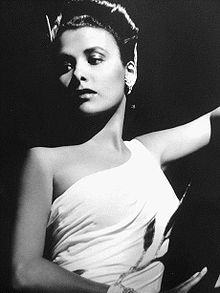 On this day in 2010, Grammy Award winning singer, Tony Award winning actress, civil rights activist and dancer, Lena Horne died in New York City of heart failure at the age of 92. Born Lena Mary Calhoun Horne on 30 June 1917 in the Bedford-Stuyvesant neighborhood of Brooklyn.
Horne’s career spanned over 70 years, appearing in film, television, and theater. Horne joined the chorus of the Cotton Club at the age of 16 and became a nightclub performer before moving to Hollywood.
Horne took part in the March on Washington in August 1963 and continued to work as a performer, both in nightclubs and on television while releasing well-received record albums. She announced her retirement in March 1980, but the next year starred in a one-woman show, Lena Horne: The Lady and Her Music, which ran for more than 300 performances on Broadway. She then toured the country in the show, earning numerous awards and accolades. Horne continued recording and performing sporadically into the 1990s.
Horne married twice; Louis Jordan (1937-1944 divorce) and Lennie Hayton (1947-1971 his death). Lena Horne; great voice, great beauty, trail blazer.
The Final Footprint – Horne was cremated and her cremains were returned to her family. Horne’s funeral took place at St. Ignatius Loyola Church on Park Avenue in New York City. Thousands gathered to mourn her, including Leontyne Price, Dionne Warwick, Jessye Norman, Cicely Tyson, Diahann Carroll, Leslie Uggams, Lauren Bacall, and Vanessa L. Williams.
#RIP #OTD in 2015, Western swing fiddler, member of Bob Wills and His Texas Playboys, session/touring musician (Merle Haggard, Conway Twitty, Connie Smith, Loretta Lynn, Lefty Frizzell, Ray Price, Willie Nelson, Chet Atkins, Asleep at the Wheel), Johnny Gimble died at a nursing facility in Marble Falls, Texas aged 88. New harmony cemetery, Tyler, Texas
#RIP #OTD in 2020, musician, singer, songwriter (“Tutti Frutti”, “Long Tall Sally”), The Originator, The Architect of Rock and Roll, Little Richard died at his home in Tullahoma, Tennessee, from bone cancer, aged 87. Oakwood University Memorial Gardens Cemetery in Huntsville, Alabama
#RIP #OTD in 2024, director (A Bucket of Blood, The Little Shop of Horrors, The Intruder, X: The Man with the X-ray Eyes, The Wild Angels, The Trip, House of Usher), Roger Corman died at his home in Santa Monica, California, at the age of 98. Cremated
#RIP #OTD in 2025, singer (“Pass Me By (If You’re Only Passing Through)”, “You Always Come Back (To Hurting Me)”, “Desperado”, “Down on the Rio Grande”, “Foolin'”), Johnny Rodriguez died after entering hospice care in San Antonio aged 73. Cremated
Have you planned yours yet?
Follow TFF on twitter @RIPTFF
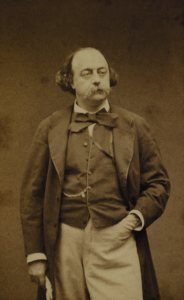 On this day in 1880, novelist Gustave Flaubert died in Croisset, France of a cerebral hemorrhage at the age of 58. Born on 12 December 1821, in Rouen, in the Seine-Maritime department of Upper Normandy, in northern France. In my opinion, one of the greatest novelists in Western literature. He is known especially for his first published novel, Madame Bovary (1857), for his Correspondence, and for his scrupulous devotion to his style and aesthetics. Flaubert was a notorious perfectionist and claimed always to be searching for le mot juste (“the precise word”). When it was first serialized in La Revue de Paris between 1 October 1856 and 15 December 1856, the novel was attacked for obscenity by public prosecutors. The resulting trial, held in January 1857, made the story notorious. After Flaubert’s acquittal on 7 February 1857, Madame Bovary became a bestseller when it was published as a single volume in April 1857. Flaubert’s masterpiece is now considered a seminal work of realism and one of the most influential novels ever written. From 1846 to 1854, Flaubert had a relationship with the poet Louise Colet; his letters to her survive. Flaubert never married.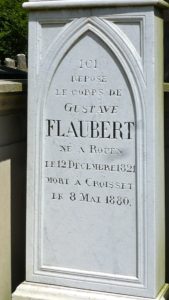
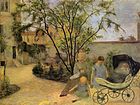
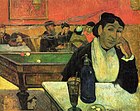
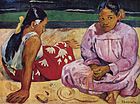
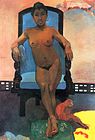
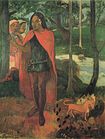
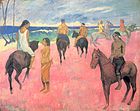
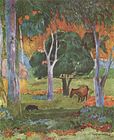
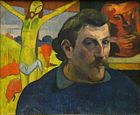
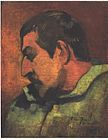
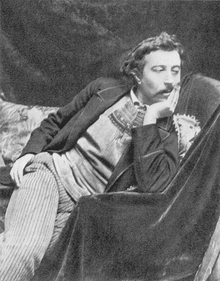 On this day in 1903, leading Post-Impressionist artist, Paul Gauguin died of syphilis in Atuona, Hiva ‘Oa, Marquesas Islands, French Polynesia at the age of 54. Born Eugène Henri Paul Gauguin on 7 June 1848 in Paris. In my opinion, one of the most influential artists to ever live. He married a Danish woman, Mette-Sophie Gad. Gauguin was friends with Vincent van Gogh, with whom in 1888 he spent nine weeks painting in Arles. He was also friends with Camille Pissarro and Paul Cézanne and painted with each of them. He made several attempts to find a tropical paradise where he could ‘live on fish and fruit’ and paint in his increasingly primitive style and frolic with the nubile native girls (see the gallery below). His travels took him to Martinique, the Panama Canal, Tahiti and the Marquesas Islands.
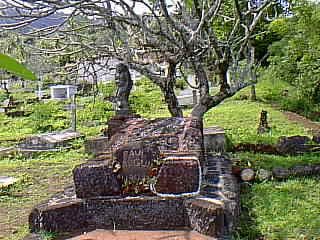 The Final Footprint – Gauguin is interred in Calvary Cemetery (Cimetière Calvaire), Atuona, Hiva ‘Oa, Marquesas Islands, French Polynesia. Gauguin’s life inspired W. Somerset Maugham’s novel The Moon and Sixpence. Mario Vargas Llosa based his 2003 novel The Way to Paradise on Gauguin’s life. Gauguin is also the subject of at least two operas: Federico Elizalde‘s Paul Gauguin (1943); and Gauguin (a synthetic life) by Michael Smetanin and Alison Croggon. Déodat de Séverac wrote his Elegy for piano in memory of Gauguin.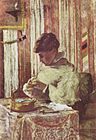











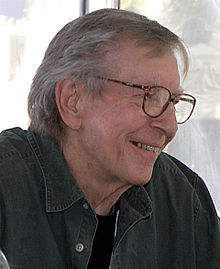 On this day in 2009, journalist, sportswriter, novelist, biographer and screenwriter, Bud Shrake died at St. David’s Hospital in Austin, of complications from lung cancer at the age of 77. Born Edwin A. Shrake, Jr. in Fort Worth on 6 September 1931. Shrake co-wrote a series of golfing advice books with legendary golf coach Harvey Penick, including Harvey Penick’s Little Red Book, a golf guide that became the best-selling sports book in publishing history. Called a “lion of Texas letters” by the Austin American-Statesman, Shrake was a member of the Texas Film Hall of Fame, and received the Lon Tinkle lifetime achievement award from the Texas Institute of Letters and the Texas Book Festival Bookend Award. Shrake married twice and was Texas Governor Ann Richards’ companion for 17 years, until her death in 2006. As the “first gentleman of Texas,” he escorted Richards to her inaugural ball and to other social events, and organized card games inside the Texas governor’s mansion. Shrake was raised in Fort Worth’s Travis Avenue Baptist Church, but that did not stop him from obtaining ordination by the Universal Life Church and officiating at the wedding of friends such as writer Gary Cartwright.
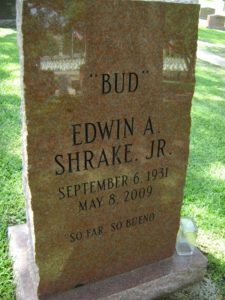 The Final Footprint – The staff at the Austin Country Club lowered its club flag to half staff in recognition of Shrake’s death. At Shrake’s funeral, Ray Benson sang Willie Nelson‘s “I Still Can’t Believe You’re Gone” while Nelson sang “Angel Flying Too Close to the Ground”. Cartwright called Shrake “my friend, compadre and mentor for 50 years. Every success I enjoyed owed directly or indirectly to Bud Shrake.” At the graveside service, Jerry Jeff Walker played two songs: Charles John Quarto and Shake Russell‘s “Dare of an Angel” and the Walter Donaldson and Gus Kahn standard “My Buddy.” Shrake’s hearse bore the Mad Dog Productions sign in the back window.Shrake is interred next to Richards in the Texas State Cemetery. Other notable final footprints at Texas State Cemetery include; Stephen F. Austin, John B. Connally, Nellie Connally, J. Frank Dobie, Barbara Jordan, Tom Landry (cenotaph), James A. Michener (cenotaph), Ann Richards, Big Foot Wallace, and Walter Prescott Webb.
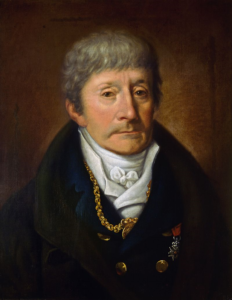 On this day in 1825,
 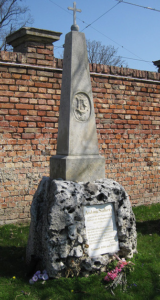 The Final Footprint
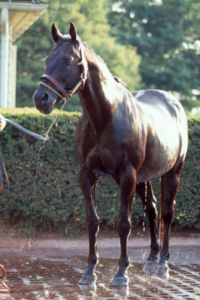 On this day in 2002 Thoroughbred race horse who won the United States Triple Crown of Thoroughbred Racing in 1977, Seattle Slew died in his sleep at Hill ‘N’ Dale Farm, Lexington, Kentucky, 25 years to the day he won the Kentucky Derby, at the age of 28. Foaled on 15 February 1974 at Ben Castleman’s White Horse Acres Farm near Lexington, Kentucky. A descendant of the great sire Nearco through his son, Nasrullah, Seattle Slew was sired by Bold Reasoning and out of My Charmer. He was named Champion 2-Year-Old of 1976. The big nearly-black colt swept through the Triple Crown races and was named Champion 3-Year-Old of 1977 and Eclipse Award American Horse of the Year. Seattle Slew is the only Belmont Stakes winner to sire a Belmont Stakes winner, A.P. Indy (whose damsire was the great Secretariat), who in turn sired Belmont Stakes winner, Rags to Riches.
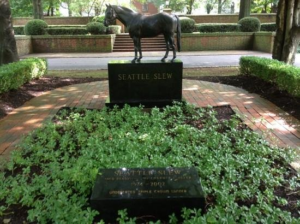 The Final Footprint – Seattle Slew was buried whole, the highest honor for a race horse, in the courtyard at Hill ‘N’ Dale Farm with his favorite blanket and a bag of peppermints which he liked to eat. Three Chimneys Farm, Midway, Kentucky erected a statue of Seattle Slew near the stallion barn in his honor.
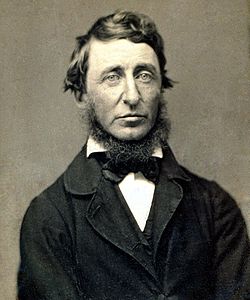 On this day in 1862, author, poet, philosopher, abolitionist, naturalist, tax resister, development critic, surveyor, historian, and leading transcendentalist, Henry David Thoreau died from complications of tuberculosis at his home in Concord, Massachusetts at the age of 44. Born David Henry Thoreau in Concord on 12 July 1817. Perhaps best known for his book Walden, a reflection upon simple living in natural surroundings, and his essay Resistance to Civil Government (also known as Civil Disobedience), an argument for disobedience to an unjust state. Thoreau’s books, articles, essays, journals, and poetry total over 20 volumes. His literary style interweaves close natural observation, personal experience, pointed rhetoric, symbolic meanings, and historical lore, while displaying a poetic sensibility, philosophical austerity, and “Yankee” love of practical detail. He was also deeply interested in the idea of survival in the face of hostile elements, historical change, and natural decay; at the same time he advocated abandoning waste and illusion in order to discover life’s true essential needs. He was a lifelong abolitionist, delivering lectures that attacked the Fugitive Slave Law while praising the writings of Wendell Phillips and defending abolitionist John Brown.
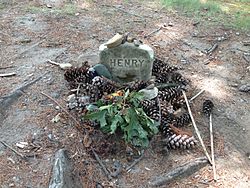 The Final Footprint – Bronson Alcott planned the funeral service and read selections from Thoreau’s works, and Ellery Channing presented a hymn. Ralph Waldo Emerson wrote the eulogy spoken at his funeral. Originally buried in the Dunbar family plot, he and members of his immediate family were eventually moved to Sleepy Hollow Cemetery in Concord. Other notable final footprints at Sleepy Hollow include; Louisa May Alcott, William Ellery Channing, Ralph Waldo Emerson, and Nathaniel Hawthorne.
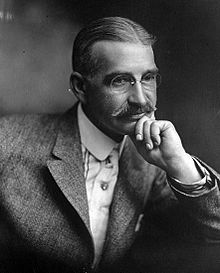 On this day in 1919, author L. Frank Baum died from a stroke in Hollywood at the age of 62. Born Lyman Frank Baum on 15 May 1856 in Chittenango, New York. Perhaps best known for writing The Wonderful Wizard of Oz. He wrote 55 novels in total including thirteen Oz sequels, and nine other fantasy novels. In his writings, he anticipated television, augmented reality, laptop computers (The Master Key), wireless telephones (Tik-Tok of Oz), women in high risk, action-heavy occupations (Mary Louise in the Country), and the ubiquity of advertising on clothing (Aunt Jane’s Nieces at Work). Baum married Maud Gage (1882 – 1919 his death). They had four children.
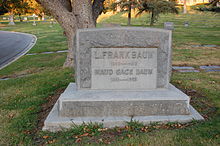 The Final Footprint – The day after his stroke, Baum slipped into a coma but briefly awoke and reportedly spoke his last words to his wife, “Now we can cross the Shifting Sands.” He was buried in Forest Lawn Memorial Park, Glendale, California. Following early film treatments in 1910 and 1925 and Baum’s own venture The Oz Film Manufacturing Company, Metro Goldwyn Mayer made the story into the now classic movie The Wizard of Oz (1939), starring Judy Garland as Dorothy Gale. The film was given an all-a-dream ending which differs from the book. A completely new Tony Award-winning Broadway musical with an African-American cast, The Wiz, was staged in 1975 with Stephanie Mills as Dorothy. It was the basis for a 1978 film by the same title starring Diana Ross as an adult Dorothy and Michael Jackson as the Scarecrow. The Wizard of Oz continues to inspire new versions, such as Disney’s Return to Oz (1985), The Muppets’ Wizard of Oz, Tin Man (a re-imagining of the story televised in late 2007 on the Sci Fi Channel), and a variety of animated productions. Today’s most successful Broadway show, Wicked, provides a backstory to the two Oz witches used in the classic MGM film. Gregory Maguire, author of the novel, Wicked, on which the musical is based, chose to honor Baum by naming his main character Elphaba, a phonetic take on Baum’s initials. The film Oz the Great and Powerful (2013) serves as an homage to MGM’s film, and stars James Franco, Mila Kunis, Rachel Weisz, and Michelle Williams. Other notable Final Footprints at Forest Lawn Glendale include; Humphrey Bogart, Lon Chaney, Nat King Cole, Dorothy Dandridge, Sammy Davis, Jr., Jean Harlow, Sam Cooke, Walt Disney, Errol Flynn, Clark Gable, Michael Jackson, Carole Lombard, Tom Mix, Casey Stengel, Jimmy Stewart, Elizabeth Taylor, and Spencer Tracy.
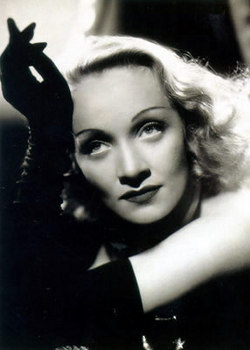 On this day in 1992, Oscar nominated actress and singer, Marlene Dietrich died of renal failure in Paris at the age of 90. Born Maria Magdalene Dietrich on 27 December 1901 in Schöneberg, a district of Berlin, Germany. She appeared in over 70 movies and was known for her glamour and her beauty. She became a U. S. citizen in 1939. Dietrich raised war bonds and performed in USO tours and was awarded the Presidential Medal of Freedom by the US in 1947. She said that this was her proudest accomplishment. She was also awarded the Légion d’honneur by the French government as recognition for her wartime work. Dietrich married once to Rudolf Sieber (1897-1976 his death). Dietrich allegedly had affairs with writer Erich Maria Remarque, Gary Cooper, Yul Brynner, George Bernard Shaw, and John F. Kennedy.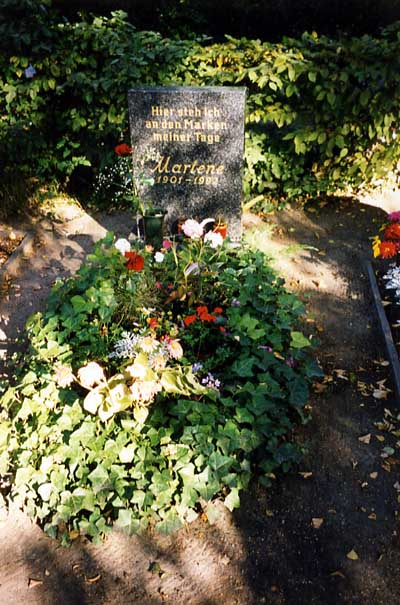

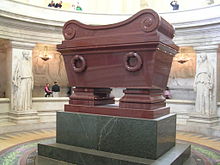 The Final Footprint – Napoleon was initially entombed on St. Helena in the Valley of the Willows. In 1840, King of the French Louis Philippe I obtained permission from the British to return Napoleon’s remains to France. The remains were transported aboard the frigate Belle-Poule, which had been painted black for the occasion, and on 29 November she arrived in Cherbourg. The remains were transferred to the steamship Normandie, which transported them to Le Havre, up the Seine to Rouen and on to Paris. On 15 December, a state funeral was held. The hearse proceeded from the Arc de Triomphe down the Champs-Élysées, across the Place de la Concorde to the Esplanade des Invalides and then to the cupola in St Jérôme’s Chapel, where it stayed until the tomb designed by Louis Visconti was completed. In 1861, Napoleon’s remains were entombed in a porphyry sarcophagus in the crypt under the dome at Les Invalides, the burial sight for some of France’s war heroes including a memorial to Antoine de Saint-Exupéry.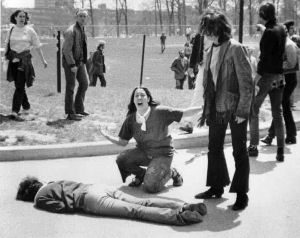
 The Final Footprint
 In 1990, twenty years after the shootings, a memorial commemorating the events of May 4 was dedicated on the campus on a 2.5-acre (1.0 ha) site overlooking the University’s Commons where the student protest took place. Even the construction of the monument became controversial and, in the end, only 7% of the design was constructed. The memorial does not contain the names of those killed or wounded in the shooting; under pressure, the university agreed to install a plaque near it with the names.
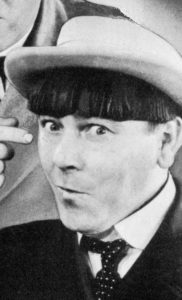 On this day in 1975, actor and comedian and Stooge, Moe Howard died of lung cancer in Los Angeles, California just shy of his 78th birthday. Born Moses Harry Horwitz on 19 June 1897 in the Brownsville neighborhood of Brooklyn. The leader of The Three Stooges, the classic comedy team who stared in motion pictures and television for four decades. The original line up included Moe and his brother Shemp and Larry Fine. When Shemp left in 1932 he was replaced by another brother, Jerome who took the stage name, Curly. Shemp returned when Curly suffered a stroke in 1946. On 22 November 1955, Shemp died of a heart attack and was replaced by Joe Besser. Besser was eventually replaced by Joe DeRita who took the name Curly-Joe. Moe was married to Helen Schonberger (1925-1975 his death). He apparently was very romantic and wrote his wife hundreds of love poems. My kinda guy! The Three Stooges humour spans generations. One of my sons is a fan.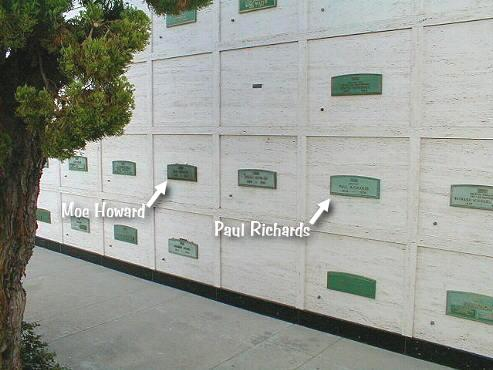

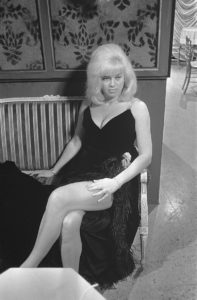 On this day in 1984, actress and singer Diana Dors died from ovarian cancer in Windsor, Berkshire, England at the age of 52. Born Diana Mary Fluck on 23 October 1931 in Swindon, Wiltshire, England. She first came to public notice as a blonde bombshell in the style of American Marilyn Monroe, as promoted by her first husband, Dennis Hamilton, mostly via sex film-comedies and risqué modelling. After it turned out that Hamilton had been defrauding her, she continued to play up to her established image, and she made tabloid headlines with the parties reportedly held at her house. Later, she showed a genuine talent for TV, recordings, and cabaret, and gained new popularity as a regular chat-show guest.
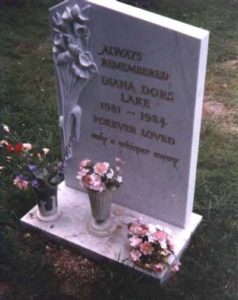 The Final Footprint
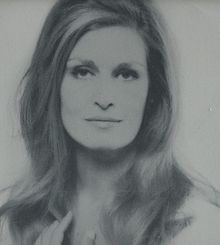 On this day in 1987, singer and actress Dalida, died by suicide by overdosing on barbiturates, in Paris, at the age of 54. She left behind a note which read, “La vie m’est insupportable… Pardonnez-moi.” (“Life has become unbearable for me… Forgive me.”) Born Iolanda Cristina Gigliotti on 17 January 1933 in Cairo, Egypt. Her family was from Serrastretta, Calabria, Italy, but lived in Egypt, where Dalida’s father, Pietro Gigliotti, was first violinist (primo violino) at the Cairo Opera House. Dalida performed and recorded in more than 10 languages including: French, Arabic, Italian, Greek, German, English, Japanese, Hebrew, Dutch and Spanish. She received 55 gold records and was the first singer to receive a diamond record. Renowned for the changes she brought to the French and global music industry with her powerful and colourful performances, she is today still remembered by fans throughout the world. A 30-year career (she debuted in 1956 and recorded her last album in 1986, a few months before her death) and her death led to an iconic image as a tragic diva. My favorite songs sung by Dalida include; “Bambino”, “Gondolier”, “Tu Me Donnes”, and “Parole Parole”.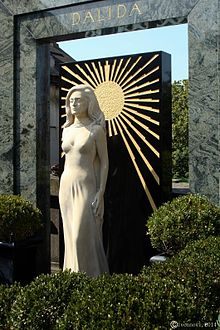
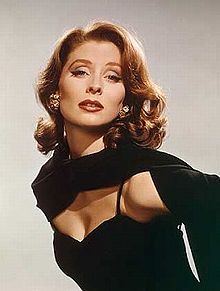 On this day in 2003, model and actress Suzy Parker died at her home in Montecito, California from kidney failure at the age of 70. Born Cecilia Ann Renee Parker on 28 October 1932 in San Antonio, Texas. One of the most recognizable faces of the 1950’s, appearing on many magazine covers, advertisements, and in movies and television series. Parker became the so-called signature face of the Coco Chanel brand. Parker was married three times including; Pierre de la Salle (1958-1961 divorce) and actor Bradford Dillman (1963-2003 her death).
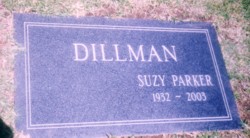 The Final Footprint – Parker is interred in Santa Barbara Cemetery, Santa Barbara, California. Her grave is marked by a flat granite marker. Other notable Final Footprints at Santa Barbara include; Laurence Harvey, Fess Parker (no relation) and Kenneth Rexroth.
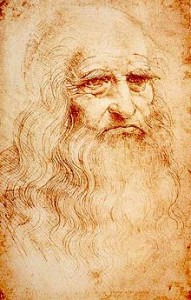 On this day in 1519, Italian polymath: painter, sculptor, architect, musician, scientist, mathematician, engineer, inventor, anatomist, geologist, cartographer, botanist and writer; Renaissance Man, Leonardo da Vinci died at the manor house Clos Lucé in Amboise, Touraine (in present-day Indre-et-Loire, France), at the age of 67. Born Lionardo di ser Piero da Vincion on 15 April 1452, in the Tuscan hill town of Vinci, in the lower valley of the Arno River in the territory of Florence. One of the most diversely talented people ever to have lived. Perhaps he best known for his paintings, Mona Lisa or La Giocondo, The Last Supper and his drawing Vitruvian Man. Da Vinci apparently had no close relationships with any women and never married. Reportedly in his final days Da Vinci apologized to “God and man for leaving so much undone.” If we all accomplished a fraction of what Da Vinci did the world would be an immeasurable better place.
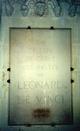 The Final Footprint – King Francis I of France had apparently become a close friend and fact or legend reports that he held Leonardo’s head in his arms as he died. This story is beloved by the French and was portrayed in romantic paintings by Ingres, Ménageot and other French artists, as well as by Angelica Kauffman. In accordance with his will, sixty beggars followed his casket. Da Vinci is entombed in the Chapel of Saint-Hubert in Château d’Amboise, France. The engraving on his crypt front reads; EN CE LIEV REPOSENT LES RESTES DE LEONARDO DE VINCI.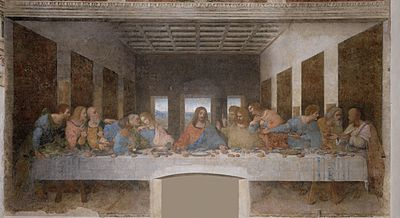
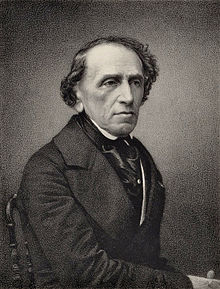 On this day in 1864, opera composer Giacomo Meyerbeer died in Paris at the age of 72. Born Jacob Liebmann Beer on 5 September 1791 in Tasdorf (now a part of Rüdersdorf), near Berlin, then the capital of Prussia. His father was the enormously wealthy financier Judah Herz Beer (1769–1825) and his mother, Amalia (Malka) Wulff (1767–1854) also came from the moneyed elite. Their other children included the astronomer Wilhelm Beer and the poet Michael Beer. Meyerbeer changed his surname upon the death of his grandfather Liebmann Meyer Wulff (1811) and adopted his first name Giacomo during his period of study in Italy. In my opinion, he is one of the most successful stage composers of the nineteenth century. With his 1831 opera Robert le diable and its successors he gave the genre of grand opera a distinct new character. Meyerbeer’s grand opera style was achieved by his merging of German orchestra style with Italian vocal tradition. These were employed in the context of sensational and melodramatic libretti created by Eugène Scribe, and were enhanced by the up-to-date theatre technology of the Paris Opéra. They set a standard which helped to maintain Paris as the opera capital of the nineteenth-century. His 1824 opera Il crociato in Egitto was the first to bring him Europe-wide reputation, but it was Robert le diable (1831) which raised his status to great celebrity. His public career from 1831 until his death, during which he remained throughout a dominating figure in the world of opera, was summarized by his contemporary Hector Berlioz, who claimed that he ‘has not only the luck to be talented, but the talent to be lucky.’ Meyerbeer was at his peak with his operas Les Huguenots (1836) and Le prophète (1849); his last opera (L’Africaine) was performed posthumously. His operas made him the most frequently performed composer at the world’s leading opera houses in the nineteenth century. Meyerbeer, as a Prussian Court Kapellmeister (Director of Music) from 1832, and from 1843 as Prussian General Music Director, was also influential in opera in Berlin and throughout Germany. He was an early supporter of Richard Wagner, enabling the first production of the latter’s opera, Rienzi. He was commissioned to write the patriotic opera Ein Feldlager in Schlesien to celebrate the reopening of the Berlin Royal Opera House in 1844, and wrote music for certain Prussian state occasions. His operas were suppressed by the Nazi regime in Germany, and were neglected by opera houses through most of the twentieth century.
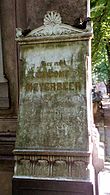 The Final Footprint – Gioachino Rossini, who, not having heard the news, came to Meyerbeer’s apartment the day after his death, intending to meet him, was shocked to hear the news and fainted. He was reportedly moved to write on the spot a choral tribute (Pleure, pleure, muse sublime!). A special train bore Meyerbeer’s body from the Gare du Nord to Berlin on 6 May, where he was entombed in the family vault at the



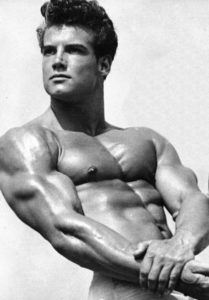 On this day in 2000, U. S. Army veteran, bodybuilder and actor, Steve Reeves died from complications of lymphoma in Escondido, California at the age of 74. Born Stephen Lester Reeves on 21 January 1926 in Glasgow, Montana. While in high school, Reeves developed an interest in bodybuilding. After his military career, he began entering bodybuilding contests culminating with winning the Mr. Universe title in 1950. Reeves then began an acting career. In 1957, Reeves went to Italy and played the lead character in Pietro Francisci‘s Hercules, a low-budget epic based loosely on the tales of Jason and the Argonauts. From 1959 through 1964, Reeves went on to appear in a string of sword and sandal movies. Reeves reportedly turned down the role that finally went to Clint Eastwood in Sergio Leone’s A Fistful of Dollars (1964) because he could not believe that “Italians could make a western”. That is what I call an “ouch babe” moment. I believe that Reeves was an early inspiration for Arnold Swarzenegger. I have been a fan of bodybuilding and an avid weightlifter since about 1990. I love the bodybuilder lifestyle, the workouts and diets; minus the steroids. Reeves is a legend and he is remembered.
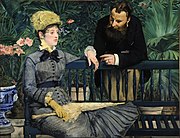
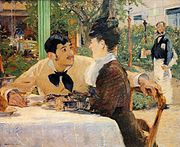
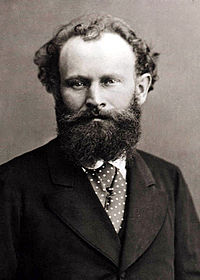 On this day in 1883, painter
 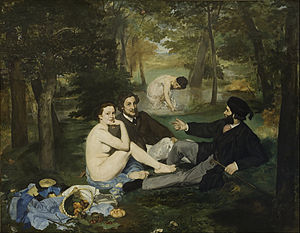 Leenhoff in 1863. Leenhoff was a Dutch-born piano teacher of Manet’s age with whom he had been romantically involved for approximately ten years. Leenhoff initially had been employed by Manet’s father, Auguste, to teach Manet and his younger brother piano. She also may have been Auguste’s mistress. In 1852, Leenhoff gave birth, out of wedlock, to a son, Leon Koella Leenhoff. Eleven-year-old Leon Leenhoff,
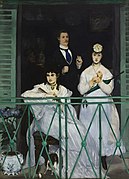
 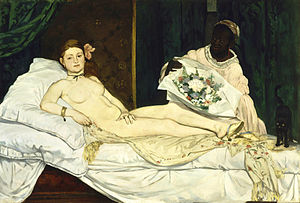 whose father may have been either of the Manets, posed often for Manet, most famously, as the subject of the Boy Carrying a Sword of 1861 (Metropolitan Museum of Art, New York). He also appears as the boy carrying a tray in the background of The Balcony. Manet painted his wife in The Reading, among other paintings.
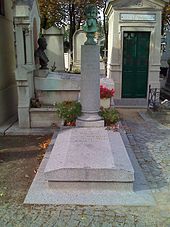 The Final Footprint – Manet is buried in Passy Cemetery in the 16th arrondissement of Paris. Opened in 1820 in the expensive residential and commercial districts of the Right Bank near the Champs-Élysées, by 1874 the small Passy Cemetery had become the aristocratic necropolis of Paris. Sheltered by a bower of chestnut trees, the cemetery is in the shadow of the Eiffel Tower. The retaining wall of the cemetery is adorned with a bas relief (by Louis Janthial) commemorating the soldiers who fell in the Great War. Other notable final footprints as Passy include; Claude Debussy, Gabriel Fauré, Hubert de Givenchy, Octave Mirbeau, and Berthe Morisot.

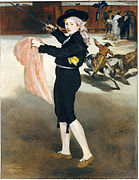


 Dead Matador, National Gallery of Art, 1864–1865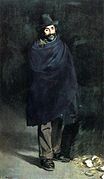










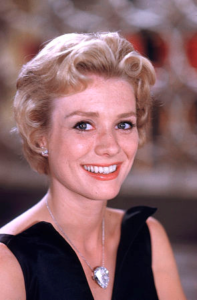 On this day in 1970 actress Inger Stevens died from a drug related overdose in Hollywood at the age of 35. Born Ingrid Stensland on October 18, 1934 in Stockholm.
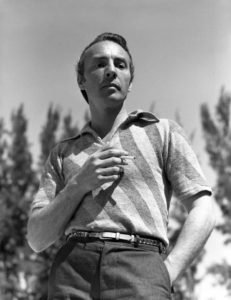 On this day in 1983, ballet choreographer George Balanchine died, aged 79, in Manhattan from Creutzfeldt–Jakob disease. Born Georgiy Melitonovich Balanchivadze on January 22, 1904 in Saint Petersburg, Russian Empire. In my opinion, one of the most influential 20th century choreographers. Styled as the father of American ballet, he co-founded the New York City Ballet and remained its Artistic Director for more than 35 years.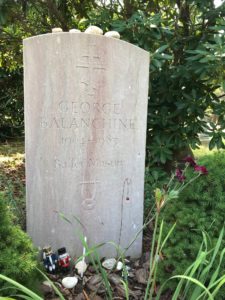
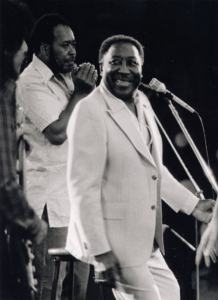 On this day in 1983, blues musician, The Father of Chicago Blues, Muddy Waters died in his sleep from heart failure at his home in Westmont, Illinois at the age of 70. Born McKinley Morganfield on April 4, 1913 in Issaquena County, Mississippi.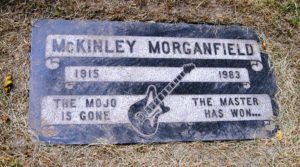
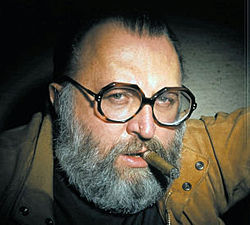 On this day in 1989, director, producer and screenwriter, Sergio Leone died from a heart attack in Rome at the age of 60. Born on 3 January 1929 in Rome. Best known as the director of three legendary, iconic westerns, often referred to as Spaghetti Westerns: A Fistful of Dollars (Per un pugno di dollari) (1964) with Clint Eastwood; For a Few Dollars More (Per qualche dollaro in più) (1965) with Eastwood and Lee Van Cleef; and The Good, the Bad and the Ugly (Il buono, il brutto, il cattivo) (1966) with Eastwood, Van Cleef and Eli Wallach. The film score for all three movies was composed by Ennio Morricone. Leone also directed Once Upon a Time in the West (C’era una volta il West) (1968) with Henry Fonda, Charles Bronson, Jason Robards and Claudia Cardinale; and Once Upon a Time in America (C’era una volta il America) (1984) with Robert De Niro. All five of these movies are among my very favorites and I will stop what I am doing to watch them.
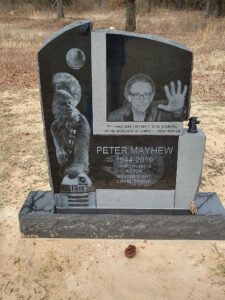
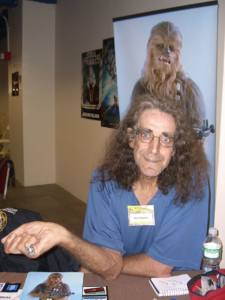 On this day in 2019, actor Peter Mayhew died