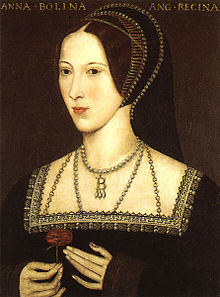
 On this day in 1536, second wife of King Henry VIII and Marquess of Pembroke, Queen of England, Anne Boleyn was executed by beheading for high treason, adultery, incest and witchcraft, at the Tower of London. She was somewhere between 28 and 35 years old. Born in Norfolk at the Boleyn home at Blickling between 1501 and 1507. Henry’s marriage to Anne, and her subsequent execution, made her a key figure in the political and religious upheaval that was the start of the English Reformation. Anne was the daughter of Thomas Boleyn, 1st Earl of Wiltshire, and his wife, Lady Elizabeth Howard, and was educated in the Netherlands and France, largely as a maid of honour to Claude of France. She returned to England in early 1522, to marry her Irish cousin James Butler, 9th Earl of Ormond; the marriage plans ended in failure and she secured a post at court as maid of honour to Henry VIII’s wife, Catherine of Aragon. In February/March 1526, Henry VIII began his pursuit of Anne. She resisted his attempts to seduce her, refusing to become his mistress – which her sister Mary had been. It soon became the one absorbing object of Henry’s desires to annul his marriage to Queen Catherine so he would be free to marry Anne. When it became clear that Pope Clement VII would not annul the marriage, the breaking of the power of the Catholic Church in England began. In 1532, Henry granted her the Marquessate of Pembroke. Henry and Anne married on 25 January 1533. On 23 May 1533, Thomas Cranmer declared Henry and Catherine’s marriage null and void; five days later, he declared Henry and Anne’s marriage to be good and valid. Shortly afterwards, the Pope decreed sentences of excommunication against Henry and Cranmer. As a result of this marriage and these excommunications, the first break between the Church of England and Rome took place and the Church of England was brought under the King’s control. Anne was crowned Queen of England on 1 June 1533. On 7 September, she gave birth to the future Queen Elizabeth I, whose gender disappointed Henry. He was not entirely discouraged, for he said that a son would surely follow and professed to love Elizabeth. Three miscarriages followed, and by March 1536, Henry was courting Jane Seymour. Henry had Anne investigated for high treason in April 1536. On 2 May she was arrested and sent to the Tower of London, where she was tried before a jury of peers – which included Henry Percy, her former betrothed, and her own uncle, Thomas Howard – and found guilty on 15 May. She was beheaded four days later. Modern historians view the charges against her as unconvincing. Henry commuted Anne’s sentence from burning to beheading, and rather than have a queen beheaded with the common axe, he brought an expert swordsman from Saint-Omer in France, to perform the execution. Shortly before dawn, she heard mass and swore on the eternal salvation of her soul, upon the Holy Sacraments, that she had never been unfaithful to the king. She ritually repeated this oath both immediately before and after receiving the sacrament of the Eucharist. She wore a red petticoat under a loose, dark grey gown of damask trimmed in fur and a mantle of ermine. Accompanied by two female attendants, Anne made her final walk from the Queen’s House to the scaffold. Anne climbed the scaffold and made a short speech to the crowd:
Good Christian people, I am come hither to die, for according to the law, and by the law I am judged to die, and therefore I will speak nothing against it. I am come hither to accuse no man, nor to speak anything of that, whereof I am accused and condemned to die, but I pray God save the king and send him long to reign over you, for a gentler nor a more merciful prince was there never: and to me he was ever a good, a gentle and sovereign lord. And if any person will meddle of my cause, I require them to judge the best. And thus I take my leave of the world and of you all, and I heartily desire you all to pray for me. O Lord have mercy on me, to God I commend my soul.
In a 1,318 line poem, written in French, two weeks after Anne’s death, Lancelot de Carle provides a moving account of her last words and their effect on the crowd:
She gracefully addressed the people from the scaffold with a voice somewhat overcome by weakness, but which gathered strength as she went on. She begged her hearers to forgive her if she had not used them all with becoming gentleness, and asked for their prayers. It was needless, she said, to relate why she was there, but she prayed the Judge of all the world to have compassion on those who had condemned her, and she begged them to pray for the King, in whom she had always found great kindness, fear of God, and love of his subjects. The spectators could not refrain from tears.
Lancelot de Carle, a secretary to the French Ambassador, Antoine de Castelnau, was in London in May 1536, and was an eyewitness to her trial and execution. The poem, Épistre Contenant le Procès Criminel Faict à l’Encontre de la Royne Anne Boullant d’Angleterre, (A Letter Containing the Criminal Charges Laid Against Queen Anne Boleyn of England), provides a detailed account of Anne’s early life and the circumstances relating to her arrest, trial and execution. It is thought that Anne avoided criticising Henry to save Elizabeth and her family from further consequences, but even under such extreme pressure Anne did not confess guilt, in fact subtly implying her innocence, in her appeal to historians who “will meddle of my cause”. The ermine mantle was removed and Anne lifted off her headdress, tucking her hair under a coif. After a brief farewell to her weeping ladies and a request for prayers, she kneeled down and one of her ladies tied a blindfold over her eyes. She knelt upright, in the French style of executions. Her final prayer consisted of her repeating continually, “Jesu receive my soul; O Lord God have pity on my soul.”
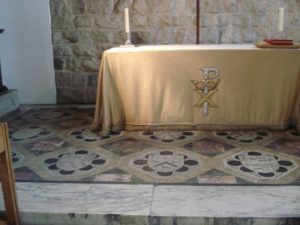 The Final Footprint – The execution consisted of a single stroke. She was then buried in an unmarked grave in the Chapel of St Peter ad Vincula. Her skeleton was identified during renovations of the chapel in 1876 and Anne’s resting place is now marked in the marble floor. Following the coronation of her daughter, Elizabeth, as queen, Anne was venerated as a martyr and heroine of the English Reformation. Over the centuries, she has inspired or been mentioned in numerous artistic and cultural works. As a result, she has retained her hold on the popular imagination. Anne has been called “the most influential and important queen consort England has ever had”, since she provided the occasion for Henry VIII to annul his marriage to Catherine of Aragon, and declare his independence from Rome. Many legends and fantastic stories about Anne Boleyn have survived over the centuries. One is that she was secretly buried in Salle Church in Norfolk under a black slab near the tombs of her Boleyn ancestors. Her body was said to have rested in an Essex church on its journey to Norfolk. Another is that her heart, at her request, was buried in Erwarton (Arwarton) Church, Suffolk by her uncle Sir Philip Parker. In 18th-century Sicily, the peasants of the village of Nicolosi believed that Anne Boleyn, for having made Henry VIII a heretic, was condemned to burn for eternity inside Mount Etna. This legend was often told for the benefit of foreign travelers. A number of people have claimed to have seen Anne’s ghost at Hever Castle, Blickling Hall, Salle Church, Tower of London, and Marwell Hall. The most famous account of her reputed sighting has been described by paranormal researcher Hans Holzer. In 1864, Major General J.D. Dundas of the 60th Rifles regiment was quartered in the Tower of London. As he was looking out the window of his quarters, he noticed a guard below in the courtyard, in front of the lodgings where Anne had been imprisoned, behaving strangely. He appeared to challenge something, which to the General “looked like a whitish, female figure sliding towards the soldier”. The guard charged through the form with his bayonet, then fainted. Only the General’s testimony and corroboration at the court-martial saved the guard from a lengthy prison sentence for having fainted while on duty. In 1960, Canon W. S. Pakenham-Walsh, vicar of Sulgrave, Northamptonshire, reported having conversations with Anne. Other notable final footprints at the Chapel include: Lady Jane Grey, William Hastings, 1st Baron Hastings; Margaret, Countess of Salisbury, the last of the Plantagenet dynasty; Queen Catherine Howard, fifth wife of Henry VIII; Jane Boleyn, Viscountess Rochford; and Robert Devereux, 2nd Earl of Essex.
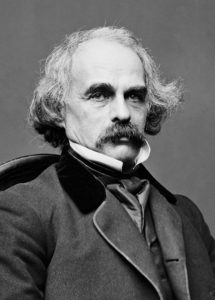 On this day in 1864, novelist, dark romantic, and short story writer Nathaniel Hawthorne died in his sleep in Plymouth, New Hampshire, at the age of 59. Born on July 4, 1804 in Salem, Massachusetts. His ancestors include John Hathorne, the only judge involved in the Salem witch trials who never repented of his actions. He entered Bowdoin College in 1821 and graduated in 1825. He published his first work in 1828, the novel Fanshawe; he later tried to suppress it, feeling that it was not equal to the standard of his later work. He published several short stories in periodicals, which he collected in 1837 as Twice-Told Tales. The next year, he became engaged to Sophia Peabody. He worked at the Boston Custom House and joined Brook Farm, a transcendentalist community, before marrying Peabody in 1842. The couple moved to The Old Manse in Concord, Massachusetts, later moving to Salem, the Berkshires, then to The Wayside in Concord. The Scarlet Letter was published in 1850, followed by a succession of other novels. A political appointment as consul took Hawthorne and family to Europe before their return to Concord in 1860.
Much of Hawthorne’s writing centers on New England, many works featuring moral metaphors with an anti-Puritan inspiration. His fiction works are considered part of the Romantic movement and, more specifically, dark romanticism. His themes often center on the inherent evil and sin of humanity, and his works often have moral messages and psychological complexity. His published works include novels, short stories, and a biography of his college friend Franklin Pierce, the 14th President of the United States.
The Final Footprint

Henry Wadsworth Longfellow wrote a tribute poem to Hawthorne published in 1866 called “The Bells of Lynn”. Hawthorne was buried on what is now known as “Authors’ Ridge” in Sleepy Hollow Cemetery, Concord, Massachusetts. Pallbearers included Longfellow, Ralph Waldo Emerson, Bronson Alcott, Oliver Wendell Holmes Sr., James Thomas Fields, and Edwin Percy Whipple. Emerson wrote of the funeral: “I thought there was a tragic element in the event, that might be more fully rendered—in the painful solitude of the man, which, I suppose, could no longer be endured, & he died of it.” His wife Sophia and daughter Una were originally buried in England. However, in June 2006, they were reinterred in plots adjacent to Hawthorne. Other notable final footprints at Sleepy Hollow include; Louisa May Alcott, Ralph Waldo Emerson and Henry David Thoreau.
#RIP #OTD in 1895 Cuban nationalist, poet, philosopher, essayist, journalist, translator, professor, publisher, Cuban national hero, José Martí died during the Battle of Dos Ríos, Cuba, aged 42. Cementerio Santa Ifigenia, Santiago de Cuba
#RIP #OTD in 1918, one of the best-known Swiss painters of the nineteenth century, Ferdinand Hodler died in Geneva aged 65. Cimetière de Saint Georges in Geneva
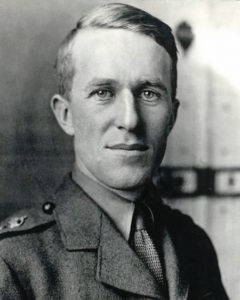 On this day in 1935, archaeologist, army officer, diplomat, and writer T. E. Lawrence died from injuries in a motorcycle crash in Dorset close to his cottage Clouds Hill, near Wareham, England, at the age of 46 . Born Thomas Edward Lawrence on 16 August 1888 in Tremadog, Carnarvonshire, Wales. He was renowned for his liaison role during the Sinai and Palestine Campaign and the Arab Revolt against the Ottoman Empire during the First World War. The breadth and variety of his activities and associations, and his ability to describe them vividly in writing, earned him international fame as Lawrence of Arabia—a title used for the 1962 film based on his wartime activities.
Soon after the outbreak of war, he volunteered for the British Army and was stationed in Egypt. In 1916, he was sent to Arabia on an intelligence mission and quickly became involved with the Arab Revolt as a liaison to the Arab forces, along with other British officers. He worked closely with Emir Faisal, a leader of the revolt, and he participated in and sometimes led military activities against the Ottoman armed forces, culminating in the capture of Damascus in October 1918.
After the war, Lawrence joined the Foreign Office, working with the British government and with Faisal. In 1922, he retreated from public life and spent the years until 1935 serving as an enlisted man, mostly in the Royal Air Force, with a brief stint in the Army. During this time, he published his best-known work Seven Pillars of Wisdom, an autobiographical account of his participation in the Arab Revolt. He also translated books into English and wrote The Mint, which was published posthumously and detailed his time in the Royal Air Force working as an ordinary aircraftman. He corresponded extensively and was friendly with well-known artists, writers, and politicians. For the Royal Air Force, he participated in the development of rescue motorboats.
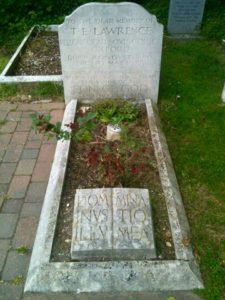 The Final Footprint

Memorial near the crash site which is found south of his cottage at Clouds Hill, Wareham, Dorset
He is interred in the separate burial ground of St Nicholas’ Church, Moreton. Mourners included Winston, E. M. Forster, Lady Astor, and Lawrence’s youngest brother Arnold.
#RIP #OTD in 1962 expressionist painter who studied and lived with the painter Wassily Kandinsky, a founding member of the expressionist group Der Blaue Reiter, Gabriele Münter died at home in Murnau am Staffelsee, Germany aged 85. Friedhof Murnau, Murnau am Staffelsee, Landkreis Garmisch-Partenkirchen, Bavaria, Germany
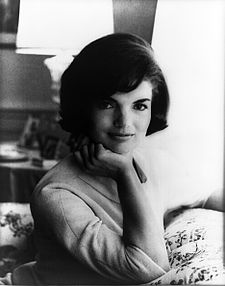 On this day in 1994, wife of the 35th President of the United States, First Lady of the United States, fashion icon, editor, Jackie, Jacqueline Kennedy Onassis died in her sleep from cancer at her apartment in New York City at the age of 64. Born Jacqueline Lee Bouvier on 28 July 1929 in Southampton, New York. She is remembered for her contributions to the arts and preservation of historic architecture, her style, elegance and grace.
Jackie married John F. Kennedy on 12 September 1953. They had four children; Arabella (23 August 1956 – 23 August 1956), Caroline Bouvier (27 November 1957 – ), John Fitzgerald Jr. (25 November 1960 – 16 July 1999), and Patrick Bouvier (7 August 1963 – 9 August 1963). Jackie proved to be a very popular First Lady. When the Kennedys visited France, Jackie so impressed the public that President Kennedy remarked; “I am the man who accompanied Jacqueline Kennedy to Paris — and I have enjoyed it!” Jackie’s steadiness and courage during and after JFK’s assassination and funeral won her admiration around the world. Lady Jeanne Campbell reported back to The London Evening Standard: “Jacqueline Kennedy has given the American people… one thing they have always lacked: Majesty.” During an interview with Theodore H. White of Life magazine she compared the Kennedy years in the White House to King Arthur’s mythical Camelot, commenting that the President often played the title song of Lerner and Loewe‘s musical recording before retiring to bed. She also quoted Queen Guinevere from the musical, trying to express how the loss felt. Following Robert F. Kennedy’s assassination on 6 June 1968, Jackie apparently began to fear for the safety of her children. Perhaps this was a factor in her decision to marry Greek shipping magnate Aristotle Onassis; seeking the privacy and protection his vast wealth provided. They married on 20 October 1968 on his private island Skorpios in the Ionian Sea.
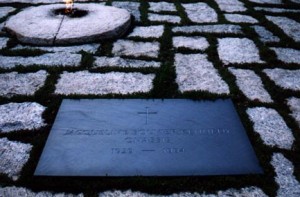 The Final Footprint – Jackie is interred next to JFK in Arlington National Cemetery. Her grave is marked by a flat granite engraved marker that matches her husband’s. Jackie’s legacy has been memorialized in various aspects of American culture and she is frequently alluded to and depicted in various forms of popular culture, including books, films, television series, cartoon series, video games and music. Other notable Final Footprints at Arlington include; Space Shuttle Challenger, Space Shuttle Columbia, Medgar Evers, Dashiell Hammett, JFK, RFK, Edward Kennedy, Malcolm Kilduff, Jr., Lee Marvin, and Audie Murphy.
#RIP #OTD in 2025, poet (165 Meeting House Lane, When I Was Alive, The Descent of Alette, Culture of One), member of the second generation of the New York School of poetry, Alice Notley died from a stroke at a Paris hospital at the age of 79. Her memorial was held at the Poetry Project at St. Mark’s Church in-the-Bowery, East Village, Manhattan
Have you planned yours yet?
Follow TFF on twitter @RIPTFF
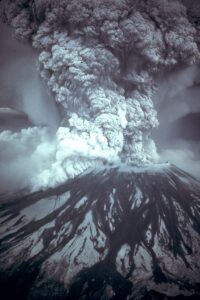 On this day in 1980, Mt. Saint Helens erupted killing 57 people including, USGS volcanologist David A. Johnston, Reid Blackburn, a National Geographic photographer. and innskeeper Harry R. Truman. Mount St. Helens is an active stratovolcano located in Skamania County, Washington, 96 miles south of Seattle, Washington and 50 miles northeast of Portland, Oregon. The catastrophic eruption produced an eruption column that reached 80,000 feet into the atmosphere and volcanic mudslides that reached the Columbia River, nearly 50 miles away; deposited ash in 11 U. S. states and parts of Canada; destroyed 4 billion board feet of timber, 250 homes, 47 bridges, 15 miles of railways, and 185 miles of highway.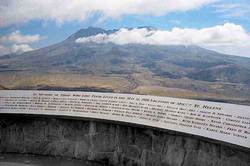
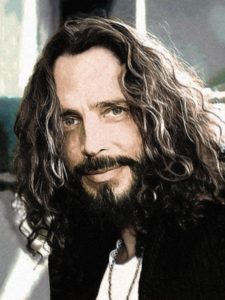 On this day in 2017, musician, singer and songwriter Chris Cornell died from suicide by hanging at the MGM Grand in Detroit, at the age of 52. Born Christopher John Cornell (né Boyle) on July 20, 1964 in Seattle. Perhaps best known as the lead vocalist for the rock bands Soundgarden and Audioslave. Cornell was also known for his numerous solo works and soundtrack contributions since 1991, and as the founder and frontman for Temple of the Dog, the one-off tribute band dedicated to his late friend Andrew Wood.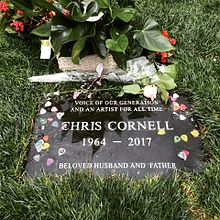
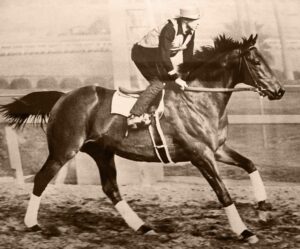 On this day in 1947, champion Thoroughbred racehorse, Seabiscuit died in his stall at Ridgewood Ranch near Willits, California at the age of 13. Foaled 23 May 1933 from the mare Swing On and sired by Hard Tack, a son of Man o’ War. Seabiscuit was named for his father, as hardtack or “sea biscuit” is the name for a type of cracker eaten by sailors. The bay colt grew up on Claiborne Farm in Paris, Kentucky. Seabiscuit became an unlikely champion and a symbol of hope to many Americans during the Great Depression. In the “Match of the Century” on 1 November 1938, Seabiscuit ran against Triple Crown winner War Admiral in a match race. Seabiscuit won by four clear lengths. He was named the 1938 Horse of the Year and at the time of his retirement, he was racing’s all-time leading money winner. Seabiscuit became the subject of a 1949 film, The Story of Seabiscuit; a 2001 book, Seabiscuit: An American Legend by Laura Hillenbrand; and a 2003 film, Seabiscuit starring Jeff Bridges and Chris Cooper, which was nominated for seven Academy Awards, including Best Picture.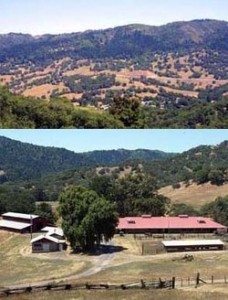
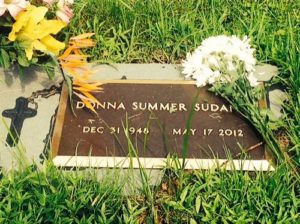
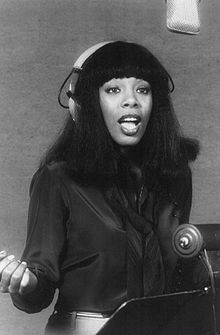 On this day in 2012, singer, songwriter, and painter, “Queen of Disco”, Donna Summer died at her home in Naples, Florida from lung cancer at the age of 63. Born LaDonna Adrian Gaines on 31 December 1948 in Boston. Summer gained prominence during the disco era of the late 1970s. A five-time Grammy Award winner, she was the first artist to have three consecutive double albums reach No. 1 on the United States Billboard album chart and charted four number-one singles in the United States within a 12-month period. Summer has reportedly sold over 140 million records, making her one of the world’s best-selling artists of all time. A partial list of hit songs she sung include; “Love to Love You Baby”, “I Feel Love”, “Last Dance”, “MacArthur Park”, “Heaven Knows”, “Hot Stuff”, “Bad Girls”, “Dim All the Lights”, “No More Tears (Enough Is Enough)” (duet with Barbra Streisand), and “On the Radio”. “Last Dance” won an Academy Award and a Golden Globe for Best Original Song on the “Thank God It’s Friday” movie soundtrack. At the time of her death, Summer was married to Brooklyn Dreams singer Bruce Sudano.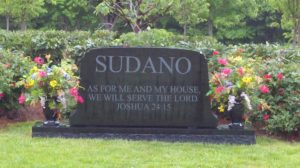
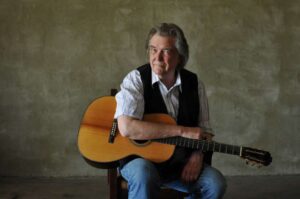

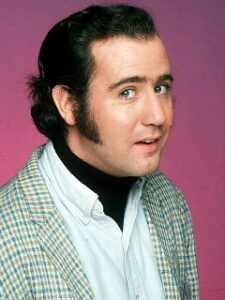 On this day in 1984, entertainer, actor, writer, and performance artist Andy Kaufman supposedly died of lung cancer in Los Angeles, at the age of 35. Born Andrew Geoffrey Kaufman on January 17, 1949 in New York City. While often called a comedian, Kaufman described himself instead as a “song and dance man”
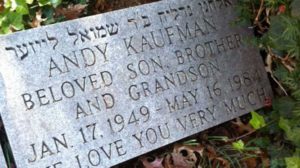 The Final Footprint
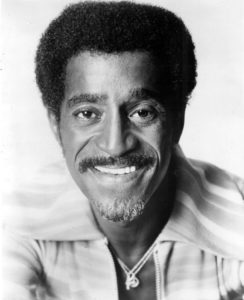 On this day in 1990, entertainer, singer, dancer, actor, member of the Rat Pack, Sammy Davis, Jr. died in Beverly Hills from throat cancer at the age of 64. Born Samuel George Davis, Jr. on 8 December 1925 in Harlem. Davis converted to Judaism in 1955. In 1959, he became a member of the famous “Rat Pack”, led by his friend Frank Sinatra, which included Dean Martin, Joey Bishop and Peter Lawford. Davis dated actress Kim Novak before his first marriage. He married three times: Loray White (1958-1959 divorce), May Britt (1960-1968 divorce) and Altovise Gore (1970-1990 his death). Davis was awarded the Spingarn Medal by the NAACP, and was nominated for a Golden Globe and an Emmy Award for his television performances. He was the recipient of the Kennedy Center Honors in 1987, and in 2001, he was posthumously awarded the Grammy Lifetime Achievement Award.
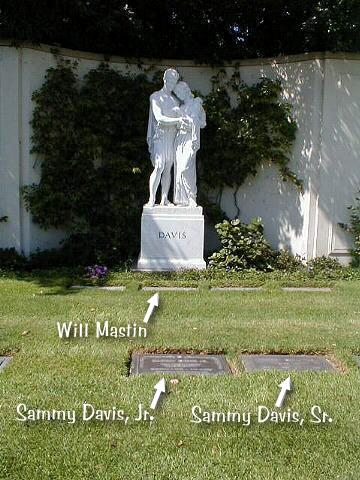 The Final Footprint – Davis is interred in Forest Lawn Memorial Park, Glendale, California. His grave is marked by a flat bronze individual marker with the inscription “THE ENTERTAINER” HE DID IT ALL and YOUR LOVING WIFE ALTOVISE AND FATHER OF TRACEY, MARK, JEFF, MANNY. A nearby white marble statue has the name DAVIS engraved at the bottom. Other notable Final Footprints at Forest Lawn Glendale include; L. Frank Baum, Humphrey Bogart, Lon Chaney, Nat King Cole, Dorothy Dandridge, Jean Harlow, Sam Cooke, Walt Disney, Errol Flynn, Clark Gable, Michael Jackson, Carole Lombard, Tom Mix, Casey Stengel, Jimmy Stewart, Elizabeth Taylor, and Spencer Tracy.


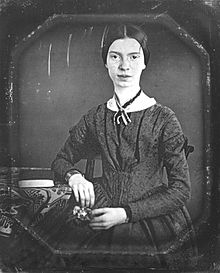 On this day in 1886, renowned poet, Emily Dickinson died at her home in Amherst, Massachusetts at the age of 55. Born Emily Elizabeth Dickinson on 10 December 1830 in Amherst. She led a mostly introverted and reclusive life and never married. Fewer than a dozen of her poems were published during her lifetime. Those that were, were usually heavily edited to fit the conventional poetic rules of the time. Dickinson’s poems were unique for that era as they featured short lines, no titles, slant rhyme and unconventional capitalization and punctuation. After Dickinson’s death, her sister Lavinia, kept her promise and burned most of the poet’s correspondence. Fortunatley though, Dickinson had left no instructions about the forty notebooks and loose sheets gathered in a locked chest. The notebooks and loose sheets contained almost 1800 poems. Lavinia recognized the poems’ worth and decided they must be published. Today Dickinson is considered one of the most important poets and an important part of American culture. One of my favorite poets. Lately, my own poetry has been influenced by Dickinson. Here is her poem Wild Nights – Wild Nights! (249);
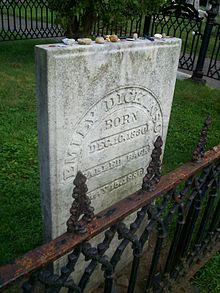 The Final Footprint – Dickinson is interred in the Dickinson family private estate in West Cemetery in Amherst. Her grave is marked by an upright stone marker. S
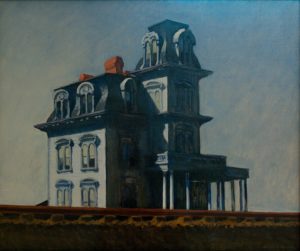
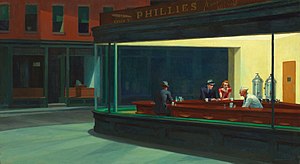
 On this day in 1967, realist painter Edward Hopper died in his studio near Washington Square, Manhattan at the age of 84. Born on July 22, 1882 in Upper Nyack, New York. While he was most popularly known for his oil paintings, he was equally proficient as a watercolorist and printmaker in etching. Both in his urban and rural scenes, his spare and finely calculated renderings reflected his personal vision of modern American life.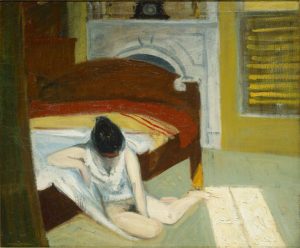


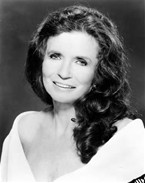 On this day in 2003,
 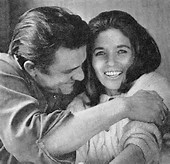 They married on 1 March in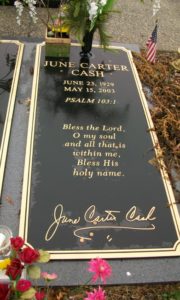
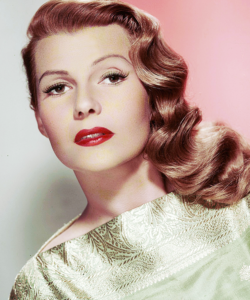 On this day in 1987, dancer and actress, beauty icon, Rita Hayworth died from complications of Alzheimer’s disease at the age of 68 in New York City. Born Margarita Carmen Cansino on 17 October 1918 in Brooklyn. Hayworth achieved fame during the 1940s as one of the era’s top stars. Appearing first as Rita Cansino, she agreed to change her name to Rita Hayworth and her natural dark brown hair color to dark red to attract a greater range of roles. Her appeal led to her being featured on the cover of Life magazine five times, beginning in 1940. She appeared in a total of 61 films over 37 years. Hayworth married five times, apparently none of them happily; Edward C. Judson (1937–1942 divorce), Orson Welles
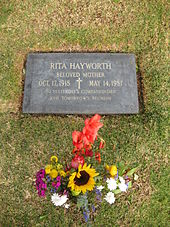 The Final Footprint – A funeral service was held on 19 May 1987, at the Church of the Good Shepherd in Beverly Hills. Pallbearers included actors Ricardo Montalbán, Glenn Ford, Don Ameche, agent Budd Burton Moss, and the choreographer Hermes Pan. She was interred in Holy Cross Cemetery, Culver City. Her headstone includes the inscription: “To yesterday’s companionship and tomorrow’s reunion.” Hayworth’s pin-up poster is portrayed in Stephen King’s novella Rita Hayworth and Shawshank Redemption (1982), and was later brought to the screen in the film The Shawshank Redemption (1994) directed by Frank Darabont (which itself features a video clip of Hayworth in Gilda, shown as a film the prisoners are watching). Other notable final footprints at Holy Cross include; John Candy, Bing Crosby, Jimmy Durante, John Ford, Chick Hearn, Bela Lugosi, Al Martino, Audrey Meadows, Ricardo Montalbán, Evelyn Nesbit, Hermes Pan, Chris Penn, Jo Stafford, and Sharon Tate.
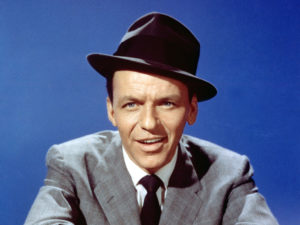 On this day in 1998, legendary and iconic singer and actor; Academy Award winner, Grammy Award winner, producer, director, conductor, member of the Rat Pack, Ol’ Blue Eyes, The Chairman of the Board, The Voice, Frankie, Frank Sinatra died at 10:50 P.M. on a Thursday at the Cedars-Sinai Medical Center, with his wife Barbara by his side, at the age of 82. Born Francis Albert Sinatra on 12 December 1915 in Hoboken, New Jersey. Oh my, where to begin. This could take awhile. Sinatra is perhaps my favorite entertainer.
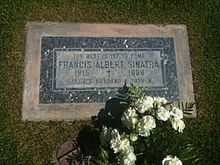 The Final Footprint – The night after Sinatra’s death, the lights on the Empire State Building in New York City were turned blue, the lights at the Las Vegas Strip were dimmed in his honor, and the casinos stopped spinning for a minute.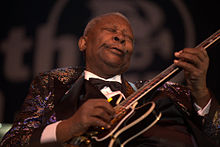

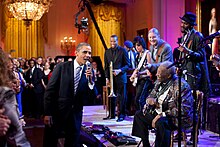
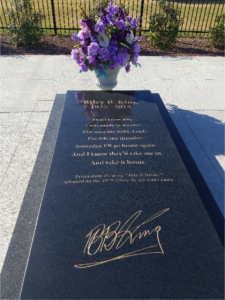 The Final Footprint
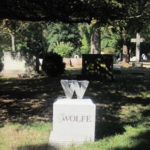
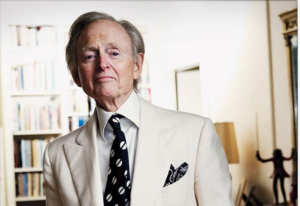 On this day in 2018, author and journalist Tom Wolfe died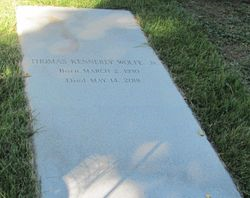
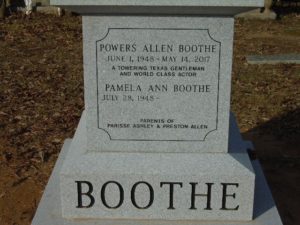
 On this day in 2019,
 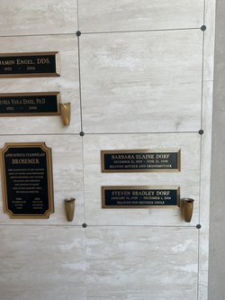 The Final Footprint
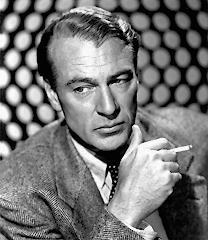 On this day in 1961, Academy Award-winning actor, Coop, Gary Cooper died from cancer at his home in Beverly Hills at the age of 60. Born Frank James Cooper on 7 May 1901 in Helena, Montana. His career comprised more than a 100 films. My favorite movies with Cooper include; as Will Cane in High Noon (1952) with Grace Kelly, as Lou Gehrig in The Pride of the Yankees (1942), as Robert Jordan in the film adaptation of Ernest Hemingway’s For Whom the Bell Tolls (1943) with Ingrid Bergman, as Howard Roark in the film adaptation of Ayn Rand’s The Fountainhead (1949) and as Frank Flannagan in Love in the Afternoon (1957) with Audrey Hepburn. Cooper married once; Veronica “Rocky” Balfe (1933-1961 his death). Cooper allegedly had affairs with famous co-stars Marlene Dietrich, Kelly and Patricia Neal.
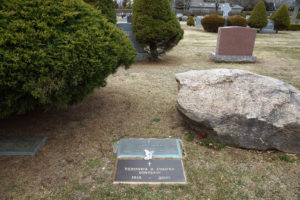 The Final Footprint – A requiem mass was held on May 18 at the Church of the Good Shepherd, attended by many of Cooper’s friends, including James Stewart, Henry Hathaway, Joel McCrea, Audrey Hepburn, Jack L. Warner, John Ford, John Wayne, Edward G. Robinson, Frank Sinatra, Dean Martin, Fred Astaire, Randolph Scott, Walter Pidgeon, Bob Hope, and Marlene Dietrich. Cooper was initially interred in the Grotto Section of Holy Cross Catholic Cemetery in Culver City, California. In May 1974 his body was removed from Holy Cross Cemetery, when his widow Veronica remarried and moved to New York, and relocated to Sacred Heart Cemetery, in Southampton, New York, on Long Island. His grave is marked by an individual bronze marker and a three-ton boulder from a Montauk quarry. Veronica was buried next to him when she died in 2000. For his contribution to the film industry, Cooper has a star on the Hollywood Walk of Fame at 6243 Hollywood Blvd. In 1966, he was inducted into the Western Performers Hall of Fame at the National Cowboy & Western Heritage Museum in Oklahoma City, Oklahoma.
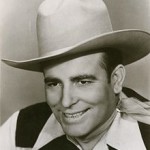 On this day in 1975, musician, songwriter, and bandleader of the Texas Playboys; co-founder of Western Swing, the King of Western Swing, Bob Wills died in Fort Worth, Texas at the age of 70 from a stroke. Born James Robert Wills on a farm near Kosse, Texas on 6 March 1905. Wills formed several bands and played radio stations around the South and West until he formed the Texas Playboys in 1934 with Wills on fiddle, Tommy Duncan on piano and vocals, rhythm guitarist June Whalin, tenor banjoist Johnnie Lee Wills (his brother), and Kermit Whalin, who played steel guitar and bass, later adding Leon McAuliffe on steel guitar, pianist Al Stricklin, drummer Smokey Dacus, and a horn section that expanded the band’s sound. Wills favored jazz-like arrangements and the band found national popularity into the 1940s with such hits as “Steel Guitar Rag”, “New San Antonio Rose”, “Smoke on the Water”, “Stars and Stripes on Iwo Jima”, and “New Spanish Two Step”. In 1950, he had two top ten hits, “Ida Red Likes the Boogie” and “Faded Love”. The Country Music Hall of Fame inducted Wills in 1968 and the Texas State Legislature honored him for his contribution to American music. In 1972, Wills accepted a citation from the American Society of Composers, Authors and Publishers in Nashville. He was recording an album with Merle Haggard in 1973 when a stroke left him comatose until his death in 1975. The Rock and Roll Hall of Fame inducted Wills and the Texas Playboys in 1999. I love to hear Bob holler.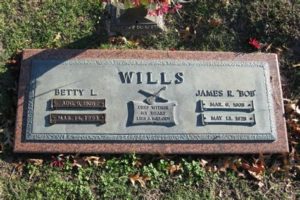
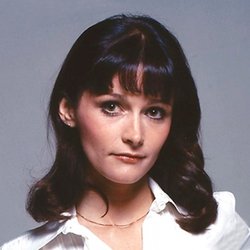 On this day in 2018, actress and activist Margot Kidder died at her home in Livingston, Montana from suicide by alcohol and drug overdose, at the age of 69. Born Margaret Ruth Kidder on October 17, 1948 in Yellowknife, Northwest Territories, Canada. Her accolades include three Canadian Screen Awards and one Daytime Emmy Award. Though she appeared in an array of films and television, Kidder is perhaps best known for her performance as Lois Lane in the Superman film series, appearing in the first four films.
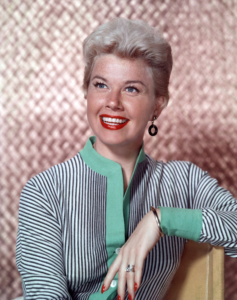 On this day in 2019,
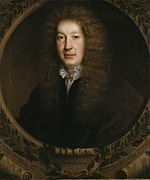

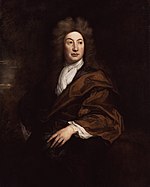
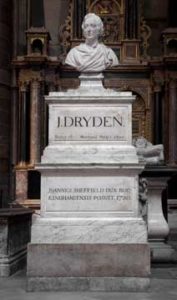 The Final Footprint
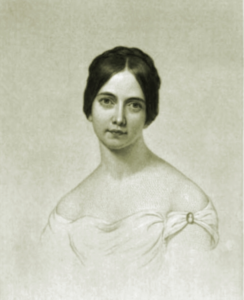 On this day in 1850, poet Frances Sargent Osgood died
 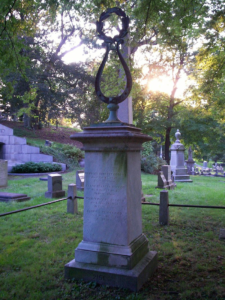 The Final Footprint
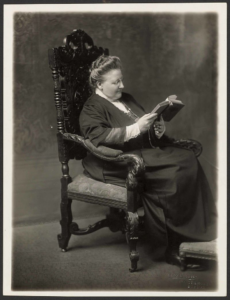 On this day in 1925, poet Amy Lowell died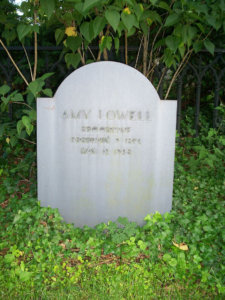
 On this day in 2000, professional racing driver, great-grandson of Lee Petty, grandson of Richard Petty, son of Kyle Petty, Adam Petty died when his Busch series car crashed during a practice run at New Hampshire Motor Speedway in Loudon, New Hampshire, at the age of 19. Born Adam Kyler Petty on 10 July 1980 and raised in High Point, North Carolina.


 The Final Footprint
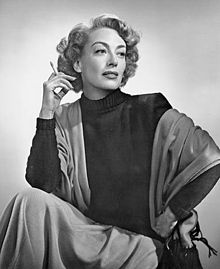 On this day in 1977, Academy Award winning actress, Joan Crawford died at her New York apartment from a heart attack at the age of 72. Born Lucille Fay LeSueur on 23 March 1905 in San Antonio, Texas. Crawford became one of Hollywood’s most prominent movie stars and one of the highest paid women in the United States. In 1931, she starred opposite Clark Gable in Possessed. They began an affair during the production, that lasted for many years. Crawford won her Oscar for the title role in Mildred Pierce (1945). She was married four times; Douglas Fairbanks, Jr. (1929-1933 divorce), Franchot Tone (1935-1939 divorce), Phillip Terry (1942-1946 divorce) and Alfred Steele (1955-1959 his death).
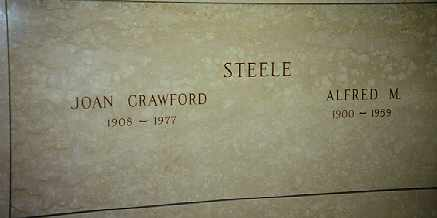 The Final Footprint – Crawford was cremated. Her cremains were entombed in a crypt next to her husband, Alfred Steele, in the Ferncliff Mausoleum, Ferncliff Cemetery in Hartsdale, New York. A funeral service was held at Frank E. Campbell Funeral Chapel (a
  On this day in 1999,