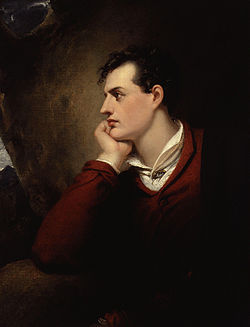
Portrait by Richard Westall
On this day in 1824, poet and eading figure in the Romantic movement, Lord Byron died at the age of 36 in Missolonghi, Aetolia-Acarnania,Ottoman Empire (Greece). Born George Gordon Byron on 22 January 1788 in a house on 24 Holles Street in London. In my opinion, Byron is one of the greatest British poets, and remains widely read and influential. He travelled widely across Europe, especially in Italy where he lived for seven years. Later in life, Byron joined the Greek War of Independence fighting the Ottoman Empire, for which many Greeks revere him as a national hero. Often described as the most flamboyant and notorious of the major Romantics, Byron was both celebrated and castigated in life for his aristocratic excesses, including huge debts, numerous love affairs, rumours of a scandalous liaison with his half-sister, and self-imposed exile. He also fathered the Countess Ada Lovelace, whose work on Charles Babbage’s Analytical Engine is considered a founding document in the field of computer science. Perhaps his best known works are the lengthy narrative poems Don Juan and Childe Harold’s Pilgrimage and the short lyric She Walks in Beauty.
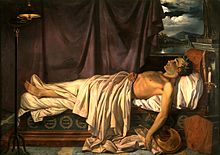
Lord Byron On His Deathbed by Joseph Denis Odevaere
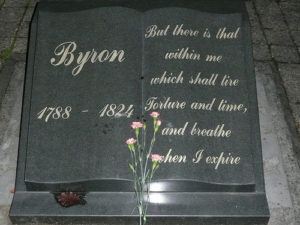 The Final Footprint – Alfred, Lord Tennyson would later recall the shocked reaction in Britain when word was received of Byron’s death. The Greeks mourned Lord Byron deeply. The national poet of Greece, Dionysios Solomos, wrote a poem about the unexpected loss, named To the Death of Lord Byron. Βύρων (“Vyron”), the Greek form of “Byron”, continues in popularity as a masculine name in Greece, and a town near Athens is called Vyronas in his honour. Byron’s body was embalmed, but the Greeks wanted some part of their hero to stay with them. According to some sources, his heart remained at Missolonghi. His other remains were sent to England (accompanied by his faithful manservant, “Tita”) for burial in Westminster Abbey, but the Abbey refused for reason of “questionable morality”. Huge crowds viewed his body as he lay in state for two days in London. He is buried at the Church of St. Mary Magdalene in Hucknall, Nottinghamshire. A marble slab given by the King of Greece is laid directly above Byron’s grave. A duplicate of the slab was later placed in Westminster Abbey. His daughter, Ada Lovelace, was later buried beside him. Byron’s friends raised the sum of 1,000 pounds to commission a statue of the writer; Thorvaldsen offered to sculpt it for that amount. However, for ten years after the statue was completed in 1834, most British institutions turned it down, and it remained in storage. The statue was refused by the British Museum, St. Paul’s Cathedral, Westminster Abbey and the National Gallery before Trinity College, Cambridge, finally placed the statue of Byron in its library. In 1969, 145 years after Byron’s death, a memorial to him was finally placed in Westminster Abbey. The memorial had been lobbied for since 1907: The New York Times wrote, “People are beginning to ask whether this ignoring of Byron is not a thing of which England should be ashamed … a bust or a tablet might be put in the Poets’ Corner and England be relieved of ingratitude toward one of her really great sons.”. Robert Ripley had drawn a picture of Boatswain’s grave with the caption “Lord Byron’s dog has a magnificent tomb while Lord Byron himself has none”. This came as a shock to the English, particularly schoolchildren, who, Ripley said, raised funds of their own accord to provide the poet with a suitable memorial. Close to the centre of Athens, Greece, outside the National Garden, is a statue depicting Greece in the form of a woman crowning Byron. The statue is by the French sculptors Henri-Michel Chapu and Alexandre Falguière.
| Dame Daphne du Maurier DBE | |
|---|---|
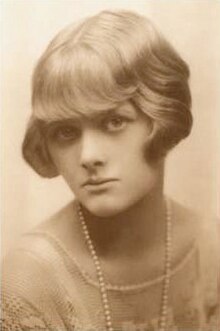 (about 1930) |
|
On this day in 1989 author and playwright Daphne du Maurier died, aged 81, at her home in Cornwall. Born on May 1907 in London.
Although she is classed as a romantic novelist, her stories seldom feature a conventional happy ending and have been described as “moody and resonant” with overtones of the paranormal. These bestselling works were not at first taken seriously by critics, but have since earned an enduring reputation for storytelling craft. Many have been successfully adapted into films, including the novels Rebecca, My Cousin Rachel, and Jamaica Inn, and the short stories “The Birds” and “Don’t Look Now/Not After Midnight”.
Du Maurier spent much of her life in Cornwall, where most of her works are set. As her fame increased, she became more reclusive.
Du Maurier married Major (later Lieutenant-General) Frederick “Boy” Browning in 1932. Biographers have noted that du Maurier’s marriage was at times somewhat chilly and that she could be aloof and distant to her children, especially the girls, when immersed in her writing. Her husband died in 1965 and soon after Daphne moved to Kilmarth, near Par, Cornwall, which became the setting for The House on the Strand.
After her death in 1989, references were made to her reputed bisexuality; an alleged affair with Gertrude Lawrence, as well as her attraction to Ellen Doubleday, the wife of her U.S. publisher Nelson Doubleday, were cited. The Daphne du Maurier Companion, edited by Helen Taylor, includes Taylor’s claims that du Maurier confessed to her in 1965 that she had had an incestuous relationship with her father and that he had been a violent alcoholic.
In correspondence that her family released to biographer Margaret Forster, du Maurier explained to a trusted few people her own unique slant on her sexuality: her personality comprised two distinct people – the loving wife and mother (the side she showed to the world); and the lover (a decidedly male energy) hidden from virtually everyone and the power behind her artistic creativity. According to Forster’s biography, du Maurier believed the male energy propelled her writing. Forster wrote that du Maurier’s denial of her bisexuality unveiled a “homophobic” fear of her true nature.
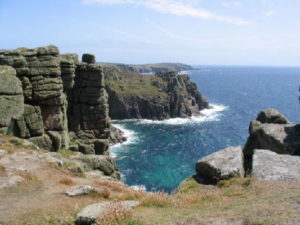
The Final Footprint
Her body was cremated and her ashes scattered off the cliffs at Fowey, Kilmarth, Cornwall.
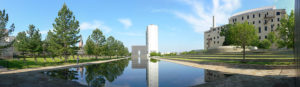 On this day in 1995, Timothy McVeigh parked a rental truck filled with explosives in front of the Alfred P. Murrah Federal Building in Oklahoma City. The resulting explosion killed 168 people and destroyed the entire north face of the building. The Oklahoma City National Memorial is a memorial that honors the victims, survivors, rescuers, and all who were changed by the Oklahoma City bombing. The memorial is located in downtown Oklahoma City on the former site of the Alfred P. Murrah Federal Building.
The Final Footprint – The 3.3 acre memorial can be visited 24 hours a day, 365 days a year and includes;
- The Gates of Time: Monumental twin bronze gates frame the moment of destruction – 9:02 – and mark the formal entrances to the Outdoor Memorial. 9:01, found on the eastern gate, represents the last moments of peace, while its opposite on the western gate, 9:03, represents the first moments of recovery. Both time stamps are inscribed on the interior of the monument, facing each other and the Reflecting Pool. The outside of each gate bears this inscription: We come here to remember Those who were killed, those who survived and those changed forever. May all who leave here know the impact of violence. May this memorial offer comfort, strength, peace, hope and serenity.
- Reflecting Pool: A thin layer of water flows over polished black granite to form the pool.
 Field of Empty Chairs: 168 empty chairs hand-crafted from glass, bronze, and stone represent those who lost their lives, with a name etched in the glass base of each. The chairs represent the empty chairs at the dinner tables of the victims’ families. Three unborn children died along with their mothers, and they are listed on their mothers’ chairs beneath their mothers’ names.
- Survivors’ Wall: The only remaining original portions of the Murrah Building are the southeast corner, known as the Survivors’ Wall, and a portion of the south wall. The Survivors’ Wall includes several panels of granite salvaged from the Murrah Building itself, inscribed with the names of more than 600 survivors from the building and the surrounding area, many of whom were injured in the blast.
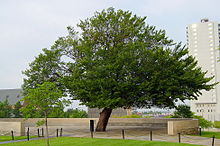 The Survivor Tree: An American elm on the north side of the Memorial, this was the only shade tree in the parking lot across the street from the Murrah Building. The force of the blast ripped most of the branches from the Survivor Tree. Glass and debris were embedded in its trunk and fire from the cars parked beneath it blackened what was left. Most thought the tree could not survive. Almost a year after the bombing, family members, survivors and rescue workers gathered for a memorial ceremony by the tree noticed it was beginning to bloom again. The inscription around the inside of the deck wall around the Survivor Tree reads: The spirit of this city and this nation will not be defeated; our deeply rooted faith sustains us. Hundreds of seeds from the Survivor Tree are planted annually and the resulting saplings are distributed each year on the anniversary of the bombing. Thousands of Survivor Trees are growing in public and private places all over the United States.
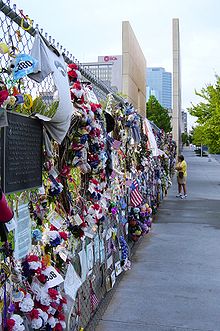 The Memorial Fence: A 10-foot-tall chain link fence was installed around the area that is now the Reflecting Pool and the Field of Empty Chairs to protect the site from damage and visitors from injury. The Fence stood for more than four years, becoming notable as the place where visitors left tributes. Visitors may still leave small items along and in the Fence; the mementos are periodically collected, cataloged, and stored.
- Rescuers’ Orchard: A grove of Oklahoma redbuds (Oklahoma’s state tree), Amur Maple, Chinese Pistache, and Bosque Elm trees are planted on the lawn around the Survivor Tree.
- Children’s Area: More than 5,000 hand-painted tiles, from all over the United States and Canada, were made by children and sent to Oklahoma City after the bombing in 1995. Most are stored in the Memorial’s Archives, and a sampling of tiles is on the wall in the Children’s Area. Chalkboards provide a place where children can draw and share their feelings. The Children’s Area is north of the 9:03 gate, on the west side of the Museum.
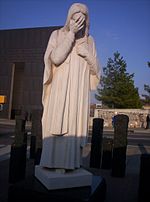 And Jesus Wept: On a corner adjacent to the memorial is a sculpture of Jesus weeping, erected by St. Joseph’s Catholic Church. St. Joseph’s, one of the first brick-and-mortar churches built in the city, was almost destroyed by the blast. Not officially part of the memorial, the statue is regularly visited.
- Journal Record Building: North of the memorial is the Journal Record Building, which formerly housed the offices of the The Journal Record. It now houses the Oklahoma City National Memorial Museum, which features numerous exhibits and artifacts related to the Oklahoma City bombing. Staff of the National Memorial Institute for the Prevention of Terrorism, a non-partisan think tank created shortly after the bombing by family members and survivors, also work here to spread knowledge of terrorism and its prevention.
- Alfred P. Murrah Federal Building Plaza: Located just south of the Field of Empty Chairs, above the underground parking garage, is the raised Alfred P. Murrah Federal Building Plaza. An original part of the federal building, the plaza had a garden and seating areas, as well as a playground for the daycare center. Visitors to the Memorial can walk across the plaza, where the original flagpole is used for the American flag.
#RIP #OTD in 1998 poet (Piedra de Sol, essay El laberinto de la soledad), diplomat Octavio Paz died of cancer in Mexico City, aged 84. Antiguo Colegio de San Ildefonso, Centro, Cuauhtémoc Borough, Distrito Federal, Mexico.
| Levon Helm | |
|---|---|
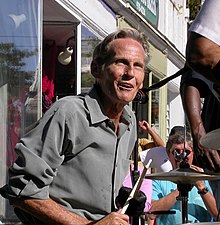 performing in 2004 on the Village Green in Woodstock, New York |
|
On this day in 2012, musician, drummer, actor Levon Helm died from throat cancer at Memorial Sloan-Kettering Cancer Center in New York City at the age of 71. Born Mark Lavon Helm on May 26, 1940 in Elaine, Arkansas. Perhaps best known as the drummer and one of the vocalists for The Band. Helm was known for his soulful, country-accented voice, multi-instrumental ability, and creative drumming style, highlighted on many of the Band’s recordings, such as “The Weight”, “Up on Cripple Creek”, and “The Night They Drove Old Dixie Down”.
Helm also had a successful career as a film actor, appearing as Loretta Lynn’s father in Coal Miner’s Daughter, as Chuck Yeager’s friend and colleague Captain Jack Ridley in The Right Stuff, and as a Tennessee firearms expert in Shooter.
In 1998, Helm was diagnosed with throat cancer, which caused him to lose his singing voice. After treatment, his cancer eventually went into remission, and he gradually regained the use of his voice. His 2007 comeback album Dirt Farmer earned the Grammy Award for Best Traditional Folk Album in February 2008. In 2010, Electric Dirt, his 2009 follow-up to Dirt Farmer, won the first Grammy Award for Best Americana Album, a category inaugurated in 2010. In 2011, his live album Ramble at the Ryman won the Grammy in the same category. On April 17, 2012, his wife and daughter announced on Helm’s website that he was “in the final stages of his battle with cancer” and thanked fans while requesting prayers. Two days later, Helm died from throat cancer at Memorial Sloan-Kettering Cancer Center in New York City at the age of 72.
Helm met singer-songwriter Libby Titus in April 1969, while the Band was recording its second album.
Helm met his future wife, Sandra Dodd, in 1975 in California, while he was still involved with Titus. Helm and Dodd were married on September 7, 1981.

The Final Footprint
On April 17, 2012, Helm’s wife Sandy and daughter Amy revealed that he had end-stage throat cancer. They posted the following message on Helm’s website:
- “Dear Friends,
- Levon is in the final stages of his battle with cancer. Please send your prayers and love to him as he makes his way through this part of his journey.
- Thank you fans and music lovers who have made his life so filled with joy and celebration… he has loved nothing more than to play, to fill the room up with music, lay down the back beat, and make the people dance! He did it every time he took the stage…
- We appreciate all the love and support and concern.
- From his daughter Amy, and wife Sandy”
Fans were invited to a public wake at Helm’s Barn studio complex on April 26. Approximately 2,000 fans came to pay their respects to the rock icon. The following day, after a private funeral service and a procession through the streets of Woodstock, Helm was interred in the Woodstock Cemetery, within sight of the grave of his longtime bandmate and friend Rick Danko.
On the day of Helm’s death, April 19, 2012, Tom Petty & the Heartbreakers, in a concert at the First Bank Center in Broomfield, Colorado, paid tribute to Levon by performing their song “The Best of Everything” and dedicating it to him.
At a concert on May 2, 2012, at the Prudential Center in Newark, NJ, Bruce Springsteen and the E Street Band performed “The Weight” as a tribute to Helm. Springsteen called Helm “one of the greatest, greatest voices in country, rockabilly and rock ‘n’ roll … staggering … while playing the drums. Both his voice and his drumming were so incredibly personal. He had a feel on the drums that comes out of certain place in the past and you can’t replicate it.”
On June 2, 2012, at Mountain Jam, Gov’t Mule, along with the Levon Helm Band (with Lukas Nelson coming on stage for the closing song) played a tribute set, including “The Night They Drove Old Dixie Down,” “Up on Cripple Creek,””It Makes No Difference,” and closing with “The Weight.”
A tribute concert called Love for Levon took place at the Izod Center in East Rutherford, New Jersey, on October 3, 2012. The concert featured many special guests who had collaborated with and were inspired by Helm and the Band, including Roger Waters, Garth Hudson, Joe Walsh, Gregg Allman, Bruce Hornsby, Jorma Kaukonen, John Mayer, Mavis Staples, My Morning Jacket, Marc Cohn, John Hiatt, Allen Toussaint, Jakob Dylan, Mike Gordon and others. Proceeds from the concert were to “help support the lasting legacy of Levon Helm by helping his estate keep ownership of his home, barn and studio, and to continue the Midnight Ramble Sessions.”
At the 2013 Grammy Awards, the Zac Brown Band, Mumford & Sons, Elton John, Mavis Staples, T-Bone Burnett and Alabama Shakes singer Brittany Howard performed “The Weight” as a tribute to Levon and other recently deceased musicians. They also dedicated the song to the victims of the Sandy Hook Elementary School shooting. In May 2013, the New York State Legislature approved a resolution to name State Route 375—the road which connects State Route 28 with the town of Woodstock—”Levon Helm Memorial Boulevard”. Governor Andrew Cuomo signed the bill on June 20, 2013. In July 2017, U.S. 49 from Marvell, Arkansas to Helena-West Helena was named The Levon Helm Memorial Highway by Act 810 of the Arkansas State Legislature. The Levon Helm Legacy Project is raising money to commission a bronze bust of Helm and to restore his boyhood home. The house, originally located in Turkey Scratch, Arkansas, was moved in 2015 to Marvell, where Helm attended school.
#RIP #OTD in 2021 composer, lyricist (Meat Loaf’s Bat Out of Hell album, “Total Eclipse of the Heart”, “It’s All Coming Back to Me Now”), record producer Jim Steinman died from kidney failure at a hospital in Danbury, Connecticut, aged 73. Cremated
Have you planned yours yet?
Follow us on twitter @RIPTFF
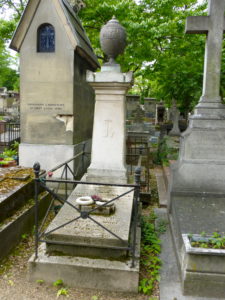 The Final Footprint







 On this day in 1936 violinist and composer Ottorino Respighi died of endocarditis at the age of 56. Born in an apartment inside Palazzo Fantuzzi on Via Guido Reni in Bologna, Italy, into a musical family 0n 9 July 1879. Perhaps best known for his three orchestral tone poems Fountains of Rome (1916), Pines of Rome (1924), and Roman Festivals (1928). His musicological interest in 16th-, 17th- and 18th-century music led him to compose pieces based on the music of these periods. He also wrote several operas, the most famous being La fiamma.
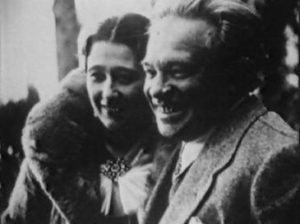 In 1919, he married the composer and singer Elsa Olivieri-Sangiacomo who, at fourteen years his junior, had been his composition pupil. In 1921, the couple relocated to a flat in Rome.

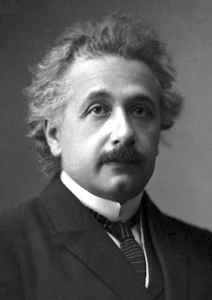 On this day in 1955, theoretical physicist, the father of modern physics, Albert Einstein died in Princeton Hospital in Princeton, New Jersey at the age of 76. Born on 14 March 1879 in Ulm, in the Kingdom of Württemberg in the German Empire. Einstein discovered the theory of general relativity, effecting a revolution in physics. He received the 1921 Nobel Prize in Physics “for his services to theoretical physics, and especially for his discovery of the law of the photoelectric effect”. Einstein was visiting the United States when Hitler came to power in 1933. He did not go back to Germany, becoming a U. S. citizen in 1940. In the summer of 1939, Einstein wrote a letter, with Leo Szilard, to President Franklin D. Roosevelt, alerting him of the possibility that Nazi Germany might be developing an atomic bomb. The letter recommended that the U.S. government should become directly involved with uranium research and chain reaction research. Einstein and Szilard, along with other refugees such as Edward Teller and Eugene Wigner, “regarded it as their responsibility to alert Americans to the possibility that German scientists might win the race to build an atomic bomb, and to warn that Hitler would be more than willing to resort to such a weapon.” Einstein married twice; Mileva Marić (1903-1919 divorce) and Elsa Löwenthal (1919-1936 her death). On his religious belief, Einstein said; “I believe in Spinoza’s God who reveals himself in the orderly harmony of what exists, not in a God who concerns himself with fates and actions of human beings.” The day before he died, Einstein experienced internal bleeding caused by the rupture of an abdominal aortic aneurysm. He refused surgery, saying: “I want to go when I want. It is tasteless to prolong life artificially. I have done my share, it is time to go. I will do it elegantly.” I have always thought physics was fascinating and had I been born a little smarter, actually a lot smarter, perhpaps I would have been a physicist. It is the study of the final frontier, or the next frontier.
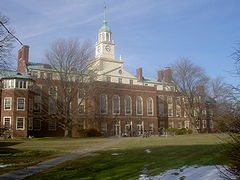 The Final Footprint – Einstein was cremated and his cremains were possibly scattered around the grounds of The Institute for Advanced Study in Princeton. Einstein has been the subject of, or inspiration for, many novels, films, plays, and works of music.

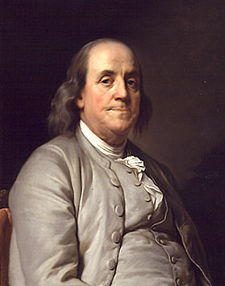 On this day in 1790, one of the Founding Fathers of the United States of America, “The First American”, Benjamin Franklin died in Philadelphia at the age of 84. Born on 17 January 1706 in Boston, Massachusetts Bay. A noted polymath, Franklin was a leading author and printer, political theorist, politician, postmaster, scientist, inventor, satirist, civic activist, statesman, and diplomat. Known for his discoveries and theories regarding’s electricity and his inventions; the lightning rod, bifocals, the Franklin stove, a carriage odometer, and the glass ‘armonica’. He formed both the first public lending library in America and the first fire department in Pennsylvania. In 1733, Franklin began to publish the famous Poor Richard’s Almanack. Adages from this almanac, such as “A penny saved is twopence dear” and “Fish and visitors stink in three days” remain common quotations still today. Franklin sought to cultivate his character by a plan of thirteen virtues, which he developed at age 20 (in 1726) and continued to practice in some form for the rest of his life. His autobiography lists his thirteen virtues as:
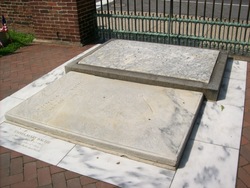 The Final Footprint – Franklin is interred in Christ Church Burial Ground in Philadelphia with his wife Deborah. He wrote a possible epitaph for himself when he was 22; “The Body of B. Franklin Printer; Like the Cover of an old Book, Its Contents torn out, And stript of its Lettering and Gilding, Lies here, Food for Worms. But the Work shall not be wholly lost: For it will, as he believ’d, appear once more, In a new & more perfect Edition, Corrected and Amended By the Author.” Franklin’s actual grave, however, as he specified in his final will, simply reads “Benjamin and Deborah Franklin.” Franklin’s likeness and name are ubiquitous, as are cultural references to him, even more than two centuries after his death. He has been honoured on coinage and money, and many towns, counties, educational institutions, people, and companies are named after him.


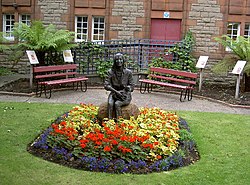
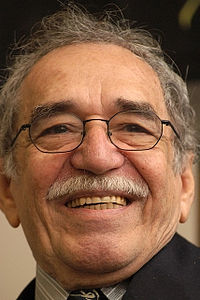 On day in 2014, novelist, short-story writer, screenwriter and journalist, Gabo, Gabriel García Marquez died of pneumonia at the age of 87 in Mexico City. Born Gabriel José de la Concordia García Marquez on 6 March 1927 in Aracataca, Colombia. In my opinion, one of the most significant authors of the 20th century. He was awarded the 1972 Neustadt International Prize for Literature and the 1982 Nobel Prize in Literature. He pursued a self-directed education that resulted in his leaving law school for a career in journalism. In 1958, he married Mercedes Barcha. García Márquez started as a journalist, and wrote many acclaimed non-fiction works and short stories, but is perhaps best known for his novels, such as One Hundred Years of Solitude (1967), The Autumn of the Patriarch (1975) and Love in the Time of Cholera (1985). His works have achieved significant critical acclaim and widespread commercial success, most notably for popularizing a literary style labeled as magic realism, which uses magical elements and events in otherwise ordinary and realistic situations. Some of his works are set in a fictional village called Macondo (the town mainly inspired by his birthplace Aracataca), and most of them explore the theme of solitude.
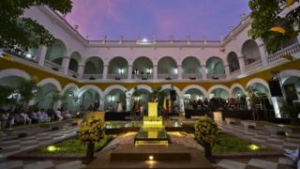 The Final Footprint – On his death in April 2014, Juan Manuel Santos, the President of Colombia, described him as “the greatest Colombian who ever lived”. Garcia Marquez was cremated at a private family ceremony in Mexico City. On 22 April, the presidents of Colombia and Mexico attended a formal ceremony in Mexico City, where Garcia Marquez had lived for more than three decades. A funeral cortege took the urn containing his ashes from his house to the Palacio de Bellas Artes, where the memorial ceremony was held. Earlier, residents in his home town of Aracataca in Colombia’s Caribbean region held a symbolic funeral. In May of 2016 his cremated remains were relocated to La Merced monastery in Cartagena.
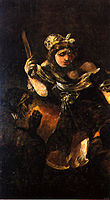
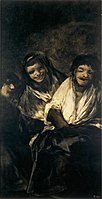
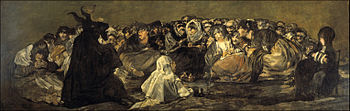
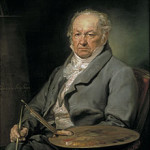 On this day in 1828, romantic painter and printmaker, the last of the Old Masters and the first of the moderns, Francisco Goya died of a stroke at the age of 82 in Bordeaux, France. Born Francisco José de Goya y Lucientes in Fuendetodos, Aragón, Spain, on 30 March 1746. Throughout the Peninsular War, Goya was court painter to the Spanish Crown, remaining in Madrid, where he painted the portrait of Joseph Bonaparte, pretender to the Spanish throne, and documented the war in the masterpiece of studied ambiguity known as the Desastres de la Guerra. Through his works he was both a commentator on and chronicler of his era. The subversive imaginative element in his art, as well as his bold handling of paint, provided a model for the work of artists of later generations. In February 1819, Goya bought a house, called Quinta del Sordo (“Deaf Man’s House”), and painted many unusual paintings on canvas and on the walls, including references to witchcraft and war. One of these is the famous work Saturno devorando a su hijo (Saturn Devouring His Son known informally in some circles as Devoration or Saturn Eats His Child) (see below), which displays a Greco-Roman mythological scene of the god Saturn consuming a child, possibly a reference to Spain’s ongoing civil conflicts. The series has been described as essential to our understanding of the human condition in modern times, just as Michelangelo’s Sistine ceiling is essential to understanding the tenor of the 16th century. At the age of 75, alone and in mental and physical despair, he completed the work as one of his 14, or possibly 15, Black Paintings, all of which were executed in oil directly onto the plaster walls of his house. Goya did not intend for the paintings to be exhibited and did not write of them. It was not until around 1874, 46 years after his death, that they were taken down and transferred to a canvas support. Many of the works apparently were significantly altered during the restoration, and what remain are has been described as crude facsimiles of what Goya painted. The effects of time on the murals, coupled with the inevitable damage caused by the delicate operation of mounting the crumbling plaster on canvas, meant that most of the murals suffered extensive damage and loss of paint. Today they are on permanent display at the Museo del Prado, Madrid.
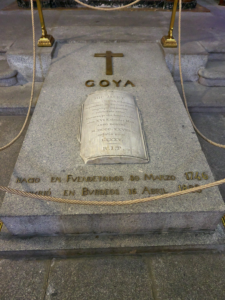 The Final Footprint – Goya was initially interred in Bordeaux. In 1919 his remains were transferred to the Real Ermita de San Antonio de la Florida in Madrid. However, the skull was missing, a detail the Spanish consul immediately communicated to his superiors in Madrid, who wired back, “Send Goya, with or without head.” The chapel ceiling and dome frescoes were painted by Goya. In the Oliver Stone film, Wall Street: Money Never Sleeps, Goya’s Saturno devorando a su hijo hangs in the office of Bretton James (Josh Brolin). James states that this is the 15th Black Painting and that the other 14 are in the Museo del Prado. Actually, it appears there may be a 15th Black Painting; Heads in a Landscape (Cabezas en un paisaje) (see below). It may have became separated from the other paintings in the collection and is now in the collection of poet, publisher and art dealer Stanley Moss in New York.





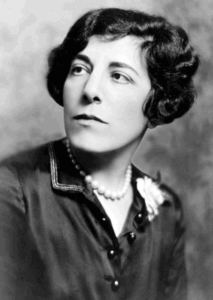 On this day in 1968, Pulitzer Prize-winning novelist, short story writer and playwright, Edna Ferber died from stomach cancer in New York City at the age of 82. Born on 15 August 1885 in Kalamazoo, Michigan. She was awarded the Pulitzer for her book So Big (1924). Her novel Show Boat (1926) was made into a Broadway play with music by Jerome Kern and Oscar Hammerstein II. The book was also made into three films. The 1951 version starred Kathryn Grayson, Ava Gardner, and Howard Keel. And of course, she wrote the novel, Giant (1952), the epic story of the Benedict family and their Reata Ranch in Texas. The book was made into a Hollywood classic in 1956 starring; Elizabeth Taylor (Leslie Lynnton Benedict), Rock Hudson (Jordan “Bick” Benedict, Jr.) and James Dean (Jett Rink) and featuring Carroll Baker (Luz Benedict, Leslie and Bick’s daughter), Jane Withers, Chill Wills, Mercedes McCambridge (Luz Benedict, Bick’s sister), Dennis Hopper (Jordan “Jordy” Benedict III), Sal Mineo, Rod Taylor and Earl Holliman. Giant was the last of Dean’s three films as a leading actor, and earned him his second and last Academy Award nomination; he was killed in a car accident before the film was released. The book and the movie are perhaps my very favorites. Feber never married. In her early novel Dawn O’Hara (1911), the title character’s aunt is said to have remarked, “Being an old maid was a great deal like death by drowning — a really delightful sensation when you ceased struggling.”
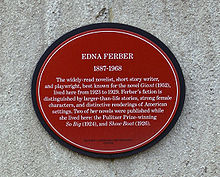 The Final Footprint – Feber was cremated. A plaque was placed in her honour in Manhattan on the building at 65th Street and Central Park West where she lived for six years. The plaque reads; “The widely-read novelist, short story writer, and playwright, best known for the novel Giant (1952), lived here from 1923 to 1929. Ferber’s fiction is distinquished by larger-than-life stories, strong female characters, and distinctive renderings of Amercian settings. Two of her novels were published while she lived here: the Pulitzer Prize-winning So Big (1924), and Show Boat (1926).”
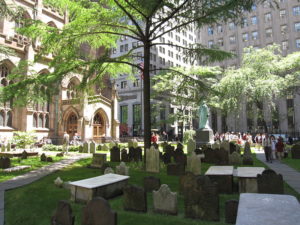 The Final Footprint
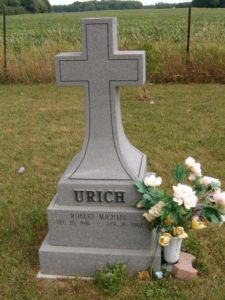 The Final Footprint
 On this day in 1865, 16th President of the United States, Abraham Lincoln, died from a gunshot wound to the head, in the Petersen House which was across the street from Ford’s Theater where he had been shot by John Wilkes Booth. Lincoln died six days after General Robert E. Lee‘s surrender at Appomatox Courthouse. Born on 12 February 1809 in a one-room log cabin on the Sinking Spring Farm in southeast Hardin County, Kentucky (now LaRue County). He successfully led the country through its greatest constitutional, military and moral crisis, the American Civil War, by preserving the Union with force while ending slavery. Lincoln was the first Republican president, winning the 6 November 1860 election over Democrat Stephen Douglas and two other candidates. He won reelection in 1864 in the Union states in a landslide. Lincoln married Mary Todd (1842-1865 his death). One of the great orators in American history, his Gettysburg Address is oft quoted. Lincoln delivered the speech at the dedication of the Soldiers’ National Cemetery in Gettysburg, Pennsylvania, on the afternoon of Thursday 19 November 1863. In 272 words, and three minutes Lincoln summarized and defined the war:
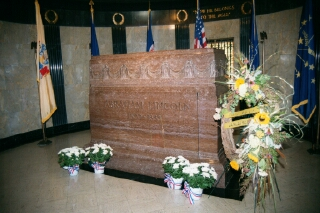 The Final Footprint – Lincoln is entombed in Lincoln’s Tomb in Oak Ridge Cemetery in Springfield, Illinois. His wife Mary and three of their four sons are entombed in the walls opposite his tomb. Lincoln’s name and image appear in numerous places, including the Lincoln Memorial in Washington, D.C., the U.S. Lincoln $5 bill and the Lincoln cent, and Lincoln’s sculpture on Mount Rushmore. Secretary of War Edwin M. Stanton, who was present when Lincoln died said, “Now he belongs to the ages.” Indeed he does.
 On this day in 1912, RMS Titanic sank in the north Atlantic Ocean, four days into her maiden voyage from Southampton to New York City. The largest passenger liner in service at the time, Titanic had an estimated 2,224 people on board when she struck an iceberg at 23:40 (ship’s time) on Sunday, 14 April 1912. Her sinking two hours and forty minutes later at 02:20 (05:18 GMT) on Monday, 15 April resulted in the deaths of more than 1,500 people, which made it one of the deadliest peacetime maritime disasters in history. Titanic received six warnings of sea ice on 14 April but was travelling near her maximum speed when her crew sighted the iceberg. Unable to turn quickly enough, the ship suffered a glancing blow that buckled her starboard (right) side and opened five of her sixteen compartments to the sea. Titanic had been designed to stay afloat with four of her forward compartments flooded but not more, and the crew soon realised that the ship would sink. They used rocket flares and radio (wireless) messages to attract help as the passengers were put into lifeboats. However, in accordance with existing maritime practice, the ship was carrying far too few lifeboats for everyone (though slightly more than the law required), and many boats were not filled to their capacity due to a poorly managed evacuation. The ship sank with over a thousand passengers and crew members still on board. Almost all those who jumped or fell into the water died from hypothermia within minutes. RMS Carpathia arrived on the scene about an hour and a half after the sinking and had rescued the last of the survivors in the lifeboats by 09:15 on 15 April, little more than 24 hours after Titanic‘s crew had received their first warnings of drifting ice.


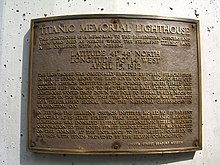
 The Titanic Engineers’ Memorial is a memorial in East (Andrews) Park, Southampton, United Kingdom, to the engineers who died in the RMS Titanic disaster on 15 April 1912. The bronze and granite memorial was originally unveiled by Sir Archibald Denny, president of the Institute of Marine Engineers on 22 April 1914. The event was attended by an estimated 100,000 Southampton residents.
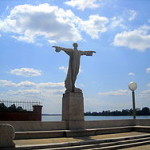 The Titanic Memorial is a granite statue in southwest Washington, D.C., that honors the men who gave their lives so that women and children might be saved during the RMS Titanic disaster. The thirteen-foot-tall figure is of a partly clad male figure with arms outstretched. The statue was erected by the Women’s Titanic Memorial Association. The memorial is located on P Street SW next to the Washington Channel near Fort Lesley J. McNair. It was designed by Gertrude Vanderbilt Whitney, who won the commission in open competition, and sculpted by John Horrigan from a single piece of red granite furnished from Westerly, RI, by the Henry C. Smalley Granite Co. It was unveiled on May 26, 1931, by Helen Herron Taft, the widow of President Taft. Originally located at the foot of New Hampshire Avenue, NW in Rock Creek Park along the Potomac River, the monument was removed in 1966 to accommodate the Kennedy Center. The memorial was re-erected without ceremony in 1968 on the south Washington waterfront outside Fort McNair in Washington Channel Park at Fourth and P Streets, SW. A replica of the head of the memorial, carved in marble and exhibited in Paris in 1921, was purchased by the French Government for the Musée du Luxembourg.
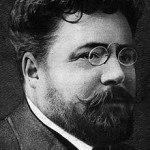 On this day in 1927, journalist and author Gaston Leroux died in Nice, France at the age of 58. In the English-speaking world, he is perhaps best known for writing the novel The Phantom of the Opera (Le Fantôme de l’Opéra, 1911). Born Gaston Louis Alfred Leroux in Paris on 6 May 1868. His novel The Mystery of the Yellow Room is also one of the most famous locked room mysteries ever written.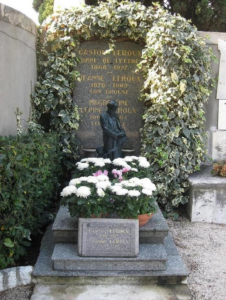
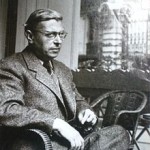 On this day in 1980, philosopher, playwright, novelist, screenwriter, political activist, biographer, and literary critic, Jean-Paul Sartre died from pulmonary edema in Paris at the age of 74. Born Jean-Paul Charles Aymard Sartre on 21 June 1905 in Paris. In my opinion, Sartre was one of the key figures in the philosophy of existentialism and phenomenology, and one of the leading figures in 20th-century French philosophy and Marxism. His work has also influenced sociology, critical theory, post-colonial theory, and literary studies, and continues to influence these disciplines. Sartre has also been noted for his open relationship with the prominent feminist theorist Simone de Beauvoir. He was awarded the 1964 Nobel Prize in Literature but refused it, saying that he always declined official honors and that “a writer should not allow himself to be turned into an institution”. In 1929 at the École Normale, he met de Beauvoir, who studied at the Sorbonne. The two became inseparable and lifelong companions, initiating a romantic relationship, though apparently, they were not monogamous. Together, Sartre and de Beauvoir challenged the cultural and social assumptions and expectations of their upbringings, which they considered bourgeois, in both lifestyle and thought. The conflict between oppressive, spiritually destructive conformity (mauvaise foi, literally, “bad faith”) and an “authentic” way of “being” became the dominant theme of Sartre’s early work, a theme embodied in his principal philosophical work L’Être et le Néant (Being and Nothingness) (1943). Sartre’s introduction to his philosophy is his work Existentialism and Humanism (1946), originally presented as a lecture.
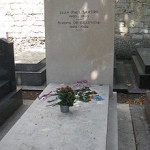 The Final Footprint – Sartre is entombed in Cimetière de Montparnasse in Paris. Evidently, his funeral was well attended, with estimates of the number of mourners along the two hour march ranging from 15,000 to over 50,000.






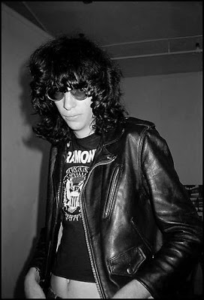 On this day in 2001,
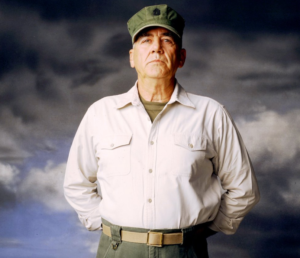 And on this day in 2018,
 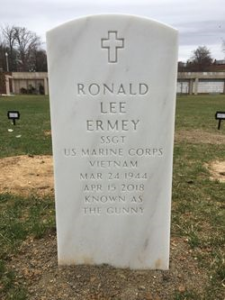 The Final Footprint
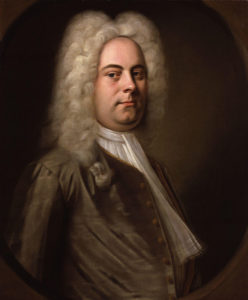 On this day in 1759, Baroque composer George Frideric (or Frederick) Handel died at his home in Brook Street, London, at age 74. Born on 5 March in Halle-upon-Saale, Duchy of Magdeburg (then part of Brandenburg-Prussia). He spent the bulk of his career in London, becoming well-known for his operas, oratorios, anthems, and organ concertos. Handel received important training in Halle-upon-Saale and worked as a composer in Hamburg and Italy before settling in London in 1712. He became a naturalised British subject in 1727. He was strongly influenced both by the great composers of the Italian Baroque and by the middle-German polyphonic choral tradition.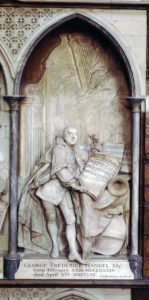
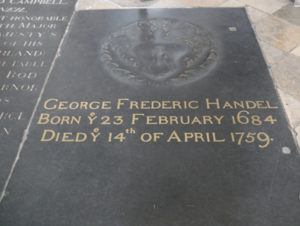 The Final Footprint
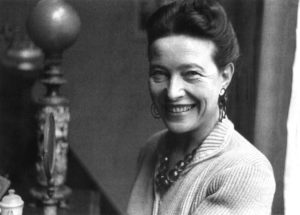 On this day in 1986, existentialist philosopher, public intellectual, social theorist and author, Simone de Beauvoir died of pneumonia in Paris at the age of 78. Born Simone-Ernestine-Lucie-Marie Bertrand de Beauvoir on 9 January 1908 in Paris. Perhaps best known for her metaphysical novels, including She Came to Stay (1943) and The Mandarins (1954), and for her treatise The Second Sex (1949). Also noted for her lifelong polyamorous relationship with Jean-Paul Sartre. Scholarly discussions have analyzed the influences of Beauvoir and Sartre on one another. She is seen as having influenced Sartre’s masterpiece, Being and Nothingness. Yet she wrote much on philosophy that is independent of Sartrean existentialism.
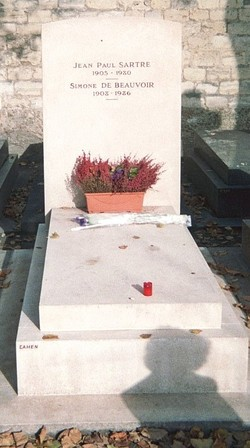 The Final Footprint – Beauvoir is interred with Sartre in the Cimetière du Montparnasse in Paris. In 2006, the city of Paris commissioned architect Dietmar Feichtinger to design a footbridge solely for pedestrians and cyclists across the Seine River. The bridge was named the Passerelle Simone-de-Beauvoir in her honor. It leads to the new Bibliothèque nationale de France. Other notable Final Footprints at Montparnasse include; Charles Baudelaire, Samuel Beckett, Emmanuel Chabrier, Henri Fantin-Latour, César Franck, Guy de Maupassant, Adah Isaac Menken, Man Ray, Camille Saint-Saëns, Jean-Paul Sartre, Jean Seberg, and Susan Sontag.
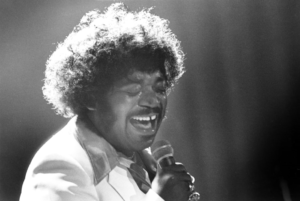 On this day in 2015,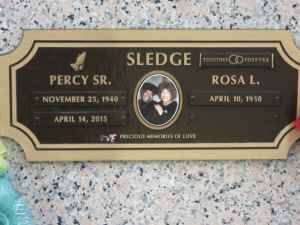
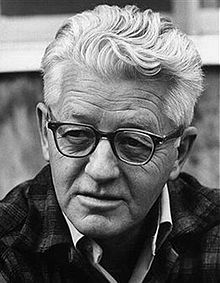 On this day in 1993, novelist, short story writer, environmentalist, and historian, “The Dean of Western Writers”, Wallace Stegner died in Santa Fe, New Mexico as the result of a car accident at the age of 84. Born Wallace Earle Stegner on 18 February 1909 in Lake Mills, Iowa. He and grew up in Great Falls, Montana; Salt Lake City, Utah; and the village of Eastend, Saskatchewan. Stegner won the Pulitzer Prize in 1972 for Angle of Repose, and the U.S. National Book Award in 1977 for The Spectator Bird. He taught at the University of Wisconsin and Harvard University. Eventually he settled at Stanford University, where he founded the creative writing program. His students included Wendell Berry, Sandra Day O’Connor, Thomas McGuane, Ken Kesey, and Larry McMurtry. Stegner married once; Mary Stuart Page (1934 – 1993 his death).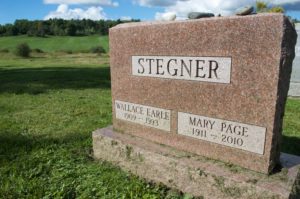
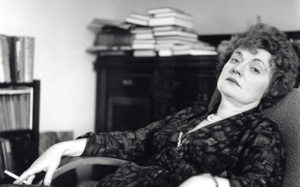 On this day in 2006 novelist, short story writer, poet and essayist Muriel Spark died in Florence, Tuscany, Italy at the age of 88. Born Muriel Sarah Spark on 1 February 1918 in Edinburgh. In 2008, The Times named Spark as No. 8 in its list of “the 50 greatest British writers since 1945”. Perhaps best know for her novel, The Prime of Miss Jean Brodie (1961).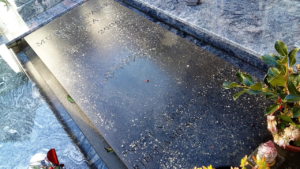
 On this day in 2009, sportscaster, Ford C. Frick Award-winning lead play-by-play announcer for Major League Baseball’s Philadelphia Phillies, Harry Kalas, died from a heart attack in the press box at Nationals Park, several hours before the Washington Nationals’ home opener against the Phillies. Born Harry Norbert Kalas on 26 March 1936 in Naperville, Illinois. He graduated for the University of Iowa and served two years in the U. S. Army. Kalas made his major league debut with the Houston Astros in 1965 and was hired by the Phillies in 1971. He called the first game at The Astrodome, six no-hit games, six National League Championship Series, three World Series (1983, 1993, and 2008), the first game at Veterans Stadium (10 April 1971), the last game at Veterans Stadium (28 September 2003), and the first game at Citizens Bank Park (12 April 2004). Kalas worked in the booth alongside Richie Ashburn for 27 seasons. The two became best friends and beloved figures in Philadelphia. Kalas’ signature home run call was “Swing … and a long drive, this ball is … outta here!” He was known for his love of Frank Sinatra’s version of the song, “High Hopes” (written by Jimmy Van Heusen and Sammy Cahn), a song he sang at numerous events, including the Phillies’ championship celebrations in his later years. On 29 October 2008, Kalas was finally able to call a Phillies’ championship-winning moment in the World Series when Brad Lidge struck out Eric Hinske to win the 104th Fall Classic: “One strike away; nothing-and-two, the count to Hinske. Fans on their feet; rally towels are being waved. Brad Lidge stretches. The 0-2 pitch — swing and a miss, struck him out! The Philadelphia Phillies are 2008 World Champions of baseball! Brad Lidge does it again, and stays perfect for the 2008 season! 48-for-48 in save opportunities, and let the city celebrate! Don’t let the 48-hour wait diminish the euphoria of this moment, and the celebration. And it has been 28 years since the Phillies have enjoyed a World Championship; 25 years in this city that a team that has enjoyed a World Championship, and the fans are ready to celebrate. What a night!”
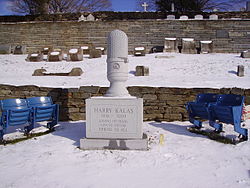 The Final Footprint – Kalas is interred in Laurel Hill Cemetery in Philadelphia. His grave is marked by an individual upright granite marker with a replica of a microphone on top. The terms of endearment; LOVING HUSBAND LOVING FATHER FRIEND TO ALL, are engraved on the monument. On either side of the monument are four seats from Veteran’s Stadium. Kalas became the fourth person to be given the honor of having their body lie in repose inside a major-league baseball stadium, after Babe Ruth, Jack Buck, and Miller Huggins, when his casket was displayed behind home plate and fans were encouraged to pay their respects at Citizens Bank Park. Friends, broadcast partners, and every player on the Phillies team roster, passed by his casket to pay respects before it was placed in a hearse which carried him out of Citizens Bank Park one final time. His grave was resurfaced with sod that originally came from Citizens Bank Park. On 17 April 2009, at the first home game after Kalas’ death, fans sang along with a video of Harry singing “High Hopes” during the seventh-inning stretch, instead of the traditional “Take Me Out to the Ball Game”.
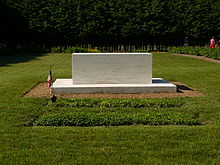 The Final Footprint – Roosevelt is interred in the Rose Garden at his home in Hyde Park which is now a National Historic Site and home to his Presidential Library. Eleanor was interred next to him upon her death in 1962. Their graves are marked by a large white marble monument engraved with their names and birth and death years.
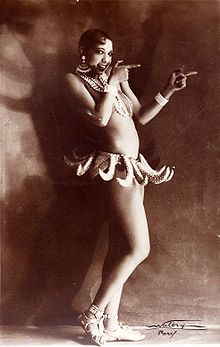 On this day in 1975, dancer, singer, actress, Civil Rights activist, spy, “Black Pearl,” “Bronze Venus”, “The Creole Goddess”, Josephine Baker died from a cerebral hemorrhage at Pitié-Salpêtrière Hospital in Paris at the age of 68. Born Freda Josephine McDonald in St. Louis, Missouri on 3 June 1906. Baker was the first black woman to star in a major motion picture, Zouzou (1934) or to become a world-famous entertainer. Baker, who refused to perform for segregated audiences in America, is also noted for her contributions to the Civil Rights Movement. She was offered unofficial leadership in the movement in the United States by Coretta Scott King in 1968, following Martin Luther King, Jr.’s assassination. Baker, however, turned down the offer. She was also known for assisting the French Resistance during World War II, and received the French military honor, the Croix de guerre and was made a Chevalier of the Légion d’honneur by General Charles de Gaulle. Baker became a citizen of France in 1937. She first traveled to Paris for a new venture, and opened in “La Revue Nègre” on 2 October 1925, at the Théâtre des Champs-Élysées. Baker became an instant success for her erotic dancing and for appearing practically nude on stage. After a successful tour of Europe, she returned to France to star at the Folies Bergère, setting the standard for her future acts. Baker was married four times; Willie Wells, Willie Baker, Jean Lion, and composer Jo Bouillon.
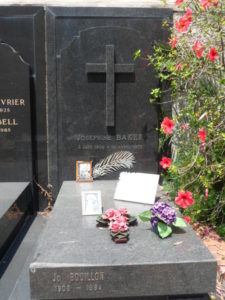 The Final Footprint – Baker received a full Roman Catholic funeral which was held at L’Église de la Madeleine. The only American-born woman to receive full French military honors at her funeral, Baker locked up the streets of Paris one last time. After a family service at Saint-Charles Church in Monte Carlo, she was interred at Monaco’s Cimetière de Monaco. In 1991, The Josephine Baker Story, was broadcast on HBO. Lynn Whitfield portrayed Baker, and won an Emmy Award for Outstanding Lead Actress in a Miniseries or a Special—becoming the first Black actress to win the award in this category.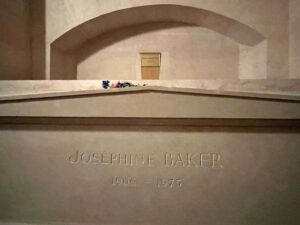
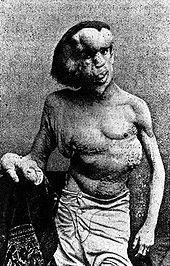 On this day in 1890, the man with severe deformities who was exhibited as a human curiosity and known as The Elephant Man, Joseph Carey Merrick died in The London Hospital (now known as the Royal London Hospital) at the age of 27. The exact cause of Merrick’s deformities is unclear. It is thought that Merrick suffered from either neurofibromatosis type I or Proteus syndrome or perhaps both. He was befriended by Dr. Frederick Treves who tried to diagnose and treat Merrick’s condition and saw to it that Merrick could stay at The London Hospital.
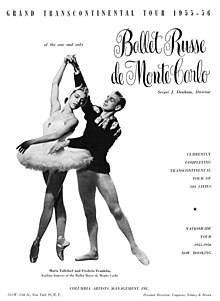
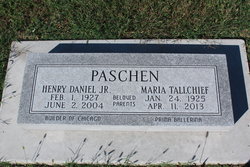
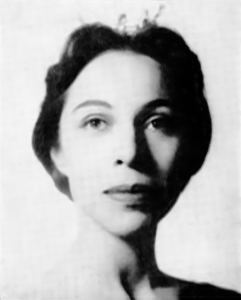 On this day in 2013, Native American and America’s first major prima ballerina Maria Tallchief died in Chicago at the age of 88. Born Elizabeth Marie “Betty” Tall Chief (Osage family name: Ki He Kah Stah Tsa) on January 24, 1925 in Fairfax, Oklahoma.


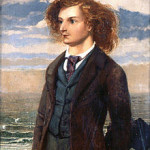 On this day in 1909, English poet, playwright, novelist, and critic Algernon Charles Swinburne died at The Pines, 11 Putney Hill, Putney, London at the age of 72. Born at 7 Chester Street, Grosvenor Place, London, on 5 April 1837. He devised the poetic form called the roundel, a variation of the French Rondeau form. In addition, he wrote several novels, and contributed to the famous Eleventh Edition of the Encyclopædia Britannica. He was nominated for the Nobel Prize in Literature in every year from 1903 to 1907 and again in 1909. Author H. P. Lovecraft considered that Swinburne was “the only real poet in either England or America after the death of Mr. Edgar Allan Poe.”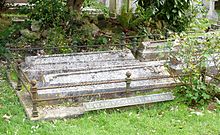
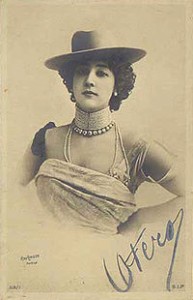 On this day in 1965, dancer, actress and courtesan Carolina “La Belle” Otero died in her apartment at the Hotel Novelty in Nice, France. Born Agustina Otero Iglesias on 4 November 1868 in Valga, Pontevedra, Galicia (Spain). She reportedly married an Italian nobleman, Count Guglielmo 1882, but found a sponsor in 1888 who moved with her to Marseille in order to promote her dancing career in France. She soon left him and created the character of La Belle Otero and became the star of Les Folies Bèrgere productions in Paris. Soon she was one of the most sought after women in Europe, serving as a courtesan to wealthy and powerful men. Apparently her lovers included; Prince Albert I of Monaco, King Edward VII of the United Kingdom, Kings of Serbia, and Kings of Spain as well as Russian Grand Dukes Peter and Nicholas, the Duke of Westminster and writer Gabriele D’Annunzio. Allegedly, duels were fought over her and some of her lovers committed suicide after the affairs ended. It was once said that her extraordinarily dark black eyes were so captivating that they were “of such intensity that it was impossible not to be detained before them.” Otero said, “Women have one mission in life: to be beautiful. When one gets old, one must learn how to break mirrors.”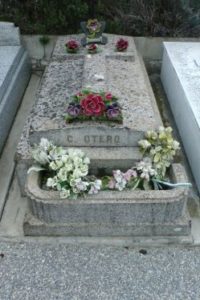
 On this day in 1979, Italian composer, pianist, conductor and academic Nino Rota died from a coronary thrombosis at the age of 67 in Rome. Born Giovanni Rota Rinaldi on 3 December 1911 in Milan, Italy. Perhaps best known for his film scores, notably for the films of Federico Fellini, Luchino Visconti and Franco Zeffirelli. He will forever be remembered for his film scores for the first two films of Francis Ford Coppola‘s Godfather trilogy, receiving the Academy Award for Best Original Score for The Godfather Part II (1974).
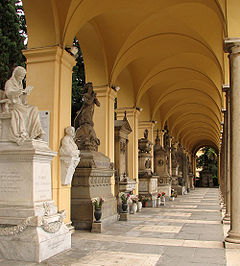 The Final Footprint – Rota shares a simple gravesite with his mother Ernesta, his brother Luigi, and his cousins Maria and Titina. The gravesite is at
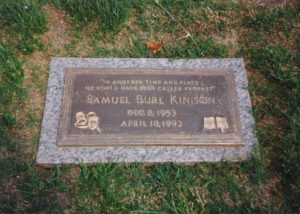
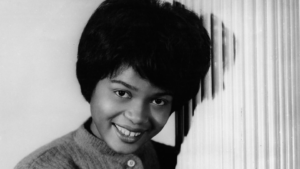 On this day in 2003, singer (“The Loco-Motion”) Little Eva died from
 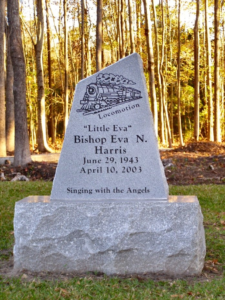 The Final Footprint

