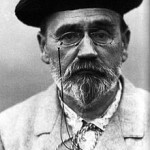
 On this day in 1902, writer Émile Zola died at his home in Paris of carbon monoxide poisoning caused by an improperly ventilated chimney at the age of 62. In my opinion, the most important exemplar of the literary school of naturalism and an important contributor to the development of theatrical naturalism. Zola was a major figure in the political liberalization of France and in the exoneration of the falsely accused and convicted army officer Alfred Dreyfus, which is encapsulated in the renowned newspaper headline J’accuse. Zola was nominated for the first and second Nobel Prize in Literature in 1901 and 1902.
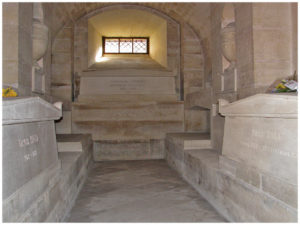 The Final Footprint – Zola was initially buried in the Cimetière de Montmartre in Paris, but on 4 June 1908, just five years and nine months after his death, his remains were relocated to the Panthéon. The Panthéon is a building in the Latin Quarter in Paris. It was originally built as a church dedicated to St. Genevieve and to house the reliquary châsse containing her relics but, after many changes, now functions as a secular mausoleum containing the remains of distinguished French citizens. The inscription above the entrance reads AUX GRANDS HOMMES LA PATRIE RECONNAISSANTE ( “To the great men, the grateful homeland”). By burying its great men in the Panthéon, the Nation acknowledges the honour it received from them. As such, interment here is severely restricted and is allowed only by a parliamentary act for “National Heroes”. Other notable Final Footprints at the Panthéon include: Victor Hugo, Louis Braille, Pierre and Marie Curie, André Malraux, and Alexandre Dumas, père, Jean-Jacques Rousseau, and Voltaire.
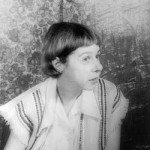 On this day in 1964 the author of the The Heart is a Lonely Hunter (1940) and one of my favorites, Carson McCullers died in Nyack, New York after a brain hemorrhage at the age of 50. Born Lula Carson McCullers on 19 February 1917 in Columbus, Georgia.
Her first novel, The Heart Is a Lonely Hunter, explores the spiritual isolation of misfits and outcasts in a small town of the U.S. South. Her other novels have similar themes and most are set in the deep South.
McCullers’ oeuvre is often described as Southern Gothic and indicative of her southern roots, but her writing and eccentric characters are universal in scope. Her stories have been adapted to stage and film. A stagework of her novel The Member of the Wedding (1946), which captures a young girl’s feelings at her brother’s wedding, made a successful Broadway run in 1950–51.
McCullers married Reeves McCullers (1937 – 1941 divorce and 1945 – 1953 his death).
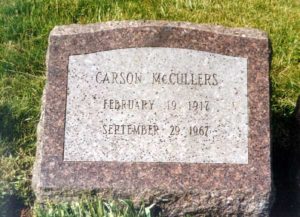
The Final Footprint – McCullers is interred in Oak Hill Cemetery in Nyack.
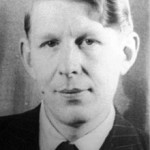 On this day in 1973, poet W. H. Auden died in Vienna at the age of 66. Born Wystan Hugh Auden on 21 February 1907 in York, England. In my opinion, Auden is one of the greatest writers of the 20th century. His work is noted for its stylistic and technical achievements, its engagement with moral and political issues, and its variety of tone, form and content. The central themes of his poetry are love, politics and citizenship, religion and morals, and the relationship between unique human beings and the anonymous, impersonal world of nature. In the 1950s and 1960s many of his poems focused on the ways in which words revealed and concealed emotions, and he took a particular interest in writing opera librettos, a form ideally suited to direct expression of strong feelings. He was also a prolific writer of prose essays and reviews on literary, political, psychological and religious subjects, and he worked at various times on documentary films, poetic plays and other forms of performance. Throughout his career he was both controversial and influential. After his death, some of his poems, notably “Funeral Blues” (“Stop all the clocks”), “Musée des Beaux Arts”, “Refugee Blues”, “The Unknown Citizen”, and “September 1, 1939”, became known to a much wider public than during his lifetime through films, broadcasts, and popular media.
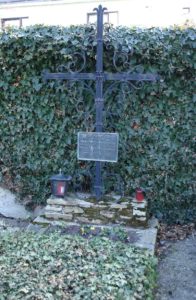
The Final Footprint – Auden is buried in a Kirchstetten churchyard in Kirchstetten, Austria.
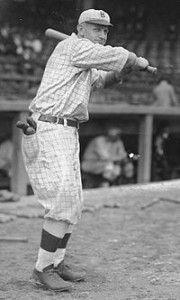 On this day in 1975, baseball Hall of
 Famer, player, manager, The Old Perfesser, Casey Stengel died in Glendale, California at the age of 85. Born Charles Dillon Stengel on 30 July 1890 in Kansas City, Missouri. The only manager to win five consecutive World Series championships, all with the New York Yankees. Between playing and managing, he is the only man to have worn all four of New York’s major league clubs’ uniforms. His number 37 was retired by both the Yankees and the Mets.
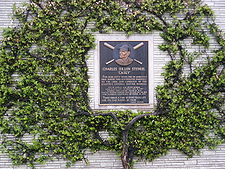 The Final Footprint– Stengel was buried at Forest Lawn Memorial Park in Glendale, California. His grave is marked with a flat bronze on granite marker. A plaque on a wall near his grave reads in part: FOR OVER SIXTY YEARS ONE OF AMERICA’S FOLK HEROES WHO CONTRIBUTED IMMENSLEY TO THE LORE AND LANGUAGE OF OUR COUNTRY’S NATIONAL PASTIME, BASEBALL. “THERE COMES A TIME IN EVERY MAN’S LIFE AND I’VE HAD PLENTY OF THEM” CASEY STENGEL. His plaque in Monument Park at Yankee Stadium reads; Brightened baseball for over 50 years; with spirit of eternal youth; Yankee manager 1949-1960 winning 10 pennants and 7 world championships including 5 consecutive. Monument Park is an open-air museum containing a collection of monuments, plaques, and retired numbers honoring distinguished members of the Yankees. Other notable Final Footprints at Forest Lawn Glendale include; L. Frank Baum, Humphrey Bogart, Lon Chaney, Nat King Cole, Sam Cooke, Dorothy Dandridge, Sammy Davis, Jr., Walt Disney, Errol Flynn, Clark Gable, Jean Harlow, Michael Jackson, Carole Lombard, Tom Mix, Casey Stengel, Jimmy Stewart, Elizabeth Taylor, and Spencer Tracy.. Other notable Yankees whose final footprints include memorialization in Monument Park; Babe Ruth, Lou Gehrig, Joe DiMaggio, George Steinbrenner, Thurman Munson, Mickey Mantle, Roger Maris, Phil Rizzuto, Billy Martin, Mel Allen, and Bob Sheppard.
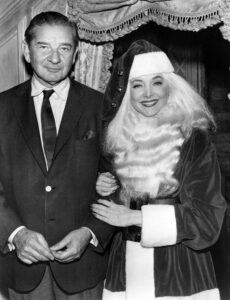 On this day in 1988 cartoonist known for his darkly humorous and macabre characters Charles Addams died at St. Clare’s Hospital and Health Center in New York City, having suffered a heart attack, aged 76. Born Charles Samuel Addams in Westfield, New Jersey on 7 January 1912. Some of the recurring characters, who became known as the Addams Family, have been the basis for spin-offs in several other forms of media.
In late 1942, he met his first wife, Barbara Jean Day, who purportedly resembled his cartoon character Morticia Addams. The marriage ended eight years later after Addams decline to have children.
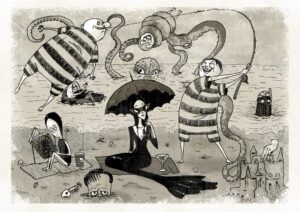 Addams married his second wife, Barbara Barb (Estelle B. Barb), in 1954. A practicing lawyer, she “combined Morticia-like looks with diabolical legal scheming,” by which she wound up controlling The Addams Family television and film franchises and persuaded her husband to give away other legal rights. At one point, she got her husband to take out a US $100,000 insurance policy. Addams consulted a lawyer on the sly, who later humorously wrote: “I told him the last time I had word of such a move was in a picture called Double Indemnity starring Barbara Stanwyck, which I called to his attention.” In the movie, Stanwyck’s character plotted her husband’s murder. The couple divorced in 1956.
Addams was “sociable and debonair”. A biographer described him as being “a well-dressed, courtly man with silvery back-combed hair and a gentle manner, he bore no resemblance to a fiend”. Figuratively a “ladykiller”, Addams accompanied women such as Greta Garbo, Joan Fontaine and Jacqueline Kennedy on social occasions.
Addams married his third and final wife, Marilyn Matthews Miller, best known as “Tee” (1926–2002), in a pet cemetery. In 1985, the Addamses moved to Sagaponack, New York, where they named their estate “The Swamp”.
The Final Footprint – As he had requested, a wake was held rather than a funeral. He had reportedly wished to be remembered as a “good cartoonist”. In accordance with Addams’s wishes, he was cremated, and his ashes were interred in the pet cemetery of “The Swamp”.
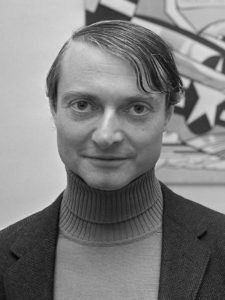 On this day in 1997, artist Roy Lichtenstein died of pneumonia in 1997 at New York University Medical Center, at the age of 73. Born Roy Fox Lichtenstein on October 27, 1923 in Manhattan. During the 1960s, along with Andy Warhol, Jasper Johns, and James Rosenquist among others, he became a leading figure in the new art movement. His work defined the premise of pop art through parody. His work was influenced by popular advertising and comic book style. He described pop art as “not ‘American’ painting but actually industrial painting”. His paintings were exhibited at the Leo Castelli Gallery in New York City.
Perhaps best known for his works; Whaam!, Drowning Girl, Oh, Jeff…I Love You, Too…But…, and Look Mickey.

Oh, Jeff…I Love You, Too…But…
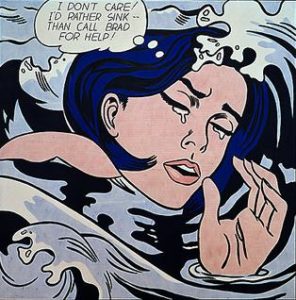
Drowning Girl
In 1949, Lichtenstein married Isabel Wilson, who previously had been married to Ohio artist Michael Sarisky. After he began teaching at the State University of New York at Oswego in 1958. The couple sold the family home in Highland Park, New Jersey, in 1963 and divorced in 1965.
Lichtenstein married his second wife, Dorothy Herzka, in 1968. From 1970 until his death, Lichtenstein split his time between Manhattan and Southampton.
The Final Footprint
Lichtenstein was cremated.
#RIP #OTD in 2002 singer/songwriter (Just Dropped In (To See What Condition My Condition Was In), Sweet Memories, Time is a Thief, Here Comes the Rain Baby), Mickey Newbury died from emphysema in Springfield, Oregon aged 62. Greenwood Cemetery, Leaburg, Oregon
#RIP #OTD 2005 painter (Pottery, Still Life Ingredients) Patrick Caulfield died in London in 2005 aged 69. Highgate Cemetery
#RIP #OTD in 2007 actress best known for her portrayal of Miss Moneypenny in the first fourteen Eon-produced James Bond films, Lois Maxwell died at Fremantle Hospital, Freemantle, Australia, age 80. Cremation.
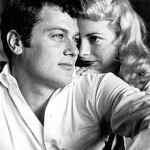 On this day in 2010 United States Navy veteran, actor Tony Curtis died at his Henderson, Nevada home of cardiac arrest at the age of 85. Born Bernard Schwartz on 3 June 1925 in The Bronx. His career spanned six decades, and had his greatest popularity during the 1950s and early 1960s. He acted in more than 100 films in roles covering a wide range of genres, from light comedy to serious drama. Although his early film roles were partly the result of his good looks, by the later half of the 1950s he became a notable and strong screen presence. He began proving himself to be a fine dramatic actor, having the range to act in numerous dramatic and comedy roles. He won his first serious recognition as a skilled dramatic actor in Sweet Smell of Success (1957) with co-star Burt Lancaster. The following year he was nominated for an Oscar for Best Actor in another drama, The Defiant Ones (1958). Curtis then gave what could arguably be called his best performance: three interrelated roles in the comedy Some Like It Hot (1959), possibly one of the funniest films ever made. The film co-starred Jack Lemmon and Marilyn Monroe, and was directed by Billy Wilder. That was followed by Blake Edwards’s comedy Operation Petticoat (1959) with Cary Grant. They were both frantic comedies, and displayed his impeccable comedic timing. In 1960, Curtis co-starred with Kirk Douglas in Spartacus, which became another major hit for him. Cirtis married six times: Janet Leigh (1951–1962 divorce), Christine Kaufmann
(1963–1968 divorce), Leslie Allen (1968–1982 divorce), Andrea Savio (1984–1992 divorce), Lisa Deutsch (1993–1994 divorce), Jill Vandenberg (1998–2010 his death).
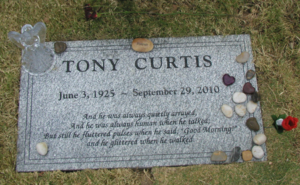
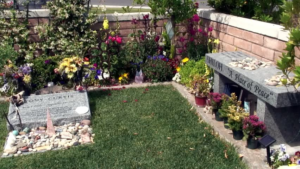
The Final Footprint – Curtis was interred in a private estate at Palm Memorial Park Cemetery, a Dignity Memorial property, in Green Valley, Nevada. His memorial service was attended by his daughters, Jamie Lee Curtis and Kelly Curtis, Arnold Schwarzenegger, Ron Jeremy, Rich Little, and Vera Goulet, Robert Goulet’s widow. Investor Kirk Kerkorian, Kirk Douglas and singer Phyllis McGuire were among the honorary pallbearers. His epitaph; “And he was always quietly arrayed, And he was always human when he talked; But still he fluttered pulses when he said “Good Morning!” and he glittered when he walked.” Other notable final footprints at Palm Memorial include Redd Foxx and Joe Williams.
#RIP #OTD in 2018 blues guitarist, singer (“I Can’t Quit You Baby”), songwriter (“Double Trouble”, “All Your Love (I Miss Loving)”) Otis Rush died from complications of a stroke in Chicago at the age of 84.
#RIP #OTD in 2020 singer-songwriter (“Baby, Don’t Get Hooked On Me”; “In The Ghetto”; “I Believe In Music”), actor (North Dallas Forty), Mac Davis died from heart surgery complications aged 78. City of Lubbock Cemetery, Lubbock, Texas
#RIP #OTD 2020 singer (“Delta Dawn”), lyricist (“I am Woman”), actress, television host, activist Helen Reddy died at the Motion Picture & Television Country House and Hospital in Los Angeles, at the age of 78. Cremated remains scattered at sea
Have you planned yours yet?
Follow TFF on twitter @RIPTFF
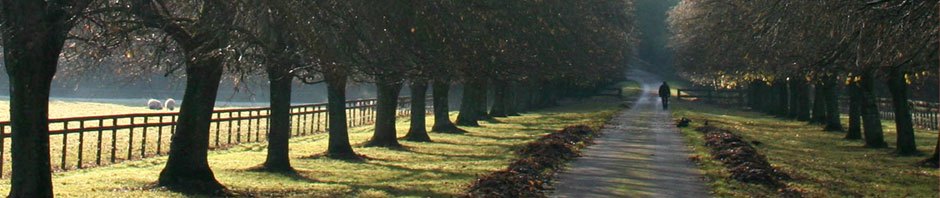
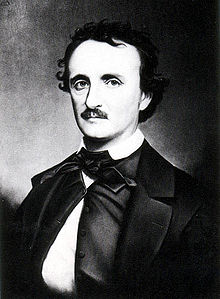
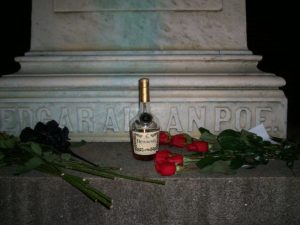
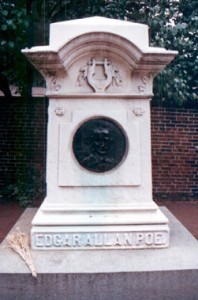 There is an upright engraved granite monument marking his original grave. The inscription reads in part; “Quoth the Raven, Nevermore”. His current burial space is marked by a large upright marble monument. Poe and his works influenced literature in the United States and around the world, as well as in specialized fields, such as cosmology and cryptography. Poe and his work appear throughout popular culture in literature, music, films, and television. A number of his homes are dedicated museums today. The Mystery Writers of America present an annual award known as the Edgar Award for distinguished work in the mystery genre. Every year on the anniversary of his birth from about 1949 until 2009, “The Poe Toaster” would appear at his grave and drink a cognac toast and leave three roses.
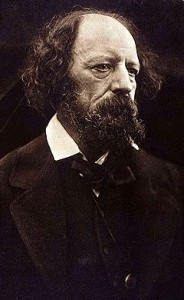 On this day in 1892, 1st Baron Tennyson, FRS and poet laureate, Alfred, Lord Tennyson died in Haslemere, Surrey at the age of 83. Born Alfred Tennyson in Somersby, Lincolnshire on 6 August 1809. Tennyson was Poet Laureate of Great Britain and Ireland during much of Queen Victoria’s reign and probably remains one of the most popular British poets. Tennyson excelled at penning short lyrics, such as “Break, Break, Break”, “The Charge of the Light Brigade”, “Tears, Idle Tears” and “Crossing the Bar”. Much of his verse was based on classical mythological themes, such as Ulysses, although In Memoriam A.H.H. was written to commemorate his best friend Arthur Hallam, a fellow poet and fellow student at Trinity College, Cambridge, who was engaged to Tennyson’s sister, but died from a brain haemorrhage before they could marry. Tennyson also wrote some notable blank verse including Idylls of the King, “Ulysses”, and “Tithonus”. A number of phrases from Tennyson’s work have become commonplaces of the English language, including “Nature, red in tooth and claw“, “‘Tis better to have loved and lost / Than never to have loved at all“, “Theirs not to reason why, / Theirs but to do and die“, “My strength is as the strength of ten, / Because my heart is pure“, “To strive, to seek, to find, and not to yield“, “Knowledge comes, but Wisdom lingers“, and “The old order changeth, yielding place to new“. Tennyson is one of the most frequently quoted writers in The Oxford Dictionary of Quotations. Tennyson married Emily Sarah Sellwood (1850 – 1892 his death). One of my favorite poets. An excerpt from his poem In Memoriam A.H.H.: I hold it true, whate’er befall;/I feel it when I sorrow most;/’Tis better to have loved and lost/Than never to have loved at all.
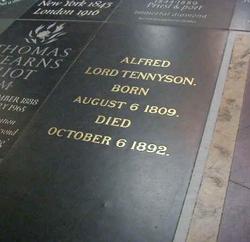 The Final Footprint – Tennyson was entombed in Poet’s Corner in Westminster Abbey in Westminster. A memorial was erected in All Saints’ Church, Freshwater. His last words were; “Oh that press will have me now!” A statue of Tennyson was erected in Trinity College, Cambridge. Other notable Final Footprints at Westminster include; Robert Browning, Lord Byron, Geoffrey Chaucer, Oliver Cromwell, Charles Darwin, Charles Dickens, Edward The Confessor, Elizabeth I, George II, George Friederic Handel, Steven Hawking, James I (James VI of Scotland), Samuel Johnson, Ben Jonson, Charles II, Edward III, Edward VI, Henry III, Henry V, Henry VII, Richard II, Rudyard Kipling, Henry Wadsworth Longfellow, John Milton, Sir Isaac Newton, Laurence Olivier, Henry Purcell, Mary I, Mary II, Mary Queen of Scots, Lord Alfred Tennyson, Dylan Thomas, and William III.
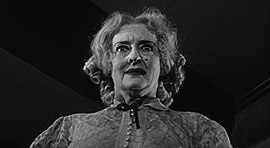
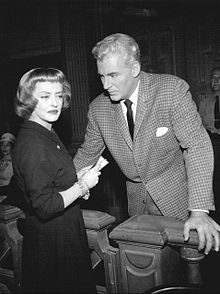
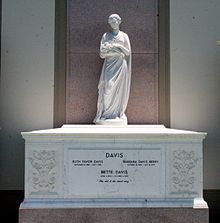
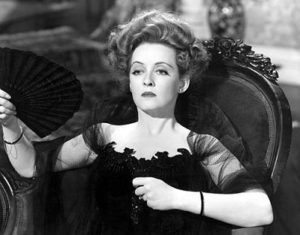 On this day in 1989, Academy Award winning actress Bette Davis died at the American Hospital in Neuilly-sur-Seine, France from breast cancer at the age of 81. Born Ruth Elizabeth Davis in Lowell, Massachusetts on April 5, 1908. In my opinion, one of the greatest actresses in Hollywood history. Davis was known for her willingness to play unsympathetic, sardonic characters and was reputed for her performances in a range of film genres, from contemporary crime melodramas to historical and period films and occasional comedies, although her greatest successes were her roles in romantic dramas.
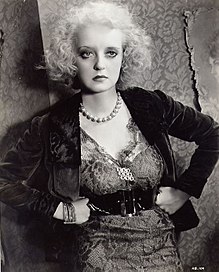

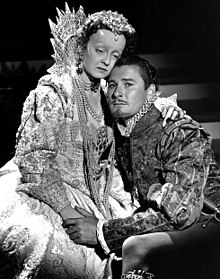



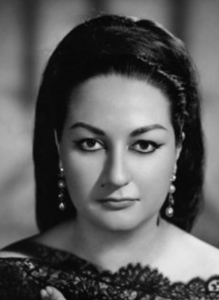
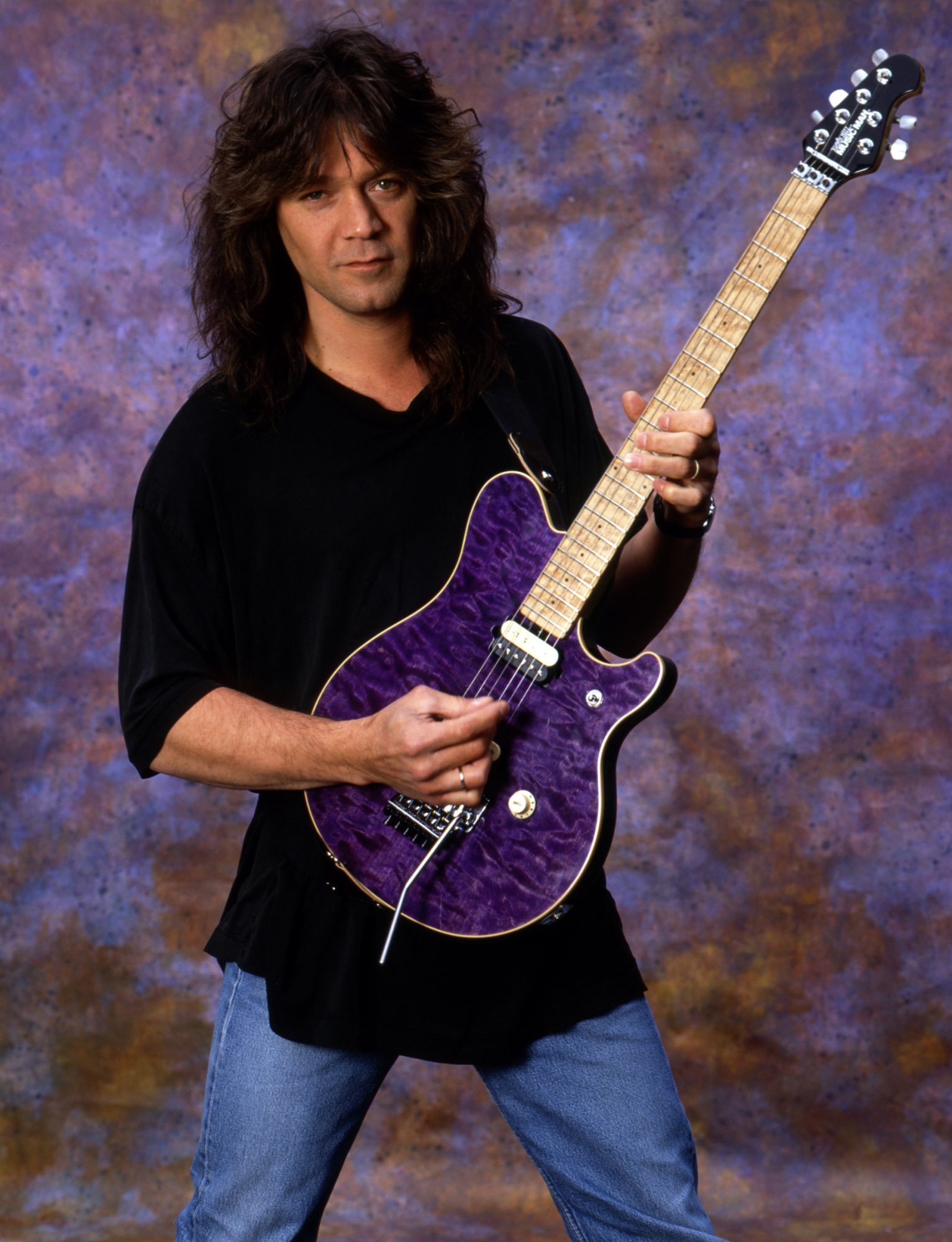
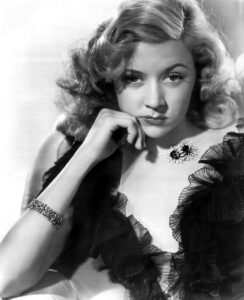 On this day in 1981, actress and singer Gloria Grahame died from cancer at St. Vincent’s Hospital in Manhattan, New York City, at the age of 57. Born Gloria Grahame Hallward on November 28, 1923 in Los Angeles. She began her acting career in theatre, and in 1944 made her first film for MGM.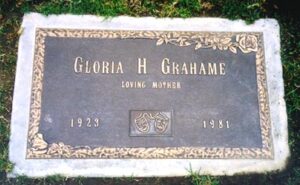
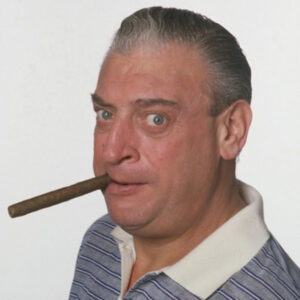 On this day in 2004, actor and comedian Rodney Dangerfield died in Los Angeles, California at the age of 82. Born Jacob Cohen in Babylon, New York on 22 November 1921. In my opinion, one of the funniest entertainers. I saw him in concert in Austin, Texas when I was a student at the University of Texas. It was non-stop laughter from beginning to end. He was so funny in Caddyshack. Upon entering the hospital prior to his death, he was asked how long he would be in the hospital. He reportedly replied, “If all goes well, about a week. If not, about and hour and a half.” Dangerfield married three times: Joyce Indig (1949–1962 divorce; 1963–1970 divorce) and Joan Child (1993–2004 his death).
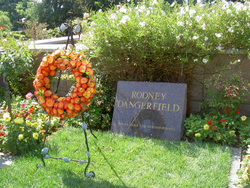 The Final Footprint – Dangerfield was interred at Pierce Brothers Westwood Village Memorial Park and Mortuary (a
  On this day in 2011, American entrepreneur, marketer, and inventor, who was the co-founder, chairman, and CEO of Apple Inc., Steve Jobs died at his Palo Alto, California, home at the age of 56, due to complications from a relapse of his previously treated islet-cell neuroendocrine pancreatic cancer, resulting in respiratory arrest, with his wife, children, and sisters at his side. Born Steven Paul Jobs on 24 February 1955 in San Francisco and adopted at birth by Paul and Clara Jobs. Through Apple, he is widely recognized as a charismatic pioneer of the personal computer revolution and for his influential career in the computer and consumer electronics fields. Jobs also co-founded and served as chief executive of Pixar Animation Studios and became a member of the board of directors of The Walt Disney Company in 2006, when Disney acquired Pixar. Jobs oversaw the development of the iMac, iTunes, iPod, iPhone, and iPad, and on the services side, the company’s Apple Retail Stores, iTunes Store and the App Store.
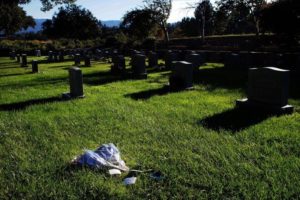 The Final Footprint – Both Apple and Microsoft flew their flags at half-staff throughout their respective headquarters and campuses. Bob Iger ordered all Disney properties, including Walt Disney World and Disneyland, to fly their flags at half-staff, from October 6 to 12, 2011. His death was announced by Apple in a statement which read:
 On this day in 1669, Dutch painter and etcher Rembrandt died in Amsterdam at the age of 63. Born Rembrandt Harmenszoon van Rijn on 15 July 1606 in Leiden, in the Dutch Republic, nowadays the Netherlands. In my opinion, he is one of the greatest painters and printmakers in European art and the most important in Dutch history. His contributions to art came in a period of great wealth and cultural achievement that historians call the Dutch Golden Age. His etchings and paintings were popular throughout his lifetime and his reputation as an artist remained high. Rembrandt’s greatest creative triumphs are exemplified especially in his portraits of his contemporaries, self-portraits and illustrations of scenes from the Bible. Because of his empathy for the human condition, he has been called “one of the great prophets of civilization.” Rembrandt married Saskia van Uylenburgh (1634 – 1642 her death). During Saskia’s illness, Geertje Dircx was hired as his son’s caretaker and nurse and also became Rembrandt’s lover. In the late 1640s Rembrandt began a relationship with the much younger Hendrickje Stoffels, who had initially been his maid.
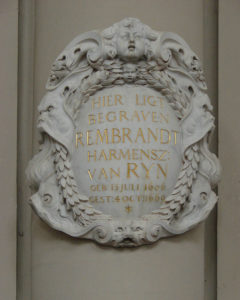 The Final Footprint – Rembrandt was buried in an unmarked grave in the Westerkerk, a Dutch Protestant church in central Amsterdam. It is next to Amsterdam’s Jordaan district, on the bank of the Prinsengracht canal.
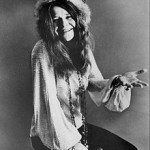 On this day in 1970, singer, songwriter, painter, dancer and music arranger, The Queen of Psychedelic Soul, Pearl, Janis Joplin died from an overdose of heroin at the Landmark Motor Hotel in Los Angeles at the age of 27, thus becoming a member of Club 27 or the Forever 27 Club; a group of famous musicians who died when they were 27 years old. Other members of the Forever 27 Club include; Kurt Cobain, Jimi Hendrix, Rolling Stone Brian Jones, Robert Johnson, Jim Morrison, Alan Wilson, Amy Winehouse, and Anton Yelchin. Joplin died sixteen days after Hendrix. Born Janis Lyn Joplin on 19 January 1943 in Port Arthur, Texas. Joplin first rose to prominence in the late 1960s as the lead singer of the psychedelic-acid rock band Big Brother and the Holding Company, and later as a solo artist with her own backing groups, The Kozmic Blues Band and The Full Tilt Boogie Band. She was apparently one of the more popular acts at the Monterey Pop Festival and later became one of the major attractions to the Woodstock festival and the Festival Express train tour. Popular songs from her four-year solo career include “Down on Me”, “Summertime”, “Piece of My Heart”, “Ball ‘n’ Chain”, “Maybe”, “To Love Somebody”, “Kozmic Blues”, “Work Me, Lord”, “Cry Baby”, and “Mercedes Benz”. Her number one hit, “Me and Bobby McGee”, was written by Kris Kristofferson, reportedly her lover in the spring of 1970. Joplin was well known for her performing abilities, and her fans referred to her stage presence as “electric”. Joplin was inducted into the Rock and Roll Hall of Fame in 1995.
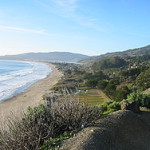 The Final Footprint – Joplin was cremated at the Pierce Brothers Westwood Village Mortuary in Los Angeles; her ashes were scattered from a plane into the Pacific Ocean and along Stinson Beach. Joplin’s will funded $2,500 to throw a wake party in the event of her demise. The party, took place 26 October 1970, at the Lion’s Share, located in San Anselmo, California.
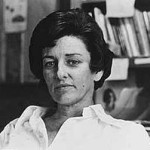 On this day in 1974 poet Anne Sexton died at the age of 45 by carbon monoxide poisoning at her home in Weston, Massachusetts. Born Anne Gray Harvey in Newton, Massachusetts on 9 November 1928. She won the Pulitzer Prize for poetry in 1967. Themes of her poetry include her long battle against depression and mania, suicidal tendencies, and various intimate details from her private life, including her relationships with her husband and children.
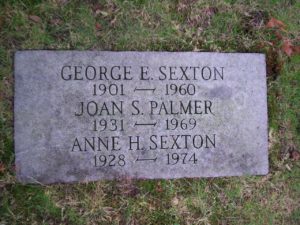 The Final Footprint – She is interred at Forest Hills Cemetery and Crematory in Jamaica Plain, Boston. Other notable final footprints at Forest Hills include; E. E. Cummings and Eugene O’Neill
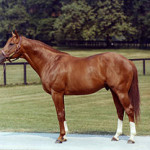 On this day in 1989, chestnut thoroughbred race horse, Triple Crown winner, two-time Horse of the Year, Big Red, Secretariat died at Claiborne Farm in Paris, Kentucky at the age of 19. Foaled 30 March 1970 at Meadow Farm in Caroline County, Virginia. Secretariat was sired by Bold Ruler out of Somethingroyal, by Princequillo. Owned by Penny Chenery, also known as Penny Tweedy, he was trained by Lucien Laurin and mainly ridden by Canadian jockey Ron Turcotte. He raced in Chenery’s Meadow Stable’s blue and white checkered colors. His groom was Eddie Sweat and exercise rider was Charlie Davis. Secretariat stood approximately 16.2 hands tall, and weighed 1,175 pounds (533 kg), with a 75-inch girth, in his racing prime. In my opinion, the greatest racehorse who ever raced. He set new race records in two of the three Triple Crown races, the Kentucky Derby and the Belmont, and his time in the Belmont is a world record for a 1.5 mile race on dirt. In the Derby he ran each quarter-mile segment faster than the one before it, which means he was still accelerating in the final quarter-mile of the race. He broke last in the Derby but gradually moved on the field and overtook Sham at the top of the stretch. He broke last in the Preakness but overtook the field on the first turn and was never challenged. He won the Belmont wire-to-wire by a record 31 lengths. My memories of his Derby and Preakness runs are not clear, but I will never forget watching his Belmont run from home with my Dad. My favorite racehorses have ever since been the chestnuts.
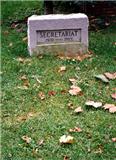 The Final Footprint – Secretariat was buried whole at Claiborne Farm. Usually winning racehorse’s bodies were cremated while the head, heart and hooves only were buried. His grave is marked by an upright granite marker. The necropsy revealed that his heart weighed 22 pounds, 2.5 times larger than that of an average horse. Bronze replica statues of Secretariat have been erected at Belmont Park in Elmont, New York and Kentucky Horse Park in Lexington, Kentucky. A Walt Disney Pictures film titled Secretariat, starring Diane Lane opened 8 October 2010.
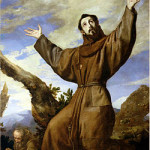 On this day in 1226, Italian Catholic friar and preacher, St. Francis of Assisi died in a hut next to the Porziuncola, a small church located within the Basilica of Santa Maria degli Angeli in the frazione of Santa Maria degli Angeli, situated about 4 kilometres from Assisi, Umbria, singing Psalm 142(141) – “Voce mea ad Dominum”, at the approximate age of 44. Born Giovanni di Pietro di Bernardone, but nicknamed Francesco (“the Frenchman”) by his father, in 1181 or 1182 in Assisi. He founded the men’s Order of Friars Minor, the women’s Order of St. Clare, and the Third Order of Saint Francis for men and women not able to live the lives of itinerant preachers followed by the early members of the Order of Friars Minor or the monastic lives of the Poor Clares. Though he was never ordained to the Catholic priesthood, Francis is one of the most venerated religious figures in history. Francis’ father was Pietro di Bernardone, a prosperous silk merchant. Francis lived the high-spirited life typical of a wealthy young man, even fighting as a soldier for Assisi. While going off to war in 1204, Francis had a vision that directed him back to Assisi, where he lost his taste for his worldly life. On a pilgrimage to Rome, he joined the poor in begging at St. Peter’s Basilica. The experience moved him to live in poverty. Francis returned home, began preaching on the streets, and soon amassed a following. His Order was authorized by Pope Innocent III in 1210. He then founded the Order of Poor Clares, which became an enclosed religious order for women, as well as the Order of Brothers and Sisters of Penance (commonly called the Third Order). In 1219, he went to Egypt in an attempt to convert the Sultan to put an end to the conflict of the Crusades. By this point, the Franciscan Order had grown to such an extent that its primitive organizational structure was no longer sufficient. He returned to Italy to organize the Order. Once his community was authorized by the Pope, he withdrew increasingly from external affairs. In 1223, Francis arranged for what is thought to be the first Christmas manger scene. In 1224, he received the stigmata, making him the first recorded person to bear the wounds of Christ’s Passion. He is known as the patron saint of animals, the environment, and is one of the two patron saints of Italy (with Catherine of Siena). It is customary for Catholic and Anglican churches to hold ceremonies blessing animals on his feast day of October 4. He is also known for his love of the Eucharist, and his sorrow during the Stations of the Cross. Saint Francis is considered the first Italian poet by literary critics. He believed commoners should be able to pray to God in their own language, and he wrote often in the dialect of Umbria instead of Latin. His writings are considered to have great literary and religious value.
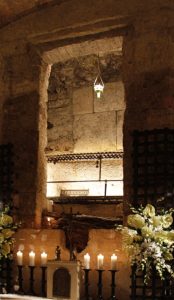 The Final Footprint – On 16 July 1228, he was pronounced a saint by Pope Gregory IX (the former cardinal Ugolino di Conti, friend of St Francis and Cardinal Protector of the Order). The next day, the Pope laid the foundation stone for the Basilica of Saint Francis in Assisi. He was entombed on 25 May 1230, under the Lower Basilica, but his tomb was soon hidden on orders of Brother Elias to protect it from Saracen invaders. His burial place remained unknown until it was discovered in 1818. Pasquale Belli then constructed for his remains a crypt in neo-classical style in the Lower Basilica. It was refashioned between 1927 and 1930 into its present form by Ugo Tarchi, stripping the wall of its marble decorations. In 1978, the remains of St. Francis were examined and confirmed by a commission of scholars appointed by Pope Paul VI, and put in a glass urn in the ancient stone tomb.
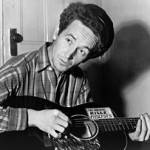 On this day in 1967, singer, songwriter, musician Woody Guthrie died of complications of Huntington’s disease at Creedmoor Psychiatric Center in Queens, New York at the age of 55. Born Woodrow Wilson Guthrie on 14 July 1912 in Okemah, Oklahoma. His musical legacy includes hundreds of political, traditional and children’s songs, ballads and improvised works. He frequently performed with the slogan This Machine Kills Fascists displayed on his guitar. Perhaps his best-known song is “This Land Is Your Land.” Many of his recorded songs are archived in the Library of Congress. Many songwriters including Bob Dylan, Bruce Springsteen, John Mellencamp, Pete Seeger, Billy Bragg, and Tom Paxton have acknowledged Guthrie as a major influence. Many of his songs are about his experiences in the Dust Bowl era during the Great Depression when Guthrie traveled with migrant workers from Oklahoma to California and learned their traditional folk and blues songs, earning him the nickname the “Dust Bowl Troubadour.” Guthrie was married three times and fathered eight children, including American folk musician Arlo Guthrie. During his later years Guthrie served as a figurehead in the folk movement, providing inspiration to a generation of new folk musicians, including mentor relationships with Ramblin’ Jack Elliott and Dylan.
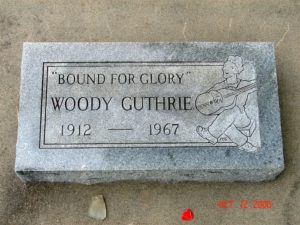 The Final Footprint – Guthrie is interred in Highland Cemetery in Okemah.
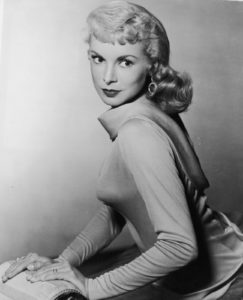 On this day in 2004, Academy Award nominated actress, singer, dancer and author, former wife of Tony Curtis and mother of Jamie Lee Curtis, Janet Leigh died at her home in Los Angeles, California at the age of 77. Born Jeanette Helen Morrison on 6 July 1927 in Merced, California.
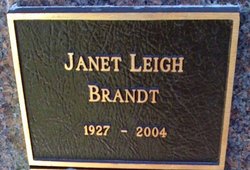 The Final Footprint – Leigh was cremated and her ashes were inurned in a niche at
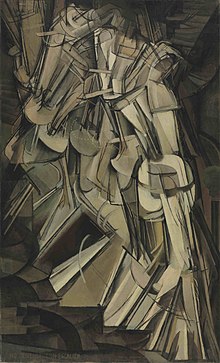
 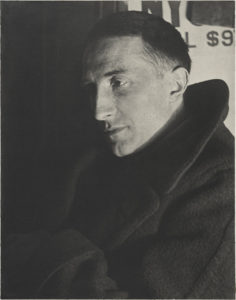 On this day in 1968, painter, sculptor, chess player, and writer Marcel Duchamp died in his home in



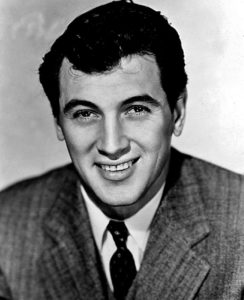 On this day in 1985 Academy Award nominated actor Rock Hudson died from AIDS-related complications at his home The Castle in Beverly Hills, California at the age of 59. Born Roy Harold Scherer, Jr. on 17 November 1925 in Winnetka, Illinois. The 6 foot 5 inch tall actor was one of the most popular and well-known movie stars of his time. He completed nearly 70 films and starred in several television productions during a career that spanned over four decades. My favorite Rock Hudson movies include: Giant, A Farewell to Arms, and The Undefeated. Giant, perhaps my all-time favorite movie, is based on the novel by Edna Ferber. Along with Hudson the movie features Elizabeth Taylor, James Dean, Dennis Hopper, and Chill Wills.
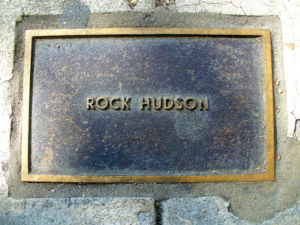 The Final Footprint – Hudson was cremated and his cremains were scattered in the channel between Wilmington and Santa Catalina Island. A cenotaph was installed at Forest Lawn Cemetery in Cathedral City, California. He has a star on the Hollywood Walk of Fame at 6104 Hollywood Boulevard. Taylor purchased a bronze plaque for Hudson on the West Hollywood Memorial Walk. Other notable final footprints at FLCCC include; Dinah Shore, Jerry Vale, and Jane Wyman.
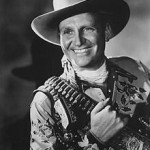 On this day in 1998 singer, actor, The Singing Cowboy, Gene Autry died of lymphoma 3 days after his 91st birthday at his home in Studio City, California. Born Orvon Grover Autry on 29 September 1907 in Tioga, Texas. Autry gained fame as a singing cowboy on the radio, in movies, and on television for more than three decades beginning in the early 1930s. Autry was also owner of a television station, several radio stations in Southern California, and the Los Angeles/California/Anaheim Angels Major League Baseball team from 1961 to 1997. From 1934 to 1953, Autry appeared in 93 films and 91 episodes of The Gene Autry Show television series. During the 1930s and 1940s, he personified the straight-shooting hero—honest, brave, and true—and profoundly touched the lives of millions of Americans. Autry was also probably one of the most important figures in the history of country music. His singing cowboy movies were the first vehicle to carry country music to a national audience. In addition to his signature song, “Back in the Saddle Again”, Autry is still remembered for his Christmas holiday songs, “Here Comes Santa Claus”, which he wrote, “Frosty the Snowman”, and his biggest hit, “Rudolph the Red-Nosed Reindeer”. Autry is a member of both the Country Music Hall of Fame and Nashville Songwriters Hall of Fame, and is the only person to be awarded stars in all five categories on the Hollywood Walk of Fame, for film, television, music, radio, and live performance. The town of Gene Autry, Oklahoma was named in his honor.
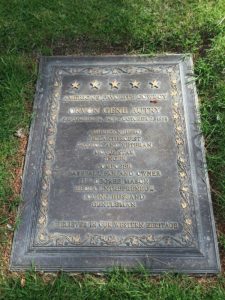 The Final Footprint – Autry is interred in the Forest Lawn Hollywood Hills Cemetery in Los Angeles, California. His grave is marked by a flat bronze individual marker and is engraved thusly; AMERICA’S FAVORITE COWBOY / AMERICAN HERO PHILANTHROPIST PATRIOT AND VETERAN MOVIE STAR SINGER COMPOSER BASEBALL FAN AND OWNER 33RD DEGREE MASON MEDIA ENTREPRENEUR LOVING HUSBAND GENTLEMAN A BELIEVER IN OUR WESTERN HERITAGE. Other notable final footprints at Hollywood Hills include; Albert “Cubby” Broccoli, David Carradine, Scatman Crothers, Bette Davis, Sandra Dee, Ronnie James Dio, Michael Clarke Duncan, Carrie Fisher, Bobby Fuller, Andy Gibb, Buck Henry, Michael Hutchence, Jill Ireland, Al Jarreau, Buster Keaton, Lemmy Kilmister, Jack LaLanne, Nicolette Larson, Liberace, Strother Martin, Jayne Meadows, Ricky Nelson
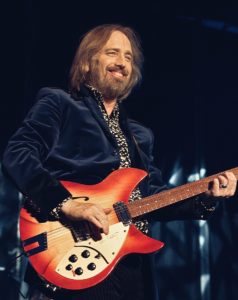 On this day in 2017, singer-songwriter, multi-instrumentalist, record producer, actor, and member of the Traveling Wilburys, Tom Petty died from a heart attack caused by an accidental overdose at UCLA Medical Center in Santa Monica, California at the age of 66. Born Thomas Earl Petty on October 20, 1950 in Gainesville, Florida. He was the lead singer of Tom Petty and the Heartbreakers, formed in 1976. He previously led the band Mudcrutch.


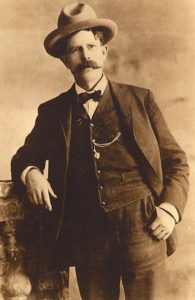
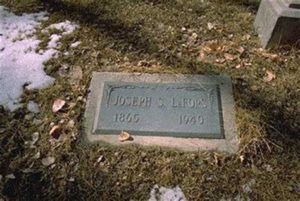
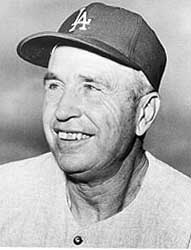
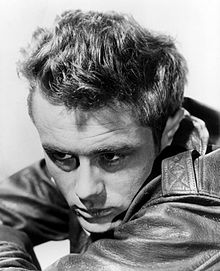 On this day in 1955, actor, cultural icon, James Dean died in Cholame, California at the age of 24 in an automobile accident. Born James Byron Dean on 8 February 1931 in Marion, Indiana. A cultural icon of teenage disillusionment, as expressed in the title of his most celebrated film, Rebel Without a Cause (1955), in which he starred as troubled Los Angeles teenager Jim Stark. The other two roles that defined his stardom were as loner Cal Trask in East of Eden (1955), and as the surly ranch hand, Jett Rink, in Edna Ferber’s Giant (1956) alongside Elizabeth Taylor and Rock Hudson. Perhaps my favorite book and movie. Dean was the first actor to receive a posthumous Academy Award nomination for Best Actor and remains the only actor to have had two posthumous acting nominations.
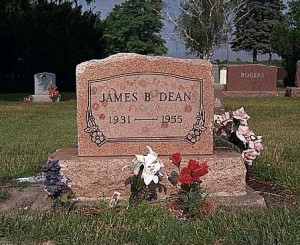 The Final Footprint– Dean was buried in Park Cemetery in Fairmont, Indiana, less than a mile from where he grew up on his aunt and uncle’s farm. His grave is marked with an upright granite monument. A sculpture made of concrete and stainless steel was erected in his honor in Cholame, California. A quote from Antoine de Saint Exupéry’s The Little Prince is inscribed on the sculpture: “What is essential is invisible to the eye.”
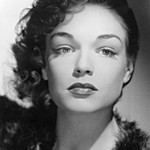 On this day in 1985 actress Simone Signoret died of pancreatic cancer in Auteuil-Anthouillet, France at the age of 64. Born Simone Henriette Charlotte Kaminker in Wiesbaden, Germany. In my opinion she is one of France’s greatest film stars. She became the first French person to win an Academy Award, for her role in Room at the Top (1959). In her lifetime she also received a César, three BAFTAs, an Emmy, Cannes Film Festival recognition, the Silver Bear for Best Actress awards and a Golden Globe nomination. Her memoirs, Nostalgia Isn’t What It Used To Be, were published in 1978. She also wrote a novel, Adieu Volodya (1985). She first married filmmaker Yves Allégret (1944–49 divorce). Her second marriage was to the Italian-born French actor Yves Montand (1951 – 1985 her death).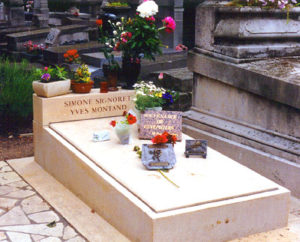
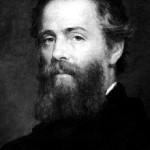 On this day in 1891 author Herman Melville died at his home in New York City at age 72 from cardiac dilation. Born in New York City on 1 August 1819. Best known for the novel Moby-Dick. His first three books gained much contemporary attention (the first, Typee, became a bestseller), but after a fast-blooming literary success in the late 1840s, his popularity declined precipitously in the mid-1850s and never recovered during his lifetime. It was not until the “Melville Revival” in the early 20th century that his work won recognition, especially Moby-Dick, which was hailed as one of the literary masterpieces of both American and world literature. In 1919, the unfinished manuscript for his novella Billy Budd was discovered by his first biographer, Raymond M. Weaver, who published a version in 1924. He was the first writer to have his works collected and published by the Library of America. Melville married Elizabeth Shaw (1847 – 1891 his death).
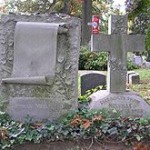 The Final Footprint – He was interred in the Woodlawn Cemetery in The Bronx, New York. Woodlawn Cemetery is one of the largest cemeteries in New York City and is a designated National Historic Landmark. Other notable Final Footprints at Woodlawn include; Irving Berlin, Miles Davis (see below), Duke Ellington, Fiorello La Guardia, Lionel Hampton, Rowland Macy, Bat Masterson, J. C. Penney, Joseph Pulitzer, and Elizabeth Cady Stanton.
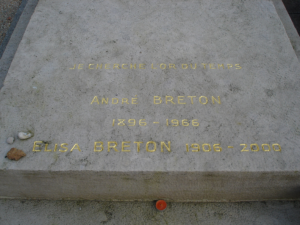
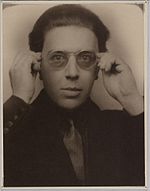 On this day in 1966, French writer, poet, anarchist and anti-fascist, the founder of Surrealism, André Breton died at 70. Born on 19 February 1896 in Tinchebray (Orne) in Normandy.Perhaps best known as the co-founder, leader, principal theorist and chief apologist of Surrealism. His writings include the first Surrealist Manifesto (Manifeste du surréalisme) of 1924, in which he defined surrealism as “pure psychic automatism”.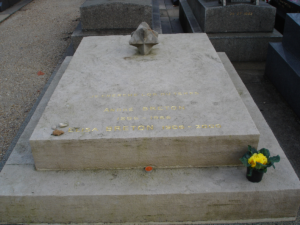
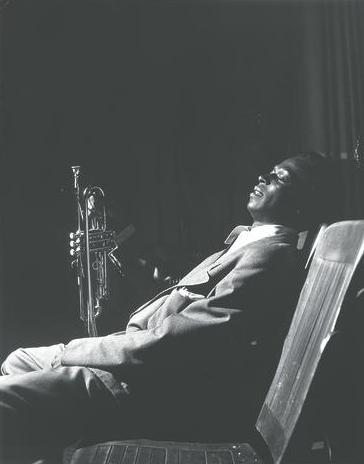 On this day in 1991, multiple Grammy winner, trumpeter, bandleader and composer Miles Davis died in Santa Monica, California at the age of 65. Born Miles Dewey Davis III on 26 May 1926 in Alton, Illinois. In my opinion he is one of the most influential musicians of the 20th century. Davis was, with his musical groups, at the forefront of several major developments in jazz music, including bebop, cool jazz, hard bop, modal jazz, and jazz fusion. Davis was inducted into the Rock and Roll Hall of Fame in 2006. On 7 October 2008, his 1959 album Kind of Blue received its fourth platinum certification from the Recording Industry Association of America (RIAA), for shipments of at least four million copies in the United States. On 15 December 2009, the U.S. House of Representatives passed a symbolic resolution recognizing and commemorating the album Kind of Blue on its 50th anniversary, “honoring the masterpiece and reaffirming jazz as a national treasure”. He was knighted into the Légion d’honneur or Ordre national de la Légion d’honneur in Paris. In my opinion, Kind of Blue is one of the greatest albums ever recorded. I heard someone say once, if you do not own Kind of Blue, something is wrong with you. Yes, I own a copy. Davis married actress Cicely Tyson on 26 November 1981. The ceremony was conducted by Atlanta mayor Andrew Young at the home of actor Bill Cosby. Davis and Tyson divorced in 1988.
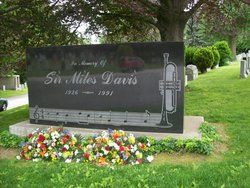 The Final Footprint – Davis is buried with one of his trumpets, in Woodlawn Cemetery in the Bronx. His grave is marked by a large black granite engraved rectangular monument. It is inscribed, In Memory of Sir Miles Davis and has a music scale and a trumpet engraved in the granite. A bronze statue of Davis was erected in Kielce, Poland. Other notable Final Footprints at Woodlawn include; Irving Berlin, Duke Ellington, Lionel Hampton, Fiorello La Guardia, Rowland Macy, Bat Masterson, Herman Melville (see above), J. C. Penney, Joseph Pulitzer, and Elizabeth Cady Stanton.
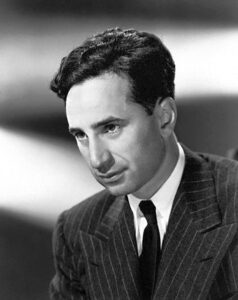 On this day in 2003, film and theatre director, producer, screenwriter and actor Elia Kazan died from natural causes in his Manhattan apartment aged 94. Born Elias Kazantzoglou on September 7, 1909 in Constantinople, now Istanbul. In my opinion, one of the most honored and influential, and controversial, directors in Broadway and Hollywood history.
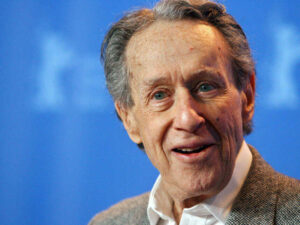 nd on this day in 2010, director and producer of film, television and theater, Arthur Penn died in Manhattan a day after his 88th birthday from congestive heart failure. Born Arthur Hiller Penn on September 27, 1922 in Philadelphia. Closely associated with the American New Wave, Penn directed critically acclaimed films throughout the 1960s such as the drama The Chase (1966), the biographical crime film Bonnie and Clyde (1967) and the comedy Alice’s Restaurant (1969). He also received attention for his acclaimed revisionist Western Little Big Man (1970), Night Moves (1975) and The Missouri Breaks (1976). In the 1990s he returned to stage and television direction and production, including an executive producer role for the crime series Law & Order. By his death he had been nominated for three Academy Awards for Best Director, a BAFTA, a Golden Globe, two Emmys, and two Directors Guild of America Awards. He was the recipient of several honorary accolades, including an Honorary Golden Bear, a Tony Award, and an Akira Kurosawa Award from the San Francisco International Film Festival.

