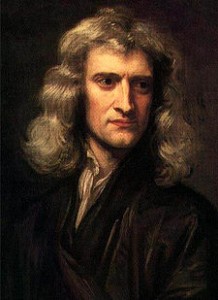
Portrait of Newton by Godfrey Kneller (1689)
On this day in 1727, physicist, mathematician, astronomer, natural philosopher, alchemist, and theologian, Sir Isaac Newton died in his sleep in Kensington, Middlesex, England at the age of 84. Born 25 December 1642 at Woolsthorpe Manor in Woolsthorpe-by-Colsterworth, a hamlet in the county of Lincolnshire. In my opinion, one of the most influential people in human history. His Philosophiæ Naturalis Principia Mathematica (Latin for “Mathematical Principles of Natural Philosophy”; usually called the Principia) (1687) lays the groundwork for most of classical mechanics and describes universal gravitation and the three laws of motion. Newton often told the story that he was inspired to formulate his theory of gravitation by watching the fall of an apple from a tree. Seems to me it is unlikely that the apple actually hit him on the head. Newton was an unorthodox Christian and actually wrote more on Biblical studies than on science and mathematics. English poet Alexander Pope wrote of Newton; “Nature and nature’s laws lay hid in night/God said “Let Newton be” and all was light.” Newton himself wrote; “If I have seen further it is by standing on the shoulders of giants.”, and “I do not know what I may appear to the world, but to myself I seem to have been only like a boy playing on the sea-shore, and diverting myself in now and then finding a smoother pebble or a prettier shell than ordinary, whilst the great ocean of truth lay all undiscovered before me.”
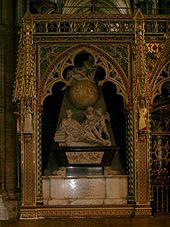 The Final Footprint – Newton is entombed in Westminster Abbey. His monument is north of the entrance to the choir against the choir screen, near his tomb. Executed by the sculptor Michael Rysbrack (1694–1770) in white and grey marble with design by the architect William Kent. The monument features a figure of Newton reclining on top of a sarcophagus, his right elbow resting on several of his great books and his left hand pointing to a scroll with a mathematical design. Above him is a pyramid and a celestial globe showing the signs of the Zodiac and the path of the comet of 1680. The Latin inscription on the base translates as: “Here is buried Isaac Newton, Knight, who by a strength of mind almost divine, and mathematical principles peculiarly his own, explored the course and figures of the planets, the paths of comets, the tides of the sea, the dissimilarities in rays of light, and, what no other scholar has previously imagined, the properties of the colours thus produced. Diligent, sagacious and faithful, in his expositions of nature, antiquity and the holy Scriptures, he vindicated by his philosophy the majesty of God mighty and good, and expressed the simplicity of the Gospel in his manners. Mortals rejoice that there has existed such and so great an ornament of the human race!” Other notable Final Footprints at Westminster include; Robert Browning, Lord Byron, Charles II, Geoffrey Chaucer, Oliver Cromwell, Charles Darwin, Charles Dickens, Edward III, Edward VI, Edward The Confessor, Elizabeth I, George II, George Friederic Handel, Stephen Hawking, Henry III, Henry V, Henry VII, James I (James VI of Scotland), Samuel Johnson, Ben Jonson, Rudyard Kipling, Henry Wadsworth Longfellow, Mary I, Mary II, Mary Queen of Scots, John Milton, Laurence Olivier, Henry Purcell, Thomas Shadwell, Edmund Spenser, Lord Alfred Tennyson, Dylan Thomas, and William III.
RIP #OTD in 1730 the greatest French actress of her time, inspiration for playwrights, composers and poets, Adrienne Lecouvreur died in Paris aged 37. she was denied religious rites and buried in a ditch near the banks of the Seine
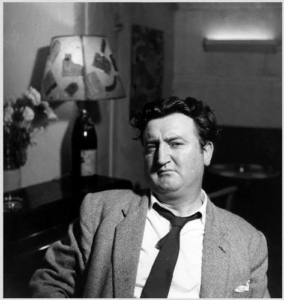 On this day in 1964, Irish poet, short story writer, novelist and playwright Brendan Behan died after collapsing at the Harbour Lights bar in Dublin at the age of 41. Born Brendan Francis Aidan Behan (christened Francis Behan) on 9 February 1923 in . Behan wrote in both English and Irish. In my opinion, he was one of the greatest Irish writers of all time.
An Irish republican and a volunteer in the Irish Republican Army, Behan was born in Dublin into a staunchly republican family becoming a member of the IRA’s youth organisation Fianna Éireann at the age of fourteen. There was also a strong emphasis on Irish history and culture in the home, which meant he was steeped in literature and patriotic ballads from an early age. Behan eventually joined the IRA at sixteen, which led to his serving time in a borstal youth prison in the United Kingdom and he was also imprisoned in Ireland. During this time, he took it upon himself to study and he became a fluent speaker of the Irish language. Subsequently released from prison as part of a general amnesty given by the Fianna Fáil government in 1946, Behan moved between homes in Dublin, Kerry and Connemara, and also resided in Paris for a time.
In 1954, Behan’s first play The Quare Fellow, was produced in Dublin. It was well received; however, it was the 1956 production at Joan Littlewood’s Theatre Workshop in Stratford, London, that gained Behan a wider reputation. This was helped by a famous drunken interview on BBC television with Malcolm Muggeridge. In 1958, Behan’s play in the Irish language An Giall had its debut at Dublin’s Damer Theatre. Later, The Hostage, Behan’s English-language adaptation of An Giall, met with great success internationally. Behan’s autobiographical novel, Borstal Boy, was published the same year and became a worldwide best-seller and by 1955, Behan had married Beatrice ffrench Salkeld.
By the early 1960s, Behan reached the peak of his fame. He spent increasing amounts of time in New York, famously declaring, “To America, my new found land: The man that hates you hates the human race.” By this point, Behan began spending time with people including Harpo Marx and Arthur Miller and was followed by a young Bob Dylan. He turned down his invitation to the inauguration of John F. Kennedy. He had long been a heavy drinker (describing himself, on one occasion, as “a drinker with a writing problem” and claiming “I only drink on two occasions—when I’m thirsty and when I’m not”) and developed diabetes in the early 1950s but this was not diagnosed until 1956. His Brendan Behan’s New York and Confessions of an Irish Rebel received little praise. He briefly attempted to combat this by a sober stretch while staying at Chelsea Hotel in New York, but once again turned back to drink.
The Final Footprint
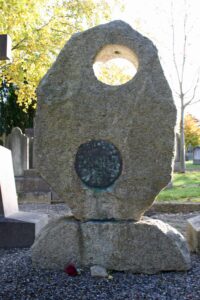 He was given a full IRA guard of honour, which escorted his coffin. It was described by several newspapers as the biggest Irish funeral of all time after those of Michael Collins and Charles Stewart Parnell. He is interred at Glasnevin Cemetery in Dublin. Other notable final footprints at Glasnevin include; Michael Collins, Maud Gonne, Gerard Manley Hopkins, and Seán MacBride.
#RIP #OTD in 1994 writer, humorist, newspaper columnist (Atlanta Journal-Constitution), Lewis Grizzard died from complications of his 4th heart-valve surgery in Atlanta, aged 47. Some of his cremated remains scattered at the 50-yard line of Sanford Stadium, University of Georgia
#RIP #OTD in 2020 singer (“Ruby, Don’t Take Your Love to Town”, “Lucille”, “Coward of the “County”, “The Gambler”), songwriter, musician, actor, entrepreneur Kenny Rogers died while under hospice care at his home in Sandy Springs, Georgia, aged 81. Oakland Cemetery in Atlanta
Have you planned yours yet?
Follow us on twitter @RIPTFF
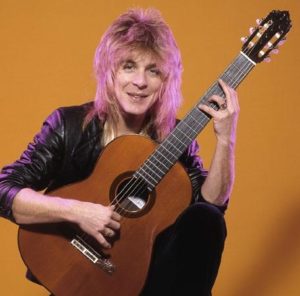 On this day in 1982, heavy metal guitarist Randy Rhoads died in a plane accident in Leesburg, Florida, at the age of 25. Born Randall William Rhoads on December 6, 1956 in Santa Monica, California. Rhoads played with Quiet Riot and Ozzy Osbourne. A devoted student of classical guitar, Rhoads combined his classical music influences with his own heavy metal style. Despite his short career, Rhoads, who was a major influence on neoclassical metal, is cited as an influence by many guitarists.

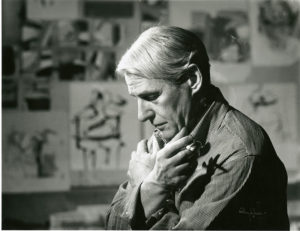 On this day in 1997, artist Willem de Kooning died from complications of Alzheimer’s disease at the age of 92 in East Hampton, New York. Born April 24, 1904 in Rotterdam, Netherlands. He moved to the United States in 1926, and became an American citizen in 1962. On December 9, 1943, he married painter Elaine Fried.

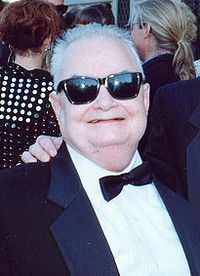 On this day in 2007, actor and comedian, Larry Bud Melman, died at Good Samaritan Hospital in West Islip, New York at the age of 85. Born Calvert Grant DeForest on 23 July 1921 in Brooklyn. Perhaps best known for his appearances on Late Night with David Letterman and the Late Show with David Letterman. He was the cousin of actor DeForest Kelley of Star Trek fame. His appearances on Letterman were so funny. I used to watch Letterman back in the day when I could stay awake past 2300 hours.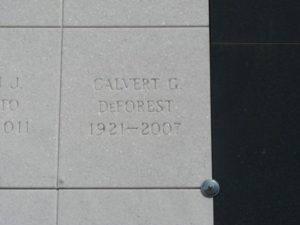
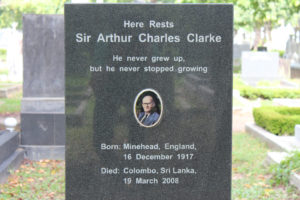
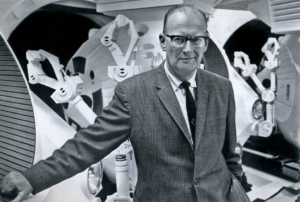 On this day in 2008, science fiction writer, science writer and futurist, inventor, undersea explorer, and television series host Arthur C. Clarke died in Colombo, Sri Lanka from respiratory failure at the age of 90. Born Arthur Charles Clarke on 16 December 1917 in Minehead, Somerset, England, UK.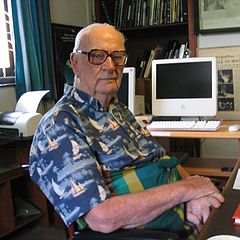
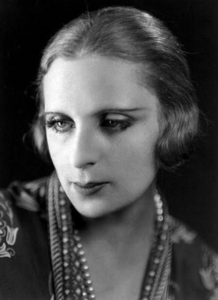 On this day in 1980 artist Tamara de Łempicka died in Cuernavaca, Mexico at the age of 81. Born Tamara Rozalia Gurwik-Górska on 16 May 1898 in Warsaw, Poland. She spent her working life in France and the United States. Perhaps best known for her polished Art Deco portraits of aristocrats and the wealthy, and for her highly stylized paintings of nudes.
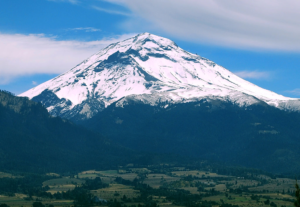 The Final Footprint
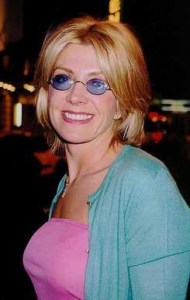 On this day in 2009, actress Natasha Richardson died at the age of 45 at Lenox Hill Hospital in Manhattan from an epidural hematoma, after hitting her head in a skiing accident at the Mont Tremblant Resort in Mont-Tremblant, Quebec, Canada. Born Natasha Jane Richardson on 11 May 1963 in Marylebone, London. Richardson was a member of the Redgrave family, being the daughter of actress Vanessa Redgrave and director/producer Tony Richardson, and the granddaughter of Michael Redgrave and Rachel Kempson.
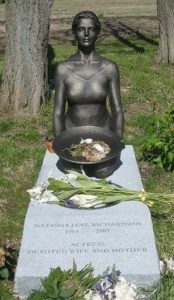 The Final Footprint
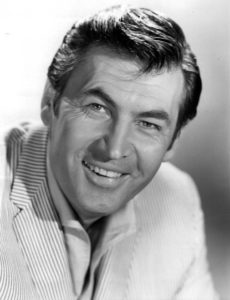 On this day in 2010, U. S. Navy and Marine
 Corp veteran, Texas Longhorn, actor and wine maker, Fess Parker, died at his home in Santa Ynez, California at the age of 85. Born Fess Elisha Parker, Jr. on 16 August 1924 in Fort Worth, Texas. Parker graduated from the University of Texas at Austin with a degree in history in 1950. Perhaps best known for his portrayals of Davy Crockett in the Walt Disney 1955 – 1956 television mini-series and as television’s Daniel Boone from 1964 – 1970. Parker founded and operated the Fess Parker Family Winery and Vineyards in Los Olivos, California. The wine labels have a logo of a golden coonskin cap and the winery sells coonskin caps. Parker was married once to Marcella Belle Rinehart (1960 – 2010 his death).
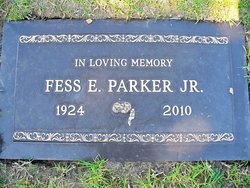 The Final Footprint – Parker is interred with is parents in Santa Barbara Cemetery in Santa Barbara, California. His grave is marked by and individual bronze marker with a coonskin emblem and the term of endearment; IN LOVING MEMORY. Other notable Final Footprints at Santa Barbara include; Laurence Harvey, Suzy Parker (no relation) and Kenneth Rexroth.
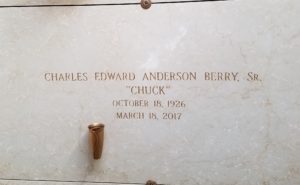
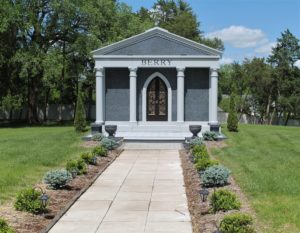
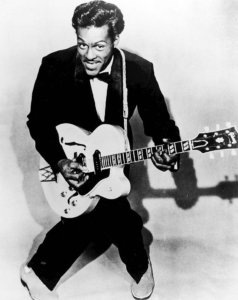 On this day in 2017, musician, singer, songwriter, rock and roll pioneer, Chuck Berry died at his home in St. Charles County, Missouri at the age of 90. Born Charles Edward Anderson Berry on October 18, 1926 in St. Louis, Missouri. With songs such as “Maybellene” (1955), “Roll Over Beethoven” (1956), “Rock and Roll Music” (1957) and “Johnny B. Goode” (1958), Berry refined and developed rhythm and blues into major elements that made rock and roll distinctive. Writing lyrics that focused on teen life and consumerism, and developing a music style that included guitar solos and showmanship, Berry was a major influence on subsequent rock music.



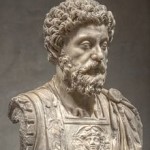 On this day in 180 AD, Joint 16th Emperor of the Roman Empire, Philosopher King, Marcus Aurelius died in the city of Vindobona (modern Vienna) or in Sirmium, Serbia, the age of 58. Born Marcus Annius Catilius Severus on 26 April 121 in Rome. He ruled with Lucius Verus as co-emperor from 161 until Verus’ death in 169. Aurelius was the last of the Five Good Emperors, and is also considered one of the most important Stoic philosophers. During his reign, the Empire defeated a revitalized Parthian Empire in the East; Aurelius’ general Avidius Cassius sacked the capital Ctesiphon in 164. In central Europe, Aurelius fought the Marcomanni, Quadi, and Sarmatians with success during the Marcomannic Wars, with the threat of the Germanic tribes beginning to represent a troubling reality for the Empire. A revolt in the East led by Cassius failed to gain momentum and was suppressed immediately. Aurelius’ Stoic tome Meditations, written in Greek while on campaign between 170 and 180, is still revered as a literary monument to a philosophy of service and duty, describing how to find and preserve equanimity in the midst of conflict by following nature as a source of guidance and inspiration. Aurelius married his first cousin Faustina the Younger in 145. During their 30-year marriage Faustina bore 13 children.
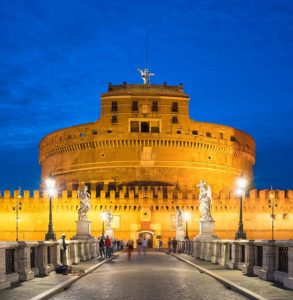 The Final Footprint – Aurelius was cremated and immediately deified and his cremated remains were returned to Rome, and rested in Hadrian’s mausoleum (modern Castel Sant’Angelo) until the Visigoth sack of the city in 410. His campaigns against Germans and Sarmatians were also commemorated by a column and a temple built in Rome. In the 1964 movie The Fall of the Roman Empire he was portrayed by Alec Guinness and in the 2000 movie Gladiator he was portrayed by Richard Harris. Both movie plots posited that Aurelius was assassinated because he intended to pass down power to Aurelius’s adopted son, a Roman general, instead of his biological son Commodus.
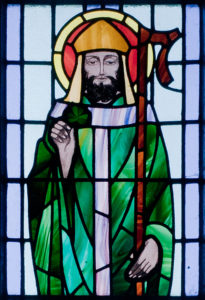 On this day; the traditional death date of fifth-century Romano-British Christian missionary and bishop in Ireland, Saint Patrick. Known as the “Apostle of Ireland”, he is the primary patron saint of Ireland, the other patron saints being Brigit of Kildare and Columba. He is venerated in the Catholic Church, the Anglican Communion, the Lutheran Churches, the Old Catholic Church, and in the Eastern Orthodox Church as equal-to-the-apostles and Enlightener of Ireland.
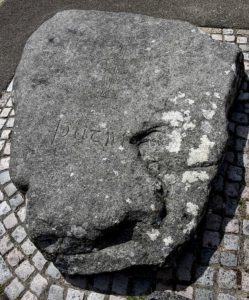 The Final Footprint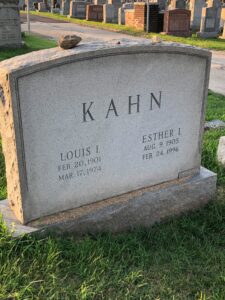
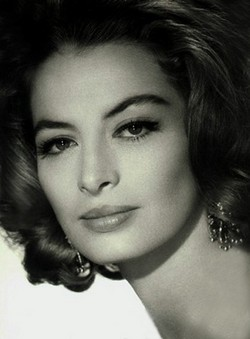 On this day in 1990, French actress and fashion model, Capucine jumped to her death from her eighth-floor apartment in Lausanne, Vaud, Switzerland, where she had lived for 28 years, at the age of 57. Born Germaine Lefebvre on 6 January 1933 in Toulon, France. Capucine is best known for her comedic roles in North to Alaska (1960) starring John Wayne, Stewart Granger and Fabian; The Pink Panther (1963) starring David Niven and Peter Sellers; What’s New Pussycat? (1965) starring Sellers and Peter O’Toole.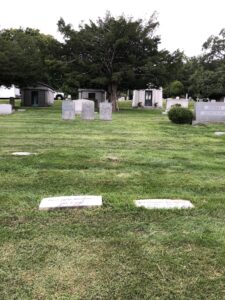
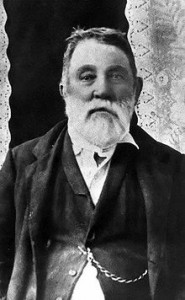
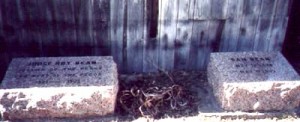 The Final Footprint – Bean and his son Sam are interred at the Whitehead Museum in Del Rio, Texas. Bean’s grave is marked by a flat granite marker inscribed; JUSTICE OF THE PEACE / LAW WEST OF THE PECOS. Lillie Langtry recounted how she visited the area following the death of Bean in her autobiography, The Days I Knew (1925).
 On this day in 1970 singer Tammi Terrell died from a brain tumor in Philadelphia at the age of 24. Born Thomasina Winifred Montgomery on April 29, 1945 in Philadelphia. Perhaps best known as a singer for Motown Records during the 1960s, most notably for a series of duets with Marvin Gaye. Terrell’s career began as a teenager, first recording for Scepter/Wand Records, before spending nearly two years as a member of James Brown‘s Revue, recording for Brown’s Try Me label. After a period attending college, Terrell recorded briefly for Checker Records, before signing with Motown in 1965. With Gaye, Terrell scored seven Top 40 singles on the Billboard Hot 100, including “Ain’t No Mountain High Enough”, “Ain’t Nothing Like the Real Thing” and “You’re All I Need to Get By”. Terrell’s career was interrupted when she collapsed into Gaye’s arms as the two performed at a concert at Hampden–Sydney College on October 14, 1967, with Terrell later being diagnosed with a brain tumor.
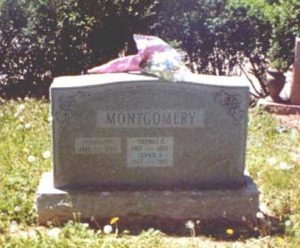 The Final Footprint
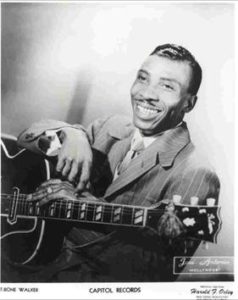 On this day in 1975, blues guitarist, singer, songwriter T-Bone Walker died of bronchial pneumonia following a stroke in Los Angeles, at the age of 64. Born Aaron Thibeaux Walker on May 28, 1910 in Linden, Texas. He was a pioneer and innovator of the jump blues and electric blues sound. Much of his output was recorded from 1946 to 1948 for Black & White Records, including his most famous song, “Call It Stormy Monday (But Tuesday Is Just as Bad)” (1947). Other notable songs he recorded during this period were “Bobby Sox Blues” (a number 3 R&B hit in 1947) and “West Side Baby” (number 8 on the R&B singles chart in 1948). He won a Grammy Award for Best Ethnic or Traditional Folk Recording in 1971 for Good Feelin’.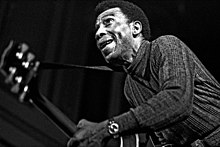
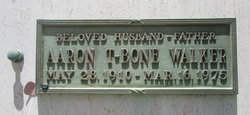 The Final Footprint
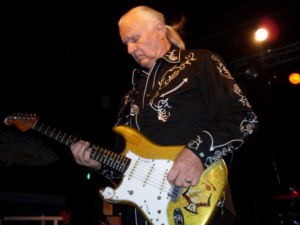 On this day in 2019, guitarist, The King of the Surf Guitar, Dick Dale died
  On this day in 44BC, Roman general, statesman, Consul, and notable author of Latin prose, Julius Caesar was assassinated by a group of rebellious senators led by Marcus Junius Brutus, on the steps of the Senate in Rome. He was 55. born into a patrician family, the gens Julia, which claimed descent from Iulus, son of the legendary Trojan prince Aeneas, supposedly the son of the goddess Venus, in July 100 BC, in Rome. Caesar played a critical role in the events that led to the demise of the Roman Republic and the rise of the Roman Empire. In 60 BC, Caesar, Crassus, and Pompey formed a political alliance that was to dominate Roman politics for several years. Their attempts to amass power through populist tactics were opposed by the conservative ruling class within the Roman Senate, among them Cato the Younger with the frequent support of Cicero. Caesar’s victories in the Gallic Wars, completed by 51 BC, extended Rome’s territory to the English Channel and the Rhine. Caesar became the first Roman general to cross both when he built a bridge across the Rhine and conducted the first invasion of Britain. These achievements granted him unmatched military power and threatened to eclipse the standing of Pompey, who had realigned himself with the Senate after the death of Crassus in 53 BC. With the Gallic Wars concluded, the Senate ordered Caesar to step down from his military command and return to Rome. Caesar refused the order, and instead marked his defiance in 49 BC by crossing the Rubicon with a legion, leaving his province and illegally entering Roman Italy under arms. Civil war resulted, and Caesar’s victory in the war would put him in an unrivaled position of power and influence. After assuming control of government, Caesar began a programme of social and governmental reforms, including the creation of the Julian calendar. He centralised the bureaucracy of the Republic and was eventually proclaimed “dictator in perpetuity”, giving him additional authority. But the underlying political conflicts had not been resolved, which resulted in his assassination.
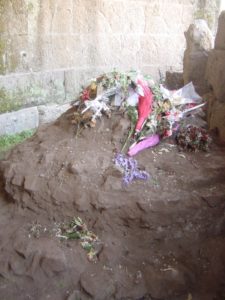 The Final Footprint – According to Plutarch, after the assassination, Brutus stepped forward as if to say something to his fellow senators; they, however, fled the building. Brutus and his companions then marched to the Capitol while crying out to their beloved city: “People of Rome, we are once again free!” They were met with silence, as the citizens of Rome had locked themselves inside their houses as soon as the rumor of what had taken place had begun to spread. Caesar’s dead body lay where it fell on the Senate floor for nearly three hours before other officials arrived to remove it. His body was cremated, and on the site of his cremation the Temple of Caesar was erected a few years later (at the east side of the main square of the Roman Forum). Only its altar now remains. A lifesize wax statue of Caesar was later erected in the forum displaying the 23 stab wounds. A crowd who had gathered there started a fire, which badly damaged the forum and neighboring buildings. A new series of civil wars broke out, and the constitutional government of the Republic was never fully restored. Caesar’s adopted heir Octavius, later known as Augustus, rose to sole power after defeating his opponents in the civil war. Octavius set about solidifying his power, and the era of the Roman Empire began. Much of Caesar’s life is known from his own accounts of his military campaigns, and from other contemporary sources, mainly the letters and speeches of Cicero and the historical writings of Sallust. The later biographies of Caesar by Suetonius and Plutarch are also major sources. Caesar is considered by many to be one of the greatest military commanders in history.
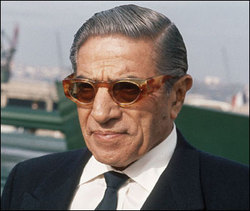 On this day in 1975, prominent Greek shipping magnate, Aristotle Onassis, died in Neuilly-sur-Seine, France, of respiratory failure at the age of 69. Born Aristotle Socrates Onassis on 15 January 1906 in Karatass, a suburb of Smyrna (now İzmir, Turkey). During his lifetime he was one of the wealthiest and most famous men in the world. Onassis married twice; Athina Livanos (1946 – 1960 divorce), daughter of shipping magnate Stavros Livanos and Jacqueline Bouvier Kennedy (1968 – 1975 his death). Onassis reportedly had a notorious affair with Maria Callas shortly after the two met in 1957. Onassis was quoted as saying, “There [was] just a natural curiosity; after all, we were the most famous Greeks alive in the world.” Livanos divorced Onassis over the affair. He ended his relationship with Callas to marry Kennedy.
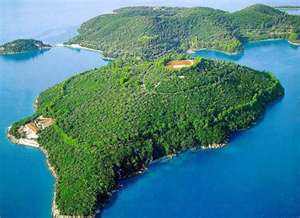 The Final Footprint – Onassis was entombed in a sarcophagus beside the chapel next to his son Alexander in the Island of Skorpios Cemetery on Skorpios Island in the Ionian Sea off the western coast of Greece, a private island owned by Onassis.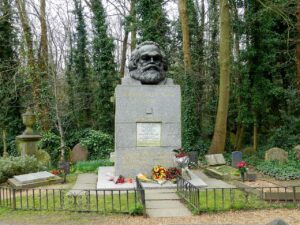
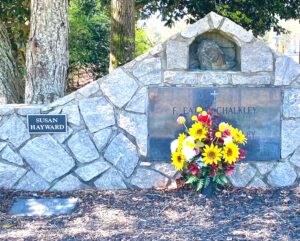
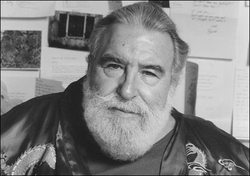 On this day in 1991, lyricist and blues singer, Doc Pomus, died from cancer in Manhattan at the age of 65. Born Jerome Solon Felder on 27 June 1925 in Brooklyn, New York. Best known for the many rock and roll songs he co-wrote, with Mort Shuman including; “A Teenager in Love”; “Save The Last Dance For Me”; “Hushabye”; “This Magic Moment”; “Turn Me Loose”; “Sweets For My Sweet”; “Go Jimmy Go”, “Can’t Get Used to Losing You”; “Little Sister”; “Suspicion”; “Surrender”; “Viva Las Vegas”; “(Marie’s the Name) His Latest Flame”; and with Mike Stoller and Jerry Leiber: “Young Blood” and “She’s Not You”.
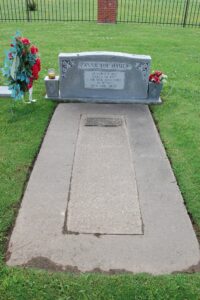
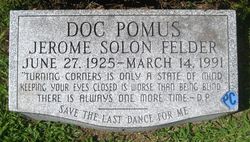 The Final Footprint – Pomus is interred in Beth David Cemetery, Elmont, New York. His grave is marked with an individual granite marker engraved with; “TURNING CORNERS IS ONLY A STATE OF MIND KEEPING YOUR EYES CLOSED IS WORSE THAN BEING BLIND.” THERE IS ALWAYS ONE MORE TIME – D. P. / SAVE THE LAST DANCE FOR ME
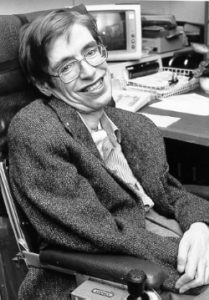 On this day in 2018 theoretical physicist, cosmologist, and author Stephen Hawking died at his home in Cambridge, England from ALS at the age of 76. Born Stephen William Hawking on 8 January 1942 in Oxford, England. Hawking was born on the 300th anniversary of Galileo’s death. He was director of research at the Centre for Theoretical Cosmology at the University of Cambridge at the time of his death. He was the Lucasian Professor of Mathematics at the University of Cambridge between 1979 and 2009.
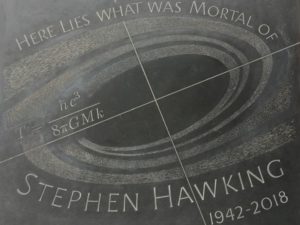 The Final Footprint
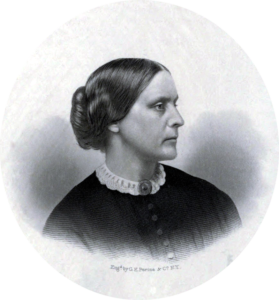 On this day in 1906, social reformer and women’s rights activist Susan B. Anthony died at the age of 86 of heart failure and pneumonia in her home in Rochester, New York. Born on February 15, 1820 in Adams, Massachusetts. She played a pivotal role in the women’s suffrage movement. Born into a Quaker family committed to social equality, she collected anti-slavery petitions at the age of 17. In 1856, she became the New York state agent for the American Anti-Slavery Society.
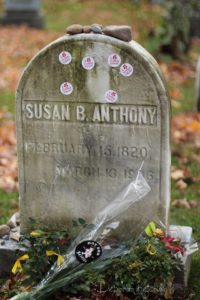 The Final Footprint
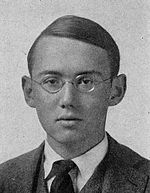 On this day in 1943, author, poet, short story writer novelist, Pulitzer Prize winner, Stephen Vincent Benét, died of a heart attack in New York City at the age of 44. Born on 22 July 1898 in Bethlehem, Pennsylvania. Benét is best known for his book-length narrative poem of the American Civil War, John Brown’s Body (1928), for which he won a Pulitzer Prize in 1929, and for two short stories, “The Devil and Daniel Webster” and “By the Waters of Babylon.” He graduated from Yale.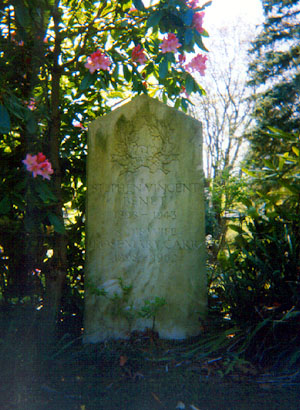
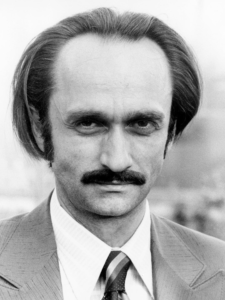 On this day in 1978, actor John Cazale died in New York City from lung cancer with girlfriend Meryl Streep by his side, at the age of 42. Born John Holland Cazale on 12 August 1935 in Revere, Massachusetts. Perhaps best known for his role as Michael Corleone’s big brother Fredo in Francis Ford Coppola‘s Godfather films. During his six-year film career he appeared in five films, each nominated for the Academy Award for Best Picture: The Godfather, The Conversation, The Godfather Part II, Dog Day Afternoon and The Deer Hunter. He appeared in archival footage in The Godfather III, which was nominated for the Best Picture Oscar. He is the only actor to have this multi-film distinction.
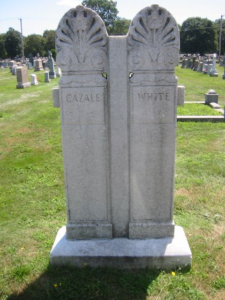 The Final Footprint – Cazale was interred at Holy Cross Cemetery in Malden, Massachusetts. Al Pacino said: “I’ve hardly ever seen a person so devoted to someone who is falling away like John was. To see her (Streep) in that act of love for this man was overwhelming.”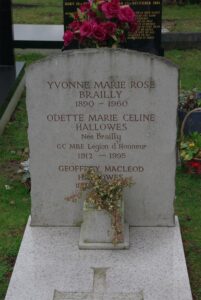
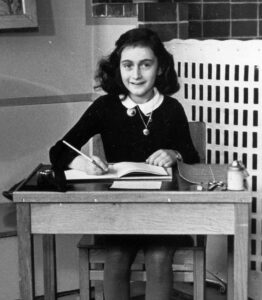 On this approximate day in 1945, victim of the Holocaust and diarist, Anne Frank, died in the Bergen-Belsen concentration camp in Lower Saxony, Nazi Germany at the age of 15. Born Annelies Marie Frank on 12 June 1929 in Frankfurt am Main, Germany. The Frank family moved from Germany to Amsterdam in 1933, the year the Nazis gained control over Germany. By the beginning of 1940, they were trapped in Amsterdam by the Nazi occupation of the Netherlands. As persecutions of the Jewish population increased in July 1942, the family went into hiding in the hidden rooms of Anne’s father, Otto Frank’s, office building. After two years, the group was betrayed and transported to concentration camps. Anne and her sister, Margot, were eventually transferred to the Bergen-Belsen concentration camp, where they both died of typhus in March 1945. Otto, the only survivor of the family, returned to Amsterdam after the war to find that Anne’s diary had been saved, and his efforts led to its publication in 1947. It was translated from its original Dutch and first published in English in 1952 as The Diary of a Young Girl. The diary, which was given to Anne on her 13th birthday, chronicles her life from 12 June 1942 until 1 August 1944.
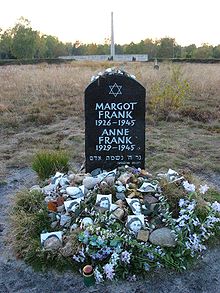 The Final Footprint – Anne and her sister Margot were buried in a mass grave at Bergen-Belsen, the exact whereabouts are not known. A memorial to the sisters has been erected there. A bronze statue of Anne was erected outside the Westerkerk in Amsterdam. A bronze plaque in Anne’s memory was placed at Beth Olam Cemetery in Los Angeles. The plaque has the term of endearment; A Star shines in the dark. The plaque also has a picture of Anne cast into the bronze and the following inscription from her diary; “This is a photo as I wish I still was. If so, I would still have a chance to come to Hollywood.”



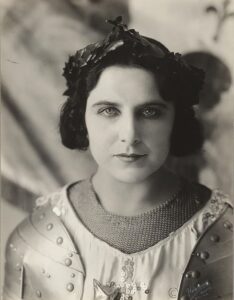 On this day in 1967, soprano opera singer and actress Geraldine Farrar died in Ridgefield, Connecticut of a heart attack at the age of 85. Born in Melrose, Massachusetts on 28 February 1882. Farrar was noted for her beauty, acting ability, and “the intimate timbre of her voice.” She had a large following among young women, who were nicknamed “Gerry-flappers”. Farrar studied voice with the American soprano Emma Thursby and the Italian baritone Francesco Graziani. Farrar created a sensation at the Berlin Hofoper with her debut as Marguerite in Charles Gounod’s Faust in 1901 and remained with the company for three years, during which time she continued her studies with famed German soprano Lilli Lehmann. She appeared in the title rôles of Ambroise Thomas’ Mignon and Jules Massenet’s Manon, as well as Juliette in Gounod’s Roméo et Juliette. Her admirers in Berlin included Crown Prince Wilhelm of Germany, with whom she is believed to have had a relationship beginning in 1903. After three years with the Monte Carlo Opera, she made her debut at the New York Metropolitan Opera in Romeo et Juliette on 26 November 1906. Farrar appeared in the first Met performance of Giacomo Puccini’s Madama Butterfly in 1907 and remained a member of the company until her retirement in 1922, singing 29 roles there in nearly 500 performances. In 1960 Farrar was awarded two stars on the Hollywood Walk of Fame, in the music and film categories (at 1620 & 1709 Vine Street).
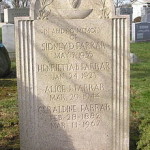 The Final Footprint – Farrar was buried in Kensico Cemetery in Valhalla, New York. Other notable final footprints at Kensico include; Anne Bancroft, Tommy Dorsey, Lou Gehrig, Danny Kaye, Robert Merrill, Sergei Rachmaninoff, and Ayn Rand.

