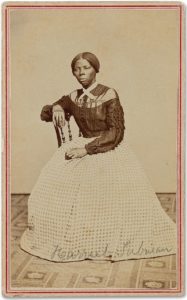
 On this day in 1913, abolitionist and political activist Harriet Tubman died in Auburn, New York surrounded by friends and family members of pneumonia, aged 90-91. Born Araminta Ross, c. January 29, 1822 in Dorchester County, Maryland. Born a slave, Tubman was beaten and whipped by her various masters as a child. Early in life, she suffered a traumatic head wound when an irate slave owner threw a heavy metal weight intending to hit another slave but hit her instead. The injury caused dizziness, pain, and spells of hypersomnia, which occurred throughout her life. She was a devout Christian and experienced strange visions and vivid dreams, which she ascribed to premonitions from God.
In 1849, Tubman escaped to Philadelphia, then immediately returned to Maryland to rescue her family. Slowly, one group at a time, she brought relatives with her out of the state, and eventually guided dozens of other slaves to freedom. Traveling by night and in extreme secrecy, Tubman (or “Moses”, as she was called) “never lost a passenger”. After the Fugitive Slave Act of 1850 was passed, she helped guide fugitives farther north into British North America, and helped newly freed slaves find work. Tubman met the abolitionist John Brown in 1858, and helped him plan and recruit supporters for the raid on Harpers Ferry.
When the Civil War began, Tubman worked for the Union Army, first as a cook and nurse, and then as an armed scout and spy. The first woman to lead an armed expedition in the war, she guided the raid at Combahee Ferry, which liberated more than 700 slaves. After the war, she retired to the family home on property she had purchased in 1859 in Auburn, New York, where she cared for her aging parents. She was active in the women’s suffrage movement until illness overtook her and she had to be admitted to a home for elderly African Americans that she had helped to establish years earlier. After she died in 1913, she became an icon of courage and freedom.

Tubman, 1911
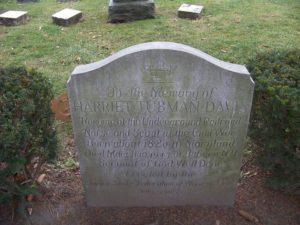
The Final Footprint
Just before she died, she told those in the room: “I go to prepare a place for you.” Tubman was buried with semi-military honors at Fort Hill Cemetery in Auburn.
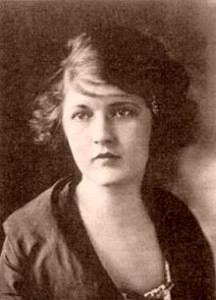 On this day in 1948, novelist and wife of F. Scott Fitzgerald, Zelda Fitzgerald, died in a fire at the Highland Hospital in Asheville, North Carolina at the age of 47. Born Zelda Sayre on 24 July 1900 in Montgomery, Alabama. The Fitzgeralds were icons of the 1920s; she was dubbed by her husband “the first American Flapper”. After the success of his first novel, This Side of Paradise (1920), the Fitzgeralds became celebrities and were seen as embodiments of the Jazz Age and the Roaring Twenties: young, seemingly wealthy, beautiful, and energetic. The couple has been the subject of popular books, movies and scholarly attention. They were married 3 April 1920 in St. Patrick’s Cathedral. They had one daughter Frances Scott “Scottie” Fitzgerald (26 October 1921 – 16 June 1986). Zelda wrote a semi-autobiographical novel, Save Me the Waltz (1932) and worked on another novel, Caesar’s Things, which she never finished.
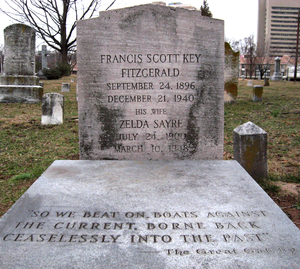 The Final Footprint
Zelda was interred next to Scott, who died 21 December 1940, in Rockville, Maryland—originally in the Rockville Union Cemetery, away from his family plot. In 1975, however, Scottie successfully campaigned for them to be buried with the other Fitzgeralds at Saint Mary’s Catholic Cemetery in Rockville. Engraved on their tombstone is the final sentence of The Great Gatsby: “SO WE BEAT ON, BOATS AGAINST THE CURRENT, BORNE BACK CEASELESSLY INTO THE PAST”.
#RIP #OTD in 1967, composer (The Magic Harp, Colin Clout, Gaelic Hymns, Glencree, Wildgeese), Ina Boyle died of cancer in Greystones, County Wicklow, Ireland, aged 78. churchyard of St. Patrick’s Church in Enniskerry, County Wicklow
#RIP #OTD in 1986 actor (The Lost Weekend, Reap the Wild Wind, Dial M for Murder, Love Story), film director Ray Milland died of lung cancer; Torrance Memorial Medical Center, Torrance, California, aged 79. Cremated remains scattered in the Pacific Ocean off the coast of Redondo Beach CA
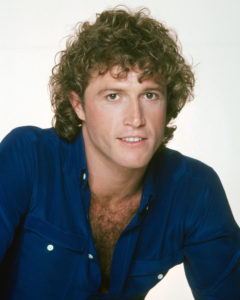 On this day in 1988, singer, songwriter Andy Gibb died from myocarditis, an inflammation of the heart muscle caused by a viral infection in John Radcliffe Hospital in Oxford, at the age of 30. Born Andrew Roy Gibb on 5 March 1958 in Manchester, England. He was the younger brother of the Bee Gees: Barry, Robin, and Maurice Gibb.
Gibb came to international prominence in the late 1970s with six singles that reached the Top 10 in the United States, starting with “I Just Want to Be Your Everything” (1977), followed by three other top 20 singles.
The Final Footprint

Gibb’s body was returned to the United States, where he was entombed at Forest Lawn Memorial Park in Hollywood Hills, Los Angeles. The crypt plate reads Andy Gibb / March 5, 1958 – March 10, 1988 / “An Everlasting Love”. Other notable final footprints at Hollywood Hills include; Gene Autry, David Carradine, Scatman Crothers, Bette Davis, Sandra Dee, Ronnie James Dio, Michael Clarke Duncan, Carrie Fisher, Bobby Fuller, Michael Hutchence, Jill Ireland, Al Jarreau, Lemmy Kilmister, Jack LaLanne, Nicolette Larsen, Liberace, Strother Martin, Ricky Nelson, Bill Paxton, Brock Peters, Freddie Prinze, Lou Rawls, John Ritter, Debbie Reynolds, Telly Savalas, Lee Van Cleef, Paul Walker, and Jack Webb.
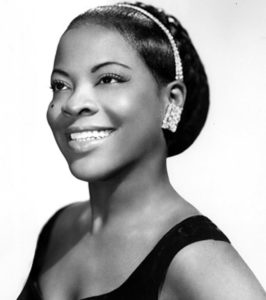
On this day in 1997, rhythm-and-blues singer LaVern Baker died of cardiovascular disease, at the age of 67. Born Delores Evans on November 11, 1929 in Chicago. She had several hit records on the pop chart in the 1950s and early 1960s. Her most successful records were “Tweedle Dee” (1955), “Jim Dandy” (1956), and “I Cried a Tear” (1958). In 1990 Baker was among the first eight recipients of the Pioneer Award from the Rhythm and Blues Foundation. In 1991, she became the second female solo artist inducted into the Rock and Roll Hall of Fame, following Aretha Franklin in 1987. “Jim Dandy” was named one of the Rock and Roll Hall of Fame’s 500 Songs That Shaped Rock and Roll.
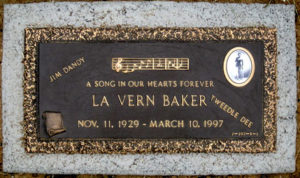 The Final Footprint
She was interred in an unmarked plot in Maple Grove Cemetery, in Kew Gardens, New York. Local historians raised funds for a headstone, which was installed on May 4, 2008. Maple Grove is a historic cemetery at 127-15 Kew Gardens Road in Briarwood/Kew Gardens, Queens, New York City, New York. It was added to the National Register of Historic Places in 2004.
#RIP #OTD in 1998, actor (Sahara, A Walk in the Sun, Little Big Horn, High Noon, Sea Hunt, Airplane!), father of Beau and Jeff, Lloyd Bridges died in Los Angeles aged 85. Cremation
#RIP #OTD in 2017, author (The Bridges of Madison County, Puerto Vallarta Squeeze), Robert James Waller died of complications from multiple myeloma at his home in Fredericksburg, Texas, aged 77
Have you planned yours yet?
Follow TFF on twitter @RIPTFF
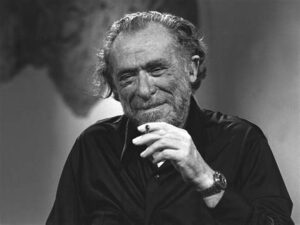 On this day in 1994, poet, novelist, and short story writer Charles Bukowski died of leukemia in San Pedro, Los Angeles, aged 73, shortly after completing his last novel, Pulp. Born Heinrich Karl Bukowski in Andernach, Germany on 16 August 1920. His writing was influenced by the social, cultural, and economic ambience of his home city of Los Angeles. His work addresses the ordinary lives of poor Americans, the act of writing, alcohol, relationships with women, and the drudgery of work. Bukowski wrote thousands of poems, hundreds of short stories and six novels, eventually publishing over sixty books. The FBI kept a file on him as a result of his column, Notes of a Dirty Old Man, in the LA underground newspaper Open City.
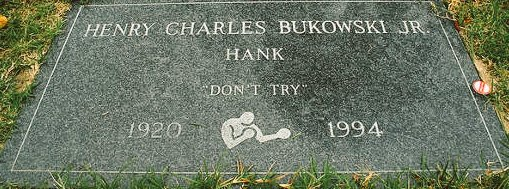 The Final Footprint – Bukowski is interred in
 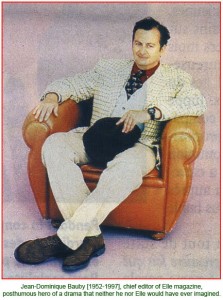 On this day in 1997, French journalist, author and editor of the French fashion magazine ELLE, Jean-Dominique Bauby, died in Paris at the age of 44. Born 23 April 1952 in Paris. On 8 December 1995 at the age of 43, Bauby suffered a massive stroke. Waking up twenty days later, he found he was entirely paralyzed; he could only blink his left eyelid, a condition referred to as locked-in syndrome. He learned to communicate by blinking and in this manner dictated his memoir, The Diving Bell and the Butterfly (Le scaphandre et le papillon) (1997). In 2007 the book was adapted into a feature film of the same name, directed by Julian Schnabel. The film was nominated for four Academy Awards in 2008 for directing, cinematography, editing and writing.
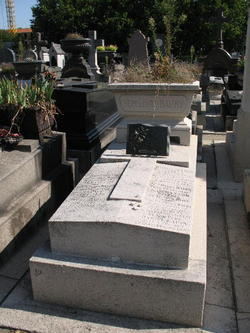 The Final Footprint – Bauby is entombed in the Bauby family crypt in Père Lachaise Cemetery in Paris, the largest cemetery in Paris and one of the most visited cemeteries in the world. Other notable Final Footprints at Père Lachaise include; Guillaume Apollinaire, Honoré de Balzac, Georges Bizet, Maria Callas, Chopin, Colette, Auguste Comte, Jean-Baptiste-Camille Corot, Max Ernst, Molière, Jim Morrison, Édith Piaf, Camille Pissarro, Marcel Proust, Sully Prudhomme, Gioachino Rossini, Georges-Pierre Seurat, Simone Signoret, Gertrude Stein, Dorothea Tanning, Alice B. Toklas, Oscar Wilde, and Richard Wright.
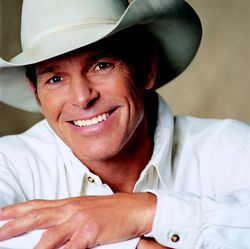 On this day in 2005, rodeo champion, country music singer and songwriter, bronze sculptor, Grammy Award nominee, Chris LeDoux, died in Casper, Wyoming from cancer at the age of 56. Born Chris Lee LeDoux 2 October 1948 in Biloxi, Mississippi. In 1976, LeDoux won the world bareback riding championship at the National Finals Rodeo in Oklahoma City. During his music career LeDoux recorded 36 albums, many self-released. His album, Whatcha Gonna Do with a Cowboy, was certified gold by the Recording Industry Association of America.
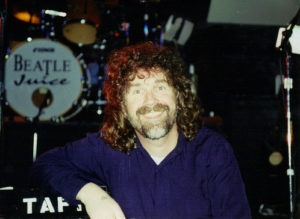 On this day in 2007, singer and songwriter Brad Delp died by suicide from carbon monoxide poisoning at his home in Atkinson, New Hampshire, at the age of 55. Born Bradley Edward Delp on June 12, 1951 in Peabody, Massachusetts. Perhaps best known as the lead vocalist of the rock band Boston (“More Than a Feeling”, “Peace of Mind”, “Foreplay/Long Time”, “Rock and Roll Band”, “Smokin'”, “Don’t Look Back”).





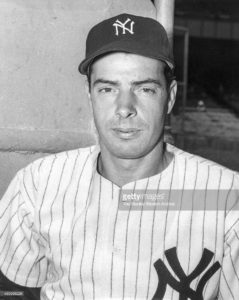 On this day in 1999, baseball Hall of Fame
 player, 3-time MVP, 13-time All Star, 9-time World Series champion, “Joltin’ Joe”, “The Yankee Clipper”, Joe DiMaggio, died at his home in Hollywood, Florida at the age of 84 from lung cancer. Born Giuseppe Paolo DiMaggio on 25 November 1914 in Martinez, California. Perhaps best known for his 56-game hitting streak (15 May – 16 July 1941), a record that still stands. I believe he is the only player to be named an all-star in every season he played. The Yankees retired his number 5 in 1952.
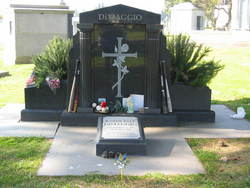 The Final Footprint – DiMaggio is entombed in a private single crypt mausoleum in Holy Cross Catholic Cemetery in Colma, California. A raised granite cenotaph in front of the mausoleum was engraved with his name and birth and death dates and the term of endearment; GRACE, DIGNITY AND ELEGANCE PERSONIFIED. His final words may or may not have been, “I’ll finally get to see Marilyn.” Another notable final footprint at Holy Cross; Vince Guaraldi.
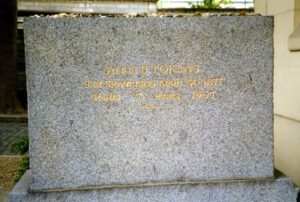
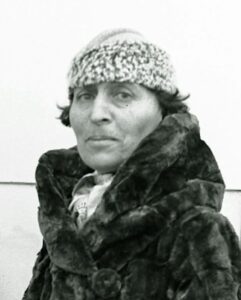 On this day in 1967, member of the Parisian avant-garde of the early 20th century, Alice B. Toklas died in Paris at the age of 89. Born Alice Babette Toklas in San Francisco on 30 April 1877. Toklas was the life partner of American writer Gertrude Stein. Toklas met Stein in Paris on September 8, 1907, the day she arrived there from San Francisco after the 1906 San Francisco earthquake. Together they hosted a salon in the home they shared that attracted expatriate American writers and avant-garde painters. Acting as Stein’s confidante, lover, cook, secretary, muse, editor, critic, and general organizer, Toklas remained a background figure, chiefly living in the shadow of Stein, until the publication by Stein of Toklas’ “memoirs” in 1933 under the title The Autobiography of Alice B. Toklas. It became Stein’s bestselling book. Toklas and Stein remained a couple until Stein’s death in 1946. Although Stein willed much of her estate to Toklas, including their shared art collection (some of them by Picasso) housed in their apartment at 5, rue Christine, the couple’s relationship had no legal recognition. As many of the paintings appreciated greatly in value, Stein’s relatives took action to claim them, eventually removing them from Toklas’s residence while she was away on vacation and placing them in a bank vault. Toklas then relied on contributions from friends as well as her writing to make a living.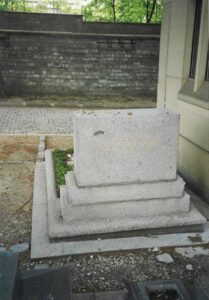
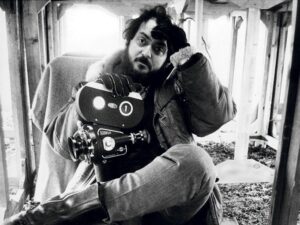 On this day in 1999, film director, writer, producer, and photographer, Stanley Kubrick, died in his sleep at his home in Harpenden, Hertfordshire, England at the age of 70. Born on 26 July 1928, at the Lying-In Hospital in Manhattan, New York. Best known for his films, Spartacus (1960), Lolita (1962), Dr. Strangelove (1964), 2001: A Space Oddysey (1968), A Clockwork Orange (1971), The Shining (1980), Full Metal Jacket (1987) and Eyes Wide Shut (1999).
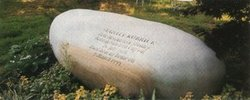 The Final Footprint – Kubrick is interred next to his favorite tree at his home in Childwickbury Manor, Hertfordshire, England, U.K. His grave is marked with an engraved stone with the term of endearment; “Here lies our love Stanley”.
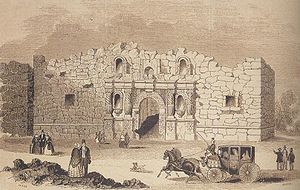 On this day in 1836, following a 13-day seige, Mexican troops under President General Antonio López de Santa Anna launched a final assault on the Alamo Mission near San Antonio de Béxar (modern-day San Antonio, Texas) killing all but two of the Texian defenders. The Battle of the Alamo was a pivotal event in the Texas Revolution. The Texians under General Sam Houston later defeated Santa Anna and the Mexican Army at the Battle of San Jacinto on 21 April 1836. The Texians’ battle cry that day was “Remember the Alamo” and “Remember Goliad.” The story has been made into two major motion pictures; The Alamo (1960) directed by John Wayne and The Alamo (2004) directed by John Lee Hancock. Among those killed at the Alamo;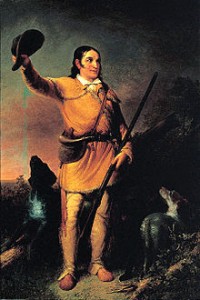
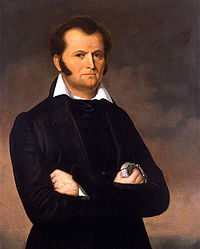 James “Jim” Bowie – pioneer, Texas Ranger and soldier. Born on 10 April 1796 in Logan County, Kentucky. He popularized the Bowie knife. Bowie was 39 at the time of his death. Bowie, Texas and Bowie County are named in his honor. Bowie was portrayed in the Alamo movies by Richard Widmark and Jason Patric.
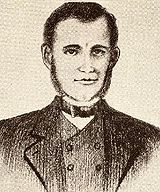 William Barret Travis – lawyer and soldier. Born 9 August 1809 in Saluda County, South Carolina. Travis married once, Rosanno Cato (1828 – 1836 divorce). Travis was 26 years old when he died. Travis was portayed in the Alamo movies by Laurence Harvey and Patrick Wilson. On 24 February 1836, during the siege, Travis wrote the now famous letter addressed “To the People of Texas and All Americans in the World”:
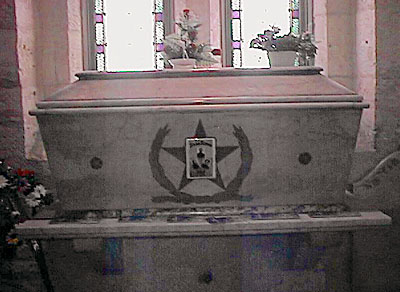 The Final Footprint – the bodies of the Texians including Crockett, Bowie and Travis were stacked and burned. Juan Seguín returned to Béxar in February 1837 to examine the remains and found ashes from the funeral pyres. He had the ashes placed in a simple coffin inscribed with the names Crockett, Bowie and Travis. According to a 28 March 1837 article in the Telegraph and Texas Register, Seguín buried the coffin under a peach tree grove. The spot was not marked and cannot now be identified. However, Seguín later claimed that he had placed the coffin in front of the altar at the San Fernando Cathedral in San Antonio. Remember the Alamo!


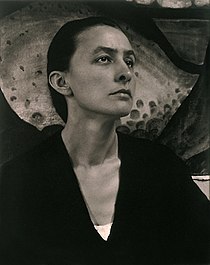
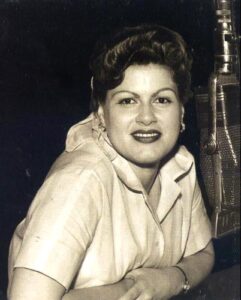 On this day in 1963, country music singer, songwriter, one of the most influential, successful, and acclaimed female vocalists of the 20th century, Patsy Cline, died in a private plane crash near Camden, Tennessee at the age of 30. Born Virginia Patterson Hensley on 8 September 1932 in Winchester, Virginia. In my opinion, the best ever female country music singer and one of my all-time favorite singers. Her contralto voice had such a rich tone and was so emotionally expressive. Her life and career have been the subject of numerous books, movies, documentaries, articles and stage plays. Her hits included “Walkin’ After Midnight”, “I Fall to Pieces”, “She’s Got You”, “Crazy”, and “Sweet Dreams”. A biographical film Sweet Dreams was released in 1985 starring Jessica Lange and Ed Harris. Lange would be nominated for an Academy Award for Best Actress. For all the musical scenes Lange lip-synched to Cline recordings. Cline was married twice; Gerald Cline (1953 – 1957 divorce) and Charlie Dick (1957 – 1963 her death).
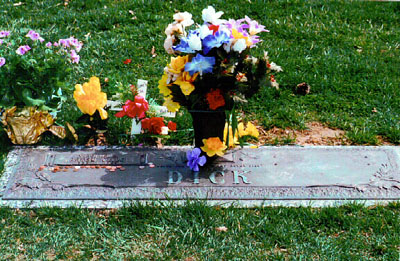 The Final Footprint – Cline is interred in Shenandoah Memorial Park, Winchester, Virginia. Her grave is marked by a companion flat bronze on granite marker with the inscription; “Death Cannot Kill What Never Dies: Love.” A bell tower in her memory at the cemetery, erected with the help of Loretta Lynn and Dottie West, plays hymns daily at 6:00 p.m., the hour of her death. A memorial marks the place where the plane crashed in the still-remote forest outside of Camden, Tennessee.
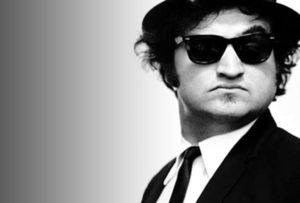 On this day in 1982, comedian, actor, and singer John Belushi died from combined drug intoxication caused by an injection of a heroin and cocaine mixture, known as a speedball at the age of 33 in
 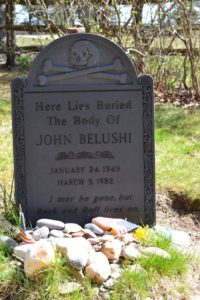 The Final Footprint
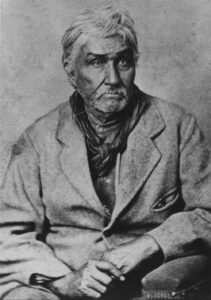 On this day in 1868, Native American Indian trader, guide, and interpreter, Jesse Chisholm, died at Left Hand Spring, near the site of present Geary, Oklahoma from food poisoning. Born in the Hiwassee region of Tennessee, probably in 1805 or 1806. His father, Ignatius, was Scottish and his mother was Cherokee. Primarily known for being the namesake of the Chisholm Trail, which ranchers used to drive their cattle to eastern markets. Chisholm had built a number of trading posts in what is now western Oklahoma. The trail had several variations but
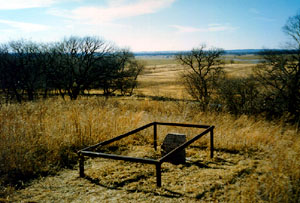 seemed to start at the Rio Grande in Texas and ran though San Antonio and ended in Abilene, Kansas.
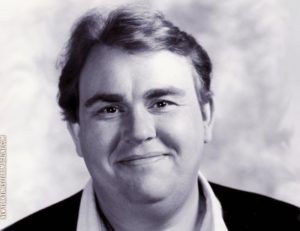 On this day in 1994, comedian and actor John Candy died of a heart attack in Durango, Mexico, aged 43. Born John Franklin Candy on October 31, 1950 in Newmarket, Ontario, Canada. Candy rose to fame as a member of the Toronto branch of the Second City and its related Second City Television series, and through his appearances in such comedy films as Stripes, Splash, Cool Runnings, Summer Rental, Home Alone, The Great Outdoors, Spaceballs, and Uncle Buck, as well as more dramatic roles in Only the Lonely and JFK. One of his most renowned onscreen performances was as Del Griffith, the talkative shower-curtain ring salesman in the John Hughes comedy Planes, Trains and Automobiles.
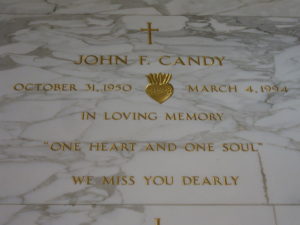 The Final Footprint
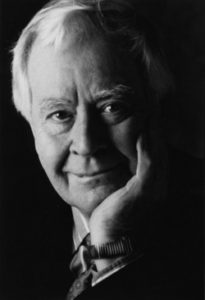 On this day in 2009 playwright and screenwriter Horton Foote died in Hartford, Connecticut at the age of 92. Born Albert Horton Foote Jr. on March 14, 1916 in Wharton, Texas. Perhaps best known for his screenplays for the 1962 film To Kill a Mockingbird and the 1983 film Tender Mercies, and his notable live television dramas during the Golden Age of Television. He received the Pulitzer Prize for Drama in 1995 for his play The Young Man From Atlanta and two Academy Awards, one for an original screenplay, Tender Mercies, and one for adapted screenplay, To Kill a Mockingbird. In 1995, Foote was the inaugural recipient of the Austin Film Festival’s Distinguished Screenwriter Award. In 2000, he was awarded the National Medal of Arts.
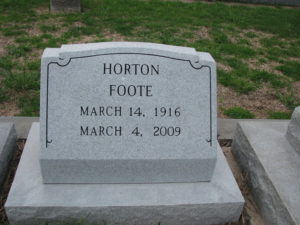 The Final Footprint
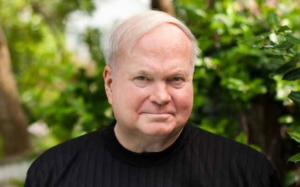 On this day in 2016, author Pat Conroy died in Beaufort, South Carolina from pancreatic cancer at the age of 70. Born Donald Patrick Conroy in Atlanta, Georgia on October 26, 1945. He wrote several acclaimed novels and memoirs. Two of his novels, The Prince of Tides (one of my personal favorites) and The Great Santini, were made into Oscar-nominated films. In my opinion, he is a leading figure of late-20th century Southern literature.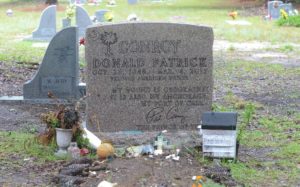
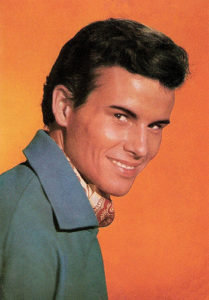 Also on this day in 2003 actor Horst Buchholz died unexpectedly at the age of sixty-nine in the Berlin Charité from pneumonia that developed after an operation for a hip fracture. Born Horst Werner Buchholz on 4 December 1933 . He appeared in more than sixty feature films from 1951 to 2002. During his youth he was sometimes called “the German James Dean.” He is perhaps best known in English-speaking countries for his role as Chico in The Magnificent Seven (1960), as a communist in Billy Wilder’s One, Two, Three (1961) and as Dr. Lessing in Life Is Beautiful (1997).
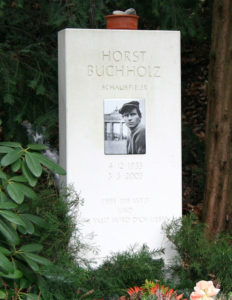 The Final Footprint
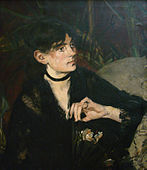
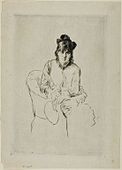
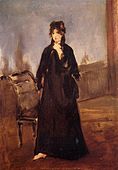
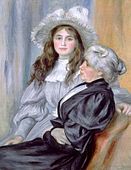
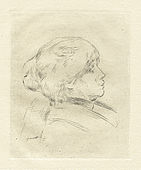
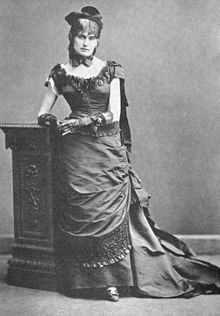 On this day in 1895, painter Berthe Morisot died in Paris, of pneumonia at the age of 54. Born
 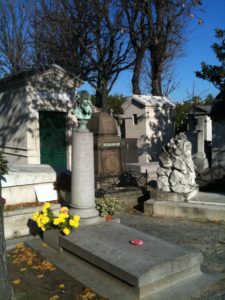 The Final Footprint – Morisot is interred in the Cimetière de Passy. Other notable final footprints as Passy include; Claude Debussy, Gabriel Faure, Hubert de Givenchy, Édouard Manet, and Octave Mirbeau.











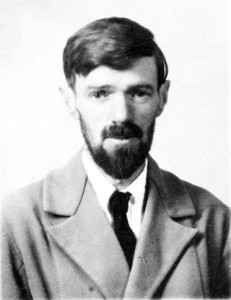 On this day in 1930, novelist, poet, playwright, essayist, literary critic and painter D. H. Lawrence died at the Villa Robermond in Vence, France, from complications of tuberculosis at the age of 44. Born David Herbert Richards Lawrence 11 September 1885 in Eastwood, Nottinghamshire, England. Perhaps best known for his novel, Lady Chatterley’s Lover, first published in 1928. The first edition was printed privately in Florence, Italy; an unexpurgated edition could not be published openly in the United Kingdom until 1960. (A private edition was issued by Mandrake Press in 1929.) The book soon became notorious for its story of the physical (and emotional) relationship between a working class man and an upper class woman, its explicit descriptions of sex, and its use of then-unprintable words.
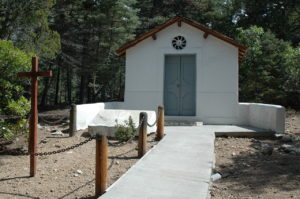 The Final Footprint – Frieda commissioned an elaborate headstone for his grave bearing a mosaic of his adopted emblem of the phoenix. After Lawrence’s death, Frieda lived with Angelo Ravagli on a ranch in Taos, New Mexico and eventually married him in 1950. In 1935 Ravagli arranged, on Frieda’s behalf, to have Lawrence’s body exhumed and cremated. However, upon boarding the ship he learned he would have to pay taxes on the cremated remains, so he instead spread them in the Mediterranean, a more preferable resting place, in his opinion, than a concrete block in a chapel. Some dust and dirt was interred on the Taos ranch in a small chapelhis ashes brought back to the D. H. Lawrence Ranch, east of Taos, New Mexico, to be interred there in a small chapel.
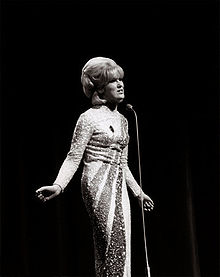 On this day in 1999, British pop singer, “The White Queen of Soul”, Dusty Springfield, died in Henley-on-Thames, Oxfordshire, England from cancer at the age of 59. Born Mary Isobel Catherine Bernadette O’Brien on 16 April 1939 in West Hampstead, North London to an Irish Catholic family. Her voice was distinctively sensual and soulful. My favorite Springfield album is Dusty in Memphis and of course my favorite song from that album is “Son of a Preacher Man.”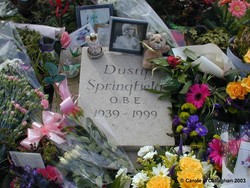
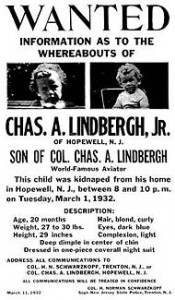 On this day in 1932, the 20 month old son of Charles Lindbergh, Charles Augustus Lindbergh, Jr., was kidnapped and murdered in Hopewell, New Jersey. Born on 22 June 1930 in Englewood Bergen, New Jersey. In what came to be referred to as “The Crime of the Century”, the boy was abducted from his family home in East Amwell, New Jersey, near the town of Hopewell, New Jersey, on the evening of 1 March 1932. His body was discovered a short distance from the Lindberghs’ home on 12 May 1932. A medical examination determined that the cause of death was a massive skull fracture. After an investigation that lasted more than two years and was ostensibly run by New Jersey State Police superintendent Colonel Herbert Norman Swarzkopf, the father of the future General H. Norman Swarzkopf, Jr., Bruno Richard Hauptmann was arrested and charged with the crime. Hauptmann was found guilty of murder in the first degree and sentenced to death. He was executed by electric chair at the New Jersey State Prison on 3 April 1936, at 8:44 in the evening. Hauptmann proclaimed his innocence to the end. Newspaper writer H. L. Mencken called the kidnapping and subsequent trial “the biggest story since the Resurrection”. The crime spurred Congress to pass the Federal Kidnapping Act, commonly called the “Lindbergh Law”, which made transporting a kidnapping victim across state lines a federal crime.