⁸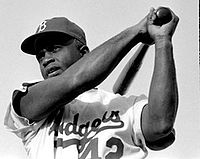 On this day in 1972, Baseball Hall of Famer, a man of courage, the man who broke baseball’s color line, Jackie Robinson died in Stamford, Connecticut at the age of 53. Born Jack Roosevelt Robinson on 31 January 1919 in Cairo, Georgia. He made his debut with the Brooklyn Dodgers in 1947. World Series Champion 1955, recipient of the inaugural MLB Rookie of the Year Award, six-time All-Star, National League MVP 1949, posthumously awarded the Presidential Medal of Freedom and the Congressional Gold Medal. A hero for all people. I own a number 42 replica Dodger’s jersey.
The Final Footprint – Robinson is interred in the Robinson Family Private Estate in Cypress Hills Cemetery in Brooklyn.
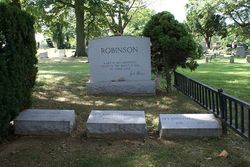
Robinson Estate
The estate is marked by a large upright granite marker inscribed with ROBINSON and this quote from him; “A LIFE IS NOT IMPORTANT EXCEPT IN THE IMPACT IT HAS ON OTHER LIVES.” He is interred between his mother-in-law and his son, Jackie Jr. Other notable final footprints at Cypress Hills; Eubie Blake and Mae West.
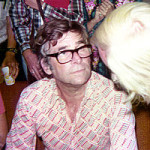 On this day in 1991 United States Army Air Forces veteran, screenwriter, producer, futurist, Gene Roddenberry died from cardiopulmonary arrest in Santa Monica, California at the age of 70. Born Eugene Wesley Roddenberry on 19 August 1921 in El Paso, Texas. Perhaps best known for creating the original Star Trek television series and thus the Star Trek science fiction franchise. In 1964, Roddenberry created Star Trek, which premiered in 1966 and ran for three seasons before being canceled. Syndication of Star Trek led to increasing popularity, and Roddenberry continued to create, produce and consult on the Star Trek films and the television series Star Trek: The Next Generation until his death. In 1985 he became the first TV writer with a star on the Hollywood Walk of Fame and he was later inducted by both the Science Fiction Hall of Fame and the Academy of Television Arts & Sciences Hall of Fame. The Star Trek franchise created has produced story material for almost five decades; resulting in six television series consisting of 726 episodes, and twelve feature films, so far. Additionally, the popularity of the Star Trek universe and films inspired the parody/homage/cult film Galaxy Quest in 1999, as well as many books, video games and fan films set in the various “eras” of the Star Trek universe. Roddenberry married Eileen Rexroat (1942 – 1969 divorce). During the 1960s, Roddenberry reportedly had affairs with Nichelle Nichols (who played Lt. Uhura on the original series) and Majel Barrett (who played Nurse Christine Chapel in the original series, Lwaxana Troi on Star Trek: The Next Generation and Star Trek: Deep Space Nine, and the voice of most onboard computer interfaces throughout the series). Roddenberry married Barrett in Japan in a traditional Shinto ceremony on 6 August 1969. They remained married until his death.
The Final Footprint – Roddenberry was cremated. After his death, Star Trek: The Next Generation aired a two-part episode of season five, called “Unification”, which featured a dedication to Roddenberry. In 1992, a portion of Roddenberry’s ashes flew and returned to earth on the Space Shuttle Columbia mission STS-52. On 21 April 21 1997, a Celestis spacecraft — carrying portions of the cremated remains of Roddenberry, of Timothy Leary and of 22 other individuals — was launched into Earth orbit aboard a Pegasus XL rocket from near the Canary Islands. On 20 May 2002, the spacecraft’s orbit deteriorated and it disintegrated in the atmosphere. Another flight to launch more of his ashes into deep space along with those of Barrett, who died in 2008, is planned for launch at a late date.
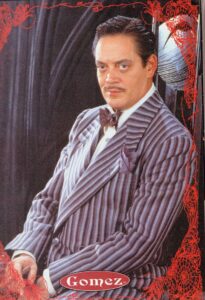 On this day in 1994 actor Raul Julia died from complications of a stroke at North Shore University Hospital in Manhasset, Long Island, aged 54. Born Raúl Rafael Juliá Arcelay on March 9, 1940 in Floral Park, San Juan, Puerto Rico, he took an interest in acting while still in school and pursued the career upon completion of his studies. After performing locally for some time, he was convinced by actor and entertainment personality Orson Bean to move and work in New York City. Juliá, who had been bilingual since his childhood, soon gained interest in Broadway and Off-Broadway plays. He took over the role of Orson in the Off-Broadway hit Your Own Thing, a rock musical update of Twelfth Night. He performed in mobile projects, including the Puerto Rican Traveling Theater.
Juliá was eventually noticed by producer Joseph Papp, who offered him work in the New York Shakespeare Festival. After gaining visibility, he received roles in two television series, Love of Life and Sesame Street. In 1978, he famously starred alongside Meryl Streep in an electric revival of Shakespeare’s Taming of the Shrew at the Delacorte Theater. In 1979, Juliá starred in the original Broadway production of Harold Pinter’s Betrayal alongside Roy Scheider and Blythe Danner. For his performance in Two Gentlemen of Verona, he received a nomination for the Tony Award and won a Drama Desk Award. Between 1974 and 1982, Juliá received Tony Award for Best Actor in a Musical nominations for Where’s Charley?, The Threepenny Opera and Nine. In 1991, Juliá acted alongside Christopher Walken in a revival of Othello and in 1984, he starred in Design for Living with Frank Langella and Jill Clayburgh.
He is also known for his performances in films; his film debut came in 1971 acting alongside Al Pacino in The Panic in Needle Park. During the 1980s, he worked in several films; he received two nominations for the Golden Globe Awards, for his performances in Tempest and Kiss of the Spider Woman; he won the National Board of Review Award for Best Actor for the latter. He also appeared in Francis Ford Coppola’s One from the Heart (1982), Sidney Lumet’s The Morning After (1986), Romero (1989) and Clint Eastwood’s The Rookie (1990). In 1991 and 1993, Julia portrayed Gomez Addams in two film adaptations of The Addams Family. In 1994, he filmed The Burning Season and a film adaptation of the Street Fighter video games. The same year Juliá suffered several health afflictions, eventually dying after suffering a stroke. His funeral was held in Puerto Rico, attended by thousands. For his work in The Burning Season, Juliá won a posthumous Golden Globe Award, Primetime Emmy Award, and Screen Actors Guild Award.
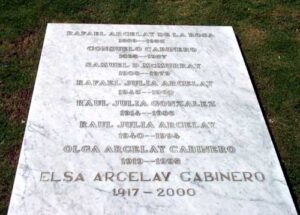
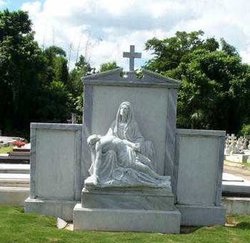 The Final Footprint – In accordance with Juliá’s instructions, his body was transported to Puerto Rico. A state funeral was held in San Juan on October 27, 1994, with Juliá’s remains being escorted to the building of the Institute of Puerto Rican Culture, where a funeral ceremony was held. The service was attended by thousands of Puerto Ricans, with native plena music being played in the background. The burial ceremony was also attended by thousands, with “La Borinqueña” being sung by Lucecita Benítez prior to the procession. After stopping at San Ignacio de Loyola Church, the procession advanced to Buxeda Cemetery, where politician and activist Rubén Berríos offered the final words. As Juliá’s coffin was lowered, a load of carnations was dropped from a helicopter while the crowd shouted “¡Viva Puerto Rico Libre!” Juliá was a lifelong supporter of the Puerto Rican independence movement; on one occasion, he convinced his agent to allow him to do an advertising campaign on behalf of the Puerto Rico Tourism Company. Final resting place Buxeda Memorial Park, Rio Piedras, San Juan Municipality, Puerto Rico.
 Subsequent memorial ceremonies were held at Joseph Papp Public Theater in New York and in Los Angeles, where several actors and personalities, including Rubén Blades and Edward James Olmos, expressed their grief. A mass in Miami and numerous private ceremonies were also held. The staff of Universal Pictures paid homage to him by dedicating Street Fighter to his memory, adding the phrase “For Raúl. Vaya con Dios.” in the film’s ending credits. Juliá had been set to reprise his role as M. Bison in the video game version of the Street Fighter film, having already met with the production staff. The New York Shakespeare Festival bought an obituary notice in Variety, where his birth and death dates were accompanied by a quote from Shakespeare. The Puerto Rican Traveling Theater established The Raúl Juliá Training Unit, giving free acting classes to young actors.
For his performance in The Burning Season, Juliá was posthumously awarded a Golden Globe Award, a Screen Actors Guild Award, a CableACE Award, and an Emmy Award. Although he did not make his screen debut before 1950, Juliá was a nominee for the American Film Institute’s AFI’s 100 Years…100 Stars. Actors such as Helen Hunt and Jimmy Smits have cited him as a source of inspiration. On November 21, 1994, Rudy Giuliani declared that date Raul Juliá Day. In 1996, he was inducted into the Theatre Hall of Fame on Broadway. The Puerto Rican Chamber of Commerce created the Raúl Juliá Scholarship Fund in 1997, intended to provide college education for teenagers.
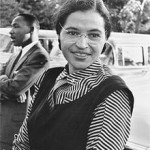 On this day in 2005, civil rights activist, “the first lady of civil rights” and “the mother of the freedom movement”, Rosa Parks died in her apartment on the east side of Detroit at the age of 92. Born Rosa Louise McCauley in Tuskegee, Alabama, on 4 February 4 1913. On 1 December 1955, in Montgomery, Alabama, Parks refused to obey bus driver James F. Blake’s order that she give up her seat in the colored section to a white passenger, after the white section was filled. Parks’ act of defiance and the Montgomery Bus Boycott became important symbols of the modern Civil Rights Movement. She became an international icon of resistance to racial segregation. Parks organized and collaborated with civil rights leaders, including Martin Luther King, Jr., a new minister in town who gained national prominence in the civil rights movement. Parks received national recognition, including the NAACP’s 1979 Spingarn Medal, the Presidential Medal of Freedom, and the Congressional Gold Medal.
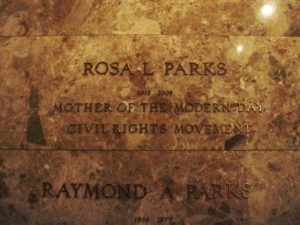 The Final Footprint – City officials in Montgomery and Detroit announced on 27 October 2005, that the front seats of their city buses would be reserved with black ribbons in honor of Parks until her funeral. Parks’ casket was flown to Montgomery and taken in a horse-drawn hearse to the St. Paul African Methodist Episcopal (AME) church, where she lay in repose at the altar on 29 October 2005, dressed in the uniform of a church deaconess. A memorial service was held there the following morning. One of the speakers, United States Secretary of State Condoleezza Rice, said that if it had not been for Parks, she would probably have never become the Secretary of State. In the evening the casket was transported to Washington, D.C. and transported by a bus similar to the one in which she made her protest, to lie in honor in the rotunda of the U.S. Capitol. Since the founding in 1852 of the practice of lying in state in the rotunda, Parks was the 31st person, the first American who had not been a U.S. government official, and the second private person (after the French planner Pierre L’Enfant) to be honored in this way. She was the first woman and the second black person to lie in state in the Capitol. An estimated 50,000 people viewed the casket there, and the event was broadcast on television on October 31, 2005. A memorial service was held that afternoon at Metropolitan AME Church in Washington, DC. With her body and casket returned to Detroit, for two days, Parks lay in repose at the Charles H. Wright Museum of African American History. Her funeral service was seven hours long and was held on 2 November 2005, at the Greater Grace Temple Church in Detroit. After the service, an honor guard from the Michigan National Guard laid the U.S. flag over the casket and carried it to a horse-drawn hearse, which was intended to carry it, in daylight, to the cemetery. As the hearse passed the thousands of people who were viewing the procession, many clapped and cheered loudly and released white balloons. Parks was entombed between her husband and mother at Detroit’s Woodlawn Cemetery in the chapel’s mausoleum. The chapel was renamed the Rosa L. Parks Freedom Chapel in her honor. When Parks died, her fame was such that ESPN noted her death on the “Bottom Line,” its on-screen ticker, on all of its networks. Her birthday, February 4, and the day she was arrested, December 1, have both become Rosa Parks Day, commemorated in the U.S. states of California and Ohio.
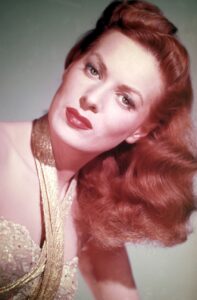 On this day in 2015 native Irish and naturalized American actress and singer, Maureen O’Hara died in her sleep at her home in Boise, Idaho, aged 95. Born Maureen FitzSimons on 17 August 1920.
She became successful in Hollywood from the 1940s through to the 1960s. She was a natural redhead who was known for playing passionate but sensible heroines, often in Westerns and adventure films. She worked with director John Ford and long-time friend John Wayne on numerous projects.
She aspired to become an actress from a very young age. She trained with the Rathmines Theatre Company from the age of 10 and at the Abbey Theatre from the age of 14. She was given a screen test, which was deemed unsatisfactory, but Charles Laughton saw potential in her, and arranged for her to co-star with him in Alfred Hitchcock’s Jamaica Inn in 1939. She moved to Hollywood the same year to appear with him in the production of The Hunchback of Notre Dame, and was given a contract by RKO Pictures. From there, she went on to enjoy a long and highly successful career, and acquired the nickname “the Queen of Technicolor”.
O’Hara appeared in films such as How Green Was My Valley (1941) (her first collaboration with John Ford), The Black Swan with Tyrone Power (1942), The Spanish Main (1945), Sinbad the Sailor (1947), the Christmas classic Miracle on 34th Street (1947) with John Payne and Natalie Wood, and Comanche Territory (1950). O’Hara made her first film with John Wayne, the actor with whom she is most closely associated, in Rio Grande (1950); this was followed by The Quiet Man (1952), The Wings of Eagles (1957), McLintock! (1963), and Big Jake (1971). Such was her strong chemistry with Wayne that many assumed they were married or in a relationship. In the 1960s, O’Hara increasingly turned to more motherly roles as she aged, appearing in films such as The Deadly Companions (1961), The Parent Trap (1961), and The Rare Breed (1966). She retired from the industry in 1971, but returned 20 years later to appear with John Candy in Only the Lonely (1991).
In the late 1970s, O’Hara helped run her third husband Charles F. Blair Jr.’s flying business in Saint Croix in the United States Virgin Islands, and edited a magazine, but later sold them to spend more time in Glengarriff in Ireland. She was married three times, and had one daughter, Bronwyn, with her second husband. Her autobiography, ‘Tis Herself, published in 2004, became a New York Times bestseller. In 2009, The Guardian named her one of the best actors never to have received an Academy Award nomination. In November 2014, she was presented with an Honorary Academy Award with the inscription “To Maureen O’Hara, one of Hollywood’s brightest stars, whose inspiring performances glowed with passion, warmth and strength”. In 2020, she was ranked number one on The Irish Times list of Ireland’s greatest film actors.
In 1939, at the age of 19, O’Hara secretly married Englishman George H. Brown, a film producer, production assistant and occasional scriptwriter whom she had met on the set of Jamaica Inn. They married at St Paul’s Church in Station Road, Harrow on 13 June, shortly before she left for Hollywood. Brown stayed behind in England to shoot a film with Paul Robeson. Brown announced that he and O’Hara had kept the marriage a secret and that they would have a full marriage ceremony in October 1939, but O’Hara never returned. The marriage was annulled in 1941. O’Hara became a naturalised American citizen on 25 January 1946.
In December 1941, O’Hara married American film director William Houston Price, who was the dialogue director in The Hunchback of Notre Dame. She lost her virginity to Price on her wedding night and immediately regretted it, recalling thinking to herself, “What the hell have I done now”. Soon after the honeymoon, O’Hara realized Price was an alcoholic. The couple had one child, a daughter, Bronwyn Bridget Price, born 30 June 1944. O’Hara’s marriage to Price steadily declined throughout the 1940s due to his alcohol abuse, and she often wanted to file for divorce but felt guilty due to her Catholic beliefs. Price eventually realized the marriage was over and filed for divorce in July 1951 on the grounds of “incompatibility”. Price left the house they shared in Bel Air, Los Angeles on 29 December 1951, on their 10th wedding anniversary.
O’Hara always denied having any extramarital affairs, but in his autobiography, frequent collaborator Anthony Quinn claimed to have fallen in love with her on the set of Sinbad the Sailor. He commented that she was “dazzling, and the most understanding woman on this earth” who “brought out the Gaelic in him”, being half Irish. Quinn implied that they had been involved in an affair, adding that “after a while we both tired of the deceit”.
From 1953 to 1967, O’Hara had a relationship with Enrique Parra, a wealthy Mexican politician and banker. She met him at a restaurant during a trip to Mexico in 1951. O’Hara stated that Parra “saved me from the darkness of an abusive marriage and brought me back into the warm light of life again. Leaving him was one of the most painful things I have ever had to do.” As her relationship with Parra progressed, she began to learn Spanish and even enrolled her daughter in a Mexican school. She moved in 1953 to a smaller property at 10677 Somma Way in Bel Air, amid frequent visits to Mexico City, where she and Parra were very well-known celebrities. She hired a detective to follow Parra in Mexico and found that he was being fully honest about the relationship with his ex-wife and that she could trust him. John Ford intensely disliked Parra, and it affected her relationship with Ford in the 1950s as he often interfered in her affairs and frowned upon the demise of her marriage to Price, being a devout Catholic like O’Hara. Price also continued to harass O’Hara for dating Parra and filed a case against her on 20 June 1955, seeking custody of Bronwyn and accusing her of immorality. O’Hara filed a countersuit, charging him with contempt of court for refusing to pay $50 a month in child support and a $7 a month alimony. During the publicity stage of The Long Gray Line in 1955, Ford insulted O’Hara and her brother Charles when he remarked to Charles, “if that whore sister of yours can pull herself away from that Mexican long enough to do a little publicity for us, the film might have a chance at some decent returns”.
O’Hara married her third husband, Charles F. Blair Jr., 11 years her senior, on 12 March 1968. Blair, an immensely popular figure, was a pioneer of transatlantic aviation, a former brigadier general of the United States Air Force, a former chief pilot at Pan Am, and founder and head of the United States Virgin Islands airline Antilles Air Boats. A few years after her marriage to Blair, O’Hara, for the most part, retired from acting. In the special features section to the DVD release of The Quiet Man, a story is recounted that O’Hara retired after longtime collaborators John Wayne and John Ford teased her about being married but not being a good, stay-at-home housewife, though Blair himself wanted her to retire from acting and help run his business. Blair died in 1978 while flying a Grumman Goose for his airline from Saint Croix to St. Thomas, crashing after an engine failure. O’Hara was elected CEO and president of the airline, with the added distinction of becoming the first woman president of a scheduled airline in the United States.
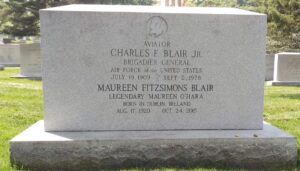 The Final Footprint – O’Hara’s remains were buried at Arlington National Cemetery in Virginia next to her late husband Blair.
Other notable final footprints at Arlington include; the Space Shuttle Columbia, the Space Shuttle Challenger, Medgar Evers, Ruth Bader Ginsburg, JFK, Jacqueline Bouvier Kennedy Onassis, RFK, Edward Kennedy, Malcolm MacGregor Kilduff, Jr., Lee Marvin, and Audie Murphy.
On the day in 2017, pianist and singer-songwriter Fats Domino died in Harvey, Louisiana at the age of 89. Born Antoine Domino Jr. on February 26, 1928 in New Orleans. One of the pioneers of rock and roll, Domino sold more than 65 million records. Between 1955 and 1960, he had eleven Top 10 hits. His humility and shyness may be one reason his contribution to the genre has been overlooked.
| Fats Domino |
 |
During his career, Domino had 35 records in the US Billboard Top 40, and five of his pre-1955 records sold more than a million copies, being certified gold. His musical style was based on traditional rhythym and blues, accompanied by saxophones, bass, piano, electric guitar, and drums.
His 1949 release “The Fat Man” is widely regarded as the first million-selling Rock ‘n Roll record.
Domino was married to Rosemary Domino (nee Hall) from 1947 until her death in 2008.
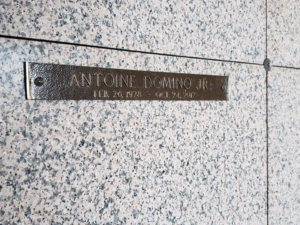 The Final Footprint
Domino is entombed at Providence Memorial Park, Metairie, Louisiana.
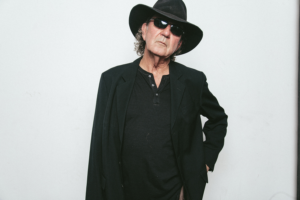 On this day in 2018 singer-songwriter and guitarist, the Swamp Fox, Tony Joe White died from a heart attack at his home in Leiper’s Fork, Tennessee, at the age of 75. Born on July 23, 1943 in Oak Grove, Louisiana. Perhaps best known for his 1969 hit “Polk Salad Annie” and for “Rainy Night in Georgia”, which he wrote but which was first made popular by Brook Benton in 1970. He also wrote “Steamy Windows” and “Undercover Agent for the Blues”, both hits for Tina Turner in 1989; those two songs came by way of Turner’s producer at the time, Mark Knopfler, who was a friend of White. “Polk Salad Annie” was also recorded by Joe Dassin, Elvis Presley, and Tom Jones.
The Final Footprint
Polk Salad Valley Ranch in Stone County, Arkansas
RIP #OTD in 2023 actor (Shaft, Roots, Generations) Richard Roundtree died of pancreatic cancer at his home in Los Angeles at the age of 81
Have you planned yours yet?
Follow TFF on twitter @RIPTFF
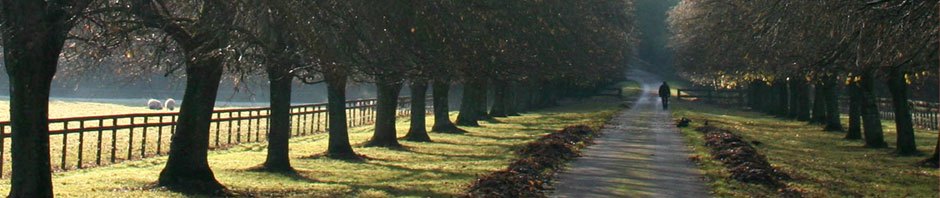
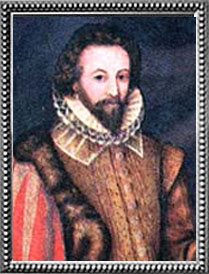 On this day in 1618, aristocrat, writer, poet, soldier, courtier, spy, and explorer, Sir Walter Raleigh was beheaded at Whitehall in London at the age of 66. Born about 1552 in Devon, England. He rose rapidly in Queen Elizabeth I‘s favour and was knighted in 1585. Colonizer of Roanoke Island, he is credited with introducing potatoes and tobacco to England. In 1591, he secretly married Elizabeth Throckmorton, one of the Queen’s ladies-in-waiting. When the Queen discovered the deception, she had him imprisoned in the Tower of London. He would be released and would eventually regain favour with the Queen. Elizabeth died in 1603 and Raleigh was arrested and again imprisoned in the Tower of London for allegedly plotting against King James. Raleigh was found guilty but James spared his life and he was kept in the tower, legally dead. In 1616, Raleigh was released to conduct a second exploration of Venezuela, where his men attacked a Spanish outpost. The outraged Spanish ambassador demanded that James reinstate the death sentence and it was carried out on this date.
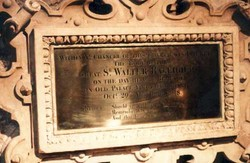 The Final Footprint – Before his execution Raleigh reportedly told the crowd the ax “is sharp medicine, but it is a physician for all diseases”. As was the custom, Raleigh’s head was presented to his wife. She had it embalmed and kept it at home.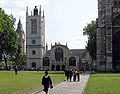
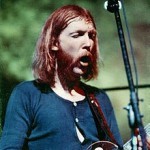 On this day in 1971, guitarist, co-founder of the The Allman Brothers Band, brother of Gregg Allman, Skydog, Duane Allman died from injuries sustained in a motorcycle accident in Macon, Georgia at the age of 24. Born Howard Duane Allman on 20 November 1946 in Nashville, Tennessee.
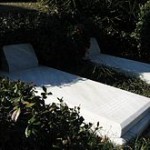 The Final Footprint – Allman’s remains were laid to rest in Rose Hill Cemetery in Macon. Shortly after Duane’s death, Ronnie Van Zant of Lynyrd Skynyrd began dedicating the song “Free Bird”, to the memory of Duane Allman in concert. In the “Free Bird” performance at Skynyrd’s famed 1976 appearance at Knebworth, England, Van Zant says to pianist Billy Powell, “Play it for Duane Allman.” In 1973, fans carved the very large letters “REMEMBER DUANE ALLMAN” in a dirt embankment along Interstate Highway 20 near Vicksburg, Mississippi. A photograph was published in Rolling Stone magazine and in the Rolling Stone Illustrated History of Rock & Roll; the carving itself lasted for over ten years. In 1998 the Georgia State Legislature passed a resolution designating a stretch of State Highway 19, US 41, within Macon as the “Duane Allman Boulevard” in his honor. Travis Tritt, in the song “Put Some Drive In Your Country” on his debut album, sings “Now I still love old country/I ain’t tryin’ to put it down/But damn I miss Duane Allman/I wish he was still around.”
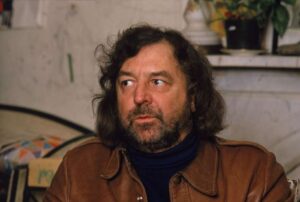 And on this day in 1995, novelist (Candy, The Magic Christian), screenwriter (Dr. Strangelove, The Loved One, The Cincinnati Kid, Easy Rider), Terry Southern died of respiratory failure at St. Luke’s Hospital, New York City, age 71.
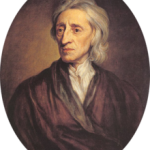 On this day in 1704 philosopher and physician, the Father of Classical Liberalism, John Locke died at the age of 72 in Essex, England. Born on 29 August 1632, in a small thatched cottage by the church in Wrington, Somerset, about twelve miles from Bristol. In my opinion, he is one of the most influential of Enlightenment thinkers. His contributions to classical republicanism and liberal theory are reflected in the United States Declaration of Independence. Locke’s theory of mind can be cited as the origin of modern conceptions of identity and the self. Locke may have been the first to define the self through a continuity of consciousness. He postulated that the mind was a blank slate or tabula rasa. Contrary to pre-existing Cartesian philosophy, he maintained that we are born without innate ideas, and that knowledge is instead determined only by experience derived from sense perception. Locke never married.
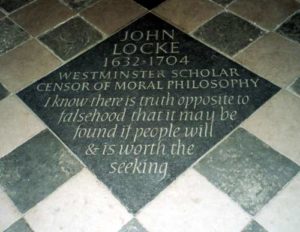 The Final Footprint – Locke is interred in the churchyard of the village of High Laver, east of Harlow in Essex.
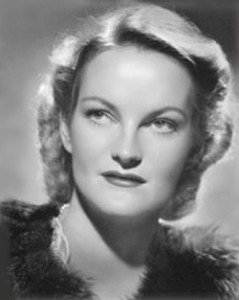 On this day in 1993, heiress, art collector, philanthropist and socialite, Doris Duke died at her Falcon’s Lair home in Beverly Hills, California at the age of 80. Born on 22 November 1912 in New York City. Duke was the only child of tobacco and electric energy tycoon James Buchanan Duke and his second wife, Nanaline Holt Inman. She was not yet 13 when her father died in 1925. She married twice; James Henry Roberts Cromwell and Porfirio Rubirosa.
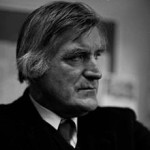 On this day in 1998, poet, husband of Sylvia Plath, British Poet Laureate, Ted Hughes died at the age of 68 from a myocardial infarction while undergoing hospital treatment for colon cancer in Southwark, London. Born Edward James Hughes on 17 August 1930 at 1 Aspinall Street, in Mytholmroyd, West Riding of Yorkshire. Hughes has been ranked as one of the best poets of his generation. He was British Poet Laureate from 1984 until his death. Hughes was married to American poet Sylvia Plath, from 1956 until her suicide in 1963 at the age of 30. His part in the relationship became controversial. His last poetic work, Birthday Letters (1998), explored their complex relationship. These poems make reference to Plath’s suicide, but none of them addresses directly the circumstances of her death. A poem discovered in October 2010, Last letter, describes what happened during the three days leading up to Plath’s suicide. In 2008 The Times ranked Hughes fourth on their list of the 50 greatest British writers since 1945. Hughes apparently had an affair with Assia Wevill, which began in 1962. Wevill died by suicide, and killed her four-year-old daughter, in a similar fashion to Plath, by use of a gas oven, just over six years after Plath’s death. Hughes later married Carol Orchard (1970 – 1998 his death).
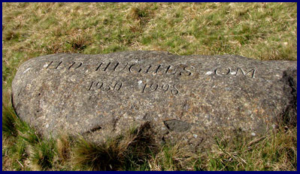 The Final Footprint – His funeral was held on 3 November 1998, at North Tawton church, and he was cremated in Exeter. His cremated remains scattered in Dartmoor, close to the source of the River Taw.
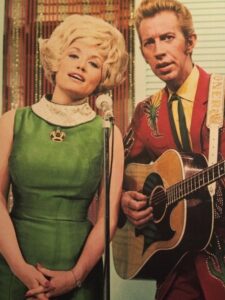 And on this day in 2007 singer (“A Satisfied Mind”, “Please Don’t Stop Loving Me” duet with Dolly Parton), Porter Wagoner died from lung cancer in Nashville with his family and Dolly at his side, aged 80. Born Porter Wayne Wagoner in West Plains, Missouri on 12 August 1927.
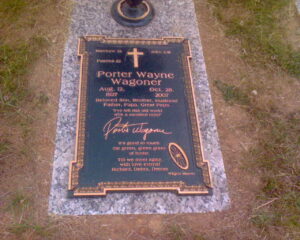 The Final Footprint – Wagoner’s funeral was held November 1, 2007, at the Grand Ole Opry House. He is buried at Woodlawn Memorial Park Cemetery in Nashville
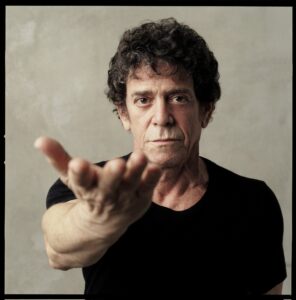 On this day in 2013, musician, singer, songwriter Lou Reed died from liver disease at his home in Southampton, New York, at the age of 71. Born Lewis Allan Reed at Beth El Hospital (now Brookdale) in Brooklyn on 2 March 1942, and grew up in Freeport, Long Island. After serving as guitarist, vocalist, and principal songwriter of the Velvet Underground, his solo career spanned several decades. The Velvet Underground was not commercially popular in the late 1960s, but the group gained a considerable cult following in the years since its demise and has gone on to become one of the most widely cited and influential bands of the era. Brian Eno was quoted as saying that while the Velvet Underground’s debut album only sold 30,000 copies, “everyone who bought one of those 30,000 copies started a band.” After his departure from the group, Reed began a solo career in 1972. He had a hit the following year with “Walk on the Wild Side”. Reed was known for his distinctive deadpan voice, poetic lyrics and for pioneering and coining the term ostrich guitar tuning. In 2003, Rolling Stone magazine’s list of the 500 greatest albums of all time included two albums by Reed as a solo artist, Transformer and Berlin.
 On this day in 1864, anti-Union guerilla leader, Bloody Bill Anderson died at the approximate age of 24 from a gunshot wound during a battle with Union forces near Richmond, Missouri. Born William T. Anderson in 1840 in Hopkins County, Kentucky. Historians have disparate opinions of Anderson; some see him as a sadistic, psychopathic killer, but for others, his actions cannot be separated from the general lawlessness of the time. At one time or another Anderson rode with William Quantrill, and Frank and Jesse James. Anderson married Bush Smith in Sherman, Texas.
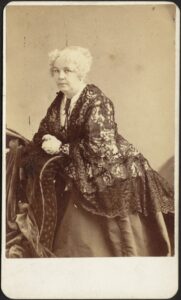 On this day in 1902 writer and activist who was a leader of the women’s rights movement in the U.S. during the mid- to late-19th century, Elizabeth Cady Stanton died in New York City from heart failure, 18 years before women achieved the right to vote in the United States via the Nineteenth Amendment to the U.S. Constitution. Born 12 November 1815 in Johnstown, New York.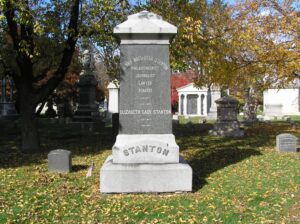
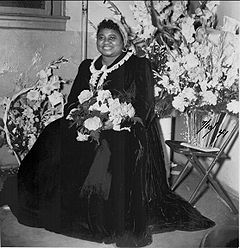
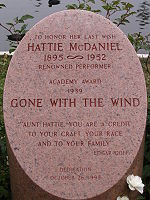
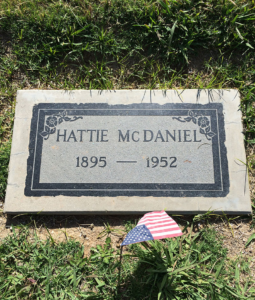 The Final Footprint – McDaniel is interred in Angelus Rosedale Cemetery in Los Angeles. Her grave is marked by a flat granite engraved marker. She planned her funeral in detail requesting a white casket with a white shroud, white gardenias for her hair, a white gardenia blanket and a pillow of red roses. She also requested to be buried at Hollywood Forever Cemetery, but the management refused because they did not take blacks. In 1999, new management at the cemetery tried to right the wrong and offered to have McDaniel moved but her family declined. Instead, Hollywood Forever built a large granite cenotaph memorial on the lawn overlooking the lake to honour McDaniel. The cenotaph includes a quote from her nephew; “Aunt Hattie, you are a credit to your craft, your race and to your family”. It is a popular site for visitors. She has two stars on the Hollywood Walk of Fame. Other notable Final Footprints at Hollywood Forever include; Mel Blanc (yes, his epitaph is “That’s All Folks!”), Lana Clarkson, Iron Eyes Cody, Chris Cornell, Cecil B. DeMille, Victor Fleming, Judy Garland, Joan Hackett, John Huston, Jayne Mansfield’s cenotaph, Tyrone Power, Dee Dee Ramone, Johnny Ramone, Virginia Rappe, Nelson Riddle, Mickey Rooney, Ann Sheridan, Bugsy Siegel
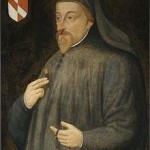 On this day in 1400, author, philosopher, alchemist, astronomer, diplomat, the Father of English literature, the greatest English poet of the Middle Ages, and the first poet to have been buried in Poet’s Corner of Westminster Abbey, Geoffrey Chaucer died of unknown causes at the probable age of 56 or 57. His many works include; The Book of the Duchess, the House of Fame, the Legend of Good Women and Troilus and Criseyde. He is perhaps best known today for The Canterbury Tales. Chaucer is a crucial figure in developing the legitimacy of the vernacular, Middle English, at a time when the dominant literary languages in England were French and Latin. Born in London sometime around 1343, though the precise date and location of his birth remain unknown.
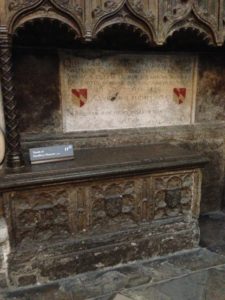 The Final Footprint – Chaucer is entombed in in Poet’s Corner of Westminster Abbey. Other notable Final Footprints at Westminster include; Robert Browning, Lord Byron, Oliver Cromwell, Charles Darwin, Charles Dickens, Edward The Confessor, Elizabeth I, George II, George Friederic Handel, Stephen Hawking, James I (James VI of Scotland), Samuel Johnson, Ben Jonson, Charles II, Edward III, Edward VI, Henry III, Henry V, Henry VII, Richard II, Rudyard Kipling, Henry Wadsworth Longfellow, John Milton, Sir Isaac Newton, Laurence Olivier, Henry Purcell, Mary I, Mary II, Mary Queen of Scots, Lord Alfred Tennyson, Dylan Thomas, and William III.
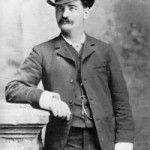 On this day in 1921, buffalo hunter, U.S. Marshal and Army scout, avid fisherman, gambler, frontier lawman, and sports editor and columnist, brother of James and Ed Masterson, friend of Wyatt Earp, Bat Masterson died from a heart attack at his desk in New York City at the age of 67. Born Bartholomew Masterson on 26 November 1853, at Henryville, Canada East, in the Eastern Townships of what is Quebec today. He later used the name William Barclay Masterson. Masterson took part in the Second Battle of Adobe Walls, in what is now Hutchinson County, Texas, against Comanche forces led by Chief Quanah Parker.
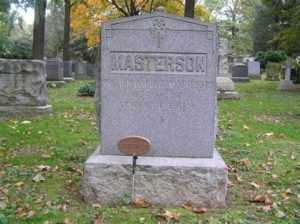 The Final Footprint – Masterson’s body was taken to Campbell’s Funeral Parlor and later buried after a simple service in Woodlawn Cemetery in Bronx, New York. Other notable funerals at Frank E. Campbell include; Aaliyah, Irving Berlin, Lord Buckley, James Cagney, Oleg Cassini, Montgomery Clift, Frank Costello, Joan Crawford, Malcolm Forbes, Greta Garbo, Judy Garland, George Gershwin, Jim Henson, Peter Jennings, Jacqueline Kennedy Onassis, Heath Ledger, John Lennon, Norman Mailer, Notorious B.I.G., Les Paul, Ayn Rand, Igor Stravinsky, Ed Sullivan, Arturo Toscanini, Rudolf Valentino, Luther Vandross and Tennessee Williams. Other notable Final Footprints at Woodlawn include; Irving Berlin, Miles Davis, Duke Ellington, Lionel Hampton, Fiorello La Guardia, Rowland Macy, Herman Melville, J. C. Penney, Otto Preminger, and Joseph Pulitzer.
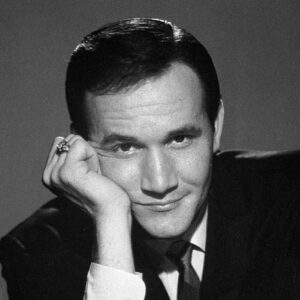 On this day in 1992 singer-songwriter, widely known for his honky-tonk-influenced novelty songs and his chart-topping country and pop hits “King of the Road”, “Dang Me”, and “England Swings”, all from the mid-1960s Nashville sound era, Roger Miller died of lung and throat cancer in Los Angeles, aged 56. Born Roger Dean Miller on 2 January 1936 in Fort Worth, Texas.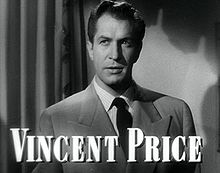
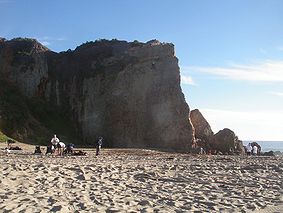 The Final Footprint – Price was cremated and his cremated remains were scattered off Point Dume in Malibu, California
 On this day in 1999 golfer, 3x major championship winner, Payne Stewart died of hypoxia aboard a Learjet 35 somewhere between Gainesville, Florida and Mina, South Dakota, age 42. Born William Payne in Springfield, Missouri on 30 January 1957.
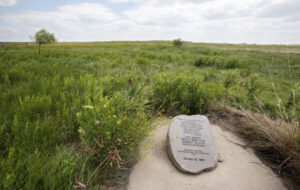 The communities of Mina and Aberdeen created their own memorial. Jon Hoffman, the owner of the property where the aircraft crashed, contacted Stewart’s widow and several family members of other crash victims. All agreed that the memorial would be a rock from the crash site, engraved with the victims’ names and a Bible passage. Hoffman fenced in about an acre (4,000 m2) of the property surrounding the memorial.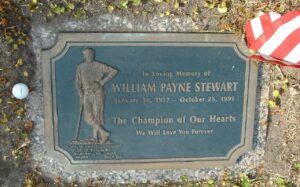
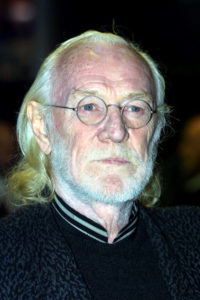 On this day in 2002, actor and singer Richard Harris died from Hodgkin’s disease at University College Hospital in Fitzrovia, London at the age of 72. Born Richard St. John Harris on 1 October 1930 in Limerick, Ireland. He appeared as Frank Machin in This Sporting Life, for which he was nominated for the Academy Award for Best Actor, King Arthur in the 1967 film Camelot and the subsequent 1981 revival of the show. He played an aristocrat captured by Native Americans in A Man Called Horse (1970), a gunfighter in Clint Eastwood’s Western film Unforgiven (1992), Emperor Marcus Aurelius in Gladiator (2000), and Albus Dumbledore in the first two Harry Potter films: Harry Potter and the Philosopher’s Stone (2001) and Harry Potter and the Chamber of Secrets (2002), the latter of which was his final film role. Harris had a number-one hit in Australia and Canada and a top ten hit in the United Kingdom, Ireland and United States with his 1968 recording of Jimmy Webb’s song “MacArthur Park”.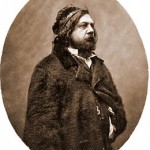
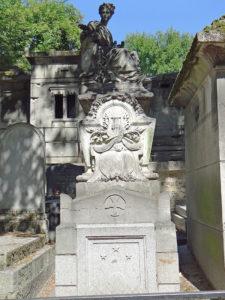 The Final Footprint – Gautier is interred at the Cimetière de Montmartre in Paris. Two poems from “Émaux et camées”—”Sur les lagunes” and the second of two titled “Études de Mains”—are featured in Oscar Wilde’s The Picture of Dorian Gray. Dorian reads them out of the book shortly after Basil Hallward’s murder. Other notable final footprints at Montmartre include; Hector Berlioz, Dalida, Edgar Degas, Alexandre Dumas, fils, Marie Duplessis, France Gall, Gustave Moreau, Jeanne Moreau, Jacques Offenbach, François Truffaut, and Alfred de Vigny.
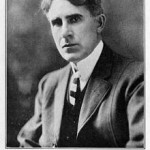 On this day in 1939, author Zane Grey died of heart failure at the age of 67, at his home in Altadena, California. Born Pearl Zane Gray on 31 January 1872, in Zanesville, Ohio. Perhaps best known for his popular adventure novels and stories that presented an idealized image of the American frontier. Riders of the Purple Sage (1912) was his best-selling book. In addition to the success of his printed works, they later had second lives and continuing influence when adapted as films and television productions. As of 2012, 112 films, two television episodes, and a television series, Dick Powell’s Zane Grey Theater, had been made that were based loosely on his novels and short stories. Grey married Lin “Dolly” Roth (1905 – 1939 his death). During his courtship of Dolly, Grey still saw previous girlfriends and warned her, “But I love to be free. I cannot change my spots. The ordinary man is satisfied with a moderate income, a home, wife, children, and all that….But I am a million miles from being that kind of man and no amount of trying will ever do any good”. He added, “I shall never lose the spirit of my interest in women.”
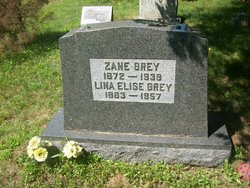 The Final Footprint – Grey was interred at the Union Cemetery in Lackawaxen, Pennsylvania.
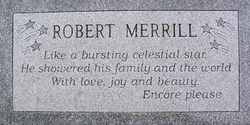
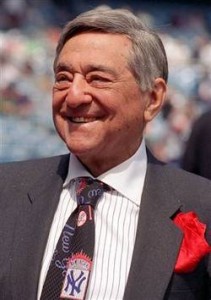 On this day in 2004, operatic baritone and Metropolitan Opera star, Robert Merrill died at his home in New Rochelle, New York at the age of 87 while watching Game 1 of the 2004 World Series between the Boston Red Sox and the St. Louis Cardinals.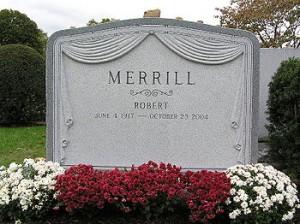
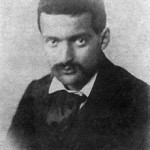 On this day in 1906 Post-Impressionist French artist Paul Cézanne died of pneumonia at his home in Aix-en-Provence, France at the age of 67. Born 19 January 1839 in Aix-en-Provence, France.
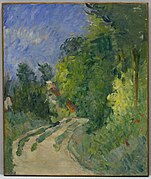

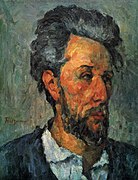
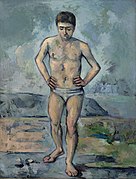
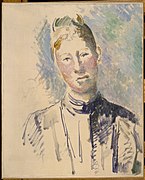


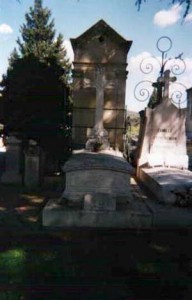 The Final Footprint – Cézanne is entombed in a single crypt private mausoleum in Cimetiere de Saint Pierre in Aix-en-Provence, France.
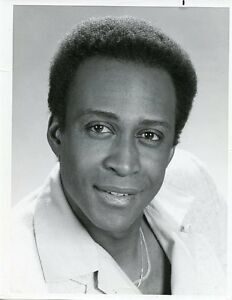 On this day in 1992 actor Cleavon Little died from colorectal cancer in Sherman Oaks, California at the age of 53. Born Cleavon Jake Little in Chickasha, Oklahoma on 1 June 1939.
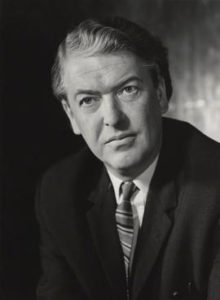 On this day in 1995, novelist, poet, critic, and teacher Sir Kingsley Amis died at St. Pancras Hospital in London at the age of 73. Born Kingsley William Amis on 16 April 1922 in Clapham, South London.
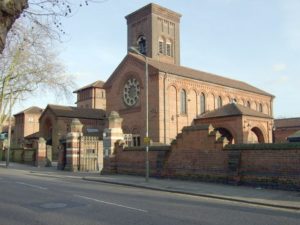 The Final Footprint – Amis was cremated and his cremains are at Golders Green Crematorium. Golders was the first crematorium to be opened in London, and one of the oldest crematoria in Britain. The crematorium, the Philipson Family mausoleum (designed by Edwin Lutyens), the wall, along with memorials and gates, the Martin Smith Mausoleum, and Into The Silent Land statue are all Grade II listed buildings. The gardens are included in the National Register of Historic Parks and Gardens. Golders is in Hoop Lane, off Finchley Road, Golders Green, London NW11, ten minutes’ walk from Golders Green tube station. It is directly opposite the Golders Green Jewish Cemetery. The crematorium is secular, accepts all faiths and non-believers; clients may arrange their own type of service or remembrance event and choose whatever music they wish. Other notable cremations at Golders include; Neville Chamberlain, T. S. Eliot, Sigmund Freud, Henry James, Rudyard Kipling, Vivien Leigh, Keith Moon, Peter Sellers, Bram Stoker, H. G. Wells and Amy Winehouse.
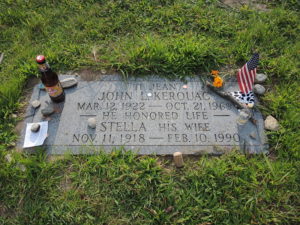
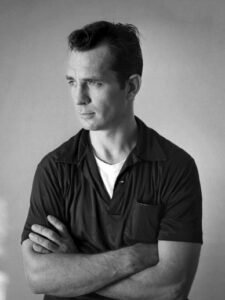 On this day in 1969, novelist and poet Jack Kerouac died at St. Anthony’s Hospital in St. Petersburg, Florida at the age of 47, from an internal hemorrhage caused by cirrhosis, the result of a lifetime of heavy drinking. Born Jean-Louis Kérouac on 12 March 1922 in Lowell, Massachusetts. He is considered a literary iconoclast and, alongside William S. Burroughs and Allen Ginsberg, a pioneer of the Beat Generation. Kerouac is recognized for his spontaneous method of writing, covering topics such as Catholic spirituality, jazz, promiscuity, Buddhism, drugs, poverty, and travel. He became an underground celebrity and, with other beats, a progenitor of the hippie movement, although he remained antagonistic toward some of its politically radical elements. Since his death Kerouac’s literary prestige has grown and several previously unseen works have been published. His books include: On the Road, Doctor Sax, The Dharma Bums, Mexico City Blues, The Subterraneans, Desolation Angels, Visions of Cody, The Sea is My Brother, and Big Sur.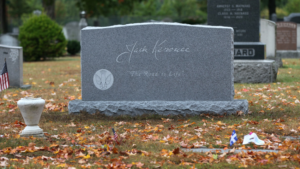
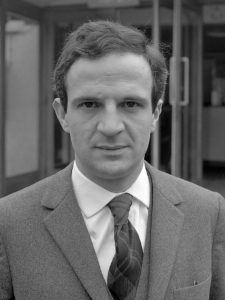 On this day in 1984, film director, screenwriter, producer, actor, and film critic, François Truffaut died from a brain tumor at the American Hospital in Neuilly-sur-Seine, France, at the age of 52. Born François Roland Truffaut

 On this day in 1992, District Attorney of Orleans Parrish, Louisiana from 1961 to 1973, Jim Garrison died of cancer at the age of 70 in New Orleans. Born Earling Carothers Garrison in Denison, Iowa on 20 November 1921. Known for his investigation into the assassination of President John F. Kennedy. A controversial figure, opinions vary as to whether he uncovered a conspiracy but was blocked from discovering what actually happened, or whether he bungled a chance to uncover a conspiracy, or whether the whole thing was a complete waste of time and resources. His book, On the Trail of the Assassins (1988), served as the basis for Oliver Stone‘s movie JFK, starring Kevin Costner as Garrison. I believe Lee Harvey Oswald was the only shooter that day, and I believe the conspiracy lies behind his motive.
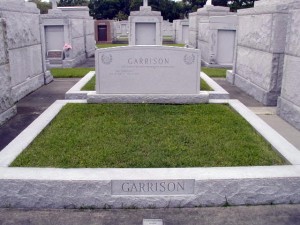 The Final Footprint – Garrison is buried in Metairie Cemetery in New Orleans. His grave is marked by an upright companion granite marker inscribed with the following; “LET JUSTICE BE DONE, THOUGH THE HEAVENS FALL”. Other notable final footprints at Metairie include; Pete Fountain, Al Hirt, Louis Prima, and Stan Rice.
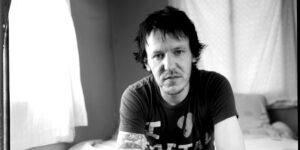 On this day in 2003 singer-songwriter and multi-instrumentalist, Elliott Smith died from two stab wounds to the chest in Los Angeles, age 34. Born Steven Paul Smith on August 6th, 1969 at the Methodist Hospital in Omaha, Nebraska.
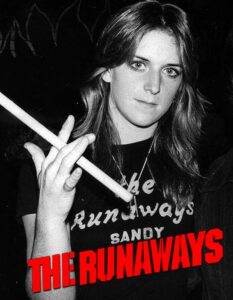 And on this day in 2006 musician, singer, songwriter, drummer, one of the founding members of the Runaways, Sandy West died at the age of 47 from lung cancer in San Dimas, California. Born Sandy Pesavento in Long Beach, California on 10 July 1959. she was the drummer in the Prisk Elementary School orchestra.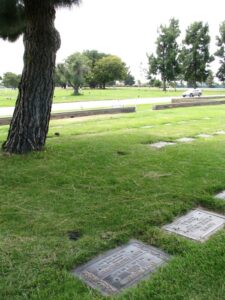
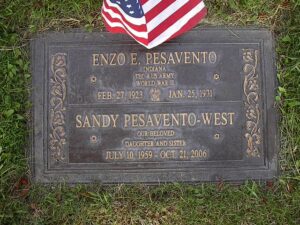 The Final Footprint – Forest Lawn Memorial Park in Cypress, Orange County, California.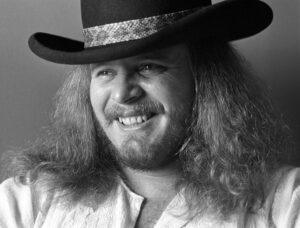
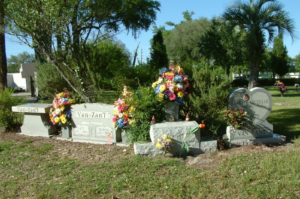 The Final Footprint– Van Zant was originally entombed in a private mausoleum in Jacksonville Memorial Gardens in Orange Park, Florida.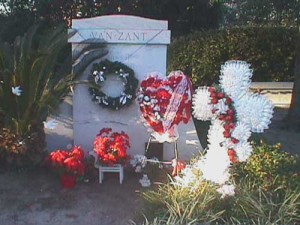
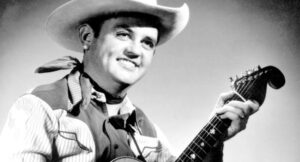 On this day in 1983 singer, songwriter, innovative guitarist, Merle Travis died of a heart attack at his Tahlequah, Oklahoma home, aged 65.
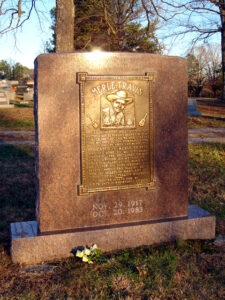 The Final Footprint – Cremated remains scattered Ebenezer Cemetery, Ebenezer, Kentucky.
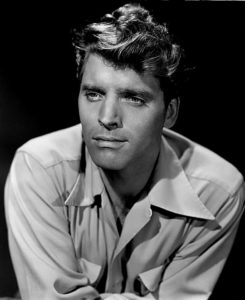 On this day in 1994, actor Burt Lancaster died in his Century City apartment in Los Angeles from a third heart attack at the age of 80. Born Burton Stephen Lancaster on November 2, 1913 in Manhattan at his parents’ home at 209 East 106th Street, between Second and Third Avenues, today the site of Benjamin Franklin Plaza.
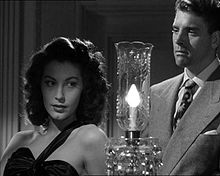


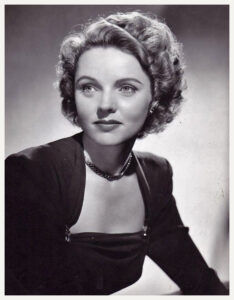 And on this day in 2006 actress Jane Wyatt died at her home in Bel-Air, California, aged 96. She starred in a number of Hollywood films, such as Frank Capra’s Lost Horizon, but is perhaps best known for her role as the housewife and mother Margaret Anderson on the CBS and NBC television comedy series Father Knows Best, and as Amanda Grayson, the human mother of Spock on the science-fiction television series Star Trek. Wyatt was a three-time Emmy Award–winner.
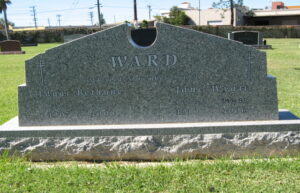 The Final Footprint – San Fernando Mission Cemetery, Mission Hills, California.

