On this day 29 July deaths of Robert Schumann – Vincent van Gogh – Valtesse de La Bigne – Cass Elliot – Luis Buñuel – David Niven

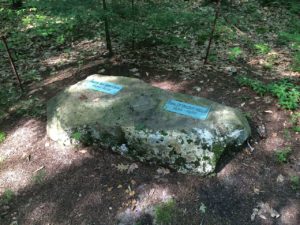
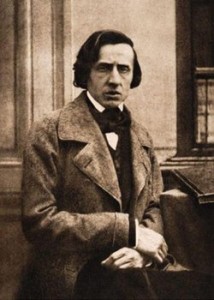
#RIP #OTD in 1856 composer (Carnaval, Symphonic Studies, Kinderszenen, Kreisleriana, Fantasie in C), pianist, husband of Clara Wieck, Robert Schumann died from pneumonia in a sanatorium in Bonn, Germany at the age of 46. Alter Friedhof in Bonn with Clara

On this day in 1890, Dutch post-Impressionist painter Vincent van Gogh died from complications of a self-inflicted gunshot to the chest in Auvers-sur-Oise, France at the age of 37.  Born Vincent Willem van Gogh on 30 March 1853 in Zundert, Netherlands.  Perhaps my favorite artist.  In my opinion, his work has had a far-reaching influence on art as a result of its vivid colors and emotional impact.  Between his move to Paris and his discovery of the French Impressionists and his stay in Arles (accompanied for awhile by Paul Gauguin) he developed his highly recognizable style.  Van Gogh never married.

Van Gogh suffered from psychotic episodes and delusions and though he worried about his mental stability, he often neglected his physical health, did not eat properly and drank heavily. His friendship with Gauguin ended after a confrontation with a razor when, in a rage, he severed part of his own left ear. He spent time in psychiatric hospitals, including a period at Saint-Rémy. After he discharged himself and moved to the Auberge Ravoux in Auvers-sur-Oise near Paris, he came under the care of the homeopathic doctor Paul Gachet.

Van Gogh was unsuccessful during his lifetime, and was considered a madman and a failure. He became famous after his suicide, and exists in the public imagination as the quintessential misunderstood genius. His reputation began to grow in the early 20th century as elements of his painting style came to be incorporated by the Fauves and German Expressionists.

A ceramic vase with sunflowers on a yellow surface against a bright yellow background.

Sunflowers (F.458), repetition of the 4th version (yellow background), August 1889. Van Gogh Museum, Amsterdam

An expansive painting of a wheatfield, with a footpath going through the centre underneath dark and forbidding skies, through which a flock of black crows fly.

Wheatfield with Crows, 1890. Van Gogh Museum, Amsterdam

Head shot photo of the artist as a clean-shaven young man. He has thick, ill-kept, wavy hair, a high forehead, and deep-set eyes with a wary, watchful expression.
Van Gogh in 1873, when he worked at the Goupil & Cie gallery in The Hague
A view from a window of pale red rooftops. A bird flies in the blue sky; in the near distance there are fields and to the right, the town and other buildings can be seen. On the distant horizon are chimneys.

Rooftops, View from the Atelier The Hague, 1882, private collection

A group of five sit around a small wooden table with a large platter of food, while one person pours drinks from a kettle in a dark room with an overhead lantern.

The Potato Eaters, 1885. Van Gogh Museum, Amsterdam

Blue-hued pastel drawing of a man facing right, seated at a table with his hands and a glass on it. He is wearing a coat. There are windows in the background.

Henri de Toulouse-Lautrec, Portrait of Vincent van Gogh, 1887, pastel drawing, Van Gogh Museum, Amsterdam

A large house under a blue sky

The Yellow House, 1888. Van Gogh Museum, Amsterdam

A seated red-bearded man wearing a brown coat, facing to the left, with a paintbrush in his right hand, is painting a picture of large sunflowers.

Paul Gauguin, The Painter of Sunflowers: Portrait of Vincent van Gogh, 1888. Van Gogh Museum, Amsterdam

A landscape in which the starry night sky takes up two-thirds of the picture. In the left foreground a dark pointed cypress tree extends from the bottom to the top of the picture. To the left, village houses and a church with a tall steeple are clustered at the foot of a mountain range. The sky is deep blue. In the upper right is a yellow crescent moon surrounded by a halo of light. There are many bright stars large and small, each surrounded by swirling halos. Across the centre of the sky the Milky Way is represented as a double swirling vortex.

The Starry Night, June 1889. Museum of Modern Art, New York

White House at Night, 1890. Hermitage Museum, St Petersburg, painted six weeks before the artist’s death

Tree Roots, July 1890, Van Gogh Museum, Amsterdam

The Church at Auvers, 1890. Musée d’Orsay, Paris

A view of a dark starry night with bright stars shining over the River Rhone. Across the river distant buildings with bright lights shining are reflected into the dark waters of the Rhone.

Starry Night Over the Rhone, 1888. Musée d’Orsay, Paris

A squarish painting of green winding olive trees; with rolling blue hills in the background and white clouds in the blue sky above.

Olive Trees with the Alpilles in the Background, 1889. Museum of Modern Art, New York

A squarish painting of a closeup of two women with one holding an umbrella while the other woman holds flowers. Behind them is a young woman who is picking flowers in a large bed of wildflowers. They appear to be walking through a garden on a winding path at the edge of a river.

Memory of the Garden at Etten, 1888. Hermitage Museum, St Petersburg

A well-dressed woman sits facing to her right (the viewer's left). She has two books on her lap, and is dressed in dark clothes vividly contrasted against a yellow background.

L’Arlésienne: Madame Ginoux with Books, November 1888. Metropolitan Museum of Art, New York
A portrait of Vincent van Gogh from the left, with an extreme intense, intent look, and a red beard.

Self-Portrait, September 1889. Musée d’Orsay, Paris

A ceramic vase with sunflowers on a yellow surface against a bright yellow background.

Still Life: Vase with Fourteen Sunflowers, August 1888. National Gallery, London

A painting of a large cypress tree, on the side of a road, with two people walking, a wagon and horse behind them, and a green house in the background, under an intense starry sky.

Road with Cypress and Star, May 1890, Kröller-Müller Museum, Otterlo

A watercolour of two pink peach trees in a blossoming orchard of trees near a wooden fence under a bright blue sky.

Pink Peach Tree in Blossom (Reminiscence of Mauve), watercolour, March 1888. Kröller-Müller Museum

An expansive painting of a wheatfield, with green hills through the centre underneath dark and forbidding skies.

Wheatfield Under Thunderclouds, 1890, Van Gogh Museum, Amsterdam, Netherlands

A man wearing a straw hat, carrying a canvas and paintbox, walking to the left, down a tree-lined, leaf-strewn country road

Painter on the Road to Tarascon, August 1888 (destroyed by fire in the Second World War)

The Final Footprint – Van Gogh is interred in Auvers-sur-Oise Town Cemetery.  His brother Theo apparently reported that van Gogh’s last words were, “The sadness will last forever.”  Theo would die six months later.  The brothers rest side-by-side. the Van Gogh Museum in Amsterdam, which holds the world’s largest collection of his paintings and drawings.

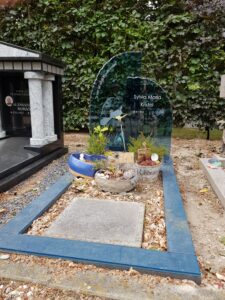
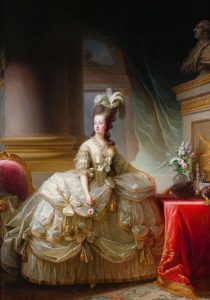
on this day in 1910 courtesan and demi-mondaine Émilie-Louise Delabigne, known as countess Valtesse de La Bigne died in Ville-d’Avray, France.  Though born to a working-class family in Paris, she rose through the social ranks and was a supporter of painters, while creating a space for women to participate in the art world through her collecting and Salon. Cimetière de Ville d’Avray

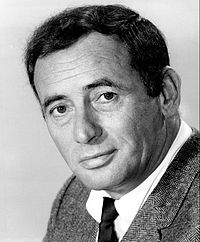
On this day in 1974, singer and actress Mama Cass, Cass Elliot died of heart failure in Harry Nilsson’s flat in Mayfair, London at the age of 32. Born Ellen Naomi Cohen on September 19, 1941 in . Perhaps best known for having been a member of the Mamas and the Papas. After the group broke up, she released five solo albums. In 1998, she was posthumously inducted into the Rock and Roll Hall of Fame for her work with the Mamas and the Papas.

Elliot was married twice, the first time in 1963 to James Hendricks, her group mate in the Big 3 and the Mugwumps. This was reportedly a platonic arrangement to assist him in avoiding being drafted during the Vietnam War. The marriage reportedly was never consummated and was annulled in 1968. In 1971, Elliot married journalist Donald von Wiedenman, heir to a Bavarian barony. Their marriage ended in divorce after a few months.

The Final Footprint

The flat where Elliot died, Flat 12, 9 Curzon Place (later Curzon Square), Shepherd Market, Mayfair, London, was on loan from Nilsson. Four years later, The Who’s drummer Keith Moon died in the same room, also aged 32 years.

Elliot’s body was cremated at the Hollywood Forever Cemetery in Los Angeles, California. Her cremated remains were later buried in Mount Sinai Memorial Park Cemetery in Los Angeles. Another notable final footprint at Mount Sinai; Don Rickles.

She is mentioned as the host of a party in the Elton John biopic, Rocketman. The party occurs after Elton’s first performance at the Troubador in Los Angeles. She is portrayed by Rachel Redleaf in the 2019 film Once Upon a Time…In Hollywood.

On this day in 1983, filmmaker Luis Buñuel died in Mexico City from diabetes complications at the age of 83. Born Luis Buñuel Portolés on 22 February 1900 in Calanda, Aragon, Spain.

His first picture, Un Chien Andalou—made in the silent era—is still viewed regularly throughout the world and retains its power to shock the viewer.  His last film, That Obscure Object of Desire—made 48 years later—won him Best Director awards from the National Board of Review and the National Society of Film Critics. Writer Octavio Paz called Buñuel’s work “the marriage of the film image to the poetic image, creating a new reality…scandalous and subversive”.

Often associated with the surrealist movement of the 1920s, Buñuel created films from the 1920s through the 1970s. Having worked in Europe and North America, and in French and Spanish, Buñuel’s films also spanned various genres. Despite this variety, filmmaker John Huston believed that, regardless of genre, a Buñuel film is so distinctive as to be instantly recognizable, or, as Ingmar Bergman put it, “Buñuel nearly always made Buñuel films”. My favorite film of his is Belle de Jour. It won the Golden Lion and the Pasinetti Award for Best Film at the Venice Film Festival in 1967.

Buñuel became an accomplished hypnotist. He was often to insist that watching movies was a form of hypnosis: “This kind of cinematographic hypnosis is no doubt due to the darkness of the theatre and to the rapidly changing scenes, lights, and camera movements, which weaken the spectator’s critical intelligence and exercise over him a kind of fascination.”

Starting at age 17, Buñuel steadily dated the future poet and dramatist Concha Méndez, with whom he vacationed every summer at San Sebastián. He introduced her to his friends at the Residencia as his fiancée. After five years, she broke off the relationship, citing Buñuel’s “insufferable character”.

In 1926 he met his future wife, Jeanne Rucar Lefebvre, a gymnastics teacher who had won a bronze medal at the 1924 Paris Olympics. Buñuel courted her in a formal Aragonese manner, complete with a chaperone. They married in 1934 and remained married until his death.

The Final Footprint

“Luis waited for death for a long time, like a good Spaniard, and when he died he was ready. His relationship with death was like that one has with a woman. He felt the love, hate, tenderness, ironical detachment of a long relationship, and he didn’t want to miss the last encounter, the moment of union. “I hope I will die alive,” he told me. At the end it was as he had wished. His last words were ‘I’m dying’.”

Long-time friend and collaborator, Jean-Claude Carrière

In 1982, he wrote (along with Carrière) his autobiography, Mon Dernier Soupir (My Last Sigh), which provides an account of his life, friends, and family as well as a representation of his eccentric personality. In it, he recounts dreams, encounters with many well-known writers, actors, and artists such as Pablo Picasso and Charlie Chaplin as well as antics, like dressing up as a nun and walking around town.

Buñuel once told his friend, novelist Carlos Fuentes: “I’m not afraid of death. I’m afraid of dying alone in a hotel room, with my bags open and a shooting script on the night table. I must know whose fingers will close my eyes.” Fuentes has recounted that Buñuel spent his last week in hospital discussing theology with the Jesuit brother Julián Pablo Fernández, a long time friend. His funeral was very private, involving only family and close friends, among them poets Octavio Paz and Homero Aridjis.

Buñuel was cremated.

#RIP #OTD in 1983 actor (Separate TablesMurder by Death, Death on the Nile, The Pink Panther, James Bond in Casino Royale), soldier, memoirist, novelist David Niven died from ALS at his chalet in Château-d’Œx, Switzerland aged 73. Château-d’Œx Cemetery

Have you planned yours yet?

Follow TFF on twitter @RIPTFF
Posted in Artistic Footprints, Day in History | Tagged , , , , , , , , , , , , , , , , , , , , , , , | Leave a comment

On this day 28 July deaths of Cyrano de Bergerac – Antonio Vivaldi – Johann Sebastian Bach – Frank Loesser – Dusty Hill

On this day in 1655, French dramatist and duelist, Cyrano de Bergerac died aged 36, at the house of his cousin, Pierre De Cyrano, in Sannois, France, or, he died from effects of tertiary syphilis in an asylum, in which he was confined by his own brother Abel de Cyrano.  Born Hercule-Savinien de Cyrano de Bergerac on 6 March 1619 in Paris.  In fictional works about his life he is featured with an overly large nose, which people would travel from miles around to see.  Portraits suggest that he did have a big nose, though not nearly as large as described in works about him.  Cyrano’s work furnished models and ideas for subsequent writers.

The Final Footprint – He was buried in a church in Sannois.  In 1897, the French poet Edmond Rostand published a play, Cyrano de Bergerac, on the subject of Cyrano’s life.  This play, by far Rostand’s most successful work, concentrates on Cyrano’s love for the beautiful Roxane, whom he is obliged to woo on behalf of a more conventionally handsome but less articulate friend, Christian de Neuvillette.  The play was adapted for cinema in 1990 with Gérard Depardieu in the title role.  The dialogue is in French with subtitles written by Anthony Burgess in rhymed couplets, mirroring the form of the dialogue in the original play.  The most famous film version in English is the 1950 film, with José Ferrer in the title role, a performance for which he won the Academy Award for Best Actor.

On this day in 1741, il Prete Rosso (“The Red Priest”), Italian Baroque composer, Catholic priest, and virtuoso violinist, Antonio Vivaldi died aged 63, in a house owned by the widow of a Viennese saddlemaker in Vienna.  Born Antonio Lucio Vivaldi on 4 March 1678 in Venice.  Recognized as one of the greatest Baroque composers, his influence during his lifetime was widespread over Europe.  Vivaldi is known mainly for composing instrumental concertos, especially for the violin, as well as sacred choral works and over forty operas.  His best known work is a series of violin concertos known as The Four Seasons.  Many of his compositions were written for the female music ensemble of the Ospedale della Pietà, a home for abandoned children where Vivaldi had been employed from 1703 to 1715 and from 1723 to 1740.  Vivaldi also had some success with stagings of his operas in Venice, Mantua and Vienna.  Though Vivaldi’s music was well received during his lifetime, it later declined in popularity until its vigorous revival in the first half of the 20th century.  Today, Vivaldi ranks among the most popular and widely recorded of Baroque composers.

The Final Footprint – On 28 July Vivaldi was buried in a simple grave in a burial ground that was owned by the public hospital fund in Vienna.  Vivaldi’s funeral took place at St. Stephen’s Cathedral.

On this day in 1750, Baroque composer, organist, harpsichordist, violist, and violinist Johann Sebastian Bach died in Leipzig, Germany at the age of 65.  Born  in Eisenach, Saxe-Eisenach, in what is now Thuringia, Germany, on 21 March 1685.  The Baroque period of Classical music begins after the Renaissance and was followed by the Classical era.  The word “baroque” came from the Portuguese word barroco, meaning “misshapen pearl”.  Baroque music forms a major portion of the classical music canon and is associated with composers such as Bach, George Frideric Handel, Alessandro Scarlatti, Antonio Vivaldi (see below), Claudio Monteverdi, and Henry Purcell.  Most importantly to me, it was during this period that opera became established as a musical genre.  My favorite Bach works include; the Brandenburg Concertos, the Goldberg VariationsThe Well-Tempered Clavier, the Mass in B minor, the St Matthew Passion, the St John Passion, and the Magnificat.  Beethoven described him as the “Urvater der Harmonie”, “original father of harmony”.  Bach married twice; his second cousin, Maria Barbara Bach (1706-1720 her death) and Anna Magdalena Wilcke (1721-1750 his death).

 The Final Footprint – Bach was originally buried at Old St. John’s Cemetery in Leipzig.  His grave went unmarked for nearly 150 years.  In 1894 his coffin was finally discovered and reburied in a vault within St. John’s Church.  This building was destroyed by Allied bombing during World War II, and in 1950 Bach’s remains were taken to their present resting place in Leipzig’s Church of St. Thomas.

#RIP #OTD in 1969 songwriter (“Baby, It’s Cold Outside”, “On a Slow Boat to China”, Broadway musicals Guys and Dolls, How to Succeed in Business Without Really Trying) Frank Loesser died of lung cancer at Mount Sinai Hospital, Manhattan, aged 59. Cremated remains scattered at sea

#RIP #OTD 2021 singer, songwriter, musician, bassist of the rock band ZZ Top, Dusty Hill died at his home in Houston, Texas, at the age of 72.  Forest Park The Woodlands Cemetery, The Woodlands, Texas

Have you planned yours yet?

Follow TFF on twitter @RIPTFF
Posted in Day in History, Extravagant Footprints, Literary Footprints, Musical Footprints | Tagged , , , , , , , , , , , , , , , , , , , , , , , , | Leave a comment

On this day 27 July deaths of Gertrude Stein – William Wyler – Bob Hope – Sam Shepard

Gertrude_Stein_1935-01-04On this day in 1946, art collector of seminal modernist paintings and an experimental writer of novels, poetry and plays, Gertrude Stein died at the age of 72 from stomach cancer in Neuilly-sur-Seine, France.  Born on February 3, 1874, in Allegheny, Pennsylvania.  Raised in Oakland, California, Stein moved to Paris in 1903, making France her home for the remainder of her life.  For some forty years, the Stein home on the Left Bank of Paris would become a renowned Saturday evening gathering place for expatriate American artists and writers, and others noteworthy in the world of vanguard arts and letters.  Entrée and membership in the Stein salon was a sought-after validation, signifying that Stein had recognized a talent worthy of inclusion into a rarefied group of gifted artists. Stein became combination mentor, critic, and guru to those who gathered around her.  A self-defined “genius”, she was described as an imposing figure with a commanding manner whose inordinate self-confidence could intimidate.  Among her coterie she was referred to as “Le Stein” and with less laudatory deference as “The Presence”.  Stein met her life partner Alice B. Toklas on 8 September 1907, on Toklas’ first day in Paris.  In 1933, Stein published the memoirs of her Paris years titled The Autobiography of Alice B. Toklas, which became a literary bestseller.  The advent of this book elevated Stein from the relative obscurity of cult literary figure, into the light of mainstream attention.

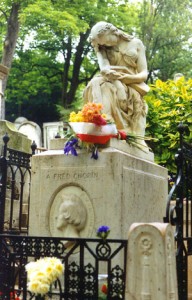
Gertrude_Stein's_gravestoneThe Final Footprint – Stein was interred in Paris in Père Lachaise Cemetery.  When Stein was being wheeled into the operating room for surgery on her stomach, she asked Toklas, “What is the answer?”  When Toklas did not reply, Stein said, “In that case, what is the question?”  There is a monument to Stein on the Upper Terrace of Bryant Park, New York.  Other notable Final Footprints at Père Lachaise include; Guillaume Apollinaire, Georges Bizet, Honoré de Balzac, Jean-Dominique Bauby, Maria Callas, Frédéric Chopin, Colette, Auguste Comte, Jean-Baptiste-Camille Corot, Max Ernst, Molière, Jim Morrison, Édith Piaf, Camille Pissarro, Marcel Proust, Sully Prudhomme, Gioachino Rossini, Georges-Pierre Seurat, Dorothea Tanning, Alice B. Toklas, Oscar Wilde, and Richard Wright.

#RIP #OTD in 1981, director (Mrs. Miniver, The Best Years of Our Lives, Ben-Hur, Dodsworth, Wuthering Heights (1939), The Letter, The Little Foxes, The Heiress, Detective Story, Roman Holiday, Funny Girl, Friendly Persuasion, The Collector), William Wyler died died of a heart attack in Beverly Hills aged 79. Forest Lawn Memorial-Park in Glendale, California

On this day in 2003, legendary comedian, actor, humanitarian, the first and only honorary veteran of the U.S. armed forces, American Icon, Bob Hope died at his home in Toluca Lake, Los Angeles at the age of 100.  Born Leslie Townes Hope 29 May 1903 in Eltham, London.  Hope appeared in vaudeville, on Broadway, and in radio, television and movies.  Perhaps his best known films are the “Road” series of films featuring Bing Crosby and Dorothy Lamour.  He was also noted for his work with the US Armed Forces and his numerous USO shows entertaining American military personnel.  Hope entertained troops during World War II, the Korean War, the Vietnam War, the third phase of the Lebanon Civil War, the latter years of the Iran–Iraq War, and the 1990–1991 Persian Gulf War.  Of Hope’s USO shows in World War II, writer John Steinbeck, who was then working as a war correspondent, wrote in 1943:

When the time for recognition of service to the nation in wartime comes to be considered, Bob Hope should be high on the list. This man drives himself and is driven. It is impossible to see how he can do so much, can cover so much ground, can work so hard, and can be so effective. He works month after month at a pace that would kill most people.”

Hope hosted the Academy Awards ceremony 18 times.  He married twice; Grace Louise Troxell (1933-1934 divorce) and Dolores Reade (1934-2003 his death).  Hope’s signature song was “Thanks for the Memory” ( music composed by Ralph Rainger and lyrics by Leo Robin).  Indeed, thanks for the memories Mr. Hope.

The Final Footprint – Reportedly when Hope was asked on his deathbed where he wanted to be buried he told his wife, “Surprise me.”  Hope is entombed in The Bob Hope Memorial Garden at San Fernando Mission Cemetery, a Catholic cemetery in Los Angeles.  Other notable final footprints at SFMC include: Walter Brennan; Chuck Connors; the parents of Francis Ford Coppola, Carmine and Italia Coppola; Ritchie Valens; and Jane Wyatt.

On this day in 2017 actor, playwright, author, screenwriter, and director Sam Shepard died at his farm near Midway, Kentucky, aged 73, from complications of amyotrophic lateral sclerosis. Born Samuel Shepard Rogers III on November 5, 1943 in Fort Sheridan, Illinois. His body of work spanned half a century. He won 10 Obie Awards for writing and directing, the most given to any writer or director. He wrote 44 plays as well as several books of short stories, essays, and memoirs. Shepard received the Pulitzer Prize for Drama in 1979 for his play Buried Child. He was nominated for an Academy Award for Best Supporting Actor for his portrayal of pilot Chuck Yeager in The Right Stuff (1983). Shepard received the PEN/Laura Pels International Foundation for Theater Award as a master American dramatist in 2009. 

Shepard’s plays are chiefly known for their bleak, poetic, often surrealist elements, black humor, and rootless characters living on the outskirts of American society. His style evolved over the years, from the absurdism of his early Off-Off-Broadway work to the realism of Buried Child and Curse of the Starving Class (both 1978).

Shepard at age 21

When Shepard first arrived in New York City, he roomed with Charlie Mingus, Jr., a friend from his high school days and the son of jazz musician Charles Mingus. He then lived with actress Joyce Aaron. From 1969 to 1984, he was married to actress O-Lan Jones. From 1970 to 1971, Shepard was involved in an extramarital affair with musician Patti Smith, who remained unaware of Shepard’s identity as a multiple Obie Award-winning playwright. 

Shepard met Academy Award-winning actress Jessica Lange on the set of the film Frances, in which they were both acting. He moved in with her in 1983, and they were together for nearly 30 years; they separated in 2009.

His 50-year friendship with Johnny Dark (stepfather to O-Lan Jones) was the subject of the documentary Shepard & Dark (2013) by Treva Wurmfeld. A collection of Shepard and Dark’s correspondence, Two Prospectors, was also published that year.

The Final Footprint

Cremation

Have you planned yours yet?

Follow TFF on twitter @RIPTFF

Posted in American Icon, Day in History, Extravagant Footprints, Film Footprints, Literary Footprints, Military Footprints | Tagged , , , , , , , , , , , , , , , , , , , , , , , | Leave a comment

On this day 26 July deaths of Sam Houston – Eva Perón – Diane Arbus – Mary Wells – J. J. Cale – June Foray – Olivia de Havilland – Randy Meisner – Sinead O’Connor

On this day in 1863, statesman, politician, soldier, 8th Governor of Tennessee, 1st and 3rd President of the Republic of Texas, United States Senator from Texas, 7th Governor of Texas, Sam Houston died from pneumonia at his home, Steamboat House in Huntsville, Texas at the age of 70.  Born Samuel Houston of Scots-Irish descent on 2 March 1793 in Rockbridge County, Virginia.  A leader of the Texas Revolution.  Sam Houston supported annexation by the United States.  When he assumed the governorship of Texas in 1859, Houston became the only person to have become the governor of two different U.S. states through direct, popular election, as well as the only state governor to have been a foreign head of state.  Houston was married to Eliza Allen (1829-1837), Tiana Rogers Gentry (under Cherokee law) and Margaret Moffette Lea (1840-1863 his death).  God bless Texas!  God bless Sam Houston!

The Final Footprint – Houston is entombed in Oakwood Cemetery in Huntsville.  His last words were reportedly; “Texas!  Texas!  Margaret…”  His grave is marked by a large carved marble monument.  His epitaph; “THE WORLD WILL TAKE CARE OF HOUSTON’S FAME.”  ANDREW JACKSON.  The inscription on his tomb;

A Brave Soldier. A Fearless Statesman. A Great Orator– A Pure Patriot. A Faithful Friend, A Loyal Citizen. A Devoted Husband and Father. A Consistent Christian– An Honest Man.

Namesake of the fourth largest city in the U.S., Houston’s reputation was sufficiently large that he was honored in numerous ways after his death, among them: a memorial museum, four U.S. warships named USS Houston (AK-1, CA-80, CL81 and SSN-713), a U.S. Army base, a national forest, a historical park, a university and a prominent roadside statue outside of Huntsville.

Eva_peron_official_state_portrait_3On this day in 1952, actress, the second wife of President Juan Perón (1895–1974), the First Lady of Argentina from 1946 until her death, Evita, Eva Perón died from cervical cancer in Buenos Aires at the age of 33.  Born María Eva Duarte on 7 May 1919 in the village of Los Toldos in rural Argentina.  Evita met Colonel Juan Perón on 22 January 1944, in Buenos Aires during a charity event at the Luna Park Stadium to benefit the victims of an earthquake in San Juan, Argentina.  The two were married the following year.  In 1946, Juan Perón was elected President of Argentina.  Over the course of the next six years, Evita became powerful within the pro-Peronist trade unions, primarily for speaking on behalf of labor rights. She also ran the Ministries of Labor and Health, founded and ran the charitable Eva Perón Foundation, championed women’s suffrage in Argentina, and founded and ran the nation’s first large-scale female political party, the Female Peronist Party.  In 1951, Evita announced her candidacy for the Peronist nomination for the office of Vice President of Argentina, receiving great support from the Peronist political base, low-income and working class Argentines who were referred to as descamisados or “shirtless ones”.  However, opposition from the nation’s military and bourgeoisie, coupled with her declining health, ultimately forced her to withdraw her candidacy.  In 1952, shortly before her death Evita was given the title of “Spiritual Leader of the Nation” by the Argentine Congress.

The Final Footprint – She was given a state funeral and a full Roman Catholic requiem mass.  The government suspended all official activities for two days, with all flags being flown at half-staff for ten days.  The crowd outside of the presidential residence grew dense, congesting the streets for ten blocks in each direction.  Later, while Evita’s body was being moved, eight people were crushed to death in the throngs.  In the following 24 hours, over 2000 people were treated in city hospitals for injuries sustained in the rush to be near Evita as her body was being transported from the presidential residence to the Ministry of Labour building.  The streets of Buenos Aires overflowed with flowers that were stacked in huge piles, and within one day of Evita’s death, all flower shops in Buenos Aires had run out of flowers.  Plans were made to construct a memorial in Evita’s honor.  The monument, which was to be a statue of a man representing the “descamisados,” was projected to be larger than the Statue of Liberty.  Evita’s body was to be stored in the base of the monument and, in the tradition of Lenin’s corpse, to be displayed for the public.  While waiting for the monument to be constructed, Evita’s embalmed body was displayed in her former office at the CGT building for almost two years.  Before the monument to Evita was completed, Juan Perón was overthrown in a military coup, the Revolución Libertadora, in 1955.  Perón hastily fled the country and did not make arrangements to secure Evita’s body.  A military dictatorship took power in Argentina.  The new authorities removed Evita’s body from display and its whereabouts remained a mystery for 16 years.  In 1971 the military revealed that the body was entombed in a crypt in Milan, Italy, under the name “María Maggi.”  In 1971, Evita’s body was exhumed and flown to Spain, where Juan Perón maintained the corpse in his home.  Juan and his third wife, Isabel, decided to keep the corpse in their dining room on a platform near the table.  In 1973, Juan Perón came out of exile and returned to Argentina, where he became president for the third time.  Perón died in office in 1974.  His third wife, Isabel Perón, whom he had married on 15 November 1961, and who had been elected vice-president, succeeded him, thus becoming the first female president in the Western Hemisphere.  It was Isabel who had Evita’s body returned to Argentina and (briefly) displayed beside Juan Perón’s.  The body was later entombed in the Duarte family tomb in La Recoleta Cemetery, Buenos Aires.  Extensive measures were taken by the Argentine government to secure Evita’s tomb.  There is a trapdoor in the tomb’s marble floor, which leads to a compartment that contains two coffins.  Under the first compartment is a second trapdoor and a second compartment.  That is where Evita’s coffin rests.  Biographers Marysa Navarro and Nicholas Fraser write that the claim is often made that Evita’s tomb is so secure that it could withstand a nuclear attack.  “It reflects a fear,” they write, “a fear that the body will disappear from the tomb and that the woman, or rather the myth of the woman, will reappear.”  This cemetery, which is located in the northern part of barrio Recoleta, also holds the remains of many illustrious military generals, presidents, scientists, poets and other affluent Argentinians.  There is a saying in Argentina that it costs much more to die than it does to live.  Evita has become a part of international popular culture, most famously as the subject of the musical Evita (1976) by Andrew Lloyd Webber and Tim Rice, which was later made into a film starring Madonna as Evita.  Cristina Alvarez Rodriguez, Evita’s great niece, claims that Evita has never left the collective consciousness of Argentines. Cristina Fernández de Kirchner, the first female elected President of Argentina, claims that women of her generation owe a debt to Evita for “her example of passion and combativeness”.

#RIP #OTD in 1971 photographer Diane Arbus died from an overdose of barbiturates in her home in the Westbeth Artists Community in Manhattan, age 48. Ferncliff Cemetery and Mausoleum, Hartsdale, New York

#RIP #OTD in 1992 singer (“The One Who Really Loves You”, “Two Lovers”, “You Beat Me to the Punch”, “My Guy”), “The Queen of Motown”, Mary Wells died from laryngeal cancer in Los Angeles, aged 49. Cremated remains Forest Lawn Memorial Park, Glendale

#RIP #OTD in 2013´guitarist, singer, songwriter (After Midnight, Cocaine, Call Me the Breeze), J. J. Cale died at the age of 74 in San Diego following a heart attack. Mission San Luis Rey Cemetery, Oceanside, California

#RIP #OTD in 2017 voice actress (Rocky the Flying Squirrel, Natasha Fatale, Nell Fenwick, Lucifer from Disney’s Cinderella, Cindy Lou Who, Jokey Smurf, Granny & Witch Hazel from Looney Tunes) June Foray died in Los Angeles, aged 99. Westwood Memorial Park, Westwood CA

#RIP #OTD in 2020 actress (Gone with the Wind, Hold Back the Dawn, To Each His Own, The Snake Pit, The Heiress) Olivia de Havilland died at her home in Paris at the age of 104. Cremation

#RIP #OTD in 2023 bassist, singer, songwriter, founding member of the Eagles (co-writer & lead vocals on Take it to the Limit), Randy Meisner died due to complications associated with chronic obstructive pulmonary disease (COPD) in Los Angeles, at the age of 77. Cremation

#RIP #OTD in 2023 singer (Nothing Compares 2 U), songwriter (Mandinka), activist Sinead O’Connor died at her flat in Herne Hill, South London aged 56. Dean’s Grange Cemetery, Dean’s Grange, Ireland


Have you planned yours yet?

Follow TFF on twitter @RIPTFF

Posted in Day in History, Extravagant Footprints, Military Footprints, Political Footprints | Tagged , , , , , , , , , , , , , , , , , , , , , , , , , , , , , , , , , , | Leave a comment

On this day 25 July deaths of Maria Szymanowska – André Chénier – Samuel Taylor Coleridge – Frank O’Hara – Big Mama Thornton – Vincente Minnelli – Charlie Rich – Ben Hogan – John Schlesinger – Carl Brashear – Bernadette Lafont – Paul Sorvino

#RIP #OTD in 1794 poet, subject of Umberto Giordano’s opera Andrea Chénier, André Chénier was guillotined for conspiracy at what is now the Place de la Nation, Paris, three days before the end of the Reign of Terror, aged 31. Cimetière de Picpus, Paris

On this day in 1834, English poet, Romantic, literary critic and philosopher who, with his friend William Wordsworth, was a founder of the Romantic Movement in England and a member of the Lake Poets, Samuel Taylor Coleridge died at the home of the Gillman family, where he lived, in Highgate, London at the age of 61 as a result of heart failure compounded by an unknown lung disorder, possibly linked to his use of opium.  Born 21 October 1772 in in the country town of Ottery St Mary, Devon, England.  Perhaps best known for his poems The Rime of the Ancient Mariner and Kubla Khan, as well as his “Conversation poems”.  His critical work, especially on Shakespeare, was highly influential, and he helped introduce German idealist philosophy to English-speaking culture.  He coined many familiar words and phrases, including the celebrated “suspension of disbelief”.  Throughout his adult life, Coleridge suffered from crippling bouts of anxiety and depression; it has been speculated by some that he suffered from bipolar disorder, a condition not identified during his lifetime.  Coleridge suffered from poor health that may have stemmed from a bout of rheumatic fever and other childhood illnesses. He was treated for these concerns with laudanum, which fostered a lifelong opium addiction.

The Final Footprint – He is entombed in Saint Michael Churchyard in Highgate.

#RIP #OTD in 1966 writer, poet (Lunch Poems), art critic, curator at the Museum of Modern Art, Frank O’Hara died from injuries after being hit by a jeep on Fire Island beach, New York, at Bayview Hospital in Mastic Beach, Long Island, aged 40. Green River Cemetery, Springs NY

bigmamaThornton_Big_Mama_01On this day in 1984, singer and songwriter Big Mama Thornton died of a heart attack in Los Angeles at age 57.  Born Willie Mae Thornton on 11 December 1926 in Ariton, Alabama.  She was the first to record Leiber and Stoller’s “Hound Dog” in 1952, which became her biggest hit.  It spent seven weeks at number one on the Billboard R&B charts in 1953 and sold almost two million copies.  However, her success was overshadowed three years later, when Elvis recorded his more popular rendition.  Similarly, Thornton’s “Ball ‘n’ Chain”, had a bigger impact when performed and recorded by Janis Joplin in the late 1960’s.

The Final Footprint – Thornton is interred in Inglewood Park Cemetery in Inglewood, California.  Other notable Final Footprints at Inglewood Park include; Ray Charles, Ella Fitzgerald, Curt Flood, Betty Grable, Etta James, Robert Kardashian (father of  Kim, Kourtney and  Khloé), Billy Preston, Cesar Romero, Billie Buckwheat Thomas, Big Mama Thornton, T-Bone Walker, and Syreeta Wright.

#RIP #OTD in 1986 stage director, film director (Meet Me in St. Louis, An American in Paris, The Band Wagon, Gigi), former husband of Judy Garland, Vincente Minnelli died in his Beverly Hills home of emphysema/pneumonia, aged 83. Forest Lawn Memorial Park in Glendale, California

On this day in 1995, singer, songwriter, and musician, the Silver Fox, Charlie Rich died in his sleep in a Hammond, Louisiana, motel from a pulmonary embolism at the age of 62. Born Charles Allan Rich on December 14, 1932 in Colt, Arkansas. His eclectic style of music was often difficult to classify, encompassing the rockabilly, jazz, blues, country, soul, and gospel genres.

Perhaps best remembered for a pair of 1973 hits, “Behind Closed Doors” (written by Kenny O’Dell) and “The Most Beautiful Girl” (written by Billy Sherrill, Norro Wilson, and Rory Bourke). “The Most Beautiful Girl” topped the U.S. country singles charts, as well as the Billboard Hot 100 pop singles charts and earned him two Grammy Awards. Rich was inducted into the Memphis Music Hall of Fame in 2015.

The Final Footprint

He was buried in the Memorial Park Cemetery in Memphis, Tennessee. Other notable final footprints at Memorial Park include; Isaac Hayes, Sam Phillips, Bob Welch, and Bobby Bland.

On this day in 1997, professional golfer, 9x major champion, winner of all four major championships (the Masters Tournament, the Open Championship, the U.S. Open, and the PGA Championship), The Hawk, Bantam Ben, The Wee Iceman, Ben Hogan died in Fort Worth, Texas at the age of 84.  Born William Ben Hogan on 13 August 1912 in Stephenville, Texas.  In my opinion, one of the greatest players in the history of the game.  Born within six months of two other acknowledged golf greats of the twentieth century, Sam Snead and Byron Nelson, Hogan is notable for his profound influence on the golf swing theory and his legendary ball-striking ability, for which he remains renowned among players and fans.

The Final Footprint –  Hogan is entombed in the mausoleum at Greenwood Memorial Park in Fort Worth.

#RIP #OTD in 2003 actor, director (Far From the Madding Crowd, Midnight Cowboy, Sunday Bloody Sunday, The Day of the Locust, Marathon Man), John Schlesinger died at Desert Regional Medical Center in Palm Springs at the age of 77. Willesden United Synagogue Cemetery, Willesden, England

Cuba Gooding, Jr., Carl Brashear and Defense Secretary William Cohen October 2000

On this day in 2006, U. S. Navy Master Diver Carl Brashear died of respiratory and heart failure at the Portsmouth Naval Medical Center, Portsmouth, Virginia at the age of 75.  Born Carl Maxie Brashear on 19 January 1931 in Tonieville, Kentucky.  Brashear was the first African-American to attend and graduate from the Diving & Salvage School, the first African-American U.S. Navy Diver and the first African-American U.S. Navy Master Diver.  After an accident aboard the U.S.S. Hoist, which resulted in the eventual amputation of his lower left leg, he became the first amputee diver to be certified or re-certified as a U.S. Navy diver.  Cuba Gooding, Jr. portrayed Brashear in the film based on his story, Men of Honor (2000) featuring Robert De Niro, Charlize Theron, Hal Holbrook, Powers Boothe and David Keith.  Brashear married three times; Junetta Wilcoxson (1952-1978 divorce), Hattie R. Elam (1980-1983 divorce) and Jeanette A. Brundage (1985-1987 divorce).

The Final Footprint – Brashear is interred in Woodlawn Memorial Gardens in Norfolk, Virginia.  His grave is marked by an individual VA, bronze on granite marker.  His epitaph; I AIN’T GONNA LET NOBODY STEAL MY DREAM.

#RIP #OTD in 2013, actress (Les Mistons, L’Effrontée, Masques, Paulette), muse of François Truffaut, Bernadette Lafont died from a heart attack in Nîmes, France aged 74. Lafont Family Estate, Saint-Andre-de-Valborgne, France

#RIP #OTD in 2022 actor (Bloodbrothers, Goodfellas, The Firm, The Cooler) Paul Sorvino died at Mayo Clinic Florida in Jacksonville aged 83. Hollywood Forever Cemetery

Have you planned yours yet?

Follow TFF on twitter @RIPTFF

Posted in Athletic Footprints, Day in History, Literary Footprints, Military Footprints, Musical Footprints | Tagged , , , , , , , , , , , , , , , , , , , , , , , , , , , , , , , , , , , , , , , , , , , | Leave a comment

On this day February 29 – Pat Garrett – Ina Coolbrith – Davy Jones

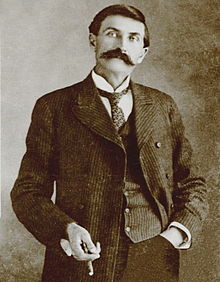
220px-Pat_Garrett2On this day in 1908; American Old West lawman, bartender, sheriff of Lincoln County, New Mexico as well as Doña Ana County, New Mexico, rancher and customs agent, Pat Garrett was shot and killed near Las Cruces, New Mexico, at the age of 57.  His murder went unsolved.  Born Patrick Floyd Jarvis Garrett on June 5, 1850, in Chambers County, Alabama.  Perhaps best known as the man who shot and killed Billy the Kid.  He coauthored a book about Billy the Kid which, for a generation after the Kid’s death, was deemed authoritative; however, historians have since found many embellishments and inconsistencies with other accounts of the outlaw’s life.  Garrett also became one of President Theodore Roosevelt’s three “White House Gunfighters” (Bat Masterson and Ben Daniels were the others) when Roosevelt appointed him Collector of Customs in El Paso.  220px-Garrett_grave2

TheFinal Footprint – Garrett’s body was too tall (he was 6′ 5″) for any finished coffins available, so a special one had to be shipped in from El Paso.  His funeral service was held March 5, 1908, and he was laid to rest next to his daughter, Ida, who had died in 1896 at the age of fifteen, at the Masonic Cemetery in Las Cruces.

Memorial marking spot where Pat Garrett was killed

The site of Garrett’s death is now commemorated by a historical marker south of U.S. Route 70, between Las Cruces and the San Augustin Pass.  The actual spot where Garrett was shot was marked Pat’s son Jarvis Garrett in 1938-1940 with a monument consisting of concrete laid around a stone with a cross carved in it.  The cross is believed to be the work of Pat’s mother.  Scratched in the concrete is “P. Garrett” and the date of his killing.  Garrett has been portrayed in film many times including:

  • Thomas Mitchell in The Outlaw (United Artists, 1943)
  • Glenn Corbett in Chisum (Warner Bros., 1970)
  • James Coburn in Pat Garrett & Billy the Kid (MGM, 1973)
  • Patrick Wayne in Young Guns (Fox, 1988)
  • William Petersen in Young Guns II (Fox, 1990)

#RIP #OTD in 1928 poet, writer, librarian, first poet laureate of California, Ina Coolbrith died in Berkeley aged 86. Mountain View Cemetery in Oakland

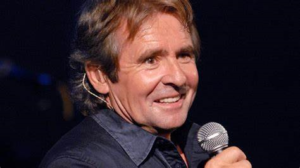
On this day in 2012, singer-songwriter, musician, actor, and teen idol, Davy Jones died from a heart attack after riding one of his favourite horses, at Martin Memorial South Hospital in Stuart, Florida, age 66. Born David Thomas Jones on 30 December 1945 in Openshaw, Manchester, England. Perhaps best known as a member of the band the Monkees, and for starring in the TV series of the same name. His acting credits include a Tony-nominated performance as the Artful Dodger in the original London and Broadway productions of Oliver! as well as a guest star role in a hallmark episode of The Brady Bunch television show and later reprised parody film; Love, American Style; and My Two Dads.

Jones with Maureen McCormick in the 1971 The Brady Bunch episode “Getting Davy Jones”, in which he was a guest star.

Jones was married three times. In December 1968, he married Dixie Linda Haines, with whom he had been living. Their relationship had been kept out of the public eye until after the birth of their first child in October 1968. It caused a considerable backlash for Jones from his fans when it was finally made public. Jones later stated in Tiger Beat magazine, “I kept my marriage a secret because I believe stars should be allowed a private life.”  The marriage ended in 1975.

Jones married his second wife, Anita Pollinger, on 24 January 1981. They divorced in 1996 during the Monkees’ 30th-anniversary reunion tour. Jones married for a third time in 2009 to Jessica Pacheco. On 28 July 2011, Pacheco filed to divorce Jones in Miami-Dade County, Florida, but dropped the suit in October. They were still married when he died. .

The Final Footprint

Jones was cremated. On Wednesday, 7 March 2012, a private funeral service was held at Holy Cross Catholic parish in Indiantown. To avoid drawing attention to the grieving family, the three surviving Monkees did not attend. Instead, the group attended memorial services in New York City and organized their own private memorial in Los Angeles along with Jones’s family and close friends. A public memorial service was held on 10 March 2012 in Beavertown, Pennsylvania, near a church Jones had purchased for future renovation.

On Monday, 12 March, a private memorial service was held in Jones’s home town of Openshaw, Manchester at Lees Street Congregational Church, where Jones performed as a child in church plays. Jones’s wife and daughters travelled to England to join his relatives based there for the service, and placed his ashes on his parents’ graves for a time.

Have you planned yours yet? 

Follow TFF on Twitter @RIPTFF

Posted in Cowboy Footprints, Day in History, Uncategorized | Tagged , , , , , | Leave a comment

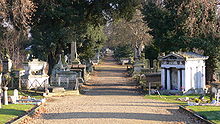
Kensal Green Cemetery

Kensal_Green_Cemetery_view_December_2005Kensal Green Cemetery is a cemetery in Kensal Green, in the west of London, England, in the Royal Borough of Kensington and Chelsea.  Inspired by the Père Lachaise Cemetery in Paris and founded by the barrister George Frederick Carden, Kensal Green Cemetery was opened in 1833 and comprises 72 acres of grounds, including two conservation areas, adjoining a canal.  Kensal Green Cemetery is home to at least 33 species of bird and other wildlife.  This distinctive cemetery has a host of different memorials ranging from large mausoleums housing the rich and famous to many distinctive smaller graves and even includes special areas dedicated to the very young.  With three chapels catering for people of all faiths and social standing, the General Cemetery Company has provided a haven in the heart of London for over 180 years for its inhabitants to remember their loved one in a tranquil and dignified environment.

The area was immortalised in the lines of G. K. Chesterton‘s poem “The Rolling English Road” from his book The Flying Inn: “For there is good news yet to hear and fine things to be seen; Before we go to Paradise by way of Kensal Green.”

Despite its Grecian-style buildings the cemetery is primarily Gothic in character, due to the high number of private Gothic monuments. Due to this atmosphere, the cemetery was the chosen location of several scenes in movies, notably in Theatre of Blood (1973).

Notable cremations at Kensal Green include; Ingrid Bergman and Freddie Mercury.

Have you planned yours yet?

Follow TFF on twitter @RIPTFF

Posted in Cemeteries | Tagged , , , , | Leave a comment

Fictional Footprint – Gerald and Ellen O’Hara

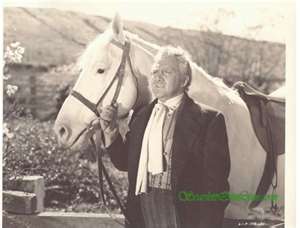
In Margaret Mitchell’s Gone with the Wind, Gerald O’Hara founded the plantation Tara, located near Jonesboro, Georgia, after he won 640 acres of land from its absentee owner during an all-night poker game.  O’Hara and his brothers emigrated from Ireland to Savannah, Georgia.  O’Hara relished the thought of becoming a planter and gave his mostly wilderness and uncultivated new lands the grandiose name of Tara after the hill of Tara, once the capital of the High King of ancient Ireland.  He borrowed money from his brothers and bankers to buy slaves and turned the farm into a very successful cotton plantation.  At the age of 43, O’Hara married the 15-year-old Ellen Robillard, an aristocratic, Savannah-born girl of French descent, receiving as dowry twenty slaves (including Mammy, Ellen’s nurse, who became nurse to Ellen’s daughters and grandchildren as well).  His young bride took a very real interest in the management of the plantation, being in some ways a more hands-on manager than her husband.  With the injection of her dowry money and the rise of cotton prices, Tara grew to a plantation of more than 1,000 acres and more than 100 slaves by the dawn of the Civil War.  Unlike the homes of most of the O’Haras’ neighbors, Tara is spared the torch during the Sherman’s Scorched Earth march.  Upon the army’s withdrawal, the family and their loyal remaining slaves are left with a looted and dilapidated house, a ruined farm with no stock, work animals, or farm equipment, no food and no means to produce food. They are indigent and soon starving.  Ellen O’Hara dies soon after the Union evacuation, and her widowed oldest daughter Scarlett returns a day later.  The loss of his wife, combined with hopelessness, poverty, age, and an increasing reliance on whiskey (when it is available) is destroying Gerald O’Hara’s sanity, leaving him a demented echo of his former self.  Peace returns after the war, but not prosperity.  Scarlett manages to save Tara from being seized and the family from dispossession only by deceitfully marrying her sister Suellen’s fiance, Frank Kennedy, and using his savings to pay the $300 in taxes levied on the place.  Though Scarlett returns to Atlanta where her fortunes rise as she takes over and expands her second husband Frank’s business interests, she shares her new wealth with Tara.  Tara never achieves anything like its antebellum grandeur, but it does become self supporting as a “two horse” farm.  While far from rich, the O’Haras are at least in better condition than most of their neighbors.  O’Hara dies when he falls off his horse while chasing a carpetbagger off the property.  In the movie version, O’Hara is portrayed by Thomas MitchellThe Final Footprint – Gerald and Ellen are buried in the O’Hara Family Cemetery at their beloved Tara.

Have you planned yours yet?

Follow TFF on twitter @RIPTFF

Posted in Fictional Footprints | Tagged , , , , , , , , , | Leave a comment

Veteran’s Day Observance – Sharon Memorial Park

Veteran's Day ObservanceCome join us for a Veteran’s Day Observance on Tuesday 11 November 2010, 10:00 am.  The location will be at the Garden of Honor in Sharon Memorial Park.  The Garden of Honor is dedicated to those who have bravely served our country and features a granite monument and a flag pole from which flies the Killed in Action Memorial Flag and the POW/MIA flag.

The program will include bagpipe music courtesy of Dave McKenzie, the Pledge of Allegiance and the placing of a memorial wreath.  VFW Post 9458 will provide Color Guard and Honor Guard and a 21-Gun Salute and Taps.  The featured speaker will be Mr. John Hodge U.S. Army World War II veteran.  Contact us for a free comprehensive Veteran’s personal planning guide>>>>>>Click Here!

Posted in Cemeteries, Special Events | Tagged , , , , , , , , , , , , , | Leave a comment

Fictional Footprint

Today we pay tribute to a great romantic literary character, Francesca Johnson from the Robert James Waller novel, The Bridges of Madison County.  Francesca was born in 1920 near Naples, Italy .  Forever remembered as the woman who loved Robert Kincaid.  She died in January 1989 at home on her farm in Madison County, Iowa.  The Final Footprint – Francesca was cremated and her ashes were scattered from the Roseman Bridge in Madison County, Iowa.  She could not have Robert in life, so she gave herself to him in death.

Related Posts Plugin for WordPress, Blogger...
Posted in Fictional Footprints | Tagged | Leave a comment